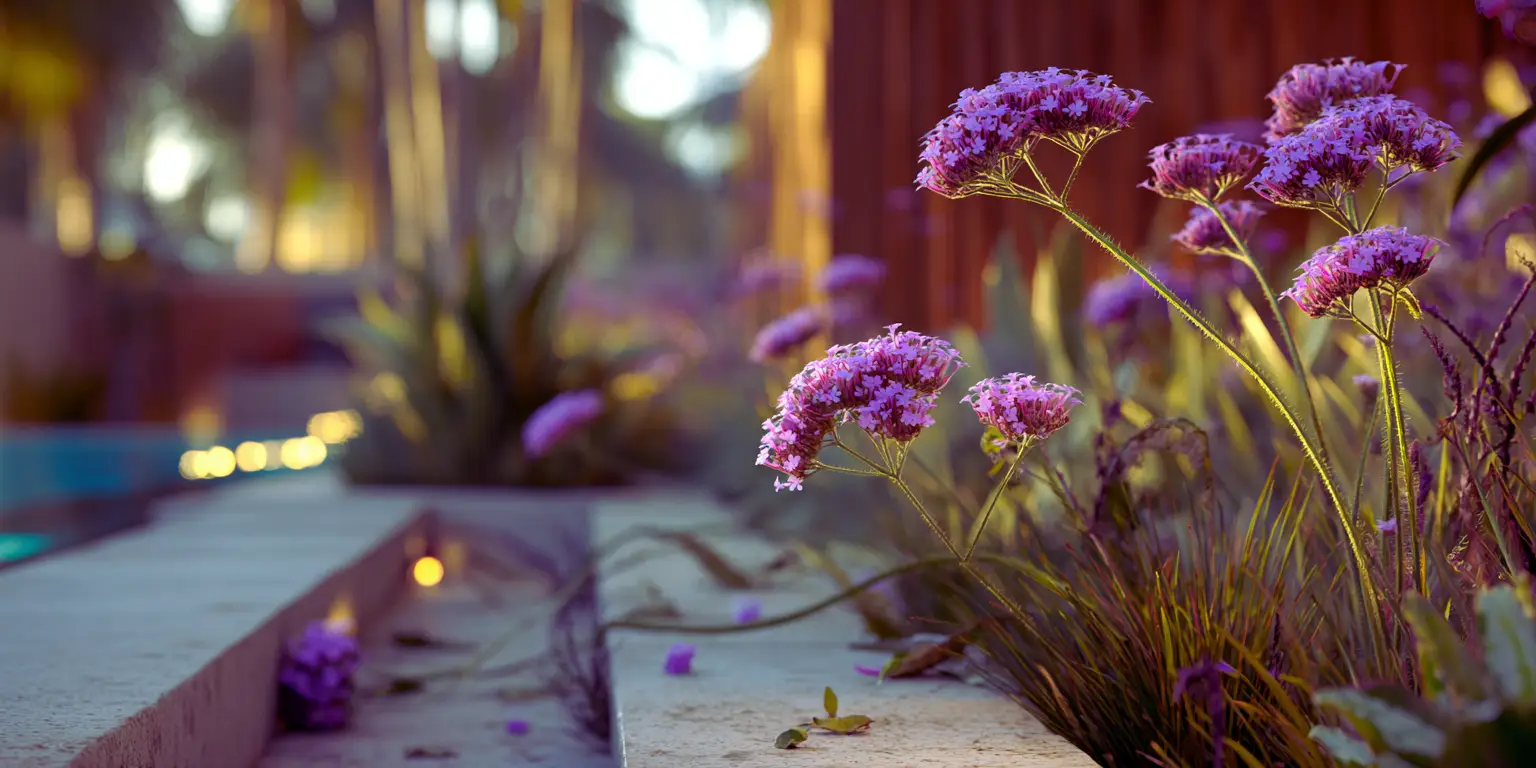
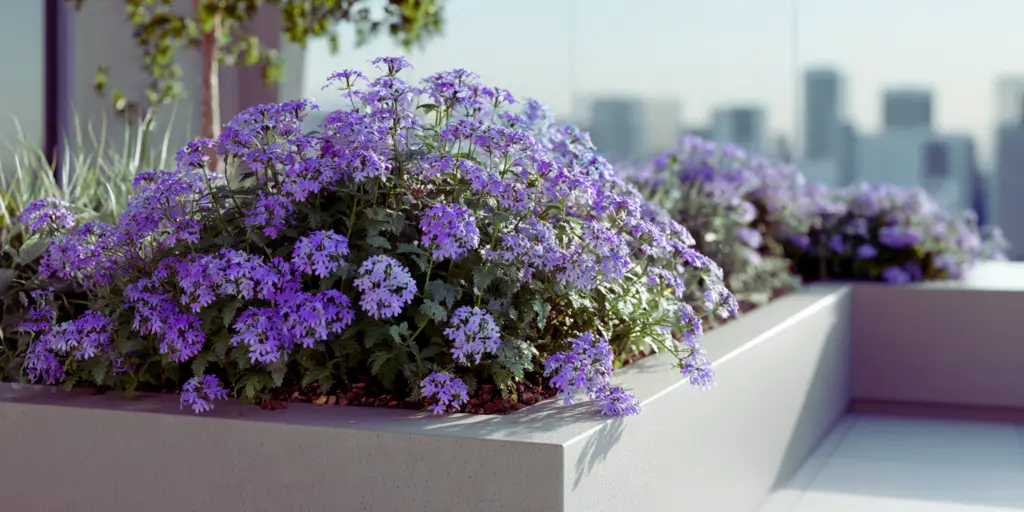
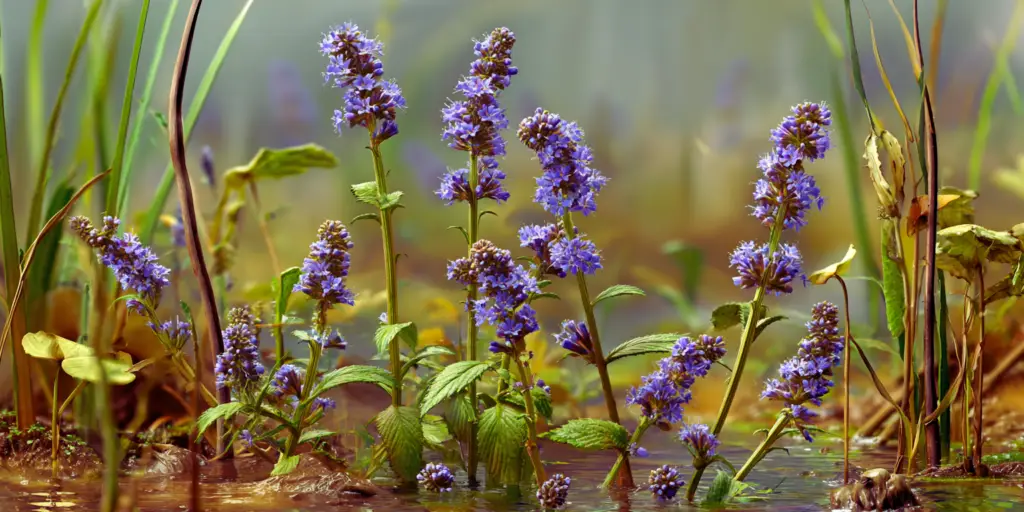
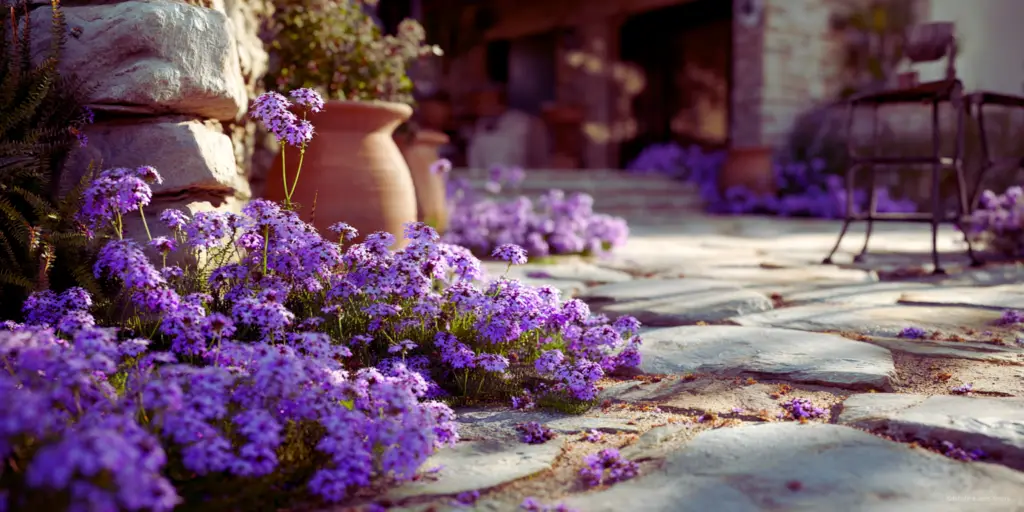
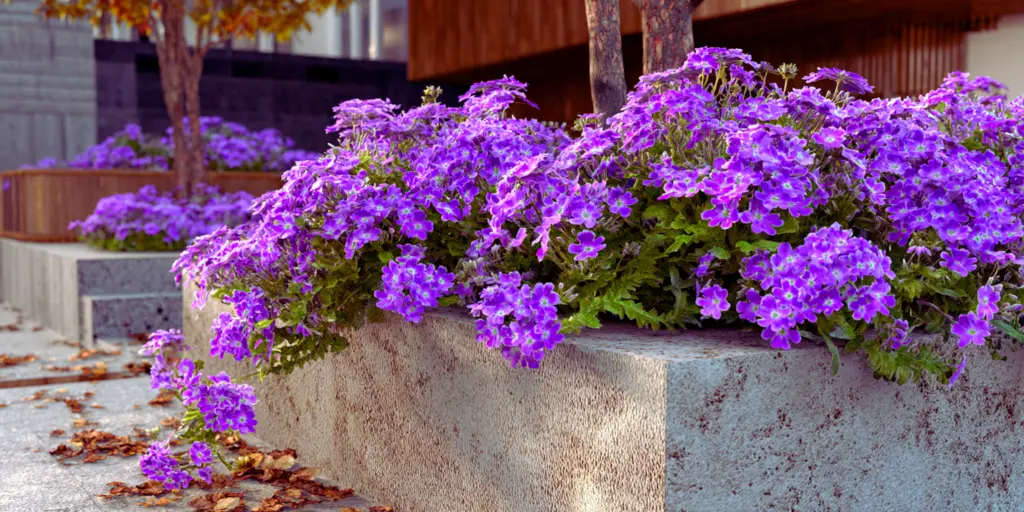
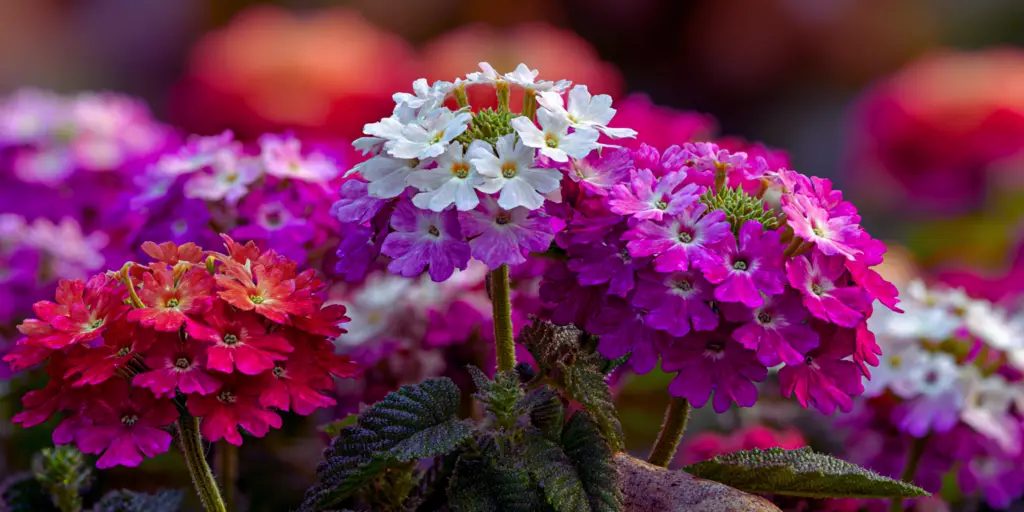
This species is a tall, airy verbena from South America that is grown as a long-flowering perennial in warm zones or as a reseeding annual in colder areas. Plants send up wiry, see-through stems topped with small purple flower clusters that thread easily through mixed borders. The standout trait is its extended bloom that runs from summer to frost in full sun. It prefers well-drained soil and handles heat and periods of drought once established. In regions colder than zone 7 it rarely overwinters, but it often self-seeds and returns. Butterflies and hummingbirds visit the flowers throughout summer and fall.
At‑a‑glance
Group/Class: species (tall verbena)
Height × spread: 2-5 ft × 1.5-3 ft (60-150 cm × 45-90 cm)
Bloom window: June to frost
Color & flower form: rose-violet to lavender; tiny tubular florets in airy, flat-topped clusters
Fragrance: 0 none
USDA hardiness: zones 7-11; grown as annual in colder regions
Breeder / Year / Origin: unknown / n/a / native to South America
Awards/registration: RHS Award of Garden Merit
Cut-flower notes: wiry stems; good airy filler; vase life varies by handling
Pet safety: sources differ / supervise pets
How it differs
Much taller and more transparent than typical bedding verbenas.
Vertical, see-through stems rather than trailing or mounded forms.
Blooms summer to frost with minimal deadheading.
Self-seeds and can naturalize where winters are mild.
Strengths
Very long bloom into fall.
Attracts butterflies and hummingbirds.
Tolerates poor, dry soils if drainage is good.
Low maintenance once established.
Care in one minute
Site in full sun with well-drained soil; avoid heavy shade.
Water to establish, then water during prolonged dry spells; avoid overwatering.
Fertilize lightly; lush growth can lean.
Stake only in very windy sites; stems are naturally wiry.
Deadhead to limit self-seeding or leave seedheads for wildlife.
Leave some hollow stems over winter for stem-nesting bees; cut back in spring.
Watch‑outs
Freely self-seeds; listed as invasive in some areas of the U.S.
Powdery mildew can show up in shade or with poor air flow.
Cold tender outside zones 7-11.
Best uses (tags)
cutting, borders, meadows, pollinators, late season
Provenance note
The specific epithet means “of Buenos Aires.” The species is sometimes listed as synonym *V. patagonica* in references.
Written by: Your Flowers Guide editorial team We are a small independent group of flower lovers who research and review each guide using trusted horticultural and educational sources. Learn more about us