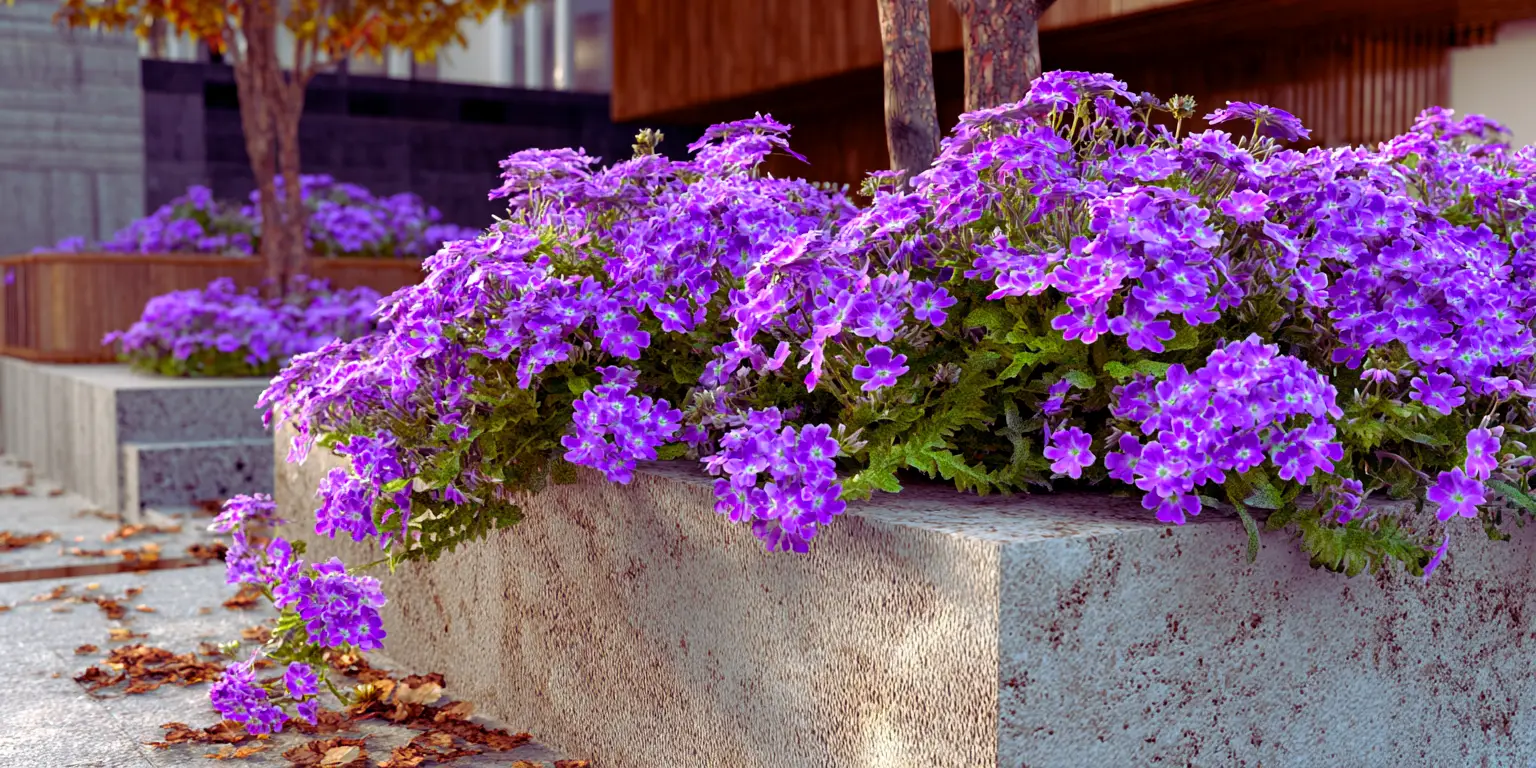
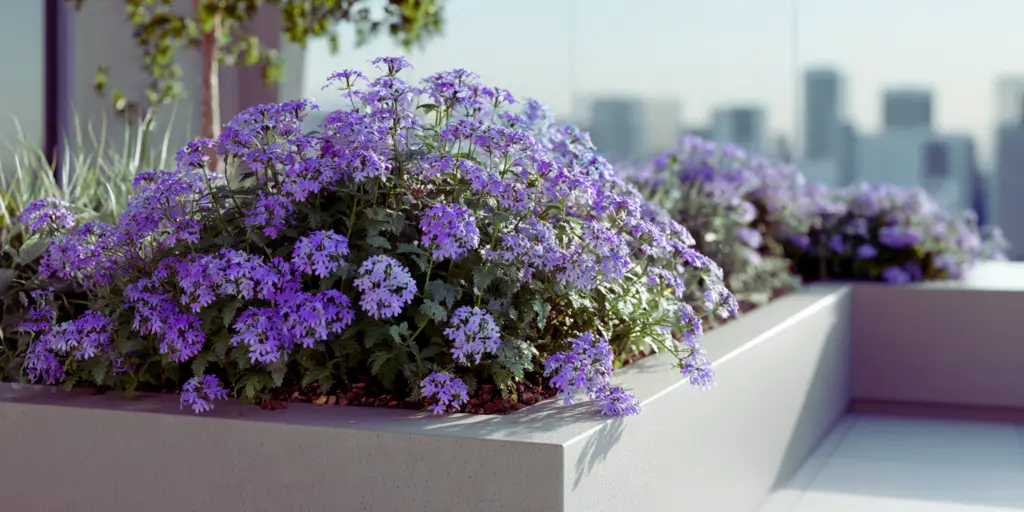
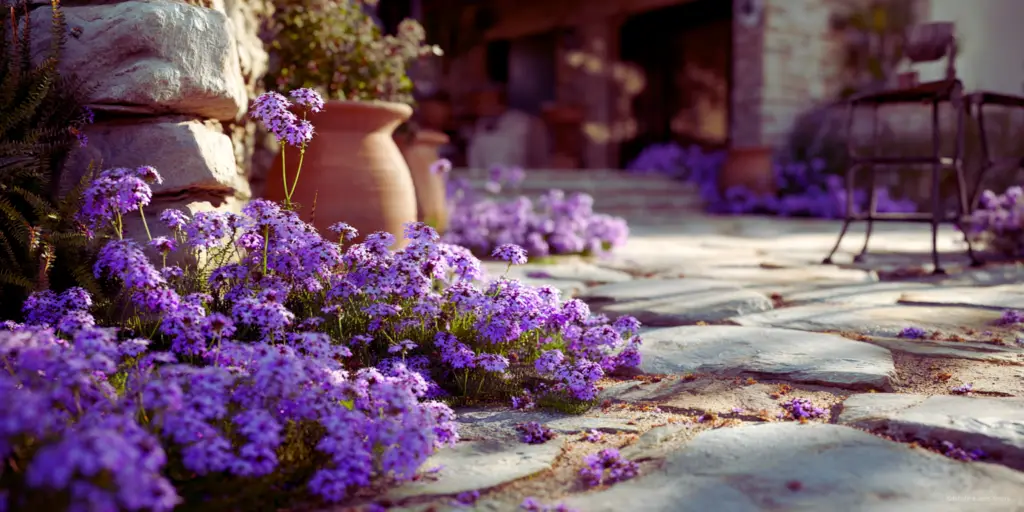
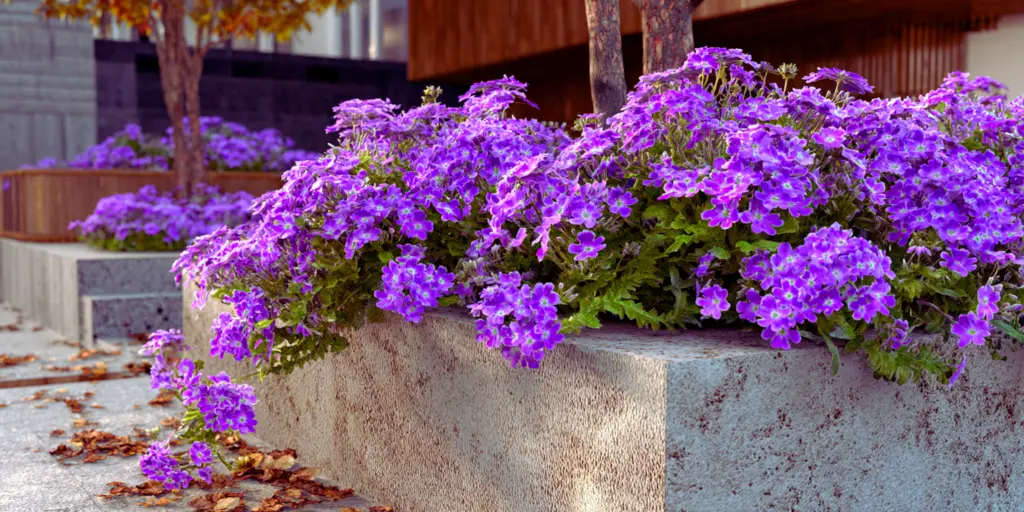
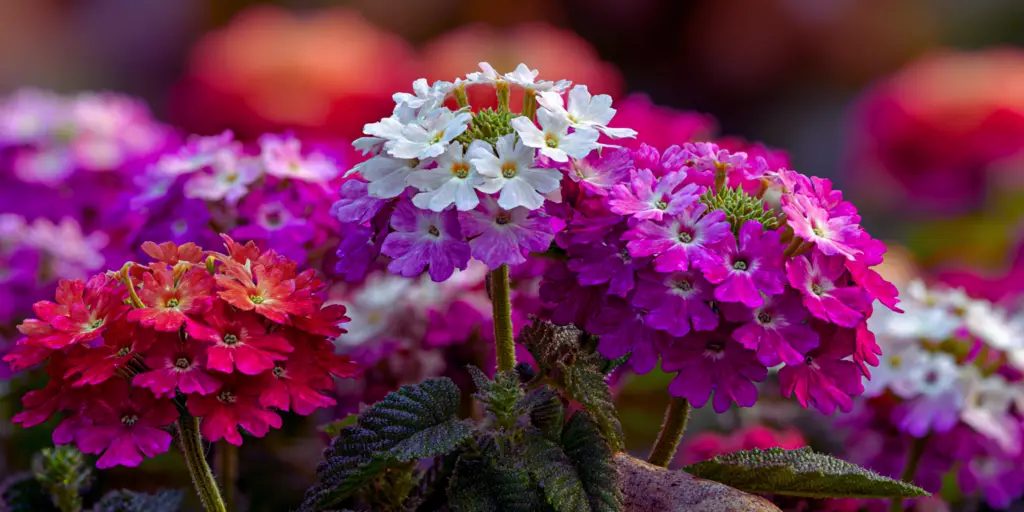
Peruvian mock vervain is a low, spreading species valued for vivid red to pink flower clusters. It forms a ground-hugging mat that trails over rocks and edges. Bloom is heaviest in spring and again in fall, with light flowering in midsummer heat. Plants prefer full sun, well-drained soil, and modest water. Hardiness varies by selection and climate, so many gardeners grow it as an annual outside warm winter zones.
At‑a‑glance
Group/Class: species (Peruvian mock vervain; often listed as *Glandularia peruviana*)
Height × spread: 6-12 in × 1-3 ft (15-30 cm × 30-90 cm)
Bloom window: spring to fall
Color & flower form: flattened clusters, commonly scarlet; pink, white, and purple selections exist
Fragrance: 0 none
USDA hardiness: grown as annual in most regions; perennial hardiness varies by selection
Breeder / Year / Origin: unknown / n/a / native to South America
Pet safety: unknown / sources differ
How it differs
Carpeting habit stays low and trails rather than forming tall stems.
Strongest bloom in spring and fall; summer bloom pauses in extreme heat.
Generally less cold hardy than *V. canadensis* selections.
True red tones are common among its cultivars.
Strengths
Cascades over rocks, walls, and container rims.
Good heat tolerance with adequate drainage.
Long season of color with deadheading.
Useful in water-wise plantings once established.
Care in one minute
Plant in full sun with excellent drainage.
Water to establish; then provide moderate, infrequent water.
Fertilize lightly in spring; avoid excessive nitrogen.
Shear after peak flush to encourage rebloom.
In frost-prone climates, grow as an annual or protect in winter.
Watch‑outs
Perennial hardiness is variable by cultivar and region.
Declines in poorly drained or overwatered soils.
Regular deadheading needed to maintain flowering.
Best uses (tags)
containers, rock gardens, edging, slopes, pollinators, heat-tolerant
Provenance note
Now widely treated as *Glandularia peruviana*. Many color forms are in cultivation and used in warm-climate bedding and containers.
Written by: Your Flowers Guide editorial team We are a small independent group of flower lovers who research and review each guide using trusted horticultural and educational sources. Learn more about us