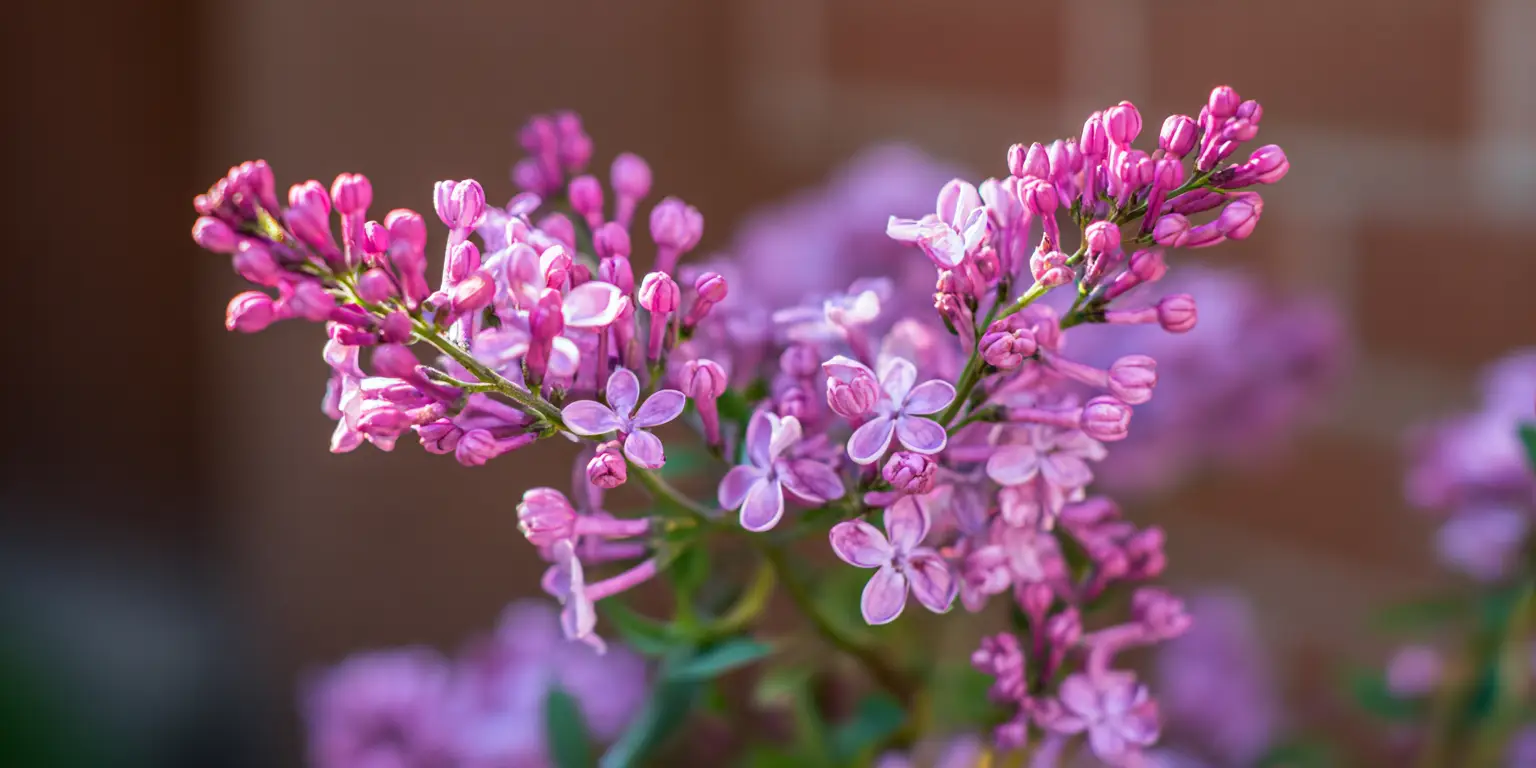
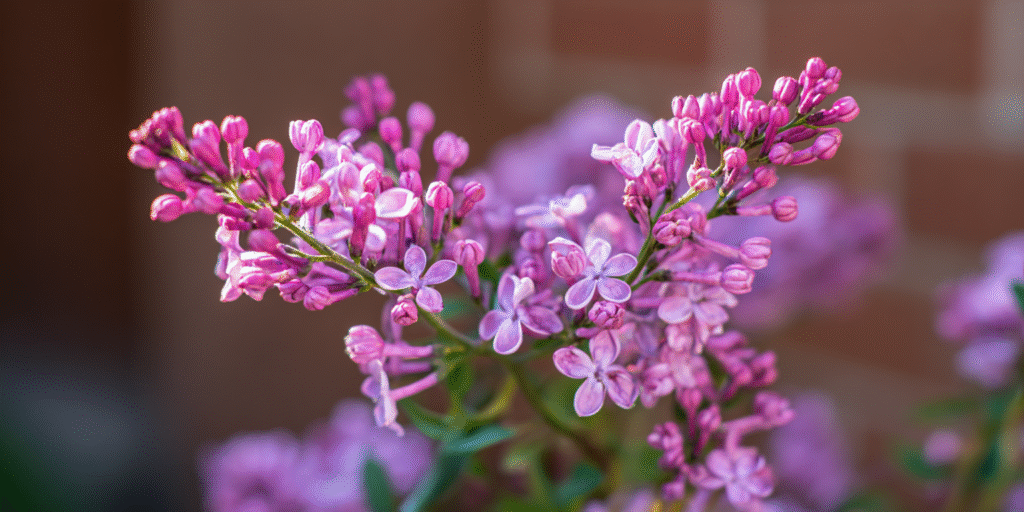
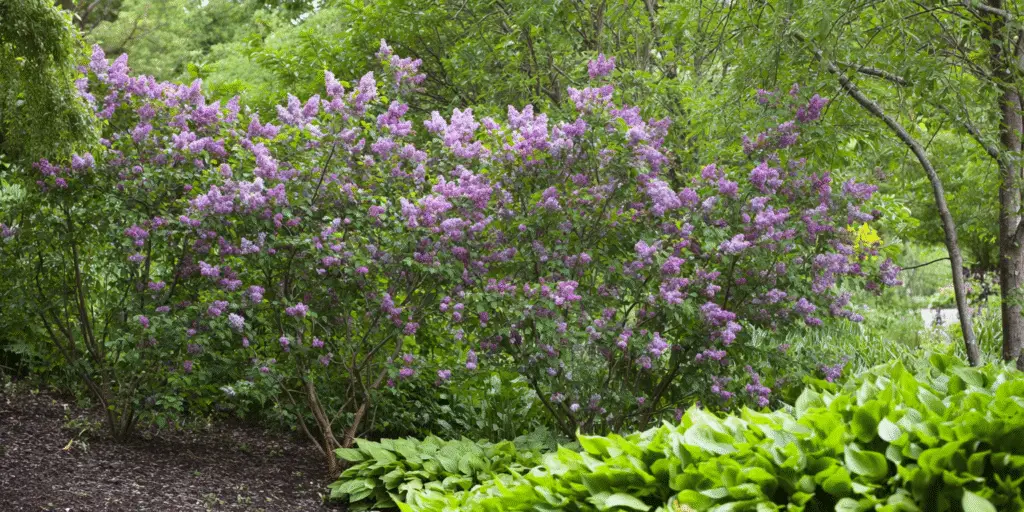
Meyer lilac is a compact species known for dense branching and reliable bloom on small shrubs. It flowers in late spring with pale lilac to violet‑purple clusters. Plants fit well in small yards and foundations where common lilac is too large. Foliage is notably resistant to powdery mildew compared with many lilacs. Performance is best in full sun with good air movement. Cold winters support strong bud set.
At‑a‑glance
Group/Class: Meyer lilac (dwarf species)
Height × spread: 5–8 ft × 6–10 ft (1.5–2.4 m × 1.8–3.0 m)
Bloom window: late spring
Color & flower form: pale lilac to violet‑purple; dense panicles 3–4 in (8–10 cm)
Fragrance: 2 noticeable
USDA hardiness: zones 3–7
Breeder / Year / Origin: Frank N. Meyer / 1909 / China
Pet safety: generally considered non‑toxic to dogs and cats
How it differs
Much shorter and denser than common lilac.
Laterals and twigs form a rounded outline without legginess.
Flowers are smaller but numerous on the tips.
Foliage shows strong resistance to powdery mildew.
More tolerant of urban conditions.
Strengths
Extremely resistant to powdery mildew.
Low maintenance once established.
Suited to hedges and foundation plantings.
Cold hardy and reliable in zones 3 to 7.
Care in one minute
Provide full sun; light shade reduces bloom.
Plant in average, well‑drained soil; avoid waterlogged sites.
Water regularly the first season; then as needed in dry periods.
Do not over‑fertilize; excess nitrogen can reduce flowering.
Deadhead after bloom; prune immediately after flowering.
Renewal‑prune oldest stems at the base every few years.
Watch‑outs
Flower buds can be nipped by late spring frost.
Best bloom requires full sun.
Growth is slow; plan spacing accordingly.
Best uses (tags)
small hedges, foundations, low screens, small spaces, pollinators
Provenance note
Collected near Beijing by agricultural explorer Frank N. Meyer in 1909. The species is not known to occur in the wild and is represented in cultivation.