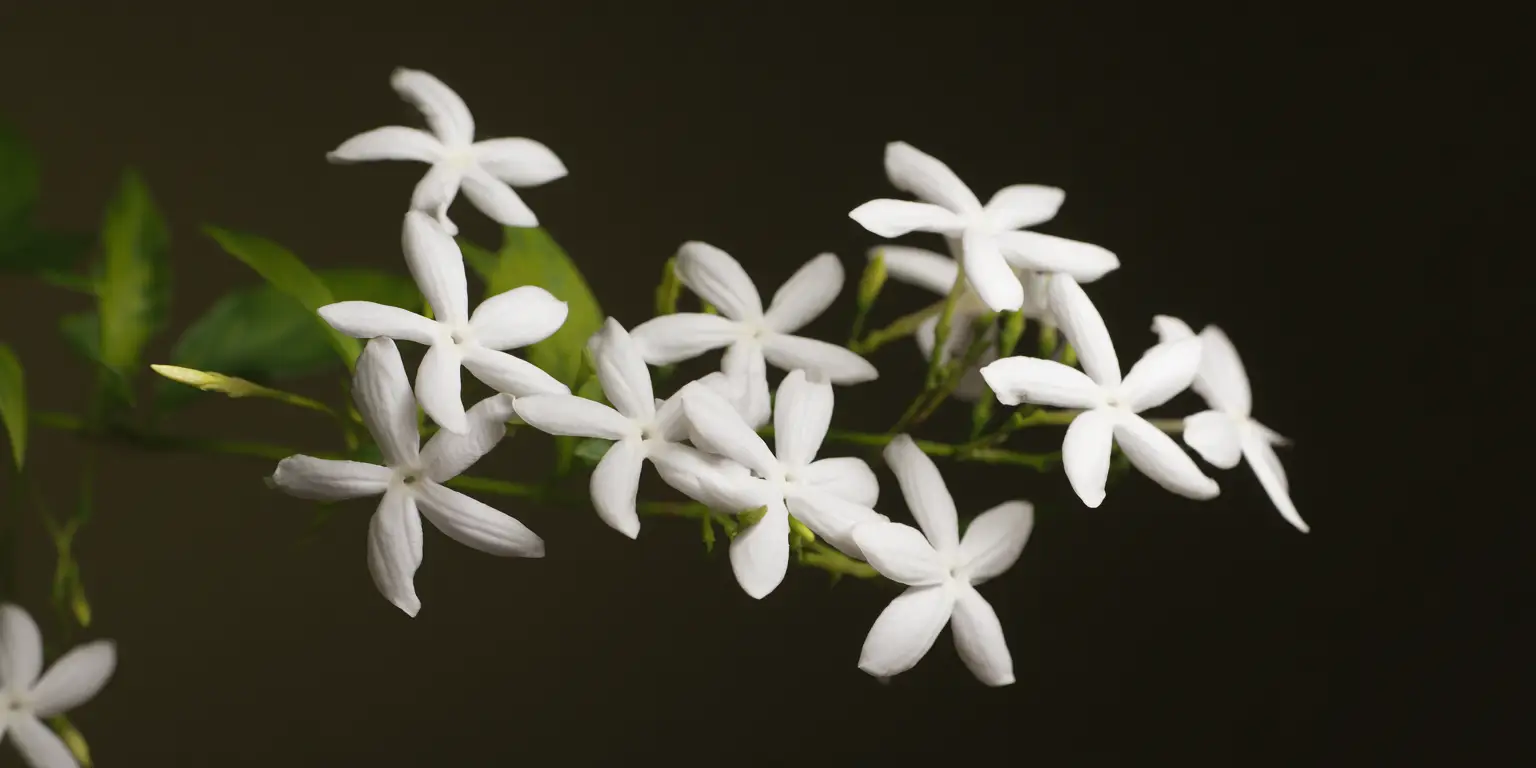
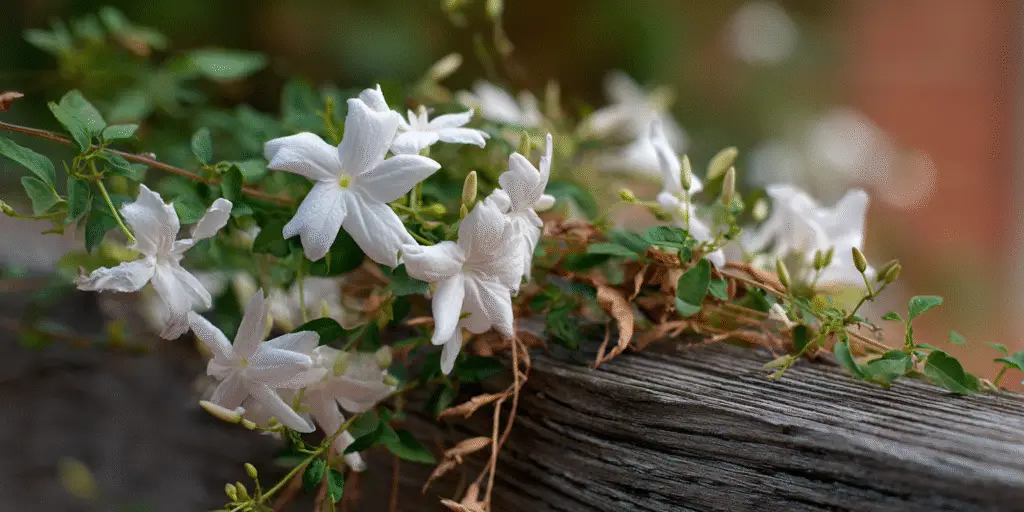
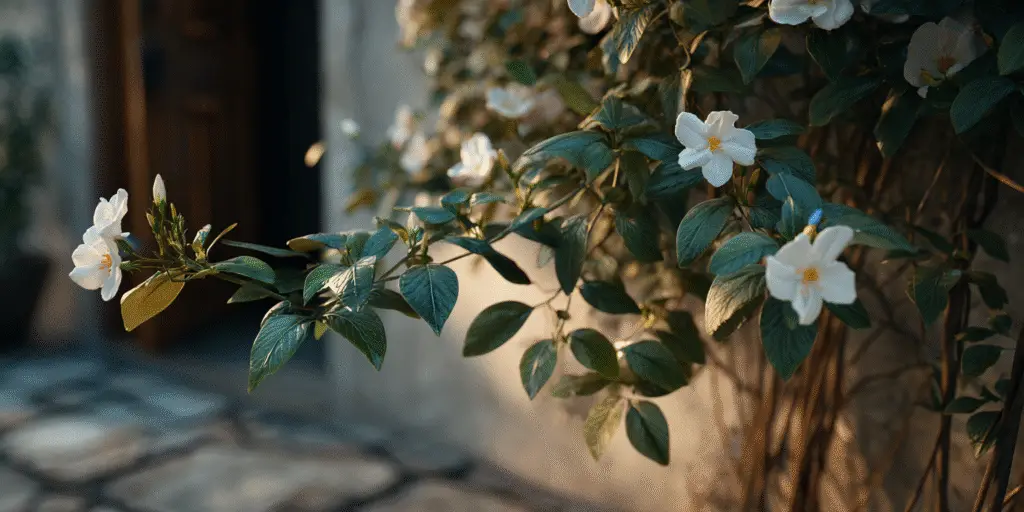
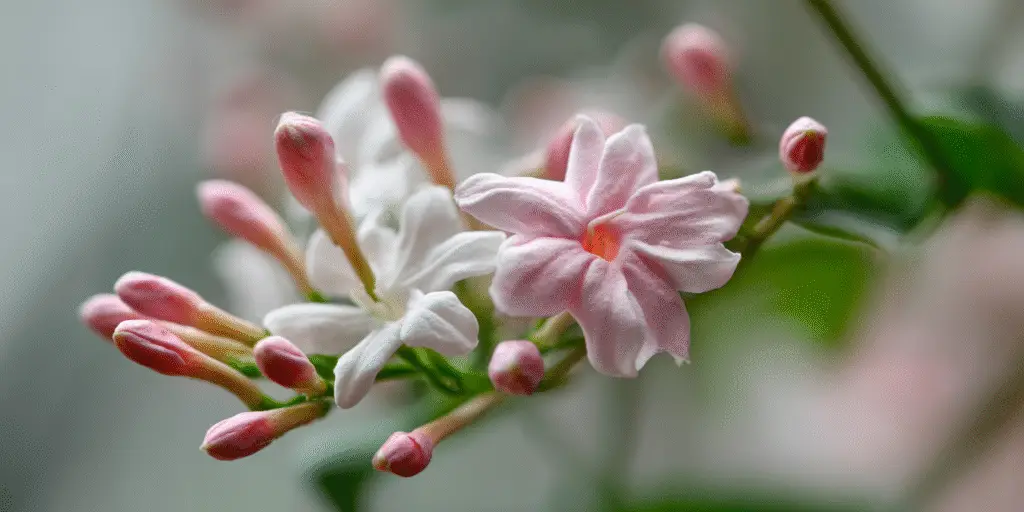
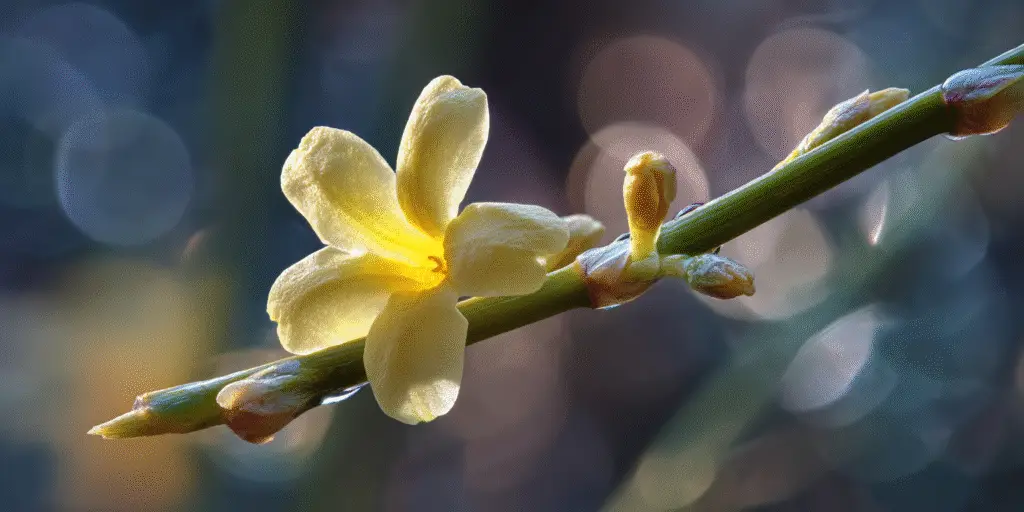
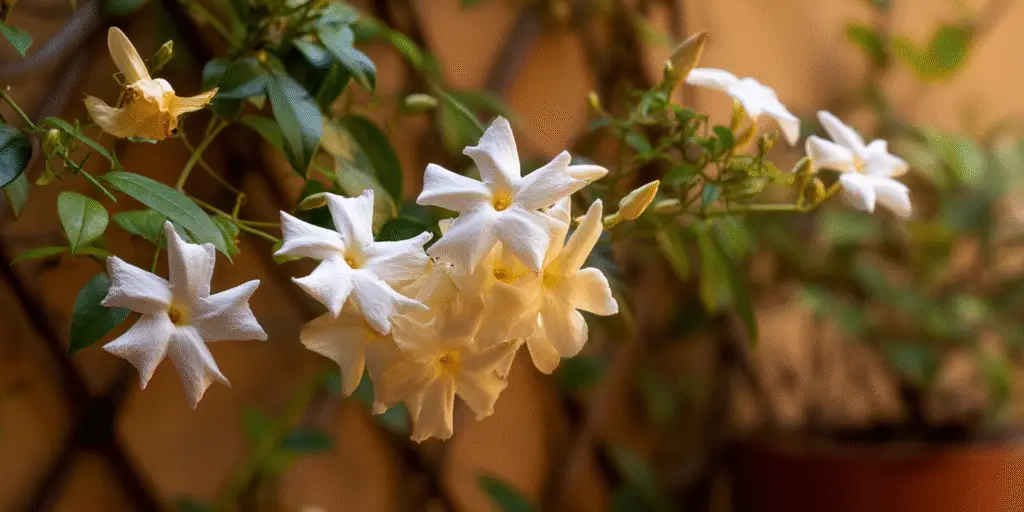
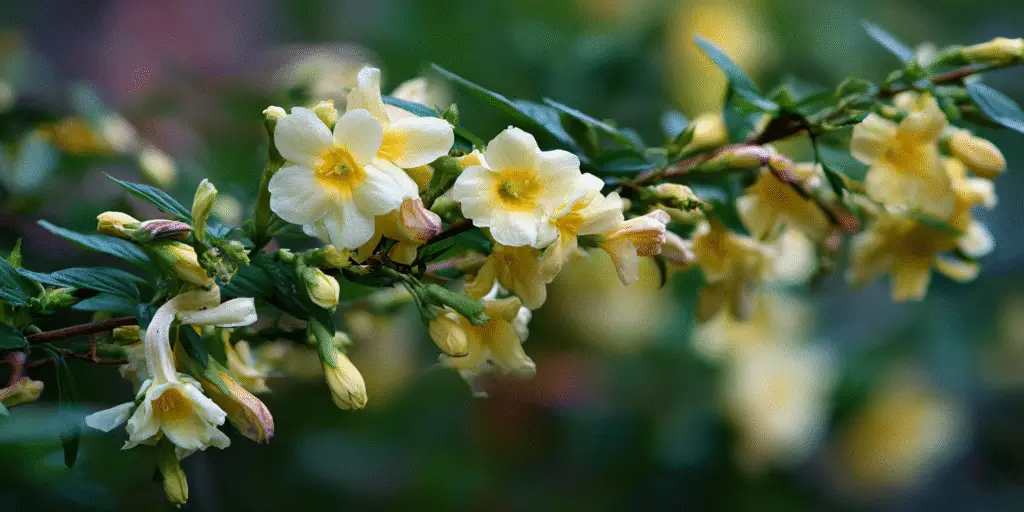
Often called pink jasmine for its rosy buds, this is an evergreen climber prized for profuse late‑winter to spring bloom. It excels in bright conservatories and as a cool‑season houseplant in colder regions. Outdoors it grows vigorously in mild coastal and West Coast climates with support. The fragrance is strong and sweet when nights are cool.
At‑a‑glance
Group/Class: evergreen twining climber
Height × spread: 10–20 ft (3–6 m) × 3–8 ft (0.9–2.4 m)
Bloom window: late winter to spring
Color & flower form: pink buds opening to white star clusters
Fragrance: 3 strong
USDA hardiness: zones 8–11 in mild climates; indoor plant in colder zones
Breeder / Year / Origin: unknown, unknown, native to southwestern China to Myanmar
Awards/registration: RHS Award of Garden Merit
Pet safety: safe
How it differs
Earlier bloom than summer jasmines, often before spring warms up.
Evergreen foliage versus deciduous common jasmine.
Rosy flower buds, a distinctive look compared with pure white budded forms.
Strengths
Heavy flower set on young vines
Fast coverage of trellises in mild climates
Performs well as a cool, bright houseplant
Care in one minute
Site: full sun to bright light with some afternoon shade in hot interiors.
Soil: well‑drained, moderately fertile; standard potting mix in containers.
Water: steady moisture while in bud and bloom; reduce slightly after flowering.
Feeding: light liquid feed in active growth.
Prune: shorten after bloom to keep to size and encourage new laterals.
Overwinter: in cold regions grow indoors near a sunny window.
Watch‑outs
Can layer and root where stems touch soil in frost‑free areas
Needs a sturdy support and regular trimming
Buds may drop indoors in low light or very dry air
Written by: Your Flowers Guide editorial team We are a small independent group of flower lovers who research and review each guide using trusted horticultural and educational sources. Learn more about us