in bloom
now
through Sep
Bloom calendar
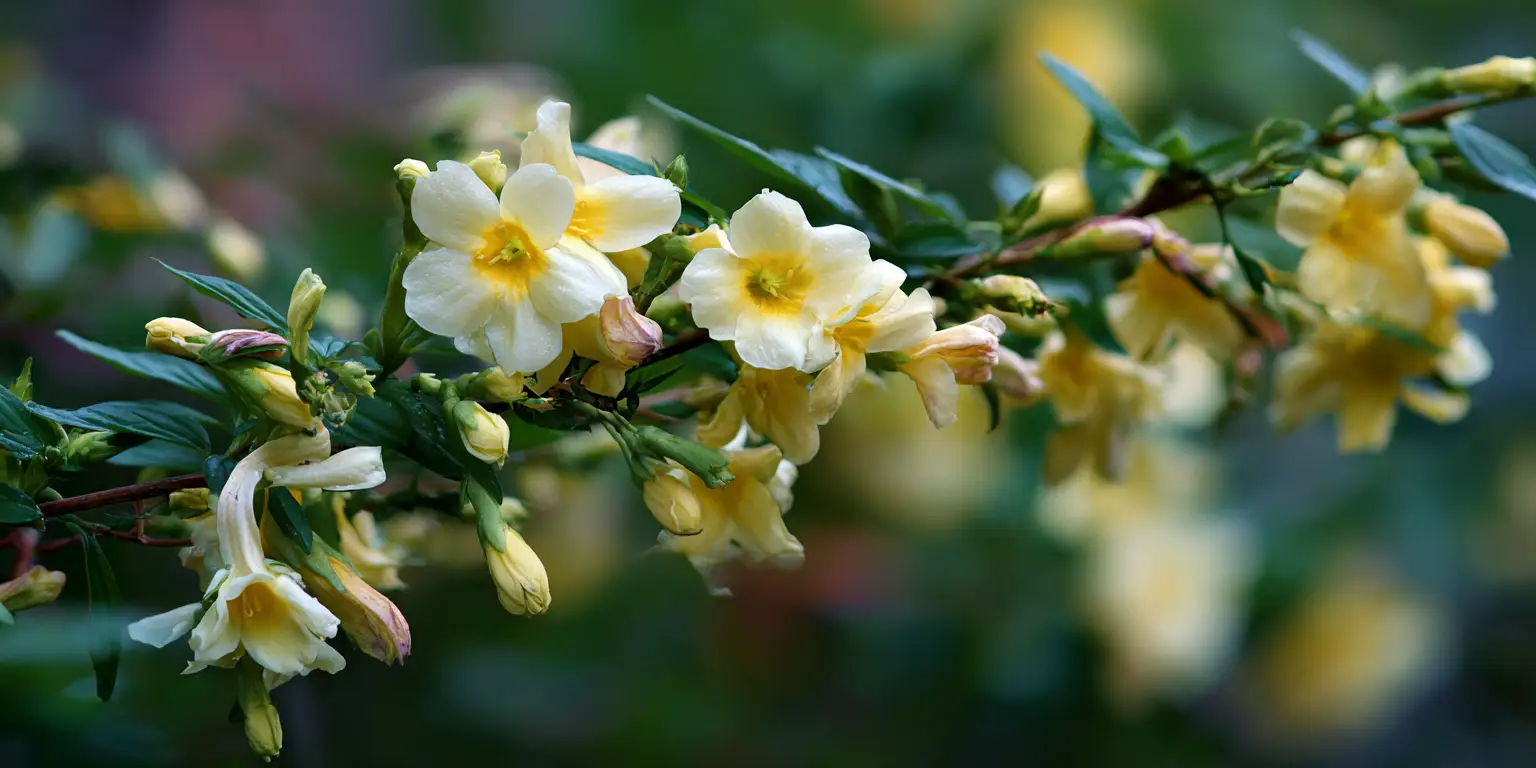
Jasminum mesnyi
evergreen arching shrub; can sprawl or be trained
At‑a‑glance
- Group/Class: evergreen arching shrub; can sprawl or be trained
- Height × spread: 6–10 ft (1.8–3 m) × 6–10 ft (1.8–3 m)
- Bloom window: late winter to spring
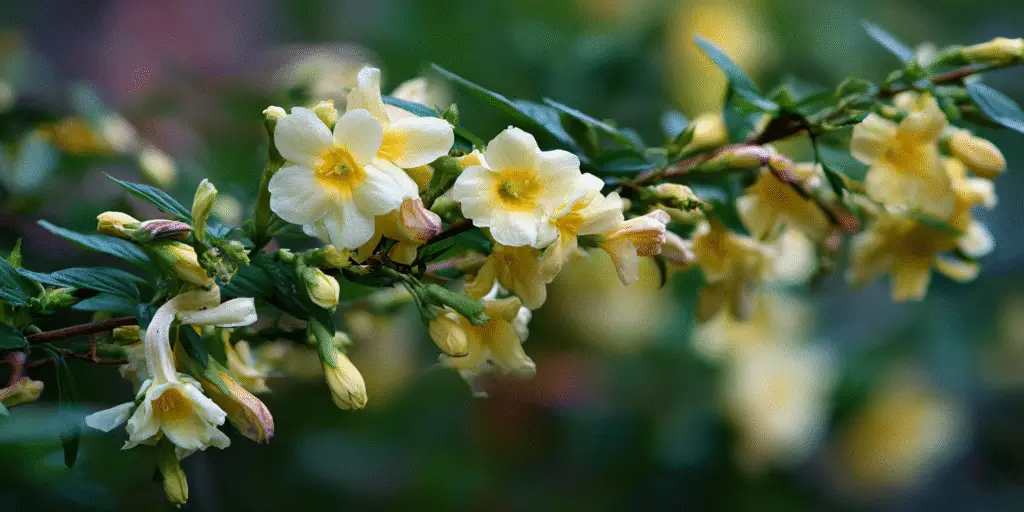
- Color & flower form: lemon‑yellow, often semi‑double
- Fragrance: 0 to 1 (varies by form)
- USDA hardiness: zones 8–10; reports vary, sheltered zone 7 sites may succeed
- Breeder / Year / Origin: unknown, unknown, native to South‑Central China to Vietnam
- Pet safety: safe
How it differs
- Yellow bloom later than Jasminum nudiflorum and with larger flowers.
- Often evergreen in mild winters versus fully deciduous winter jasmine.
- Primarily a mounding shrub rather than a tall climber.
Strengths
- Early color on arching stems
- Handles a range of soils if drainage is good
- Useful as a cascading screen over walls and banks
Care in one minute
Site: full sun for best bloom; tolerates light shade.
Soil: well‑drained; adaptable to loam, sand, or chalky soils.
Water: moderate; more in heat, less in winter.
Prune: thin older canes after flowering to keep an open fountain form.
Overwinter: mulch roots in zone 8; protect from severe Arctic blasts.
Watch‑outs
- Less cold hardy than winter jasmine; tip dieback in freezes
- Can layer where stems touch the ground
- Flower scent is inconsistent among forms
Best uses (tags)
Provenance note
Native to southwestern China and Vietnam; widely planted in warm regions and sometimes naturalized in the southern United States.
References
- Oregon State University Landscape Plants – Jasminum mesny
- Kew: Plants of the World Online – Jasminum mesnyi
- Royal Horticultural Society – Jasminum mesnyi
- ASPCA – Jasmine (Jasminum species) non‑toxic to pets
Similar Flowers
Enjoying our flower guides? Add YourFlowersGuide as a preferred source on Google. It helps more readers find us.
Add to Preferred Sources