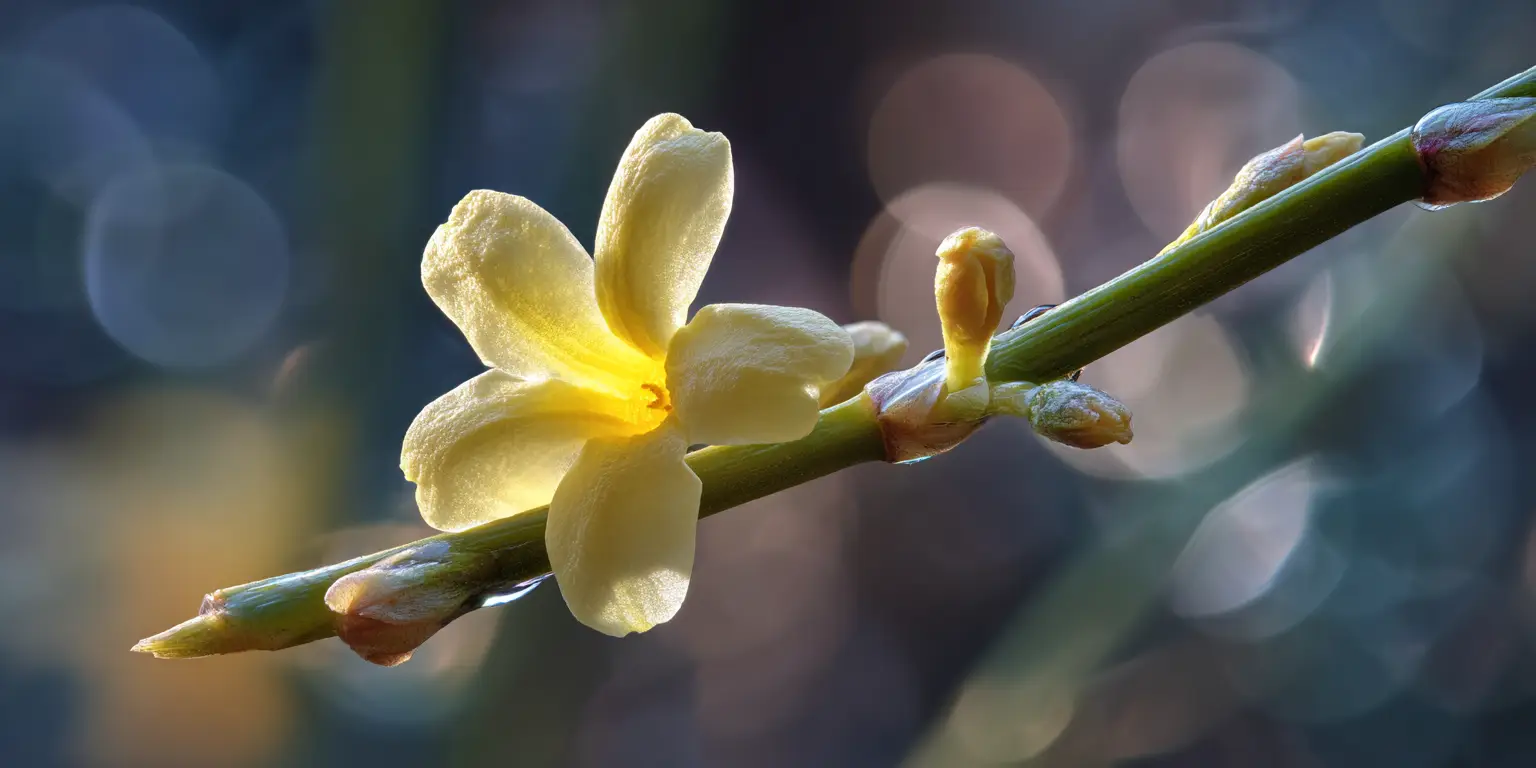
in bloom
now
through Sep
Bloom calendar
Jasminum nudiflorum
deciduous arching shrub; can be trained as a scrambling vine
At‑a‑glance
- Group/Class: deciduous arching shrub; can be trained as a scrambling vine
- Height × spread: 3–4 ft (0.9–1.2 m) × 6–10 ft (1.8–3 m); to 10–15 ft (3–4.5 m) if trained
- Bloom window: late winter to early spring
- Color & flower form: bright yellow, tubular‑star single flowers on bare stems
- Fragrance: 0 none
- USDA hardiness: zones 6–10
- Breeder / Year / Origin: unknown, unknown, native to Tibet and Central China
- Awards/registration: RHS Award of Garden Merit
- Pet safety: safe
How it differs
- Earliest bloom among common jasmines in cultivation.
- Yellow, scentless flowers versus the white, fragrant summer jasmines.
- Shrubby, self‑layering habit suitable for slopes rather than tall pergolas.
Strengths
- Cold tolerant and reliable winter color
- Takes training or cascading uses
- Low pest pressure in the landscape
Care in one minute
Site: full sun for heaviest bloom; light shade reduces flowers.
Soil: adaptable but best in well‑drained loam; neutral to slightly alkaline.
Water: moderate; drought tolerant once established.
Prune: trim after flowering; remove older stems to maintain arching habit.
Overwinter: generally hardy; mulch roots in colder parts of zone 6.
Watch‑outs
- Can spread by layering if not managed
- Needs sun for best flowering
- Non‑fragrant; plant near other winter interest if scent is desired
Best uses (tags)
Provenance note
Native to Tibet and central China; introduced to Western gardens in the 19th century and valued for winter bloom.
References
- Royal Horticultural Society: Jasminum nudiflorum
- Missouri Botanical Garden: Jasminum nudiflorum
- NC State Extension: Jasminum nudiflorum
- ASPCA: Jasmine (Jasminum species) non‑toxic to pets
Similar Flowers
Enjoying our flower guides? Add YourFlowersGuide as a preferred source on Google. It helps more readers find us.
Add to Preferred Sources