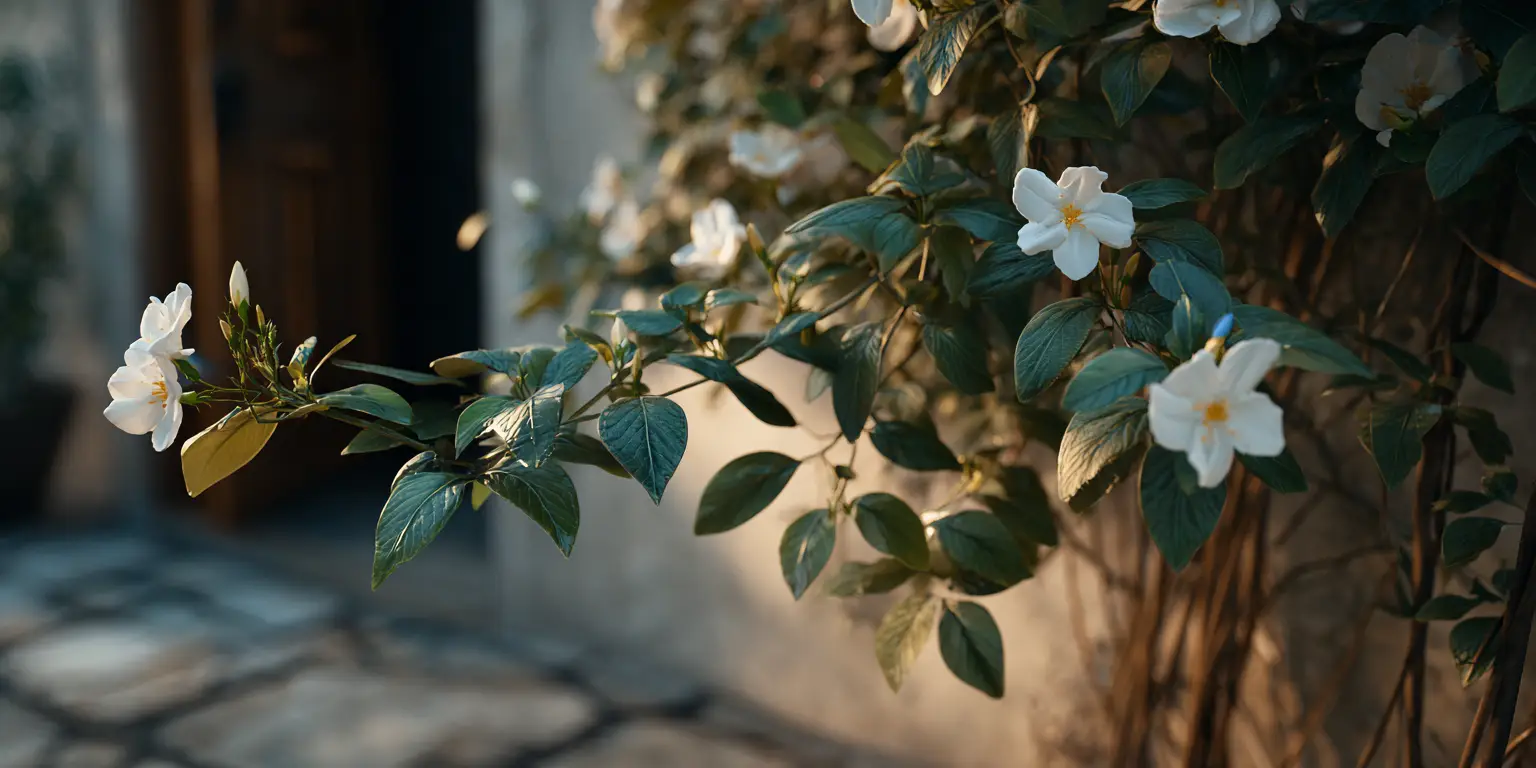
in bloom
now
through Sep
Bloom calendar
Jasminum sambac
evergreen to semi‑evergreen shrub or twining subshrub
At‑a‑glance
- Group/Class: evergreen to semi‑evergreen shrub or twining subshrub
- Height × spread: 4–5 ft (1.2–1.5 m) × 4–5 ft (1.2–1.5 m)
- Bloom window: late spring to summer; longer in frost‑free regions
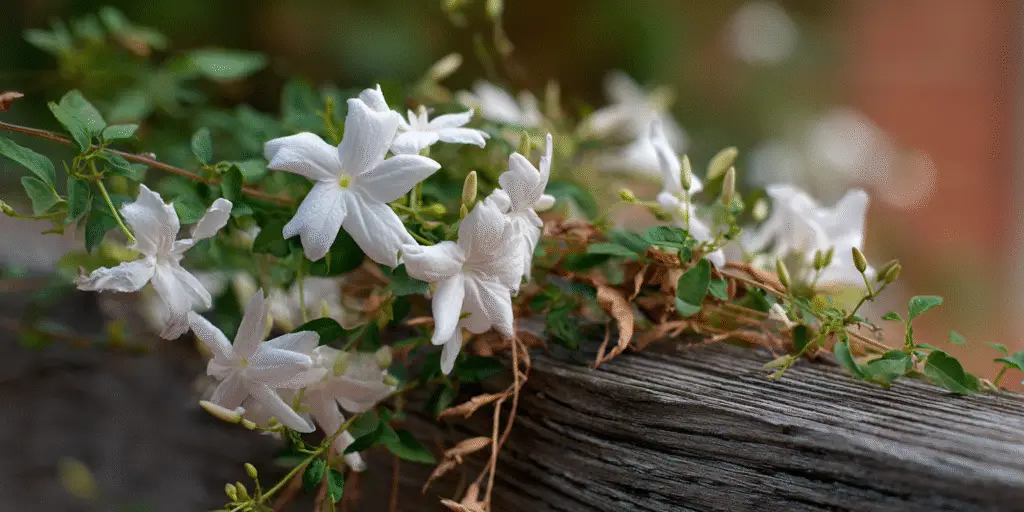
- Color & flower form: white single to double clusters
- Fragrance: 3 strong
- USDA hardiness: zones 9–11 outdoors; container elsewhere
- Breeder / Year / Origin: unknown, unknown, native to the Indian subcontinent
- Pet safety: safe
How it differs
- More heat loving and frost tender than common summer jasmine.
- Compact habit suited to patio tubs compared with long climbing types.
- Can flower intermittently year‑round in tropical conditions.
Strengths
- Exceptional fragrance on warm evenings
- Good in containers and small spaces
- Responds to pruning with dense new growth
Care in one minute
Site: full sun to bright partial sun; a warm, sheltered patio is ideal.
Soil: loose, humusy, well‑drained potting mix.
Water: keep evenly moist; avoid waterlogged roots.
Feeding: balanced, dilute liquid feed spring to midsummer.
Prune: pinch after flushes to shape and encourage branching.
Overwinter: move containers indoors before frost; provide bright light and reduced watering.
Watch‑outs
- Cannot tolerate freezing; protect below 32°F (0°C)
- Needs high light indoors to set buds
- Susceptible to spider mites in dry indoor air
Best uses (tags)
Provenance note
Native to the Indian subcontinent and widely cultivated across tropical Asia; named by Aiton in 1789.
References
- Missouri Botanical Garden: Jasminum sambac
- USDA PLANTS: Jasminum sambac
- Kew: Plants of the World Online: Jasminum sambac
- ASPCA: Jasmine (Jasminum species) non‑toxic to pets
Similar Flowers
Enjoying our flower guides? Add YourFlowersGuide as a preferred source on Google. It helps more readers find us.
Add to Preferred Sources