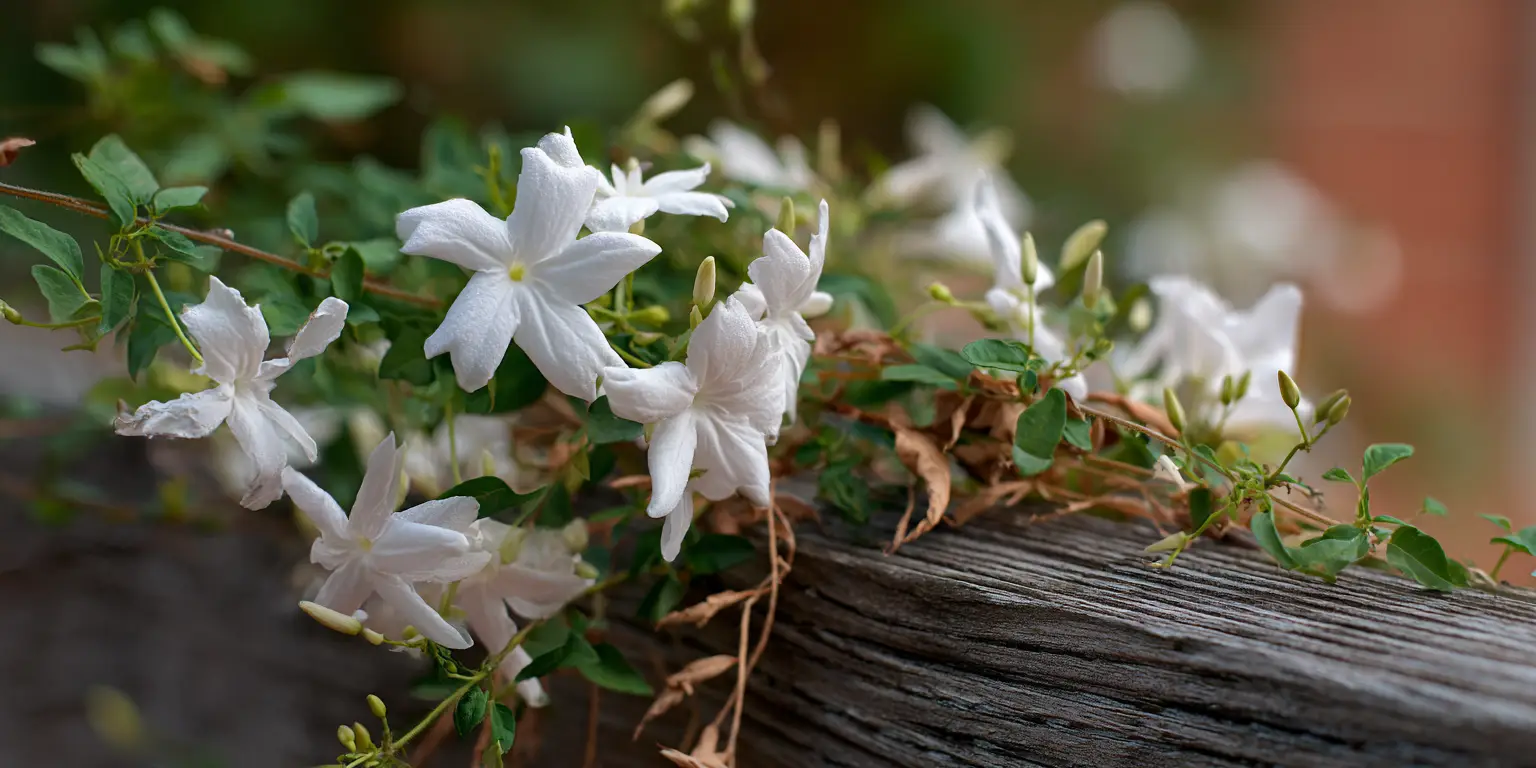
in bloom
now
through Sep
Bloom calendar
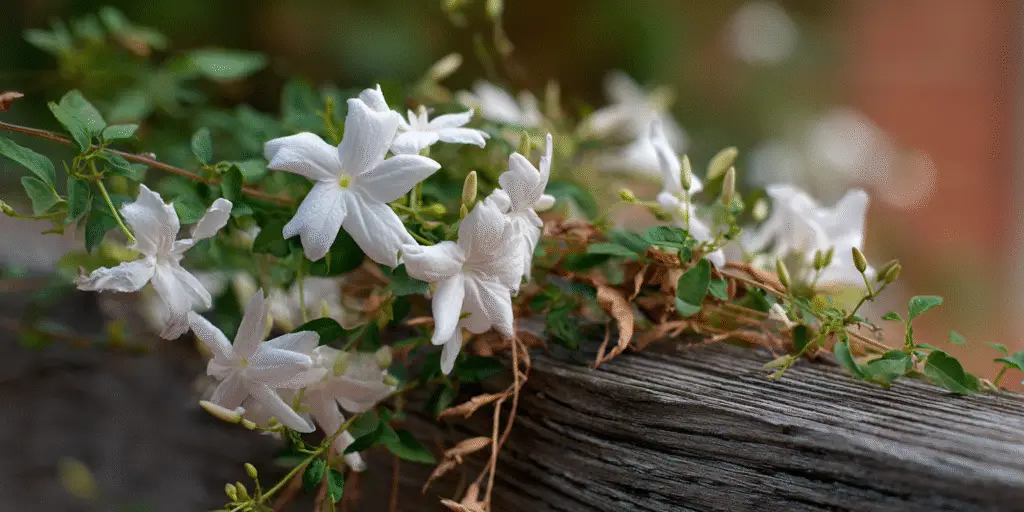
Jasminum officinale
deciduous climber
At‑a‑glance
- Group/Class: deciduous climber
- Height × spread: 20–40 ft (6–12 m) × 5–15 ft (1.5–4.5 m)
- Bloom window: summer to early fall
- Color & flower form: white star‑shaped clusters
- Fragrance: 3 strong
- USDA hardiness: zones 7–10
- Breeder / Year / Origin: unknown, unknown, native to Transcaucasus to South‑Central China
- Pet safety: safe
How it differs
- More cold tolerant than tropical jasmines such as Jasminum sambac.
- Deciduous habit versus evergreen jasmines common in frost‑free climates.
- Long, trainable stems for structures rather than a freestanding shrub form.
- Pure white summer bloom versus yellow winter jasmine that flowers in late winter.
Strengths
- Highly fragrant summer display
- Adaptable to average garden soils with good drainage
- Responds well to pruning and training
- Valued by pollinators in warm weather
Care in one minute
Site: full sun to light afternoon shade; sheltered from harsh wind.
Soil: well‑drained loam; moderately fertile; neutral to slightly alkaline.
Water: regular during establishment; then deep soak in dry spells.
Feeding: light spring feed; avoid heavy nitrogen that promotes lank growth.
Prune: after main bloom; remove old thin canes and shorten long whips.
Overwinter: in zones colder than 7, grow in a container and protect indoors.
Watch‑outs
- Needs strong support and seasonal pruning to prevent tangles
- Aphids and spider mites can appear, especially under glass
- Not hardy in areas colder than zone 7
Best uses (tags)
Provenance note
Native from the Caucasus east to South‑Central China; cultivated in Europe for centuries for its perfume value.
References
- Royal Horticultural Society – Jasminum officinale
- NC State Extension – Jasminum officinale
- ASPCA – Jasmine (Jasminum species) non‑toxic to pets
Similar Flowers
Enjoying our flower guides? Add YourFlowersGuide as a preferred source on Google. It helps more readers find us.
Add to Preferred Sources