How to Grow and Care for Hibiscus
Contents
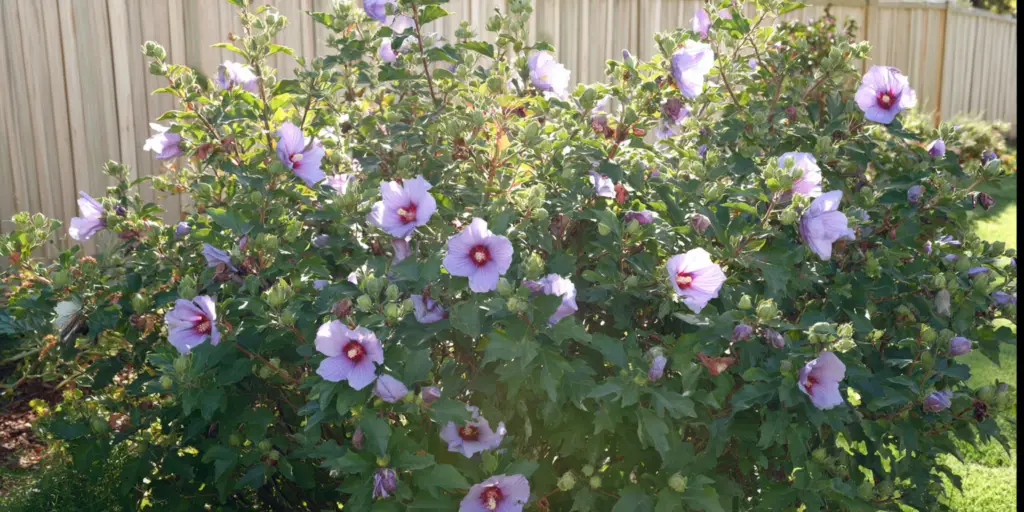
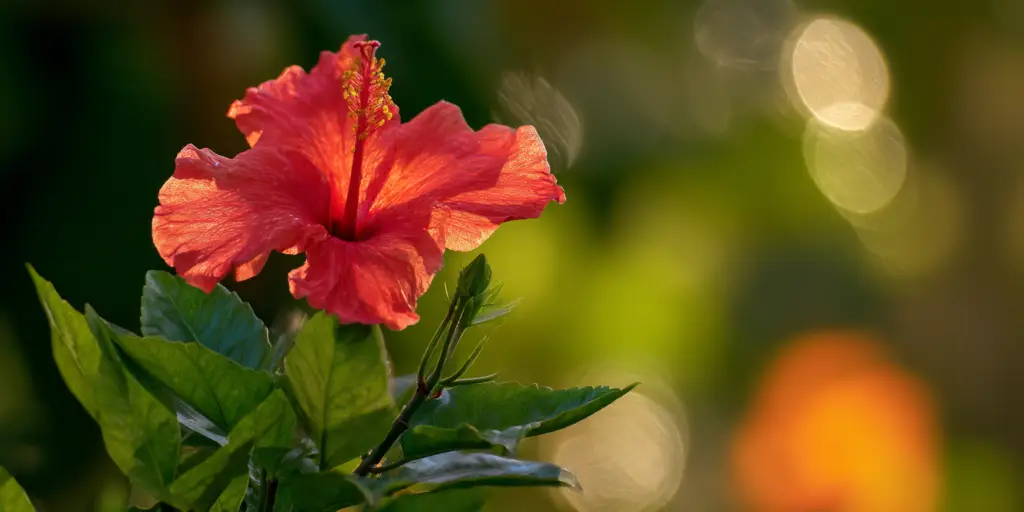
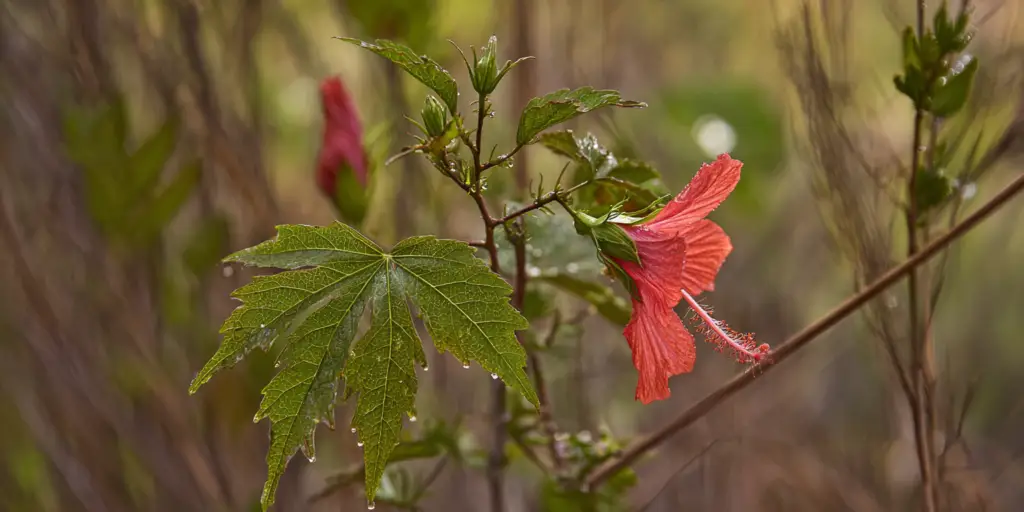
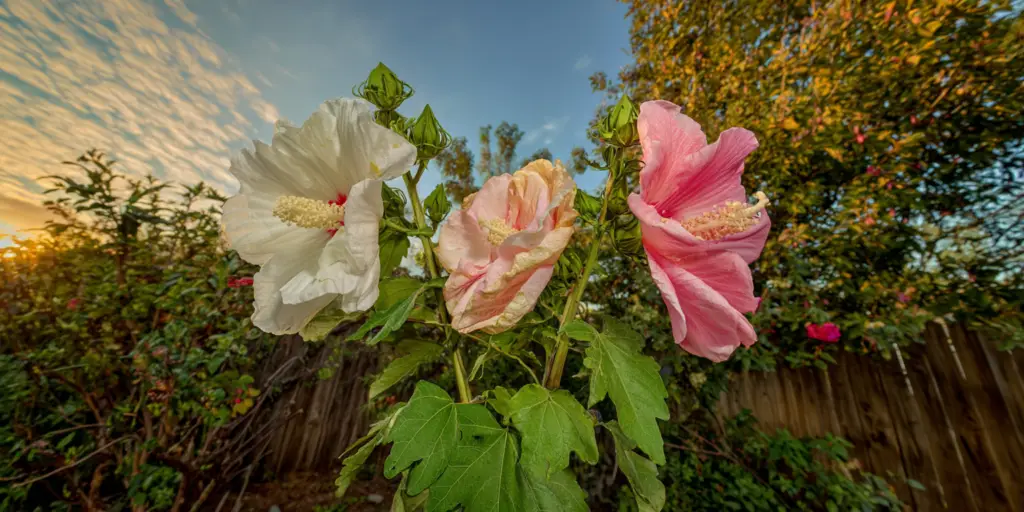
Hibiscus are showy flowering plants that bring a tropical look to U.S. gardens. The name covers several garden workhorses with different cold tolerance and habits. Tropical hibiscus is Hibiscus rosa‑sinensis, sometimes called Chinese hibiscus. It is an evergreen shrub in frost free climates and a beloved patio container plant elsewhere. Hardy hibiscus includes Hibiscus moscheutos and related hybrids, often sold as rose mallow or dinner plate hibiscus, which die back to the ground in winter and re‑sprout in spring. Rose of Sharon is Hibiscus syriacus, a deciduous shrub or small tree that blooms on new growth. For quick planning, assume full sun for best bloom and know your climate: tropical hibiscus is a long season plant suited to USDA Zones 10 to 11 outdoors; hardy hibiscus thrives in Zones 4 to 9; Rose of Sharon grows well in Zones 5 to 9. If you match the plant to your zone, give at least six hours of sun, and keep the soil consistently moist but not waterlogged, hibiscus will reward you with months of color.
Hibiscus care is largely about thoughtful site preparation and steady routines. Aim for soils with good structure that hold moisture evenly, then maintain that moisture with mulch that you keep a few inches off the stems. Feed modestly and regularly during the growing season and prune at the right time for the type you are growing. Learn how your plant responds to heat and wind where you live, then tweak watering and afternoon shade to avoid stress. Finally, remember that hardy hibiscus and Rose of Sharon bloom on current season growth. A timely late winter prune helps direct energy into vigorous shoots and flowers.
Soil & Bed Preparation
Healthy hibiscus start with the soil. All types prefer a soil that drains well yet does not dry out quickly. Hardy hibiscus evolved along riverbanks and marsh edges, so it tolerates heavier, moisture retentive ground better than many ornamentals. Tropical hibiscus needs freer drainage and will falter in soggy soil. Work two to three inches of compost into the top eight to twelve inches of planting bed to add organic matter and improve structure. If you garden on heavy clay and see water sitting on the surface after rain, consider a raised bed at least ten to twelve inches tall so the crown sits above periodic saturation. In sandy soils, organic matter boosts water holding and reduces the peaks and valleys of wet to dry cycles that cause bud drop. Before you plant, test drainage. Dig a hole about twelve inches wide and twelve inches deep. Fill it with water and let it drain. Fill it a second time and time how long it takes to drain away. If water disappears in under sixty minutes, amend with additional compost to slow the flow. If it takes more than four hours, raise the planting or select a slightly higher spot. Check soil pH with a home kit or through your local Extension lab. Tropical hibiscus shows its best color and foliage at pH 5.5 to 6.5. Hardy hibiscus and Rose of Sharon grow well at pH 6.0 to about 7.0. If pH is high and leaves show interveinal yellowing, a top‑dress of compost and careful use of chelated iron can help; for markedly alkaline soils, planting in raised beds filled with a high‑quality planting mix is a simple, reliable fix. Use raised beds if your site stays wet after storms, if you have shallow compacted subsoil, or if you garden in coastal locations where saline splash is a concern. Fill beds with a mix that includes composted bark or other coarse organic material for structure, plus peat or coir and perlite for water and air balance. In‑ground planting is fine in loam or amended clay as long as the final grade drains away from the planting hole and the crown will not sit in a basin.
Planting Calendar by USDA Zone
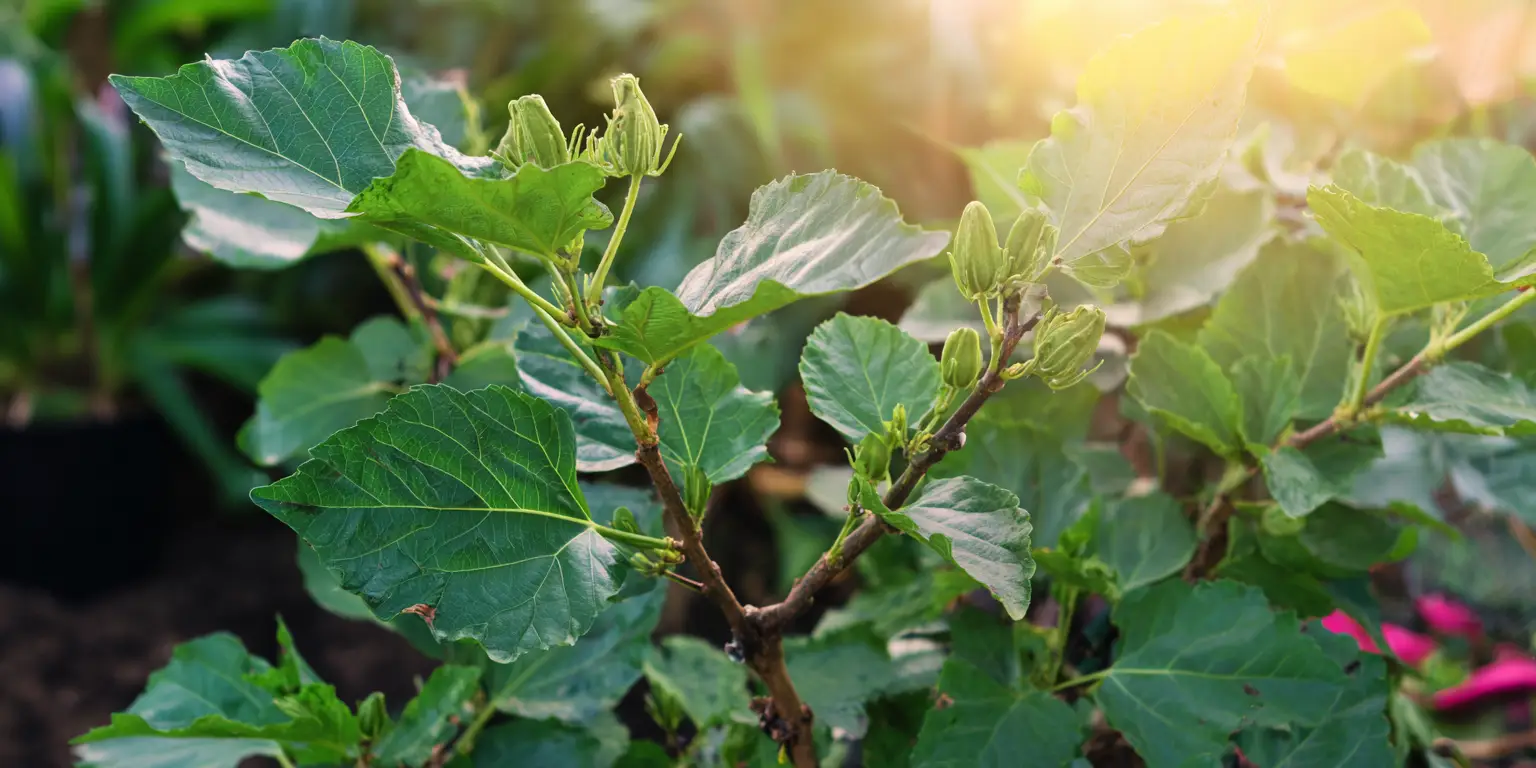
Match timing to plant type and your zone for an easy first year. Hardy hibiscus in Zones 4 to 6 is best planted in late spring after the soil has warmed well and all danger of frost has passed. In Zones 6 to 9 you can plant in spring or early fall, allowing at least six to eight weeks before the first expected hard freeze so roots establish. Bare‑root pieces or divisions should go in very early spring when eyes are visible but before rapid shoot growth. Container plants transplant well from late spring into summer if you can water consistently.
Rose of Sharon in Zones 5 to 9 transplants best in spring while dormant or just as buds swell. Fall planting also works in Zones 6 to 9 after leaf drop if the soil stays workable. Avoid mid‑summer planting in hot inland sites unless you can irrigate reliably. In coastal zones, give wind protection in the first season to reduce desiccation.
Tropical hibiscus lives outdoors year round only in frost free climates, typically Zones 10 to 11, and sometimes in protected pockets of warm Zone 9. Everywhere else, treat it as a container plant that summers outside. Move containers out after last frost when nights are reliably above 55°F (13°C). Bring them indoors before nights drop into the 50s°F, well before any frost. In deserts and high elevation valleys, the air is bright and dry, so place pots where they receive morning sun and light afternoon shade, then increase water in heat waves. In humid Gulf and Atlantic coastal belts, avoid direct salt spray and irrigate with non‑saline water.
Planting: Depth & Spacing
Hardy hibiscus can be divided and planted when dormant in early spring in cold zones and in fall in mild zones. Set the crown so the buds or eyes sit at or just below the soil surface and firm the soil around the roots to remove air pockets. Water to settle the soil, then mulch. Space divisions 3 to 5 feet apart for airflow and to allow the large summer canopy to develop. In wet meadows or rain garden edges, the same spacing applies so leaves can dry between dews.
Container‑Grown. For shrubs like tropical hibiscus and Rose of Sharon, dig a hole no deeper than the height of the root ball and two to three times as wide. Set the top of the root ball level with the surrounding soil. Backfill with the native soil you removed. If roots are circling, slice two or three vertical cuts through the mat and tease them outward so they grow into the surrounding soil. Space tropical hibiscus 3 to 5 feet apart in beds. For Rose of Sharon used as a hedge, space plants about 6 to 12 feet apart depending on cultivar size and the form you want; for a full informal screen, closer spacing fills faster, while wider spacing simplifies pruning.
Transplant shock and acclimation. Water plants the day before transplanting. Plant on an overcast day if possible. After planting, water thoroughly and shade the canopy for several days with a temporary fabric, umbrella, or other screen in hot weather. When moving tropical hibiscus from indoors to outdoors or from shade to sun, harden off for seven to ten days. Start with bright shade, then add an hour or two of morning sun each day. Pinch a few developing buds during the first two weeks so energy goes to root establishment.
Watering & Mulching
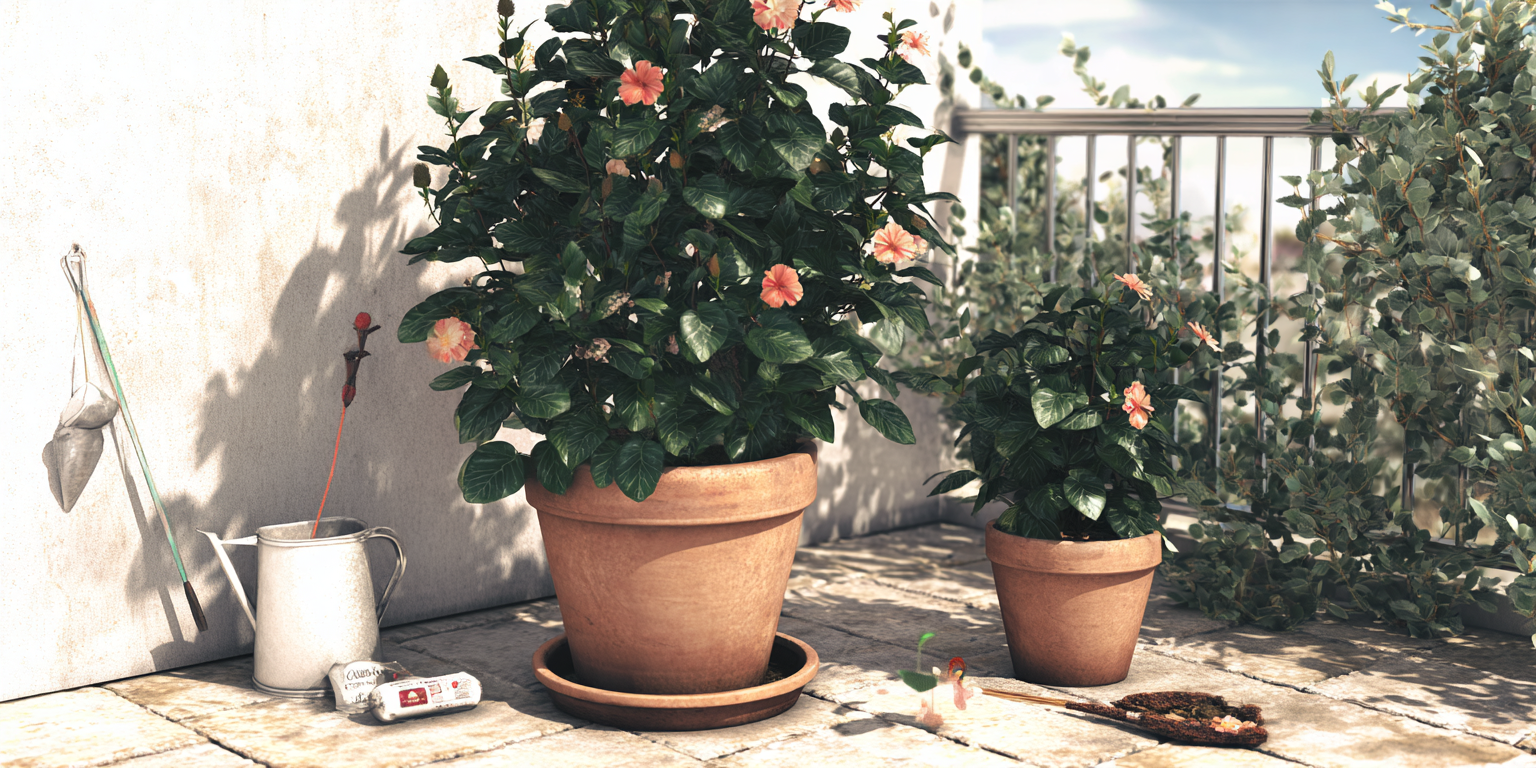
Hibiscus needs steady moisture, especially in the first growing season. In average garden soils, give newly planted shrubs and perennials a deep soak two or three times per week during the first month, then once a week in the absence of rain. A deep watering means moistening the root zone to a depth of 12 to 18 inches (30 to 45 cm). Hardy hibiscus likes soil that stays evenly moist and will tolerate periodic wet feet better than many ornamentals. Tropical hibiscus needs moisture too, but it must drain; do not let water stand around the crown. In containers, water when the top inch of mix feels dry, then water until a little drains from the bottom. In heat spikes, check pots daily, since a full, blooming shrub in a sunny spot can use water quickly.
Mulch helps smooth out the wet to dry cycle. Spread 2 to 3 inches (5 to 7.5 cm) of shredded bark, wood chips, pine straw, or similar organic mulch over the root zone to conserve moisture and suppress weeds. Keep mulch pulled back at least 3 inches (7.5 cm) from stems to prevent rot and rodent damage. In very heavy soils, lean toward the thinner end of that range to keep oxygen in the root zone. In arid climates, a mulch ring that extends beyond the canopy is especially useful to cut evaporation. In salty coastal winds, rinse leaves after storms and avoid saline irrigation water with tropical hibiscus, which is sensitive to salt. Hardy hibiscus tolerates occasional salinity a bit better, but fresh water is always the safest choice.
Feeding
Hibiscus are moderate to heavy feeders during active growth. For tropical hibiscus in the ground or in large outdoor containers, use light, regular feeding through the warm season. A balanced granular or slow release fertilizer with an analysis in the neighborhood of 10‑10‑10 to 15‑5‑10 applied in spring and again in midsummer works well, following the label and adjusting for plant size. In alkaline soils, ensure adequate micronutrients, especially iron and manganese, since leaf yellowing can develop when pH runs too high. Water after each application to move nutrients into the root zone and to avoid fertilizer burn on the leaves.
Hardy hibiscus and Rose of Sharon benefit from a single spring feeding when new growth emerges, and a light midsummer top dress if growth is pale or weak. On established beds, one pound of nitrogen per 1,000 square feet per year is a common ceiling for perennials if compost is not used. Many gardeners simply refresh a two inch layer of compost each spring, which supplies small amounts of nutrients steadily as it breaks down and improves soil biology. Skip fertilizer late in the season. You want stems to harden and go dormant before winter. Always retest soil every two or three years if you are making repeated amendments so you do not accumulate excess salts or phosphorus.
Pruning & Support
Pruning timing depends on the type. Tropical hibiscus blooms on new growth, so shape lightly through the growing season by pinching tips or thinning out the longest third of shoots at a time. Save any heavier cuts for late winter or early spring before vigorous growth begins. Avoid hard shearing in summer, which removes many developing buds and can stall flowering. Rose of Sharon blooms on current season shoots. Prune in late winter to early spring to reduce height, open the interior, and encourage strong new flowering branches. Remove crossing or rubbing limbs and thin to a framework of sturdy stems. Deadhead through summer if you wish to reduce self seeding. Many modern cultivars set little or no viable seed, but deadheading improves appearance.
Hardy hibiscus is an herbaceous perennial. Allow stems to stand over winter if you appreciate the structure and then cut back to a few inches above the crown in late winter or very early spring before new shoots emerge. In windy sites, stake tall hardy hibiscus in late spring while stems are still flexible. Use two or three discreet stakes and soft ties to form a supportive loop. Practice tool hygiene when pruning. Wipe pruner blades between plants with 70 percent alcohol or a similar disinfectant, and clean off sap and debris so cuts stay clean and disease spread is minimized.
Overwintering
Where winters are cold, hardy hibiscus crowns survive underground while the top dies back. After several hard frosts, add a light winter mulch across the bed to buffer freeze to thaw cycles that can heave shallow crowns. Use straw, pine needles, or shredded leaves in a two to four inch layer once the ground is cold. In late winter to early spring remove most of that layer in stages so the soil warms quickly. If voles are a problem, do not mound mulch against crowns. A cylinder of half inch hardware cloth pressed into the soil around the clump discourages chewing.
Rose of Sharon needs little beyond a fall cleanup and a normal two to three inch mulch ring to conserve moisture and moderate soil temperature. In exposed, windy locations, young shrubs appreciate a burlap windbreak their first winter. For tropical hibiscus in containers, decide whether to keep it growing as a houseplant or to store it cool and semi dormant. For an actively growing plant, provide a bright south or west window with daytime temperatures around 65 to 75°F (18 to 24°C) and nights above 55°F (13°C). Water less often than outdoors, but do not allow the root ball to bone dry. If you prefer a rest, set the plant in a cool bright room around 55 to 60°F (13 to 16°C). Expect some leaf drop. Water sparingly, just enough to keep stems from shriveling. In all cases, bring plants back outside only after the last frost and harden them off to sun and wind.
Growing Environments
Hibiscus grows happily in the ground or in containers. For containers, allow enough volume for steady moisture and root run. A five to seven gallon pot is a practical minimum for a single tropical hibiscus through one summer. For long term patio specimens, ten to fifteen gallons gives roots room and reduces daily watering. Pots must have ample drainage holes. Use a high quality soilless mix that is light in weight and drains well. Most mixes include peat or coir, bark, and perlite or vermiculite. Do not use straight garden soil in pots since it compacts and drains poorly. Refresh the top inch or two of mix each spring and repot into the next size up only when roots fill the current container.
Microclimate matters. Hardy hibiscus gives its biggest display in full sun, but in very hot inland areas, a touch of afternoon shade can prevent leaf scorch while maintaining flowering. In coastal neighborhoods, shield tropical hibiscus from direct salt spray and hot, drying winds with fences or taller plantings. In reflected heat next to south or west facing walls, increase mulch and monitor soil moisture closely. On balconies and rooftops, the combination of wind and low humidity increases transpiration, so group pots together to create a slightly more humid pocket and to shade the container sides.
Companion Planting & Design
Hibiscus deliver bold flower discs and lush foliage, so pair them to complement that drama and to stretch color through the season. Plant hardy hibiscus behind a low skirt of long blooming perennials such as catmint, threadleaf coreopsis, or short ornamental grasses, which fill in while hibiscus breaks dormancy in late spring. Coneflowers, salvias, and bee balms carry pollinator traffic into midsummer, then the hibiscus takes center stage. For shrubs, Rose of Sharon works well in a mixed hedge with summersweet and panicle hydrangea to layer bloom times and fragrance. If you prefer a formal foundation, flank tropical hibiscus in containers with boxwood or dwarf yaupon to give a clipped green backdrop that makes the flowers pop.
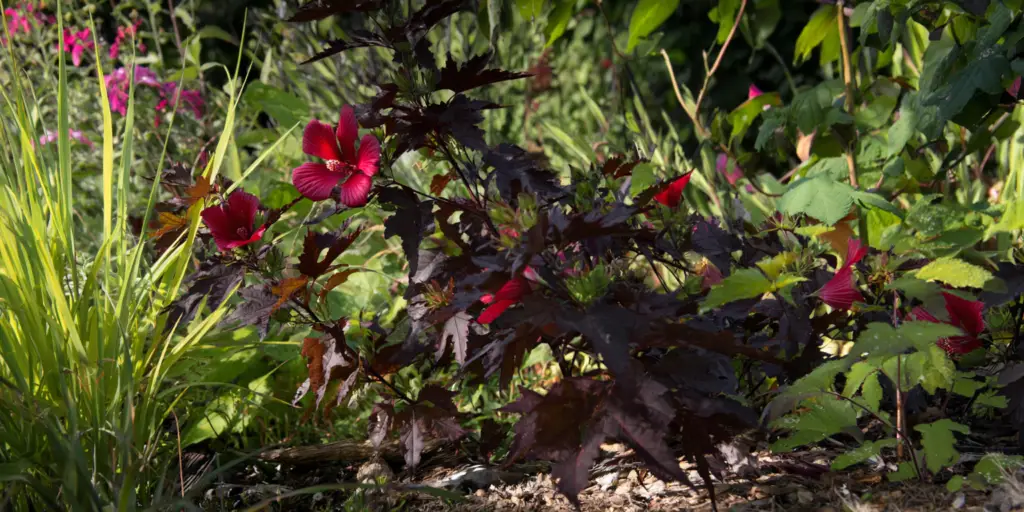
For color theming, match hibiscus to palettes elsewhere in the garden. If your beds already feature pink flowers, choose cultivars with rose, magenta, or blush blooms. For high contrast near white flowers and yellow flowers, add red or deep burgundy hibiscus to anchor the bed. Purple throats or eyes pair naturally with surrounding purple flowers and silver foliage. If you plan seasonal displays for events, use white or soft pink tropical hibiscus in urns to echo arrangements from your wedding flowers guide and repeat the color in annual bedding at entryways. Space all companions to allow airflow. Hibiscus leaves are large, so crowded plantings stay wetter for longer and can invite leaf spots. Leave two to three feet of clear space around hardy hibiscus crowns and prune neighboring shrubs to keep the canopy open.
References
- University of Florida IFAS Extension, “Hibiscus in Florida,” MG02000
- University of Florida IFAS Extension, “Hibiscus rosa‑sinensis,” Fact Sheet FPS‑254 (PDF)
- North Carolina State University Cooperative Extension, Plant Toolbox, Hibiscus moscheutos profile
- North Carolina State University Cooperative Extension, Plant Toolbox, Hibiscus syriacus profile
- University of Minnesota Extension, Houseplants: Hibiscus care page
- Clemson University Home & Garden Information Center, “Hibiscus”
- University of Maryland Extension, “Mulching Trees and Shrubs”
- Iowa State University Extension and Outreach, Yard and Garden, “How do I sanitize my pruning shears?”
- University of Minnesota Extension, “Clean and disinfect gardening tools and containers”
- Penn State Extension, “Care and Maintenance of Perennials”
Written by: Your Flowers Guide editorial team
We are a small independent group of flower lovers who research and review each guide using trusted horticultural and educational sources. Learn more about us