
How to Grow and Care for
Contents
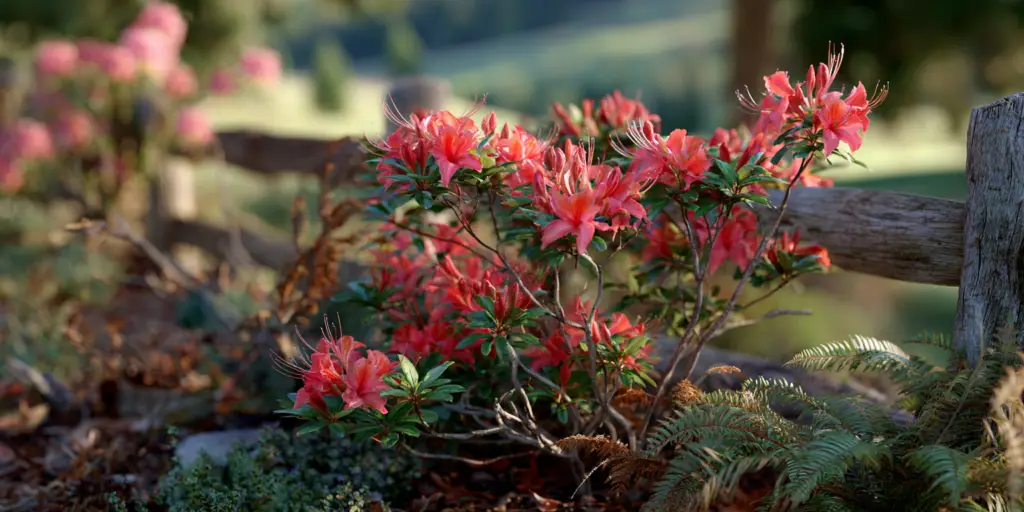
Azalea (botanical genus Rhododendron, principally the evergreen group often placed in subgenus Tsutsusi and the deciduous group in subgenus Pentanthera) are woodland shrubs prized for masses of spring flowers and neat structure. In U.S. gardens they are grown as foundation shrubs, understory accents, and seasonal hedges. Most types prefer morning sun with light afternoon shade, humus rich and acidic soil, and excellent drainage. The essentials of Azalea care are simple to remember. Plant slightly high in acidic soil, mulch with pine materials, water deeply during dry spells, prune only after bloom, and protect from intense afternoon sun and winter desiccation. With these basics, even first time growers can succeed.
Soil & Bed Preparation
Azaleas are shallow rooted shrubs that need air in the topsoil as much as moisture. Focus on texture, drainage, and acidity before you plant. Aim for a friable, well aerated top 12 inches that contains abundant fine bark and leaf mold. A practical target is a planting bed amended with 2 to 3 inches of pine bark fines or leaf compost blended into the top 8 to 10 inches of native soil. Avoid heavy manures and alkaline composts. Mushroom compost and lime enriched products often raise pH above the comfort range. Azaleas dislike waterlogged conditions. Water should drain from a 12 inch deep test hole within a few hours after filling. Where soils are heavy, build raised beds 8 to 12 inches high and mix in coarse bark to improve porosity. In sandy soils, add organic matter to increase water holding capacity. Keep irrigation low and slow through a soaker hose rather than frequent shallow sprinkling. The practical target is pH 4.5 to 6.0. Iron chlorosis, pale leaves with green veins, and poor growth are common when pH climbs above neutral. If your tap water is alkaline, use collected rainwater for container plants and for corrective irrigations during summer. Use a soil test kit or send a sample to your state Cooperative Extension laboratory before planting. To lower pH, elemental sulfur is the standard amendment. Apply the dose recommended by your test result and water in. Acidic organic mulches and pine bark based amendments help maintain that reaction over time. To raise pH slightly in overly acidic soils, blend a modest amount of composted leaf mold or fine bark, and rely on your test lab’s guidance. Avoid lime unless specifically instructed by a soil report. In cold zones and clay soils, raised beds help prevent root rot and winter heaving. In sandy coastal soils, in ground beds shaded by trees stay cooler and hold moisture better. In every case, keep the planting zone broad. Preparing a wide bed produces a natural root spread rather than a cramped pot shaped pocket. Dig a hole 12 inches wide and 12 inches deep and fill with water. If water remains after 4 to 6 hours, plan on a raised bed or find a better drained spot. For pH, the sweet spot is 4.5 to 6.0. If the test reads higher than 6.0, apply elemental sulfur in split doses across spring and early fall and mulch with pine products. Retest in 12 to 18 months.
Planting Calendar by USDA Zone
Azaleas transplant best when soils are cool to mild and there is steady moisture. The ideal window depends on your region and the plant form.
Zones 4 to 5. Grow cold hardy deciduous azaleas. Plant in spring as soon as soil is workable through late spring. Early fall planting is possible if you allow at least 6 to 8 weeks before the ground freezes. Evergreen types are more risky in Zone 5. Plant them in spring and provide wind protection.
Zones 6 to 7. Plant evergreen azaleas in early fall or in spring. Fall planting from late September to early November works well where winters are moderate. Spring planting begins after soil thaws and drains, usually March to April depending on your local climate. Deciduous azaleas in these zones also transplant well in early fall.
Zones 8 to 9. Choose fall to winter planting for evergreen types, from October through February, so roots establish before summer heat. Spring planting is acceptable if you can irrigate consistently. Deciduous azaleas succeed with late fall planting once leaves drop.
Zone 10 warm pockets. Only heat tolerant selections are reliable. Plant from late fall to mid winter and avoid reflective heat sites. Provide afternoon shade and steady moisture.
Bare root versus container grown. Deciduous azaleas are sometimes sold bare root and transplant best while dormant from late fall to early spring. Evergreen azaleas are usually container grown and can be planted whenever soil is workable, avoiding the peak of summer heat in hot interiors.
Planting: Depth & Spacing
Azaleas resent deep planting and poor air around their roots. Set plants slightly high and give them room to mature.
Container grown.
• Water the pot thoroughly before planting.
• Gently slide the plant out and inspect the root ball. If roots circle, tease them outward and make three vertical slices about ½ inch deep to encourage new spread.
• Set the plant so the top of the root ball sits 1 to 2 inches above the surrounding soil surface. This allows settling without burying the crown.
• Backfill with the native soil you improved for the whole bed. Do not create a rich pocket that differs sharply from the surrounding soil.
• Water to settle soil and mulch immediately.
Bare root or divisions.
• Soak bare roots in clean water for 30 to 60 minutes before planting.
• Build a firm cone of soil in the center of the hole and spread roots evenly over it.
• Position the root flare at finished grade. Do not bury the crown.
• Backfill and water slowly to remove air pockets, then mulch.
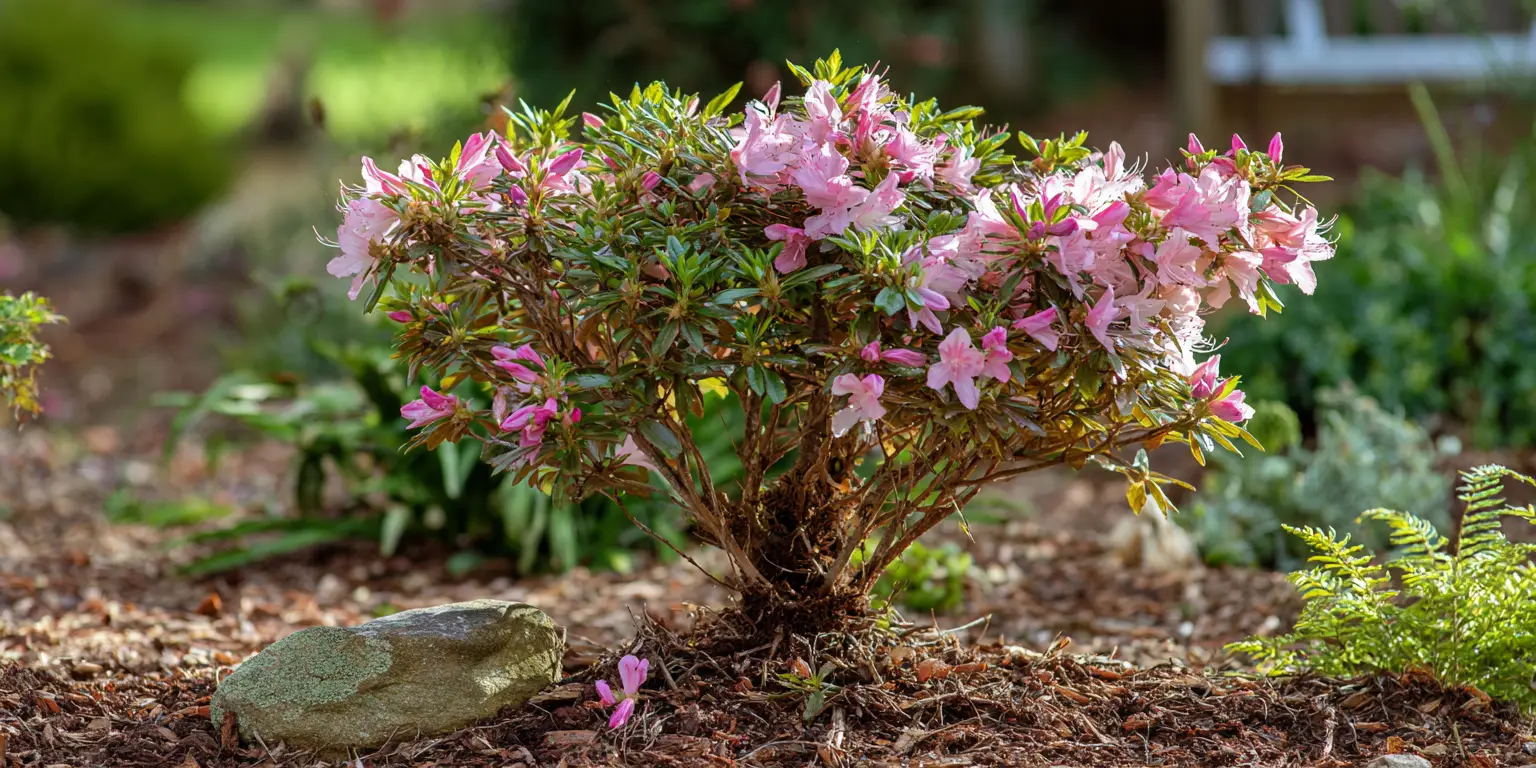
Keep the crown at or just above grade. The top of the root ball should remain visible after mulching. Never bury stems. Small evergreen azaleas that mature 2 to 3 feet wide can be spaced 2.5 to 3 feet apart on center. Larger garden forms that finish 4 to 6 feet wide should be spaced 4 to 5 feet apart. For a low hedge, plant compact forms 18 to 24 inches apart and tip prune after bloom to encourage a dense face. Always verify the expected mature width of your selection and give at least 12 inches of air between canopies once mature to reduce pests and diseases. Reduce stress by planting on an overcast day or in late afternoon. Water thoroughly, then provide temporary shade cloth or a lawn chair shade for three to seven days during sudden heat. Keep mulch off the stems. Avoid fertilizer for four to six weeks. Maintain soil moisture at a steady, not soggy, level while new roots grow.
Watering & Mulching
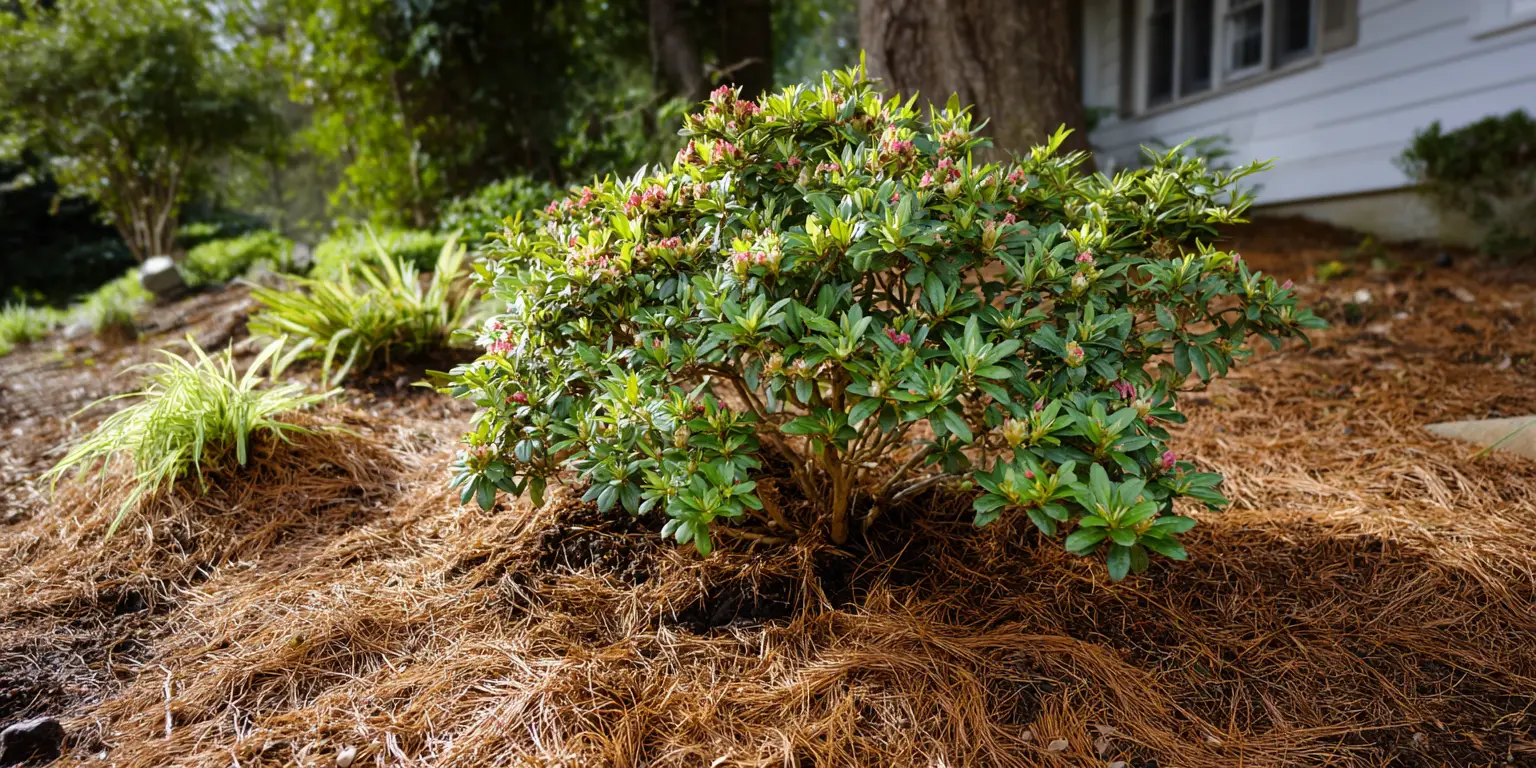
Azaleas need consistent moisture but never saturated conditions. The right mulch is a cornerstone of success. For the first growing season, water deeply once or twice a week depending on rainfall. A sensible target is the equivalent of about 1 inch of water per week. Use a soaker hose or drip emitter and water early in the morning. Check moisture by probing 4 to 6 inches down. It should feel cool and slightly damp, not muddy. After the first year, water during dry spells and during mid to late summer when flower buds for the next spring are setting. One slow deep soak every 7 to 10 days is better than frequent shallow sprinkles. In sandy soils or heat waves shorten the interval. In clay soils lengthen the interval to prevent saturation. Use pine needles, shredded pine bark, or partially composted wood chips. Keep mulch 2 to 3 inches deep, extend it slightly beyond the dripline, and pull it back 2 inches from stems. Do not pile mulch against the trunk. Mulch keeps roots cool, slows weeds, and buffers soil pH in the right direction. Never bury the top of the root ball. Do not add soil on top of mulch later. In heavy rains, check that water does not stand around the plant. Correct grade issues promptly. During heat spikes above 90 °F (32 °C), water in the early morning and again in the evening if leaves flag. Provide temporary shade for new plantings. For extended drought, increase mulch to the 3 inch maximum, reduce pruning, and withhold fertilizer. Water softened by sodium based softeners is not appropriate for azaleas. If your household water is softened, one outdoor tap may bypass the softener. If your tap water tests alkaline, collect rainwater for containers and for occasional corrective irrigations in the ground.
Feeding
Azaleas are light feeders. A soil test is the best guide to what you need and what you should skip. If fertilizer is needed, apply a modest dose in late winter to early spring just before growth begins, or right after flowering. Avoid fertilizing after midsummer in cold winter areas, because late tender growth can be damaged by frost. Use a slow release, acid forming product designed for azaleas and rhododendrons, or an organic option such as cottonseed meal or composted poultry litter applied at a light rate. Typical granular analyses for acid loving shrubs fall in the general N P K ranges of about 10 5 4 or 12 4 8. Follow product labels and aim for a light feed rather than a heavy push of nitrogen. If plants look healthy and produce normal growth with good color, skip fertilizer and focus on mulch and water. Newly planted shrubs usually need no fertilizer for the first season. Pale leaves with green veins often indicate high pH or poor drainage rather than a lack of nutrients. Address soil conditions first. Maintain a living mulch of organic materials. Refresh mulch each year. Where a soil test shows low organic matter, topdress beds annually with 1 inch of leaf mold or fine bark and rake it into the top inch of soil, then mulch over it. Retest the soil every 2 to 3 years, or after any major pH correction, to monitor progress.
Pruning & Support
Most azaleas need little pruning. Flower buds form on last year’s growth, so timing matters. Remove winter damaged or crossing wood in late winter. After flowering, shape lightly by removing or shortening stray shoots. Complete any significant pruning within 3 to 4 weeks after bloom, because next year’s flower buds begin developing soon after. Spent blooms can be removed by snapping the truss off just above the new leaves that form at its base. This keeps the shrub neat and can reduce petal blight and other moisture related problems. Take care not to break the soft new shoots behind the flowers. Old, leggy shrubs can be renovated in stages over two or three years. Each year right after bloom, remove one third of the oldest stems down at the base to encourage fresh basal shoots. Spreading types respond to selective thinning better than to shearing. Newly planted large specimens and tall deciduous azaleas in windy sites may benefit from a loose stake for the first season. Use a soft tie and remove it once roots anchor the plant. Established plants rarely need stakes. Clean hand pruners, loppers, and saws between plants. Wipe blades with 70 percent alcohol or a 10 percent bleach solution and dry them before moving to the next shrub. This simple habit helps prevent the spread of disease.
Overwintering
Winter care depends on your zone and the type you grow. Refresh mulch in late fall to a uniform 2 to 3 inch depth. In Zones 4 to 6, consider 3 to 4 inches for deciduous azaleas to buffer freeze and thaw cycles. Keep mulch off the stems. In exposed northern sites, set up a temporary windbreak of burlap on stakes on the windward side of evergreen azaleas. This reduces winter burn. Water deeply before the ground freezes if fall weather is dry. Voles and rabbits can girdle stems in winter. In problem areas, wrap the lower stems with a loose cylinder of hardware cloth that extends 2 to 3 inches into the soil and 8 to 12 inches above the mulch. Remove or adjust wraps in spring. Take down windbreaks and unwrap any protections once the soil thaws and buds swell. Do not keep covers on into active growth or you may trap moisture and encourage disease. Move containers in Zones 6 and colder to an unheated garage or sheltered porch after hard frost. Water sparingly to keep the media barely moist, not dry or soggy. In mild Zones 8 to 9, group containers out of the wind and insulate the pots with straw or bubble wrap held by burlap.
Growing Environments
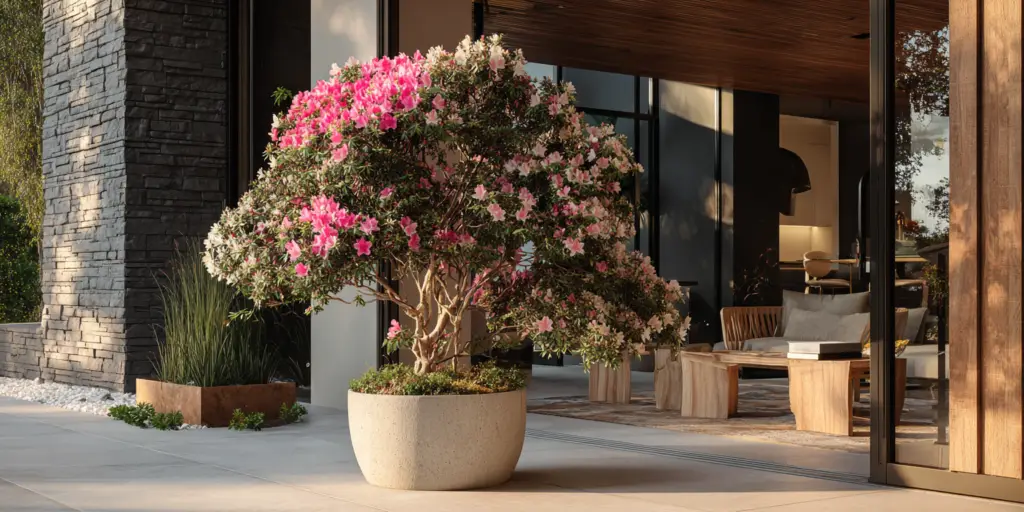
Azaleas are flexible if you match the environment to the selection. Azaleas adapt well to containers if the volume is adequate. Choose a sturdy pot with wide drainage holes, at least 16 to 20 inches in diameter for compact forms and 20 to 24 inches for medium shrubs. Use a bark based potting mix designed for acid loving plants. Elevate pots slightly on feet so water clears the base. In summer heat, containers may need water every 2 to 3 days. Feed lightly once in spring with a slow release product. A mix heavy in compost alone stays wet. Favor mixes that include fine pine bark, coarse peat, and perlite for air filled porosity. If a potting mix stays soggy after you water, repot into a more open blend. Shade: morning sun with afternoon high canopy shade is ideal. Under deciduous trees that leaf out later, azaleas enjoy bright light in spring for bloom and protective shade in summer.
Wind: provide a calm pocket near a fence, wall, or evergreen hedge. Avoid the wind tunnel effect between buildings.
Reflected heat: avoid west facing walls, stone patios, or white fences that reflect heat. Place azaleas where foliage stays cool and steady.
Companion Planting & Design
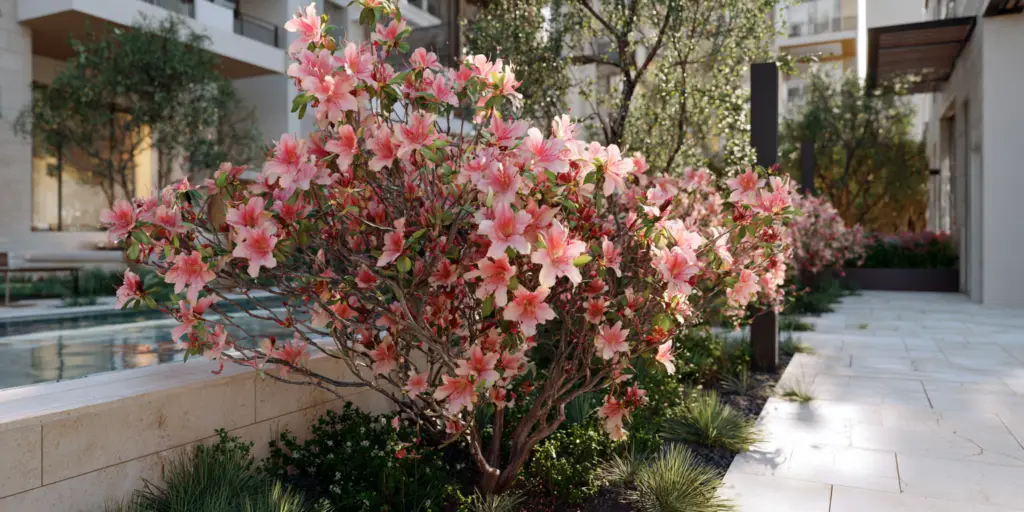
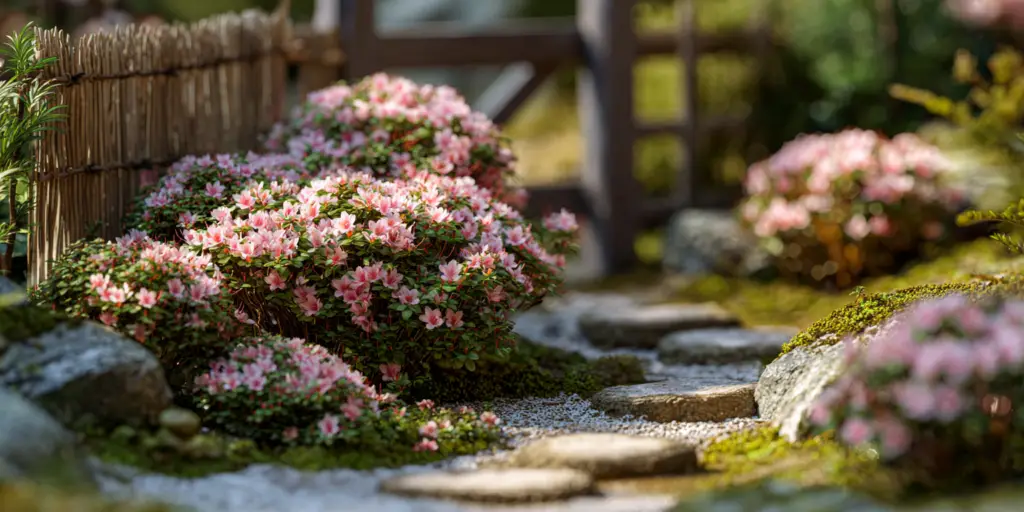
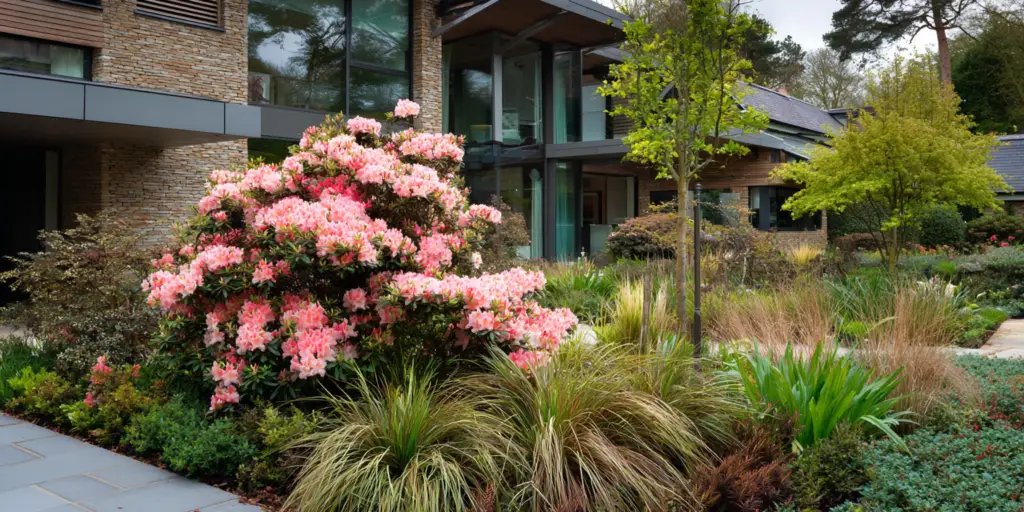
The best companions share soil preferences and create a layered, season long display.Pair azaleas with other woodland shrubs such as mountain laurel, pieris, and certain hydrangeas. For a classic spring duet, consider mophead hydrangea macrophylla in nearby part shade beds where soils are consistently moist and acidic. For fragrant and silvery contrast along a path or patio beyond the azalea root zone, tuck in lavender in a sunnier, better drained pocket. Hostas, heuchera, epimedium, and woodland ferns knit nicely around the base. Avoid aggressive groundcovers that climb into the shrub canopy. Spring bulbs like daffodils provide early color before azaleas bloom and then go dormant under the summer canopy. Evergreen azaleas supply vivid blocks of color. Use the flower color wheel to coordinate borders linked to our hub pages for pink, white, and purple flowers. In small gardens, repeat one or two colors to make a coherent theme. In larger spaces, vary bloom times by mixing early and midseason selections to extend the show. Deciduous native azaleas offer nectar and can draw early bees and even hummingbirds in some regions. Provide fresh water and a pesticide free space. As with any flowering shrub, avoid spraying open blooms. Allow a foot of air space between mature canopies. Plan paths or open mulched strips between groups to reduce humidity and leaf disease.
References
- Clemson University Cooperative Extension HGIC 1050. “Azalea.”
- ASPCA Animal Poison Control Center. “Azalea.”
Written by: Your Flowers Guide editorial team
We are a small independent group of flower lovers who research and review each guide using trusted horticultural and educational sources. Learn more about us