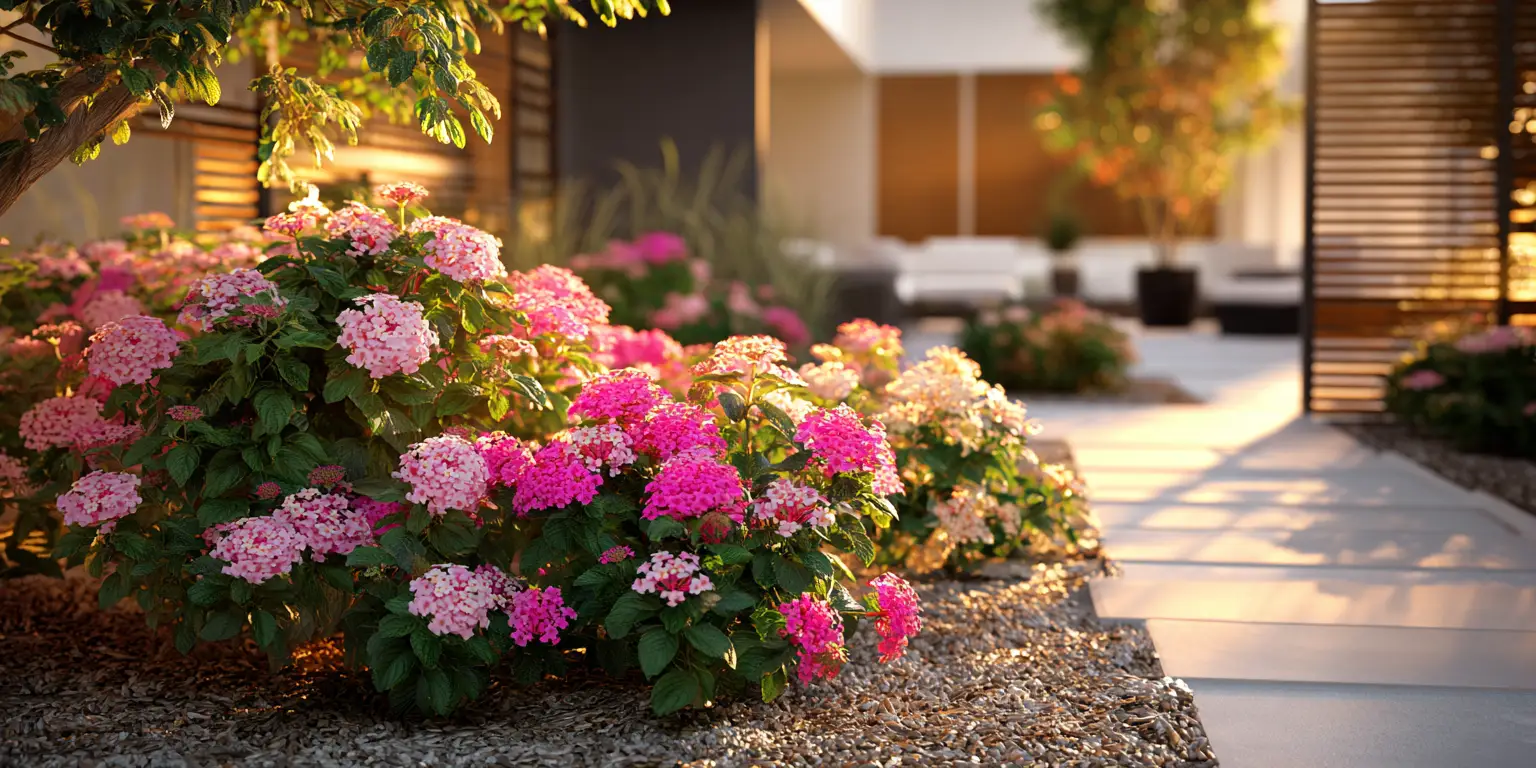
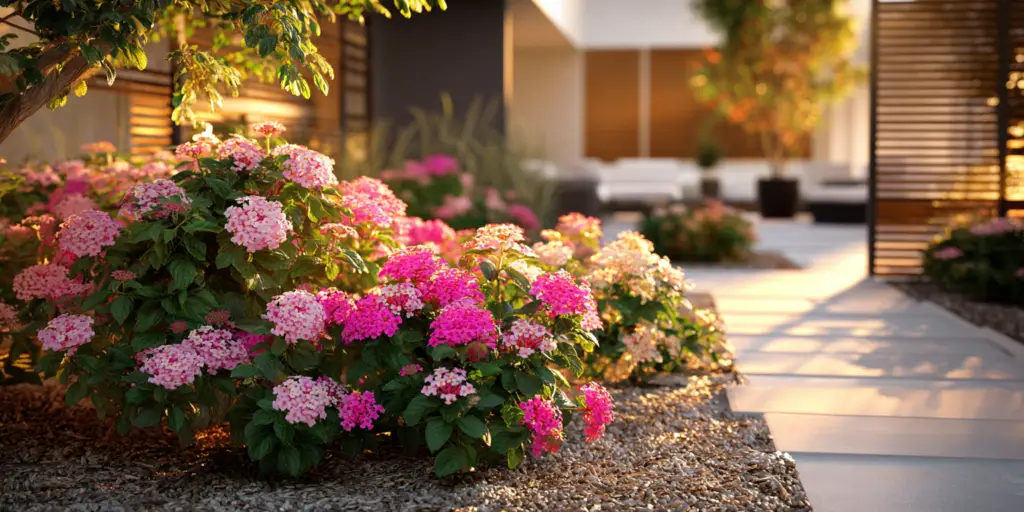
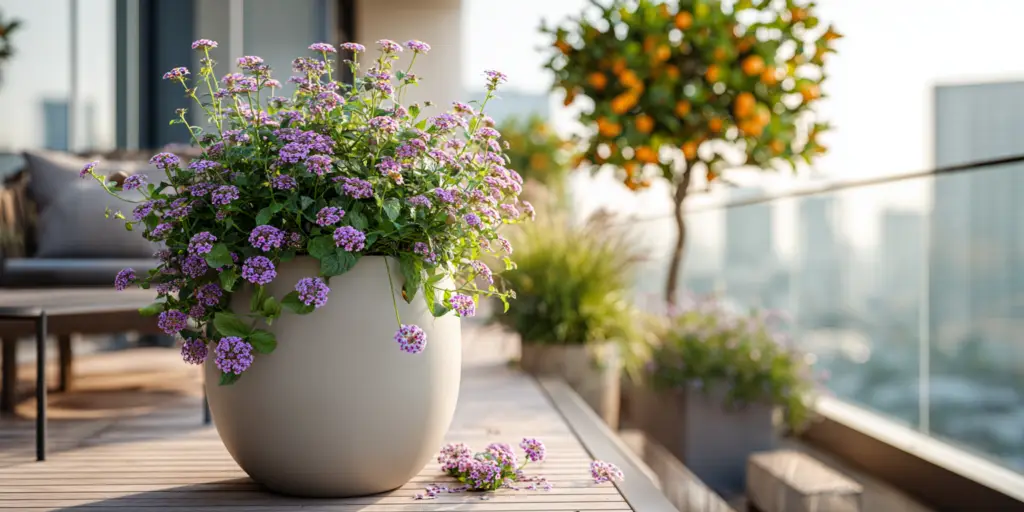
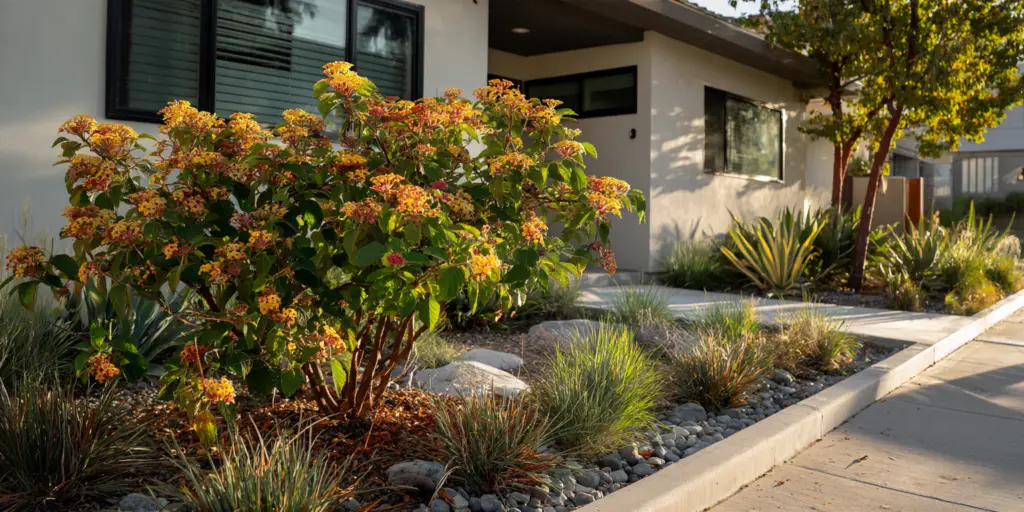
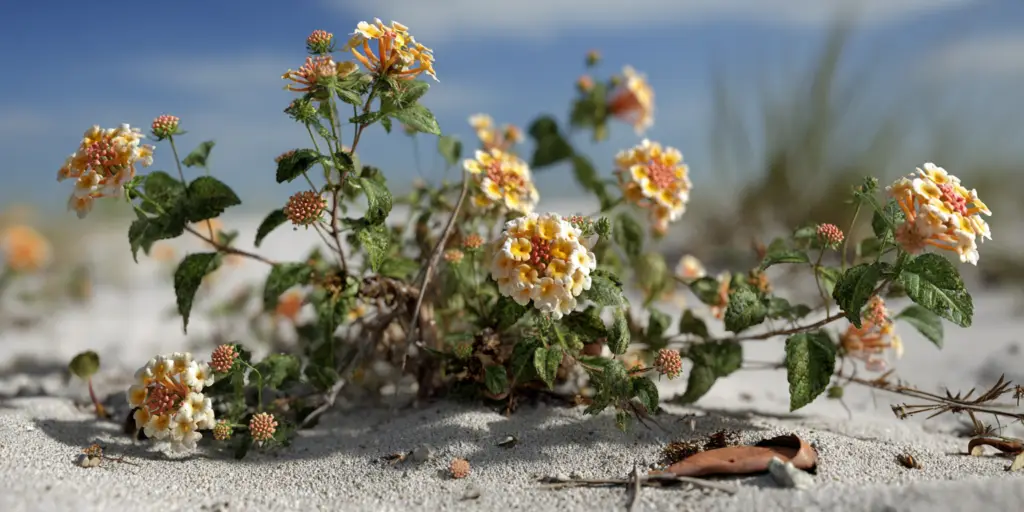
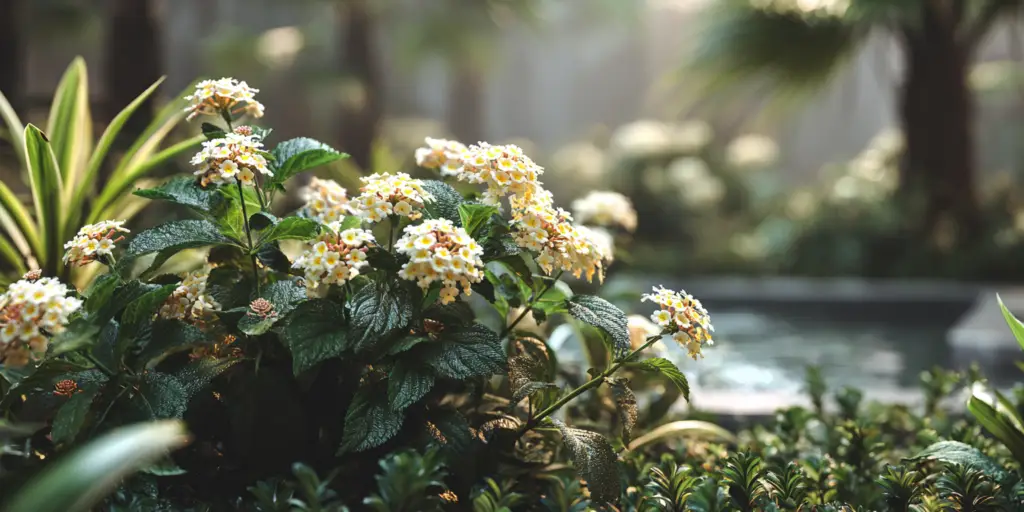
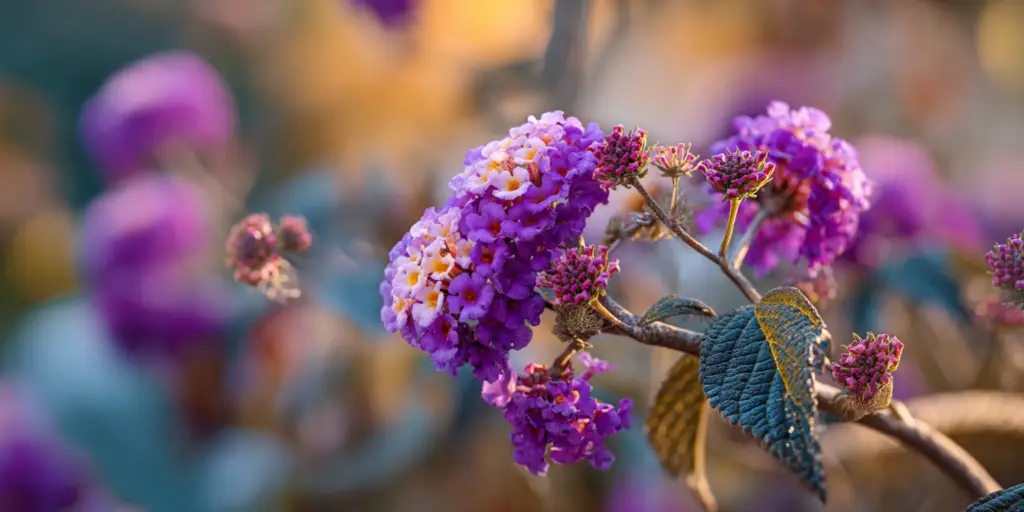
This species is the widely grown garden lantana used for long, hot-season color. It stands out for clusters of small tubular flowers that often show two or more colors on one head. It grows best in full sun with heat and sandy or average, well-drained soil. In warm coastal sites it tolerates salt and drought once established. In frost-free areas it can flower all year. In colder regions it is planted after the last frost and blooms until frost returns.
At‑a‑glance
Group/Class: Species; woody shrub
Height × spread: 3 to 6 ft (0.9 to 1.8 m) × 3 to 5 ft (0.9 to 1.5 m)
Bloom window: late spring to frost; year-round in frost-free zones
Color & flower form: dense clusters of small tubular flowers in white, yellow, orange, red, pink, or purple; often multicolored
Fragrance: 0 none
USDA hardiness: top growth hardy in zones 10 to 11; roots hardy in zone 9; grown as annual elsewhere
Breeder / Year / Origin: unknown; native to Central and South America
Awards/registration: Texas Superstar designation for garden forms of Lantana camara
Pet safety: avoid
How it differs
Upright, bushy habit compared to trailing lantanas.
Widest color range within the genus in common cultivation.
Blooms continuously in heat with minimal care in sunny sites.
Most available selections are named cultivars with varied sizes.
Strengths
Thrives in heat and sun.
Handles coastal exposure and sandy soils once established.
Attracts butterflies and other pollinators.
Tolerates light pruning to keep shape.
Care in one minute
Plant in full sun with 6 or more hours of direct light.
Use well-drained soil that is slightly acidic to neutral; avoid standing water.
Water deeply to establish, then allow the top inch to dry before watering again.
Feed lightly in spring; excess nitrogen reduces flowers.
Shear lightly to encourage fresh growth; remove fruit if reseeding is a concern.
Where winters freeze, grow in containers and move under cover before frost.
Watch‑outs
Can be invasive or weedy in warm climates and may hybridize with natives.
Leaves and unripe berries are toxic to pets and livestock.
Native to tropical America, this species has naturalized widely. In Florida, many non-native landscape plants are treated as Lantana strigocamara in invasive plant guidance.
Written by: Your Flowers Guide editorial team We are a small independent group of flower lovers who research and review each guide using trusted horticultural and educational sources. Learn more about us