
in bloom
now
through Oct
Bloom calendar
Lantana urticoides
Species; woody shrub
At‑a‑glance
- Group/Class: Species; woody shrub
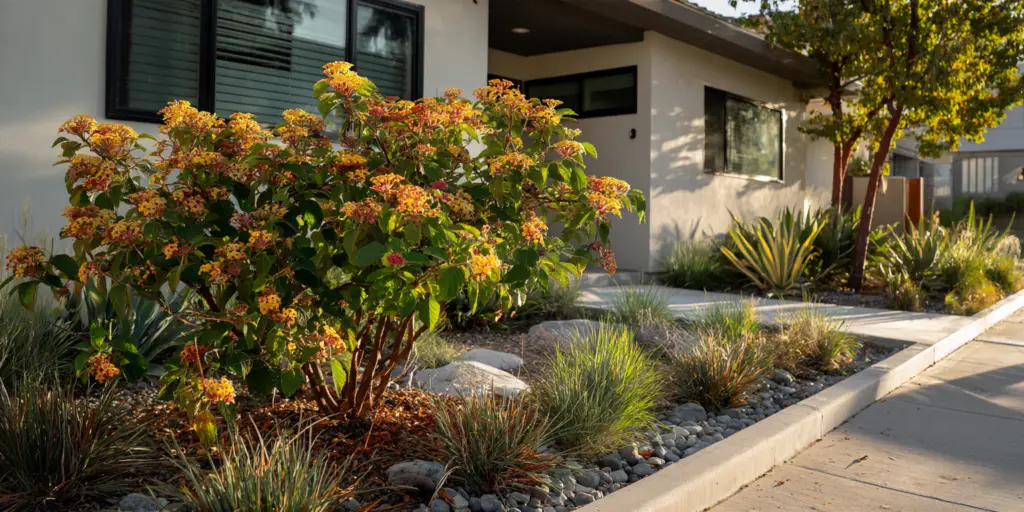
- Height × spread: 4 to 6 ft (1.2 to 1.8 m) × 4 to 6 ft (1.2 to 1.8 m)
- Bloom window: April to November in warm climates
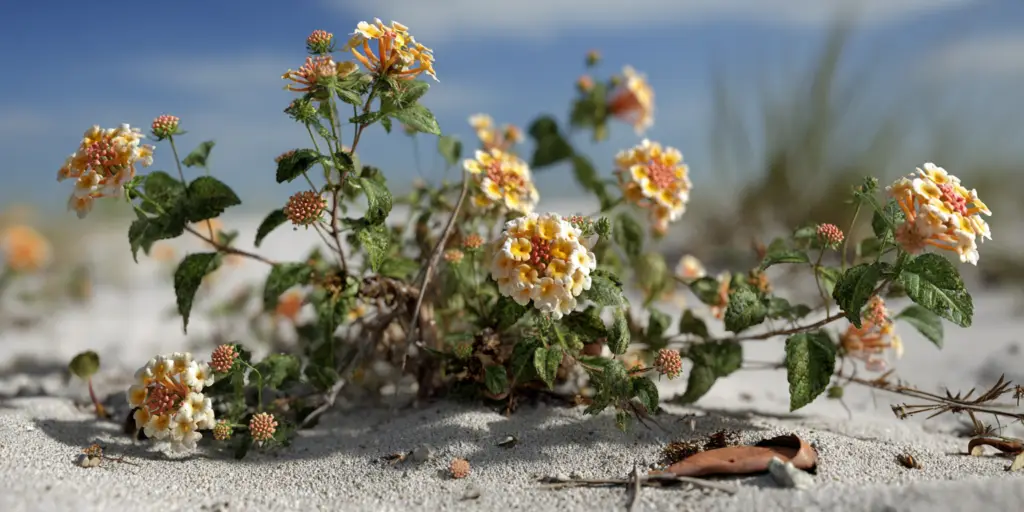
- Color & flower form: rounded clusters of small tubular flowers that age from yellow to orange and red
- Fragrance: 0 none
- USDA hardiness: zones 8 to 11; grown as annual where colder
- Breeder / Year / Origin: unknown; native to Texas and Mexico
- Pet safety: avoid
How it differs
- More drought and heat tolerance than many garden lantanas.
- Often hardier to cold than tender tropical forms.
- Naturally upright shrubs rather than trailing mats.
- Flower color changes are vivid and long-running through the season.
Strengths
- Performs in poor, sandy or limestone soils with minimal care.
- Long flowering season in full sun.
- Attracts butterflies and other pollinators.
- Accepts seasonal pruning to control size.
Care in one minute
Provide at least 6 hours of direct sun.
Use well-drained soil; alkaline soils are acceptable.
Water to establish; then water deeply but infrequently.
Fertilize lightly in spring only if growth is weak.
Prune back in late winter to keep plants compact and to refresh wood.
Watch‑outs
- All parts are poisonous if eaten; unripe fruit is especially risky.
- Can become woody and wide with age; plan space or prune in late winter.
- Not suited to shade or wet soils.
Best uses (tags)
Provenance note
A North American native once grouped with Lantana horrida, this species ranges across Texas and into Mexico. It is frequent in brushy, dry habitats and has long been used in water-wise gardens.
References
- Lady Bird Johnson Wildflower Center – Lantana urticoides
- USDA PLANTS – Lantana urticoides
- UF/IFAS EDIS – Common Poisonous Landscape Plant Species in Florida
Similar Flowers
Enjoying our flower guides? Add YourFlowersGuide as a preferred source on Google. It helps more readers find us.
Add to Preferred Sources