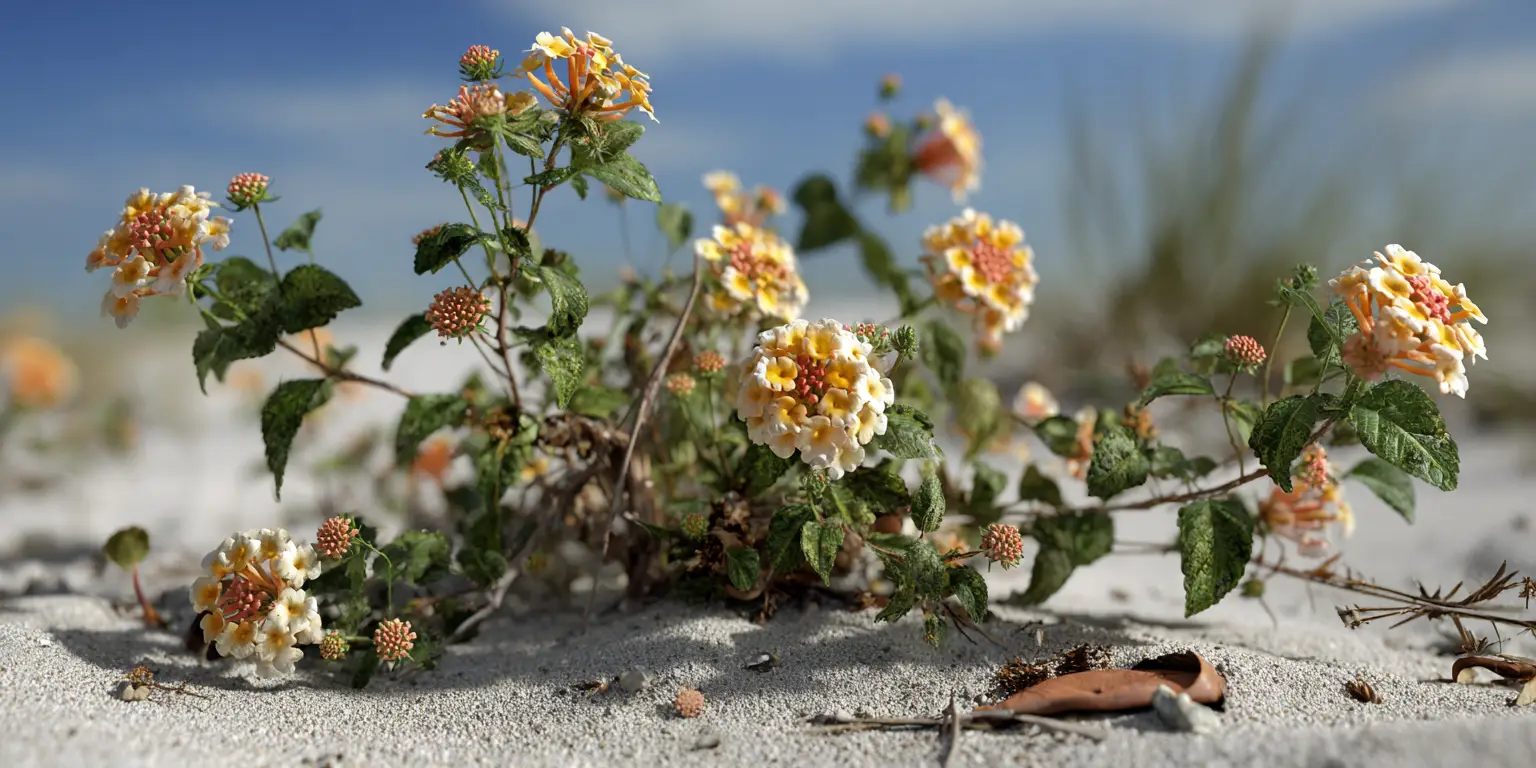
in bloom
now
through Oct
Bloom calendar
Lantana depressa
Species; low shrub or woody groundcover
At‑a‑glance
- Group/Class: Species; low shrub or woody groundcover
- Height × spread: 1 to 2 ft (0.3 to 0.6 m) × 3 to 5 ft (0.9 to 1.5 m)
- Bloom window: spring to fall in South Florida; sporadic year-round where frost free
- Color & flower form: dense clusters of small tubular flowers in bright to pale yellow
- Fragrance: 0 none
- USDA hardiness: grown as annual outside frost-free South Florida and the Keys
- Breeder / Year / Origin: unknown; endemic to southern Florida
- Pet safety: avoid
How it differs
- All-yellow flowers instead of multicolored heads common in garden lantana.
- Low, spreading habit that stays near the ground.
- Native to coastal South Florida with tolerance for dry, sandy or limestone sites.
- Conservation concern with risk of hybridization from non-native lantana nearby.
Strengths
- Adapted to sun, heat, and dry sandy or limestone soils.
- Supports butterflies and native pollinators.
- Compact size for tight coastal spaces.
Care in one minute
Plant in full sun with very sharp drainage on sand or limestone.
Irrigate sparingly after establishment; avoid constant moisture.
Do not overfertilize; growth is best on lean soils.
Trim lightly after flushes to keep edges neat.
Avoid planting near non-native lantana to protect genetics.
Watch‑outs
- Not cold hardy outside far South Florida.
- Hybridization with non-native lantana is widely reported; source plants carefully.
- All parts are poisonous if eaten.
Best uses (tags)
Provenance note
Endemic to Miami-Dade County and nearby coasts, with three described varieties, this species occupies pine rockland and coastal uplands. Its gene pool is threatened by hybridization with introduced lantana.
References
- Florida Wildflower Foundation – Lantana depressa
- Florida Native Plant Society – Lantana depressa var. depressa
- Institute for Regional Conservation – Lantana depressa
- USF Atlas of Florida Plants – Lantana depressa
Similar Flowers
Enjoying our flower guides? Add YourFlowersGuide as a preferred source on Google. It helps more readers find us.
Add to Preferred Sources