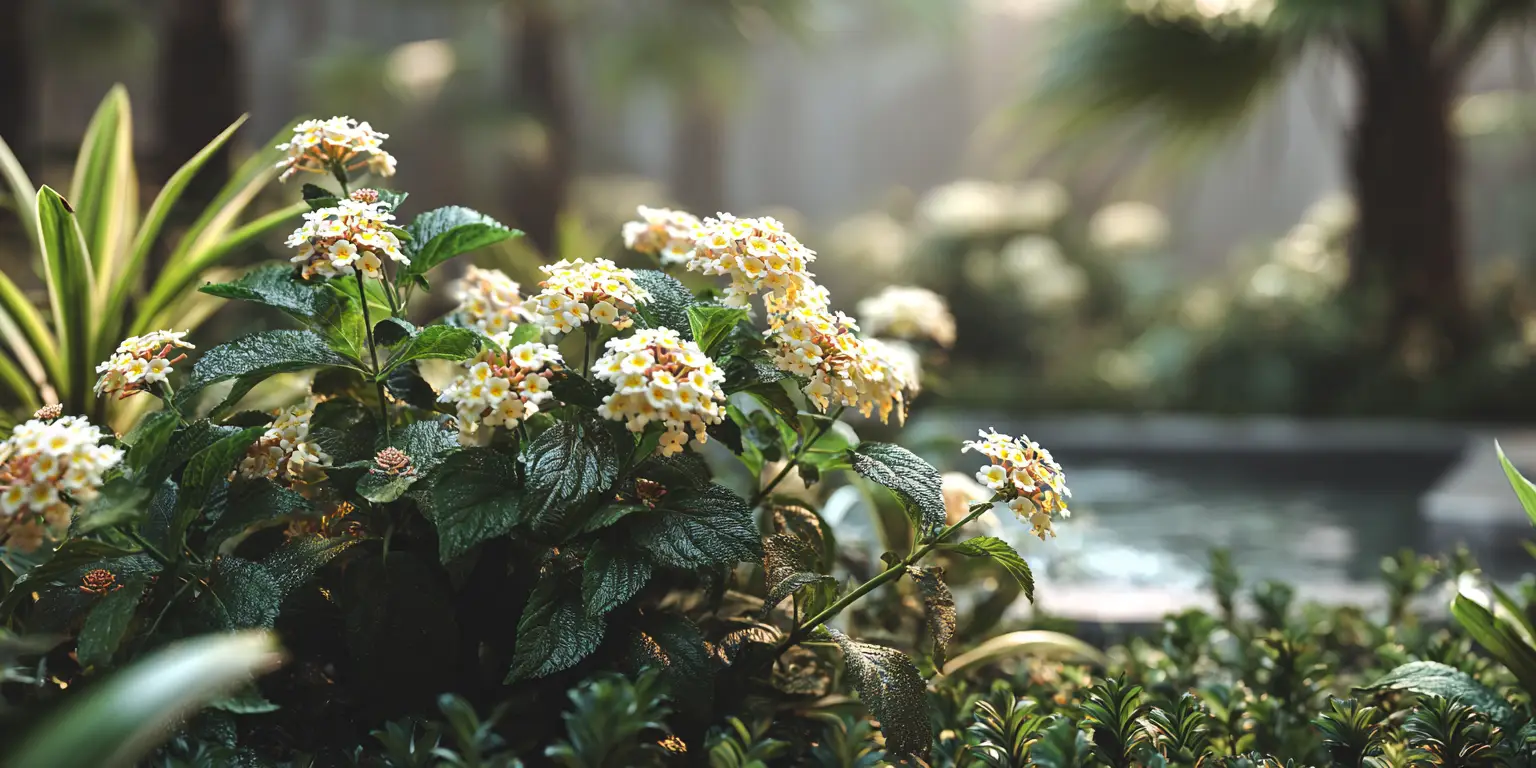
in bloom
now
through Oct
Bloom calendar
Lantana involucrata
Species; woody shrub
At‑a‑glance
- Group/Class: Species; woody shrub
- Height × spread: up to 5 ft (1.5 m) × 3 to 6 ft (0.9 to 1.8 m)
- Bloom window: spring through fall in warm climates
- Color & flower form: creamy white clusters with yellow throat; showy purple drupes after bloom
- Fragrance: 2 noticeable
- USDA hardiness: grown as annual outside frost-free South Florida and the Keys
- Breeder / Year / Origin: unknown; native to coastal South Florida and the West Indies
- Pet safety: avoid
How it differs
- Fragrant white flowers instead of bold multicolors.
- More upright and compact than trailing species.
- Fruits are an ornamental feature that follow bloom.
- Best fit is frost-free coastal gardens rather than colder interiors.
Strengths
- Long bloom season in sun and heat.
- Drought tolerant once established on sandy or limestone soils.
- Supports butterflies and other pollinators.
- Responds well to light pruning to keep a dense shape.
Care in one minute
Site in full sun with freely draining sand or limestone soils.
Water to establish; then irrigate when the top inch of soil is dry.
Use light spring feeding only; excess fertility reduces flowering.
Tip-prune after waves of bloom to maintain density.
Protect from frost or grow in containers that can be moved under cover.
Watch‑outs
- Not hardy where frosts are regular.
- All parts of lantana are considered toxic if eaten.
- Ensure sharp drainage to avoid decline in summer rains.
Best uses (tags)
Provenance note
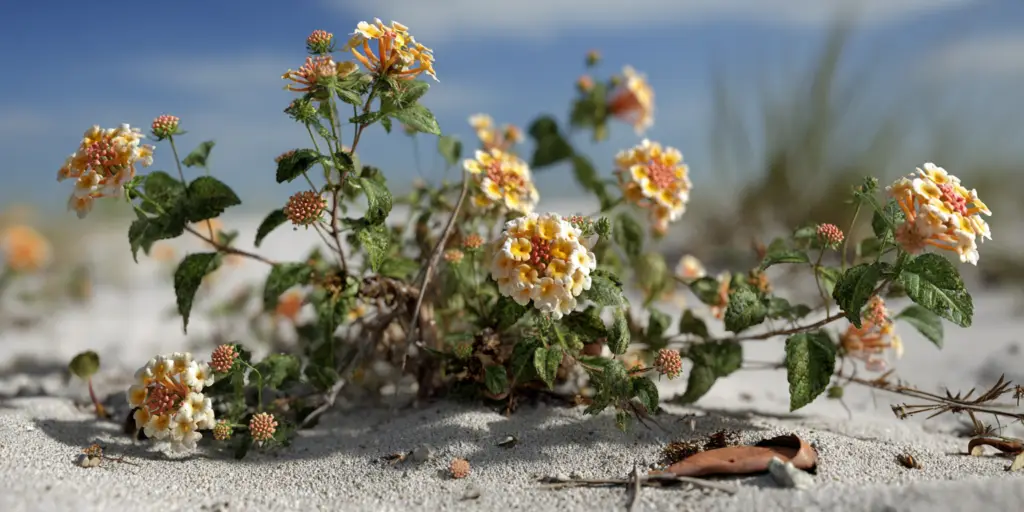
Native to coastal South Florida and the Caribbean rim, buttonsage occurs along strands, dunes, and hammocks. It is cultivated regionally for long bloom and wildlife value in frost-free gardens.
References
- Florida Museum – Button Sage (Lantana involucrata)
- UF/IFAS IRREC Garden Tool – Lantana involucrata
- USDA PLANTS – Lantana involucrata
- UF/IFAS Gardening Solutions – Lantana (general care and toxicity)
Similar Flowers
Enjoying our flower guides? Add YourFlowersGuide as a preferred source on Google. It helps more readers find us.
Add to Preferred Sources