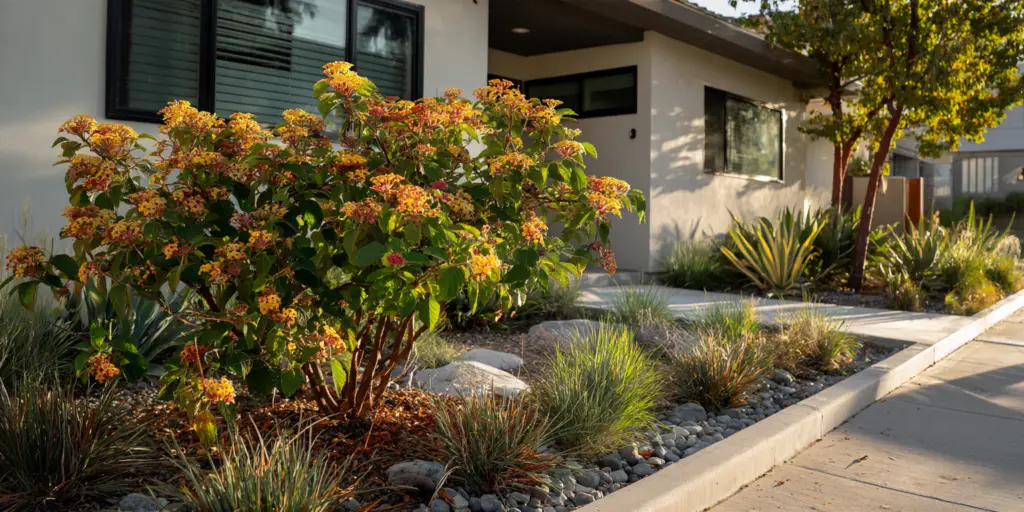
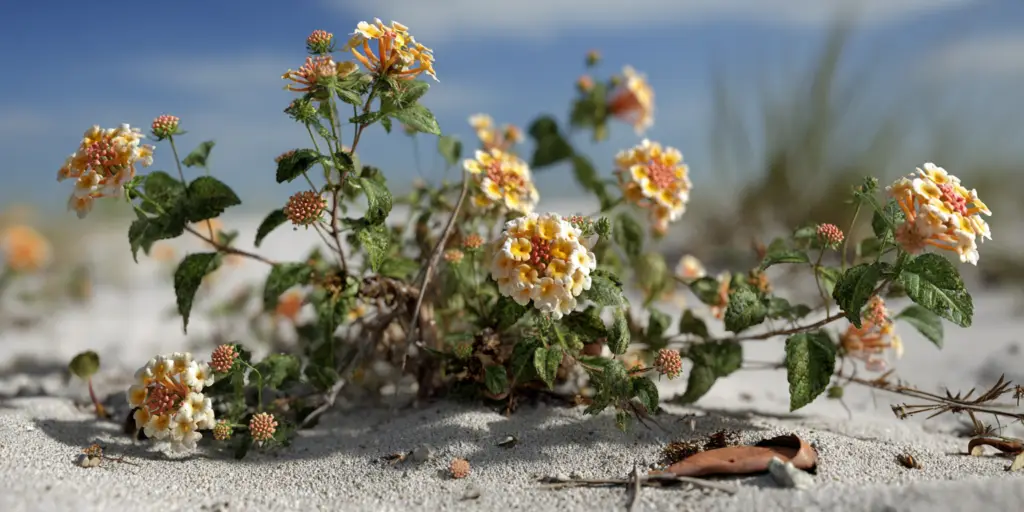
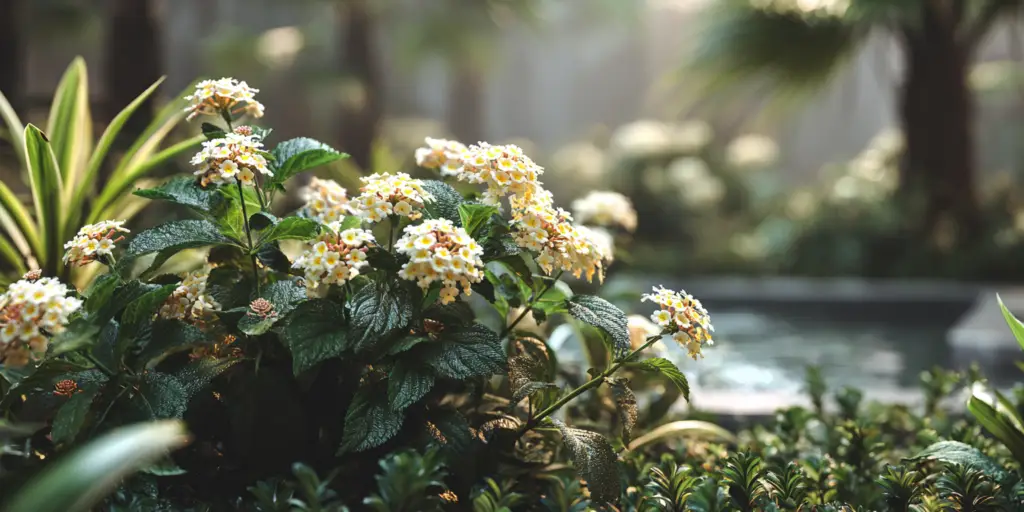
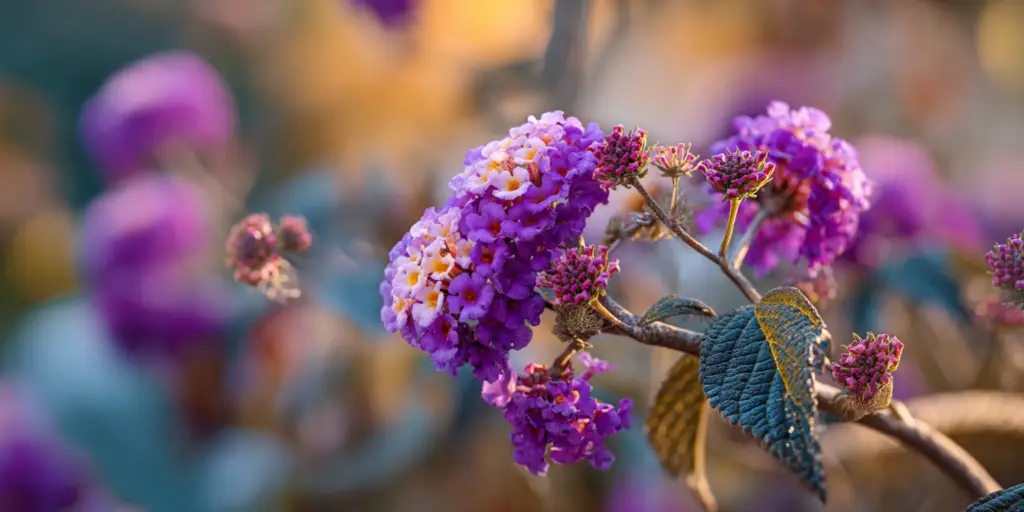
Texas lantana is a native shrub for hot, dry sites in the South and Southwest. It stands out for tricolor heads that open yellow and shift to orange and red. It performs best in full sun and fast-draining, even calcareous soils. It grows into a rounded shrub in warm zones and flowers heavily from spring into fall. It is a dependable choice where drought and heat are routine.
At‑a‑glance
Group/Class: Species; woody shrub
Height × spread: 4 to 6 ft (1.2 to 1.8 m) × 4 to 6 ft (1.2 to 1.8 m)
Bloom window: April to November in warm climates
Color & flower form: rounded clusters of small tubular flowers that age from yellow to orange and red
Fragrance: 0 none
USDA hardiness: zones 8 to 11; grown as annual where colder
Breeder / Year / Origin: unknown; native to Texas and Mexico
Pet safety: avoid
How it differs
More drought and heat tolerance than many garden lantanas.
Often hardier to cold than tender tropical forms.
Naturally upright shrubs rather than trailing mats.
Flower color changes are vivid and long-running through the season.
Strengths
Performs in poor, sandy or limestone soils with minimal care.
Long flowering season in full sun.
Attracts butterflies and other pollinators.
Accepts seasonal pruning to control size.
Care in one minute
Provide at least 6 hours of direct sun.
Use well-drained soil; alkaline soils are acceptable.
Water to establish; then water deeply but infrequently.
Fertilize lightly in spring only if growth is weak.
Prune back in late winter to keep plants compact and to refresh wood.
Watch‑outs
All parts are poisonous if eaten; unripe fruit is especially risky.
Can become woody and wide with age; plan space or prune in late winter.
A North American native once grouped with Lantana horrida, this species ranges across Texas and into Mexico. It is frequent in brushy, dry habitats and has long been used in water-wise gardens.
Written by: Your Flowers Guide editorial team We are a small independent group of flower lovers who research and review each guide using trusted horticultural and educational sources. Learn more about us