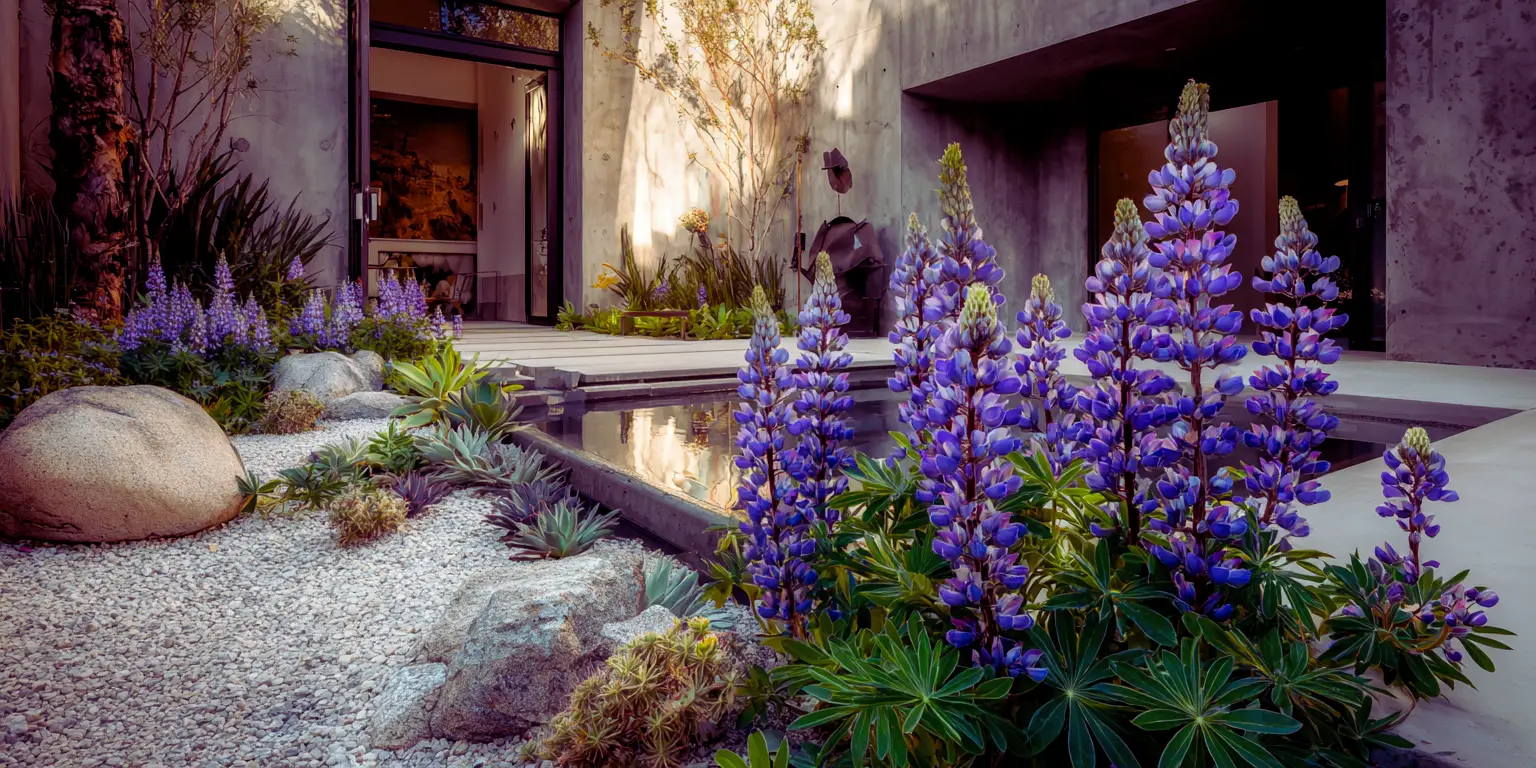
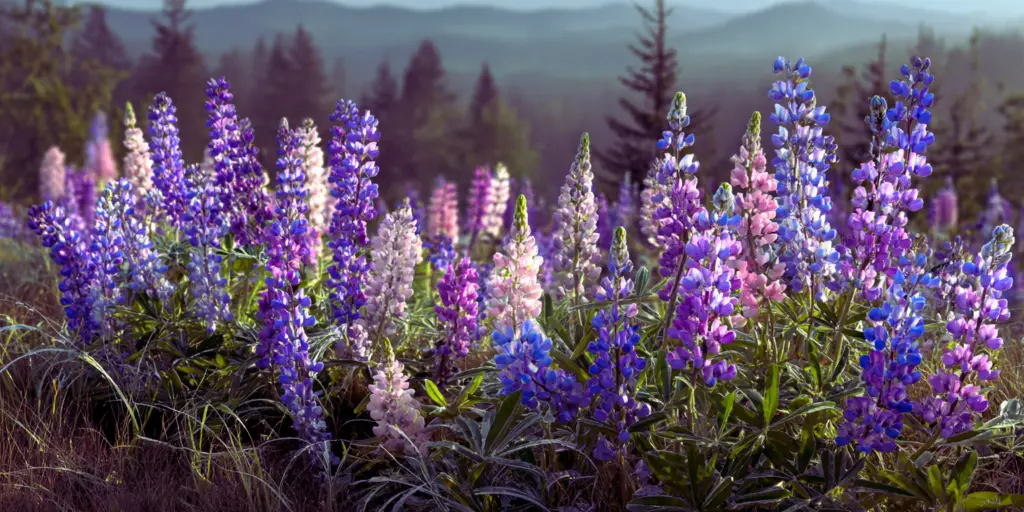
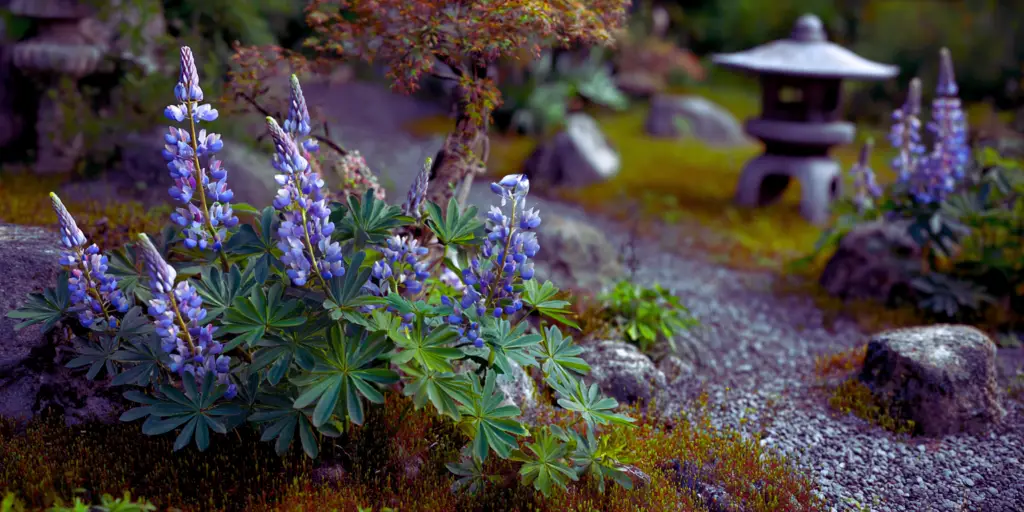
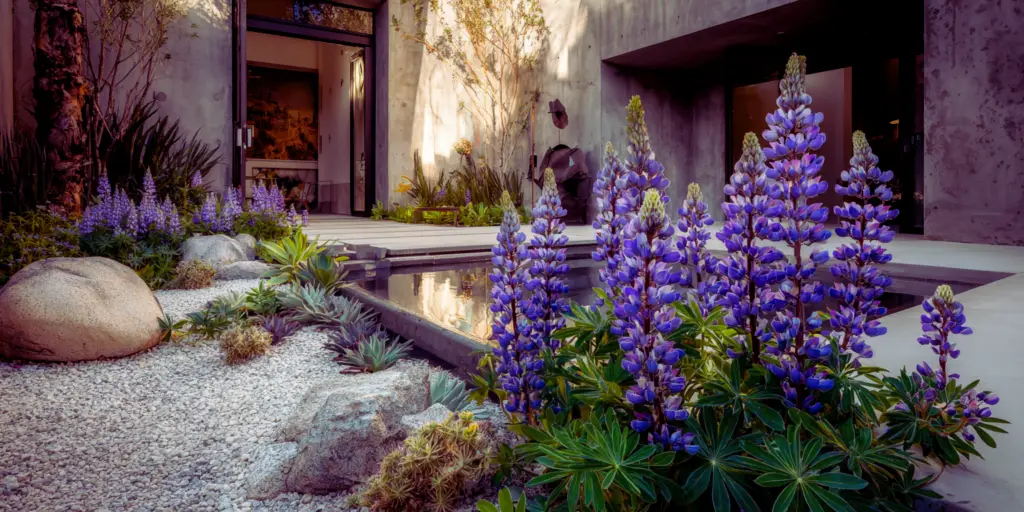
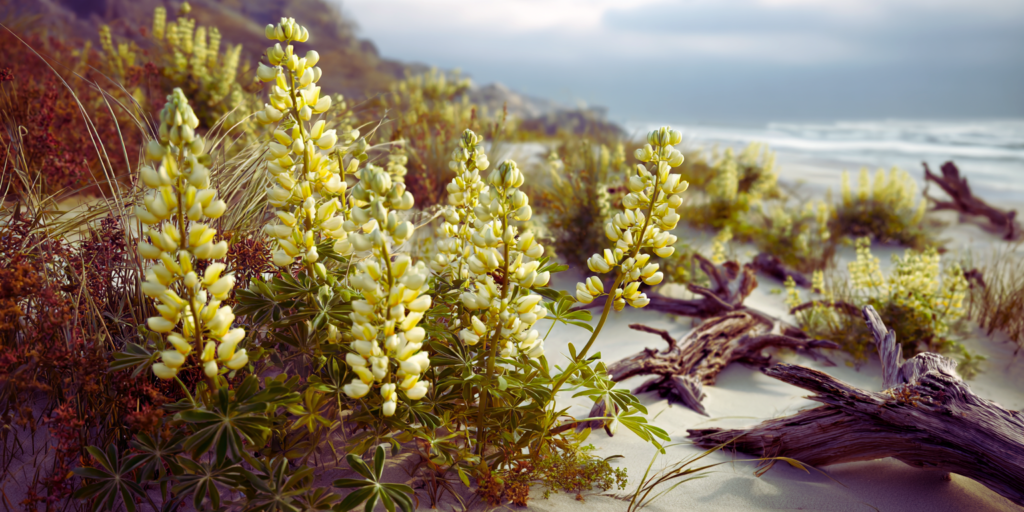
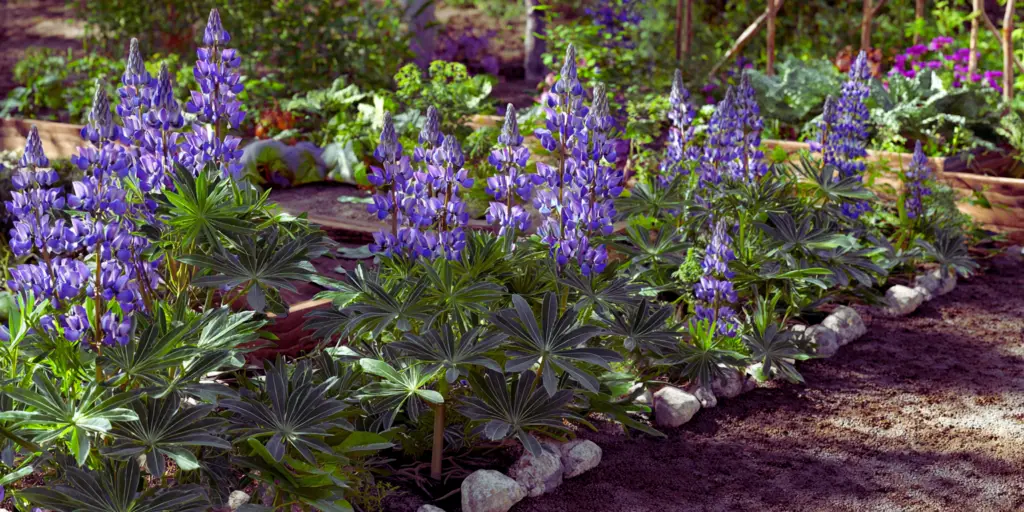
Sky lupine is a petite annual native to California’s grasslands and open slopes. It is valued for compact, fragrant blue spikes with a white or yellow banner spot. Plants grow quickly from fall or early spring sowing and bloom in spring. They perform best in full sun and lean, very well-drained soils. The season is brief in heat, and plants reseed where bare soil is available.
At‑a‑glance
Group/Class: Annual wildflower
Height × spread: 6-20 in (15-50 cm) × 6-20 in (15-50 cm)
Bloom window: March to May
Color & flower form: Sky blue to deep blue; short vertical racemes of pea-like flowers with a banner spot
Fragrance: 2 noticeable
USDA hardiness: grown as annual in most regions
Breeder / Year / Origin: unknown, unknown, USA (California)
Pet safety: avoid
How it differs
Much shorter than border lupines, suiting small spaces and containers
Noticeably fragrant for a lupine
Finishes the season early as heat arrives
Best on lean soils rather than enriched beds
Strengths
Fast from seed to bloom
Fragrance and nectar for pollinators
Low water needs in cool season
Self-sows to return modestly
Care in one minute
Site: Full sun with open exposure
Soil and pH: Very well-drained, lean soils; neutral to slightly acidic
Planting: Direct sow in fall in mild areas or early spring elsewhere; press seed to soil
Watering: Light water for establishment; then minimal irrigation
Feeding: Do not fertilize; inoculate seed if soil lacks rhizobia
Grooming: Allow some pods to ripen if reseeding is desired
Watch‑outs
Short bloom season
Declines with summer irrigation or rich soils
Seedlings need sharp drainage to avoid damping-off
Best uses (tags)
containers, meadows, rock gardens, pollinators, seasonal color
Provenance note
Native across much of California below about 4,300 ft, where it colors spring hillsides and roadsides.
Written by: Your Flowers Guide editorial team We are a small independent group of flower lovers who research and review each guide using trusted horticultural and educational sources. Learn more about us