returns in
273
days
Bloom calendar
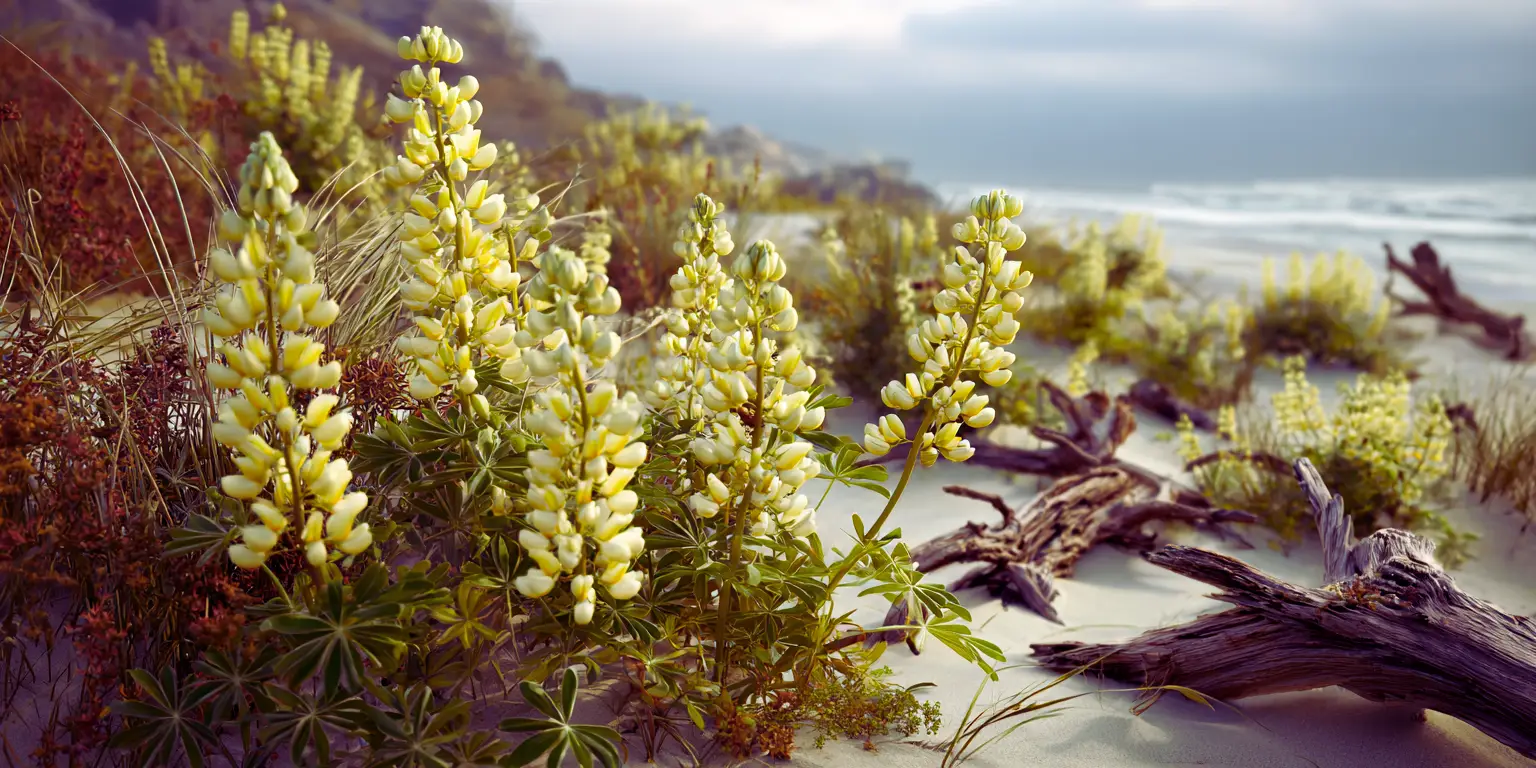
Lupinus arboreus
Evergreen shrub
At‑a‑glance
- Group/Class: Evergreen shrub
- Height × spread: 3-6.5 ft (1-2 m) × 3-6.5 ft (1-2 m)
- Bloom window: May to July
- Color & flower form: Usually yellow; erect racemes; lilac or purple forms exist
- Fragrance: 2 noticeable
- USDA hardiness: 8b to 9
- Breeder / Year / Origin: unknown, unknown, USA (coastal California)
- Pet safety: avoid
How it differs
- Woody and evergreen rather than herbaceous
- Tolerates coastal exposure and lean, sandy soils
- Flower fragrance is more noticeable than many lupines
- Can become invasive north of its probable native range
Strengths
- Quick cover and erosion control on sunny banks
- Handles salt spray and wind
- Drought tolerant once established
- Provides nectar and shelter for pollinators
Care in one minute
Site: Full sun with exposure to air movement
Soil and pH: Very well-drained, sandy soils; avoid rich amendments
Watering: Deep but infrequent after establishment
Feeding: Not needed; excessive fertility shortens life
Grooming: Light prune after bloom; deadhead to reduce reseeding
Region note: Avoid planting near sensitive dunes north of its native range
Watch‑outs
- Short-lived shrub that benefits from renewal planting
- Self-seeds freely; remove pods to limit spread
- Not reliably hardy in cold winters away from the coast
Best uses (tags)
Provenance note
Likely native from the San Francisco Bay Area south to San Luis Obispo County; now naturalized along the Pacific Coast and overseas.
References
- Trees and Shrubs Online (International Dendrology Society): Lupinus arboreus (zones, habit, notes)
- California Invasive Plant Council: Yellow bush lupine plant report
- USDA PLANTS Database: Lupinus arboreus profile
Similar Flowers
Enjoying our flower guides? Add YourFlowersGuide as a preferred source on Google. It helps more readers find us.
Add to Preferred Sources