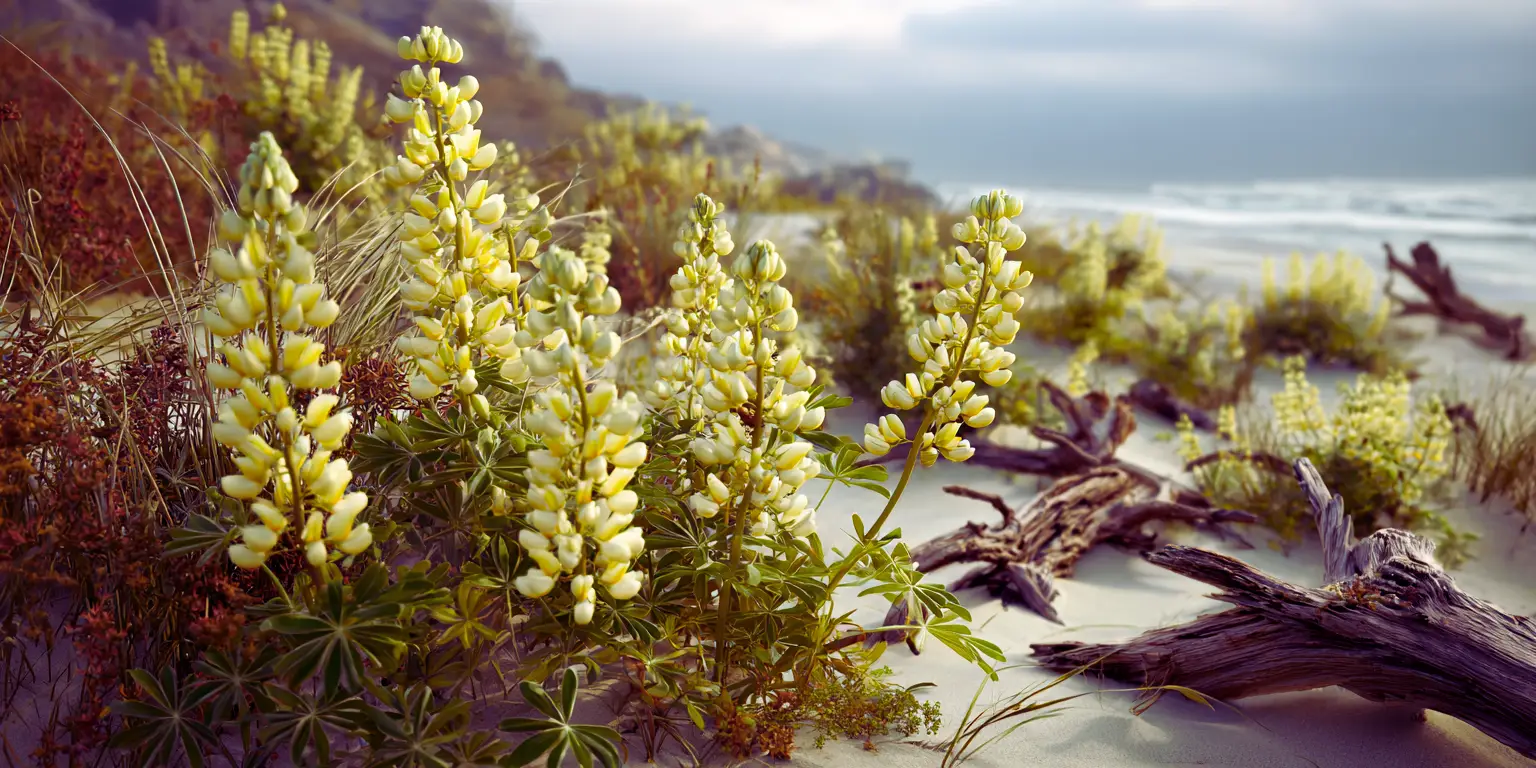
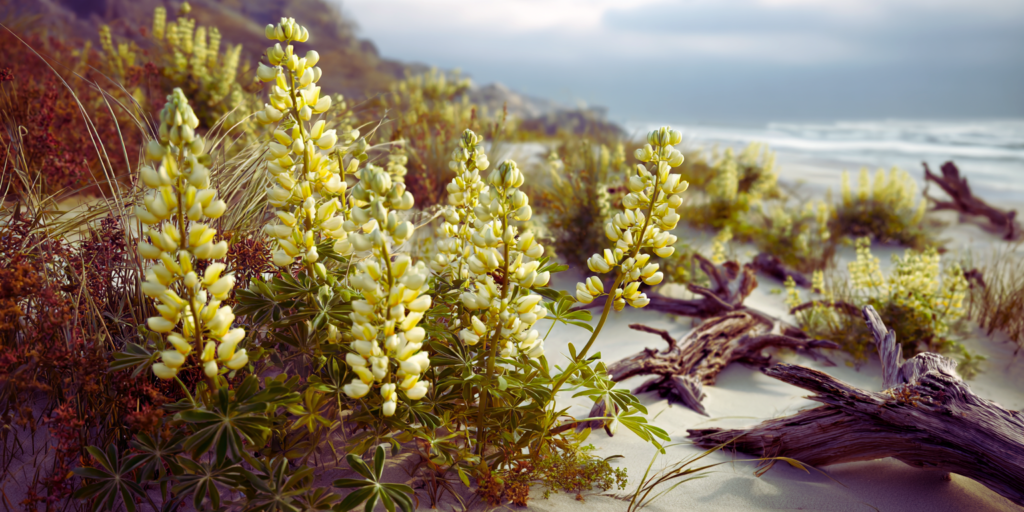
Yellow bush lupine is a fast-growing evergreen shrub native to coastal California. It bears lightly sweet-scented yellow spikes and tolerates wind and salt spray. It performs best in mild, frost-light coastal zones on sandy, sharply drained soils in full sun. Plants are short-lived but establish quickly and can stabilize sunny banks. In northern coastal dunes it can spread aggressively and alter soils through nitrogen enrichment.
At‑a‑glance
Group/Class: Evergreen shrub
Height × spread: 3-6.5 ft (1-2 m) × 3-6.5 ft (1-2 m)
Bloom window: May to July
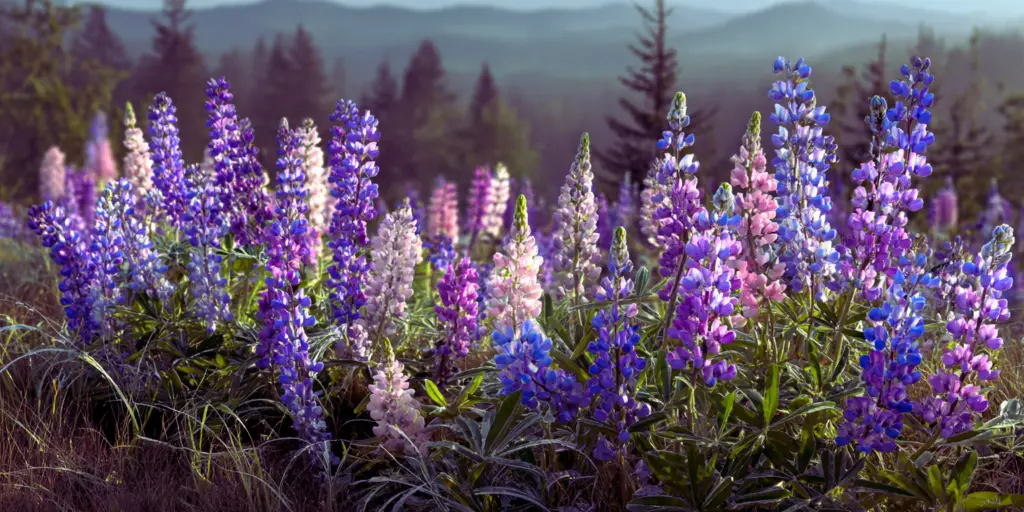
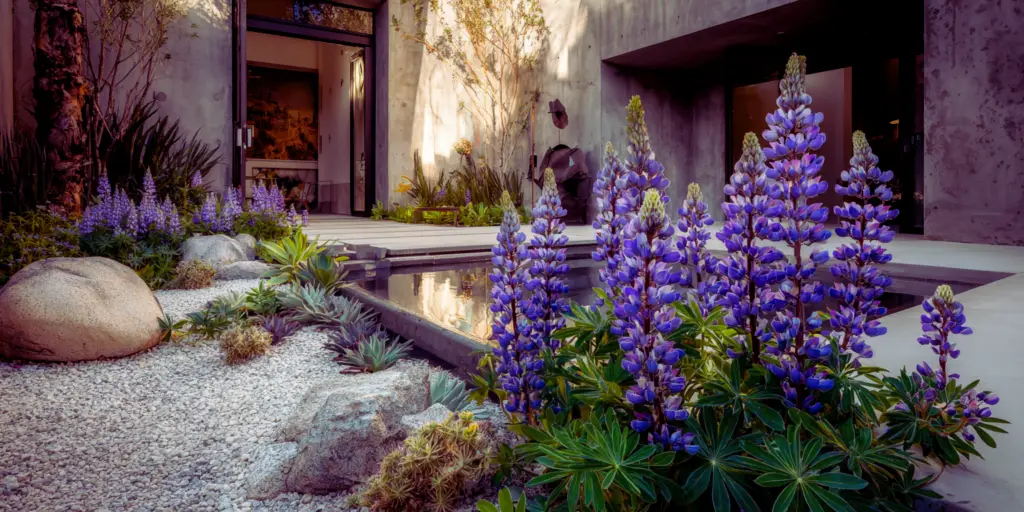
Color & flower form: Usually yellow; erect racemes; lilac or purple forms exist
Fragrance: 2 noticeable
USDA hardiness: 8b to 9
Breeder / Year / Origin: unknown, unknown, USA (coastal California)
Pet safety: avoid
How it differs
Woody and evergreen rather than herbaceous
Tolerates coastal exposure and lean, sandy soils
Flower fragrance is more noticeable than many lupines
Can become invasive north of its probable native range
Strengths
Quick cover and erosion control on sunny banks
Handles salt spray and wind
Drought tolerant once established
Provides nectar and shelter for pollinators
Care in one minute
Site: Full sun with exposure to air movement
Soil and pH: Very well-drained, sandy soils; avoid rich amendments
Watering: Deep but infrequent after establishment
Feeding: Not needed; excessive fertility shortens life
Grooming: Light prune after bloom; deadhead to reduce reseeding
Region note: Avoid planting near sensitive dunes north of its native range
Watch‑outs
Short-lived shrub that benefits from renewal planting
Self-seeds freely; remove pods to limit spread
Not reliably hardy in cold winters away from the coast
Written by: Your Flowers Guide editorial team We are a small independent group of flower lovers who research and review each guide using trusted horticultural and educational sources. Learn more about us