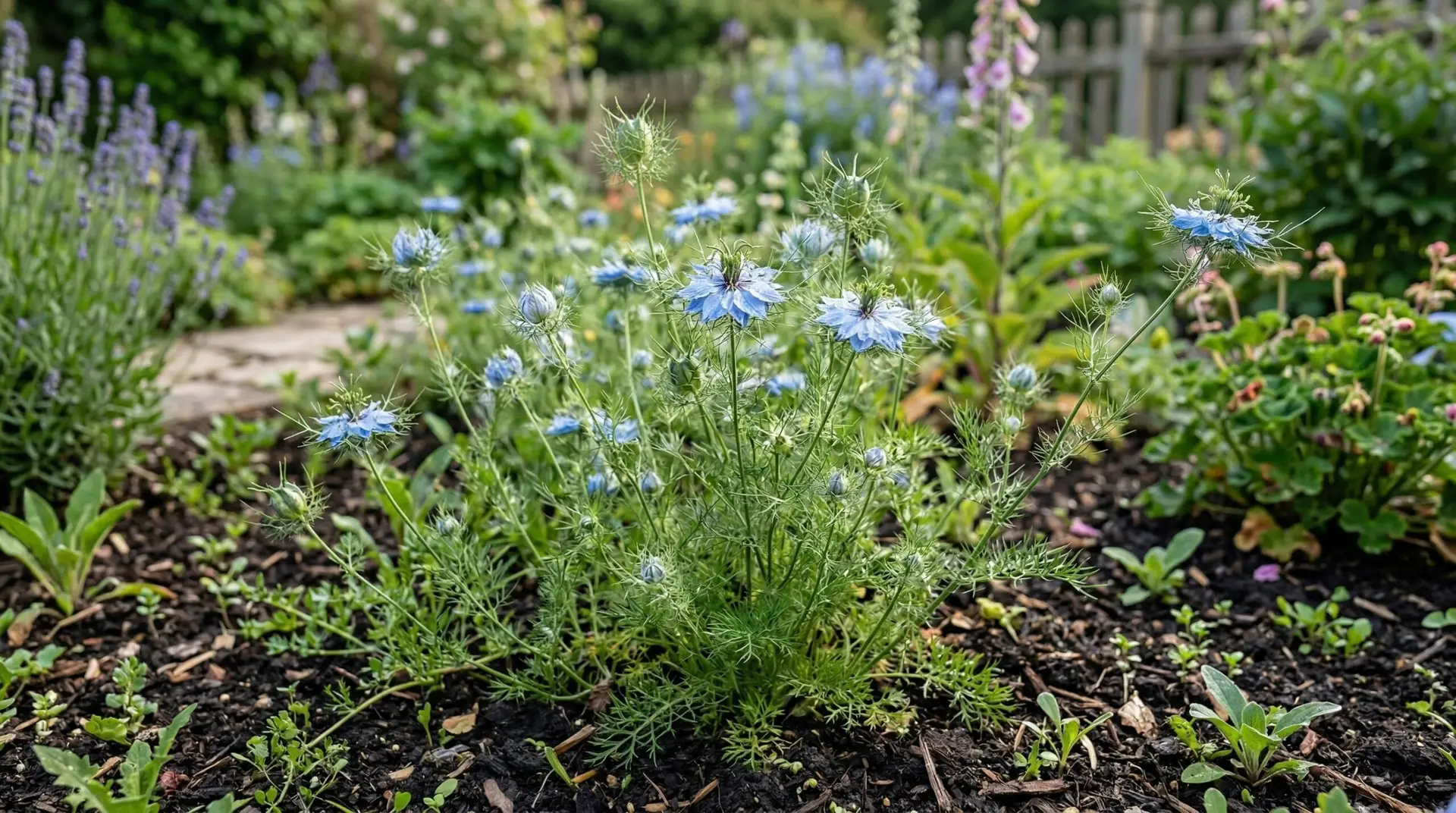
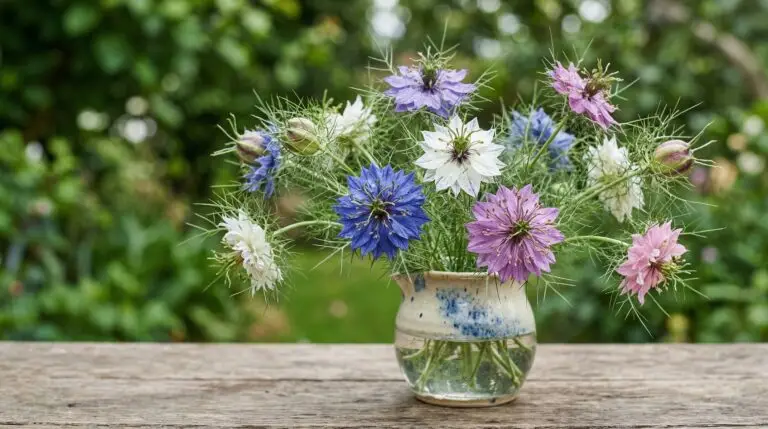
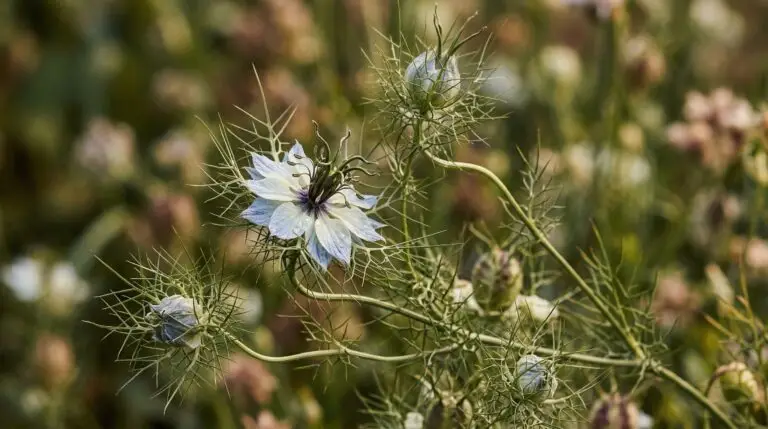
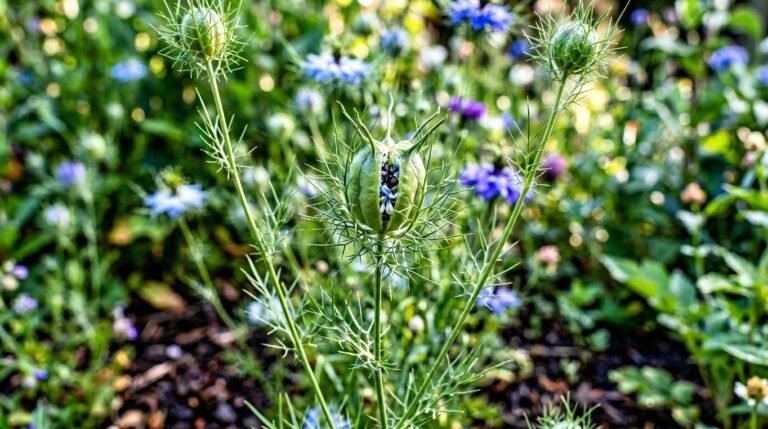
When you look closely at a love-in-a-mist flower, you are actually observing a clever botanical illusion. The delicate, thread-like green web that surrounds the blossom is not made of true leaves, but rather highly modified bracts forming an involucre. This structural adaptation gives Nigella damascena its common name, creating a visual haze that seems to trap the flower in a green fog. Plant biologists note that this feathery cage has multiple functions, from deterring crawling insects that might steal nectar without pollinating the flower to creating a slightly humid microclimate around the developing reproductive organs. Growing love-in-a-mist allows you to observe these complex defenses firsthand in your own garden space. The plant originates in the Mediterranean region, where it evolved to maximize its reproductive success in a highly competitive, rocky environment.
The deception of Nigella damascena continues when you examine the colorful parts of the bloom. The large, petal-like structures that give the plant its characteristic blue, pink, or white coloration are actually sepals, which are typically green and leaf-like in other plant species. The true petals have been evolutionarily modified into specialized, two-lipped nectaries hidden deeper within the flower structure. These nectaries function as precise landing pads and reward dispensers for specific long-tongued bees that co-evolved alongside the plant. When a bee lands to access the nectar, it brushes against the prominent anthers and stigmas, ensuring efficient pollen transfer. Understanding this complex floral architecture makes the daily observation of these plants far more interesting than simply admiring their color.
Root architecture and planting methods
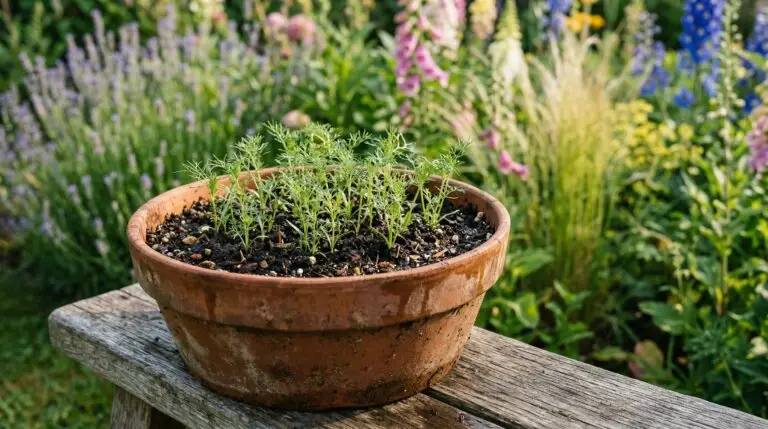
To understand proper nigella care, you have to look below the soil surface at the root system. Nigella damascena develops a distinct, fleshy taproot that drives straight down into the earth rather than spreading horizontally. This root architecture is a direct response to its native Mediterranean habitat, allowing the young seedling to quickly access deep moisture reserves before the topsoil dries out in the spring sun. Because the plant invests so much early energy into this single primary root, it strongly resents any root disturbance or transplanting. If the tip of this taproot breaks in a nursery pot, the plant will usually stunt or fail to mature properly. This biological reality dictates that successful nigella damascena growing requires direct sowing the seeds exactly where you want the plants to mature. Much like growing cornflowers, you will achieve the strongest, most resilient plants by letting the seeds germinate naturally in the garden bed.
The taproot also explains the specific soil preferences of this species. Love-in-a-mist thrives in well-draining soil because its deep root needs oxygen to function and will quickly rot in heavy, waterlogged clay. The plant handles drought surprisingly well once established, drawing on the moisture its taproot locates deep underground. You will notice that plants grown in leaner, slightly sandy soils tend to produce more flowers and stay more compact, whereas those grown in highly fertilized garden loam produce abundant feathery foliage at the expense of blooms. In its native range, it grows in poor, rocky soils that offer little nitrogen. By mimicking these lean conditions, you encourage the plant to focus its energy on reproduction rather than vegetative growth.
Temperature triggers and seasonal timing
The life cycle of love-in-a-mist is tightly governed by soil temperature. The seeds possess a mild physiological dormancy that breaks most reliably after exposure to cool, moist conditions. In the wild, seeds drop in late summer, experience the cold winter rains, and germinate as soon as the soil begins to warm in very early spring. You can use this biological programming to your advantage by sowing seeds in the autumn and letting winter weather handle the stratification naturally. The resulting seedlings are remarkably cold-hardy and will form small rosettes that wait patiently through light frosts. These autumn-sown plants invariably grow larger and bloom earlier than those sown in the spring, similar to the growth patterns seen in forget-me-nots when they are allowed to naturalize.
As a cool-season annual, Nigella damascena has a built-in biological clock that reacts to rising temperatures and lengthening daylight. When the intense heat of summer arrives, the plant receives environmental signals that its growing window is closing rapidly. It responds by halting new leaf production and accelerating the development of its seed pods to ensure the next generation is secure before the plant dies. This means that love-in-a-mist will naturally brown and fade by mid-summer in hot climates, regardless of how much water or fertilizer you provide. Rather than fighting this genetic programming, gardeners do best to accept its ephemeral nature and perhaps plan a succession of later-blooming species to fill the gap. The rapid life cycle is a highly successful evolutionary strategy for surviving the blistering, rainless Mediterranean summers as a dormant seed.
The mechanics of the seed capsule
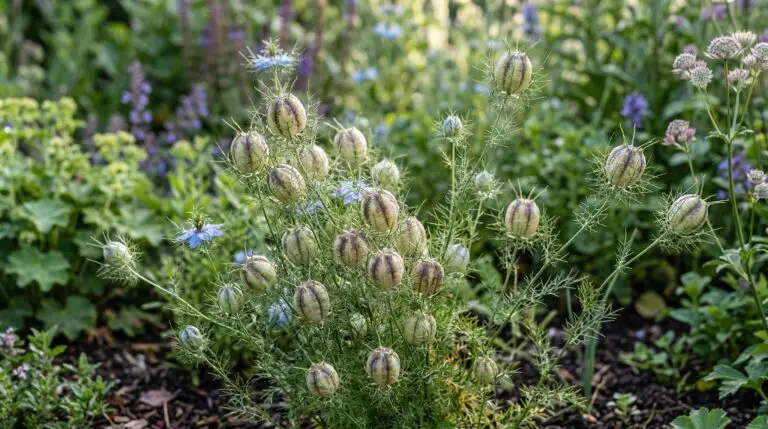
The transition from delicate flower to robust seed pod is perhaps the most fascinating phase of the plant’s life. After successful pollination, the sepals drop away and the five carpels at the center of the flower begin to fuse and swell dramatically. They form a large, inflated capsule that looks like a striped, papery balloon topped with five distinct horns. These horns are actually the remnants of the styles, the reproductive tubes that the pollen traveled down to reach the ovaries. The balloon-like structure is a protective isolation chamber, regulating temperature and humidity for the developing seeds inside while shielding them from seed-eating predators. As the capsule matures, it shifts in color from pale green to deep burgundy and finally to a papery tan.
The architecture of the mature pod reveals a highly specialized method of seed dispersal. Unlike pods that shatter violently or drop their contents all at once, the Nigella damascena capsule opens via small pores at the base of the horns at the very top of the structure. This creates a natural shaker mechanism that relies on the wind or passing animals to disturb the stiff stem. When the stem snaps back, it flings a few seeds at a time out of the top pores, ensuring the seeds are distributed over a wider area rather than clustered directly beneath the parent plant. This slow-release mechanism allows the plant to scatter its offspring over several weeks, increasing the chances that at least some seeds will land in favorable microclimates. It is a highly effective strategy that makes the plant a reliable self-sower, much like cosmos in a well-managed garden bed.
When you finally crush one of these dried pods in your hand, you release dozens of angular, coal-black seeds that carry a faint scent of oregano and pepper. These seeds are packed with protective alkaloids, chemical compounds evolved to deter soil pathogens and herbivores during the long months they sit dormant in the dirt. The sheer density of these chemical defenses explains why the seeds can survive in the soil bank for years, waiting for the exact combination of light and cool moisture to break their dormancy. This chemical resilience is exactly why the plant returns so faithfully year after year without any human intervention. Holding these seeds, you realize that the delicate blue flowers and the feathery green mist are simply temporary biological tools. The true persisting form of Nigella damascena is this small, chemically armored black seed, perfectly engineered to wait out the harshest conditions until the time is right to grow again.
More About Love in a Mist

Nigella seeds in the spice world and the culinary history of black cumin
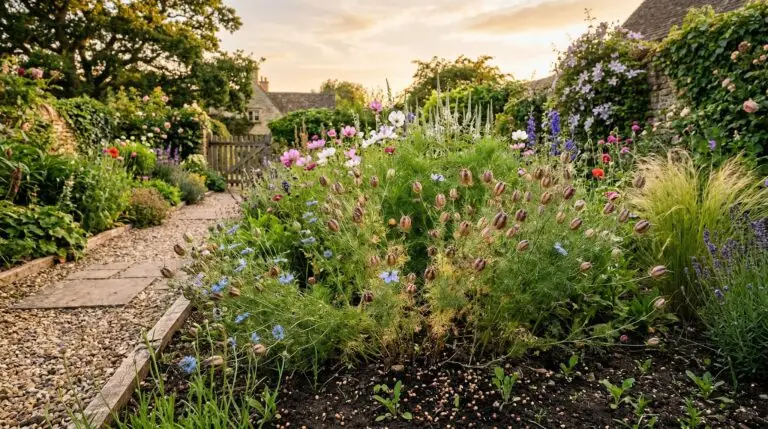
Love-in-a-mist as a self-sowing annual that creates a cottage garden on autopilot
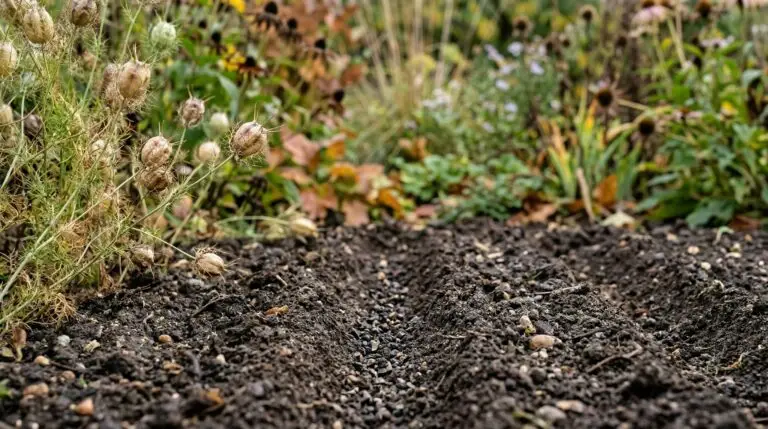
Growing love-in-a-mist from seed with the simple scatter and forget method
Best love-in-a-mist varieties from classic Persian Jewels to double Albion Green Pod
Love-in-a-mist in containers for a feathery cottage feel on balconies and windowsills
Companion plants for love-in-a-mist: what to grow and avoid
Love-in-a-mist flower meaning and the romantic mystery behind this enchanting bloom
Love-in-a-mist as a delicate cut flower for wildflower-style bouquets and arrangements