The early morning sun catches the dew on heavy, cup-shaped rose blooms, illuminating petals in shades of soft pink and deep crimson. Below these reaching canes, a soft haze of violet-blue spills over the pathway edge, softening the hard lines of the stone. This is the classic English garden catmint and rose pairing, a combination that has defined romantic borders for generations. The soft, billowing nature of the catmint provides a perfect visual anchor for the structured, sometimes stiff growth habit of the roses above. When you brush past the border, the sweet, heavy fragrance of the floral blooms mixes with the sharp, minty scent of the bruised gray-green foliage below. It is an arrangement that looks effortless, suggesting a garden that simply grew itself into perfect harmony. Most gardeners discover that achieving this specific look requires just a bit of careful planning and the right spatial arrangement.
The tradition of planting catmint with roses emerged from a need to solve a common horticultural problem. Shrub and climbing roses often develop bare, woody stems at their bases as they mature, leaving an awkward gap between the soil and the lowest leaves. Gardeners needed a low-growing companion plant that could mask these ‘bare legs’ without competing too aggressively for water and nutrients. Nepeta, with its shallow root system and sprawling habit, offered the perfect solution to this structural dilemma. The resulting aesthetic was so pleasing that it quickly became a staple of border design.
The chemistry of color and form
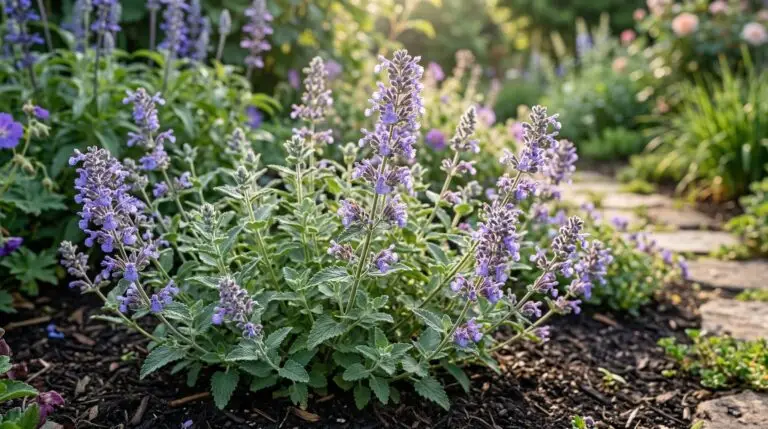
The success of the nepeta roses combination relies heavily on the reliable contrast between warm and cool tones. Pink, peach, and deep red roses command attention in the garden, drawing the eye immediately to their complex, clustered petals. The cool, recessive violet-blue of the catmint acts as a visual resting place, preventing the brighter colors from overwhelming the senses. The tiny, tubular flowers of the catmint gather in long spikes, creating a hazy, watercolor effect that contrasts sharply with the solid, defined geometry of a classic rose blossom. The foliage also plays a critical role in this visual exchange. Catmint leaves are small, textured, and coated in fine hairs that give them a silvery-gray appearance. This muted foliage makes the glossy, dark green leaves of the rose bushes appear richer and more saturated in the summer sunlight.
Many gardeners attempt to create this blue and pink dynamic using other popular border plants. While lavender offers a similar color palette and Mediterranean charm, it often demands drier, leaner soil than most heavy-feeding roses prefer. The hardy geranium provides excellent ground cover, but its mounding habit rarely achieves the same airy, cloud-like volume that nepeta produces. Catmint thrives in the exact same loamy, well-watered but well-draining soil that produces the best rose blooms. This shared cultural requirement makes them ideal bedfellows in a mixed border.
Structuring the underplanting
Proper spacing is the secret to making this combination work over the long term. If you plant the catmint too close to the base of the rose, the sprawling stems will restrict air circulation around the lower canes, which invites fungal diseases like black spot and powdery mildew. You should position the catmint crowns at least eighteen to twenty-four inches away from the main stems of the roses. This distance allows the nepeta to billow outward and backward, eventually touching the rose canes lightly without smothering them. When planting a new border, it helps to place the roses first, establishing your primary structural anchors. You can then weave the catmint plants through the foreground, spacing them about two feet apart to create a continuous, rolling river of blue. As the plants mature, they will knit together into a solid skirt of color that suppresses weeds and shades the soil.
One of the greatest advantages of English garden catmint is its exceptionally long blooming season. The first flush of blue flowers typically opens just as the early summer roses begin to unfurl their buds. While the roses will cycle through periods of heavy blooming and quiet growth, the catmint provides a constant baseline of color for weeks on end. When the first wave of catmint flowers eventually fades and the stems grow floppy in midsummer, a quick shearing will prompt a fresh flush of blue foliage and new blooms that carry the display straight through to autumn.
Maintaining the balance
Keeping these two plants in perfect proportion requires a few specific maintenance tasks throughout the growing season. Roses are notoriously heavy feeders, requiring regular applications of compost and balanced fertilizers to produce their large, complex flowers. Catmint, on the other hand, tends to grow excessively leggy and weak if the soil is too rich. You can manage this difference by applying fertilizer directly to the root zone of the roses, keeping the supplemental nutrients away from the catmint crowns. Watering practices also require a bit of observation to keep both plants healthy. You should direct the water to the base of the plants using drip irrigation or a soaker hose, keeping the foliage of both the roses and the catmint dry. The catmint will signal when the bed is getting too dry by slightly drooping its soft tips, acting as a helpful indicator plant for the deeper-rooted roses.
The true reward of this pairing reveals itself in the late afternoon, when the harsh midday light softens and the garden begins to cool. The blue tones of the catmint seem to glow in the fading light, creating a luminous base for the darkening silhouettes of the roses above. Bees and other pollinators move sluggishly through the tubular flowers, their low humming adding a layer of sound to the visual display. There is something deeply satisfying about brushing past the border at this hour, releasing that sharp, herbal scent into the still air. It is a quiet, enduring moment that captures the exact feeling of summer.
More About Catmint
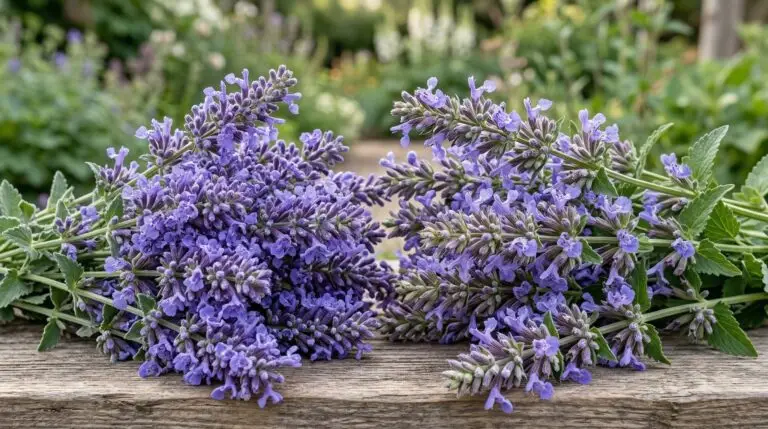
Catmint versus lavender and which fragrant purple perennial works better in your garden
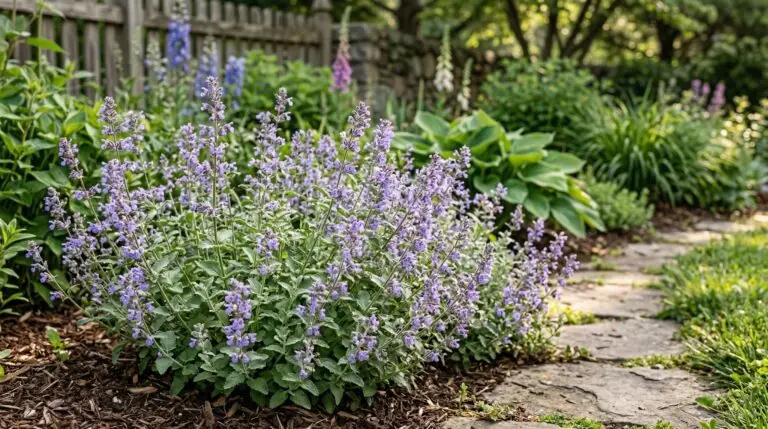
Catmint as the ultimate deer-resistant and drought-tolerant perennial for easy gardens

Designing a low-water perennial border with catmint as the anchor plant

How to shear back catmint for a second flush of blooms and a tidy appearance
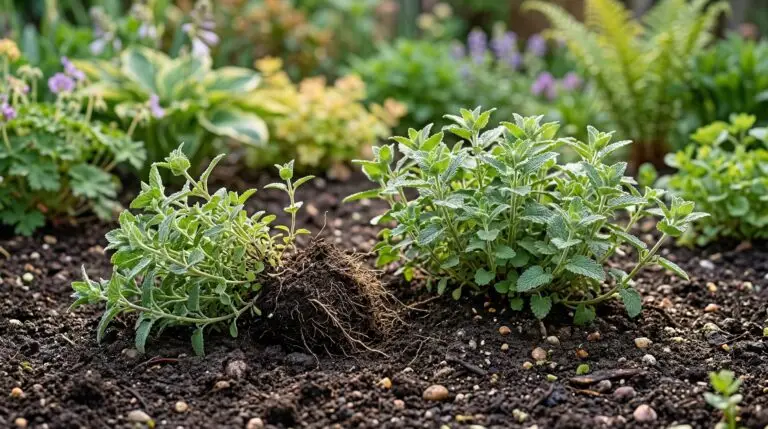
How to propagate catmint from stem cuttings and division in spring

How to use catmint as a flowering ground cover that chokes out weeds
Catmint versus catnip and why they are different plants with different garden uses
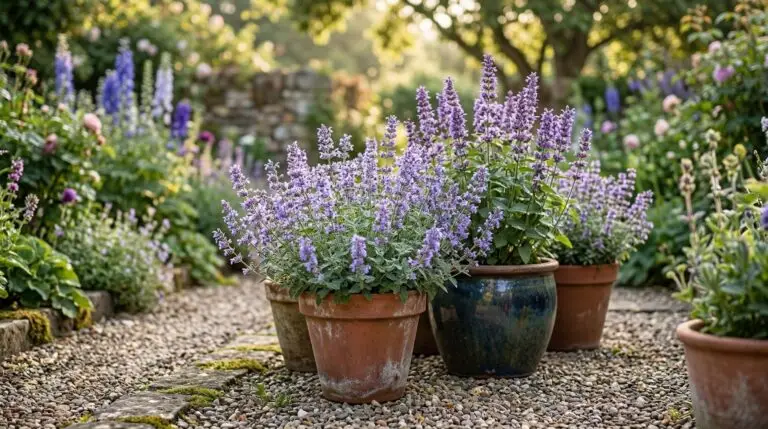
Growing catmint in containers for a fragrant pollinator-friendly balcony