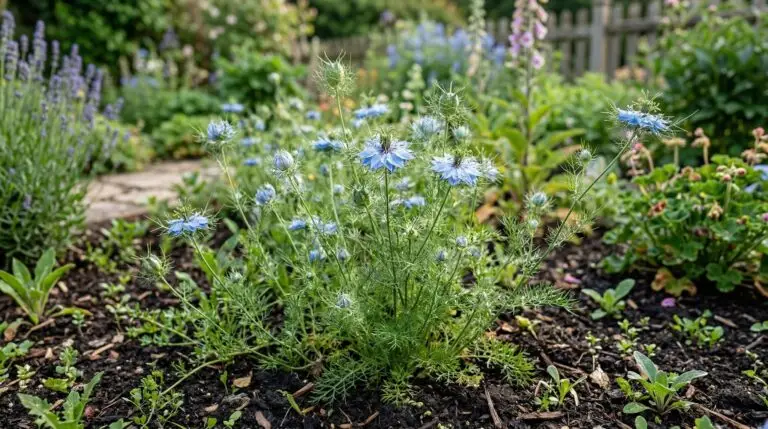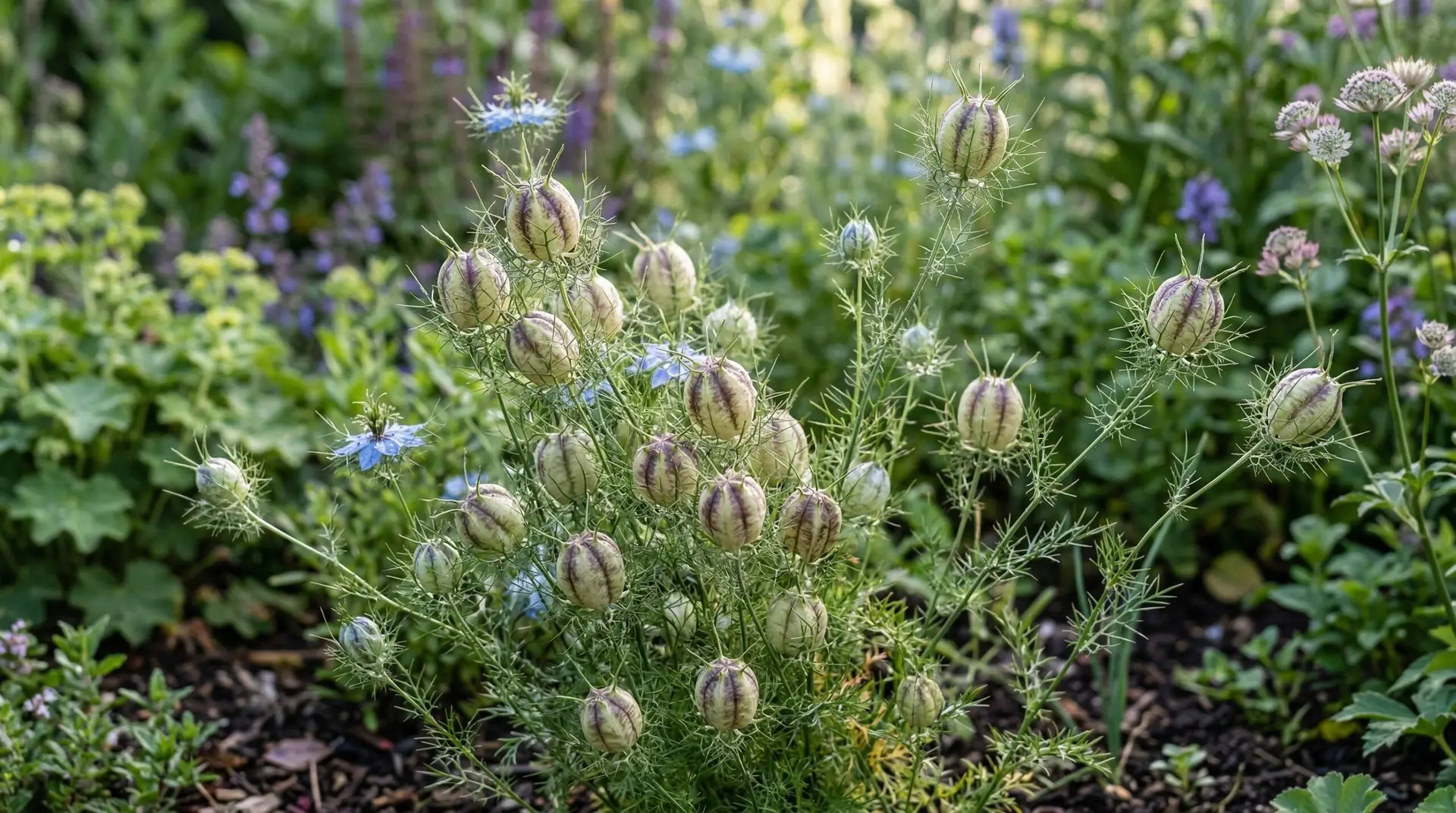
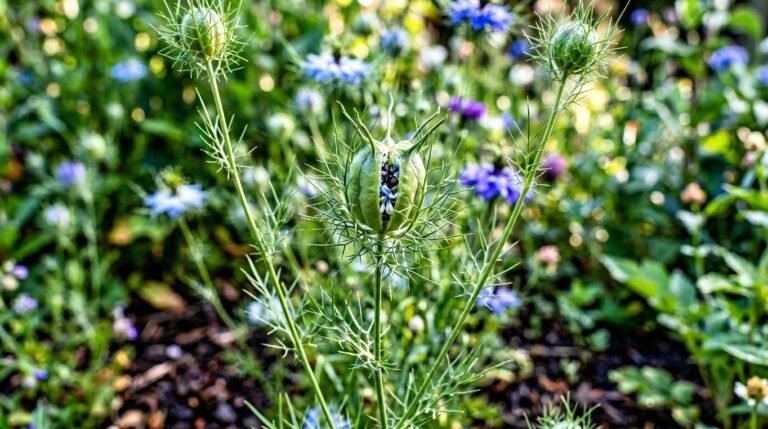
Late summer brings a quiet shift to the garden as the bright colors of July fade into the muted tones of August. The delicate blue and white petals of Nigella damascena drop to the soil, leaving behind something entirely different from the soft blooms that earned the plant its common name. The lacy foliage that once surrounded the flowers now frames swollen, balloon-like structures that seem to hover above the fading stems. These inflated vessels are the nigella seed pods, and they possess a strange, architectural beauty that commands attention. Many gardeners discover that they look forward to this phase of the plant’s life cycle even more than the initial flowering period. The transition from a fragile blossom to a sturdy, striped capsule feels like a second act in the garden. Watching this transformation offers a reminder that the end of a flower is rarely the end of the show.
The anatomy of love-in-a-mist dried pods reveals a remarkable design that is both functional and visually complex. Each papery globe is marked with distinctive vertical stripes that deepen from pale green to rich burgundy as the summer progresses. At the top of the capsule, several horn-like projections curve outward, giving the pod a slightly alien appearance. The thin walls of the pod protect the developing seeds inside while catching the low morning light, creating a translucent effect that is hard to ignore.
Timing the harvest for perfect preservation
Capturing these pods at the right moment requires a watchful eye and a bit of patience. If you cut the stems too early while the pods are still entirely soft and green, they will shrivel and lose their characteristic round shape as they dry. You must wait until the pods feel firm to the touch and the stripes begin to take on a darker, bruised color. The stems themselves should feel slightly woody rather than fleshy and bendable. Armed with a pair of sharp snips, you can harvest the stems on a dry afternoon when the morning dew has completely evaporated from the lacy bracts. Leaving a few pods in the garden ensures that the plant will self-sow for the following year, continuing the cycle without any extra effort on your part. Gathering a generous armful of the remaining stems provides plenty of material for winter projects.
The drying process itself is straightforward and requires very little specialized equipment. Once you bring the harvested stems indoors, strip away the lower leaves and bundle them together with a rubber band or a piece of twine. Hanging the bunches upside down in a warm, dark, and well-ventilated space prevents the pods from molding and helps them retain their color. After a few weeks, the stems will snap cleanly when bent, and you will hear the loose seeds rattling inside the papery chambers.
Building texture in winter vases
A well-crafted nigella dried arrangement relies on the contrast between the smooth, inflated pods and the varied textures of other preserved garden flowers. The pale, striped globes provide an excellent visual anchor when paired with the rigid, metallic blue spheres of globe thistle harvested earlier in the season. You can build a rich, layered display by incorporating the flat, mustard-yellow landing pads of dried yarrow, which offer a horizontal counterpoint to the upright nigella stems. The muted tones of the pods also work beautifully alongside the pepper-shaker heads of a dried poppy, creating a vase filled entirely with the sculptural remnants of the summer garden. Arranging these dried elements requires a gentle touch, as the stems become brittle once all the moisture has evaporated. The resulting display brings the structural bones of the garden indoors, offering a quiet beauty that lasts through the darkest months of the year.
Working with these materials allows you to appreciate the fine details that often go unnoticed outdoors. The maroon stripes on the pods echo the deep reds and browns of autumn foliage, making them a natural fit for seasonal centerpieces. Because they do not require water, you can place these arrangements in vintage wooden boxes, antique pitchers, or simple ceramic jugs that might not be watertight. The pods hold their shape and subtle coloration for years if kept out of direct sunlight and away from damp environments.
Crafting wreaths and lasting displays
Beyond the traditional vase, nigella pods offer excellent raw material for wreath making and more complex floral mechanics. Their lightweight nature means they will not weigh down a grapevine base or a delicate wire frame. By wiring small clusters of the pods together with floral tape, you can create dense, textural bundles that attach easily to a wreath form. The spiky horns at the top of each pod catch the eye and create a sense of movement around the circular design. Mixed with dried grasses, seed heads, and perhaps a few pinecones, the pods help build a wild, foraged aesthetic that feels entirely appropriate for a winter door or an interior wall. The papery globes stand out against darker evergreens, providing small points of light and interest in the shadows of the foliage.
There is something deeply satisfying about utilizing a plant long after its petals have fallen away to the soil. The hollow rattling sound of the seeds inside the dried pods is a constant reminder of the life waiting dormant within the papery walls. The structure of the pod itself holds up incredibly well against the dry indoor air of a heated house. When the arrangement finally grows dusty or the wreath begins to fade, you can simply crush the brittle globes between your fingers and scatter the small, black seeds back into the garden beds. The winter light fading across a vase of these striped, horned capsules leaves a quiet promise that the green shoots of spring are already written into the script.
More About Love in a Mist

Nigella seeds in the spice world and the culinary history of black cumin
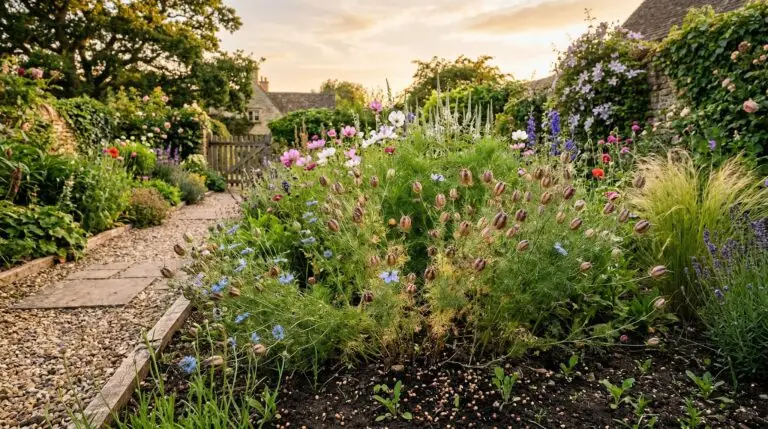
Love-in-a-mist as a self-sowing annual that creates a cottage garden on autopilot
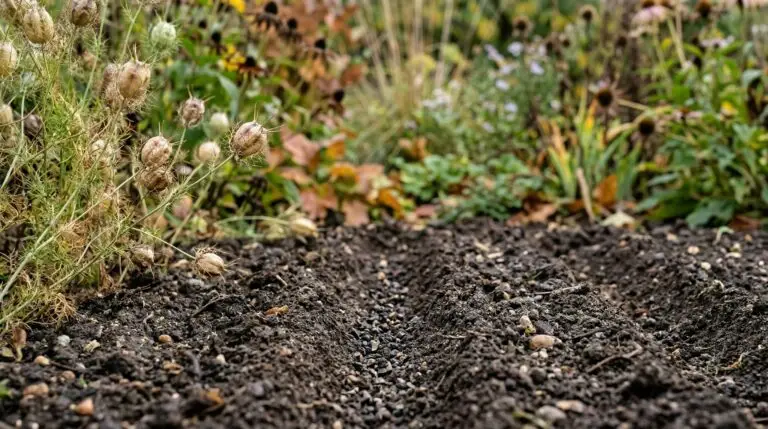
Growing love-in-a-mist from seed with the simple scatter and forget method
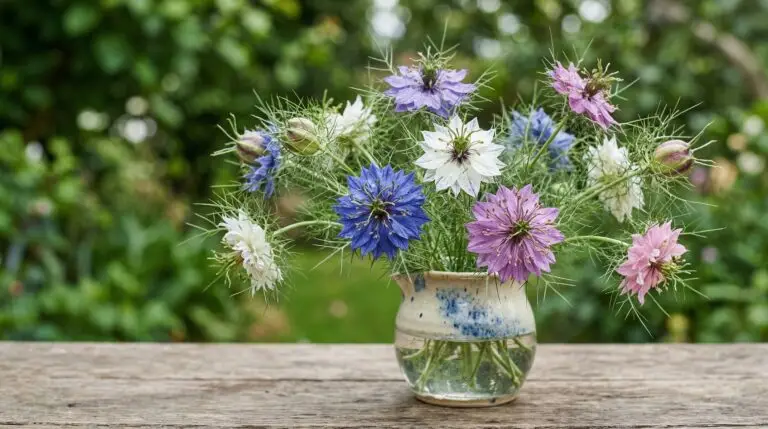
Best love-in-a-mist varieties from classic Persian Jewels to double Albion Green Pod
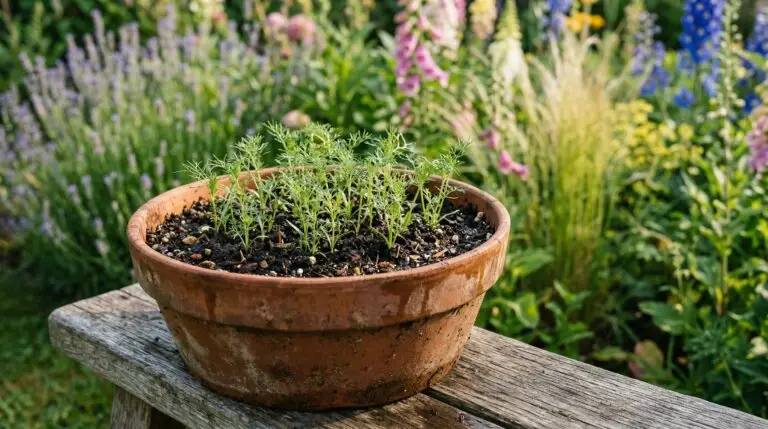
Love-in-a-mist in containers for a feathery cottage feel on balconies and windowsills
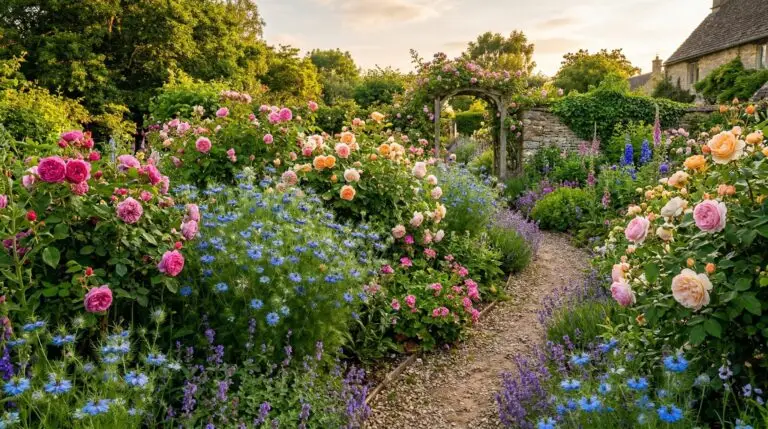
Companion plants for love-in-a-mist: what to grow and avoid
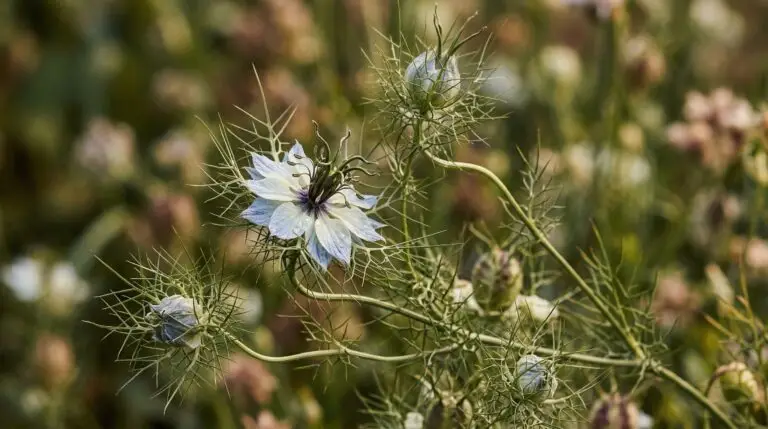
Love-in-a-mist flower meaning and the romantic mystery behind this enchanting bloom
Love-in-a-mist as a delicate cut flower for wildflower-style bouquets and arrangements