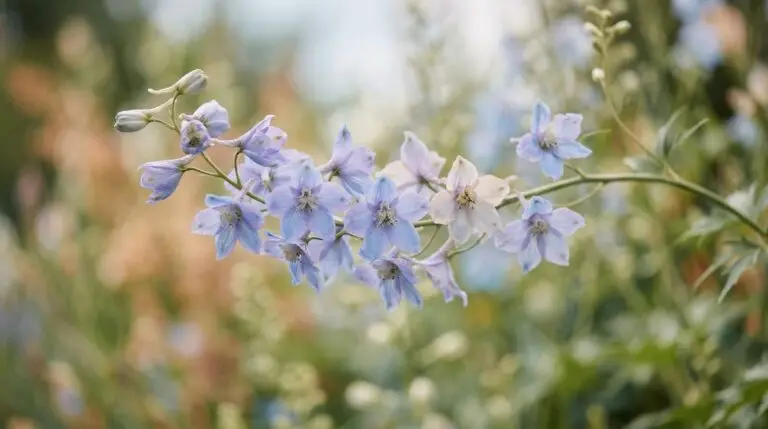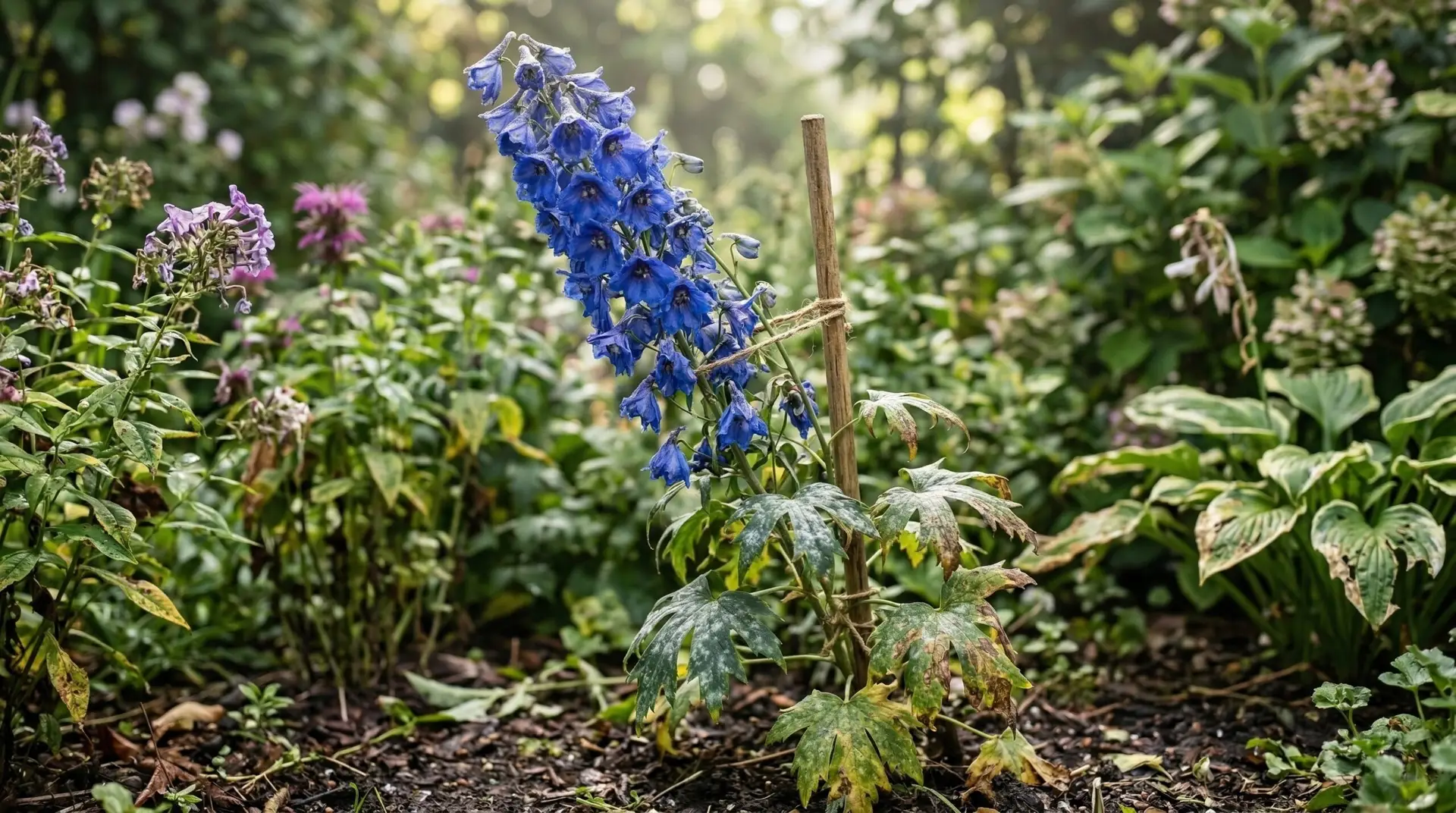
Growing conditions vary enormously across the continent, and understanding your precise local context is the foundation of any successful planting strategy. What thrives in the cool, maritime climate of the Pacific Northwest will quickly melt into a puddle of mush during a typical Georgia July. The popular Delphinium elatum evolved in high-altitude, cool-summer environments characterized by excellent soil drainage and consistently chilly nights. Gardeners south of USDA Zone 7 often buy these tall blue spikes at spring garden centers, only to watch them collapse when the aggressive summer weather arrives. Attempting to grow a delphinium in a hot climate requires recognizing that you are fighting the plant’s basic genetic programming, which demands cool roots and low atmospheric moisture. Success depends entirely on whether you can manipulate your local microclimate to support them or if you should choose plants naturally adapted to your region.
Understanding the heat and humidity challenge
The primary enemy of Delphinium elatum in warm regions is high nighttime temperatures combined with stagnant humidity. In the humid Southeast, from the Carolinas down through the Gulf Coast, summer nights rarely drop below seventy degrees. These warm, damp conditions create the perfect breeding ground for crown rot and powdery mildew, which will quickly decimate the plant before it can set a second flush of blooms. Conversely, gardeners in the arid Southwest face a completely different set of environmental stressors when attempting to grow these alpine natives. While the dry air of Arizona or inland California keeps fungal diseases at bay, the intense daytime solar radiation bakes the soil and severely stresses the shallow root systems. Alkaline soils common across the Southwest also lock up essential nutrients, requiring gardeners to add elemental sulfur to lower the pH closer to the 6.0 to 6.5 range that delphiniums prefer. Without these specific soil interventions and heavy mulching to cool the earth, the foliage yellows and the flower stalks stunt long before the peak heat of August arrives.
Strategies for pushing the zone limits
If you are determined to grow true delphiniums south of Zone 7, you must actively manipulate your growing environment to mimic their native conditions. Siting is critical in warm regions, as these plants need morning sun to dry the dew from their leaves but demand strict protection from the blistering afternoon rays. Planting them against an east-facing wall or in a garden room shaded by mature deciduous trees can provide this necessary microclimate. Southern gardeners also improve their odds by seeking out specific genetics bred for better environmental resilience, such as the Guardian series or the New Millennium hybrids. While no true delphinium is completely heat tolerant, these newer introductions possess thicker stems and a slightly stronger constitution against sudden temperature spikes. Another highly effective strategy in Zones 8 and 9 is to abandon the idea of them as perennials entirely and treat them as cool-season annuals. By planting large, established nursery transplants in October or November, you allow them to build robust root systems over the mild winter, resulting in a spectacular spring display before the summer heat inevitably kills them.
Annual larkspur as a reliable substitute
For gardeners who want the classic vertical blue spikes without the constant battle against summer rot, annual larkspur offers a highly effective alternative. Botanically known as Consolida ajacis, this close relative of the perennial delphinium thrives in the exact conditions that make winter and early spring in the South so pleasant. Instead of fighting the summer heat, you work with the natural rainfall patterns of your region by direct sowing the seeds in late autumn. The seeds require a period of cold stratification, making the fluctuating winter temperatures of Zones 7 through 9 ideal for breaking their dormancy. Once the soil warms in March and April, the plants shoot up rapidly to produce dense, colorful spires that perfectly mimic the cottage garden aesthetic of true delphiniums. Because they complete their entire life cycle and set seed before the oppressive heat of July sets in, they sidestep the humidity and fungal issues completely. Allowing a few stalks to dry and drop their seeds guarantees a returning crop the following autumn, creating a self-sustaining cycle that requires almost no supplemental watering or soil amendment.
Perennial alternatives for hot summer gardens
When you want permanent vertical structure in a hot climate, the most logical approach is to select perennials that evolved to handle intense heat and drought. Gardeners in the deep South and Texas can achieve a very similar visual effect by planting tall varieties of Blue Salvia, which shrug off both extreme humidity and prolonged dry spells. These rugged members of the mint family produce deep indigo and violet spikes that attract pollinators from May through October without requiring staking or constant disease monitoring. In coastal regions and Zones 8 through 10, Agapanthus provides another excellent structural substitute with its globe-like clusters of blue flowers held high on sturdy, leafless stalks. While the flower shape differs from a delphinium, the visual impact of tall blue blossoms rising above the garden canopy serves the exact same design purpose. For those dealing with the heavy clay soils of the Midwest or the humid Southeast, native false indigo offers towering blue flower spikes in late spring on a plant that can live for decades. These deep-rooted alternatives establish themselves permanently in the landscape, proving that you can achieve specific garden aesthetics without forcing incompatible plants into your local climate.
Successful gardening always begins with an honest assessment of your local soil chemistry, rainfall patterns, and temperature extremes. Attempting to force a cool-climate alpine plant like the tall delphinium to survive in a sweltering, humid environment usually leads to frustration and wasted resources. By studying the native habitats of the plants you admire, you understand exactly what they need to thrive and whether your garden can realistically provide those conditions through careful microclimate management. When there is a fundamental mismatch between a plant’s genetic requirements and your regional reality, the most effective approach is to look for structural equivalents that naturally love your local conditions. Choosing plants that match your specific geographic coordinates creates a resilient garden that works with the local environment rather than constantly fighting against it. Every region has its own set of perfectly adapted plants that will provide height, structure, and intense blue color without requiring life support to make it through the summer.
More About Delphinium elatum
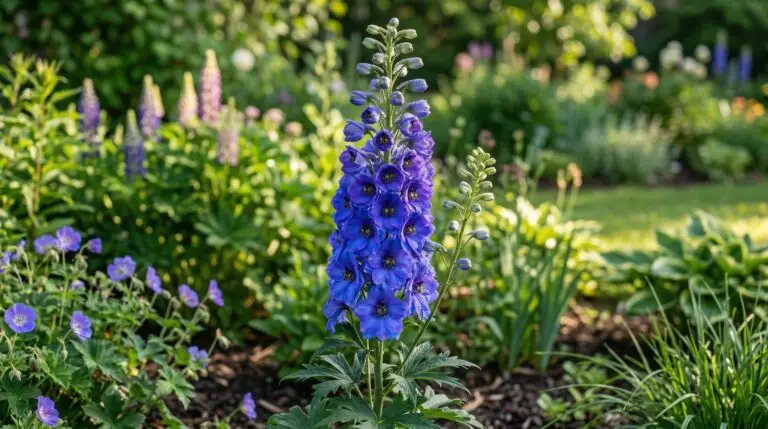
Delphiniums as show-stopping cut flowers for dramatic tall arrangements
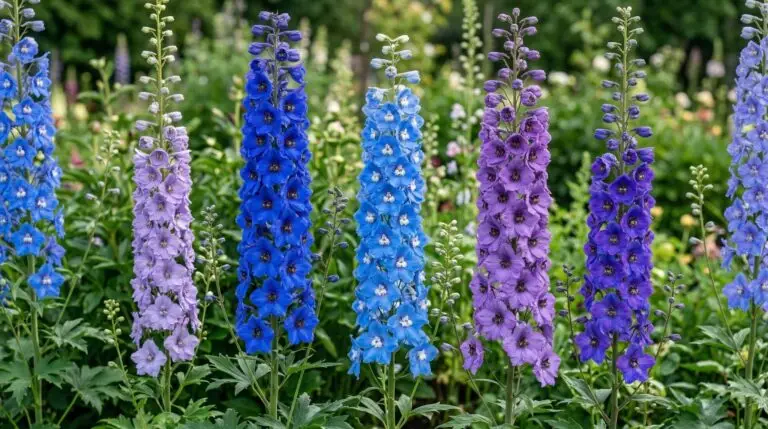
Best delphinium varieties from towering Pacific Giants to compact Magic Fountains
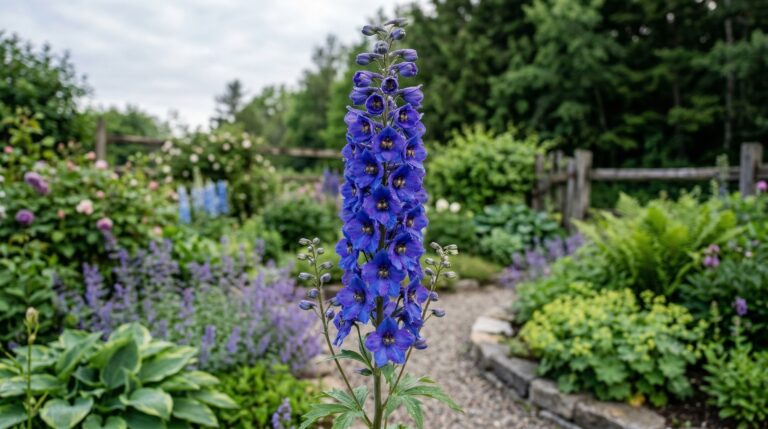
How to grow tall delphinium spires that tower above the garden like living architecture
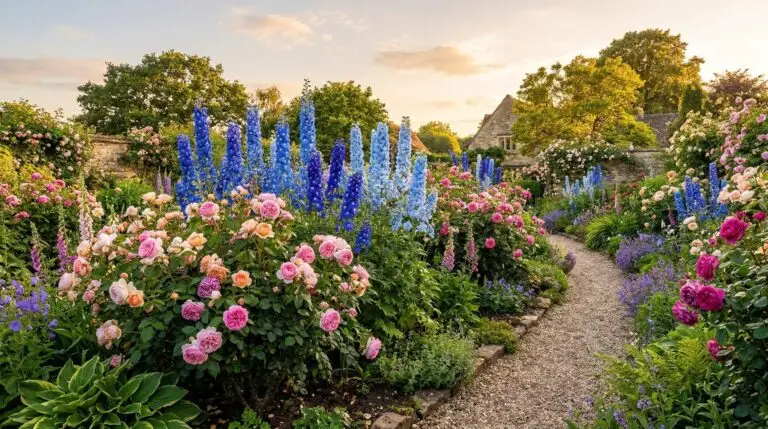
Delphinium companion plants: what to grow, what to avoid
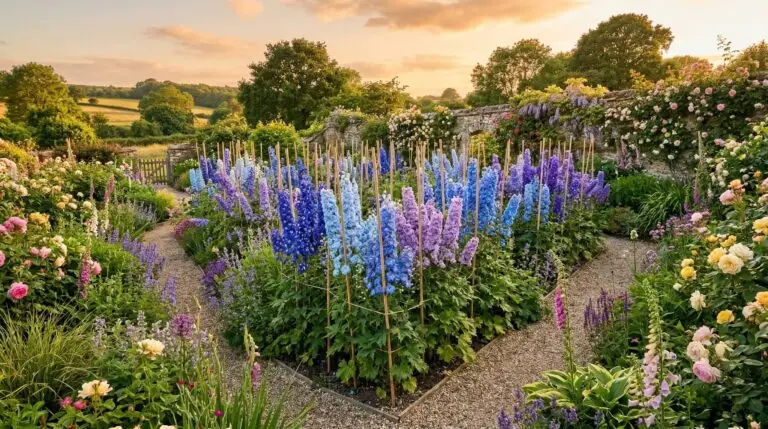
Staking delphiniums properly so tall flower spikes survive wind and rain storms
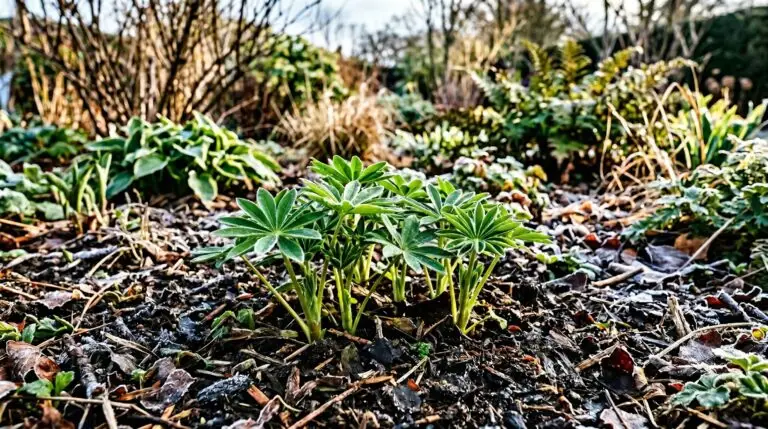
Growing delphiniums from seed and the patience required for first-year blooms
How to get delphiniums to rebloom by cutting back spent flower spikes
Why delphiniums are short-lived perennials and how to keep them coming back