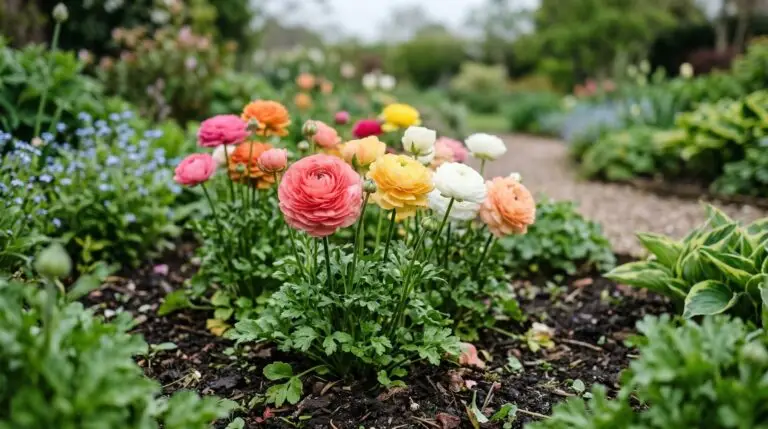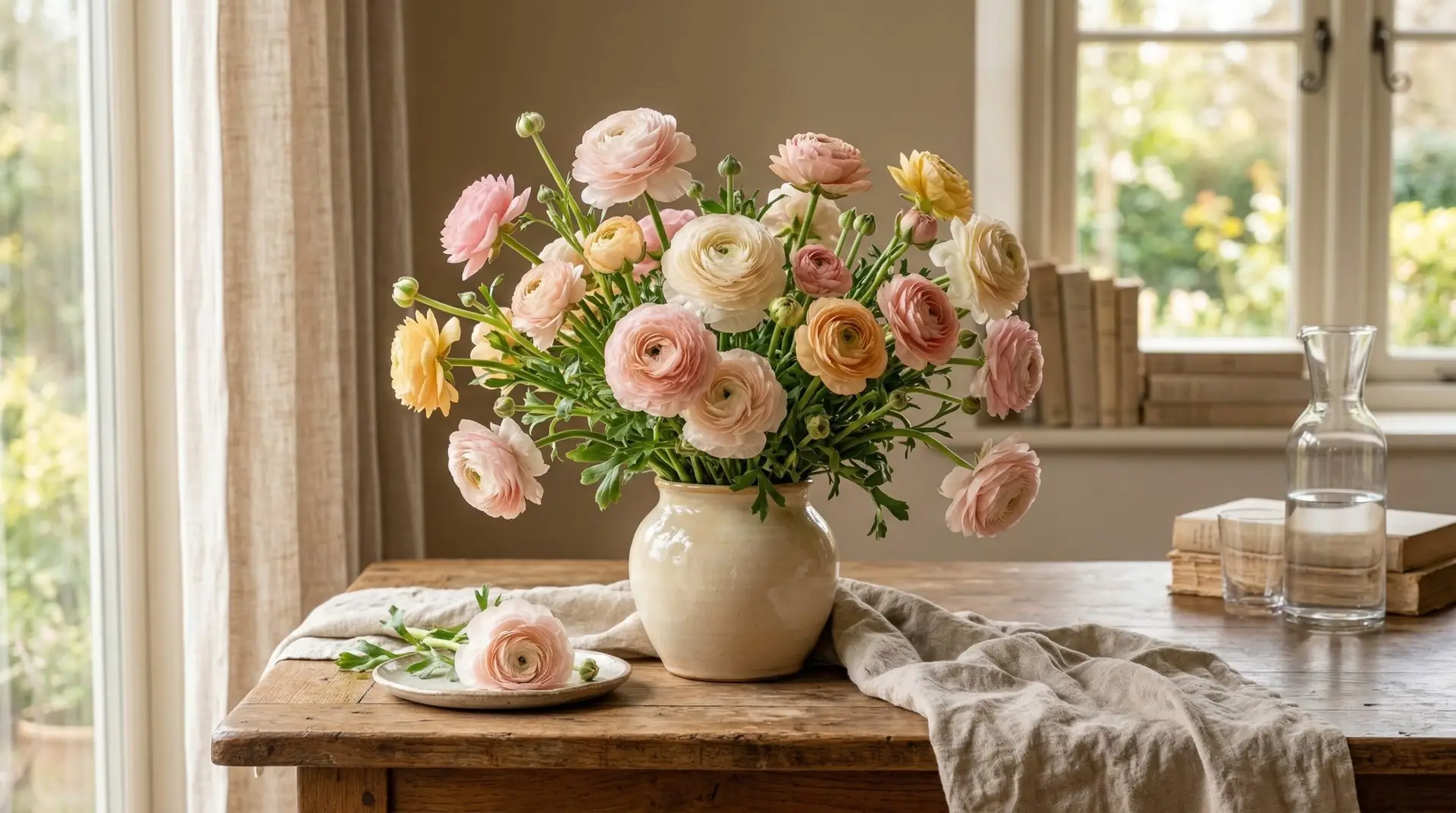
Imagine stepping into a cool florist studio just as the morning light begins to slant through the windows, catching the moisture on dozens of freshly unwrapped stems. There, resting in clear glass buckets, you will find the ranunculus waiting to be gathered into a bridal bouquet. Before they fully open, the buds resemble tight, pale green spheres, wrapped so firmly they look almost like small cabbages. As the warmth of the room touches them, the outer guard petals slowly peel back to reveal a dizzying spiral of tissue-paper layers inside. Each flower holds dozens, sometimes hundreds, of these translucent petals, stacked with mathematical precision. If you lean close, you will not find a heavy perfume, but rather a clean, watery scent that smells exactly like melting spring snow and fresh-cut grass. They are quiet flowers in their fragrance, but visually, they demand your complete attention.
The romantic alternative for a wedding bouquet
Many brides dream of walking down the aisle carrying peonies, drawn to their massive, ruffled blooms and undeniable romance. Yet those massive blooms have a notoriously short season, disappearing entirely just as the heat of late summer arrives. Ranunculus wedding flowers fill this exact space with a grace that is entirely their own, offering the same lush fullness without the seasonal heartbreak. While a peony opens into a loose, heavy cloud of petals, a ranunculus maintains a slightly more structured cup shape that holds beautifully throughout a long day of photographs and celebrations. The petals themselves are thinner than those of a traditional rose, feeling almost like silk organza between your fingertips. When clustered together in a ranunculus bridal bouquet, these dense whorls of petals catch the light from every direction, creating soft shadows that give the arrangement an incredible sense of depth. You get the opulent, overstuffed look of a spring garden, available to you regardless of the month you choose to marry.
Colors that catch the afternoon light
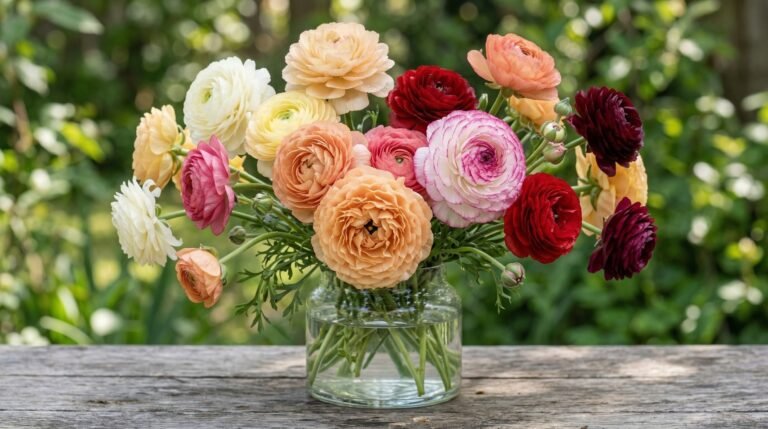
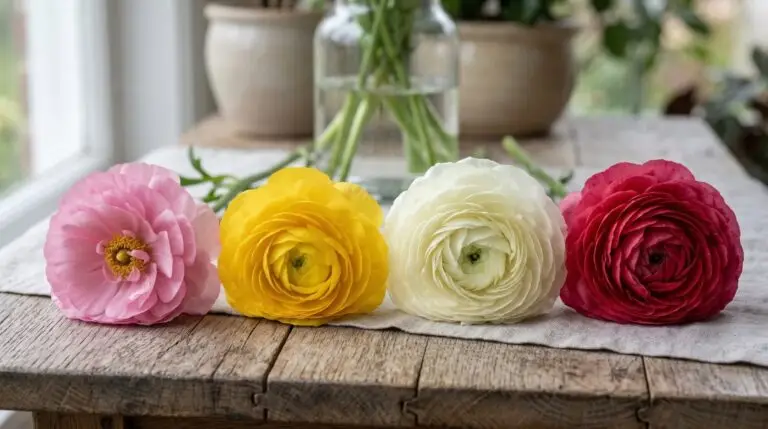
The color palette of the ranunculus reads like a painter’s mixing board, offering shades that shift and change depending on how the sun hits them. There is a specific shade of blush pink that mimics the very first light of dawn on a cloudy morning, soft and slightly cool. If you prefer warmer tones, you will find varieties in a pale, creamy peach that looks as though it was spun from fresh butter and honey. For an autumn twilight ceremony, the deep burgundy varieties offer petals that absorb the light completely, looking exactly like crushed, dark velvet against a white dress. When a photographer captures these darker blooms, the edges of the petals sometimes flash with a saturated magenta undertone. Even the pure white varieties are never flat or chalky. Their innermost petals retain a faint, ghostly wash of pale green or warm cream, making the flower look as though it is glowing from within.
Designing with delicate textures
The physical structure of a ranunculus dictates how it behaves in a bouquet, and understanding this changes how you see the entire arrangement. Unlike woody shrubs, these flowers grow on hollow, fleshy stems that feel smooth and slightly cool to the touch. These stems are naturally pliable, meaning the heavy flower heads often nod and drape rather than standing rigidly at attention. This gentle drooping creates a beautifully relaxed, organic shape in a ranunculus wedding arrangement, making the bouquet look as though it was just gathered from a wild meadow. Florists often pair them with anemones, allowing the dark, powdery centers of the anemone to contrast sharply with the tightly packed, ruffled bowls of the ranunculus. The leaves of the ranunculus, which are often stripped before arranging, are deeply lobed and possess a slightly waxy finish that repels water in tiny, perfect drops. When held in the hand, the whole bundle feels substantial but yielding, moving softly with the natural rhythm of your steps.
From the cold earth to the bridal hands
To truly appreciate these blooms in a wedding bouquet, you must understand the strange, quiet way they begin their life in the soil. Long before they reach the florist’s table, ranunculus grow from small, hard corms that look remarkably like dried, brown octopus tentacles. When you press these brittle claws into the cool, damp earth of late autumn, they feel entirely lifeless in your palm. Yet, after months of sleeping in the cold dirt, they push up rosettes of feathery, bright green foliage that smells sharply of wet earth and growing things. The transformation from a dry, rough corm to a flower of such impossible delicacy is one of the garden’s finest tricks. Knowing this history adds a layer of quiet resilience to the bouquet you carry down the aisle. These flowers have already weathered the freezing winter rains to produce those tissue-thin petals, making them far tougher than their delicate appearance suggests.
Handling the delicate stems in the studio
Working with ranunculus requires a gentle touch, because their beauty comes from their inherent fragility. When you lift a stem from the water, you have to be careful not to crush the hollow tube, which snaps with a crisp, watery sound if squeezed too hard. Florists know that the soil and growing conditions dictate the strength of these stems, and they look for flowers that have drank deeply of clean, cold water to ensure they stay firm. You will know a ranunculus is perfectly hydrated when the stem feels as taut as a fully inflated bicycle tire. As the wedding day progresses, the warmth of the hands holding the bouquet encourages the tightly wound centers to loosen even further. By the time the reception begins, the blooms have often expanded to twice their morning size, their outer petals curling backward in a display of complete, relaxed exhaustion. They age beautifully over the course of a single day, shifting from tight, formal buds into loose, romantic skirts of color.
Picture the end of the evening, when the formal photographs are finished and the lights in the reception tent are turned low. The bride sets her bouquet down on a linen-draped table, where the candlelight catches the edges of the ranunculus petals. The flowers have opened completely now, their centers exposed, their silk-thin layers settling into a soft, ruffled resting shape. A stray petal might finally release its hold, drifting silently down to rest on the white tablecloth. It is a quiet, beautiful surrender that perfectly marks the close of a long, joyous day. Even in their final moments before fading, these intricate blooms retain every ounce of their grace. They leave you with a lingering memory of soft textures, shifting colors, and the simple elegance of a garden brought indoors.
More About Ranunculus
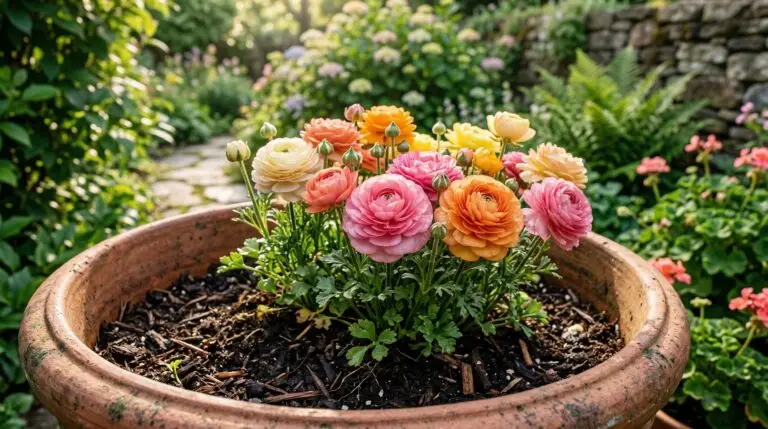
Growing ranunculus in containers for a spring flower show on patios and porches
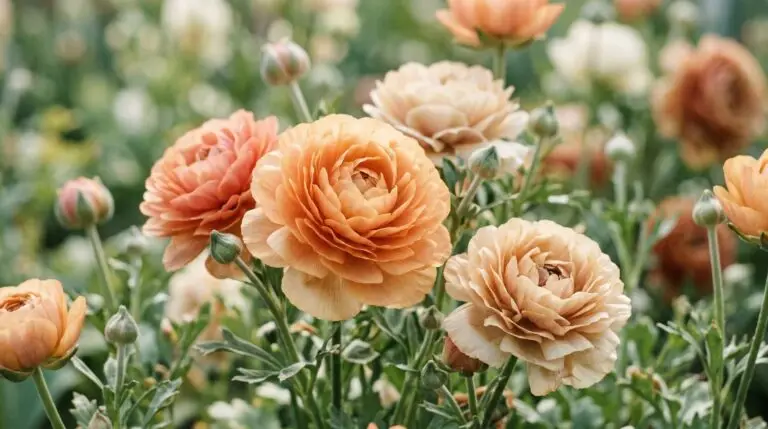
Ranunculus flower meaning and the radiance this buttercup-family bloom symbolizes
Best ranunculus varieties from classic Italian to ruffled Butterfly and Elegance types
Ranunculus versus garden roses and why these corm flowers compete with the queen of flowers
Ranunculus companion plants: what to grow, and what to avoid
Ranunculus as the ultimate cut flower and why flower farmers cannot grow enough of them