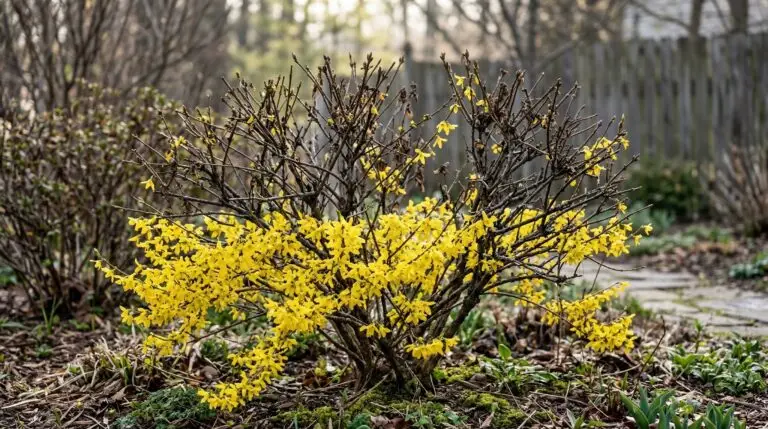
Forsythia bushes signal the arrival of spring with their bright yellow branches, but they require regular maintenance to keep that reliable display going year after year. Left to their own devices, these vigorous growers quickly turn into dense, tangled thickets of dead wood and crossing branches. Many gardeners hesitate to prune their shrubs out of fear that they will accidentally remove all of the future flowers. This hesitation usually leads to overgrown bushes that only manage to produce a sparse layer of yellow right at the very top of the plant. Learning how to manage the growth means understanding exactly how the shrub produces its buds and timing your cuts to work with that natural cycle. Taking control of an unwieldy bush is entirely possible once you know what to look for and where to make your cuts.
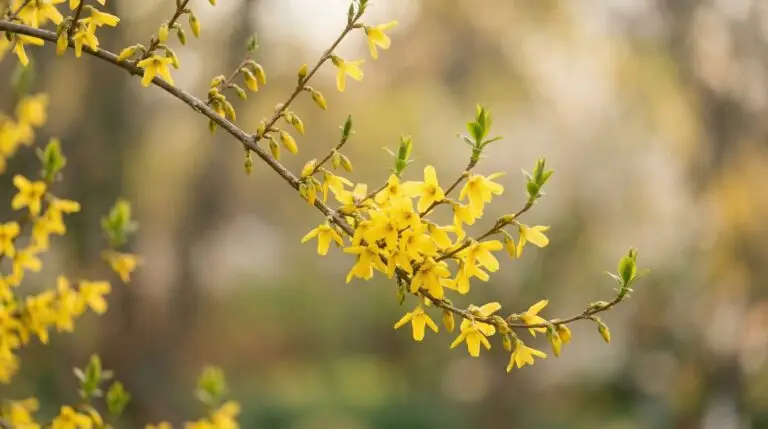
The most critical concept to grasp before picking up your tools is that forsythia produces its flowers on old wood. This means the plant spends the entire summer growing new green shoots and forming tiny flower buds along the length of those stems. These buds rest quietly through the winter months and then burst open as soon as the soil warms up in the spring. If you take a pair of shears to the bush in late summer, fall, or winter, you are simply snipping off all the hard work the plant did over the growing season. You will end up with a green leafy bush the following spring with absolutely no yellow flowers to show for it. This exact same blooming mechanism applies to several other classic spring shrubs, so learning this timing helps you manage your lilac bushes just as effectively.
Timing your cuts to protect future flowers
The safest and most effective window for pruning forsythia opens the moment the yellow blossoms begin to drop to the ground and fade. You want to start your work just as the green leaves are starting to push out along the stems. Getting out into the garden during this brief period ensures that you remove the old branches before the plant wastes any energy growing new wood that you will eventually cut away anyway. You have roughly a few weeks of grace period after the flowers fade to get this job done without risking next year’s display. If you wait until the middle of the summer to attempt your cleanup, the plant will have already initiated the bud-setting process for the following spring. Much like the careful timing required for an azalea, sticking strictly to this post-bloom window guarantees that the shrub has the entire summer to grow long, healthy stems loaded with fresh buds.
Before you begin making any cuts, you need to assemble the right equipment for the size of the branches you are facing. A sharp pair of bypass pruners will handle the thin, twiggy growth near the outside of the shrub. You will need a sturdy pair of long-handled loppers to cut through the thicker branches that measure up to an inch in diameter. For the oldest, thickest trunks resting right at the soil line, a small folding hand saw is the safest and most efficient tool to use. Make sure your blades are clean and sharp, because dull tools will crush the stems and leave jagged edges that invite disease into the heart of the plant. Taking a few minutes to wipe your blades with rubbing alcohol before you walk out to the garden protects the health of your shrub while making your physical work much easier.
Managing the size and shape of the shrub
A common mistake many people make is grabbing a pair of electric hedge trimmers and shearing the top of the forsythia into a tight ball or box shape. While this might seem like a fast way to control the height, shearing forces the plant to push out dozens of tiny, weak branches right at the cut site. Over a few seasons, this creates a dense outer shell of twigs that blocks all sunlight from reaching the center of the bush. The interior of the plant will eventually die back and turn into a hollow cage of brittle, gray wood. Instead of giving the plant a haircut, you should always practice thinning cuts, which means reaching deep inside the bush and removing entire branches right at the base. This method opens up the center of the plant, allowing sunlight and air to circulate freely through the entire structure.
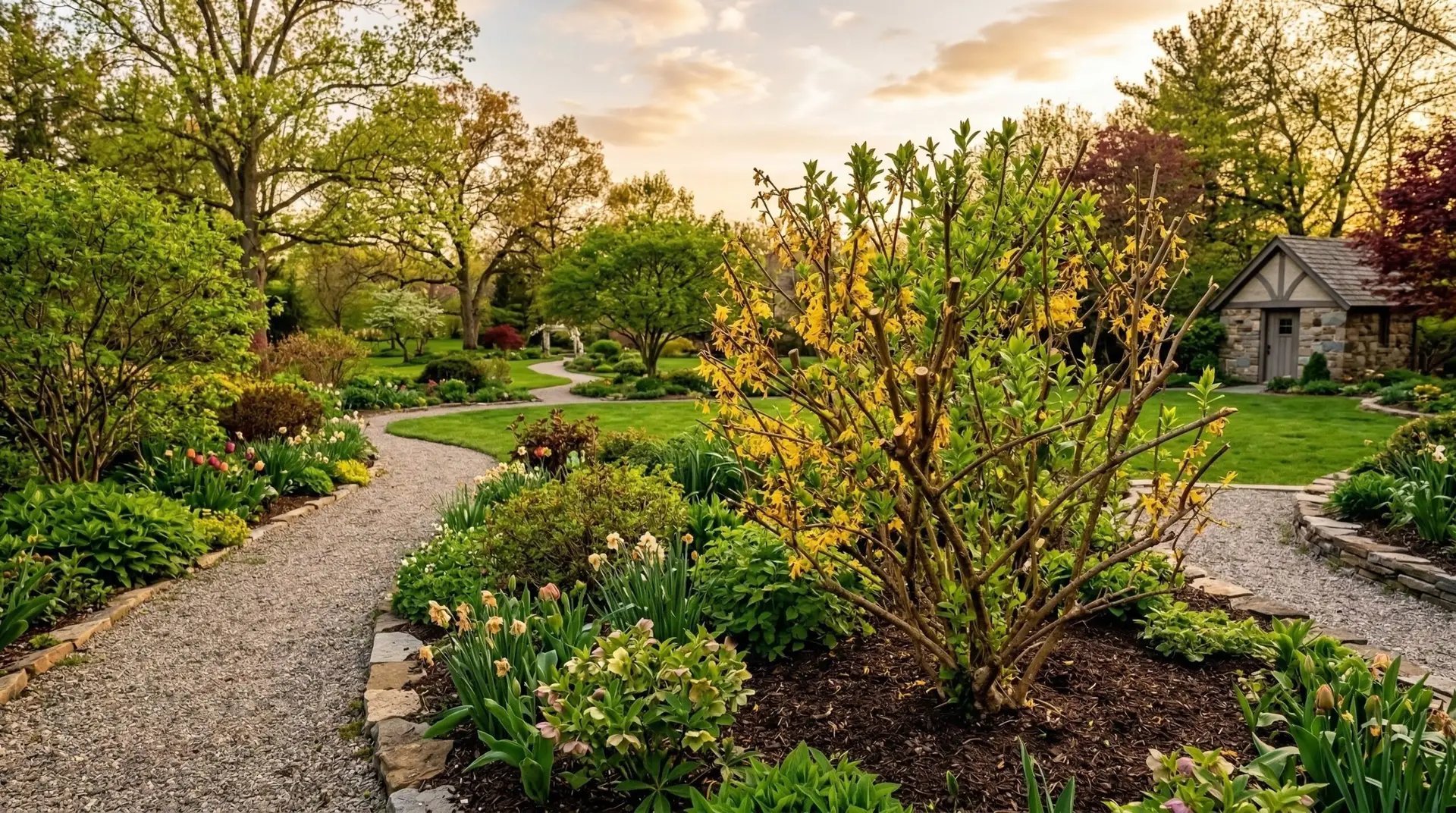
For a healthy shrub that just needs regular maintenance, you should follow the standard one-third rule of pruning. Stand back and identify the oldest, thickest, and most woody stems in the cluster. These older canes usually have rough, peeling bark and produce far fewer flowers than the younger, smoother stems. Use your loppers or hand saw to cut one-third of these massive older canes completely down to the ground. Next, look for any branches that are rubbing against each other or crossing through the center of the plant, and remove those at the base as well. By removing the oldest wood entirely, you prompt the root system to send up vigorous new shoots that will become the primary flowering branches in the coming years.
Rejuvenation techniques for overgrown bushes
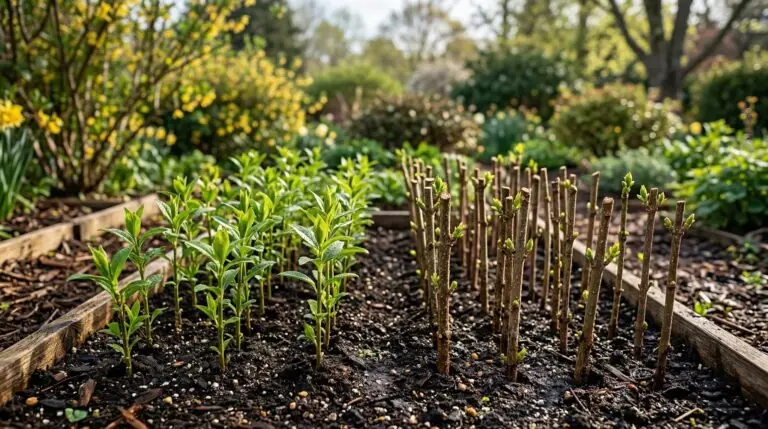
Sometimes you inherit a property with a massive, overgrown forsythia that has not been touched in a decade, and standard maintenance cuts are simply not enough. In these extreme cases, you can perform a complete rejuvenation pruning to reset the entire plant. This involves using your loppers and saw to cut every single branch down to about four inches above the soil line. You must do this drastic cut in late winter or very early spring, long before the plant wakes up, which means you will sacrifice the flowers for that current year. At this point you might look at the remaining stumps and worry that you have killed the bush entirely. That is normal, but forsythia is incredibly resilient and stores massive amounts of energy in its root system. Within a few weeks of the weather warming up, you will see dozens of fresh green shoots erupting from the base of those old stumps.
If cutting the entire bush to the ground feels too extreme, you can opt for a phased rejuvenation over the course of three years. In the first year, right after the spring bloom, you remove the oldest one-third of the branches completely to the ground. The following spring, you remove half of the remaining old wood, and in the third year, you remove the last of the original thick trunks. This phased approach allows you to keep some flowers each spring while still entirely replacing the structure of the bush over a manageable timeline. Similar to the process used for restoring an old Hydrangea macrophylla, this gradual method reduces the visual shock to your yard while still achieving a completely renewed and vigorous plant.
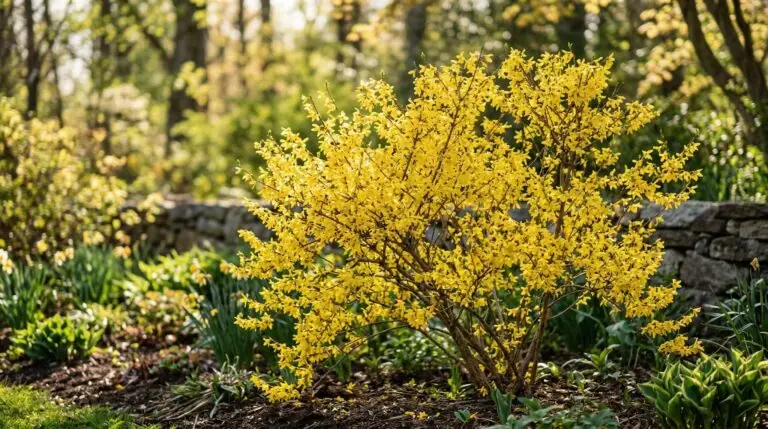
Regardless of whether you choose the gradual method or the complete reset, the aftercare remains the same and is highly rewarding. Keep the soil around the base of the newly pruned shrub evenly moist through the hottest parts of the summer to support all that rapid new growth. You will notice the plant sending up long, arching stems that look quite wild at first, but resist the urge to trim their tips. These long canes are exactly what you want, as they are actively forming the buds for the next season along their entire length. By the time autumn arrives, the plant will have established a natural, fountain-like shape filled with healthy wood. When the soil warms again the following spring, you will be rewarded with a dense, bright display of yellow flowers that covers the entire bush from top to bottom.
More About Forsythia

Companion plants for forsythia: what to grow, what to avoid
Dwarf forsythia varieties for small gardens that still deliver big spring color
Forcing forsythia branches indoors for early spring sunshine on your kitchen table
Forsythia flower meaning and why this golden shrub signals winter is finally over
How to grow forsythia for an explosion of golden yellow blooms in early spring

Best forsythia varieties from compact Show Off to weeping Arnold Dwarf

Using forsythia as a fast-growing privacy hedge that lights up spring
Why your forsythia blooms only on the bottom and how to fix bare leggy branches