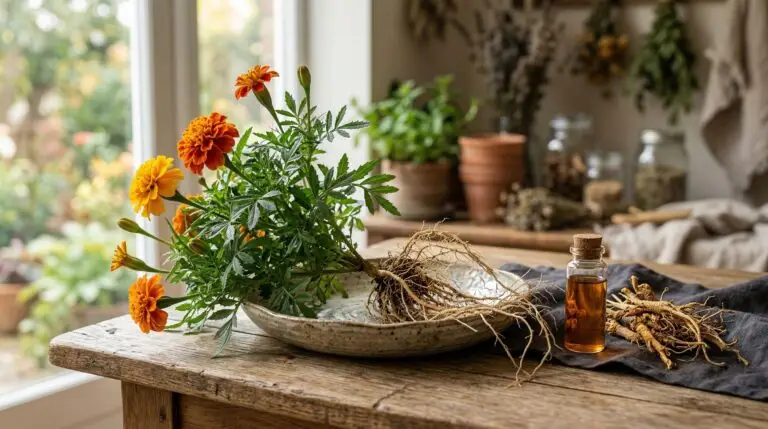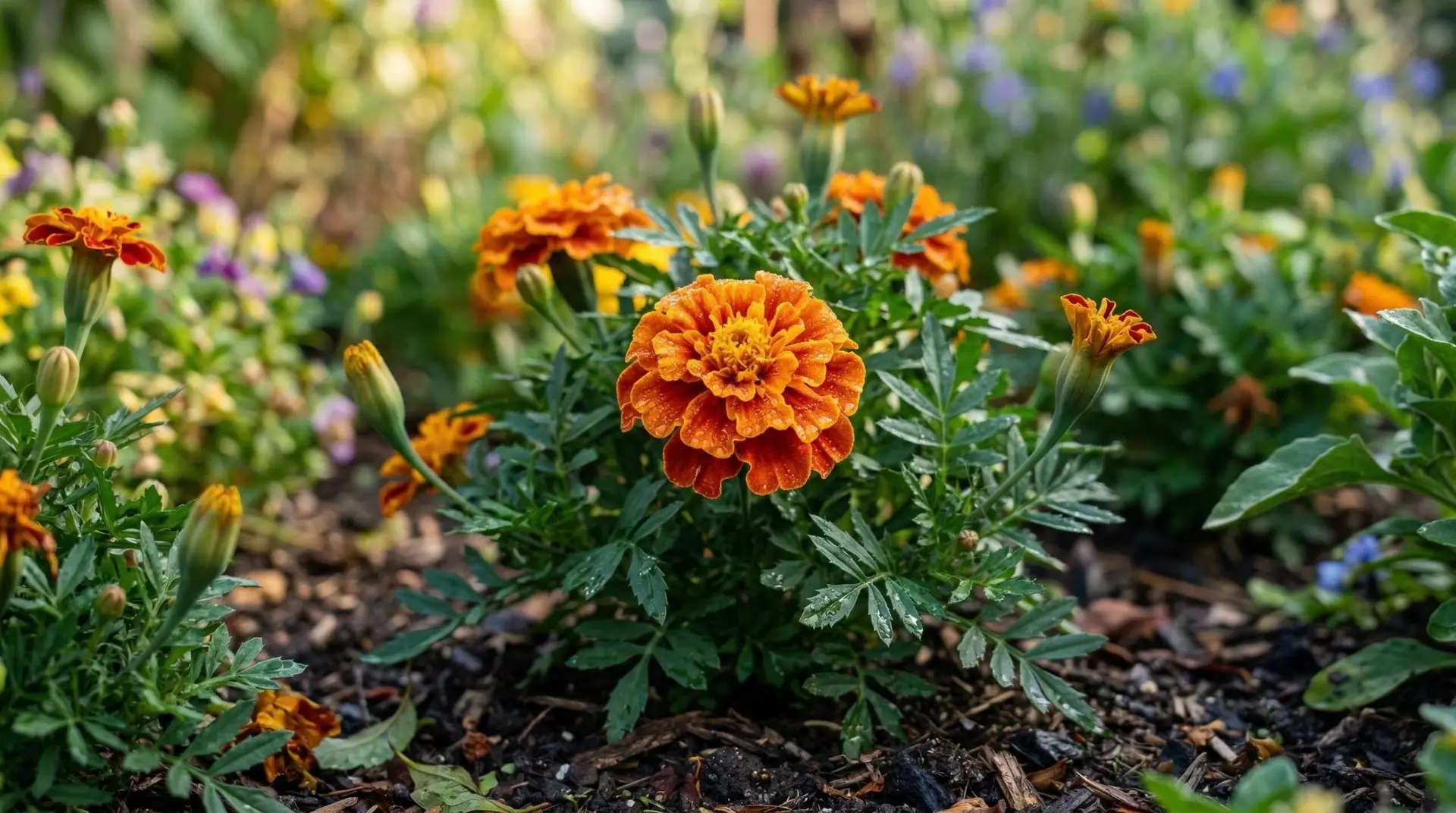
After forty years in trial gardens and extension plots, I still make room for Tagetes every spring because few annuals offer the same return on a minimal investment of time. Growing marigolds is often treated as a child’s first gardening lesson, but this reputation for simplicity masks a highly evolved resilience to heat and poor soil. Native to the Americas, primarily Mexico and Central America, these plants have adapted to thrive in conditions that would cause more delicate ornamentals to collapse. They possess a deep, fibrous root system that hunts efficiently for water once established. You will find that their ability to endure baking summer temperatures makes them an indispensable tool for maintaining continuous color in exposed garden beds. While they are famously easy to cultivate, understanding their specific physiological needs will elevate your results from adequate to exceptional.
Understanding the species and their growth habits
The genus contains several dozen species, but horticultural focus remains largely on two distinct groups that behave quite differently in the field. French marigolds, botanically classified as Tagetes patula, are naturally compact and highly branched plants that rarely exceed sixteen inches in height. They are day-neutral plants, so their blooming cycle is not dictated by the length of sunlight hours, allowing them to flower continuously from early summer until the first hard frost. In contrast, African marigolds, or Tagetes erecta, are tall, robust plants that can reach three to four feet and produce massive, tightly quilled flower heads. The term “African” is a historical misnomer from their route of introduction to Europe, as they share the same New World origins as their smaller cousins. These larger varieties often exhibit a photoperiodic response, waiting for the days to begin shortening in late summer before they initiate their heaviest flush of blooms. Knowing which species you are planting is the first step in proper marigold care, as their spacing and structural requirements are entirely different.
When planning a mixed border, you should consider how the distinct habits of these species interact with other summer annuals. The compact French varieties excel as edging plants along hot paved walkways where reflected heat stresses most herbaceous material. The taller African types require placement near the middle or back of a border, where their sturdy stalks can hold their own alongside other robust late-summer bloomers. They share similar cultural requirements with plants like zinnias, which also demand full sun and excellent drainage to prevent foliar diseases. You might also interplant them with cosmos, allowing the fine, fern-like foliage of both plants to create a continuous textural backdrop before the heavy flowering begins. Like a towering sunflower, the African marigold benefits from protection against strong prevailing winds that can snap its brittle stems when the heavy flower heads are saturated with rain.
Soil preparation and optimal planting techniques
Successful marigold planting begins with soil temperatures rather than calendar dates. These seeds require warm soil to germinate reliably, typically between seventy and seventy-five degrees Fahrenheit. Sowing seed into cold, damp spring soil invariably leads to rotting and spotty emergence, which is a common frustration for eager early-season gardeners. I always recommend direct sowing over purchasing nursery transplants, as marigolds develop a stronger, more resilient root system when they are not subjected to the confines of a plastic cell pack. The soil itself should be moderately fertile and well-draining, with an ideal pH ranging from 6.0 to 7.0. Overly rich soils or heavy applications of nitrogen fertilizer will prompt the plant to produce lush, dense foliage at the direct expense of flower production. A basic preparation of the bed with a light incorporation of mature compost is usually the only amendment required for a successful season.
When sowing the seeds, you must pay attention to depth and spacing to prevent overcrowding later in the season. Plant the long, needle-like seeds approximately one-quarter inch deep, pressing them firmly into the soil to ensure good seed-to-soil contact. Moisture must be kept consistent but not saturated during the five to seven days it takes for the cotyledons, or the first embryonic leaves, to break the surface. Once the true leaves develop and the seedlings reach two inches tall, thinning becomes a necessary and often difficult task for beginners. French varieties need about eight to ten inches of space between plants to allow for adequate air circulation, while the larger African types require at least eighteen to twenty-four inches. Failing to provide this space creates a dense, humid microclimate within the foliage canopy that invites fungal pathogens during wet summer periods.
Managing water and heat stress through the season
Once established, marigolds are highly efficient at managing their own water needs, provided they are given deep, infrequent irrigation. You should water the plants at the soil level rather than using overhead sprinklers, as wet foliage combined with warm nights is the primary catalyst for powdery mildew and botrytis blight. During periods of extreme drought, the plants will naturally slow their growth and may temporarily halt flower production to conserve resources. They will resume normal activity as soon as adequate moisture returns, demonstrating a physiological elasticity that makes them highly forgiving of irregular watering schedules. Deadheading, or the practice of removing spent blooms before they can set seed, is a critical component of ongoing marigold care. By snapping off the decaying flower heads down to the next lateral leaf node, you redirect the plant’s energy away from reproduction and back into vegetative growth and new bud formation. This simple mechanical task ensures the plant remains vigorous and aesthetically pleasing rather than becoming woody and exhausted by late August.
Pests, diseases, and companion planting realities
The pungent scent of marigold foliage is often cited as a universal pest repellent, but the reality of their defensive capabilities is far more specific. While they are generally ignored by deer and rabbits, they are highly susceptible to two-spotted spider mites, particularly during prolonged periods of hot, dry weather. These microscopic arachnids congregate on the undersides of the leaves, sucking the sap and causing a characteristic stippling or yellowing that can rapidly defoliate the plant. Regular monitoring and an occasional strong blast of water from a garden hose are usually sufficient to disrupt the mite colonies before they cause severe damage. Regarding their famous ability to suppress root-knot nematodes in the soil, the science requires careful application to be effective in a home garden. The plants produce a chemical compound called alpha-terthienyl in their roots, which is toxic to these microscopic soil pests. To achieve any meaningful nematode control, specific varieties of French marigolds must be planted as a solid cover crop, grown for several months, and then tilled directly into the soil before the target crop is planted.
As the season draws to a close and the first frost approaches, you have an excellent opportunity to secure your stock for the following year. Marigolds are open-pollinated, so unless you are growing a specific modern hybrid, the seeds you collect will produce plants highly similar to their parents. Wait until the flower heads are completely dry and brown on the stem before snapping them off and pulling the slender, two-toned seeds from the base. Spread these seeds on a screen in a dry, well-ventilated room for a week to ensure all residual moisture has evaporated. Store them in a simple paper envelope in a cool, dark place through the winter months. By taking ten minutes to harvest seeds from your strongest, most disease-resistant plants this fall, you bypass the garden center entirely and begin a cycle of localized adaptation in your own backyard.
More About Marigolds
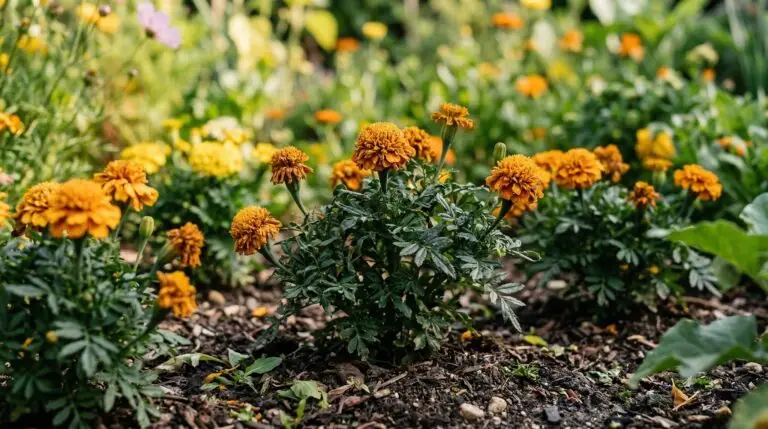
Why marigolds stop blooming in midsummer heat and how to get them flowering again
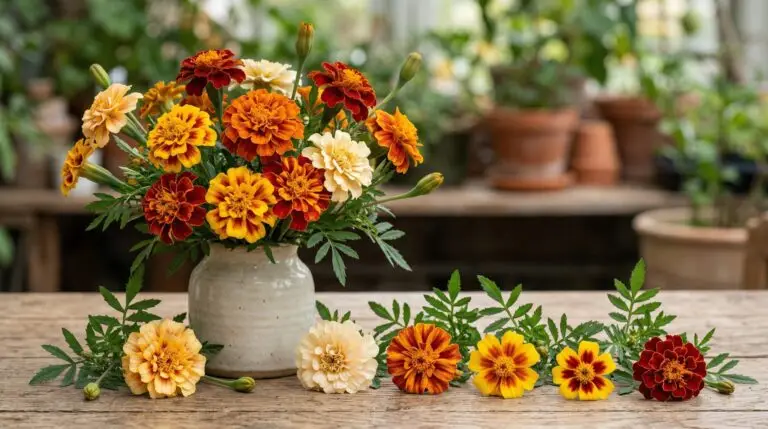
Best marigold varieties from tiny French Bonanza to towering African Antigua
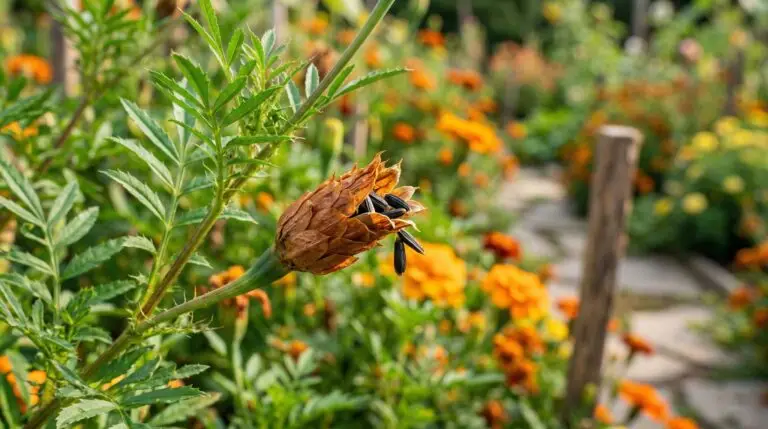
Growing marigolds from seed so easily that children can do it on their first try

Marigold meaning, from the sun and celebration to Victorian grief
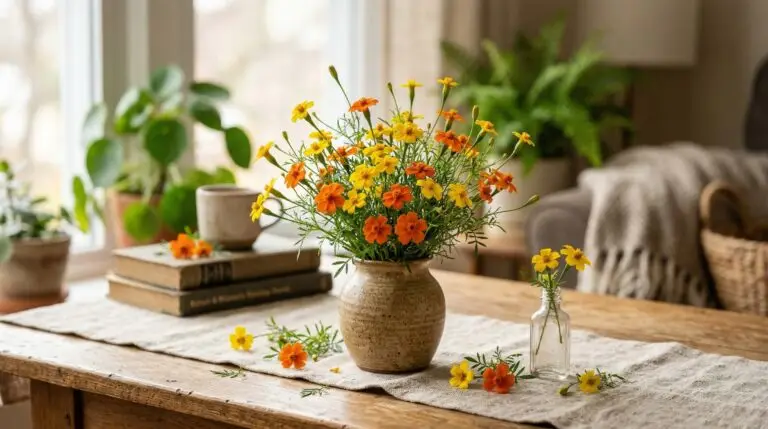
Signet marigolds for edible flowers that taste like citrus in salads and cocktails
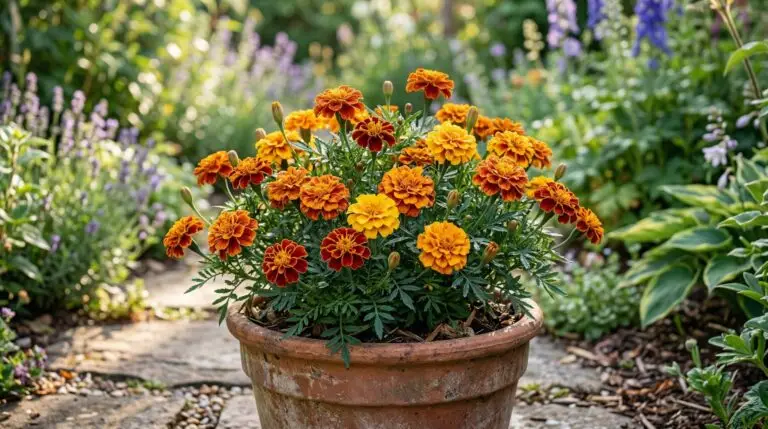
Marigolds in containers and window boxes for instant summer curb appeal
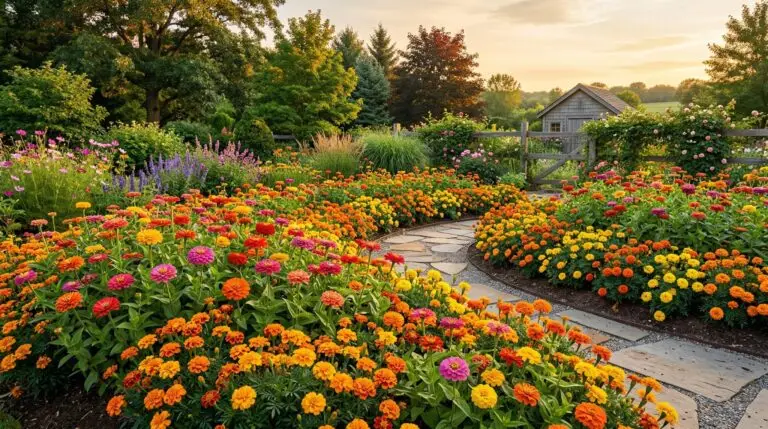
Marigold companion plants: what works, and what’s folklore