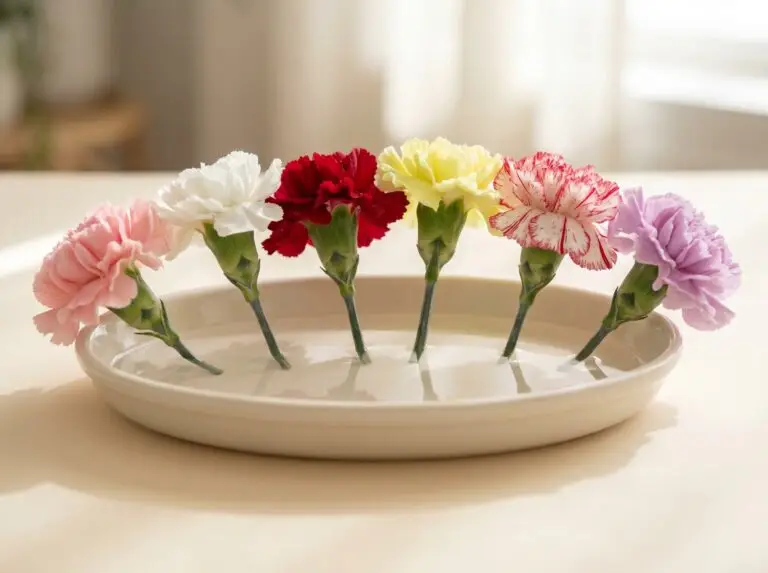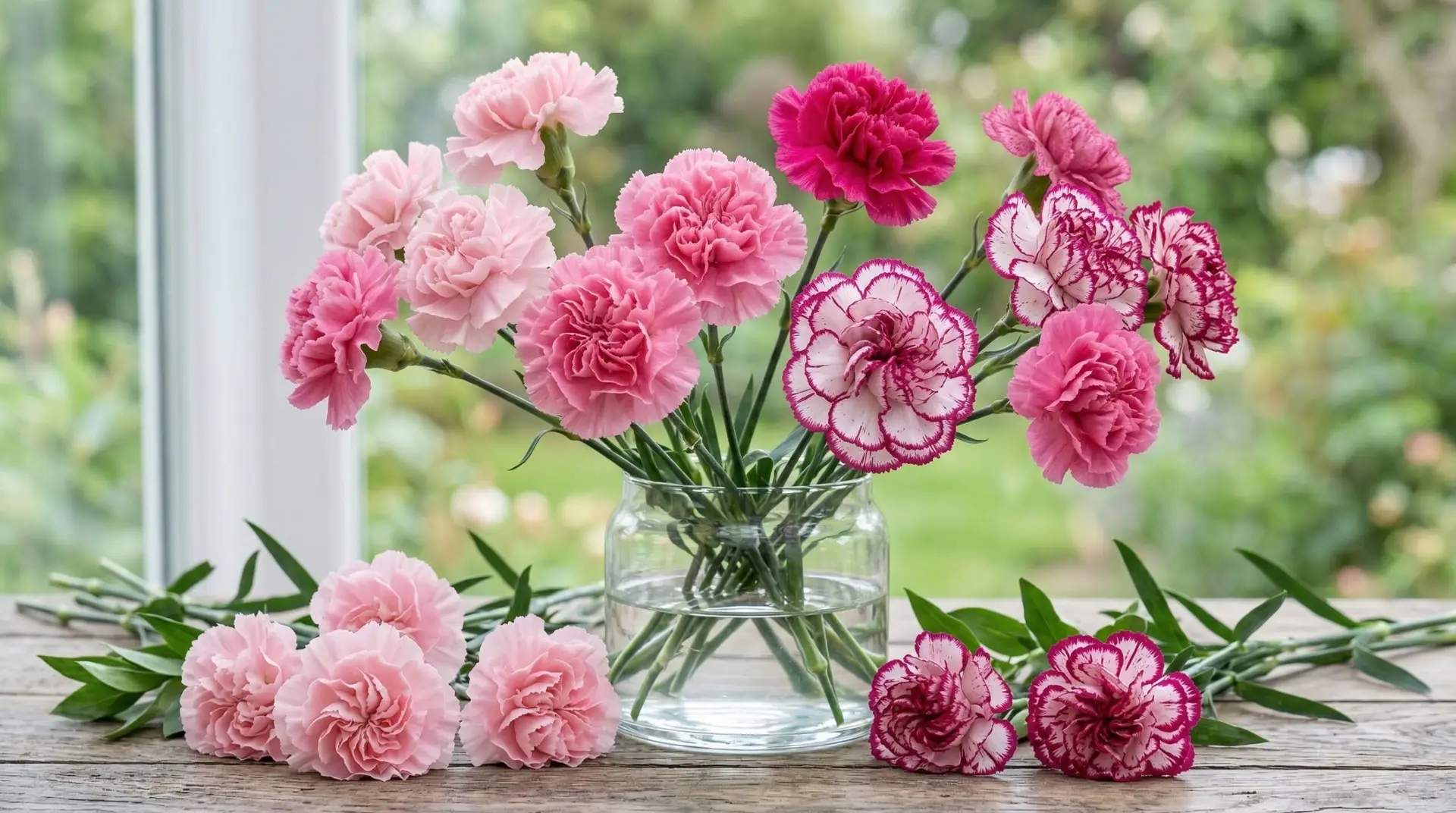
When gardeners look for carnations to plant in a perennial border, they often envision the tall, perfectly ruffled blooms found in florist bouquets. Those greenhouse-bred florist carnations are poorly suited to the average garden, requiring rigorous staking, precise temperature control, and constant deadheading. Rather than struggling with plants bred for commercial cut flower production, a thoughtful gardener should turn to garden pinks and border carnations. These hardy perennial dianthus varieties deliver the same spicy clove fragrance and ruffled petals but grow on sturdy, self-supporting stems that thrive in open garden conditions. They require no artificial heat and will happily overwinter in cold climates. By focusing entirely on these garden-adapted types, you can achieve the classic cottage garden look without the high maintenance of greenhouse varieties.
The terminology surrounding the dianthus family requires some clarification to ensure you select the right plant for your space. Garden pinks are compact, low-growing perennials that form dense mats of silver or blue-green foliage, making them excellent choices for the front of a bed or edging a pathway. Border carnations grow slightly taller, usually reaching eighteen to twenty-four inches, and produce larger blooms that closely resemble small florist carnations. Both types share a strong preference for excellent drainage and alkaline soil, resenting heavy clay or constant moisture around their crowns. Understanding this distinction allows you to place pinks at the very edge of a bed and reserve border carnations for the middle tier, perhaps weaving them among silver-foliaged companions like classic garden lavender.
The historic charm of classic white pinks
For gardeners who prioritize historical authenticity and overwhelming fragrance, the antique variety ‘Mrs Sinkins’ remains an essential selection. Introduced in the late nineteenth century, this heritage pink produces pure white, intensely double flowers that carry the strongest clove scent of any dianthus perennial. The blooms are so packed with petals that the calyx often splits down the side, giving the flowers a charmingly unkempt, bursting appearance that suits an informal cottage style perfectly. This structural quirk was once considered a flaw by strict exhibition judges, but home gardeners have always prized it for the sheer volume of petals it produces. Many modern breeding programs have tried to “improve” upon this variety by breeding out the split calyx, but in doing so, they almost always lose the extraordinary depth of fragrance. While it may look slightly messy after a heavy rain, ‘Mrs Sinkins’ earns its place in the garden entirely through its unmatched perfume.
Placing a historic variety like ‘Mrs Sinkins’ requires some thought to maximize its benefits while masking its minor structural flaws. Because the heavy blooms tend to flop outward from the center of the plant, it looks best when allowed to spill over a stone edging or a raised brick wall. The brilliant white flowers provide an excellent visual anchor at dusk, glowing softly as daylight fades from the garden. You can pair it with low-growing, mat-forming companions like fragrant sweet alyssum to create a continuous ribbon of white and silver along a pathway. This combination ensures the front of the border remains visually interesting even when the pinks have finished their primary early summer flush of blooms.
The standard of excellence in bicolored pinks
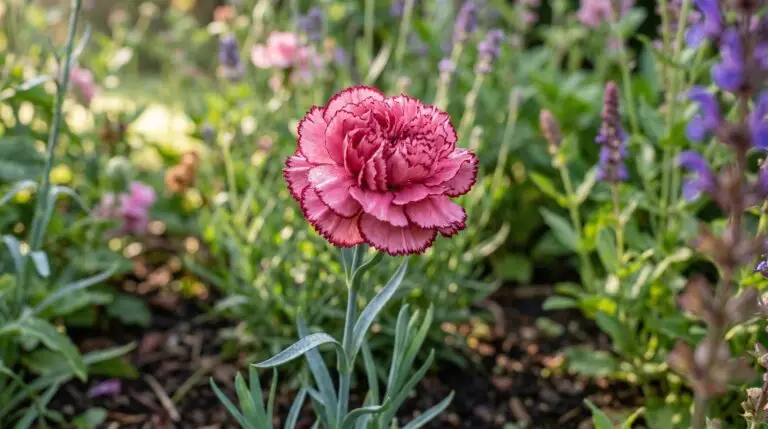
If I were forced to choose just one quintessential garden pink for a mixed perennial border, the mid-twentieth century introduction ‘Doris’ would be the undisputed selection. This variety strikes a perfect balance between the rugged constitution of older pinks and the refined floral form of larger border carnations. The flowers are a soft, shell pink with a distinct, deep coral-red ring at the center, held on stiff stems that absolutely refuse to flop. ‘Doris’ possesses a clean, sharp clove scent that carries well on warm summer air without being overpowering or cloying. It has remained a staple of English cottage gardens for decades simply because it performs reliably year after year, forming a neat cushion of glaucous foliage that looks architectural even in the depths of winter.
Many contemporary garden center displays are dominated by heavily marketed, patented dianthus series that promise endless blooming in neon colors. In practice, these modern hybrids frequently exhaust themselves in their first year and fail to return the following spring, acting more like annuals than true perennials. ‘Doris’ entirely avoids this problem by putting energy into building a strong, woody base that can survive harsh winters and wet springs with equal resilience. When planted alongside a traditional shrub or climbing rose, it provides a complementary underplanting that echoes the romantic form of the larger blooms above it. By choosing a proven variety over the latest disposable introduction, you secure a plant that will anchor your garden for a decade or more.
A rugged choice for modern gardens
While traditional cottage gardens often rely on soft pastels, ‘Firewitch’ offers a completely different aesthetic with its shocking magenta blooms and exceptionally bright silver foliage. This variety was selected in Germany in the middle of the twentieth century, and it stands out for its remarkable tolerance to heat and humidity, conditions that often cause other pinks to melt away. The intense, single and semi-double flowers appear in massive profusion in late spring, creating a solid carpet of color that completely obscures the foliage beneath. Once the initial flush fades, a quick shearing of the spent stems often encourages a second, lighter round of flowering in early autumn. The foliage remains highly attractive even when the plant is completely out of bloom, acting as a structural groundcover through the winter months. The brilliant coloring makes it an ideal candidate for gardeners who want the durability of a classic dianthus perennial but prefer a bolder, more contemporary color palette.
Selecting the right garden pink or border carnation ultimately depends on matching the plant’s character to your specific soil conditions and aesthetic goals. If your priority is sheer reliability and classic form, ‘Doris’ remains the supreme choice among all available varieties. Its combination of sturdy stems, perfect bicolored blooms, lasting perennial habit, and rich clove fragrance is the absolute peak of dianthus breeding for the home garden. It requires no staking, asks only for a sunny spot with good drainage, and rewards the gardener with decades of low-maintenance beauty. By planting ‘Doris’, you capture the true essence of a traditional cottage garden without taking on the demanding workload of a commercial flower grower.
More About Carnation
Growing carnations in containers for a fragrant windowsill or balcony garden
The rich history of carnations from ancient Greek garlands to Mother’s Day flowers
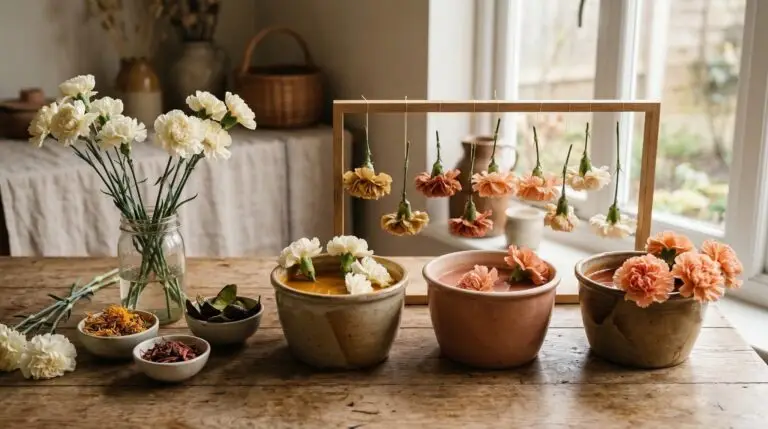
How to dye carnations with food coloring for fun science projects and party decor
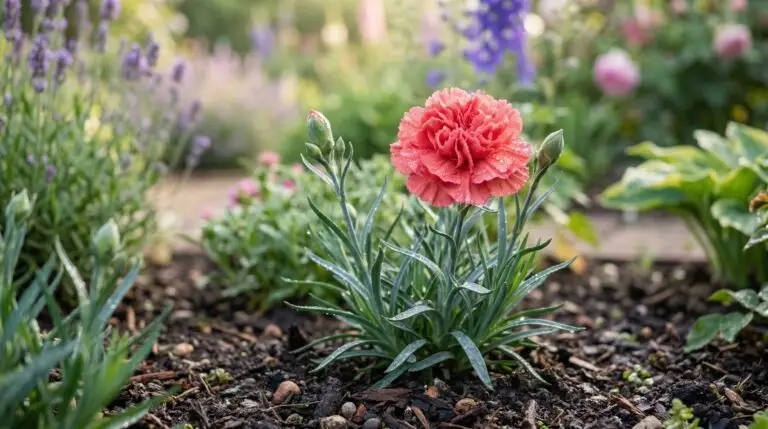
How to make carnations last over two weeks in a vase with proper care
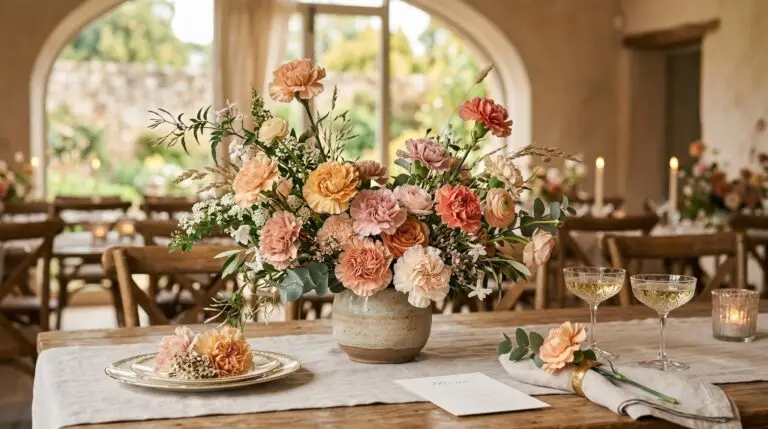
Carnation wedding bouquets making a comeback with modern elegant designs
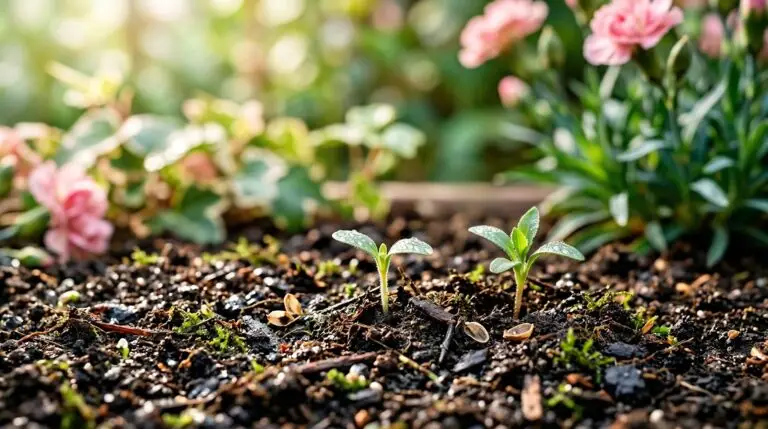
Growing carnations from seed and cuttings for fragrant garden borders all summer
Carnation leis corsages and boutonnieres for proms graduations and celebrations
Why carnations deserve more respect as garden flowers beyond their grocery store reputation