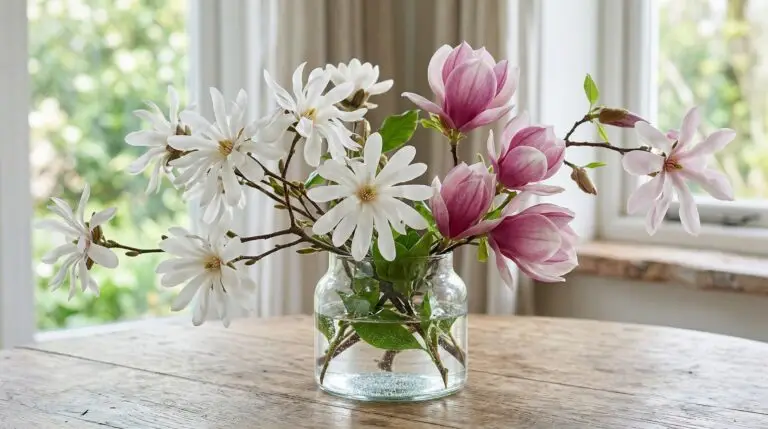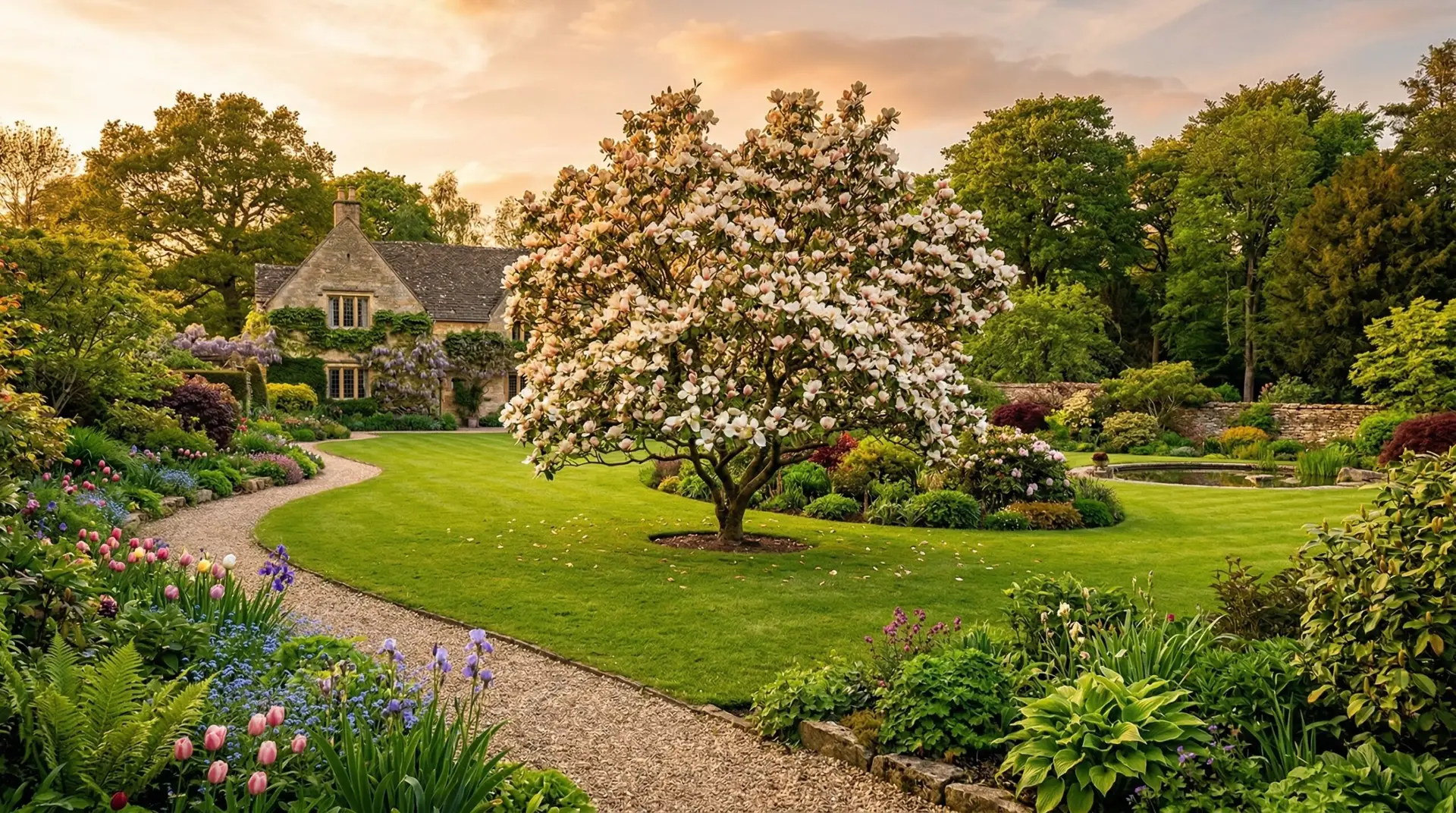
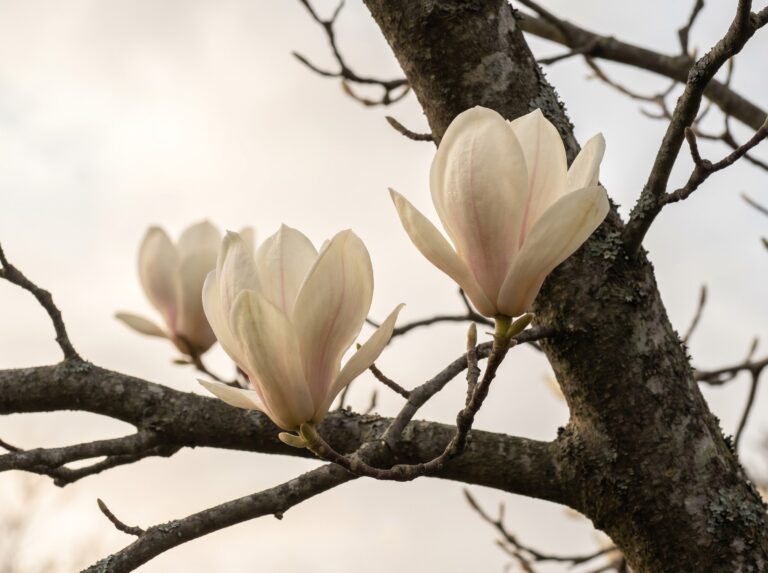
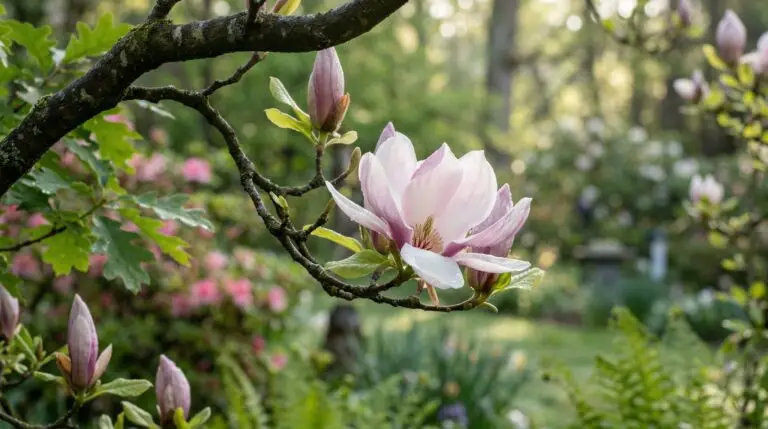
I wish you could stand beside me on the damp stone path just as the morning fog begins to lift off the lawn. The air carries a sharp chill, but drifting through it is a scent so thick and sweet it feels almost heavy, a perfume of bruised lemons and warm vanilla. Looking up, the bare, silver-gray branches of the saucer magnolia reach toward the pale sky like outstretched fingers holding enormous cups of porcelain. These blossoms are not merely pink, they carry the soft blush of a bruised peach at the base, fading to a translucent pearl white at the tips. When the sun first crests the horizon, the light catches the dew resting on these thick, waxy petals, making the entire tree glow against the still-sleeping garden. Placing a tree of this magnitude requires careful thought, as a well-planned magnolia landscape transforms an ordinary yard into a theater of seasonal change. You have to consider exactly where you will be standing when you first witness this spring awakening.
Finding the perfect stage for a specimen tree
To understand proper magnolia garden placement, you must look at the canvas behind the tree before you even dig the hole. A white star magnolia floating in the middle of a pale winter lawn often gets lost against the washed-out sky of early March. When you position that same tree in front of a dense wall of dark conifers, the contrast makes the ivory petals leap forward with startling clarity. The deep, matte green needles of hemlock or spruce absorb the light, providing a shadowy curtain that allows the luminous magnolia blossoms to command the space. You will know the spot is right when you stand at your window and see a natural frame that catches the eye immediately. As the heavy blooms finally drop, leaving a carpet of bruised petals on the damp earth, the emerging bright green leaves of the magnolia will continue to stand out against that dark evergreen backdrop.
Designing around a magnolia focal point
You must treat the tree as a living sculpture that changes its weight and texture as the months pass. The southern magnolia, with its massive evergreen canopy, asks for a different kind of spatial respect than its delicate deciduous cousins. Its leaves are thick and leathery, polished to a high gloss on top while the undersides are coated in a fuzzy, rust-colored felt that catches the late afternoon sun. Because this canopy casts a deep, cool shade that smells faintly of dry earth and citrus oil, you must plan your surrounding garden to accommodate the darkness beneath its limbs. A magnolia focal point anchors the eye, pulling your gaze across the lawn and demanding that you walk toward it to inspect the dinner-plate-sized summer flowers. As you approach, the sweet, heavy fragrance wraps around you, lingering in the still summer air long after you have walked away.
Lighting and the angle of observation
The way light moves across your property should dictate exactly where the roots go into the ground. A white-flowering magnolia planted on the eastern edge of a garden will catch the cool, blue light of dawn, making the petals look like carved ice before the rest of the yard wakes up. If you place it where the setting western sun strikes the branches, those same white petals will soak up the amber and apricot tones of dusk, radiating a warm glow as evening settles over the soil. You want to align the tree so you can view it from your favorite chair inside the house, framing it through a window like a painted canvas. When planting, you will know the soil is right when it feels like a wrung-out sponge in your hand, dark and rich with decaying leaves. The roots need this loose, cool earth to spread out and establish the strength required to push out hundreds of massive blooms year after year.
Balancing evergreen weight and deciduous grace
The choice between a tree that drops its leaves and one that keeps them dictates the entire mood of your garden room. A deciduous magnolia behaves like a sudden burst of fireworks, throwing all its energy into a naked display of color on bare branches before settling into a quiet canopy of pale green summer shade. You plant these varieties where you want a dramatic, unobstructed view of spring arriving all at once. In stark contrast, the evergreen varieties are immutable pillars of deep color, their heavy, dark leaves providing a permanent windbreak and visual anchor regardless of the month. When the freezing rain of January coats the garden, these tough leathery leaves hold the ice, bending slightly under the weight while sheltering the dry soil beneath. Mixing both types on a large property creates a rhythm of permanence and change, allowing you to smell the sweet lemon blossoms in the heat of July while remembering the delicate pink cups that floated on the cold March wind.
Layering the garden for continuous fragrance
The space around the smooth trunk offers a chance to build layers of texture and scent that carry the garden through the seasons. Before the magnolia buds break their furry winter casings, you might notice the glossy foliage of a nearby camellia offering its own early display of perfect, rosette-shaped blooms. The deep, waxy green of the camellia leaves creates a beautiful textural echo of the magnolia foliage, tying the understory to the canopy above. Later in the spring, as the magnolia petals begin to fall and scatter like pale shells across the grass, the sweet perfume of a lilac bush nearby can pick up the fragrant baton. The rough, peeling bark of the lilac contrasts sharply with the smooth, elephant-gray skin of the magnolia trunk, giving your hands two very different surfaces to touch as you wander the paths. By layering these shrubs at the edge of the tree canopy, you create a secluded room in the garden where the air is always thick with perfume and the light is filtered through layers of green.
When the garden finally strips down to its bare bones in the dead of winter, the true architecture of your placement reveals itself. The deciduous magnolias lose their large, papery leaves, exposing a twisting framework of silver branches that hold next year’s promises. At the tip of every twig sits a plump, silver-haired bud, soft as a mouse ear to the touch, waiting patiently through the frost and snow. If you have placed the tree well, the low winter sun will catch the silver hairs on these buds, turning the entire crown into a halo of frosted light against the gray sky. You can stand at the edge of the frozen lawn, breathing in the sharp scent of cold earth, and trace the sweeping lines of the branches. The tree rests there in perfect silence, holding the memory of last spring’s perfume and the quiet certainty of the blooms yet to come.
More About Magnolia
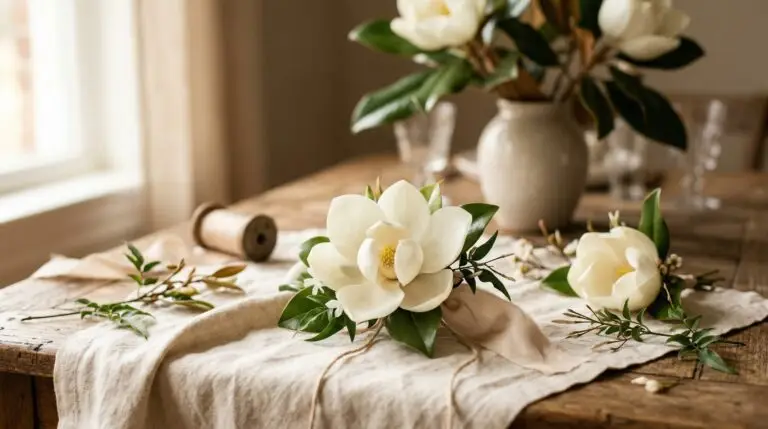
Magnolia in wedding decor and the southern tradition of magnolia bridal flowers
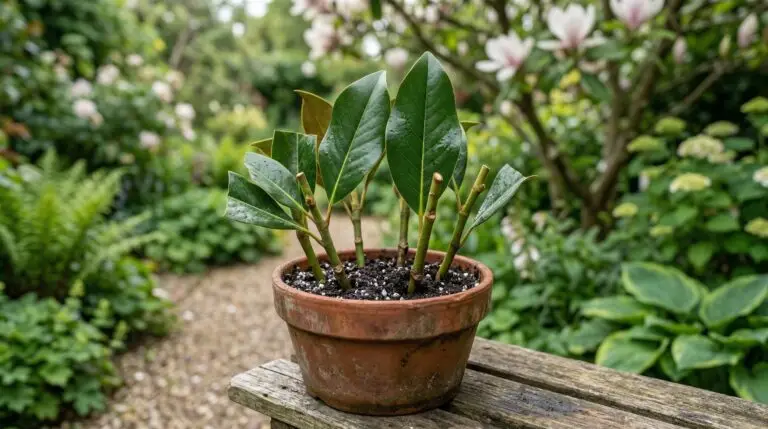
How to propagate magnolias from cuttings and layering for new trees from your favorite
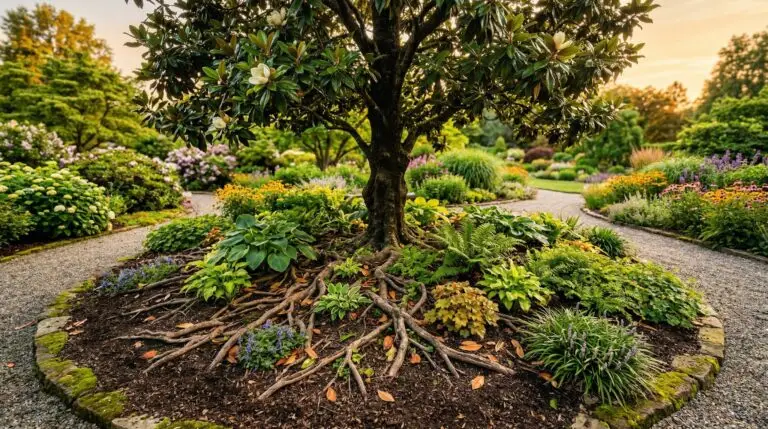
Companion plants for magnolia trees: what to grow and avoid
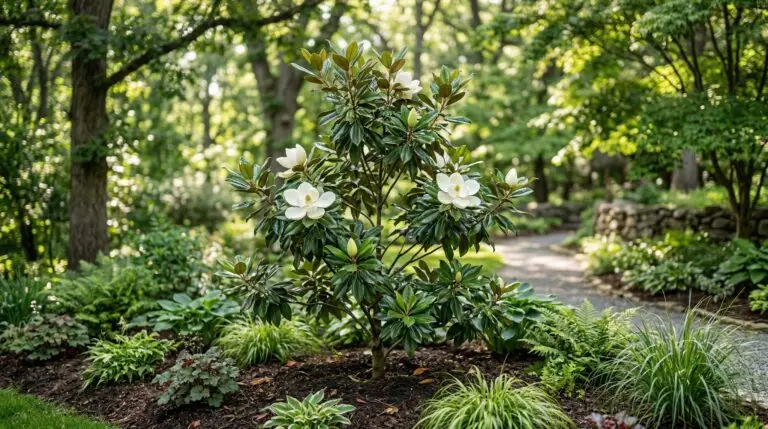
How to grow magnolia trees for breathtaking spring blooms on bare branches
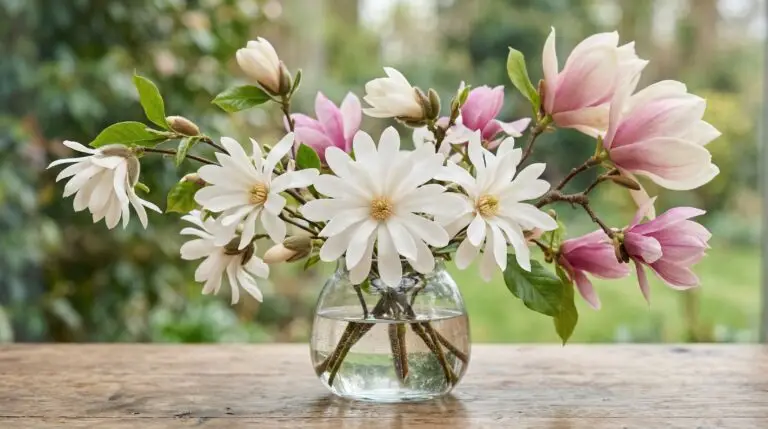
Small magnolias for compact gardens that fit any yard with room to spare
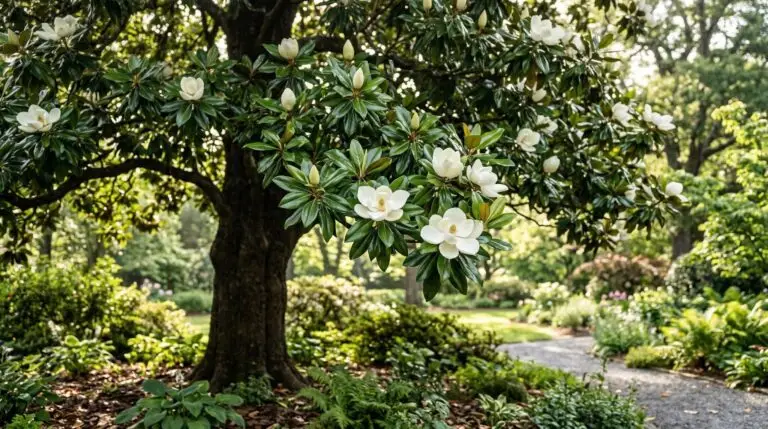
Southern magnolia grandiflora and growing the iconic evergreen of the American South
Magnolia meaning, from dignity and perseverance to its place in the American South
Why magnolia flower buds freeze in late spring frost and how to protect your tree