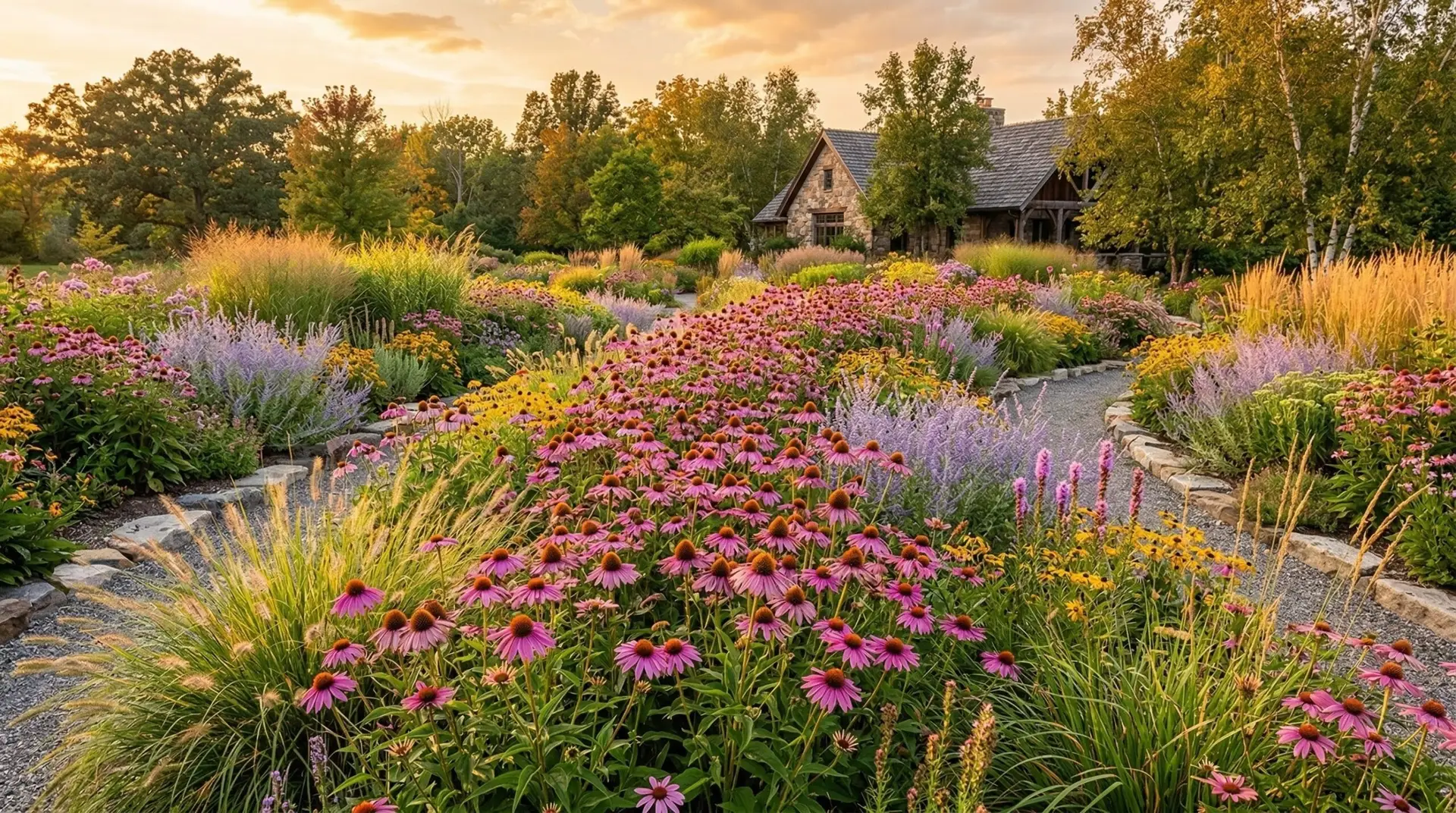
In a modern prairie garden design, the coneflower acts as a structural anchor that brings weight and geometry to the planting beds. You can rely on its strong, upright stems and prominent central cones to provide a necessary visual pause among softer, more fluid plants. Echinacea possesses a coarse texture that grounds a composition, especially when you surround it with plants that move easily in the breeze. When you pair echinacea with grasses, you create a fundamental tension between the static, rigid form of the flower and the dynamic, sweeping habit of the foliage. This relationship forms the backbone of the New American Garden style, where plants are allowed to mingle in large drifts that mimic natural ecosystems. The coneflower grows tall as a focal point in early summer before transitioning into a textured silhouette that holds the design together for months. When you place these pairings along primary sightlines or near pathways, you give visitors a chance to appreciate the architectural contrast up close.
Form and texture in the new American garden
The visual success of a coneflower prairie garden relies entirely on contrasting plant shapes. Coneflowers present a bold, daisy-like face with stiff petals that demand attention from the viewer. You can maximize this impact by planting them directly against the fine, vertical lines of Calamagrostis ‘Karl Foerster’ feather reed grass. The grass provides a strictly upright, wheat-colored backdrop that makes the rich pinks and purples of the coneflowers advance toward the eye. Because the grass blades are narrow and linear, they make the broad, dark green leaves of the Echinacea appear even more substantial. A mass planting of these two species transforms a flat yard into a dynamic, three-dimensional space. This deliberate clash of textures ensures that the garden remains visually engaging even before the flowers fully open or after their petals drop.
Color theory plays a significant role when you select specific grass cultivars to accompany your coneflowers. Little bluestem (Schizachyrium scoparium) offers a particularly rewarding color palette that shifts from blue-green in summer to copper and mahogany in autumn. The cool, silvery tones of the grass foliage in July create a highly effective complementary contrast with the warm magenta and orange hues of traditional coneflowers. You can expand this color harmony by introducing a classic black eyed Susan into the mix, which brings bright yellow tones that bridge the gap between the pinks and the blues. The resulting combination feels energetic but grounded, as the muted tones of the grass keep the bright floral colors from overwhelming the space. The deep roots of both plants also mean they share similar soil and water requirements, making this a highly functional pairing as well as a beautiful one.
Designing with scale and spatial relationships
Scale and proportion dictate exactly where these combinations belong in your overall garden layout. Switchgrass (Panicum virgatum) grows into a substantial, cloud-like mass that works perfectly as a middle-ground or background filler. You should position groupings of coneflowers in front of or woven through the edges of a switchgrass drift to establish depth in the planting bed. The airy, transparent flower panicles of the switchgrass hover above the solid, heavy heads of the Echinacea, creating a tiered effect that draws the eye upward. By treating the grasses as a continuous matrix, you allow the coneflowers to act as distinct, colorful accents that pop out from a unified green foundation. You can further emphasize this relationship by keeping the grass masses large and the coneflower groupings tightly clustered. This spatial arrangement mimics how these plants grow in the wild while maintaining the intentional order required for a designed garden space.
A well-planned prairie planting design must account for how the visual weight of the garden shifts as the growing season progresses. In midsummer, the coneflowers command the majority of the attention with their large, saturated blooms. As late summer approaches, the ornamental grasses begin to push their own inflorescences, changing the texture of the garden from mostly green to shades of tan, silver, and red. You can support this transition by planting tall architectural goldenrod nearby, which injects a strong horizontal line of yellow just as the coneflower petals begin to fade. The fading pinks of the Echinacea cones look exceptionally sophisticated against the emerging gold and rust tones of the late summer prairie palette. The structural bones of the garden remain intact, but the color palette completely transforms over a few short weeks. This progression ensures the garden feels alive and active rather than static and tired.
Winter structure and lasting architectural value
The true test of a modern prairie composition is how it performs when the growing season ends. Coneflowers are invaluable in this regard because their bristly, blackened seed heads remain rigidly upright through wind, rain, and snow. When you leave these stems standing alongside bleached, dormant ornamental grasses, you create a striking winter silhouette that catches frost and low sunlight. The dark, geometric spheres of the Echinacea cones provide high-contrast punctuation marks against the pale, sweeping masses of the dead grass foliage. Birds frequently visit these seed heads, adding a layer of motion and wildlife activity to the dormant garden. This structural persistence means your garden continues to offer spatial definition and visual interest long after the last petals have dropped. The combination proves that a garden does not need active blooms to maintain a strong, readable design.
You can extend the active color season of this composition right up to the first hard frost with careful companion choices. Incorporating a late-blooming smooth blue aster into the matrix provides a final wave of cool purple and blue tones that harmonize beautifully with the darkening coneflower cones and the reddish autumn grasses. A fundamental design principle for this style of gardening is to plant in interlocking sweeps rather than isolated clumps. You should overlap the edges of your coneflower masses with your grass masses, allowing a few individual plants to cross the invisible boundary between the two groups. By treating the entire bed as a single, woven community of plants, you achieve a professional finish. This blending technique softens the transitions between different textures and creates the cohesive, naturalistic aesthetic that makes the modern prairie style so effective.
More About Coneflower

Echinacea for health and immunity and how it connects to the garden coneflower
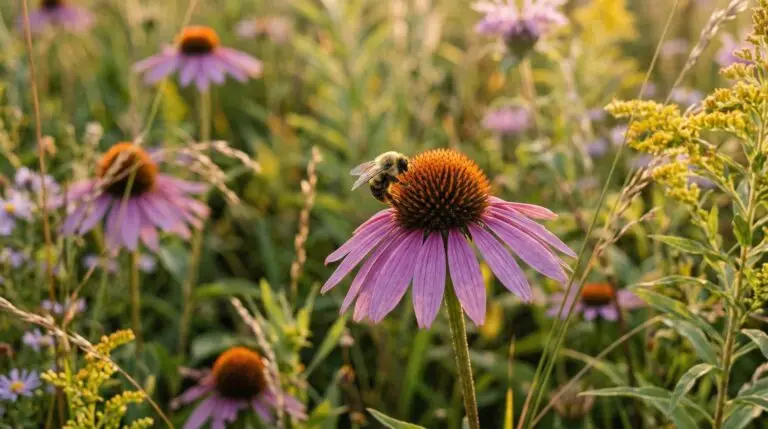
Coneflowers as the backbone of pollinator gardens attracting bees butterflies and birds

How to grow coneflowers from seed for a naturalistic wildflower garden
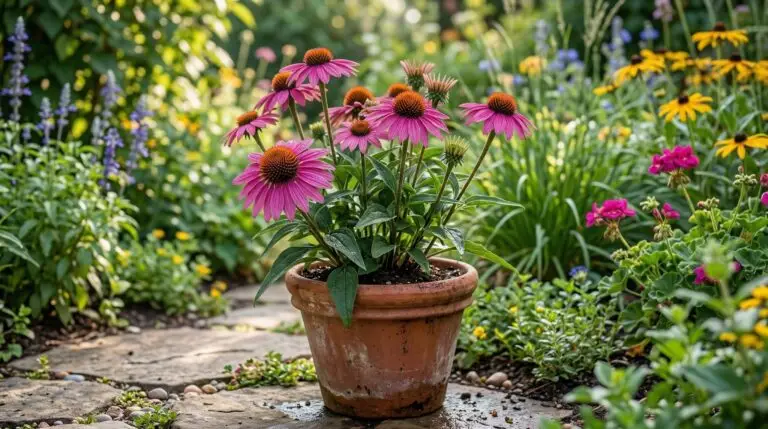
Growing coneflowers in containers for sunny balconies and apartment gardens
Using coneflowers as long-lasting cut flowers in summer and fall bouquets
Why coneflowers flop over and how to grow sturdy upright plants without staking
Best coneflower varieties from classic purple to sunset orange and double blooms