When planning a shade garden, the default choice for many gardeners is often a flat expanse of green hostas or ferns. Adding color to areas where the sun rarely reaches requires a more selective approach to plant material. Many guides point toward generic bedding plants, but those often stretch and weaken in true shade. Begonias for shade offer a completely different level of performance, provided you choose the right types for your specific light conditions. Rather than attempting to catalog every begonia available, I have selected a few distinct categories and specific varieties that reliably produce color, texture, and structure in low light. These selections bypass the mediocre performers and focus on plants that actually thrive when protected from direct sun.
The shade garden presents a unique set of challenges that thin-leaved plants struggle to overcome. While plants like impatiens provide reliable carpets of color in dappled light, begonias bring a substantial, fleshy architecture that holds up better to humidity and variable moisture. They do not wilt at the first sign of a dry afternoon, and their thick stems store water efficiently. This resilience makes shade garden begonias a superior choice for containers under deep eaves or planted directly in the dry shade cast by mature trees. By narrowing our focus to tuberous, rex, angel wing, and specific wax varieties, we can build a collection that relies on both flowers and foliage to light up dark corners.
Tuberous varieties for continuous blooming
Tuberous begonias are the undisputed heavyweights of the shade flower world, producing massive, rose-like blooms from early summer until frost. Many older tuberous varieties have a reputation for being brittle and snapping in mild winds, which is why I specifically recommend the Nonstop series for modern shade gardens. The Nonstop series, particularly ‘Nonstop Yellow’ and ‘Nonstop Deep Rose’, produces compact, sturdy plants that support their heavy double flowers without staking. They require bright, indirect light to bloom heavily, making them ideal for north-facing porches or the dappled shade of high tree canopies. Unlike plants that bloom once and fade, such as Virginia bluebells, these tuberous begonias continuously push new buds throughout the entire growing season. I consistently place them in high-visibility areas where their complex flower structures can be appreciated up close.
When cultivating tuberous begonias, the soil must drain quickly to prevent the fleshy tubers from rotting. I prefer growing them in wide, shallow containers rather than directly in the ground, as this allows for precise control over the soil moisture and drainage. The Illumination series is another tuberous option I keep in regular rotation, specifically chosen for hanging baskets. ‘Illumination Apricot Shades’ produces cascading stems covered in complex, multi-layered flowers that look like small glowing lanterns against dark green foliage. These trailing types perform exceptionally well when hung under the dense shade of covered patios, where they receive ambient light but no direct sun to scorch their delicate petals. The sheer volume of flowers produced by a mature hanging basket of Illumination begonias easily rivals any sun-loving annual.
Foliage focus with rex begonias
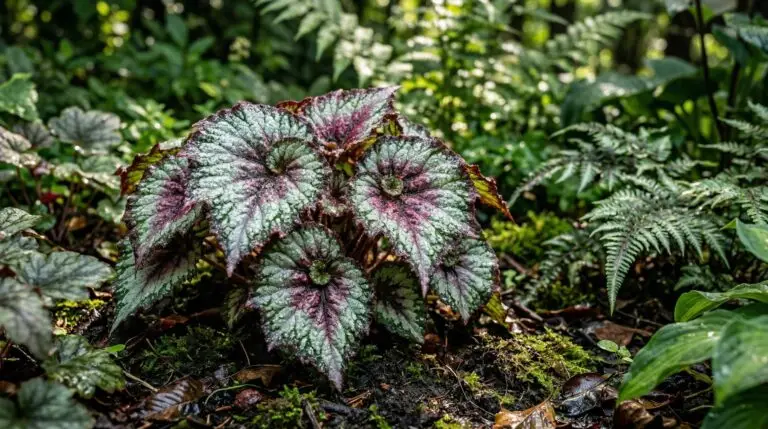
Gardeners often fixate entirely on flowers when trying to add color to a dark space, completely overlooking the visual impact of patterned foliage. Rex begonias produce insignificant blooms, but they grow some of the most complex, metallic, and colorful leaves found in any shade plant. The variety ‘Escargot’ is a permanent fixture in my shade recommendations because of its unique spiraling leaf base that curls inward like a snail shell. The leaves feature alternating bands of silver and deep forest green, covered in fine red hairs that catch the ambient light. This plant requires very little light to maintain its striking patterns, making it one of the best begonias for shade areas that receive almost no direct illumination. The visual texture it brings to a planting bed is unmatched by any other shade perennial or annual.
While ‘Escargot’ offers structural curiosity, the Jurassic series of rex begonias delivers sheer volume and intense color saturation. ‘Jurassic Silver Point’ produces large, jagged leaves that look as if they were dipped in liquid mercury, bordered by deep purple margins. I position these silver-leaved varieties in the deepest, darkest corners of the garden, where their reflective surfaces visually brighten the space. They pair beautifully with early spring bloomers like hellebore, stepping in to provide visual interest long after the spring flowers have faded. Rex begonias demand high humidity and resent cold drafts, so they perform best when grouped together in sheltered locations protected from drying winds. Keeping them slightly pot-bound also helps prevent accidental overwatering, which is the fastest way to kill a rex begonia.
Angel wing begonias for vertical architecture
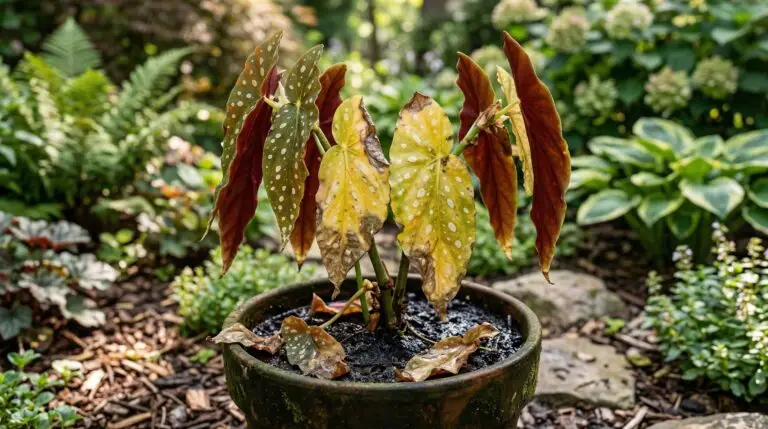
Most shade annuals grow low to the ground, creating a flat visual plane that lacks architectural interest. Angel wing begonias, a type of cane begonia, solve this problem by pushing tall, bamboo-like stems upright to heights of two to three feet. I routinely specify the variety ‘My Special Angel’ for large shade containers because it provides instant verticality and structure. The asymmetrical, wing-shaped leaves are heavily spotted with silver polka dots, while heavy clusters of pale pink flowers dangle from the branch tips. This variety requires a bit more light than the rex types, performing optimally in morning sun followed by complete afternoon shade. The heavy canes do require a heavy ceramic pot to prevent the entire plant from tipping over in late summer storms.
Many garden centers push generic cane begonias that quickly become leggy and drop their lower leaves by midsummer. To avoid this bare-stemmed look, I choose varieties known for tight internodal spacing, such as ‘Lucerna’. This heirloom variety has survived in cultivation for over a century precisely because of its rugged constitution and reliable performance in low light. The leaves are olive green with silver spots on top, but the undersides are a striking maroon that flashes whenever the wind blows. By pinching the growing tips early in the season, you encourage ‘Lucerna’ to branch outward, resulting in a dense, shrub-like plant that dominates a large shaded planter. The massive clusters of pink flowers that appear in late summer are simply a bonus to the structural foliage.
Selective use of wax begonias
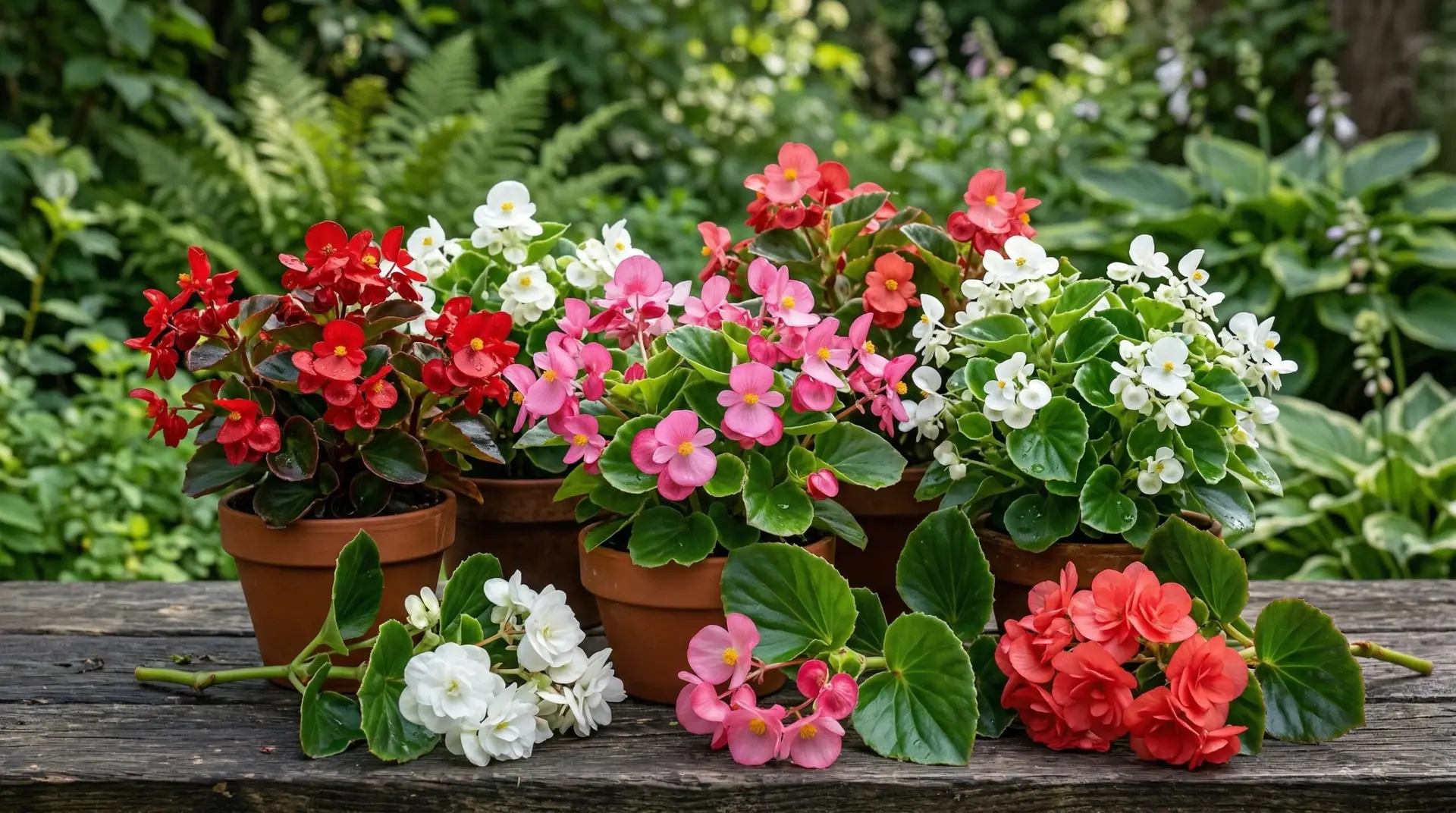
Wax begonias are often dismissed by serious gardeners as common gas-station landscaping plants, but ignoring the entire category is a mistake. The secret to using wax begonias effectively is to skip the standard green-leafed varieties and focus exclusively on the bronze-leafed cultivars. The Cocktail series, specifically the variety ‘Whiskey’, produces deep mahogany foliage that looks nearly black in heavy shade, providing a perfect backdrop for its pure white flowers. These plants are exceptionally drought-tolerant once established, making them the most practical choice for dry shade under mature maples or oaks where other plants simply cannot compete for water. They require zero deadheading and maintain a tight, mounded shape from the day they are planted until the first hard frost. I use them as a dark, grounding border to frame lighter, more delicate shade plants.
If I were forced to select just one begonia for a shade garden, discarding all others, my top recommendation would be the tuberous variety ‘Nonstop Joy Yellow’. Most tuberous begonias either grow strictly upright or trail heavily, but ‘Nonstop Joy’ bridges the gap with a semi-trailing habit that forms a perfect, flower-covered globe in a container. The yellow is a clean, sharp lemon color that acts like a light source in deep shade, drawing the eye immediately. It does not suffer from the brittle stems that plague older tuberous varieties, and it continues to produce huge, double blooms even during periods of extreme heat and humidity. The flowers shed cleanly when they finish, saving you from the tedious task of picking off mushy petals. For pure, reliable color in areas where the sun rarely reaches, it stands entirely above the rest of the genus.
More About Begonia
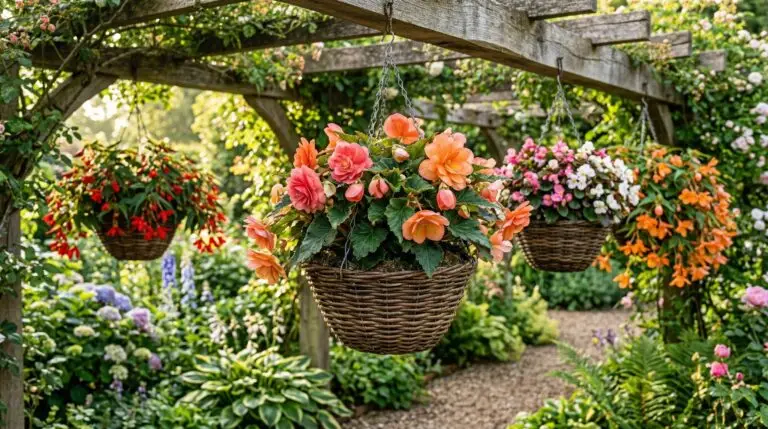
Growing tuberous begonias in hanging baskets for cascading summer color
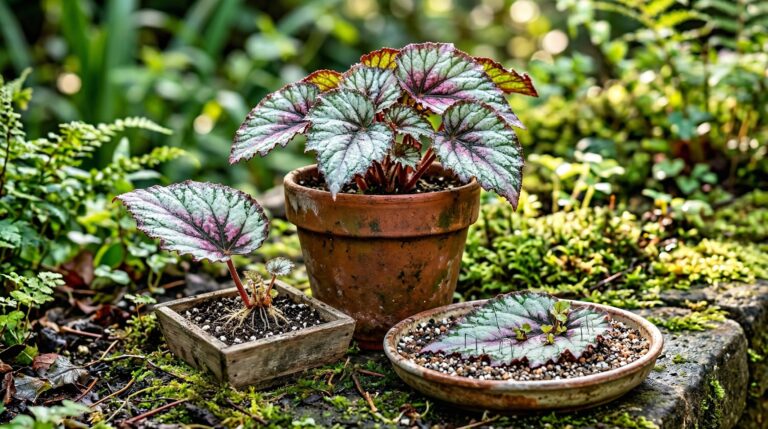
How to propagate begonias from leaf cuttings and stem cuttings step by step
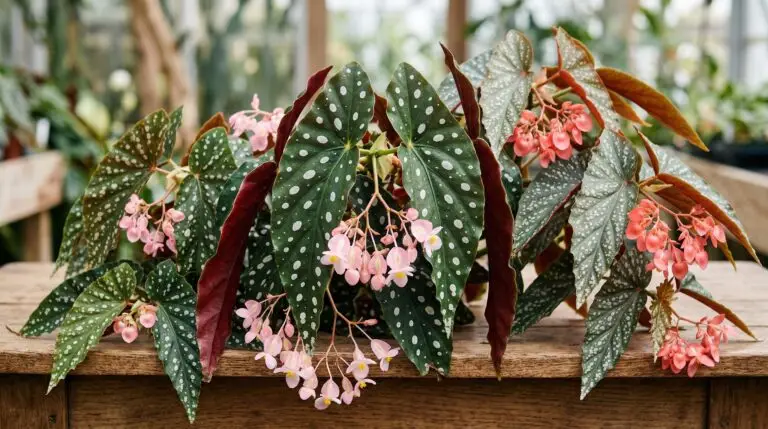
Angel wing begonias as statement houseplants with polka dot leaves and hanging clusters
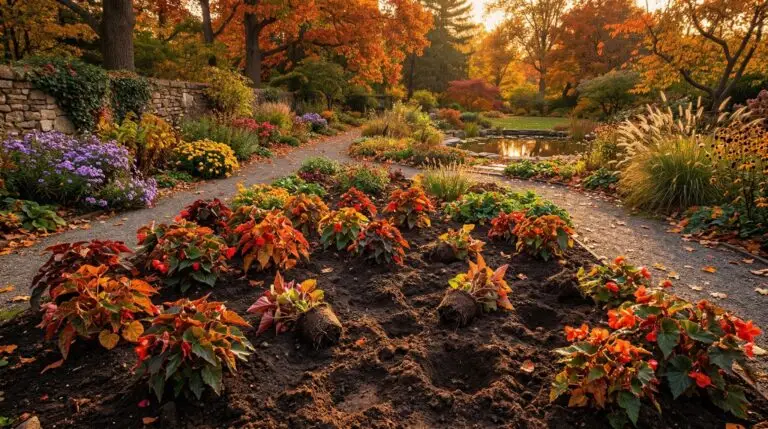
How to overwinter begonia tubers and bring them back bigger next summer
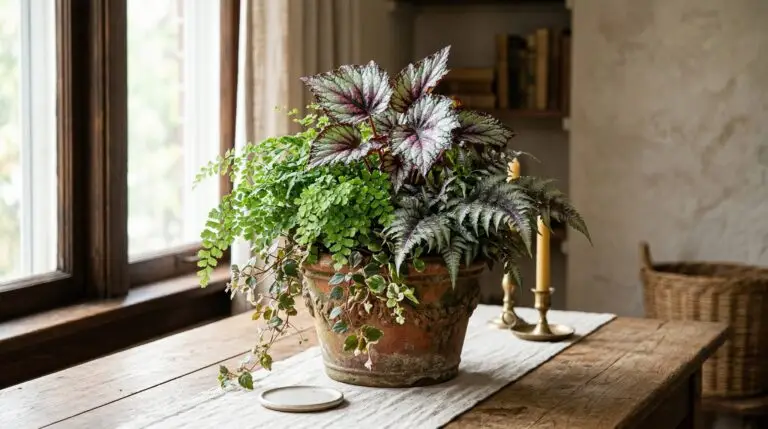
Begonia container combinations that look gorgeous on a shaded front porch
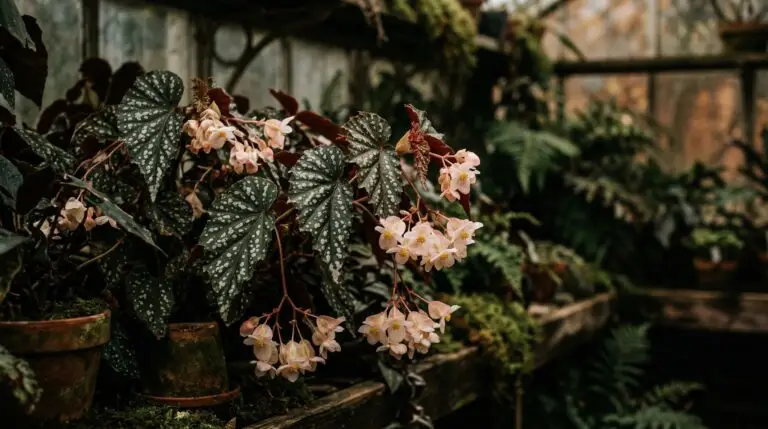
Begonia flower meaning and the Victorian message of caution and gratitude
Why begonia leaves are curling dropping or developing brown spots