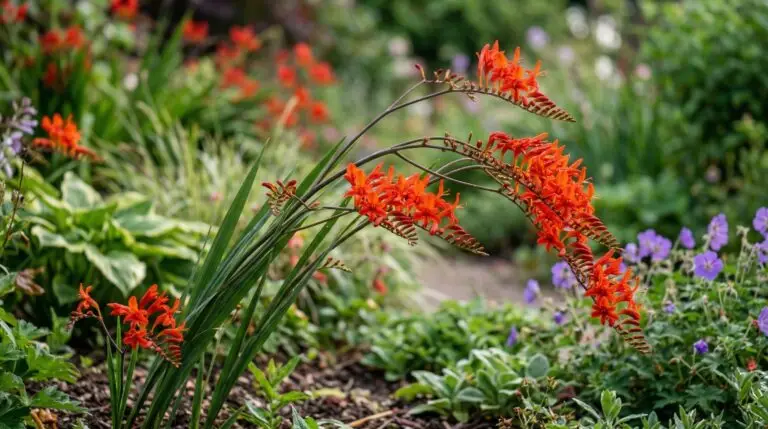
I have watched crocosmia transform summer borders for decades, reliably producing those unmistakable arching sprays of fiery orange, red, and yellow flowers just as the early summer perennials begin to fade. Often still called montbretia in older garden literature, this South African native grows from corms, which are swollen underground stems that store nutrients for the dormant season. When you plant a healthy crocosmia corm, you are setting the stage for a strong architectural display that bridges the gap between midsummer and autumn. The pleated, sword-like foliage emerges first, providing a strong vertical element that holds its own long before the flower spikes appear. By the time the zigzagging flower stems, known botanically as inflorescences, stretch out horizontally, the plant commands attention in any planting scheme. Growing crocosmia successfully requires understanding its specific seasonal rhythms and respecting its vigorous underground growth habits.
Soil preparation and planting the corms
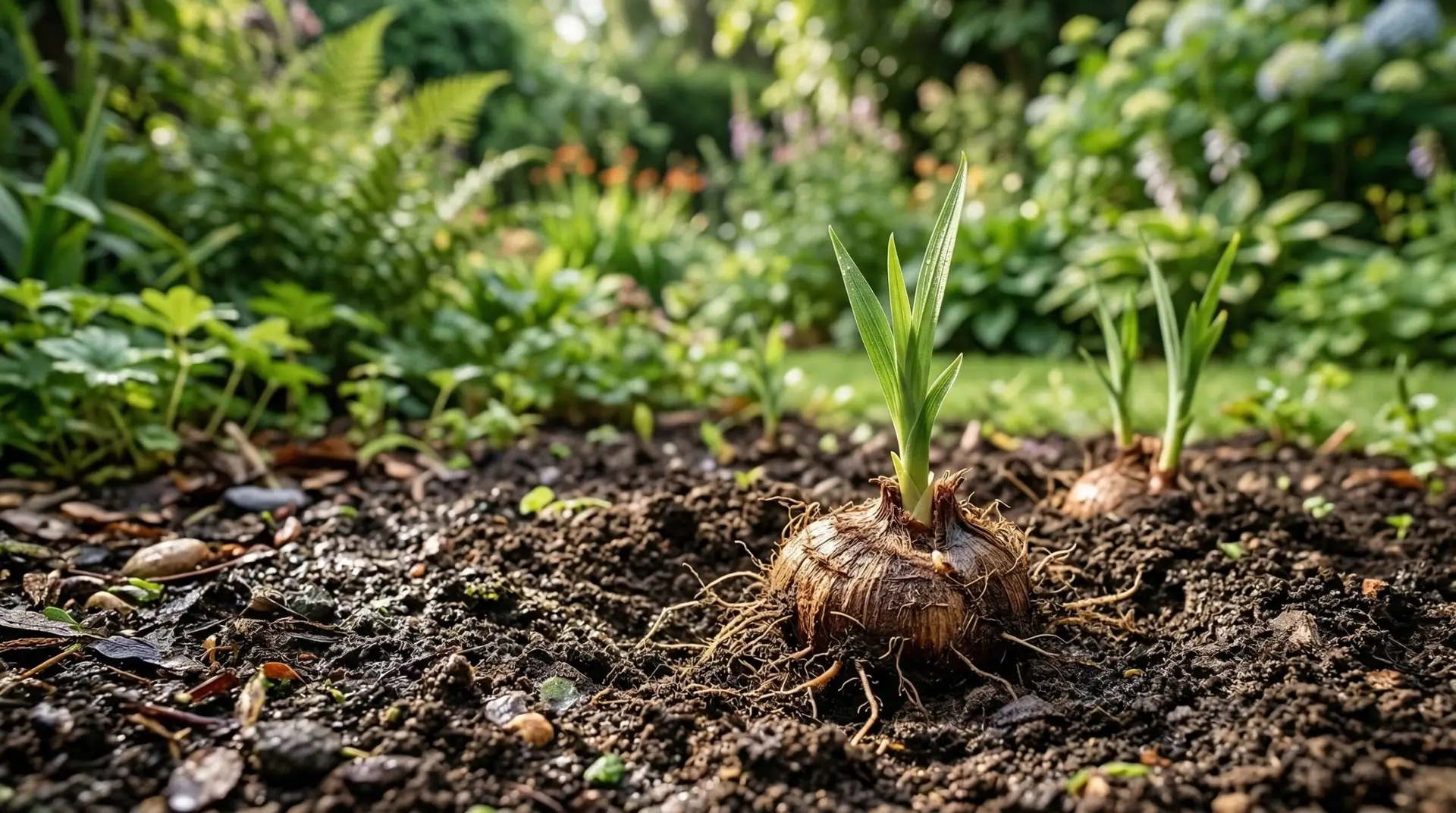
Soil preparation dictates your long-term success with crocosmia much more than any fertilizer regimen. These plants require excellent drainage, particularly during winter dormancy, because corms sitting in cold, waterlogged soil will inevitably succumb to fungal rots. You should aim for a slightly acidic to neutral soil pH, ideally falling between 6.0 and 7.0, though they will tolerate slightly alkaline conditions if the drainage is sharp. Plant the corms in spring after the danger of frost has passed, setting them about three to five inches deep and spacing them six to eight inches apart. If you garden in heavy clay, you must amend the planting area heavily with coarse sand or fine gravel, or consider planting them in raised beds to ensure water moves rapidly away from the root zone. Much like when you are planting a gladiolus, another member of the iris family, getting the planting depth right helps stabilize the tall foliage that will develop later in the season. Taking the time to prepare the soil structure before planting prevents the heartbreak of digging up mushy, rotted corms the following spring.
Sunlight requirements and temperature tolerances
Crocosmia performs best when given full sun, which translates to at least six to eight hours of direct sunlight daily in most climates. In cooler northern gardens, maximizing sun exposure ensures the stems remain sturdy and the flower colors develop their characteristic intensity. However, if you live in regions with intense summer heat, providing some afternoon shade will protect the foliage from scorching and prolong the blooming period. These plants are generally hardy in United States Department of Agriculture zones 6 through 9, though hardiness varies significantly among different cultivars. In zone 6, you should apply a thick winter mulch of chopped leaves or straw to protect the dormant corms from deep freezes. During their active growth phase in early summer, crocosmia needs consistent moisture to fuel the development of those tall flower stalks. Once established, they exhibit a surprising degree of drought tolerance, though prolonged dry spells will cause the lower leaves to brown and drop prematurely.
Managing growth habits and dividing congested clumps
The vigor of crocosmia is both its greatest asset and its primary management challenge in the garden. These plants multiply rapidly by producing new corms on top of the old ones each year, while also sending out underground stems called rhizomes to colonize adjacent soil. Over a few seasons, this creates dense, congested clumps that eventually stop flowering because the corms are competing heavily for water and nutrients. You will need to dig and divide these clumps every three to four years, ideally in early spring just as the new green shoots become visible. Use a sturdy garden fork to lift the entire mass, then gently pull the corm chains apart with your hands, discarding the older, depleted corms at the bottom of the stack. Replant only the largest, firmest corms from the top of the chain to guarantee vigorous blooming in the current season. Be aware that in mild, damp climates, particularly the Pacific Northwest, certain older varieties of crocosmia escape cultivation easily and require careful containment to prevent them from crowding out native vegetation.
Cultivar selection and architectural garden use
Selecting the right cultivar makes a profound difference in how crocosmia behaves and looks in your garden space. The famous ‘Lucifer’ cultivar grows up to four feet tall with brilliant tomato-red flowers, making a strong statement that requires equally substantial companions like a large canna lily to anchor the back of a border. Smaller cultivars like ‘Emily McKenzie’ or ‘George Davison’ top out around two feet, fitting neatly into tighter spaces or mixed perennial beds without overwhelming their neighbors. The architectural nature of the arching stems provides excellent visual contrast when planted alongside mounding or daisy-like flowers. You can create a highly textured, bright midsummer display by pairing them with a late-blooming daylily that echoes their warm color palette. As you plan your garden for the upcoming season, evaluate your borders for spots that look flat or uninteresting in late July, as these are the exact locations where a group of crocosmia corms will provide the vertical lift and warm color needed to revive the space.
More About Crocosmia
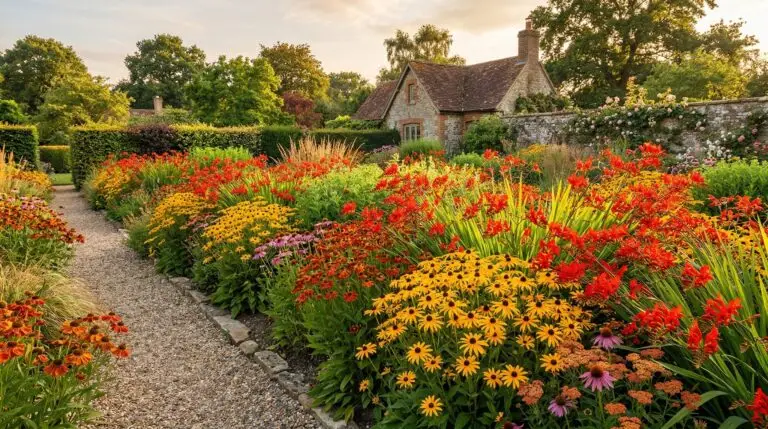
Crocosmia companion plants: what to grow, what to avoid

Overwintering crocosmia corms in cold climates zones 5 and below
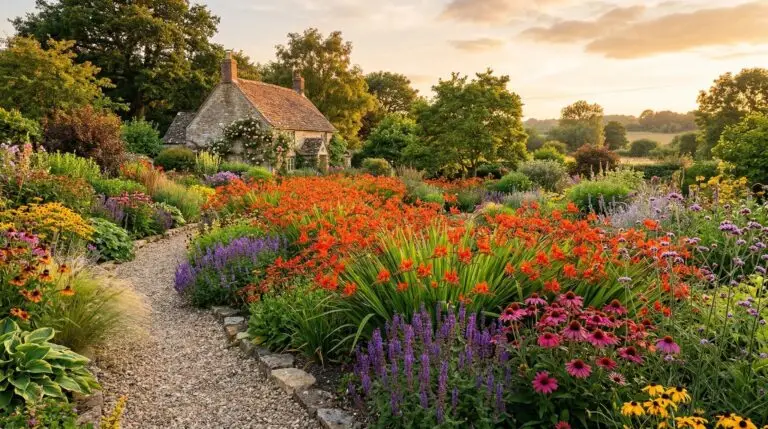
Designing a late summer garden with crocosmia that peaks when spring flowers are gone
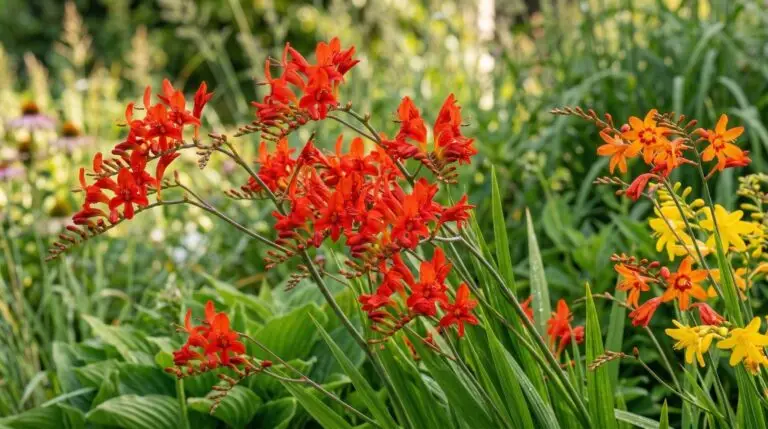
Best crocosmia varieties from fiery Lucifer to golden Emily McKenzie
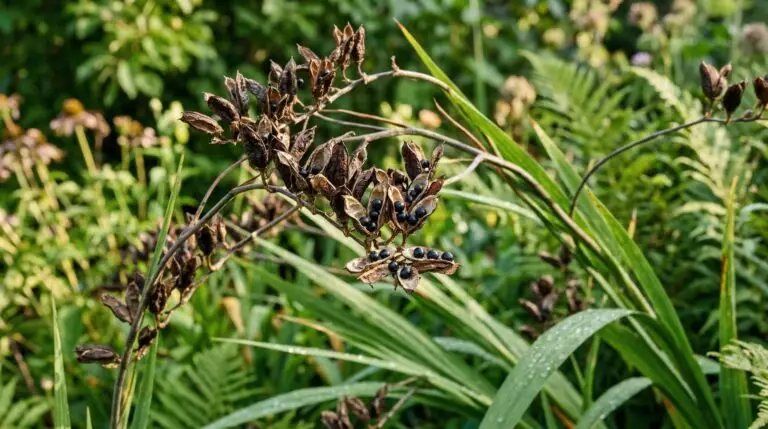
Crocosmia seed pods and how to propagate new plants from seed for unique varieties
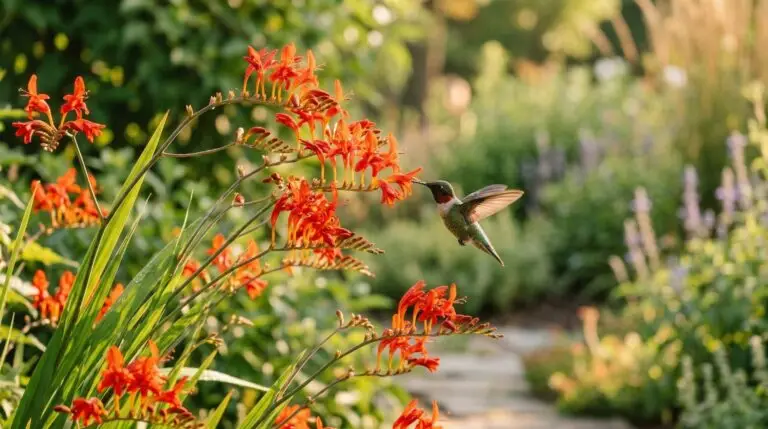
Crocosmia as a hummingbird magnet and why they prefer these tubular flowers
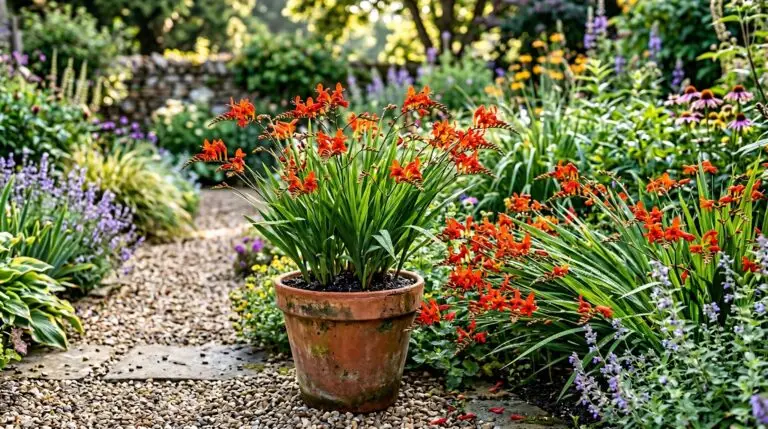
Growing crocosmia in containers for tropical-looking patio displays