Taxonomy and origin
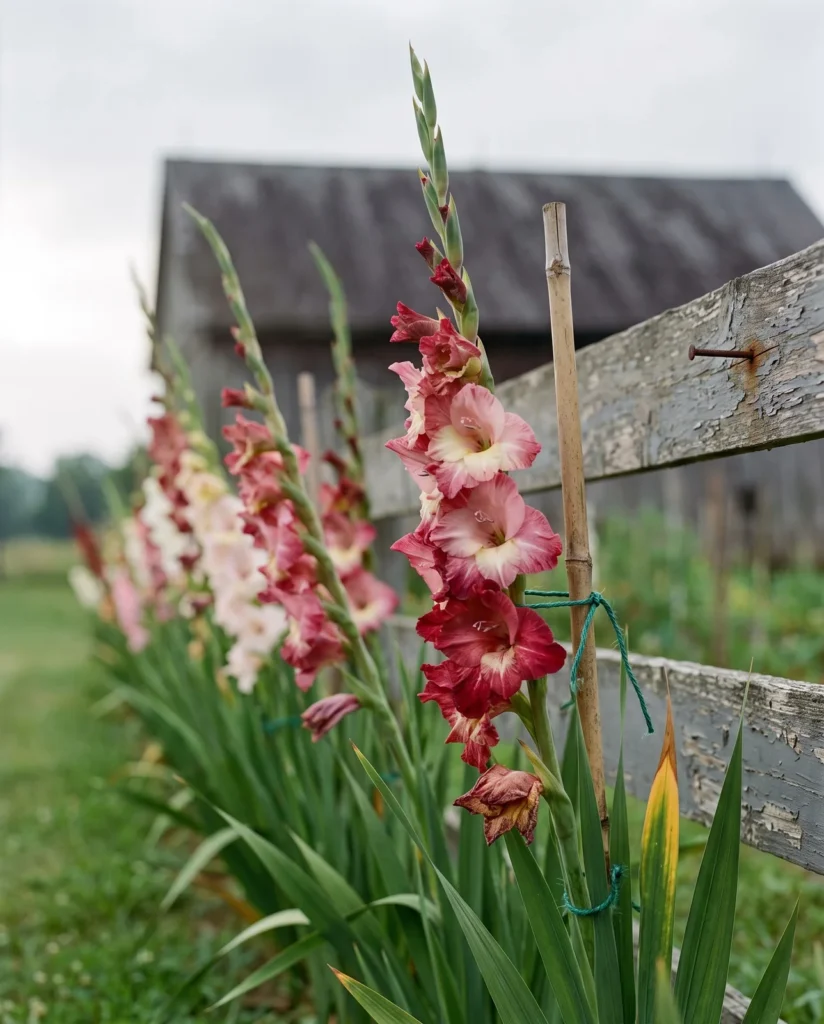
Gladiolus is a genus of perennial cormous plants in the iris family, and the name is the Latin diminutive of gladius, a sword. Long sword-shaped blades stand in upright fans, and funnel-shaped flowers ride slender stalks, opening one at a time from the bottom up. Gardeners shorten it to glads, and older American usage runs to gladiola. The family, Iridaceae, also holds crocuses, freesias and irises. Species counts run from about 180 to over 300.
In the wild the genus is African and Eurasian, centered on the Cape Floristic Region of South Africa. That home explains the corm, a flat thickened underground stem that kept the plant alive through a long dry season until the spring rains came. Garden glads still run on that schedule: the corm fattens through summer, the plant dies down, and next season starts on stored food.
Almost every glad sold in a spring bag is a hybrid. They fall into three groups: large-flowered Grandiflora at 3 to 6 feet, miniature Nanus at about 1.5 feet, and hooded Primulinus at 2 to 4 feet. Grandiflora is the florist's flower. Byzantine gladiolus, the hardy Mediterranean species, was a favorite in the old South and still turns up in old cemeteries and ditch banks.
Bloom time
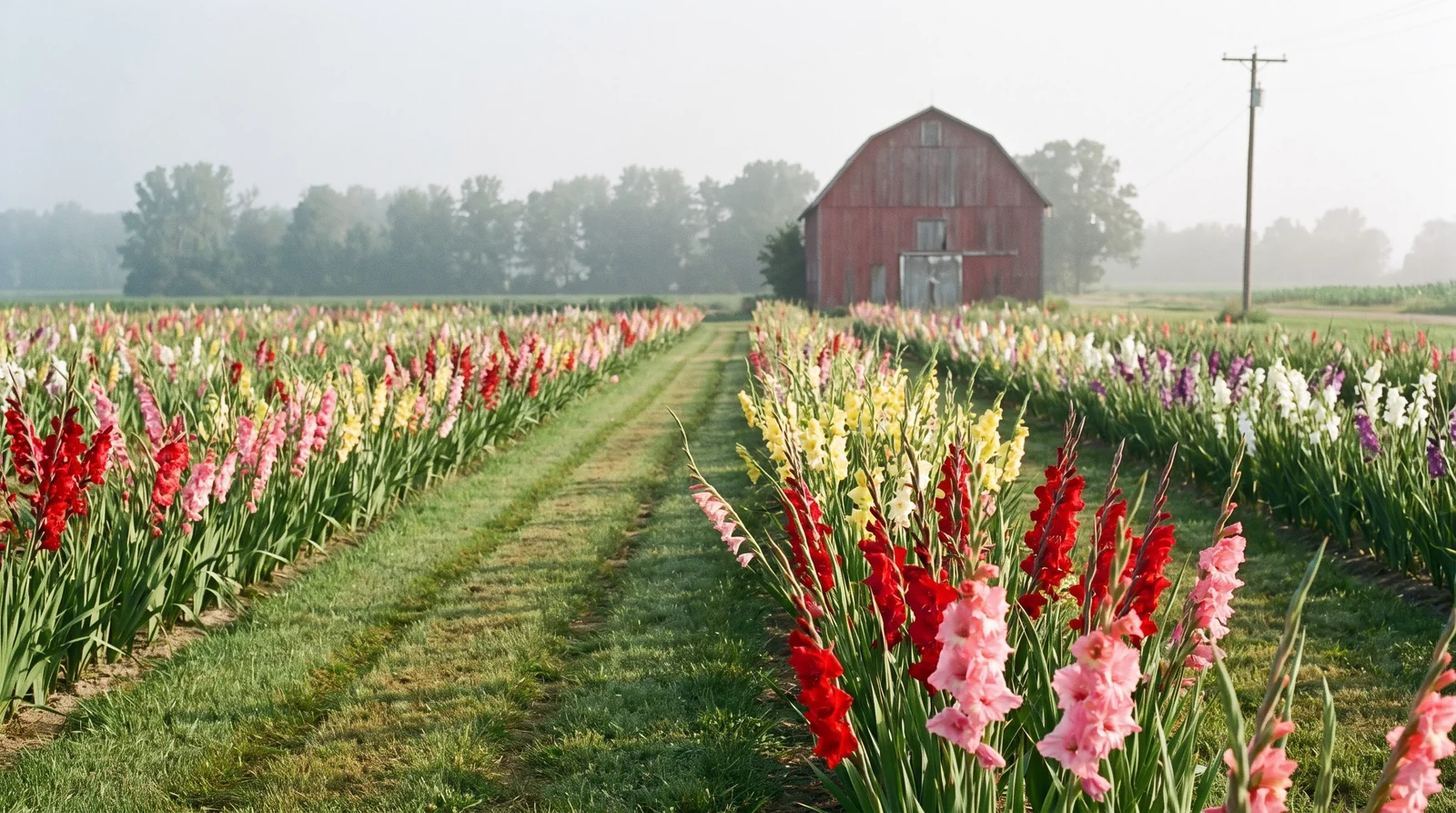
Gladiolus bloom in showy spikes from late summer into fall, and the planting date sets the timing more than the season does. Count 60 to 90 days from planting to the first flower, depending on variety. A bed planted all at once hits August to September. One Grandiflora stem carries 20 or more buds, so one stalk holds color as long as the sequence takes to work from base to tip. The hardy Byzantine species keeps its own calendar and flowers May through July. Because the clock starts at planting, spacing the plantings a week apart keeps glads in flower all summer.
Planting corms
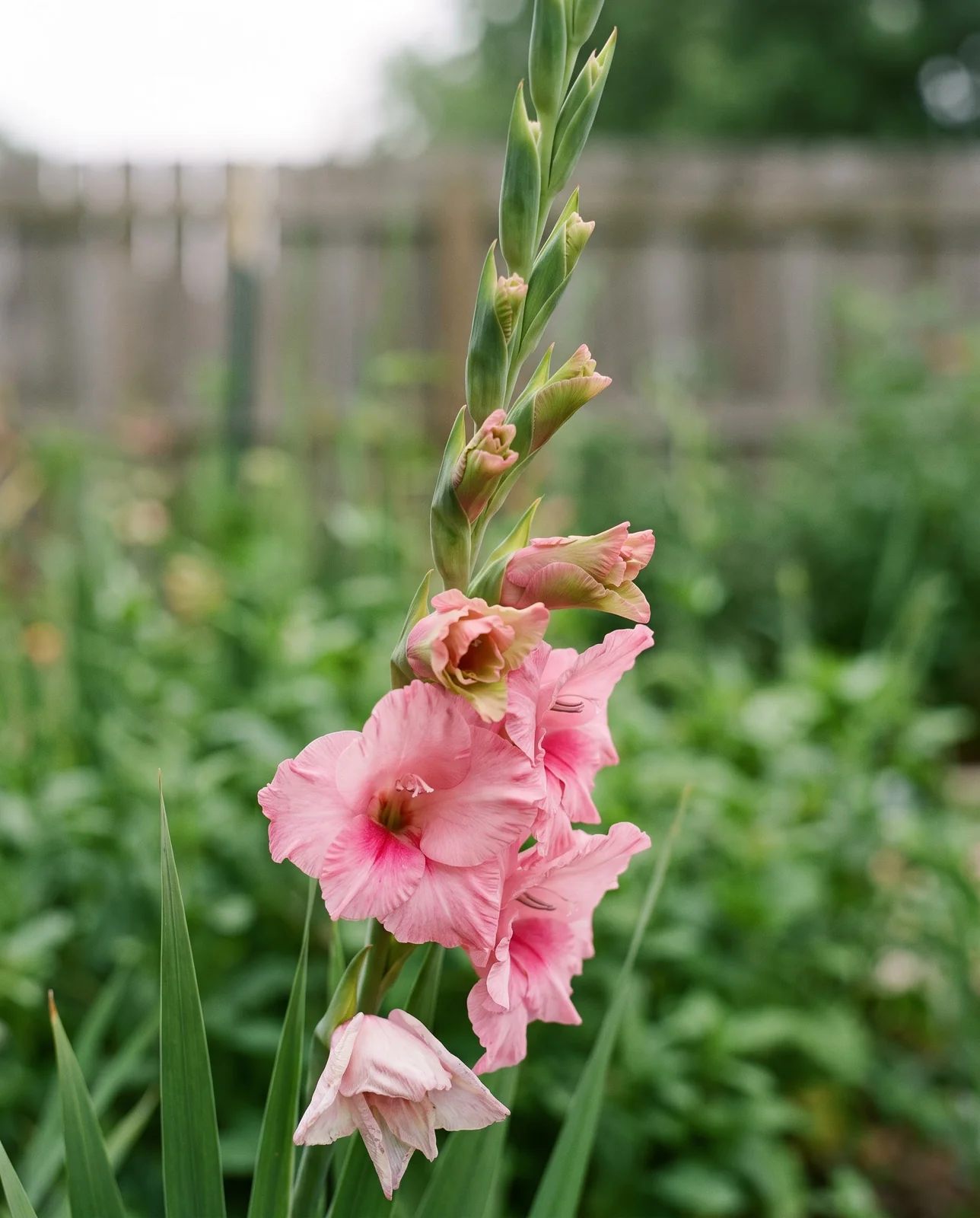
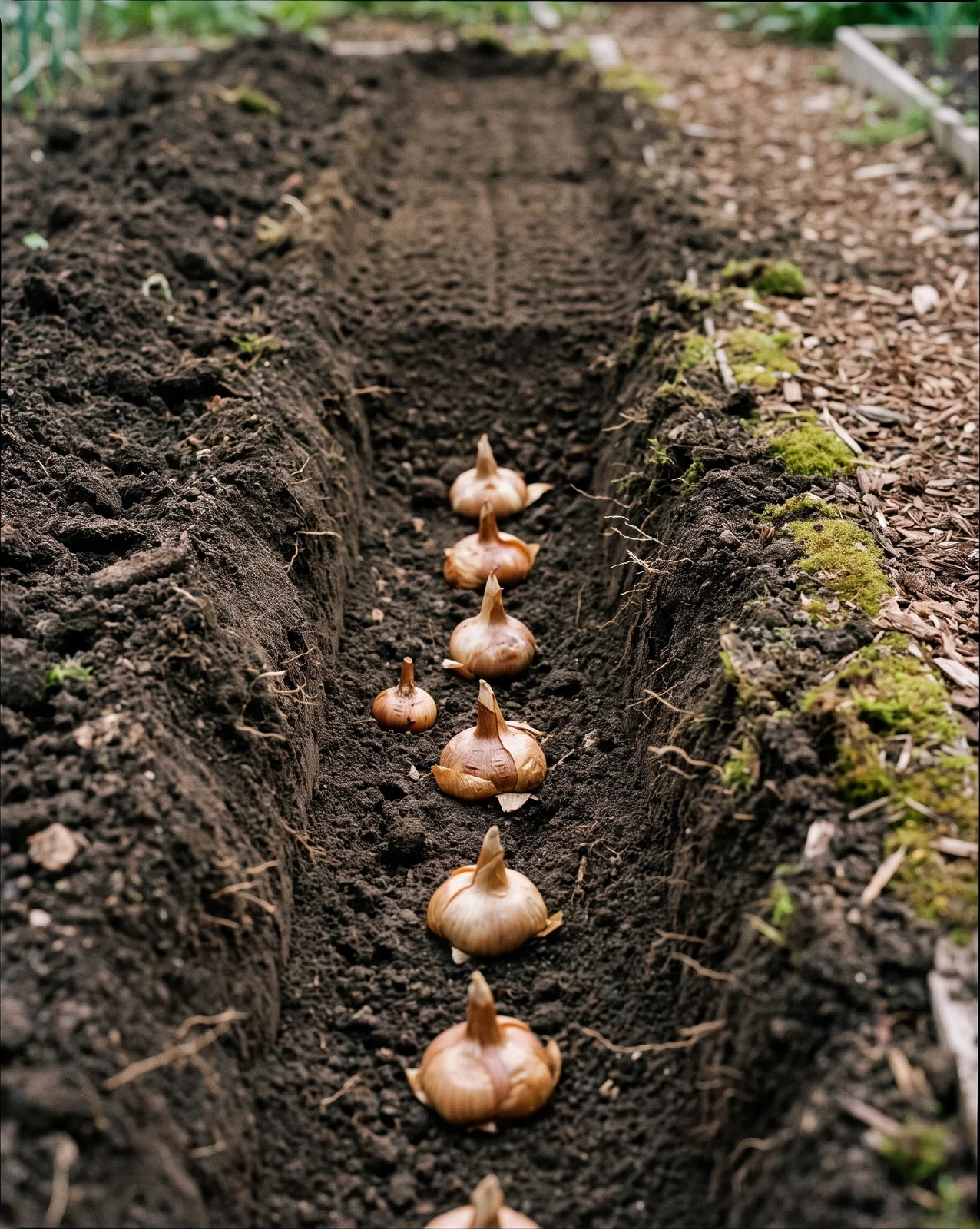
Plant the corms in spring, once frost danger has passed and the soil has warmed to at least 55 degrees Fahrenheit. Corms put into colder ground rot before they sprout. In Mississippi that window falls between mid-March and mid-April depending on location, and it moves later going north. Set them pointed end up, 3 to 6 inches deep according to the size of the corm, into ground that drains, since heavy clay rots them. Diameter decides flower size, so buy corms 1 1/4 inches or larger across for the big spikes. The hardy Byzantine type goes shallower, at 3 to 4 inches.
Spacing depends on whether the bed is for looking at or for cutting. In a border, set corms 4 to 6 inches apart with rows 12 to 36 inches apart, in groups of seven or more. A cutting patch is packed tighter: corms sit 2 to 3 inches apart in a single or double staggered row, with 20 to 36 inches between rows. Straight rows belong in the cutting patch.
Succession planting: how far apart to space the rounds
How far apart to space the rounds depends on what the row is for.
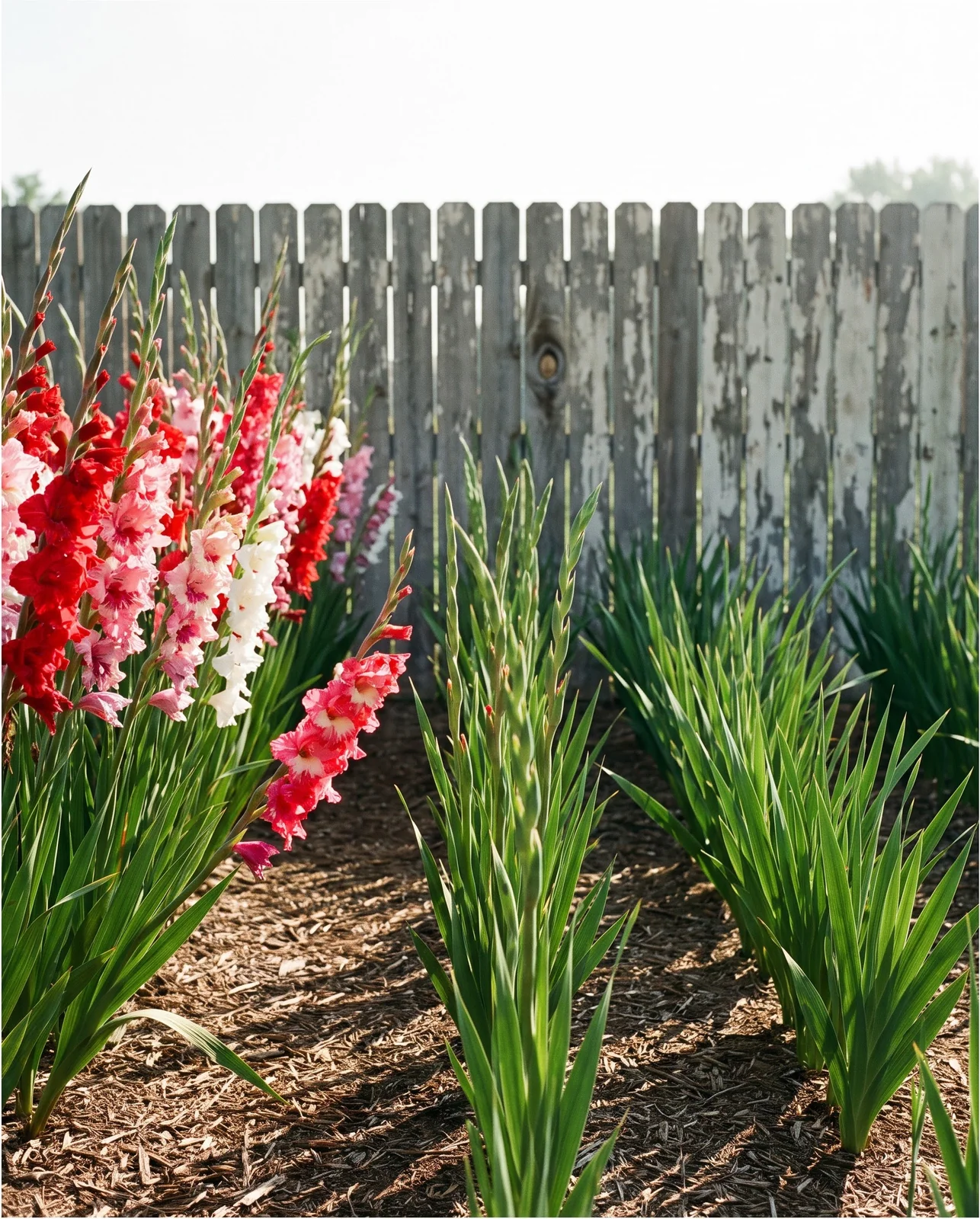
Do gladiolus come back every year?
Whether they come back depends on the zone. Gladiolus is hardy in zones 7 through 10, and the tall Grandiflora hybrids hold at zone 7 and warmer. Zone 7 is the contested edge, and most gladiolus are perennial in zones 8 to 10. That decides whether the corms stay in the ground or come out of it. Inside the hardy band they ask for little: a layer of mulch carries them through winter, and glads overwinter under mulch across most of South Carolina. It stretches the range too, into zones 6 and 7, and colder for the Nanus hybrids.
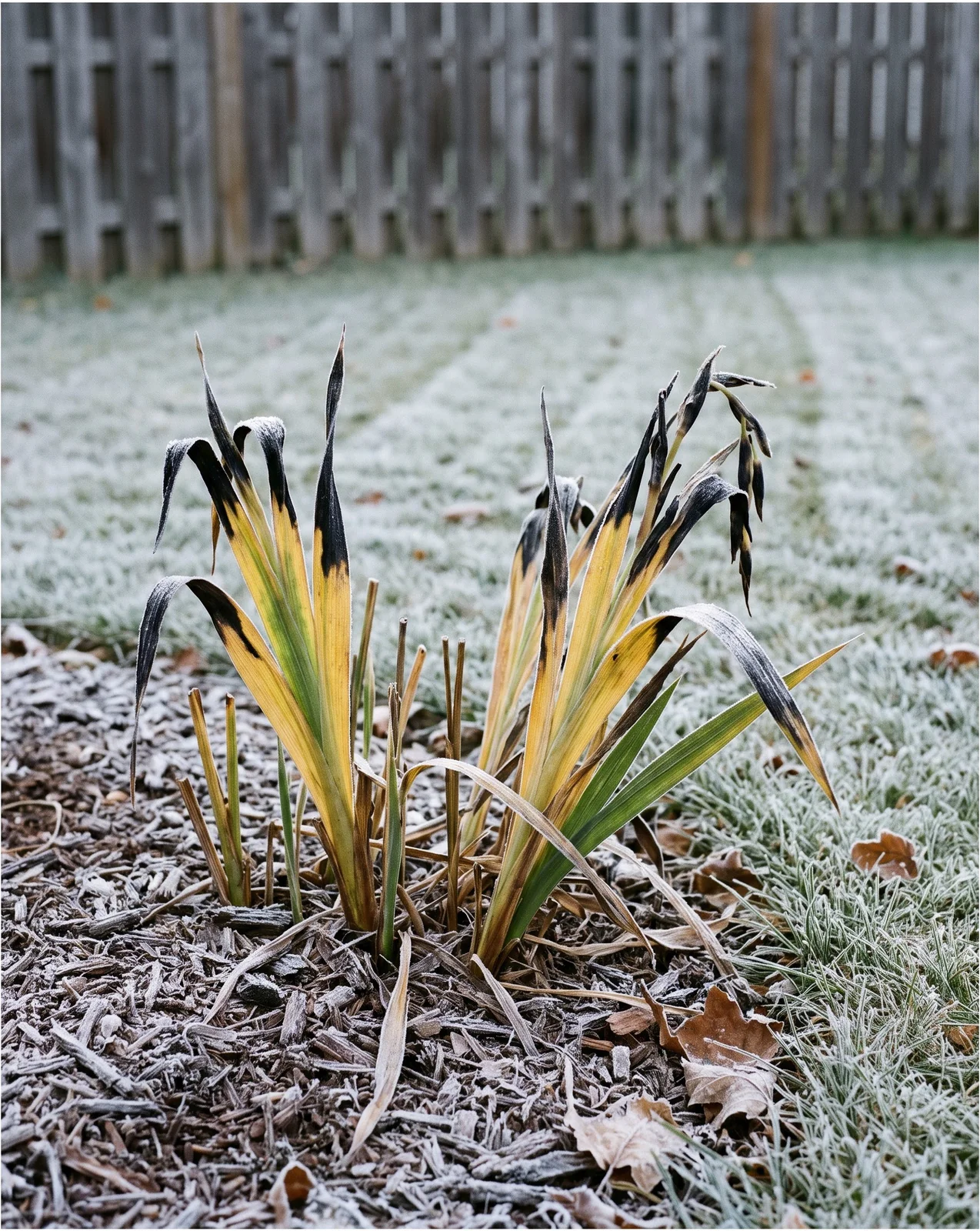
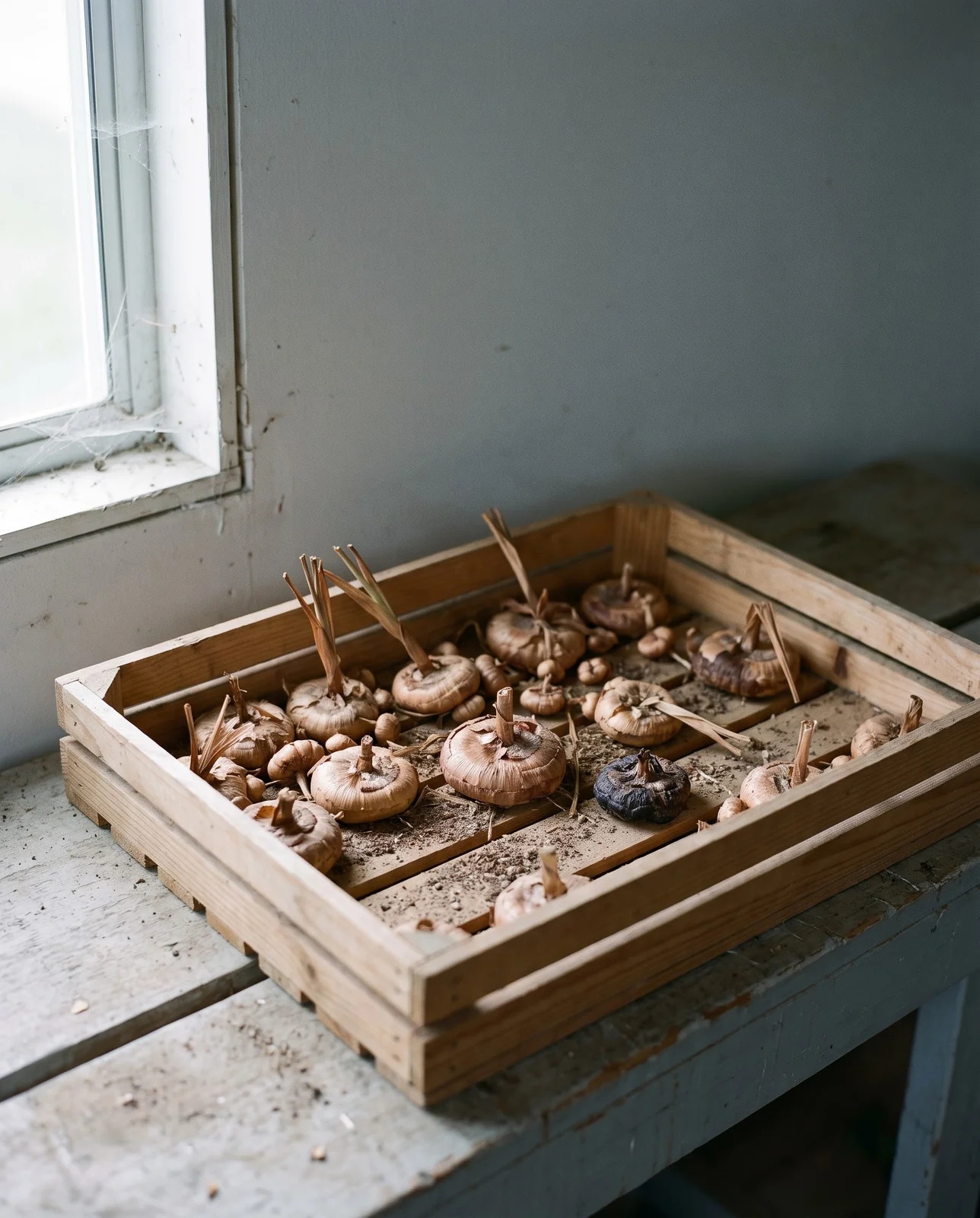
North of that line the corms come out every fall, the same autumn chore as lifting dahlia tubers. Dig once the foliage has faded after the first fall frost, and finish before a hard freeze of 28 degrees Fahrenheit damages them past saving. Lift with a spade, shake the soil off, and cut the foliage back to 1 to 2 inches above the corms. Do not wash them: corms keep better unwashed, and the soil brushes off once they are dry. Then cure them for two to three weeks somewhere warm, dry and well ventilated, at 60 to 70 degrees Fahrenheit. Glads take longer over it than most tender bulbs, about as long as calla lilies. Then snap the shriveled mother corm off the base and throw it away; the new corm on top is next season's plant.
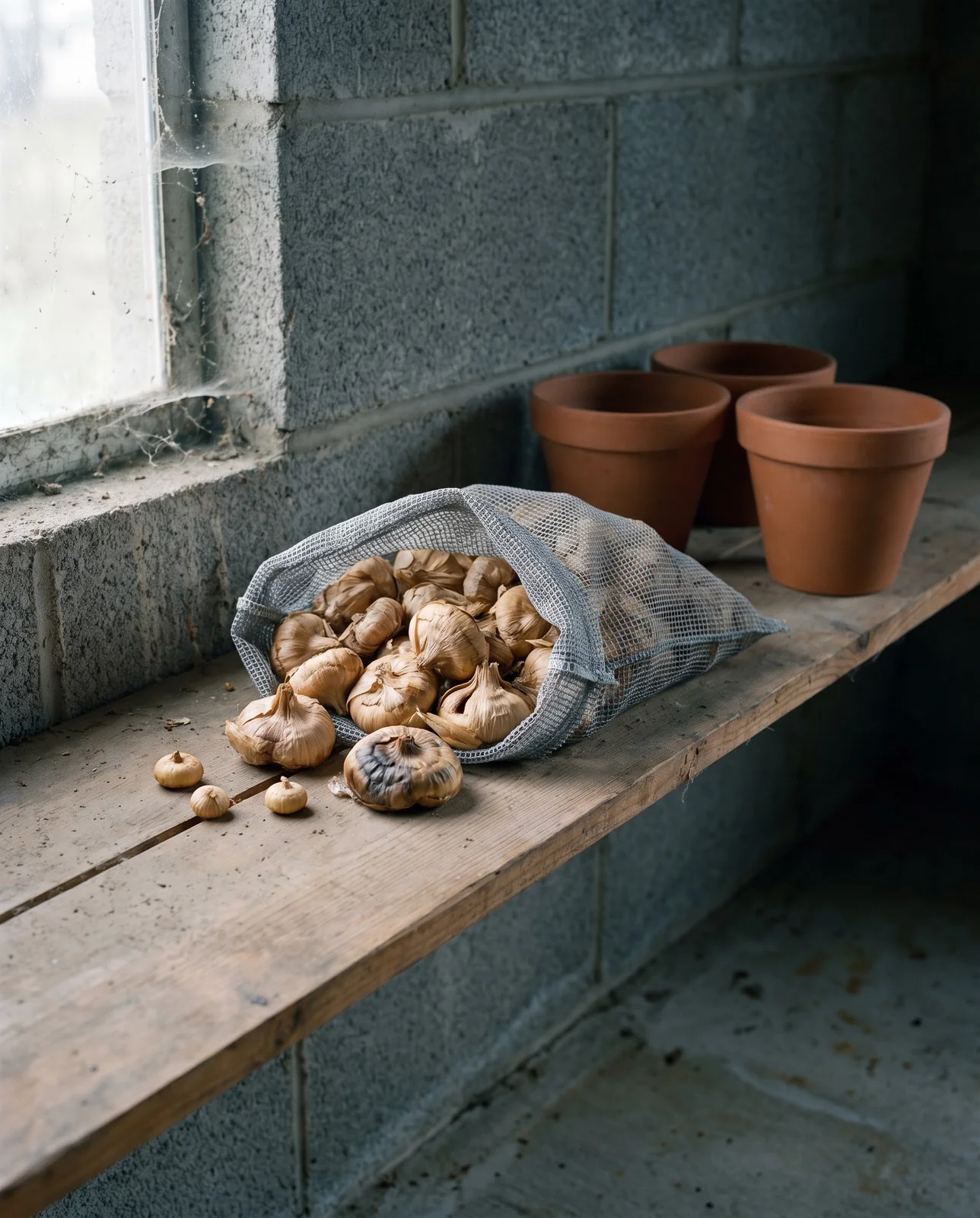
Store the cured corms cold and dry, at 35 to 45 degrees Fahrenheit and about 50 percent humidity. Containers have to breathe: mesh bags, paper or cloth bags, old stockings. The fragrant Abyssinian type is the exception, held far warmer at 60 to 70 degrees with some ventilation. Dust them with a fungicide bulb dust before they go in, and leave the husks on. Check the bags through winter and pull anything soft.
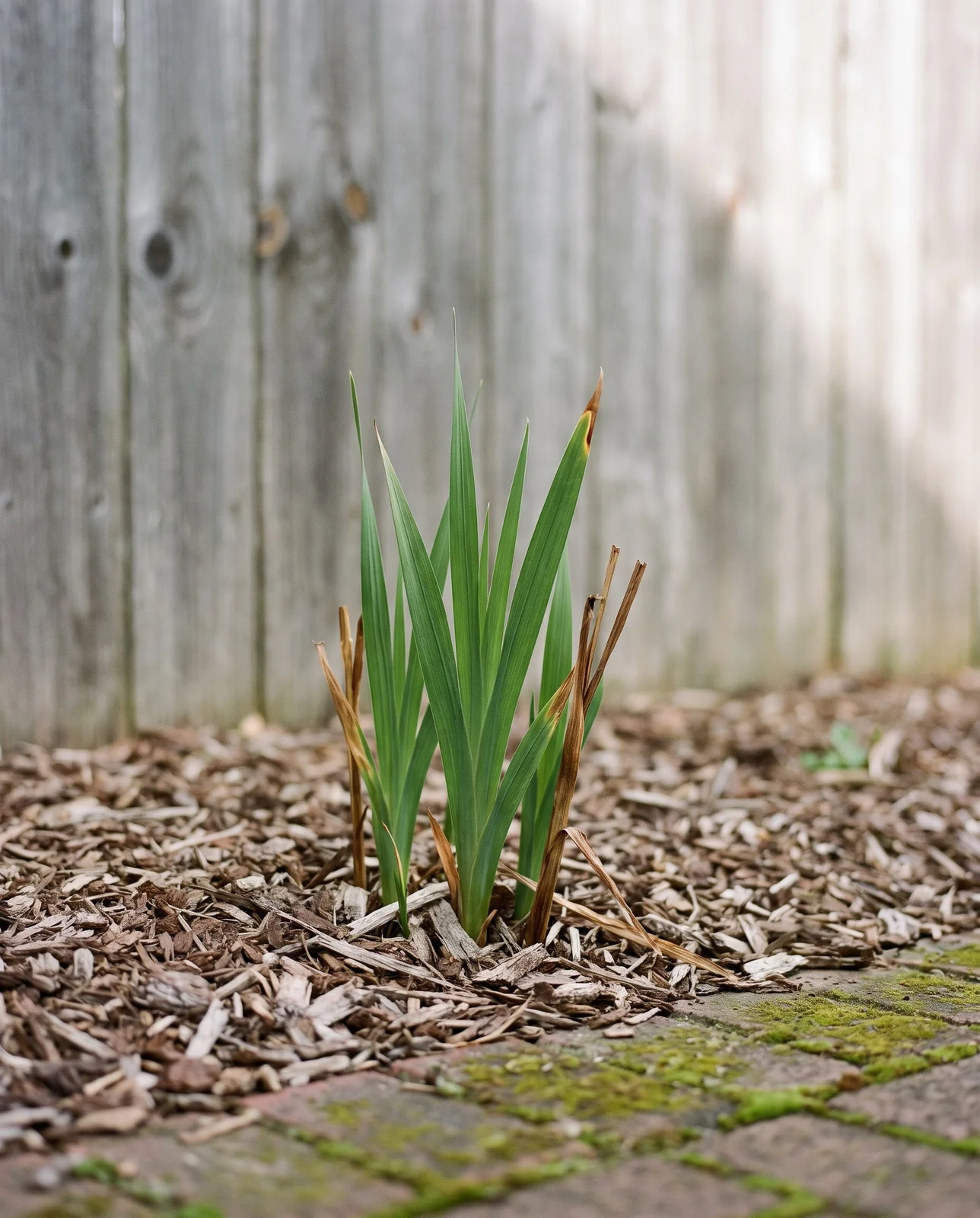
Winter, zone by zone
What happens in fall depends on the zone and on which type is in the ground.
Why gladiolus will not bloom
A fan of healthy leaves and no flower spike points at the corm first. Plants raised from the small cormels around a corm's base, or from seed, take several years to reach flowering size, so a patch started from saved cormels puts up foliage for seasons before it puts up a spike. An old planting has the opposite problem: corms multiply where they sit, the clump thickens, and the flowers thin. Dig and divide the clumps every few years to keep them vigorous.
Planting date, light and water make up the rest. A corm set out late runs out of warm weather before the spike is ready. Gladiolus flower best in full sun, and a bed shaded through the afternoon by a fence or a grown-up shrub makes leaves and little else. Feeding is the common wrong turn, because glads need only average soil fertility. Water is the real lever while the spike forms inside the leaf fan. About an inch a week is what good spike development takes, and a dry spell then costs flowers no later watering brings back.
Buds that form and then fail have their own cause. Thrips feeding inside the closed buds can ruin every blossom on a spike. Part of the answer happens in spring: go through the whole bag and discard every infected corm. Nothing sprayed or fed will pull a spike out of a corm that never made one, and the levers are corm size, sun, water and the planting date.
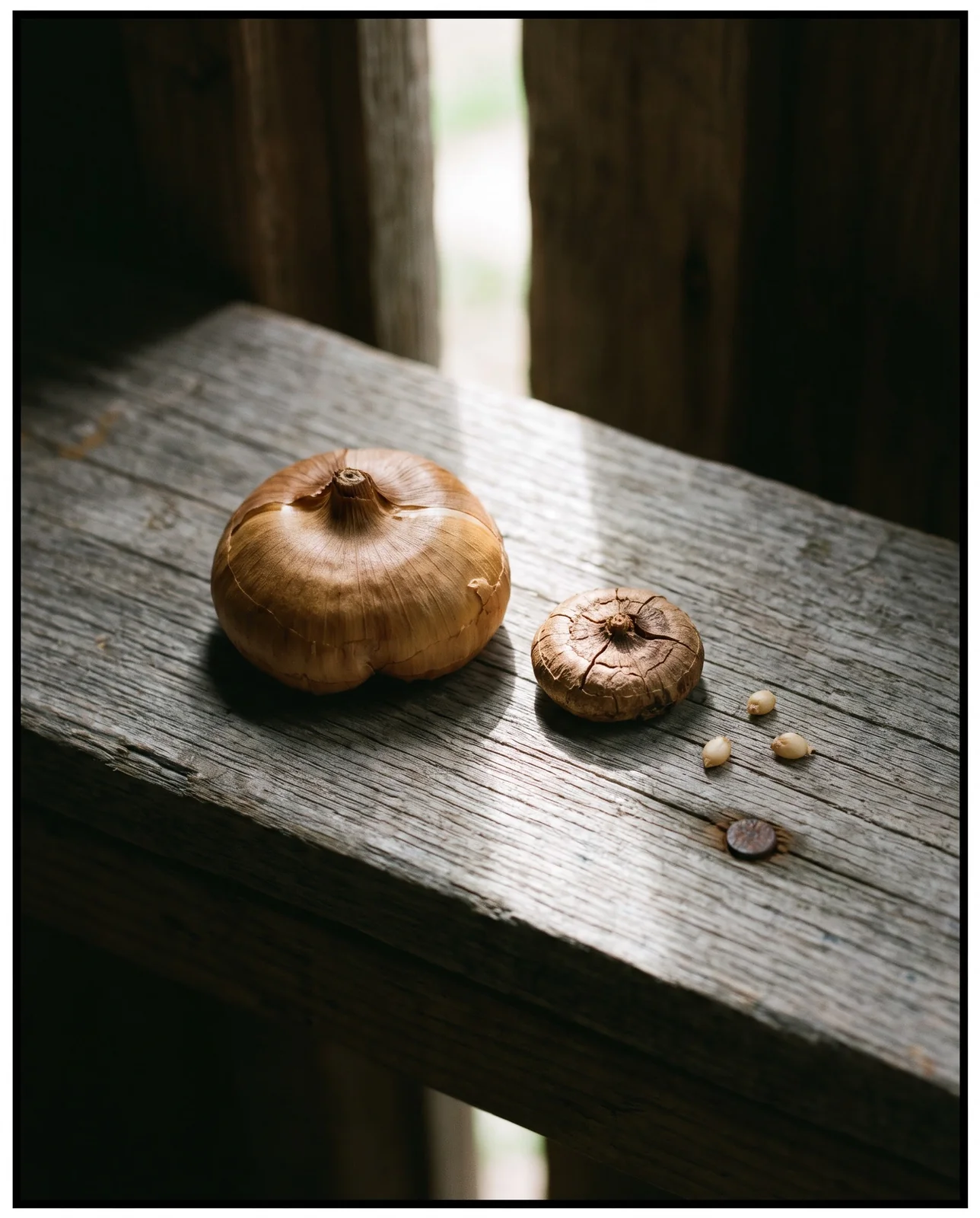
No spike, or a spike that disappoints
The checks run in order, from what went into the ground to what is feeding on the plant.
Falling over and staking
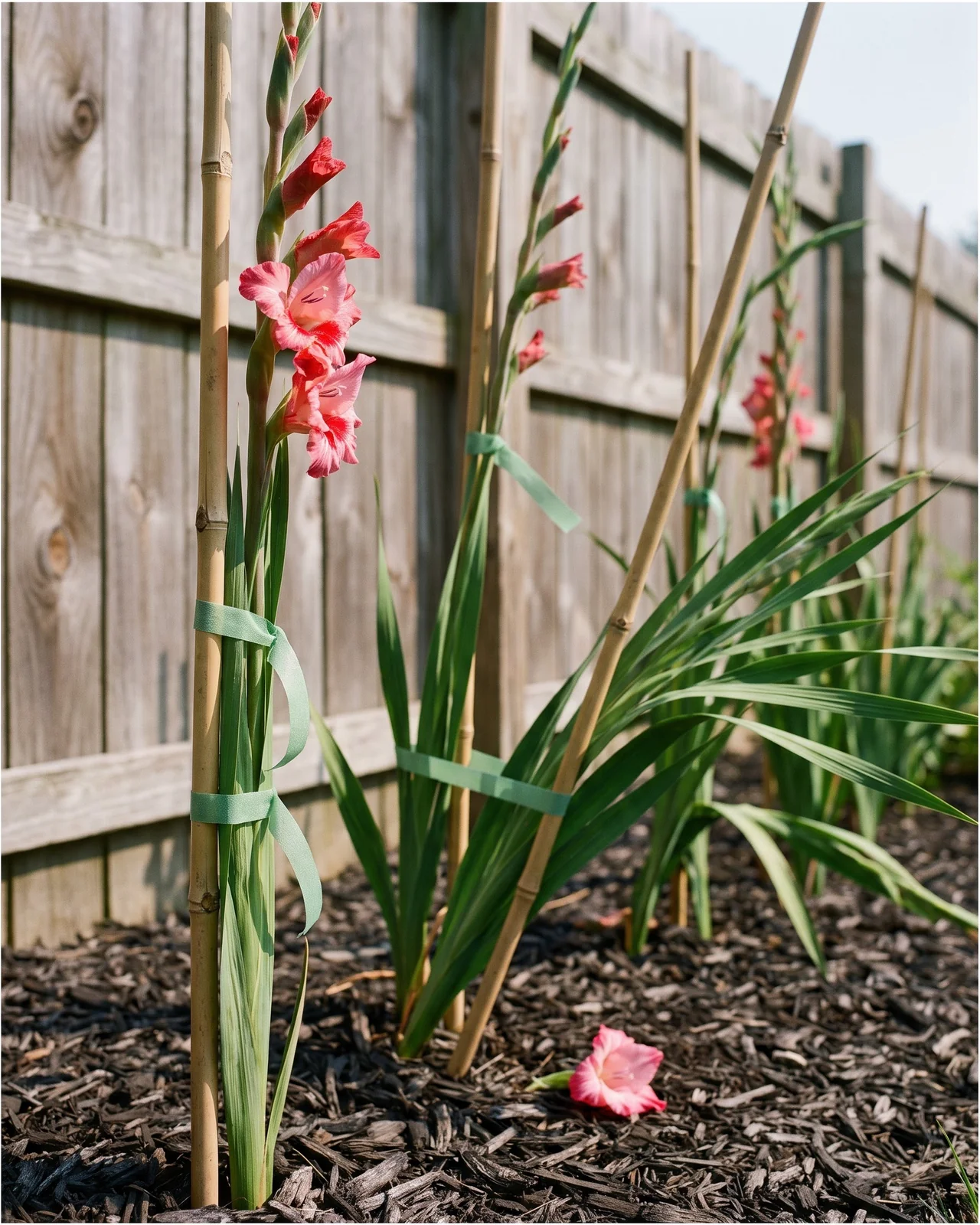
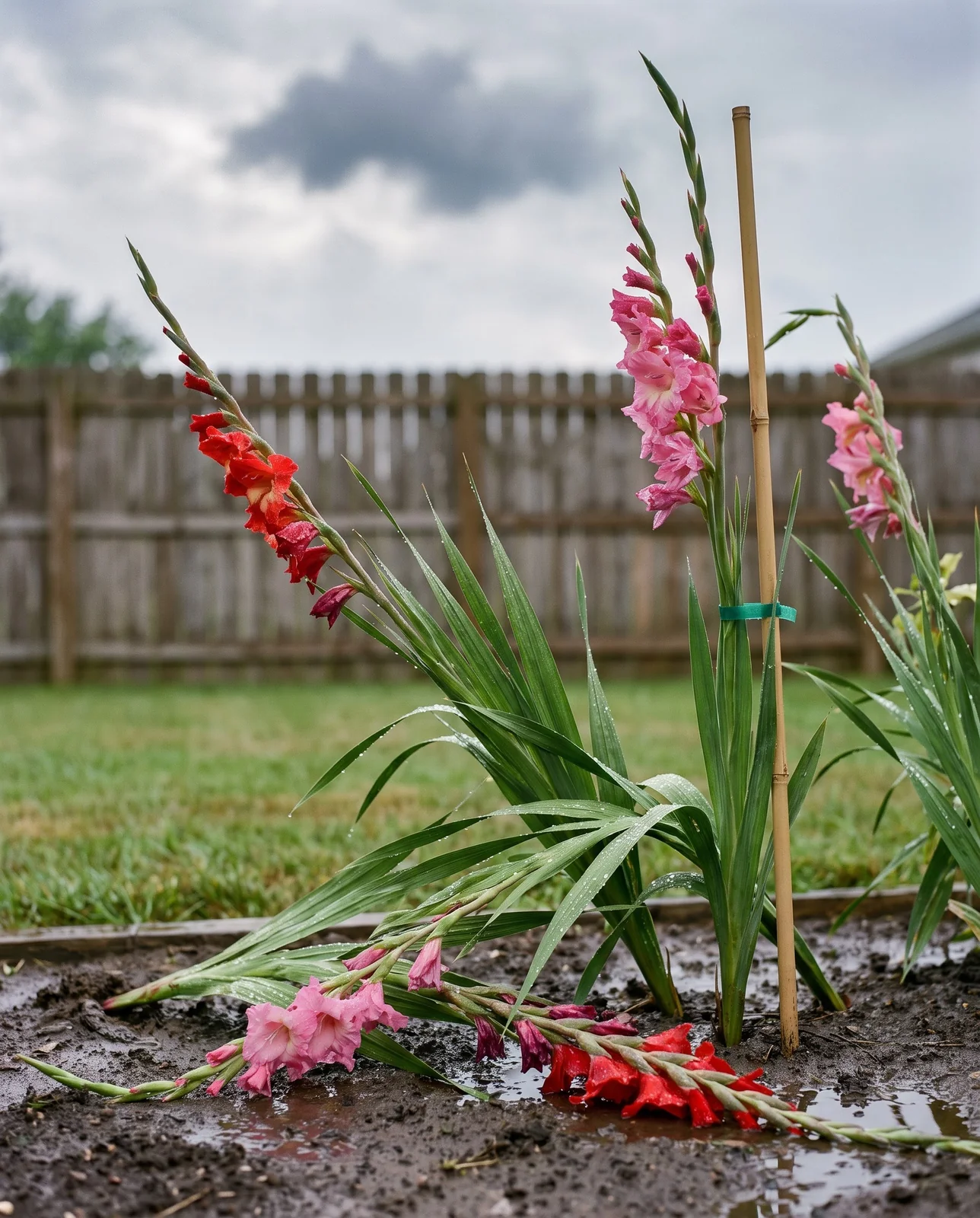
A gladiolus that falls over was usually planted too shallow, so the first fix is underground. Corms set 4 to 6 inches deep hold the tall varieties straighter and cut the support they need. Hilling soil up on both sides of the row does the same work from above. After that it is hardware. Large-flowered types have to be staked individually as soon as the sword-shaped flower heads appear. The timing rule saves the most plants: stake at planting, where the stake will not go through the corm. A stake pushed in beside a plant already in bud goes in blind, into the part that has to survive. Some glads never need it. Nanus stems are sturdy and proportional to their shorter height, and 'Flevo Jive' stands 12 to 24 inches and holds itself up.
Thrips and other problems
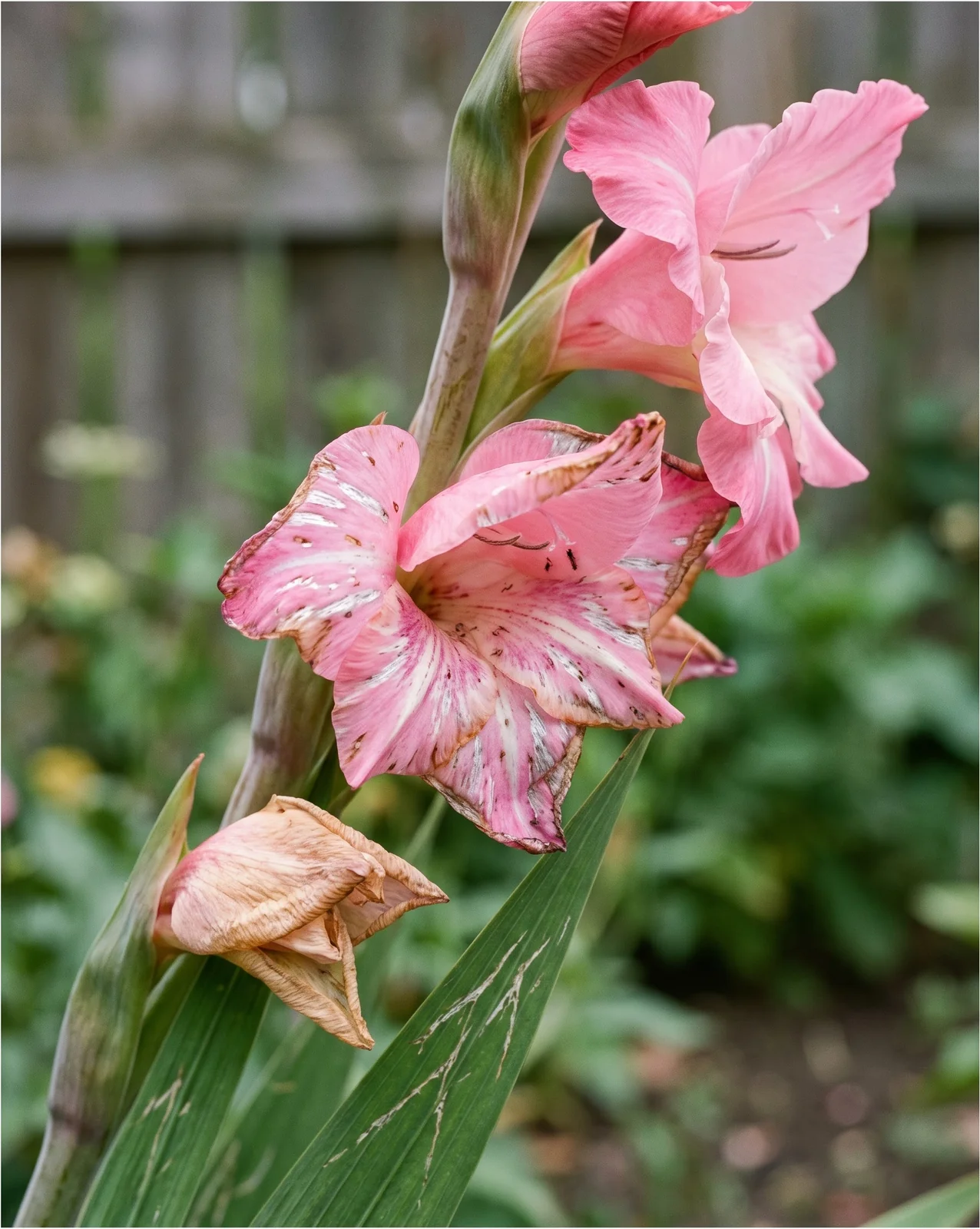
Gladiolus thrips costs the most flowers, and it works inside the leaf sheaths and the closed buds. The insects are tiny, cream to dark, about the size and shape of a grass seed, and their feeding leaves silvery depressed areas flecked with black specks. A light infestation shows as brown or silvery streaks; a heavy one stunts and distorts leaves and flowers until they brown and die. Flowers come out deformed and discolored, and the corms go soft. Adult females run about 1/16 inch long, so you go by the streaking and rarely see the insect.
The insect travels on the corm. Thrips overwinter readily on corms dug up and stored indoors, and on corms left in the soil. They cannot survive winter outdoors in the north, so their return to cold gardens arrives in shipped corms. Numbers climb fast. Development takes two to four weeks, nine or more generations occur in a year, and one female lays 100 to 200 eggs. Control runs through the corms in fall and the thermometer in winter. NC State Extension has corms cleaned gently, soaked in bleach at 4 teaspoons per gallon for three hours, then dried before storage. Cold does part of the job: corms held at 35 to 45 degrees Fahrenheit for at least four months lose the thrips riding on them.
Thrips are not the whole list. Gladiolus is susceptible to botrytis, crown rot, rust, wilt and mosaic virus, with aphids, mealybugs and spider mites alongside them. Fusarium rot, gray mold and aster yellows belong on it too. Virus deserves the most attention: it can destroy the value of a crop, and it has run through plantings across a whole state in bad years. Corm and stem rots stay active in storage when curing went wrong.
What actually goes wrong, ranked
What goes wrong most often, and what each one is telling you.
Rot takes them more often than cold, and heavy clay is where it happens. Plant into ground that drains, and mulch deeper.
Young stock, lost sun, or a late planting date. The checks above take them in order.
Open one and look for thrips inside. A dry bud looks the same whatever caused it, so watering gets the blame.
First found in Florida in 1932, the pest now reaches almost every state. Soak the corms in fall, going into storage.
Yellowing late in the season is the signal to dig. The same color in July points at watering or drainage.
Deliberate in a cutting row. In a border it shows as crowded fans and thin spikes; reset the clump when you dig in fall.
Most of it comes from washing them, holding them warm, or sealing them in plastic. The ring of small cormels at the base is normal.
Deer and rabbits mostly leave gladiolus alone, a long way from untouched. Fence the row where the herd is hungry.
Gladiolus types worth telling apart
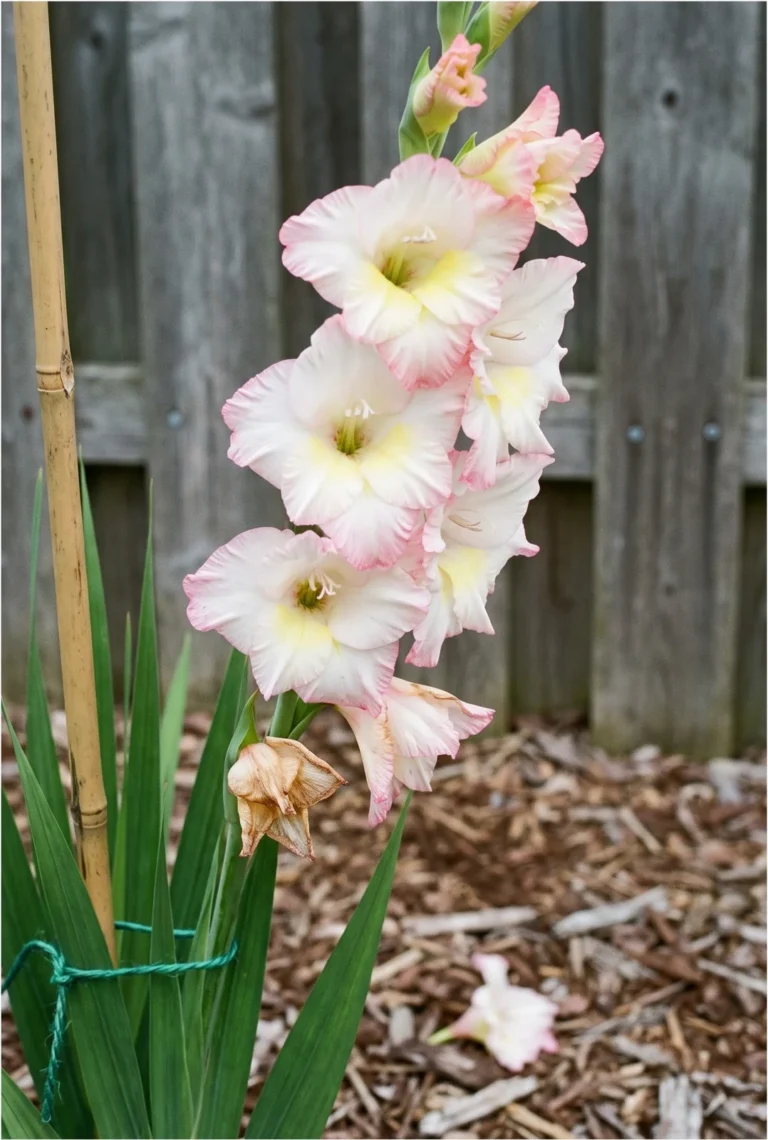
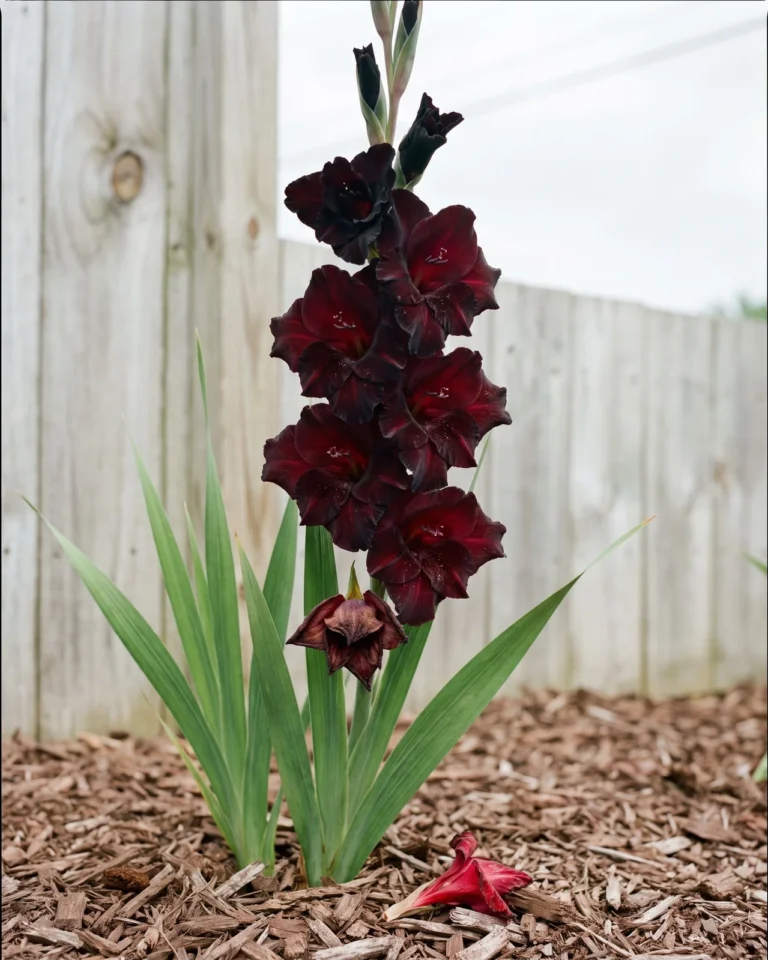
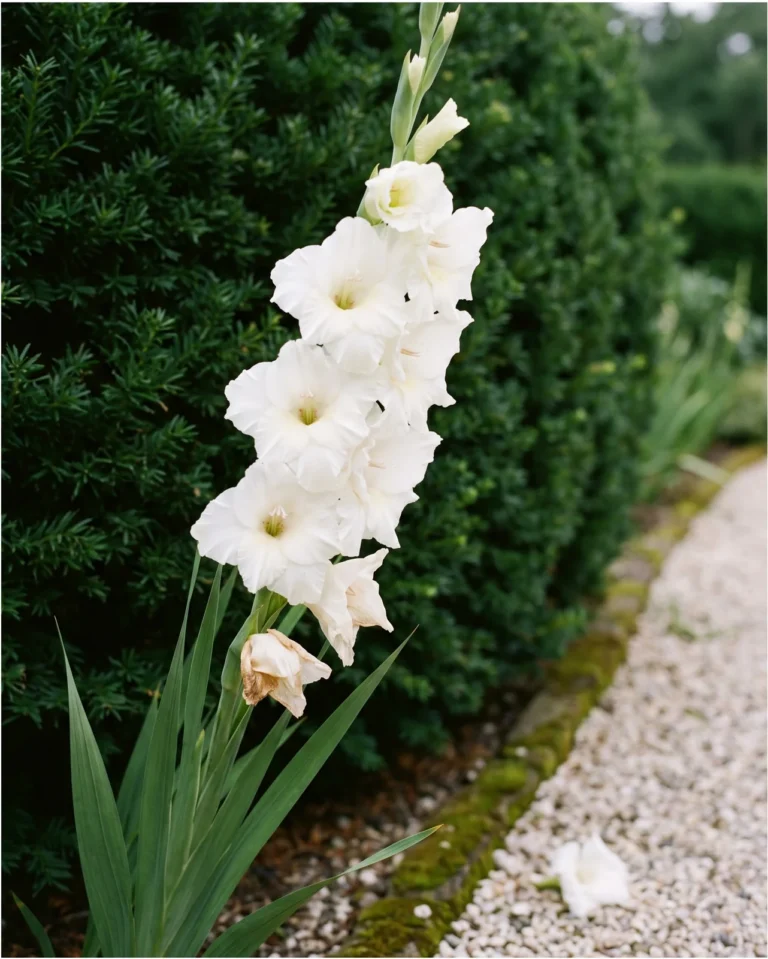
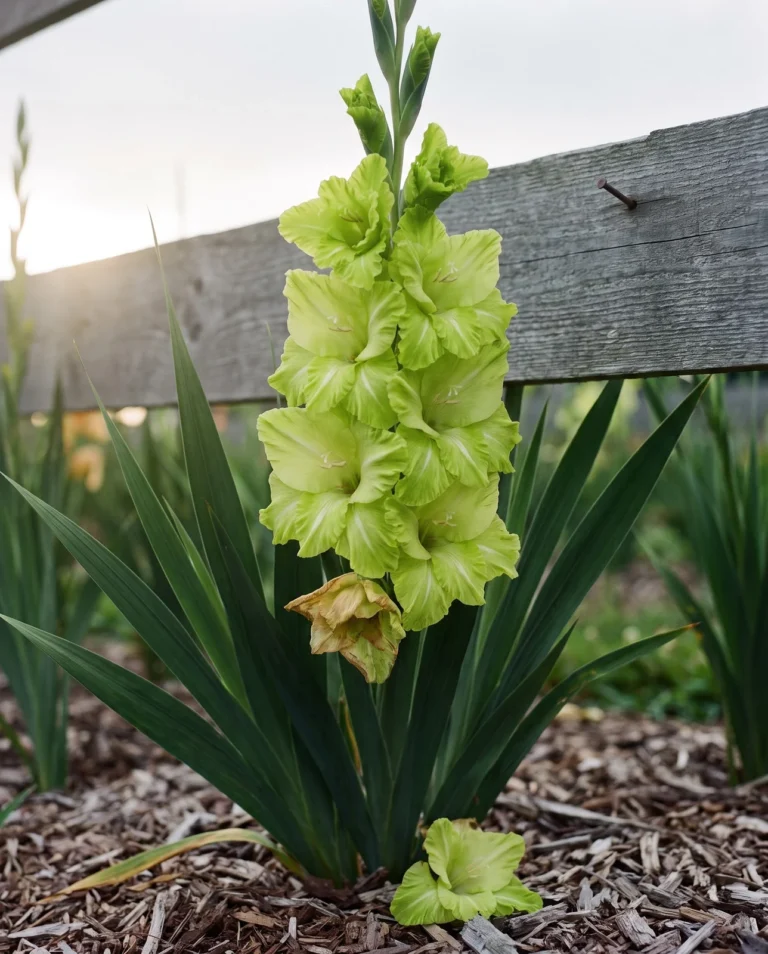
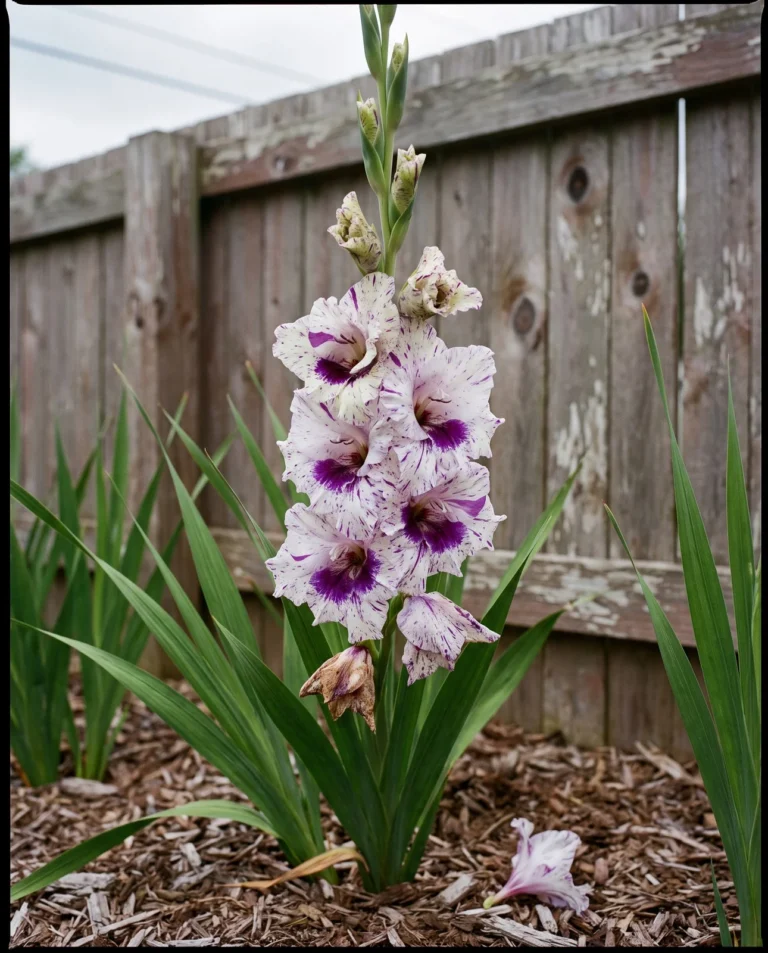
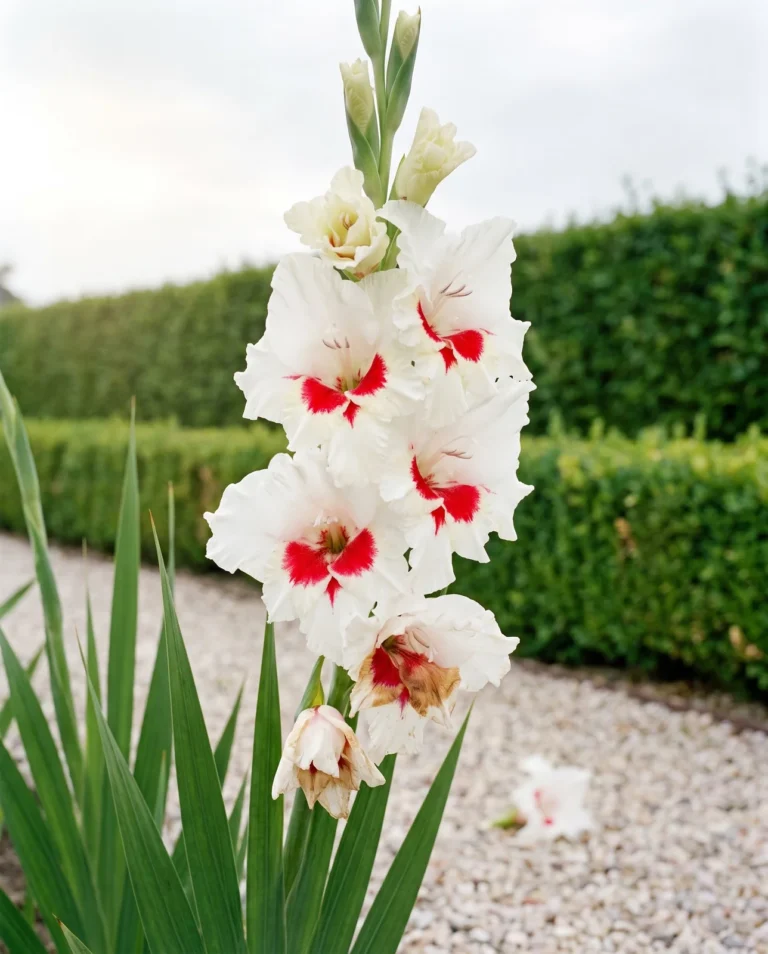
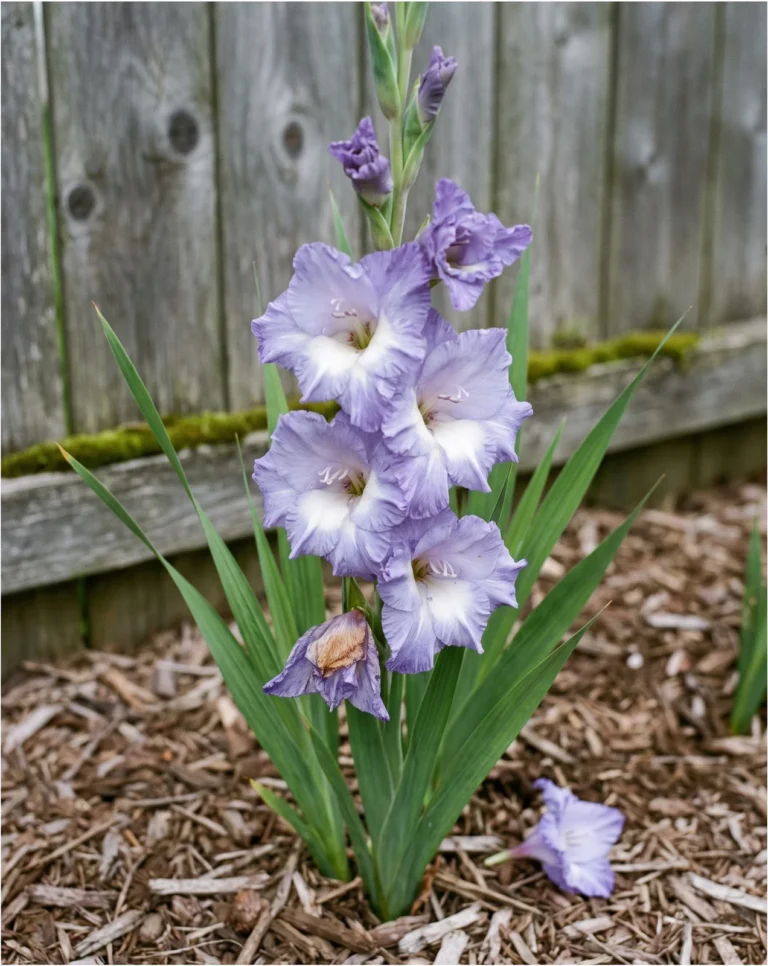
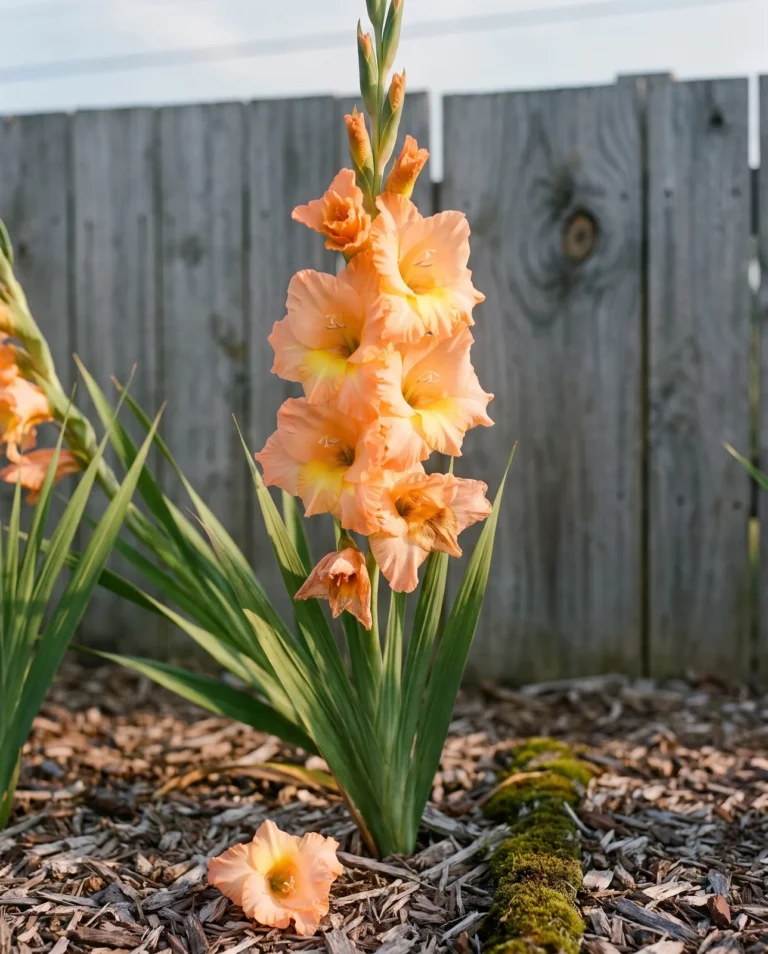
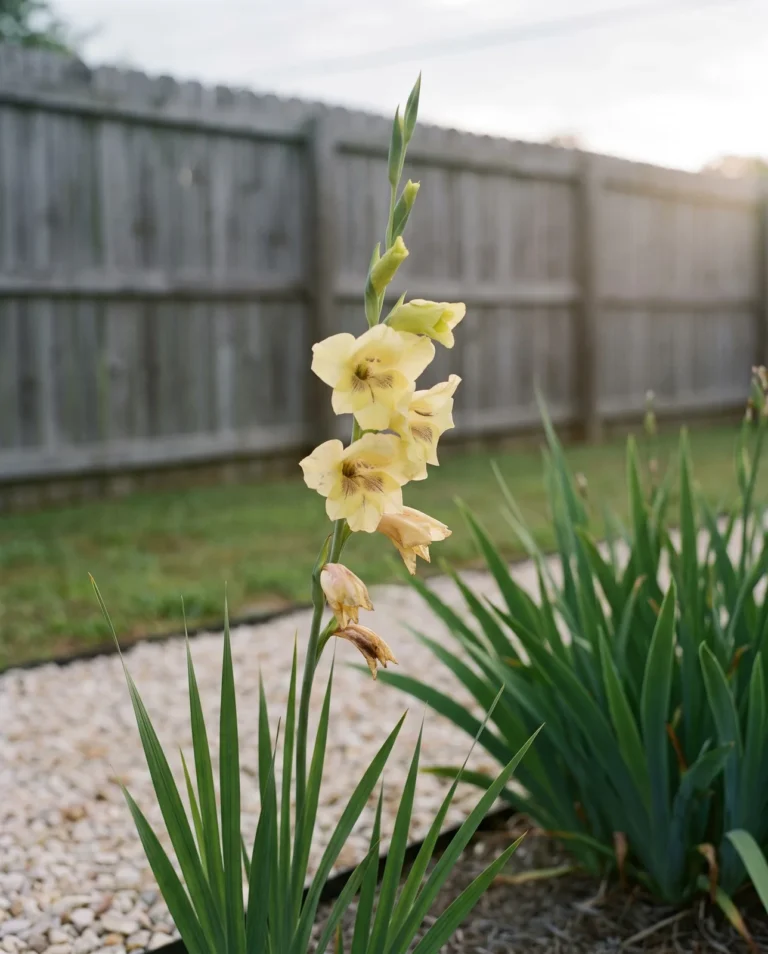
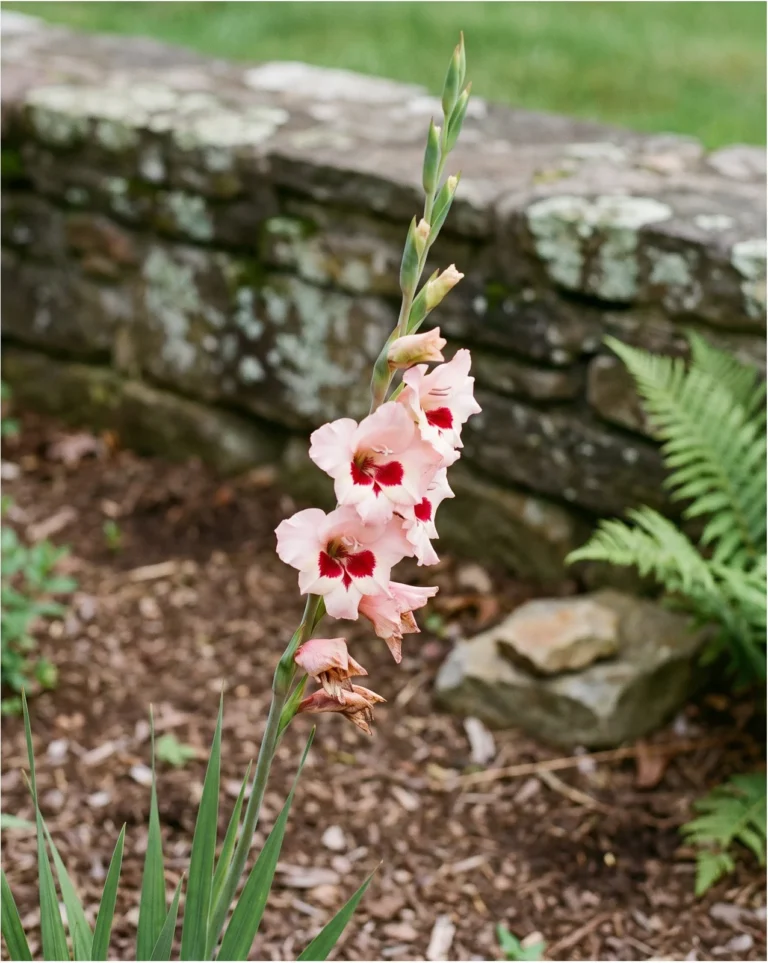
Two groups do most of the work: the tall Grandiflora hybrids grown for cutting, and the Nanus types at 18 to 24 inches, earlier and more open. Badges mark the ones that come back or carry scent, and the near-black sorts that anchor a bed of red flowers are Grandiflora like the rest.
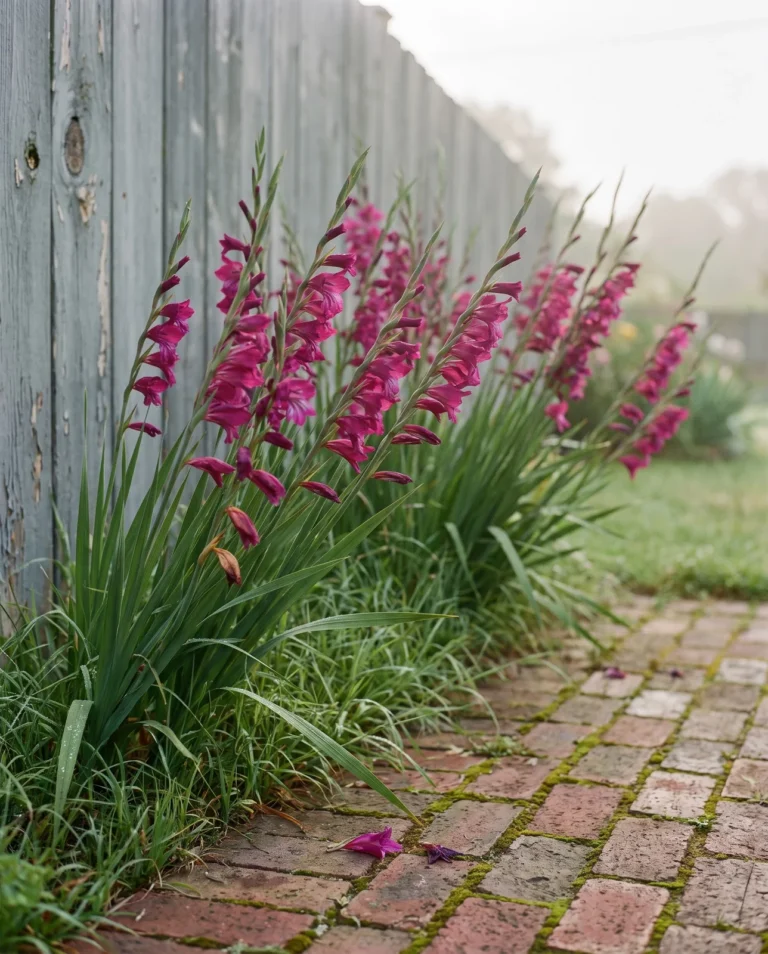
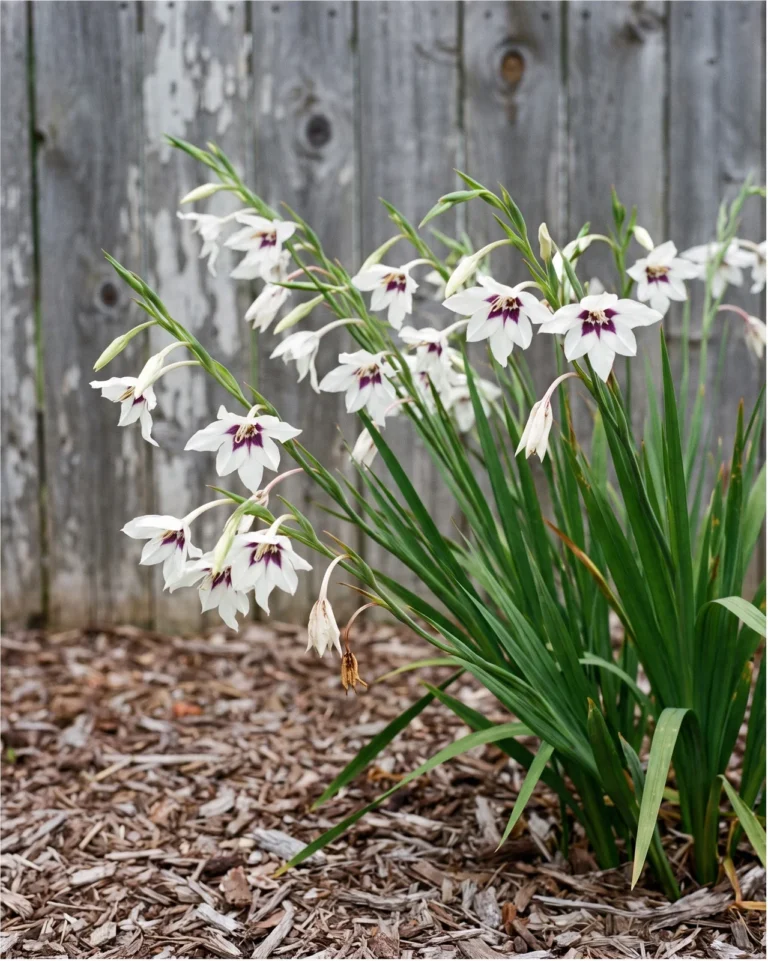
Cutting gladiolus for the vase
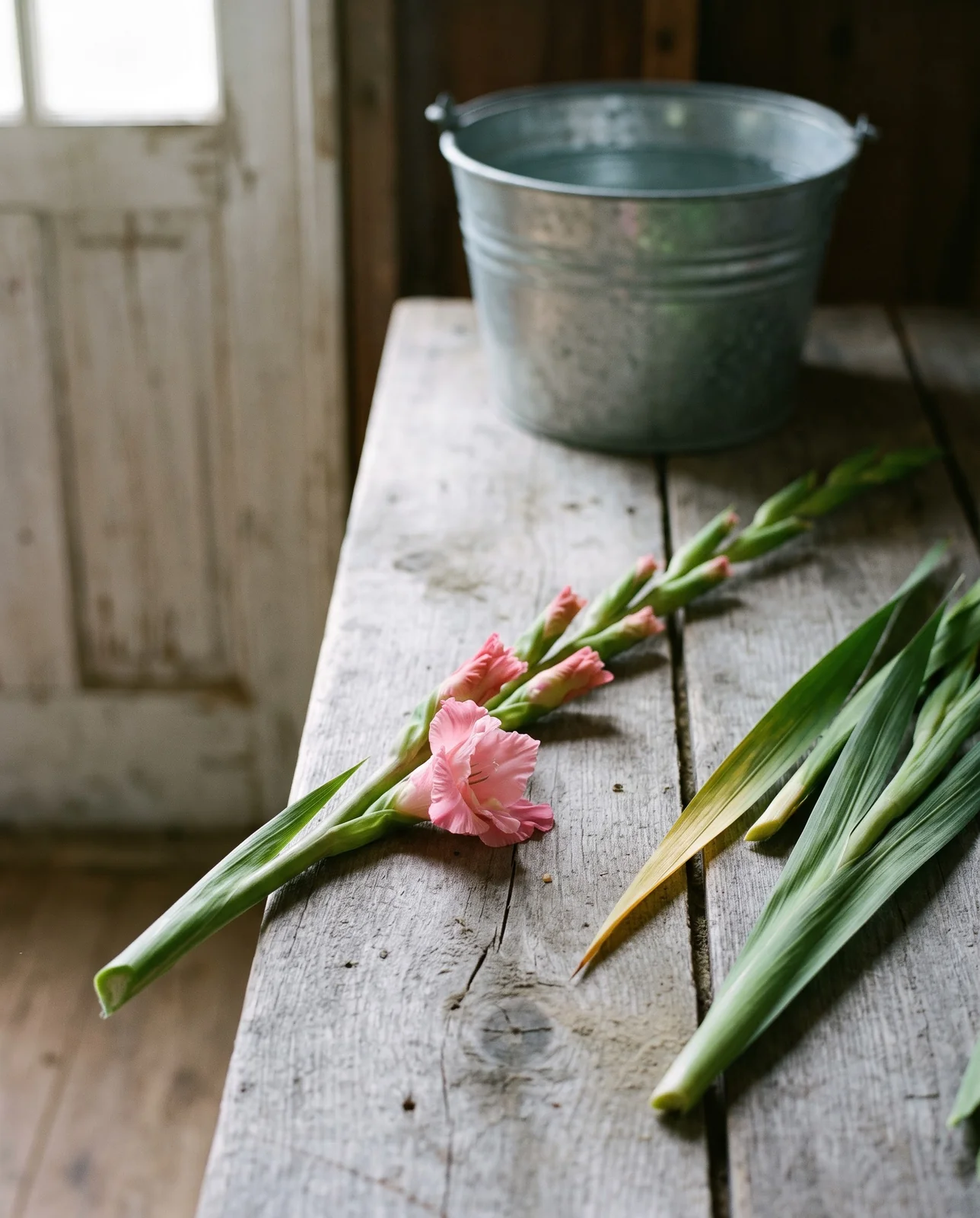
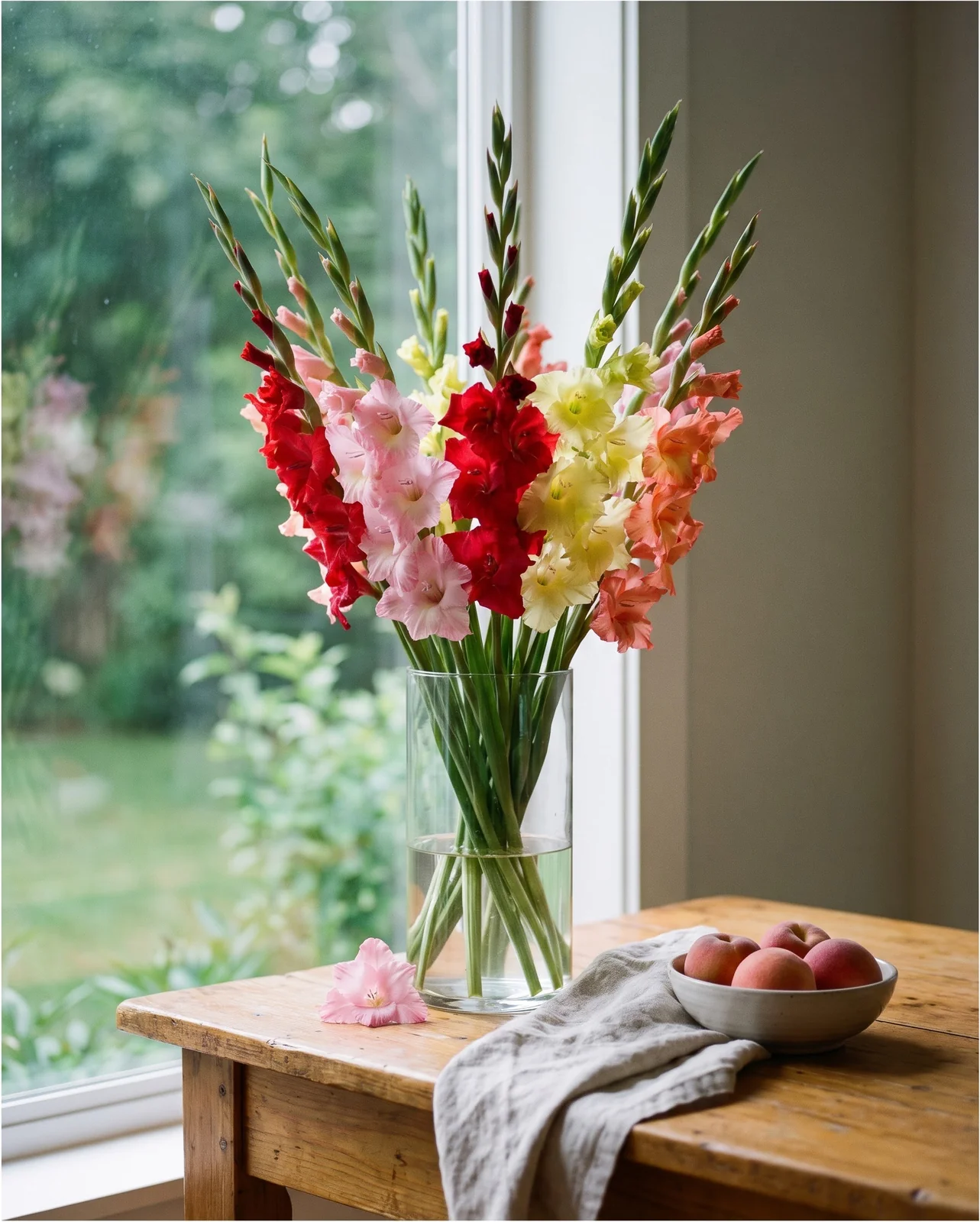
Cut the spike while most of it is still in bud, once the first floret shows color and before more than one or two are open. That is earlier than the flower's best, and deliberate: a spike opens from the bottom upward over days, so a stem taken half closed does its opening indoors. Stems that have to travel are cut earlier still, as the lowest buds start to color. What stays behind matters as much as what goes in the bucket. Leave at least four leaves standing when the corms will be lifted and used again. The fan rebuilds the corm through the rest of the season, so a spike cut low with the foliage attached takes next summer's flower with it. Cut high, just above the leaves.
Light
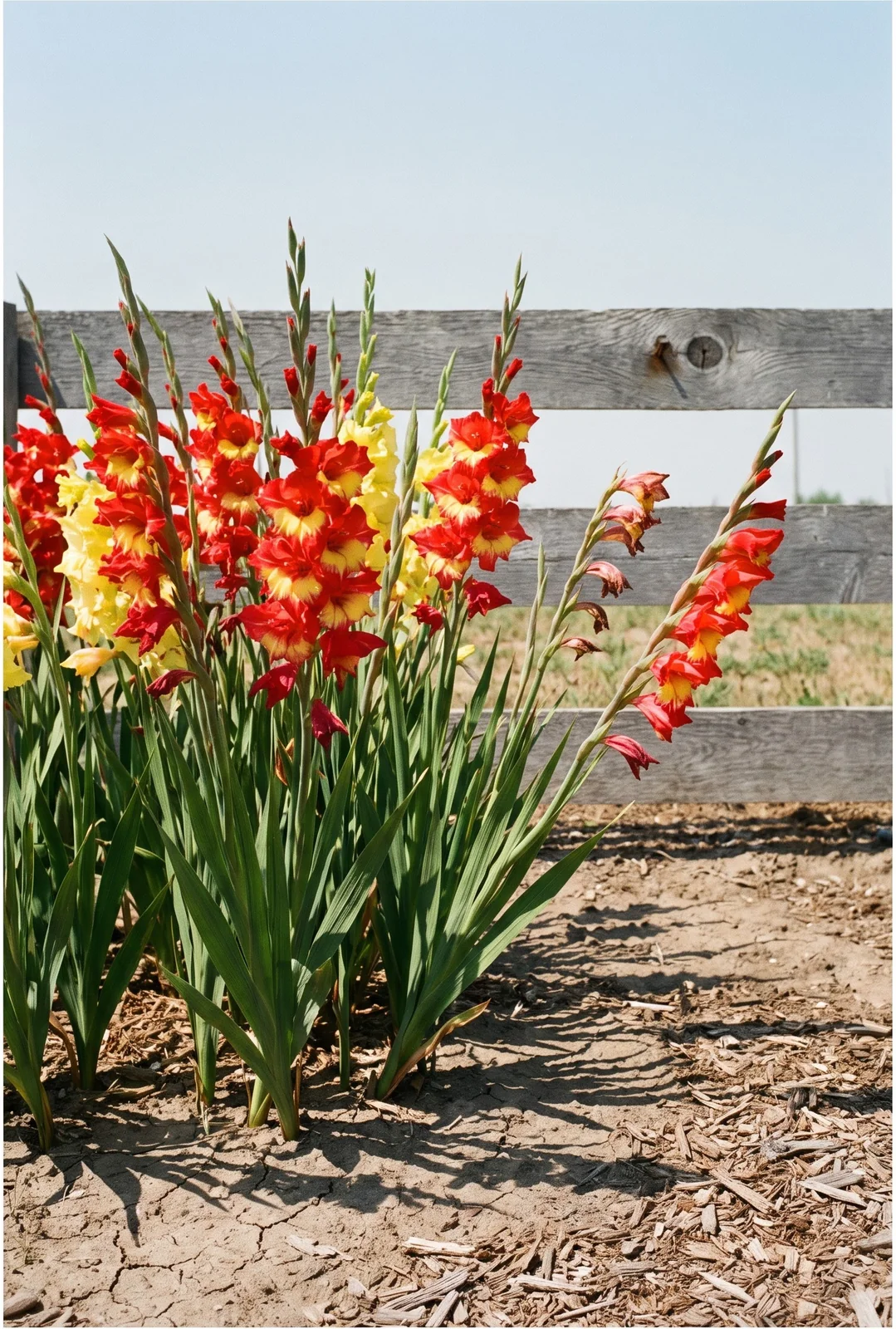
Gladiolus want full sun, 6 to 8 hours of direct light a day. Heat rarely limits them: the plant is heat tolerant and comes from a summer-dry part of the world. Shade limits them. The dwarf Glamini group is the one exception among garden types, pest resistant and able to bloom in full sun or in partial shade. Everything else repays the open spot twice: the leaf fan that carries the spike is also building next season's corm, and a fan working in shade hands over a smaller one.
Water, soil, and feeding
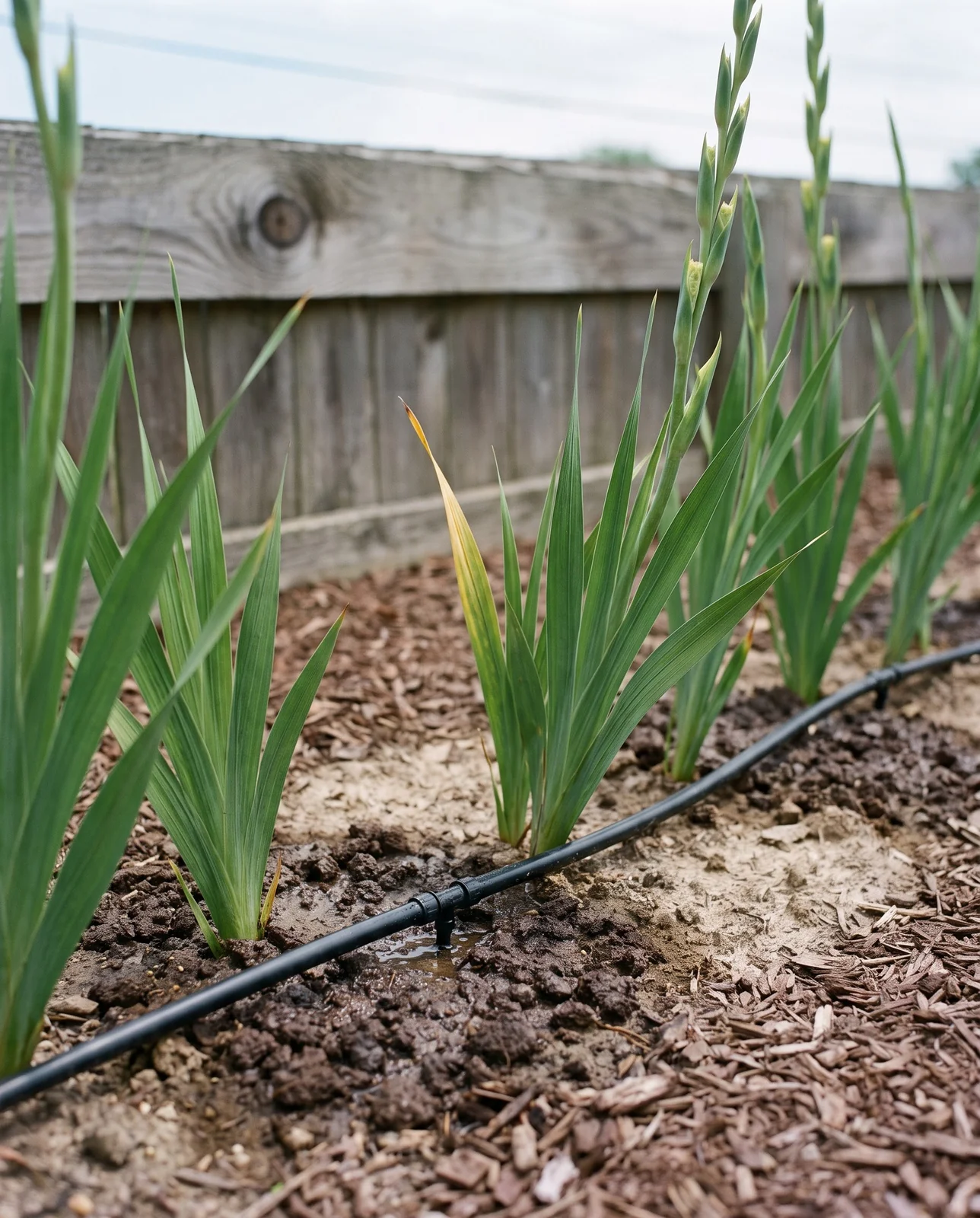
Water whenever a week brings less than 1 inch of rain, and keep it up through the summer. The ground has to drain, and the target is a pH of 6.5 to 7, which most garden beds already sit near. A bed that stays wet after rain wants raising or amending first. Feeding runs on two dates: 5-10-10 at 3 to 4 pounds per 100 square feet when the plants stand 6 to 8 inches tall, and the same again when the flower spikes appear. The second one does the heavy lifting, since it lands while the spike is still building. Finish with a 2 to 4 inch layer of mulch to hold soil moisture and keep weeds down.
USDA hardiness
Hardiness for gladiolus is published by type. Byzantine gladiolus runs zones 6a through 10b, the fragrant Abyssinian type 7a through 10b, and the familiar garden glad appears as a tender perennial from 8a through 11b. They agree at the warm end, all of them reaching zone 10 or past it. The spread sits at the cold end, so a zone number without a type attached is worth little.
Height and spread
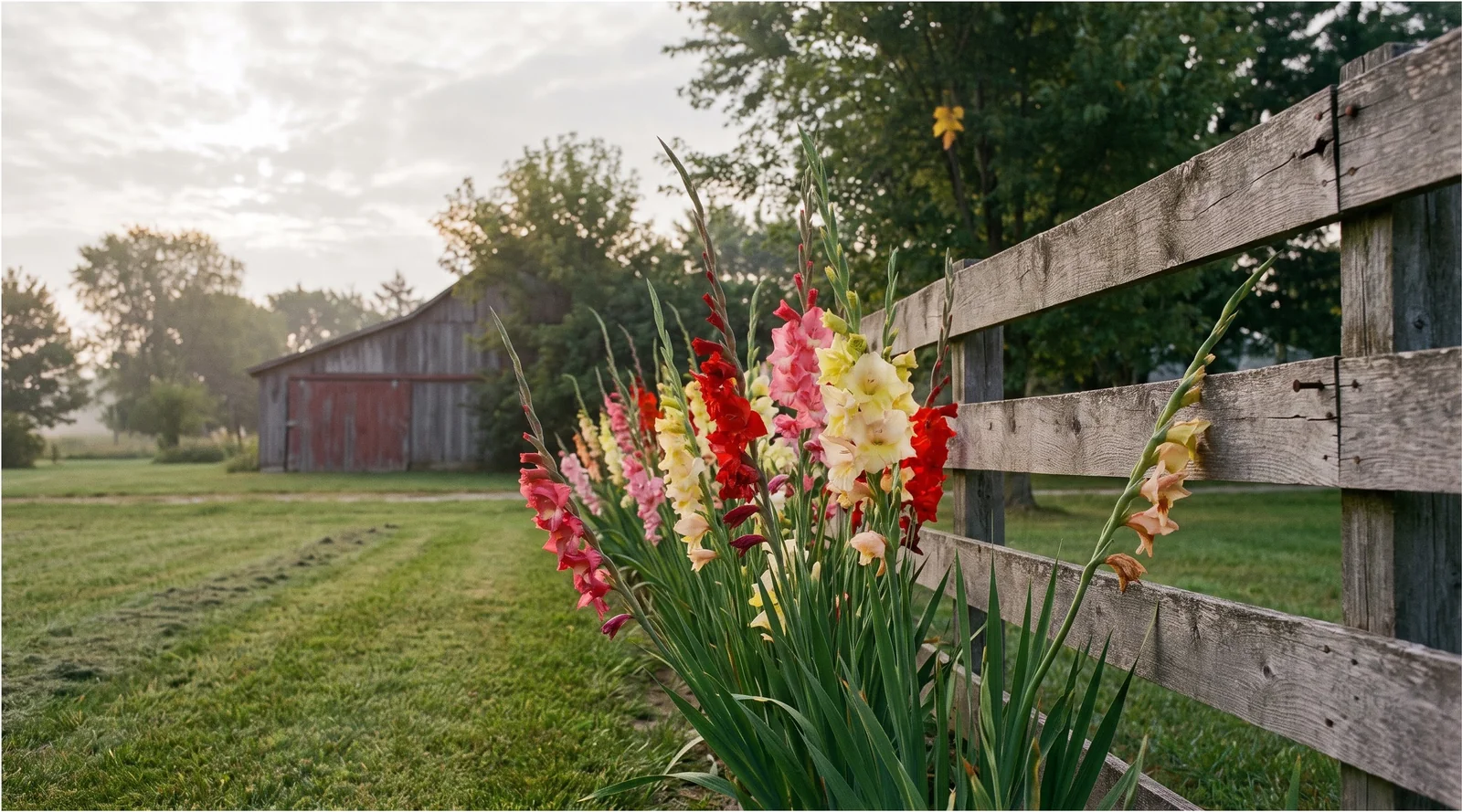
Height is a property of the type. Across the genus the published range is 1 to 6 feet tall by 1 to 2 feet wide, with the most common glads landing between 2 and 5 feet. Grandiflora, the florist type, accounts for the tall end at 36 to 60 inches. The species are smaller and steadier: Byzantine gladiolus stands 1 to 3 feet, and the fragrant Abyssinian type 2 to 3 feet. Spread carries little weight: a corm sends up one fan and one spike and does not travel sideways, so glads go in as blocks and rows and read as a group.
Propagation and longevity
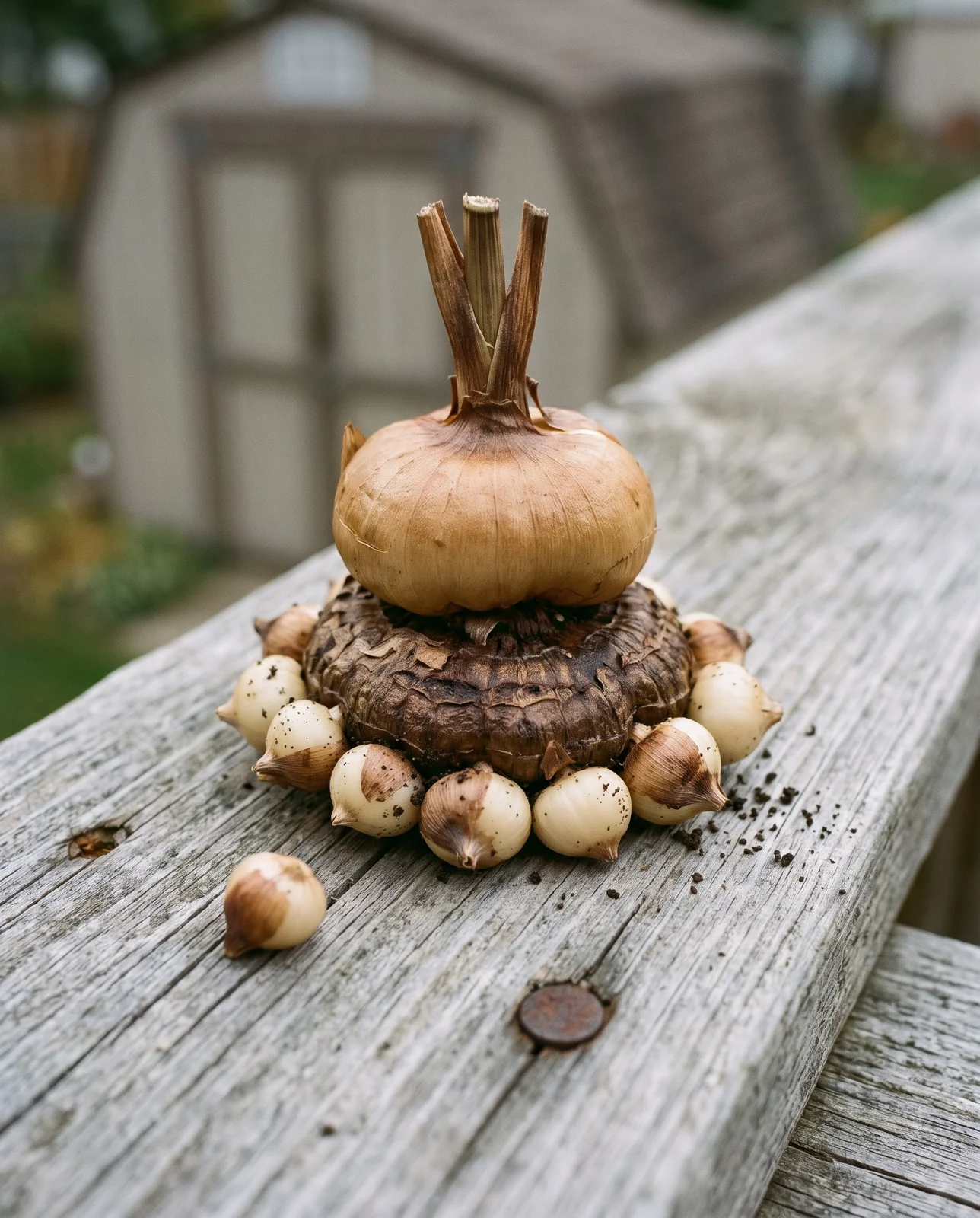
Division is the way to increase gladiolus, and the plant does most of the work itself. Every season it builds a new corm on top of the old one and a ring of small cormels around the base. Those cormels are the propagation stock, and they are slow, blooming in 2 to 3 years if they are replanted each spring. Nothing speeds that up: buy corms for next summer, and grow the cormels on in a spare row. Because the corm is replaced annually, a planting does not age out. It fails on handling, on a winter that caught it in the ground, on a shelf that ran warm, or on thrips that came through the bag.
Toxicity and pet safety
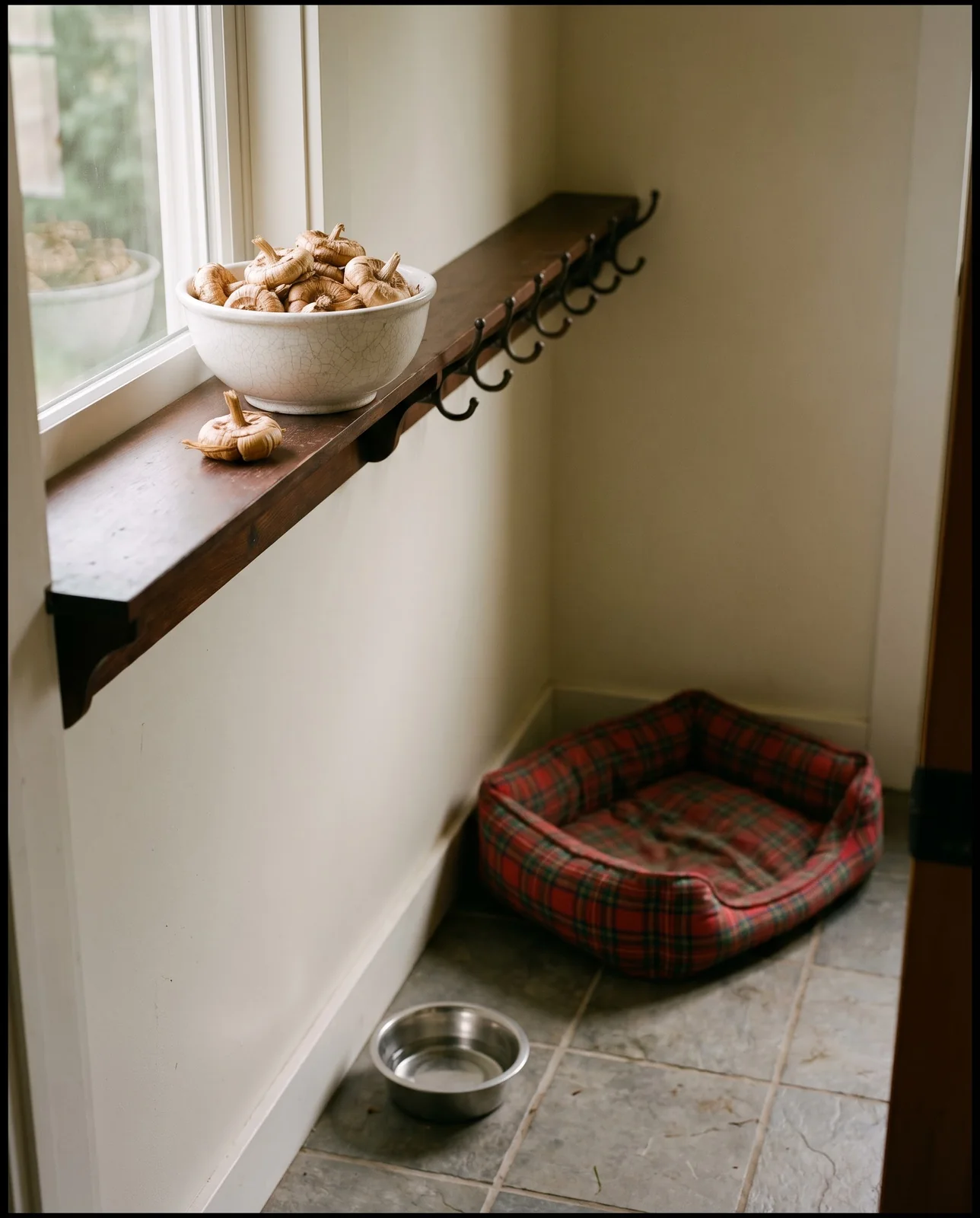
Gladiolus is toxic to dogs, cats and horses, and the ASPCA gives the toxic principle as unknown. Watch for salivation, drooling, vomiting, lethargy and diarrhea; the highest concentration sits in the corms. That decides where the risk is: not the flower border in July, but the paper bag of dug corms on a garage floor through winter, exactly the object a dog will investigate. For people the poison severity is low, and cut stems in a vase are not a household hazard.
Meaning, symbolism, and the name
Gladiolus signifies remembrance in the language of flowers, and it belongs to the fortieth wedding anniversary. The older associations are Roman and violent, which suits a plant named for a sword. Gladiators were showered with the flowers on winning, and the link between the arena and the name comes from there. Older still, Pluto was said to wear a wreath of a plant identified as a gladiolus, called phasganion or xiphion in Koine Greek. It is also the August birth flower.
Gladiolus myths, settled
Five beliefs about gladiolus that cost people flowers.
The myth: Gladiolus grow from bulbs, the same as tulips and daffodils.
The reality: They grow from corms, flat thickened underground stems. The difference shows in fall: the corm you planted is used up, a new one has formed on top, and small cormels ring the base.
The myth: Plant them shallow and they come up faster.
The reality: Planting deeper is what holds the tall varieties straight without as much support. The shallow rows are the ones lying flat after the first storm.
The myth: Given enough mulch, gladiolus come back every year anywhere.
The reality: The tall garden hybrids are winter hardy to zone 7. The small Nanus hybrids carry a zone 5 rating and take at least -15 F where winters are dry, and that is where the reputation comes from.
The myth: Thrips are a summer problem out in the garden.
The reality: They overwinter on corms dug up and stored indoors as readily as on corms left in the soil, so a bag on a shelf carries an infestation into next season.
The myth: Cutting the spike for a bouquet kills the corm.
The reality: The foliage left standing is what protects the corm. At least two leaves, and preferably four, let it mature after the spike is gone.
What to expect, season by season
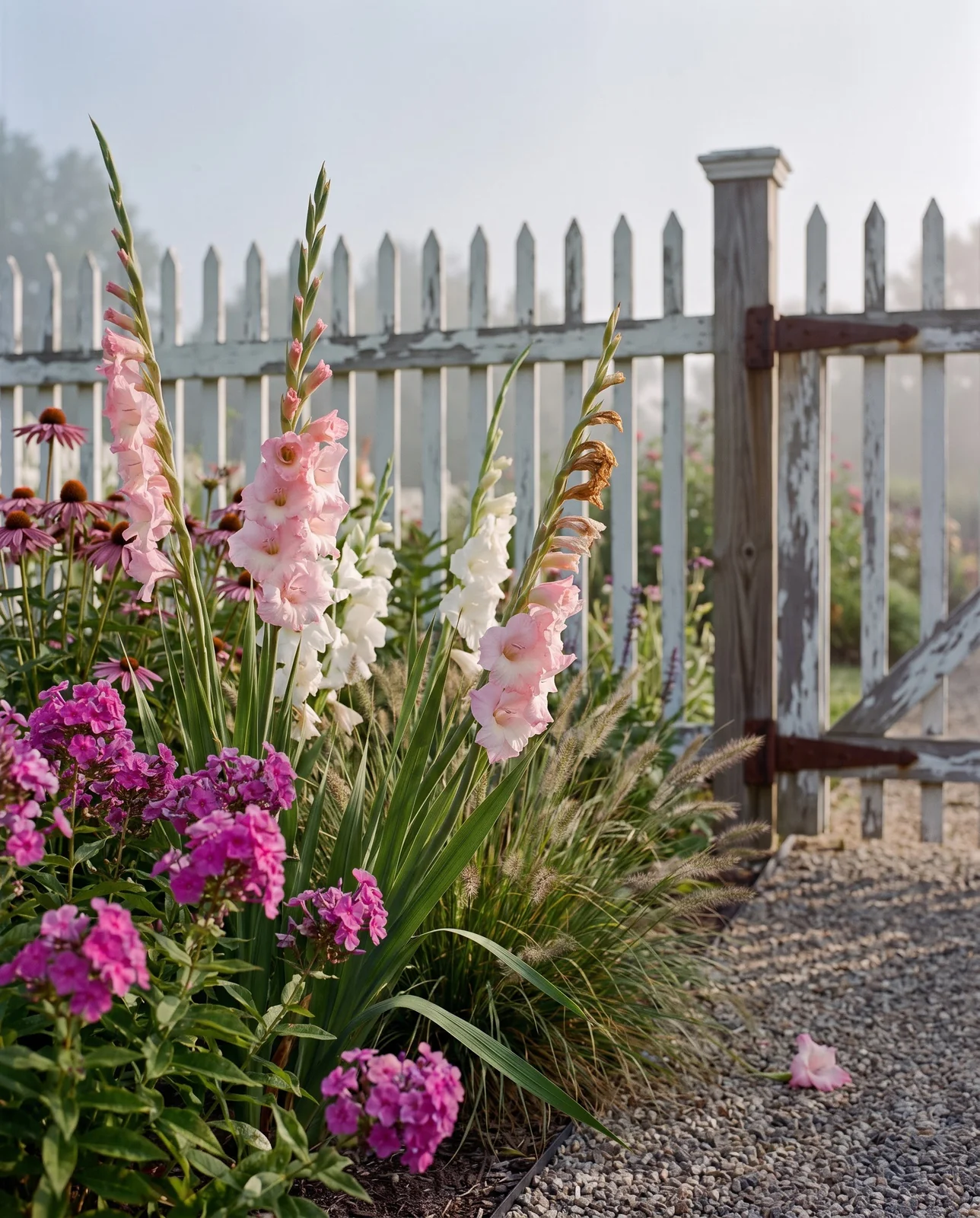
Three seasons separate a bag of corms from a patch that runs on its own stock.
The first summer belongs to the corm that came in the bag. It roots, throws its fan of sword leaves, and carries one spike. Underneath, the corm that paid for it is being used up while a new one forms on top with a ring of cormels around the base. Most people see that cluster and read it as rot.
The second summer runs on the corm you dug, cured and stored. If it came up full sized it flowers like the one before, and it tells you whether the storage shelf was cold and dry enough.
After that the patch runs on its own stock. Clumps get lifted and split, cormels get grown on in a spare row. The winter decides the rest: corms that come through it cold, dry and free of thrips start the next season where the last one ended.
In the vase
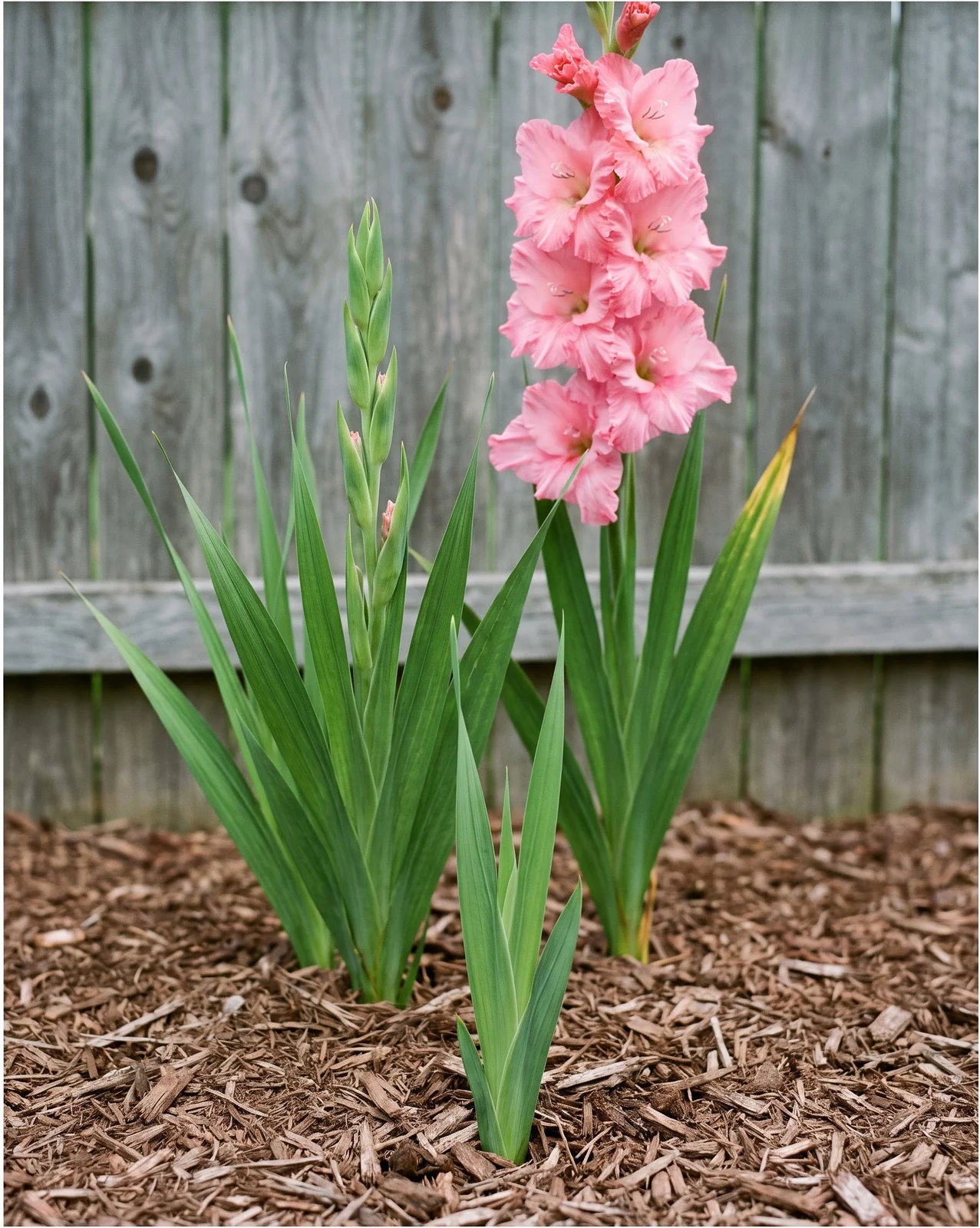
What keeps a cut spike straight and opening happens in the first hour out of the row.
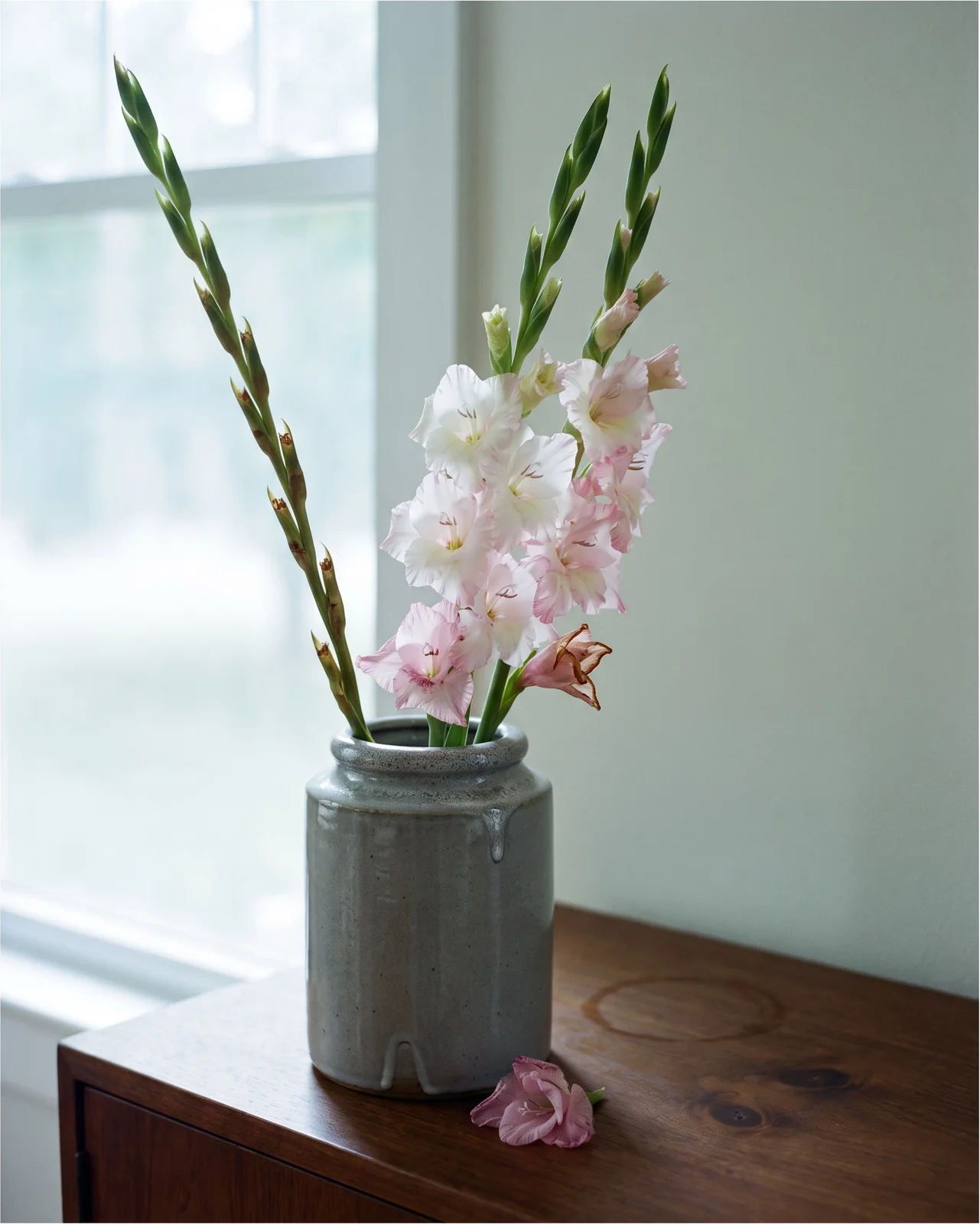
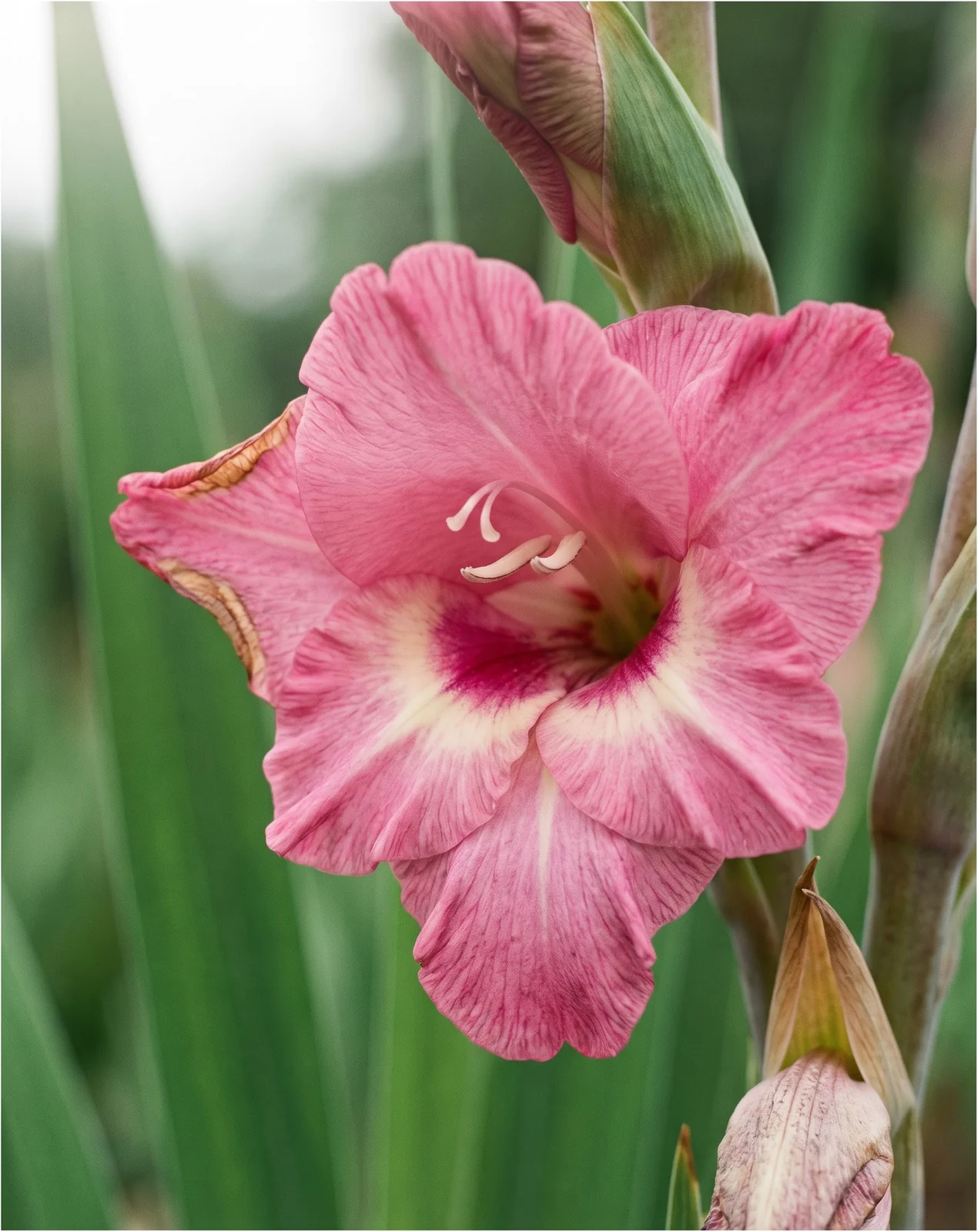
Flower photos
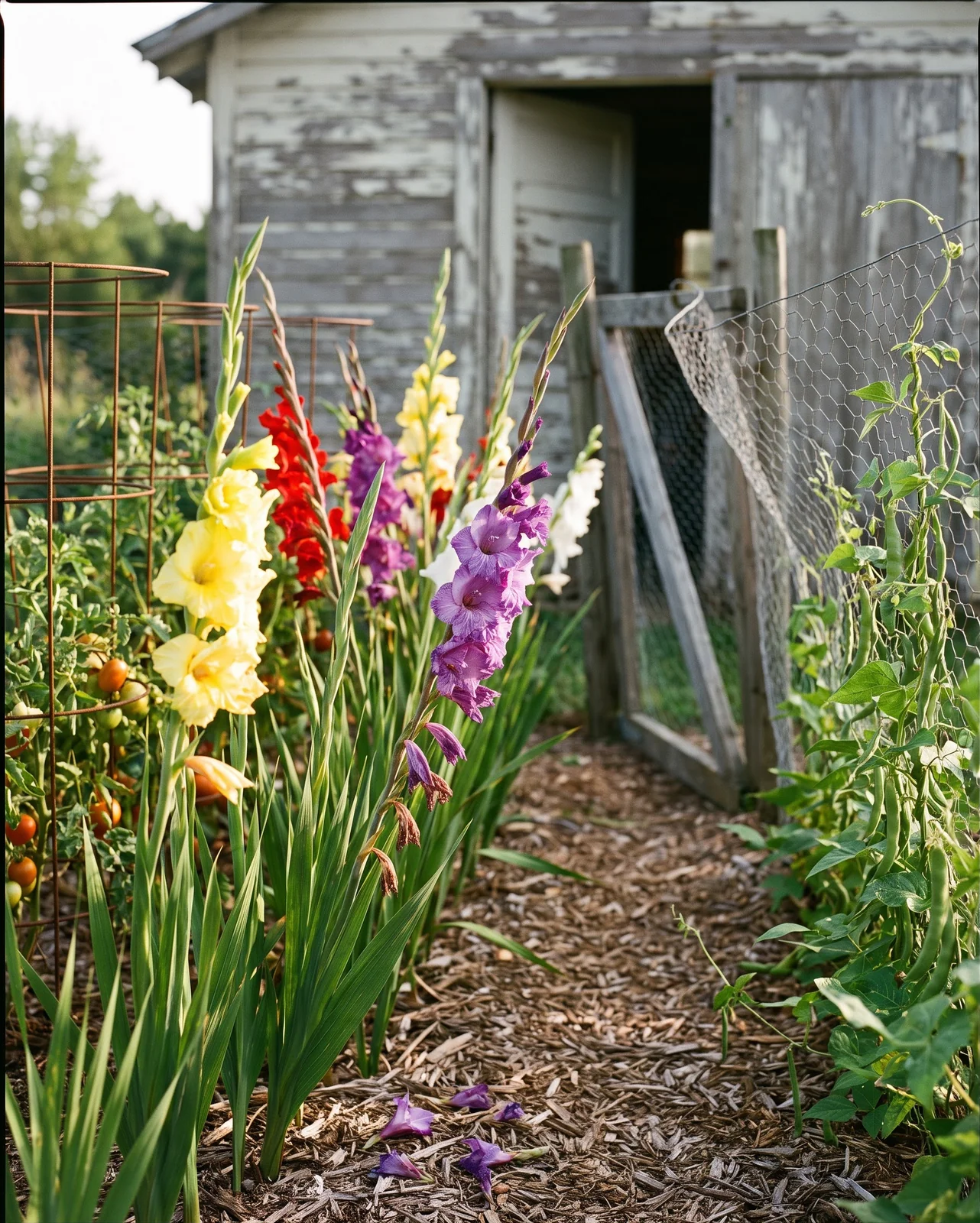
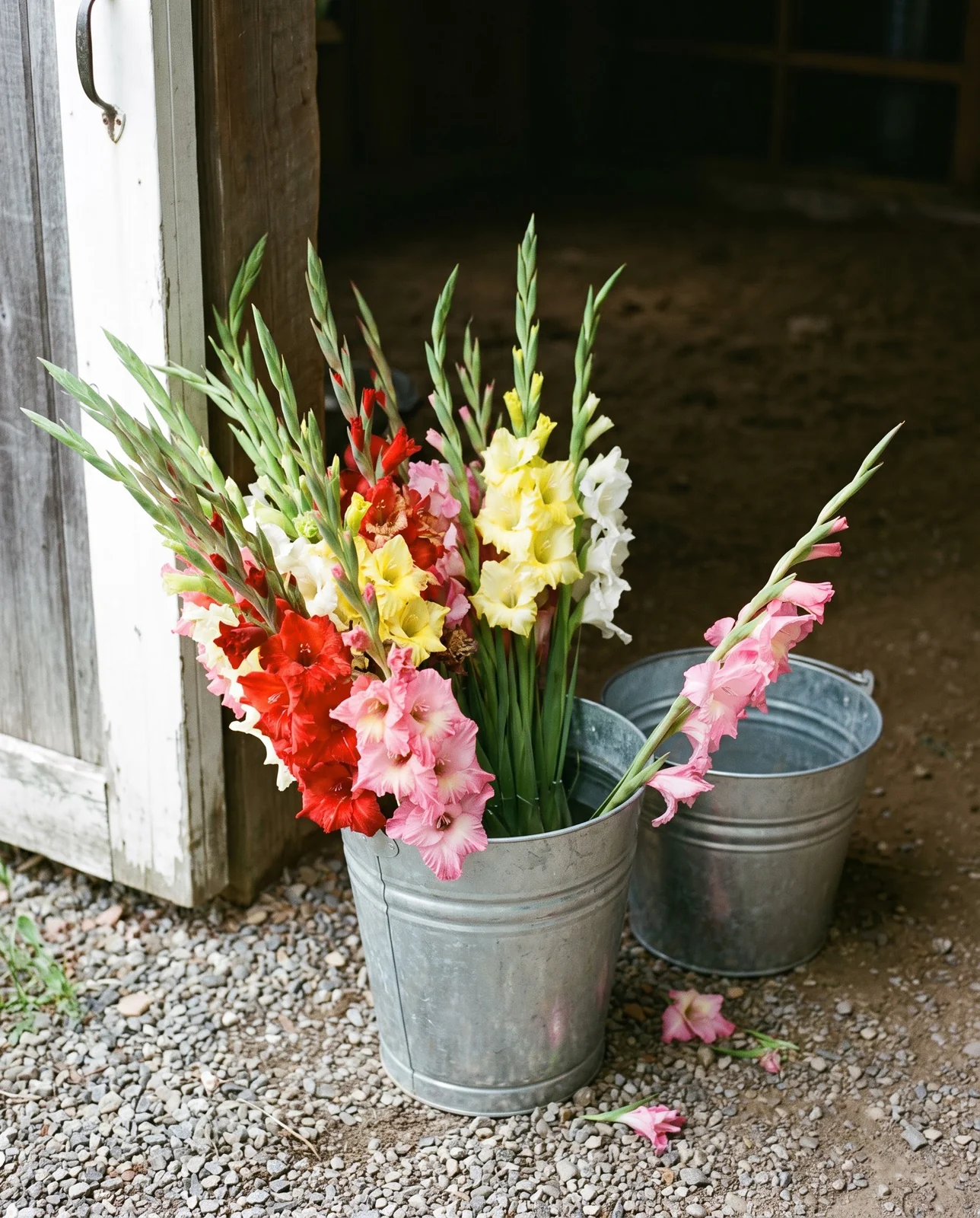
FAQ
Do gladiolus come back every year?
Down to zone 7 for the tall garden hybrids. The small Nanus hybrids carry a zone 5 rating and often stay in under a thick mulch. Colder than that, dig them.
What is the best month to plant gladiolus?
The ground decides it: plant once frost danger has passed and the soil reaches 55 degrees Fahrenheit, which Mississippi gardens hit from mid-March to mid-April.
How deep and how far apart do gladiolus corms go?
Set them 4 to 6 inches deep and 5 to 6 inches apart, pointed end up. The deep end of that range holds the tall varieties straighter.
Do gladiolus need staking?
The large-flowered types do, individually, once the flower heads appear. Nanus varieties rarely need it, and hilling soil along both sides of a row supports the whole planting.
How do you keep gladiolus blooming all summer?
Plant in rounds: 7 to 14 days apart for cut stems, or every 10 days from the last frost date into early summer.
Can you dig up gladiolus corms and use them again?
Yes, and in most of the country you have to. Dig after the first fall frost, cure 2 to 3 weeks somewhere warm and airy, store at 35 to 45 degrees Fahrenheit.
Why are my gladiolus not blooming?
Young stock first: cormels need 2 to 3 years of replanting before they flower. Then the sun the bed still gets, then the leaves, for thrips.
Do gladiolus like to be crowded?
In a cutting row, yes: 2 to 3 inches apart, 20 to 36 inches between rows. In a border, 6 to 8 inches apart in groups of five to seven.
Do gladiolus need water every day?
No. Water when a week brings less than 1 inch of rain. An inch a week is what good spike development takes.
Are gladiolus poisonous to dogs and cats?
Yes, and to horses. The corms carry the highest concentration, so the storage bag is the part to put out of reach.
What should not be planted near gladiolus?
Nothing, by the plant itself. But gladiolus thrips also infests amaryllis, carnation, chrysanthemum, freesia, iris, lily, narcissus, snapdragon and tomato, so a row beside any of them shares the pest.
What does the gladiolus flower symbolize?
Remembrance, in the language of flowers. It is also the August birth flower and the fortieth anniversary flower.
Interesting tips
- Frank Neuhauser won the first National Spelling Bee in 1925 on the word gladiolus, and the ragtime composer Scott Joplin wrote a piece called Gladiolus Rag.
- The species are not spread evenly across the genus range: about 260 are endemic to southern Africa, about 76 more grow in tropical Africa, and only about 10 in Eurasia.
- The flowers are edible once the anthers are removed, best as a garnish or as a small container for a dip.
Related Guides & Flowers
Bearded iris
The iris family relative with the same fan of sword leaves and a completely different root to look after.
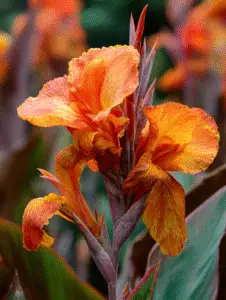
Canna lily
The other tall summer plant that gets lifted, cured, and boxed up before the first hard freeze.
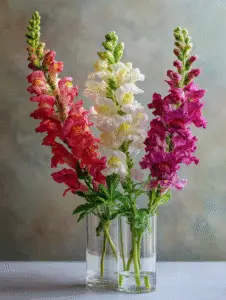
Snapdragon
A cool-season cut spike for the same vase shape, and a host the gladiolus thrips is happy to move onto.
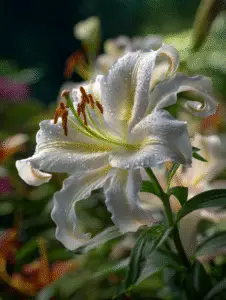
Lily
The summer bulb gardeners plant alongside glads for height, with scent the glads do not have.
Enjoying our flower guides? Add YourFlowersGuide as a preferred source on Google. It helps more readers find us.
Add to Preferred Sources