The story of a late summer garden always begins when the ground is still cold and the trees are bare. You sit by the window with your garden journals, imagining the heat of August while shivering in the drafty house. This is the moment to plan for the inevitable midsummer slump, that quiet period when the exuberant spring perennials have exhausted themselves. Crocosmia is the perfect antidote to this late-season fatigue, but its season starts long before the days grow long and hot. When the red-winged blackbirds return to the marshes and the soil finally yields to a spade, it is time to act. The earth smells sharp and metallic, holding the damp chill of melting snow. You hold the hard, wrinkled corms in your hand, marveling that something so dry and lifeless will eventually produce such intense fire.
You wait until the danger of hard frost has passed and the soil warms enough to crumble easily between your fingers. Digging down a few inches, you settle the corms into the dark earth, spacing them generously to allow for the colonies they will form over the years. The spring peepers sing their evening chorus from the nearby creek, signaling that the warming earth is ready to support new life. You cover the corms and pat the soil flat, leaving them to the gentle rains of April.
Contents 4 sections
The quiet green growth of early summer
While the rest of the garden rushes into a frantic display of pastels and soft greens, crocosmia takes a more measured approach to the season. The first shoots pierce the soil in late May, emerging as stiff, pleated blades that look remarkably like miniature gladiolus leaves. They grow steadily through the damp, mild days of early summer, forming dense architectural clumps of ribbed foliage. At this stage, they are entirely unassuming, offering only a solid vertical texture against the sprawling mounds of fading spring ephemerals. You watch the robins pulling worms from the damp earth around the emerging clumps, completely ignoring the green spears pushing upward. The garden is loud with the bloom of peonies and irises, but the crocosmia remains silent, building its root system and gathering energy from the lengthening days. It demands no attention, requires no deadheading, and simply asks for a steady supply of moisture as the sun climbs higher in the sky.
By the time June bleeds into July, a subtle shift occurs in the light and the temperature of the garden. The soft breezes turn heavy with humidity, and the soil begins to dry out much faster under the intense midday sun. The pleated crocosmia leaves have reached their full height now, standing crisp and upright even as the softer plants around them begin to wilt. You notice the stems thickening at the base, hinting at the energy concentrating within the plant.
Bridging the midsummer gap with tight buds
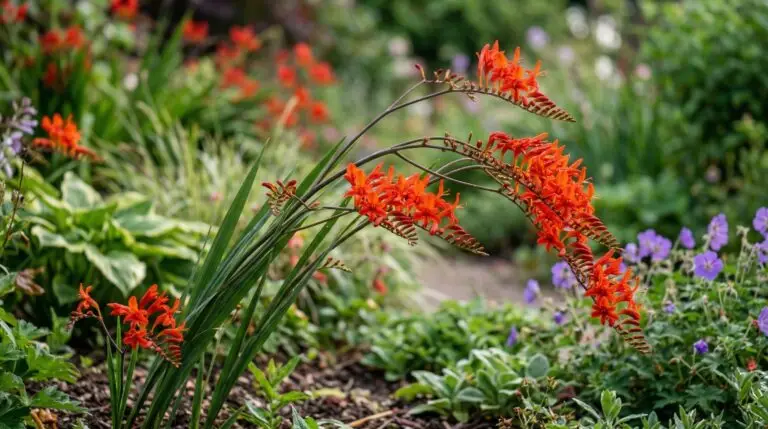
Midsummer arrives with a heavy, oppressive heat that slows the pace of both the gardener and the garden. This is the notorious July gap, the time when the spring show is a distant memory and the autumn asters are still weeks away from showing color. The garden often looks tired now, filled with the yellowing foliage of early bloomers and the sprawling stems of exhausted perennials. But right in the middle of this green fatigue, the crocosmia begins its long-awaited performance. Thin, wiry flower stalks emerge from the center of the leafy fans, arching outward with a graceful, horizontal habit. Along the top edge of these arching stems, the first buds appear as tight, green, bead-like structures arranged in a neat zigzag pattern. You can almost feel the tension in these swelling buds as the cicadas begin their afternoon buzzing in the tall trees above.
The anticipation builds as the green beads slowly elongate and take on a subtle wash of color, hinting at the fire to come. This is when you realize the wisdom of your early spring planning, seeing how the crocosmia stalks arch perfectly over the neighboring plants. You might have planted coneflower nearby, knowing their sturdy, flat-topped blooms will provide the perfect landing pad for the eye beneath the arching crocosmia stems. The garden feels poised on the edge of a transformation, waiting for a single catalyst to ignite the late summer display.
The fiery explosion of late summer
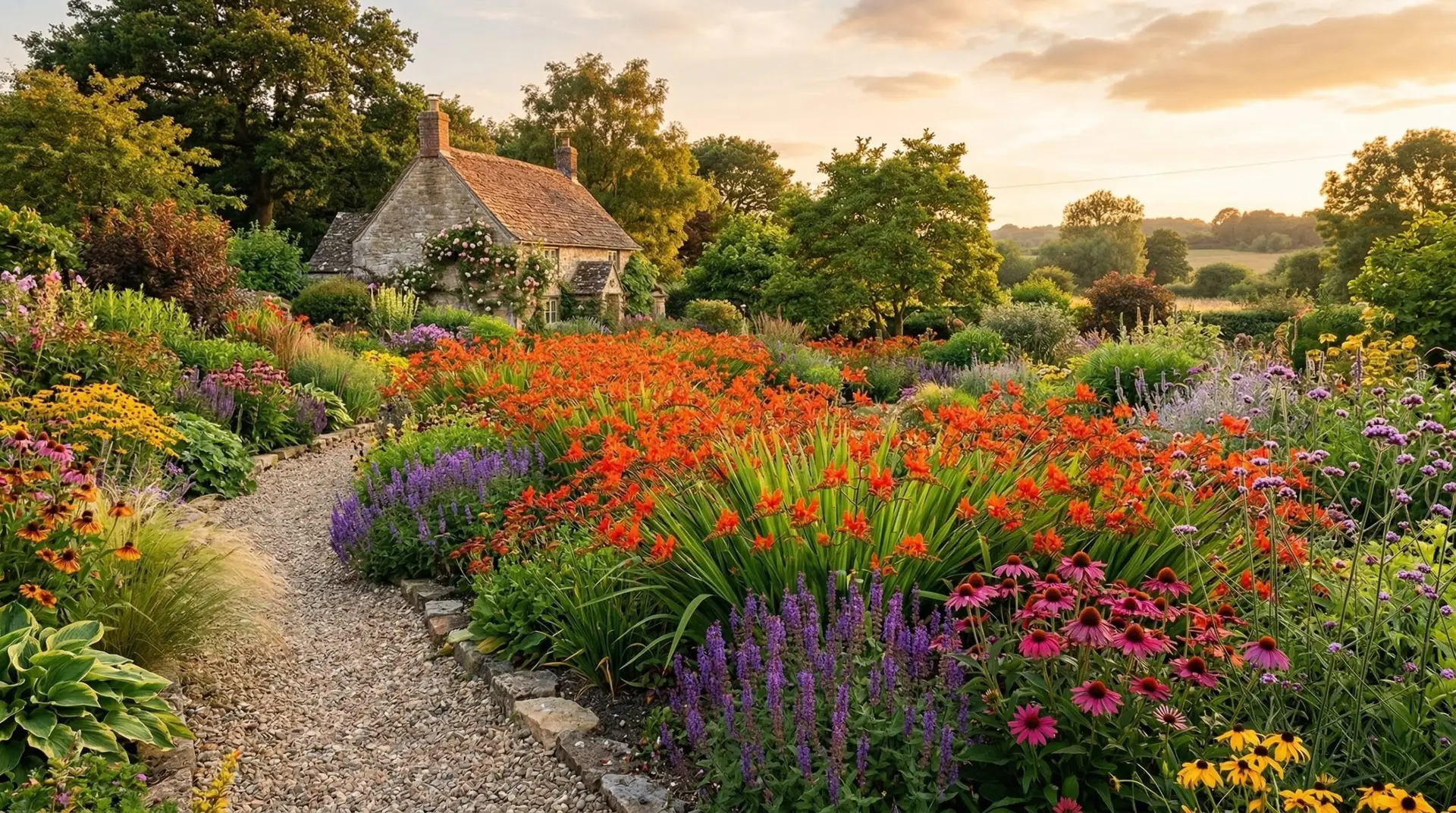
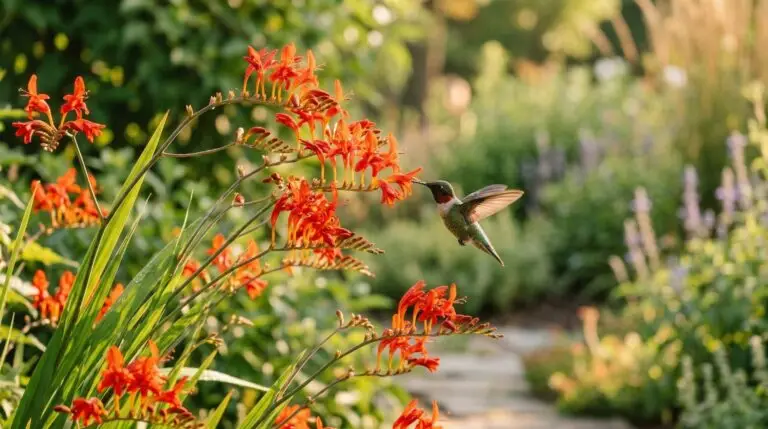
August brings the climax of the crocosmia summer garden, a season defined by intense heat and equally intense colors. The tight buds finally split open, revealing tubular flowers in blazing shades of scarlet, orange, and golden yellow. The visual impact is sudden and dramatic, like striking a match in a dimly lit room. The arching sprays of flowers seem to hover above the foliage, catching the heavy, golden light of late afternoon. Almost immediately, the hummingbirds arrive, drawn by the bright red and orange tubes that perfectly accommodate their long bills. You stand quietly at the edge of the border, listening to the low hum of their wings as they dart aggressively from flower to flower. The garden is entirely awake again, energized by this bold injection of tropical color that defies the draining heat of the dog days.
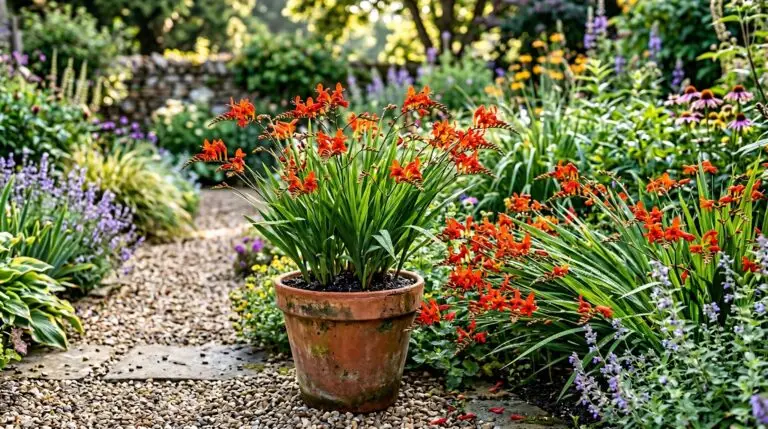
This fiery display reaches its true potential when woven together with other late-season performers that share the same craving for August sun. The rusty reds and coppers of helenium echo the warm tones of the crocosmia, creating a cohesive mass of late summer fire. Agastache pushes up its purple spikes nearby, offering a cool, contrasting color that makes the orange and red flowers seem to burn even brighter. You can also rely on the cheerful, golden-yellow daisy shapes of the Black Eyed Susan to anchor the lower levels of the planting bed. The contrasting shapes of the tubular crocosmia blooms, the flat daisy faces, and the vertical mint spikes create a dynamic, layered composition. The garden feels rich and full, completely erasing the memory of the sparse, tired borders of early July.
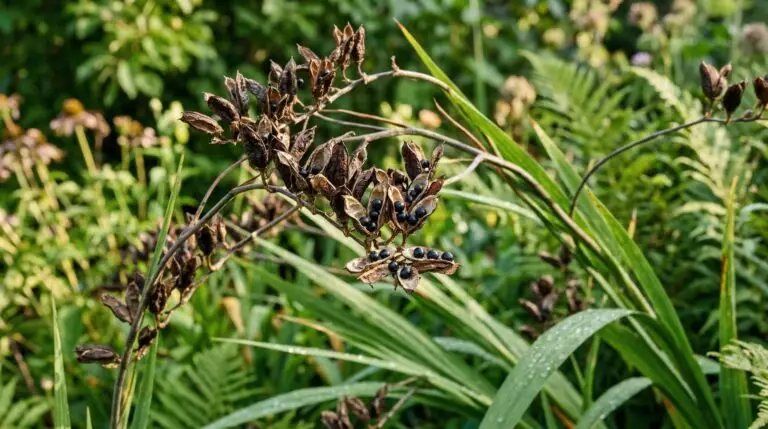
The spectacular show continues for weeks, carrying the garden safely through the hottest days of the year and into the early hints of autumn. As September approaches, the lowest flowers on the arching stems begin to fade and drop, leaving behind small, rounded seed pods. The mornings grow crisper, and the heavy dew clings to the pleated leaves, catching the lower angle of the rising sun. The tall, structural forms of a late-season dahlia might start to dominate the background, signaling that the season is shifting once more.
Fading foliage and the return to the earth
The transition into autumn is a slow, graceful decline for the crocosmia, rather than a sudden collapse. The bright flowers are entirely gone by October, replaced completely by the swelling seed pods that line the arching stems like small green pearls. The foliage, which stood so rigidly green through the worst of the summer heat, slowly begins to lose its vitality. The edges of the sword-like leaves turn a papery brown, and the green fades to a soft, golden yellow as the plant pulls its energy back down into the earth. You leave the stalks standing through the first light frosts, appreciating the architectural structure they provide as the rest of the garden melts away. The goldfinches occasionally land on the wiry stems, searching for seeds among the drying pods. The garden smells of dry leaves and damp soil, a familiar scent that marks the closing of the growing year.
Finally, a hard November freeze sweeps through the garden, blackening the remaining foliage and flattening the once-proud stems to the ground. You take your shears and cut the dead material away, clearing the bed and covering the sleeping corms with a thick layer of protective mulch. The earth grows cold and hard again, locking the garden into its long winter silence. And then, just as the snow begins to fall and the garden seems entirely lifeless, the corms below are already resting, holding the precise blueprint for next summer’s fire.
More About Crocosmia
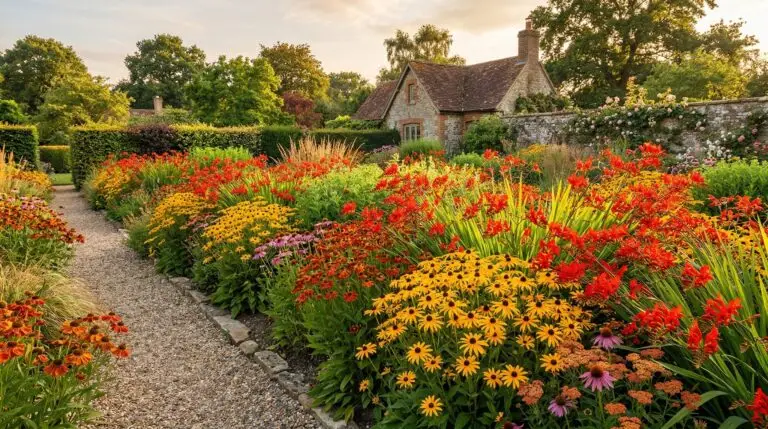
Crocosmia companion plants: what to grow, what to avoid

Overwintering crocosmia corms in cold climates zones 5 and below
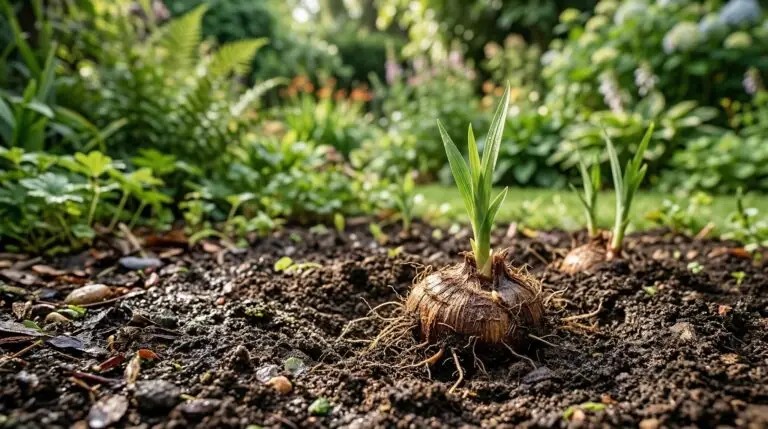
How to grow crocosmia for fiery arching sprays of color in midsummer gardens
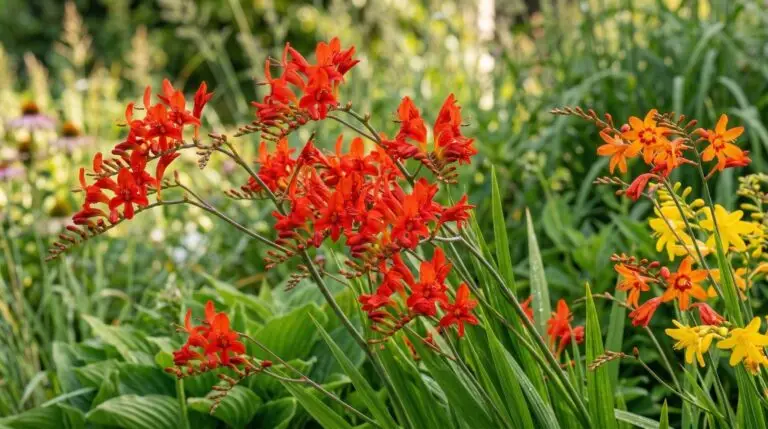
Best crocosmia varieties from fiery Lucifer to golden Emily McKenzie
Crocosmia seed pods and how to propagate new plants from seed for unique varieties
Crocosmia as a hummingbird magnet and why they prefer these tubular flowers
Growing crocosmia in containers for tropical-looking patio displays
Crocosmia as dramatic cut flowers for fiery summer floral arrangements
Enjoying our flower guides? Add YourFlowersGuide as a preferred source on Google. It helps more readers find us.
Add to Preferred Sources