You planted a few black eyed Susans three years ago because you wanted reliable late summer color, and now you are staring at a solid wall of yellow flowers that swallowed your delicate perennials whole. This is one of the most common frustrations I hear from home gardeners who feel completely overrun by a plant they originally loved. Black eyed Susans are incredibly vigorous survivors, which is exactly why they are so easy to grow but also why they become aggressive garden thugs. People often wonder why these plants seem to multiply overnight and choke out everything else in the bed. The truth is that they use a two-pronged attack to conquer your garden space, relying on both prolific seed production and expanding underground root systems. If you want to keep enjoying these bright, cheerful blooms without giving up your entire yard to them, you have to intervene actively and disrupt their reproduction cycle.
When black eyed Susans start taking over your garden, it usually means you have ignored them for a season too long and allowed them to do what they naturally want to do. To control black eyed Susan spreading, you first need to identify exactly how your specific plants are moving around the yard. If you notice tiny new plants popping up in the lawn, between patio cracks, or in completely different garden beds, you are dealing with a self-seeding problem. If the original clump you planted is simply growing wider and wider like a slow-moving yellow blob that smothers its immediate neighbors, you are dealing with underground rhizome expansion. Many common varieties, particularly the popular Rudbeckia fulgida ‘Goldsturm’, will actually use both methods simultaneously to claim territory. Understanding exactly how your plants are escaping their designated boundaries tells you exactly which control method you need to apply to get them back in line.
Stopping the self seeding cycle
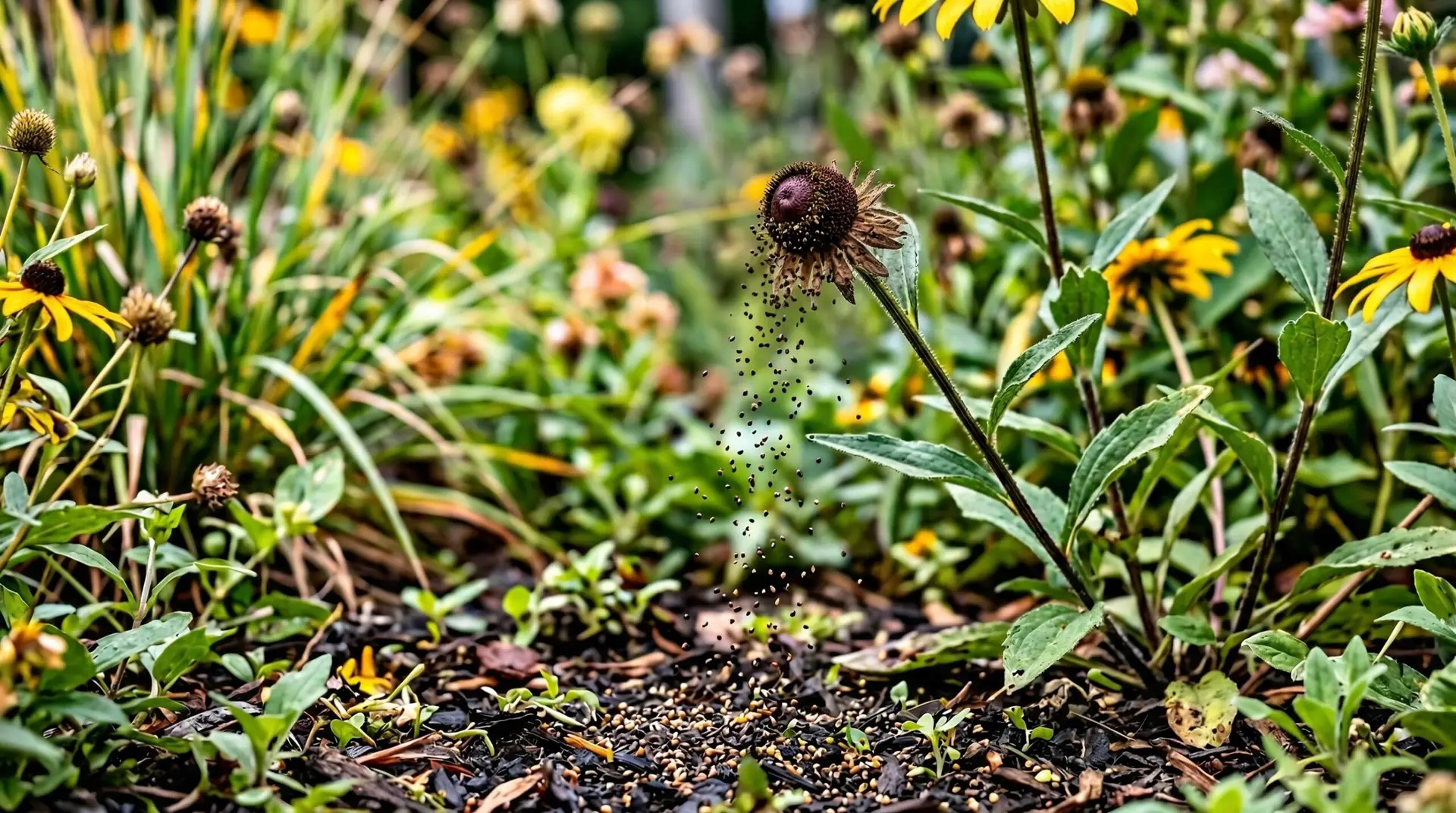
The single most effective way to stop black eyed Susans from popping up all over your property is to prevent them from dropping their seeds in the first place. When flowers fade and the central black cones dry out, they become packed with hundreds of tiny seeds that the wind and birds will scatter everywhere. The fix for this is aggressive deadheading, which means cutting off the spent blooms before those seed heads have a chance to dry completely and shatter. You need to take a sharp pair of bypass pruners and cut the flower stem all the way back to the nearest set of leaves or down to the base of the plant. This requires a bit of vigilance during the late summer and early fall, as you will need to make a pass through the garden every week to snip off the dying flowers. While many gardeners like to leave dried seed heads standing to feed winter birds, doing so with an aggressive rudbeckia guarantees a massive weeding chore the following spring. If you want to feed the birds without creating a weed problem, you are better off leaving the seed heads on a well-behaved coneflower instead.
Controlling underground root expansion
Managing the underground spread requires physical labor and a willingness to be ruthless with your established clumps. When a clump of black eyed Susans gets too wide and starts encroaching on other plants, the root system has simply outgrown its space and needs to be manually reduced. The best way to handle this is through regular division, which you should plan to do every two to three years in the early spring just as the new green shoots emerge from the soil. You take a sharp garden spade and drive it straight down through the outer edges of the clump, severing the spreading roots and removing the excess growth completely. Alternatively, you can dig up the entire massive root ball, chop it into quarters, replant one small healthy section, and compost or give away the rest. This process keeps the plant’s footprint small while rejuvenating the remaining roots for much better blooming performance later in the summer. If you ignore this chore, the center of the old clump will eventually die out and become woody while the edges continue their aggressive march across your garden bed.
If you know you will not keep up with regular division, you need to install physical barriers in the soil before the roots ever have a chance to run. You can control rudbeckia too aggressive root systems using the same containment strategies that experienced gardeners use for mint or running bamboo. Find a large plastic nursery pot, cut the entire bottom out of it with a utility knife, and sink it into the ground so the top rim sits just an inch above the soil line. Plant your black eyed Susan directly inside this buried plastic ring, which will force the roots to grow downward rather than spreading outward into the surrounding soil. The rim needs to stay slightly exposed above the dirt to prevent the shallow rhizomes from simply creeping right over the top edge of the plastic. This method requires a bit more digging upfront during the initial planting phase, but it saves you hours of backbreaking division work in the years to come.
Strategic planting and variety selection
You can also manage aggressive spreaders by forcing them to fight for their territory against equally tough competitors. When you plant a vigorous spreader next to fragile, slow-growing perennials, the black eyed Susans will always win and eventually smother the weaker plants. Instead, you should surround them with other robust native plants that have strong root systems and can hold their own in a crowded garden bed. A sturdy goldenrod or a dense ornamental grass will create a natural living wall that prevents the rudbeckia roots from advancing too far in that direction. This creates a dense, meadow-like planting style where the plants naturally keep each other in check through intense root competition. You just have to accept that this type of planting will look a bit wild and tangled, rather than neat and highly manicured.
The absolute best piece of advice I can give anyone dealing with this issue is to rip out the aggressive spreaders entirely and plant a sterile or annual variety instead. Many gardeners fight a losing battle for years against spreading rudbeckia when they could simply switch to a cultivar that does not produce viable seed or aggressive rhizomes. Varieties like ‘Indian Summer’ or ‘Prairie Sun’ are typically grown as annuals or short-lived perennials, meaning they will give you the exact same bright yellow display all summer long without permanently colonizing your yard. You will have to replant them every year or two, but that minor inconvenience is vastly easier than digging up miles of invasive roots or pulling hundreds of unwanted seedlings out of your lawn. Gardening should not feel like a constant war for territory, so do yourself a favor and choose plants that respect the boundaries you set for them.
More About Black-eyed Susan

Black eyed Susan and coneflower planted together for the ultimate prairie garden

Naturalizing black eyed Susans along roadsides and meadows for wild beauty
Black eyed Susan problems including leaf spot and aphids and organic solutions

How to grow black eyed Susans from seed for masses of golden summer blooms

Why black eyed Susans are one of the best native plants for pollinator gardens

Using black eyed Susans as cut flowers for cheerful late summer bouquets

Black eyed Susan varieties from classic Goldsturm to dramatic Cherokee Sunset