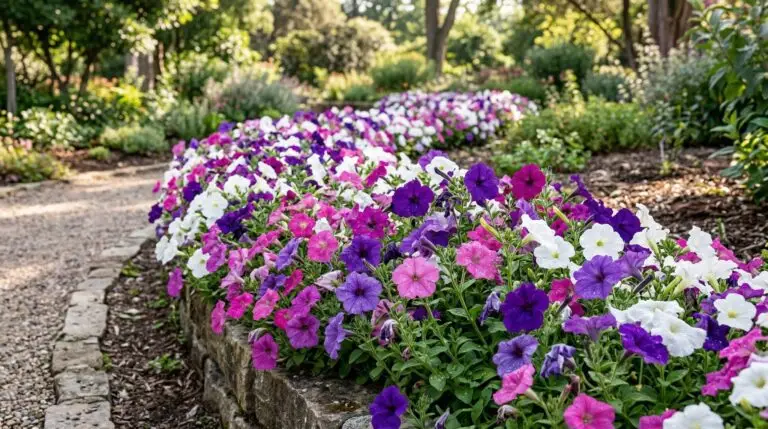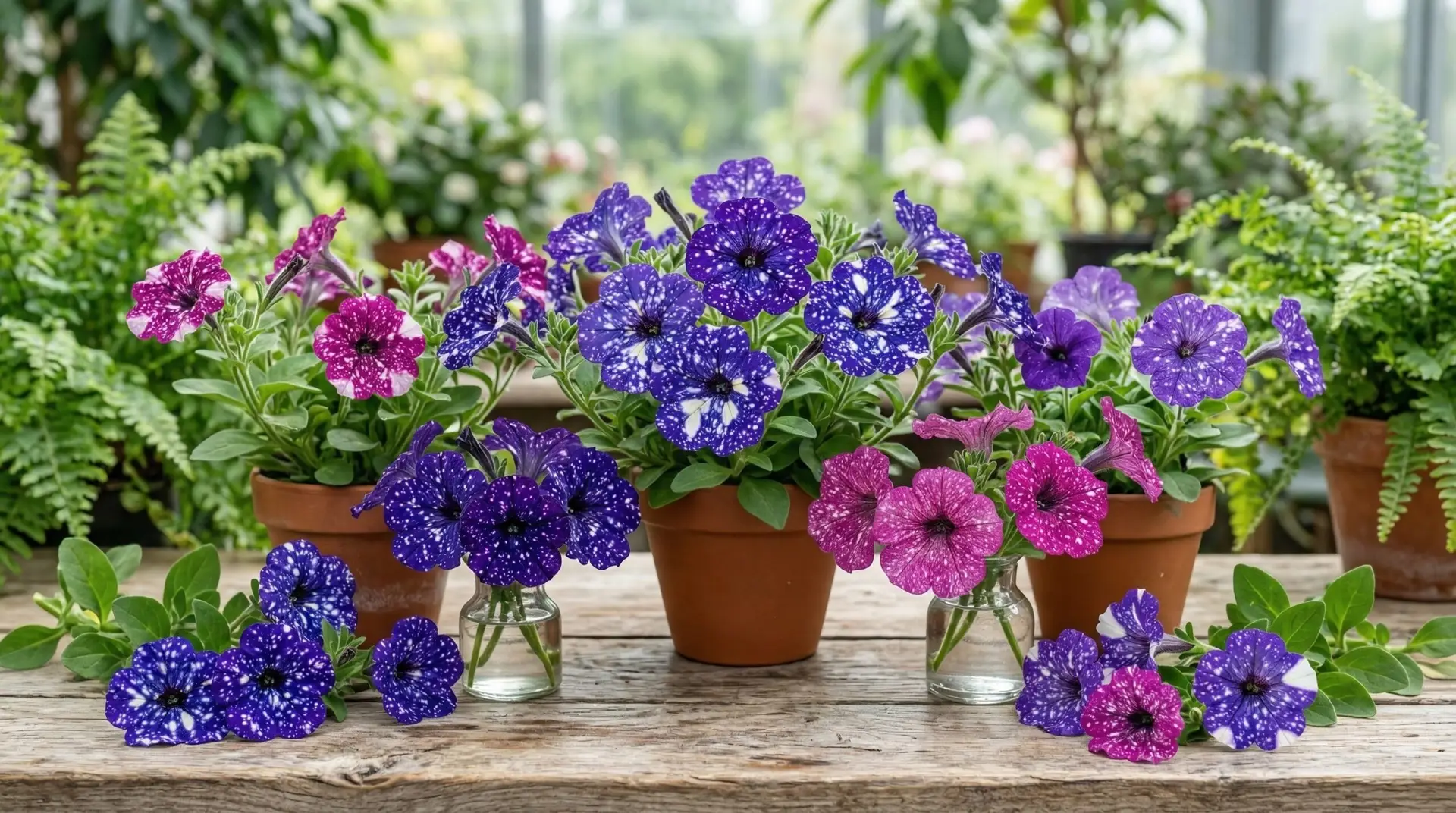
The evening light changes everything in the garden, turning the bright greens into deep olives and making the pale flowers glow like small lanterns. I wish you could stand here beside the terracotta pots on the patio just as the sun dips below the tree line. This is the exact moment when the Night Sky petunia reveals its true depth. The petals are a saturated, velvety violet that absorbs the fading light, looking almost black in the shadows. Scattered across this dark background are irregular splashes and pinpricks of pure, luminous white. They look exactly like a photograph of a distant galaxy captured by a powerful telescope. When you brush your fingers against the blooms, the surface feels like fine suede, entirely different from the papery thinness of older garden varieties. These galaxy petunia varieties have transformed the familiar summer hanging basket into a canvas of deep space.
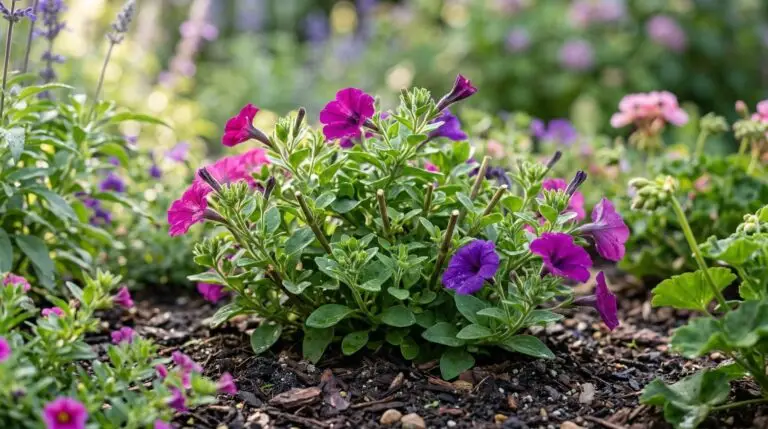
A faint, sweet scent rises from the warm soil as the evening cools down, carrying the subtle peppery notes of the petunia foliage. You might think these white speckles are painted on by a careful hand, but the pattern is entirely alive and constantly shifting. Every single bloom opens with a completely unique arrangement of stars and nebulas. Some flowers emerge almost entirely purple with just a few scattered dots of cream, while others open with massive blotches of white that bleed into the violet edges. The stems themselves are slightly sticky, covered in microscopic hairs that catch the morning dew and hold it like tiny glass beads. Watching a unique petunia develop over the course of a week feels like watching a slow chemical reaction unfold in the garden. You never know exactly what the next bud will look like when it finally unfurls its pleated edges.
The temperature behind the stars
The secret to these shifting constellations lies in the invisible swings of daily temperature. When the spring nights carry a sharp chill and the days remain mild, the plant produces heavy clusters of bright white stars. You can actually read the past week of weather just by looking at the newest layer of flowers opening at the tips of the trailing stems. As the heavy heat of deep summer settles over the garden, the white spots begin to shrink and fade. A string of ninety-degree days will turn the new blossoms into solid, unbroken pools of dark purple velvet. To keep the starry pattern strong through the hottest months, you need to find a spot where the plants receive the sharp, clear light of morning but sit in cool, dappled shade during the burning afternoon hours. You will know the soil is right when it feels like a wrung-out sponge in your hand, holding just enough moisture to keep the roots cool without suffocating them in mud.
Watering these heavy feeders requires a gentle touch and a close eye on the soil surface. When you pour water from the can, it should sink immediately into the dark earth rather than pooling on the top. The roots need oxygen just as much as they need water to support the massive energy required to produce hundreds of patterned blooms. I like to plant them alongside trailing verbena, letting the rough, deeply veined leaves of the companion plants weave through the sticky petunia stems. The tiny, clustered blossoms of the verbena create a delicate textural contrast against the wide, open trumpets of the galaxy petunias. Overfeeding with heavy chemical fertilizers will push the plant to grow long, brittle stems that snap easily in a summer storm. Instead, a slow release of organic nutrients keeps the foliage a deep, matte green that makes the purple and white flowers pop even harder against their background.
Dark velvet and neon stripes
The fascination with unusual patterns does not end with the starry night sky effect. If you walk down to the lower garden where the sun hits the stone retaining wall, you will find the Phantom petunia soaking up the heat. The base color of this flower is a purple so intensely dark that it registers to the human eye as pure, flat black. Down the center of each of the five petal lobes runs a sharp, sulfur-yellow stripe that meets in the middle to form a perfect star. The contrast is so sharp it almost hurts the eyes in the bright midday sun. The yellow stripes have a slightly different texture than the black background, catching the light with a subtle sheen while the dark areas absorb every ray of sunshine. Watching a bumblebee navigate into the dark throat of a Phantom bloom is a study in intense color dynamics.
Just a few steps away, the Crazytunia varieties spill over the edges of heavy concrete urns. These are the rebels of the garden, bred for colors that look like they belong in a neon sign rather than a traditional flower bed. One variety opens with petals of a saturated magenta that photographs almost purple, slashed through with chaotic wedges of lime green and pale yellow. The edges of the Crazytunia blooms are often slightly ruffled or scalloped, giving them the appearance of crushed silk skirts catching the wind. When a heavy summer rain passes through, the water pools in the center of these wide blossoms, magnifying the intense pigments beneath the drops. The rain washes the sticky dust from the rough green foliage, releasing a sharp, green scent that mixes with the ozone in the air. You can easily spend an hour just studying the variations in a single hanging basket, tracing the unpredictable lines of color as they bleed and shift across the petals.
Hearts hidden in the blooms
For a completely different emotional note in the garden, the Amore series offers a pattern that feels almost impossible in its precision. Each flower in this collection reveals five distinct, perfectly shaped hearts painted around the outer edge of the bloom. The Queen of Hearts variety displays these shapes in a rich, cherry red against a background of pure, paper-white. The red sections have a slightly glossy finish, making the hearts look as though they were stamped onto the petals with wet ink. When the early morning dew settles on the garden, the tiny droplets trace the edges of these red hearts, outlining the pattern in liquid glass. To soften the visual impact of such a structured pattern, I weave wispy cosmos in the background of the border. The feathery, thread-like foliage of the cosmos sways in the slightest breeze, providing a moving green curtain behind the solid, striking faces of the petunias.
Keeping these painted hearts looking their best requires a regular ritual of cleaning and pruning as the season progresses. When a blossom finally exhausts itself, the petals collapse inward, losing their crisp white background and fading to a bruised, translucent pink. You must pinch the stem just below the sticky green base of the spent flower, feeling the satisfying snap between your thumb and forefinger. This simple act stops the plant from pouring its energy into producing smooth, hard seed pods. Your fingers will inevitably become coated in the sticky, fragrant resin that covers every inch of the plant. This resin is the plant’s natural defense against the intense summer heat, helping to trap moisture around the stems and leaves. Washing the sticky green residue off your hands at the outdoor spigot becomes a familiar, satisfying end to an evening spent tending the pots.
As the evening deepens into true night, the garden undergoes its final transformation of the day. The neon slashes of the Crazytunias fade into the shadows, and the dark red hearts of the Amore series become invisible against the dark soil. Only the Night Sky petunia remains visible, its pure white speckles catching the ambient glow of the moon and the distant streetlights. The flowers seem to float in midair above the heavy foliage, entirely disconnected from the earth. The air cools, and the sharp, peppery scent of the sticky leaves settles heavily over the patio. You can sit on the wooden bench, listening to the crickets start their rhythmic calling, and look at a galaxy of white stars blooming right at your feet. The garden holds onto this quiet magic until the morning sun rises to warm the velvet petals all over again.
More About Petunia
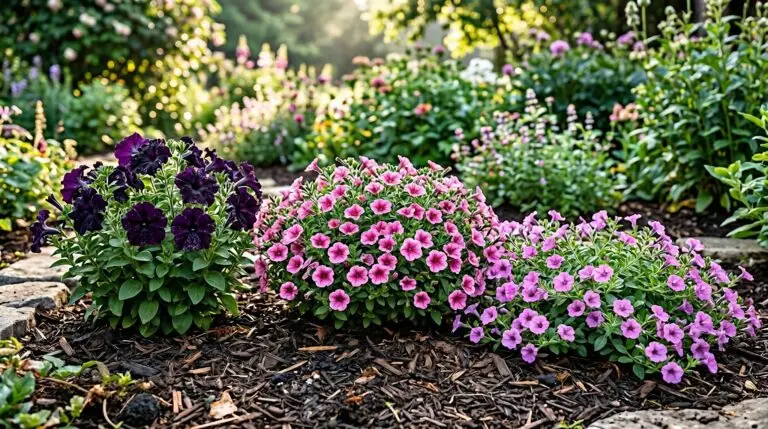
How to grow petunias for explosive color in hanging baskets containers and garden beds
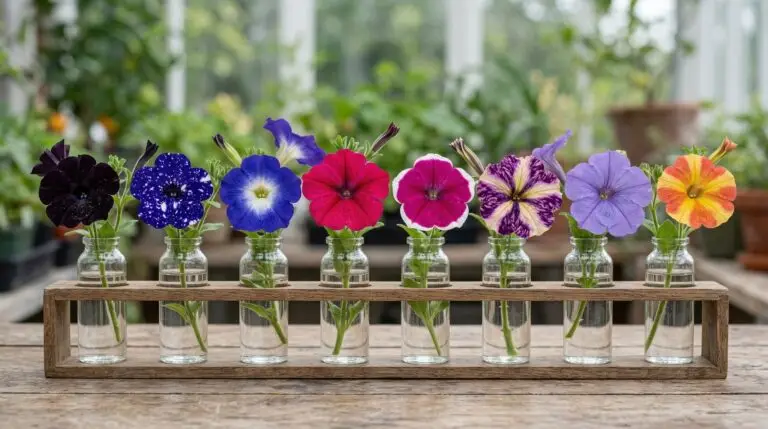
Supertunia and Surfinia versus regular petunias and why branded varieties outperform
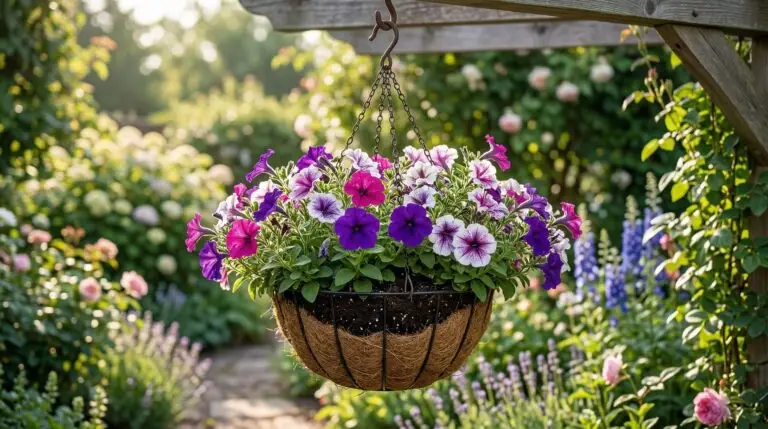
Growing petunias in hanging baskets for cascading waterfalls of summer color
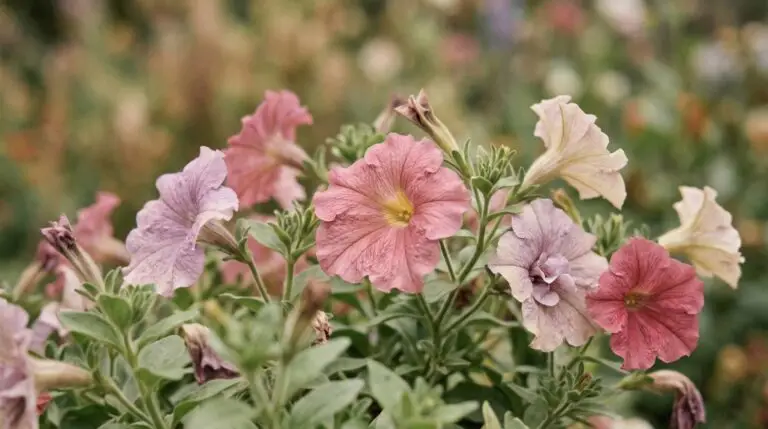
Petunia flower meaning and why this humble bloom represents desire and comfort
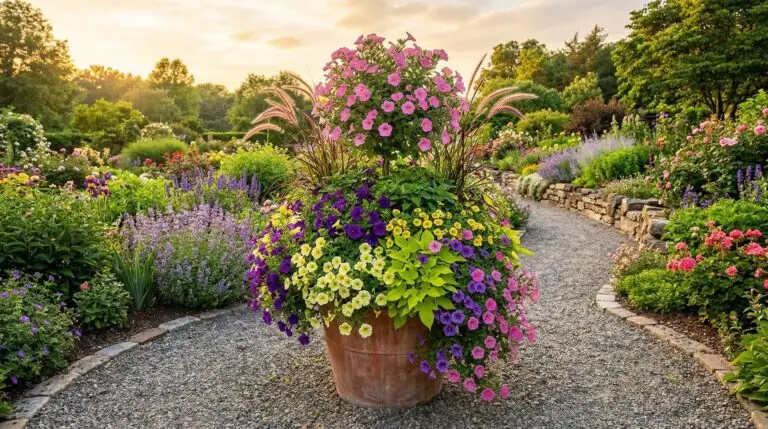
Companion plants for petunias in containers and beds for non-stop summer displays
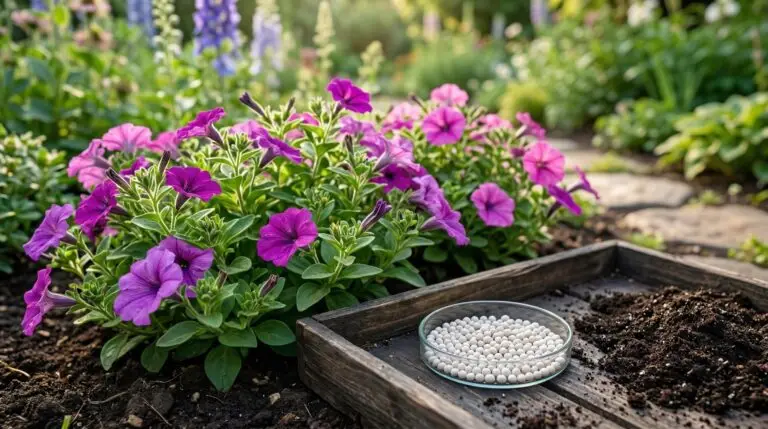
Growing petunias from seed and the tiny seeds that need light and patience to germinate
Why petunias get leggy and scraggly by midsummer and the hard cutback that saves them