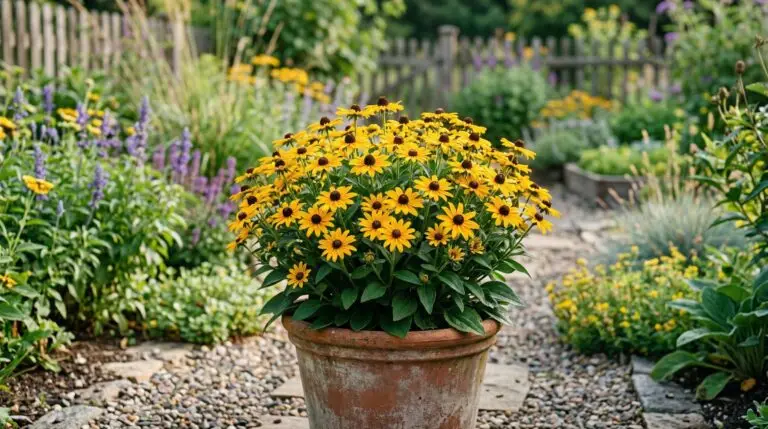
Designing with a prairie foundation
Black Eyed Susan and coneflower form the absolute structural backbone of any successful prairie garden design. When we approach a meadow composition, we need reliable anchor plants that can hold their own in large, sweeping drifts without looking chaotic. These two native perennials are the visual glue in a loose, naturalistic planting scheme. They bring a necessary weight to the mid-border, grounding the lighter, more ephemeral meadow plants that weave around them. By relying on these sturdy uprights, a designer establishes a clear rhythm that guides the eye across the entire landscape. Their shared preference for full sun and lean soils means they naturally thrive under the same cultural conditions, making them ideal partners for large-scale naturalizing.
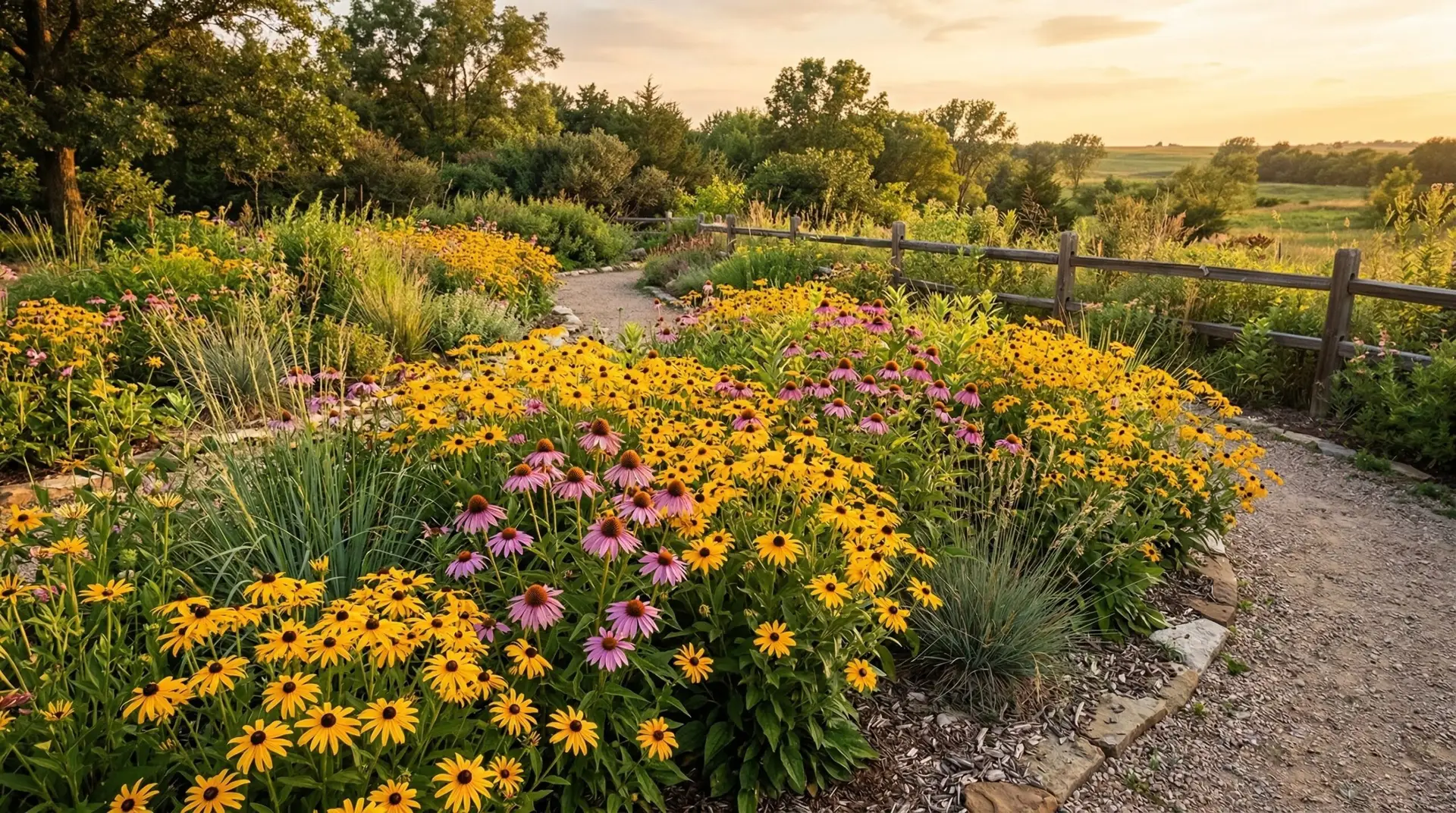
A successful meadow design relies heavily on repetition to make the space feel intentional rather than overgrown. Planting Black Eyed Susan alongside coneflower creates a repeating motif of strong daisy-like shapes that instantly signals a prairie aesthetic. You can use them as a base layer, planting them in interlocking blocks or long ribbons that follow the natural contours of the land. Because both plants have deep root systems and tolerate drought well, they compete fairly with one another in the soil profile. This balanced underground competition prevents either species from completely overtaking the other, allowing you to maintain a stable, long-lasting composition.
Color harmony and visual weight
The color relationship between these two plants provides an immediate study in classic complementary contrast. The warm, saturated gold of the Black Eyed Susan pushes forward visually, demanding attention and creating bright focal points throughout the garden. Against this intense yellow, the soft, muted pinks and pale purples of the coneflower recede slightly, providing a resting place for the eye. This push and pull between warm and cool tones gives the garden depth and prevents the yellow from becoming overwhelming. The true design genius of this pairing lies in their shared dark central cones, which act as a unifying visual element that ties the contrasting petal colors together into a cohesive whole.
As the summer progresses, this color story shifts and deepens, requiring careful thought about surrounding companions. The golden tones of the Black Eyed Susan begin to harmonize with other late-season bloomers that share a similar warm palette. Introducing sweeps of goldenrod near the back of the border creates a brilliant color echo that amplifies the yellow hues across different heights. This layering of similar colors at varying elevations creates a wall of warmth that feels particularly appropriate as the light angles lower in late summer. The coneflowers then function as cool-toned accents that break up these massive blocks of gold, keeping the overall color scheme balanced and sophisticated.
Form, texture, and spatial relationships
While their colors contrast effectively, Black Eyed Susan and coneflower share a very similar physical form, which presents a specific design challenge. Both have stiff, upright stems, coarse dark green foliage, and prominent, flat-topped flower heads. If planted entirely on their own, a solid block of these two species can look stiff and heavy. To resolve this, a garden designer must introduce contrasting textures to soften the composition and introduce movement. Fine-textured ornamental grasses, such as little bluestem or prairie dropseed, are absolutely essential in this scenario. The grasses weave between the rigid stems, catching the wind and blurring the harsh lines of the coarse perennial foliage.
Scale and proportion dictate exactly where these plants should sit within the spatial layout of the garden. Ranging from two to four feet tall depending on the specific variety, both Black Eyed Susan and coneflower belong firmly in the middle ground of a layered planting. If placed too close to the front edge of a pathway, their coarse lower foliage and rigid stems can feel aggressive and block sightlines into the rest of the bed. Instead, position them a few feet back from the edge, allowing lower, mounding plants to cover their lower stems and create a smooth transition from the path. This placement draws the viewer’s eye deeper into the planting, making the garden feel larger and more immersive.
Extending the seasonal composition
A professional garden design must account for the months when plants are not actively pushing out fresh petals. The true value of the Black Eyed Susan and coneflower pairing reveals itself in late autumn and winter. Long after the bright yellow and pink petals have dropped away, the dark, structural seed heads remain standing on their stiff stems. These prominent black and brown cones provide critical winter architecture, turning a flat, dormant garden into a sculptural landscape of varied shapes. Leaving these stems standing rather than cutting them to the ground offers visual interest against the snow or bare earth, while also providing necessary forage for local bird populations.
Planning for a continuous succession of blooms ensures the prairie garden remains engaging from high summer straight through the first hard frost. As the Black Eyed Susans begin to fade and set seed, the composition needs a fresh injection of color to carry the visual weight. Weaving drifts of native aster through the fading yellow and pink provides a much-needed burst of cool blues and purples late in the season. The design principle to apply here is the concept of matrix planting. Instead of treating each plant as an isolated specimen, treat the grasses as a continuous base layer, and plug the Black Eyed Susans, coneflowers, and late-season companions into that matrix in repeating, overlapping waves. This approach mimics the wild distribution of a natural meadow while maintaining the deliberate, refined structure of a designed garden.
More About Black-eyed Susan
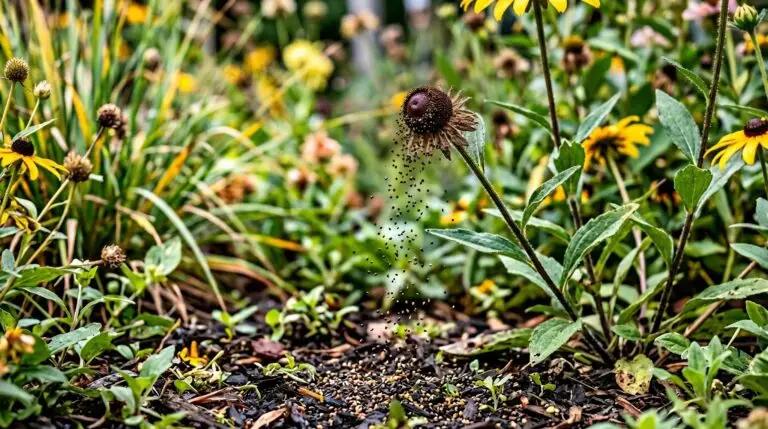
How to keep black eyed Susans from taking over your garden while still enjoying them
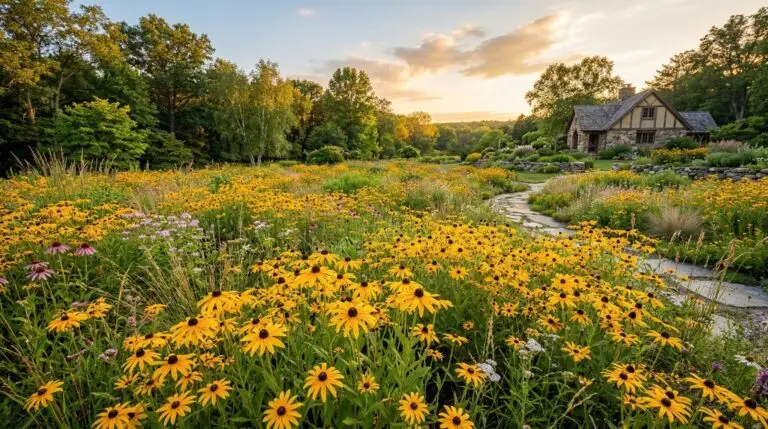
Naturalizing black eyed Susans along roadsides and meadows for wild beauty
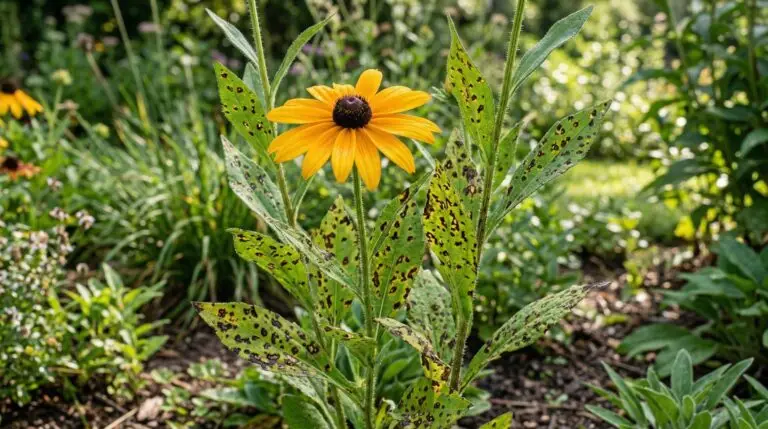
Black eyed Susan problems including leaf spot and aphids and organic solutions
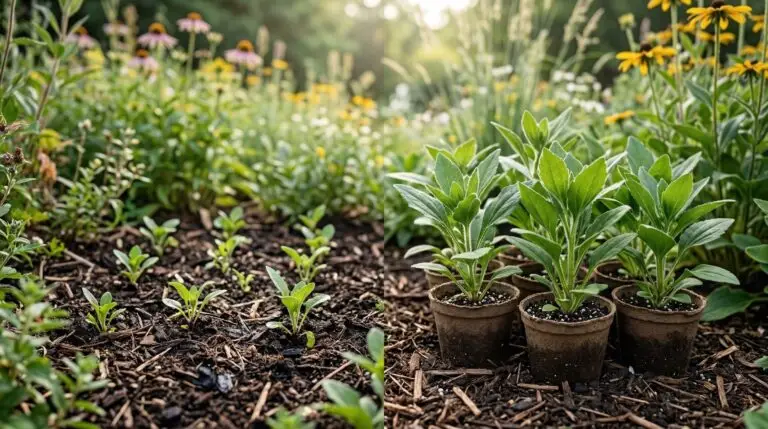
How to grow black eyed Susans from seed for masses of golden summer blooms
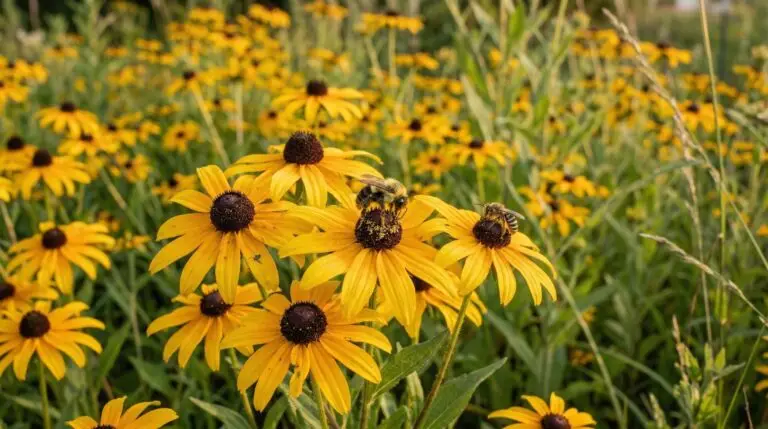
Why black eyed Susans are one of the best native plants for pollinator gardens
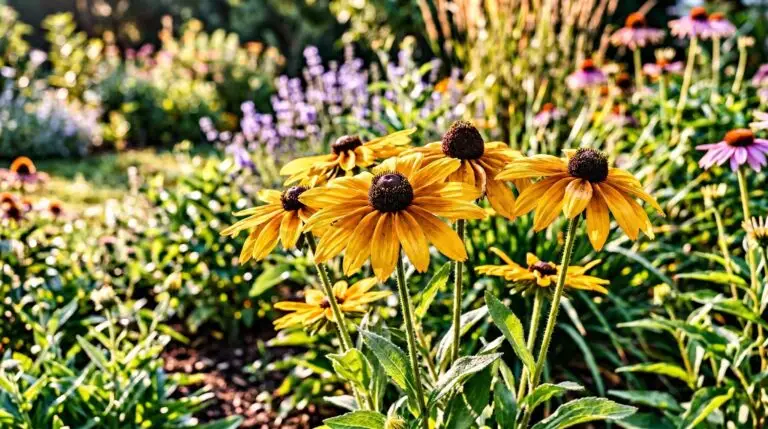
Using black eyed Susans as cut flowers for cheerful late summer bouquets
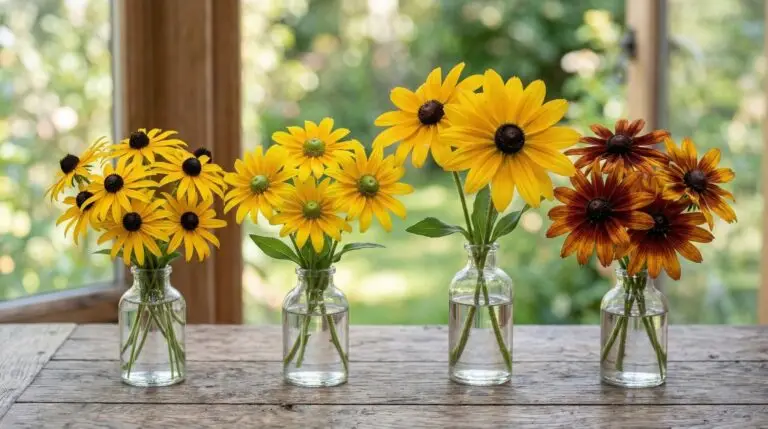
Black eyed Susan varieties from classic Goldsturm to dramatic Cherokee Sunset