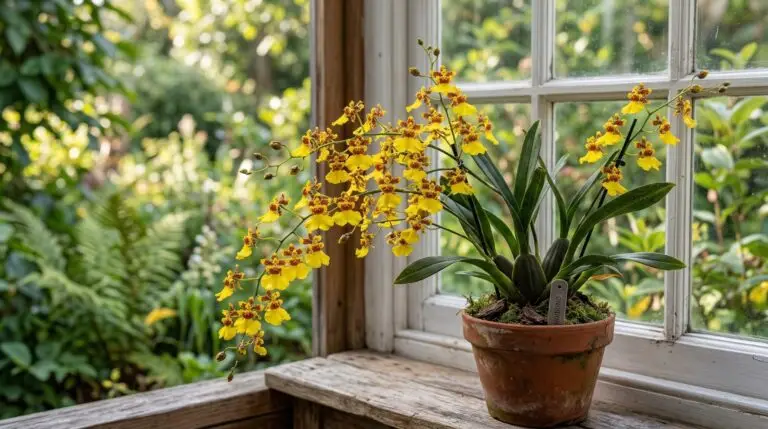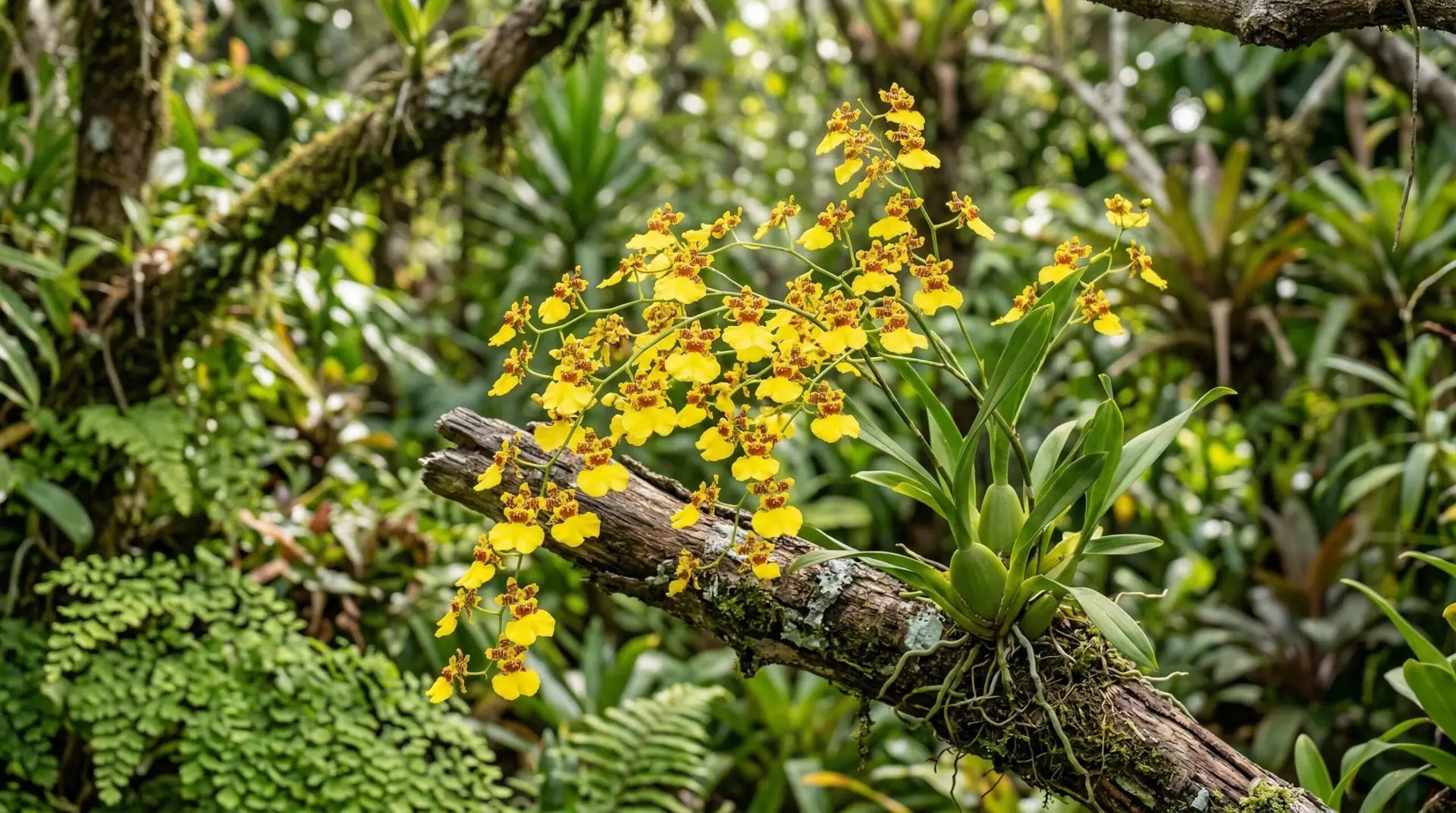
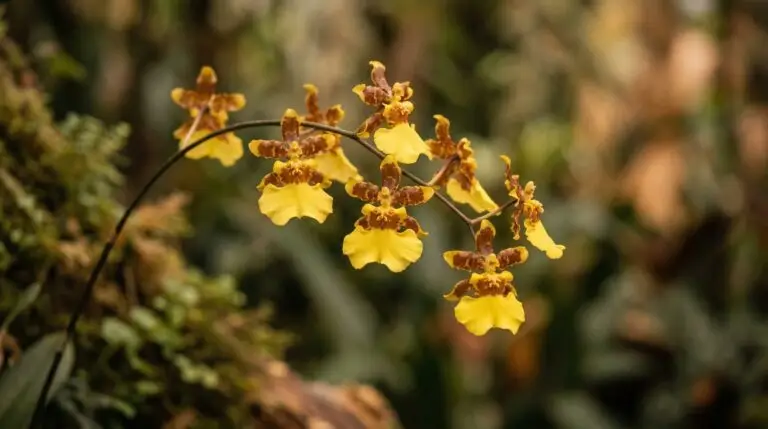
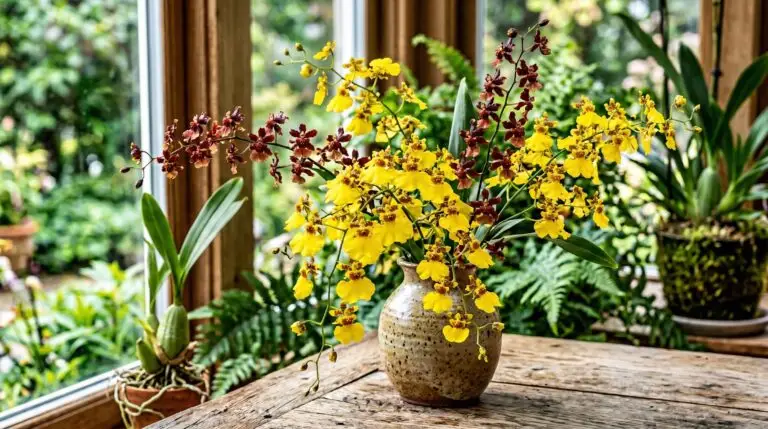
If you look closely at the flower of an Oncidium orchid, you will notice a large, flared lower petal that resembles a flowing skirt. Above this petal, smaller sepals and petals form what looks like the head and outstretched arms of a tiny figure. This unique morphology earned the plant its common name, the dancing lady orchid. In their native habitats across the Neotropics, these plants grow high in the tree canopy where the wind is a constant presence. The flowers are suspended on thin, wiry stems that cause the entire cluster to bob and sway in the slightest breeze, a movement that actively catches the attention of pollinators.
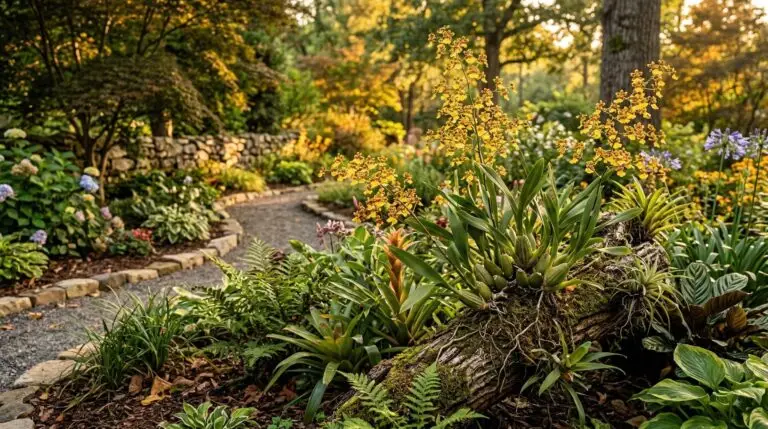
Understanding the biology of these epiphytes transforms how you approach growing oncidium orchids at home. In the wild, they do not grow in soil. Instead, they anchor themselves to the rough bark of host trees, absorbing moisture from humid air and daily rain showers. Every part of their anatomy has evolved to handle a life suspended above the forest floor, from their specialized roots to their thick storage organs. Replicating this environment might sound difficult, but it is actually quite straightforward once you learn to read the signals the plant gives you.
Understanding pseudobulbs and water storage
The most prominent feature of an Oncidium is the swollen, egg-shaped structure at the base of its leaves. Botanists call this a pseudobulb, and it is an essential reservoir for water and carbohydrates. High up in the canopy, epiphytes experience periods of intense drought between rainstorms, and they rely on these reserves to survive. The pseudobulb functions exactly like a camel’s hump, storing valuable resources when they are plentiful. During active growth or flowering, the plant draws heavily on the energy and moisture stored in older pseudobulbs to fuel the new development.
These storage organs are your best guide for oncidium orchid care and watering. A fully hydrated, healthy pseudobulb feels firm to the touch and looks relatively smooth. If the plant is not receiving enough water, the pseudobulbs will develop deep, vertical wrinkles and begin to shrink. This biological indicator makes them quite different from the common Moth Orchid, which has no specialized water storage organs and requires more consistent moisture. Slight wrinkling on older, leafless pseudobulbs is a normal part of the aging process, but severe shriveling across the entire plant means you need to adjust your watering schedule.
Replicating canopy conditions for root health
The root system of an epiphyte is completely different from that of a terrestrial plant. Oncidium roots are covered in a spongy, white tissue called the velamen. This specialized layer acts like a sponge, absorbing water rapidly during a heavy rain and holding it against the inner root core. However, the velamen also needs to dry out relatively quickly, or it will suffocate and rot. If you plant these orchids in dense potting soil, the roots cannot breathe, and the plant will die. They require a highly porous medium, such as coarse bark chips, charcoal, or tree fern fiber, to ensure rapid drainage and maximum air circulation.
Your watering routine must mimic the wet and dry cycles of a tropical forest. When you water the plant, you should flush the pot thoroughly, allowing water to pour out of the drainage holes. This saturates the bark and gives the velamen time to swell and absorb moisture. After this heavy drenching, you must let the potting medium dry out almost completely before watering again. You also need to adjust your watering based on the growth cycle. When you see new roots and green shoots emerging from the base of the plant, increase your watering frequency to support this rapid expansion.
Reading the leaves for light levels
Light is the engine that drives the massive floral displays of the dancing lady orchid. Because they grow higher up in the host trees, they are adapted to receive bright indirect light. The leaves of the canopy filter the harsh tropical sun, providing a bright but dappled environment. Indoors, this translates to an east-facing window with morning sun, or a south-facing window with a sheer curtain to diffuse the light. Without adequate light energy, the plant will produce plenty of green growth but will never initiate a flower spike.
The plant will actually tell you if its light levels are correct through the color of its foliage. A perfectly sited Oncidium will have leaves that are a light, slightly yellowish green, very similar to the skin of a Granny Smith apple. If the leaves are a dark, rich forest green, the plant is not getting enough light to fuel a bloom cycle. This is a stark contrast to understory species like the Anthurium, which naturally maintain deep green leaves in their heavily shaded native environments. If you notice your orchid leaves turning dark green, gradually move the pot closer to your light source over a few weeks to prevent sunburn.
The mechanics of the dancing lady bloom
The biological trigger for blooming usually involves a combination of mature growth and a slight shift in environmental conditions. In many regions, the natural drop in nighttime temperatures during the autumn months signals the plant to begin forming a flower spike. This spike, or inflorescence, emerges from the base of a newly matured pseudobulb, tucked just behind a lower leaf. It grows upward rapidly, sometimes reaching two to three feet in length, before branching out into a complex structure called a panicle. A single, well-grown mature plant can produce multiple spikes simultaneously, resulting in a cloud of dozens or even hundreds of small flowers.
The physical structure of these flowers reveals a fascinating evolutionary strategy. The large, brightly colored labellum is a highly visible landing pad for pollinating insects, primarily specific species of bees. Many Oncidium species do not offer nectar to their pollinators. Instead, they rely on visual deception, mimicking the appearance of territorial insects or offering a shape that triggers a mating response. The long, flexible stems are an essential part of this deception, allowing the flowers to move erratically in the wind, making the mimicry far more convincing to a passing bee.
When you bring one of these orchids into your home, you are cultivating a highly specialized survivor. It is a plant that has spent millions of years perfecting the art of living on nothing but rough bark, passing rain, and filtered sunlight. Understanding its anatomy, from the water-storing pseudobulbs to the air-hungry roots, demystifies the entire growing process. The cascading sprays of flowers are a direct physical echo of the tropical winds, designed by evolution to dance in the canopy and ensure the survival of the species.
More About Oncidium Orchid
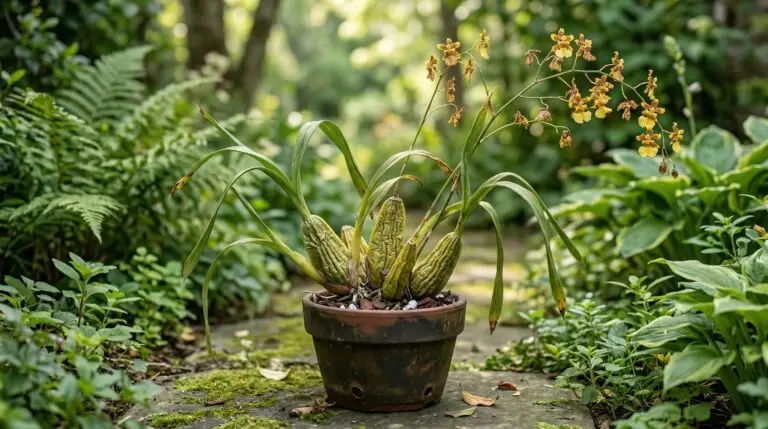
Why oncidium orchid leaves are wrinkled and the watering balance these orchids need
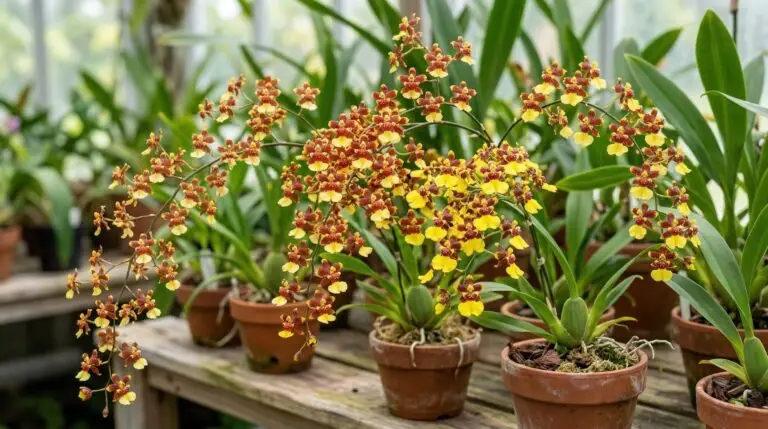
Best oncidium orchid varieties from yellow Twinkle to dramatic Wildcat
Oncidium orchid meaning and why the dancing lady brings joy and positive energy
Repotting oncidium orchids when pseudobulbs crawl over the pot edge

How to trigger oncidium orchids to bloom with the right temperature and light changes
Oncidium Sharry Baby the chocolate-scented orchid that fills rooms with cocoa fragrance
Oncidium orchids as long-lasting cut flowers for exotic spray arrangements
Tolumnia orchids the miniature oncidium relatives perfect for small spaces