Contents
Tiger Lilies
Tiger lilies are bold Asiatic lily perennials celebrated for their orange flowers adorned with dark spots, reminiscent of a tiger’s coat. Each summer, they produce tall stems (often 3-5 feet high) topped with multiple downward-facing blossoms that add exotic flair to gardens. These hardy plants are native to East Asia but have become popular worldwide for their vibrant color and reliable performance. Tiger lilies are easy to grow and perennial in habit, returning year after year with minimal fuss. They can thrive in various climates (USDA Zones 3-9), tolerating both humid summers and cold winters. Gardeners prize Tiger lilies for their long-lived nature and ability to multiply, creating a striking display of red flowers-to-orange hues in mid to late summer. They also attract pollinators like butterflies and bees, adding life to the garden. Overall, Tiger lilies make a stunning and low-maintenance addition to flower beds, borders, and cottage gardens, standing out among other summer blooms such as zinnias, cosmos, or even the towering sunflower.

🌱 Taxonomy and origin
Tiger Lily, botanically Lilium lancifolium (formerly Lilium tigrinum), belongs to the lily family Liliaceae. It is a “true lily,” growing from scaly bulbs and producing a single, upright stem with multiple leaves and flowers. The name “Tiger lily” comes from its orange color and black spots, which evoke the pattern of a tiger’s fur. In taxonomy, it falls into the Asiatic lilies group. Being a true lily, it is distinct from other plants nicknamed “lily” – for example, the calla lily and daylily are not true lilies at all (they belong to different families).
Tiger lilies are native to parts of East Asia, including China, Japan, Korea, eastern Russia, and Tibet. In their native habitat, they grew in meadows, forest edges, and mountainsides. They were introduced to Europe and North America as ornamental plants and have since naturalized in some regions. In the United States, it’s not uncommon to see escaped Tiger lilies along roadsides and ditches in New England and other areas, which is why they earned the nickname “trench lily” or “ditch lily” (though, again, true Tiger lilies are distinct from wild daylilies often found in ditches). The species typically does not produce viable seed in cultivation (many Tiger lilies are sterile triploids), so its spread in the wild is usually via bulbs or bulbils rather than seeding.
Overall, Tiger lilies have a rich origin story: they’ve been cultivated in Asian gardens for centuries and even used in traditional medicine and cuisine (the bulbs are edible and have been used in some Asian dishes). Today, their adaptability and showy blooms have made them a favorite ornamental worldwide. As a true lily, Tiger Lily shares its genus with other lilies like Easter lilies and Oriental lilies, but stands out for its spotted petals and unique propagation habits.
🌸 Bloom time
Tiger lilies bloom in mid to late summer, bringing a burst of color when many other perennials have finished their spring show. In most climates, expect blooms around July and August. The flowering period can extend into early fall if conditions are favorable, with each stem carrying numerous buds that open in succession. A healthy Tiger lily plant can bear up to 6-10 blooms on a single stalk, opening over several weeks for a prolonged display.
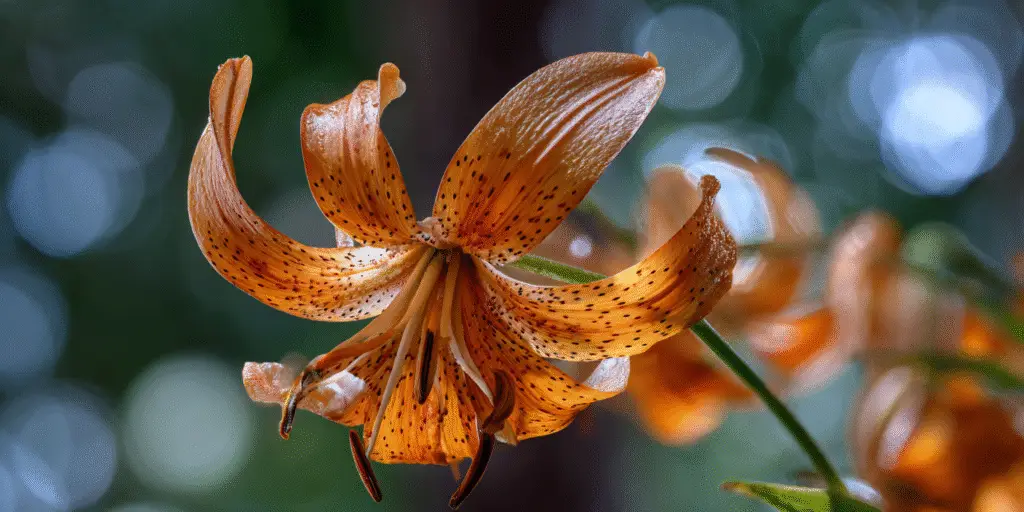
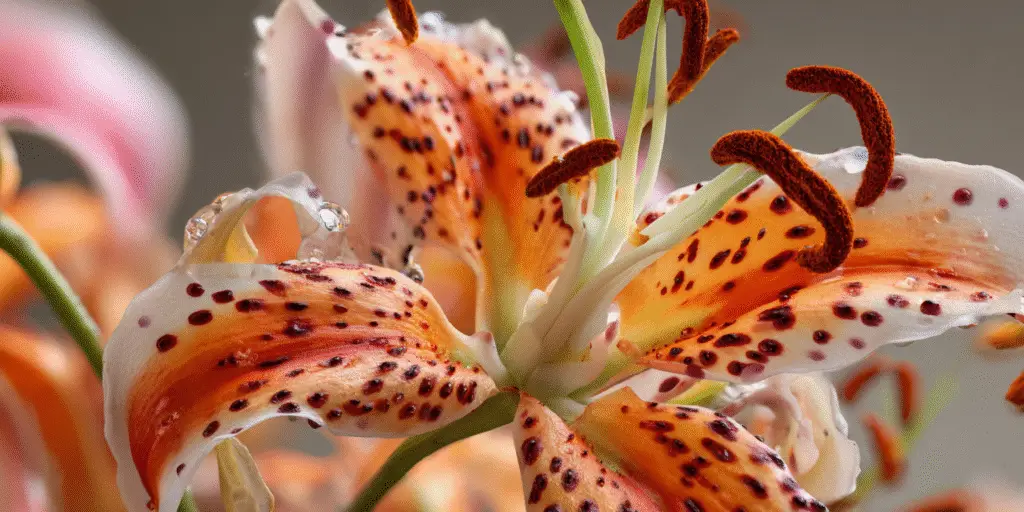
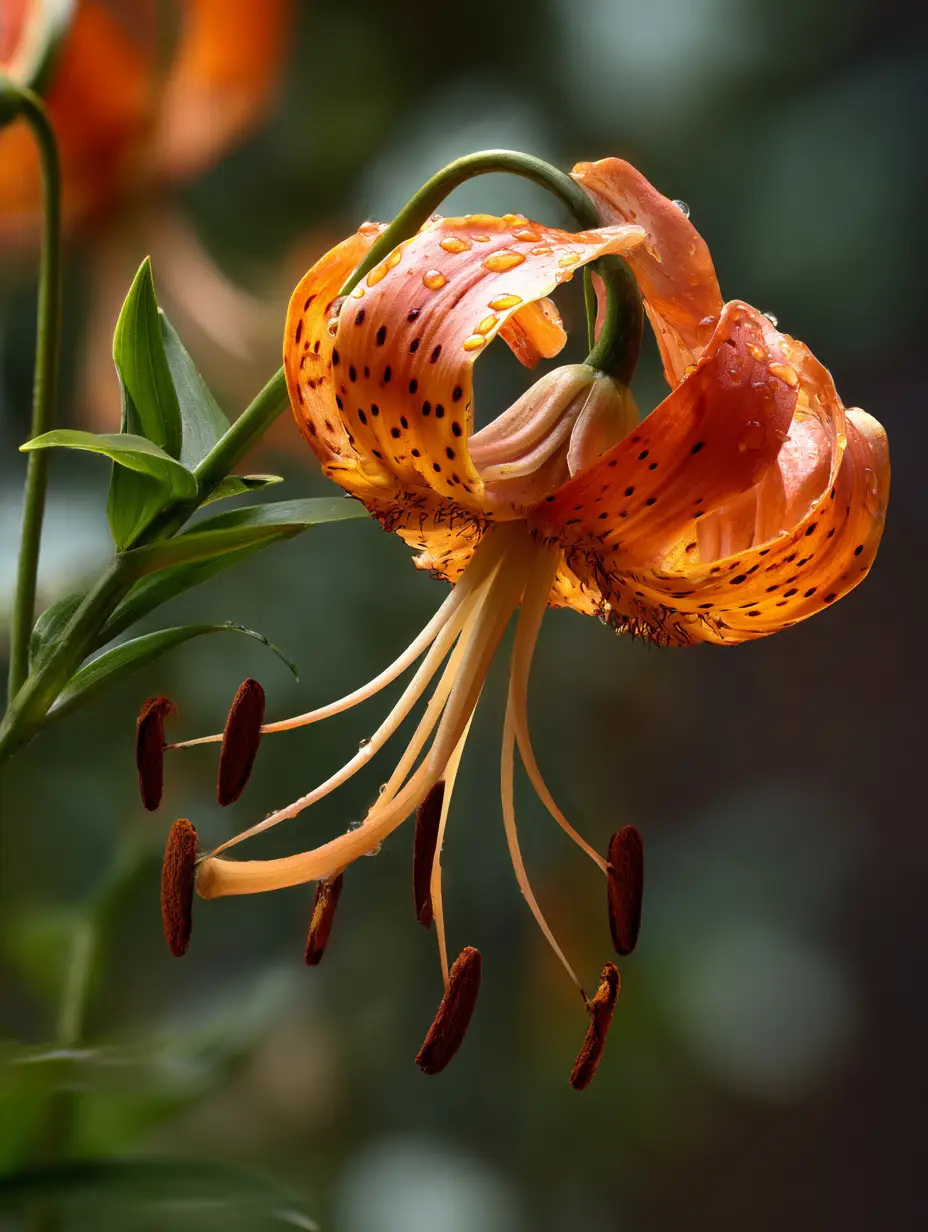
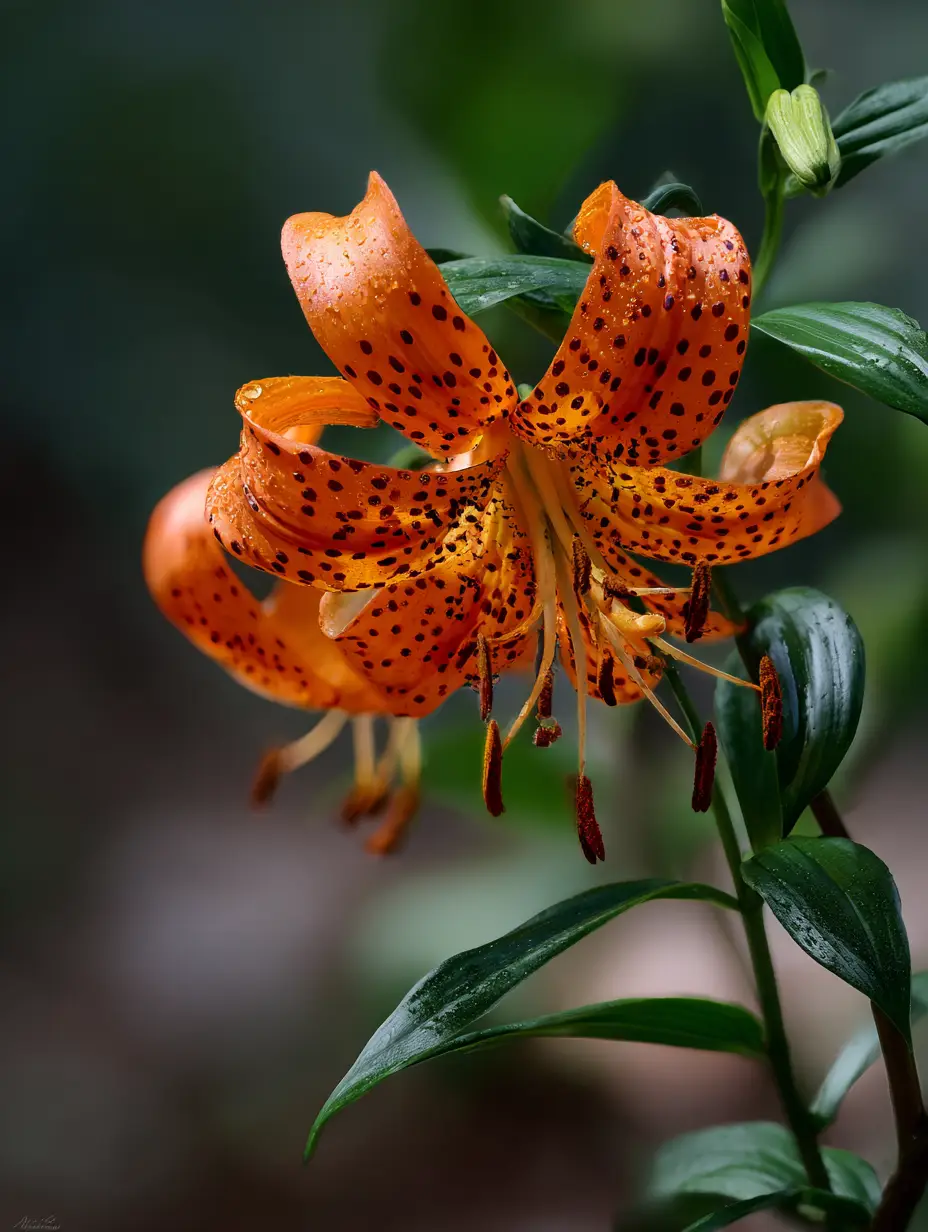
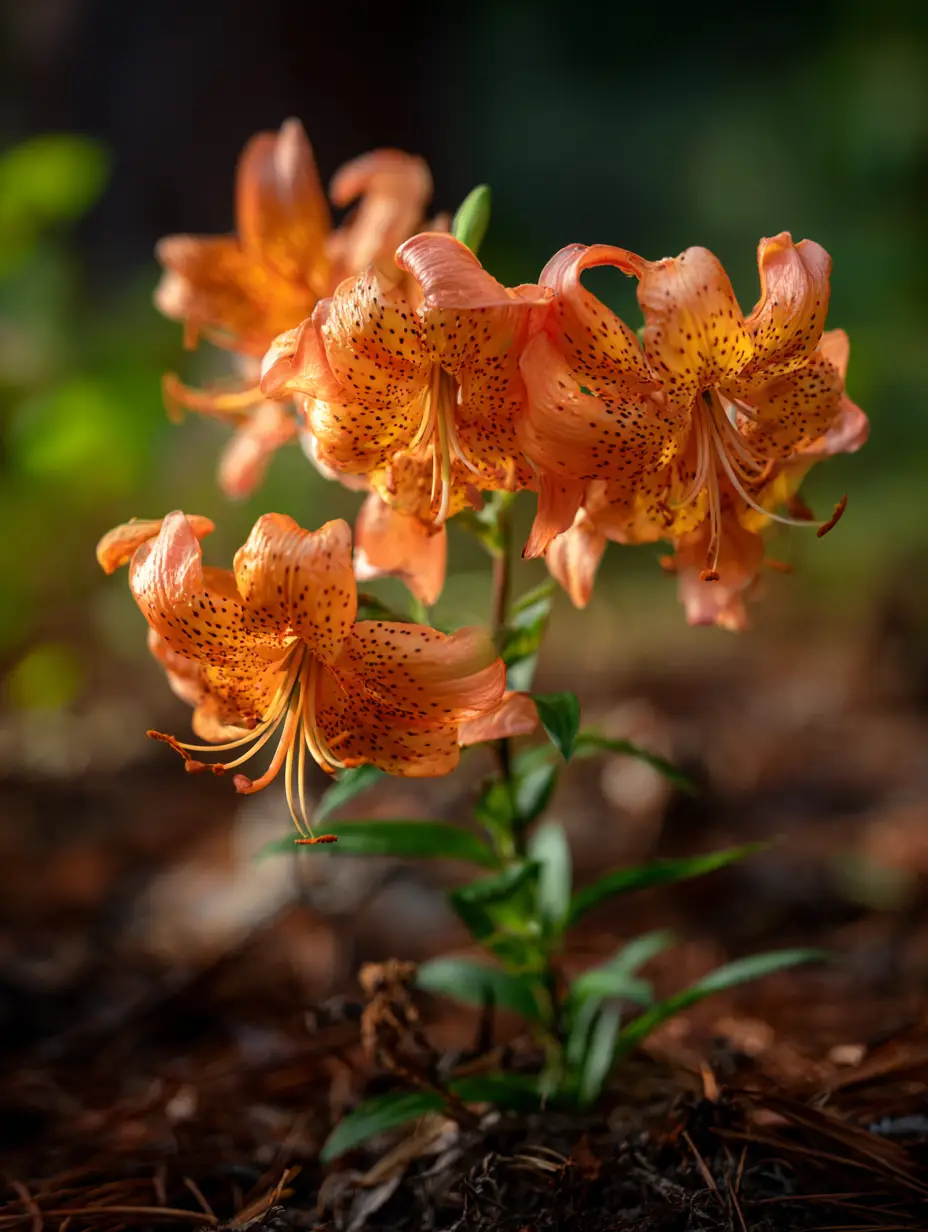
Each individual flower is typically 3-5 inches across and has six reflexed petals (tepals) curving backwards, exposing prominent stamens. The classic Tiger lily bloom is a vivid orange dotted with black or deep purple spots. These dramatic blossoms are often downward-facing (pendant), dangling like turkscap-style lilies. While the iconic color is orange, some cultivated varieties or hybrids labeled as “tiger lilies” may have other colors (such as reddish-orange or even yellow or pink tones), always with the telltale spots. The term red flowers is occasionally applied to deeper orange-red tiger lily variants, but true Tiger lily species are predominantly orange.
During bloom time, Tiger lilies become a focal point of the garden. They mix well with other summer flowers – for instance, interplanting them among cosmos or zinnias creates a vibrant, cottage-garden look. Their height also means they can rise above shorter bedding plants. Pollinators appreciate the blooms: butterflies (like swallowtails) and bees will visit Tiger lily flowers, though these lilies are mostly grown for their visual impact rather than nectar production.
It’s worth noting that Tiger lily blooms are unscented (more on fragrance below), which means you enjoy their beauty without a strong perfume. Each bloom typically lasts a few days before fading, but as new buds open, the overall show can last several weeks. To keep plants looking tidy, you can remove spent blooms (deadhead) during the flowering season, although deadheading is not crucial for the plant’s health or next year’s bloom – Tiger lilies will bloom just once per year regardless. After flowering, allow the stems and leaves to continue growing until they yellow; this post-bloom period lets the plant recharge the bulb for the next year.
📏 Height and spread
Tiger lilies are relatively tall perennials that can lend vertical interest to your garden. Mature plants typically reach about 3 to 4 feet tall, though height can vary with growing conditions – anywhere from 2 feet in poorer soil up to 5 or even 6 feet in rich soil with good care. The sturdy central stems usually do not require staking except perhaps in very windy locations; they stand upright bearing numerous leaves and blooms near the top.
In terms of spread, individual Tiger lily plants are narrow in profile. A single bulb generally produces one stem that occupies only about 6-9 inches of space in diameter (the spread of one plant is under a foot). However, Tiger lilies multiply and form clumps over time. Each year, the original bulb can produce offsets and the plant also generates small aerial bulbils (tiny bulbs) along the stem. These drop or can be replanted, resulting in new plants around the parent. Over a few years, a healthy Tiger lily can colonize an area, with a cluster potentially spreading to 1-2 feet wide or more as new shoots emerge from daughter bulbs.
Because of this natural tendency to spread, Tiger lilies can fill in a garden bed if left unchecked. They are not aggressive through roots like running plants, but the bulbils make them self-propagate readily. You may find little Tiger lily sprouts popping up nearby where bulbils fell. If you prefer to contain them in an allotted space, simply remove and replant or discard the bulbils each season (we’ll cover propagation in more detail later). Conversely, if you want a larger display, you can allow the bulbils to grow or even intentionally plant them elsewhere – an easy way to get more of these orange flowers without buying additional bulbs.
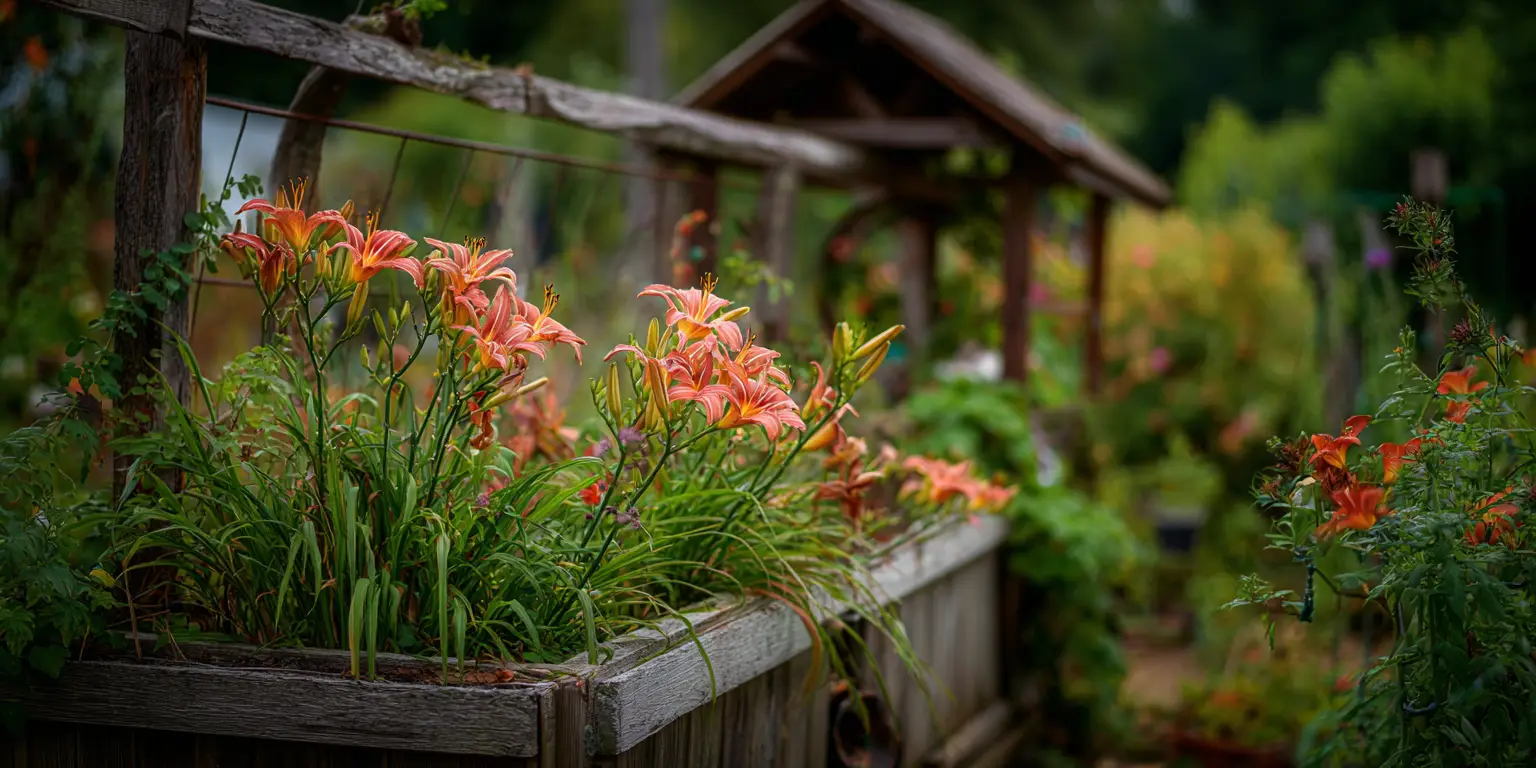
In garden design, use their height to your advantage: place Tiger lilies toward the middle or back of borders, behind shorter plants like marigolds or petunias. Their long stems look great rising behind mounded perennials. They can also complement other mid-height perennials; for example, irises or daylilies (when not in bloom) have strap-like leaves that can hide the base of Tiger lilies, and roses or tall lilacs (shrubs) in the background provide contrasting forms. Just note that Tiger lilies will die back to the ground after the growing season, so plan for some foliage from neighboring plants to fill any gaps once their leaves yellow in late summer.
☀️ Light
Like most lilies, Tiger lilies thrive in ample sunlight. Full sun (at least 6 hours of direct sun per day) is ideal to promote strong stems and abundant blooms. A sunny location ensures the plants produce the maximum number of flowers and remain sturdy. In cooler climates or northern regions, full sun all day is usually perfect. In hotter climates (southern zones or desert areas), Tiger lilies will still appreciate plenty of sun, but they can benefit from a bit of afternoon shade to prevent heat stress or scorched foliage. Thus, full sun to partial shade is the general recommendation.
Tiger lilies are fortunately not very fussy about light compared to some flowering plants. They will tolerate partial shade, especially in the afternoon. However, in too much shade (for example, a spot that only gets brief morning sun or dappled light under trees), you’ll likely see fewer blooms and taller, leaner stems as the plants stretch for light. If your Tiger lilies are leaning or not flowering well, consider whether they are getting enough sun.
One common strategy is to plant lower-growing plants around the base of Tiger lilies that can shade the soil but not the lily’s foliage. This mimics how they might grow in the wild with other plants keeping their roots cool. Surrounding annuals or perennials (such as low cosmos or bushy marigolds) can protect the bulbs from direct sun on the soil and conserve moisture, while the Tiger lily stems rise above them into the sun. This is a companion planting trick to benefit the lilies during hot summers.
In summary, provide as much sun as possible without extreme heat stress. An area with morning and midday sun and a touch of late-day shade works well in warm regions. In cooler regions, all-day sun is great. Adequate light is key for getting those spectacular summer blooms year after year.

💧 Water
Tiger lilies have moderate water needs, preferring consistently moist but not waterlogged soil. In the first year or two after planting bulbs, regular watering is important to help them establish a strong root and bulb system. Keep the soil evenly moist during active growth (spring and summer), especially if natural rainfall is erratic. A good practice is to water deeply whenever the top 1-2 inches of soil start to dry out. Generally, about 1 inch of water per week (from rain or irrigation) is a guideline for many perennials, including Tiger lilies.
While Tiger lilies enjoy moisture, drainage is crucial – they do not like “wet feet.” Standing water or soggy soil can cause the bulbs to rot, leading to stunted growth or no emergence in spring. Always plant Tiger lily bulbs in well-draining soil (add sand or grit to heavy soils) and avoid low spots where water pools after rain. If you notice yellowing leaves or a droopy appearance, it might be due to overwatering or poor drainage.
Once Tiger lilies are mature and well-established (usually after a couple of growing seasons), they become more drought-tolerant. They can handle short dry spells and will survive without constant watering, thanks to the reserves in their bulb. However, prolonged drought will reduce flowering and can stress the plant. In hot, dry summers, supplement with watering as needed to keep the soil from completely drying out for extended periods. A layer of mulch around the plants can help conserve soil moisture and keep the roots/bulbs cool.
During winter dormancy, Tiger lily bulbs require very little water. In fact, in rainy winter climates, ensuring excess water drains away will protect the dormant bulbs. If you grow Tiger lilies in containers, move the pot to a sheltered spot in winter so it doesn’t get waterlogged by rain. In summary, provide regular watering during the growth and bloom season, allow some drying between waterings but never bone-dry for too long, and guard against waterlogging at any time.
🌍 Soil and pH
Tiger lilies are fairly adaptable to soil types, but they perform best in well-draining, fertile soil. A rich loam or sandy loam with organic matter is ideal. The soil should be able to retain moisture for roots to uptake, yet drain excess water quickly to avoid rot around the bulbs. If your garden soil is heavy clay, consider amending it with compost, peat moss, or coarse sand to improve aeration and drainage. Raised beds can also be a good solution for heavy soils. Conversely, if the soil is very sandy and dries out fast, incorporate organic matter to help it hold moisture for longer.
In terms of fertility, Tiger lilies appreciate moderately fertile soil. Mixing some compost or well-rotted manure into the planting area provides nutrients for steady growth. They don’t usually require heavy feeding (over-fertilizing can even lead to lush foliage at the expense of blooms), but a little organic matter goes a long way. You can top-dress with compost each spring to refresh nutrients and soil structure.
The optimal soil pH for Tiger lilies is slightly acidic, roughly in the pH 6.0 to 6.5 range. They will generally grow in neutral soil as well (around pH 7), but very alkaline soil (pH above 7.5) might lead to nutrient deficiencies or weaker growth. If you know your soil is alkaline, you might add acidifying amendments (like peat or sulfur) or use an acid-loving plant fertilizer occasionally. Tiger lilies’ preference for slight acidity is similar to that of plants like hydrangea macrophylla (bigleaf hydrangea) which also thrive in mildly acidic conditions. However, Tiger lilies are not as sensitive about pH as some acid-loving shrubs; they can tolerate a decent range.
One thing to avoid is planting Tiger lilies in soil that has fresh manure or overly rich fertilizer directly in contact with the bulbs, as this can burn the bulbs or encourage rot. Always mix fertilizers well into the soil and, if using chemical fertilizers, opt for a balanced or bloom-boost formula sparingly. Many gardeners find that Tiger lilies do just fine with minimal feeding if the soil is initially prepared well.
In summary: loose, rich, slightly acidic soil that drains well will keep your Tiger lilies happy. Preparing the bed with compost and ensuring good drainage sets the stage for healthy growth and abundant blooms.
❄️ USDA hardiness
Tiger lilies are quite cold-hardy and can thrive in a wide range of climates. They are rated for USDA Hardiness Zones 3 through 9. This means they can survive winter low temperatures down to about -40°F (-40°C) in zone 3 with proper mulching, and they handle summer heat in zones up to 9.
In colder zones (3, 4, 5), Tiger lily bulbs overwinter in the ground. It’s always a good practice in these regions to apply a layer of mulch (straw, shredded leaves, or wood chips) over the bulb areas in late fall. The mulch helps stabilize soil temperatures and moisture, protecting the bulbs from extreme freeze-thaw cycles. Come spring, remove any heavy mulch to let new shoots emerge easily. Gardeners in these cold zones are often delighted that Tiger lilies pop back up each year despite harsh winters, a testament to their toughness.
In warmer zones (8 and 9), Tiger lilies grow well too, but the main concern is extreme heat rather than cold. In these areas, providing partial afternoon shade and consistent moisture will help the lilies through hot summers. The bulbs do need a winter chill to go fully dormant and prepare for the next cycle, which usually they get in zone 9 (where winter nights can still be cool). If you’re in a borderline zone or a Mediterranean climate, keep an eye on soil moisture – bulbs shouldn’t bake in parched soil. Sometimes in very warm climates, lily bulbs benefit from being planted a bit deeper to stay cooler, and mulching in summer to keep soil temperature down.
Tiger lilies are not recommended for tropical climates (zone 10 and above) for long-term perennial growing, as they prefer a period of cold dormancy and may not thrive without it. However, they could be grown as annual bulbs in such regions (planted in fall or winter, bloom, then treated as done, or dug and chilled).
One great aspect of Tiger lilies’ hardiness is that they don’t generally need to be lifted and stored in winter (unlike tender bulbs such as dahlias or gladiolus). You can essentially leave Tiger lily bulbs in the ground year-round in zones 3-9 and expect them to return annually. They are quite low-maintenance in this regard. Just remember their above-ground parts will die back after frost, which is normal-mark where they are planted so you don’t accidentally dig in that spot during their dormant season.
🌼 Propagation and longevity
Tiger lilies are long-lived perennials, and with the right care, a clump can persist and even expand for many years (often decades). Their longevity is one reason they’re beloved in old gardens – some people find Tiger lilies blooming in abandoned homesteads or passed down from grandparents’ plantings. To keep them vigorous over time, occasional propagation or division can be beneficial.
Propagation of Tiger lilies is straightforward and can be done in two main ways:
- Bulb Division: As Tiger lily bulbs multiply underground, you can dig and divide them to create new plants or rejuvenate crowded clumps. The best time to divide is when the plant is dormant – either in fall after the foliage has died back, or in early spring before new growth is tall. Gently dig up the cluster of bulbs, taking care not to damage them. You’ll notice large parent bulbs and smaller “offset” bulbs attached or nearby. Separate these bulbs (each should have some roots attached). Replant the bulbs immediately at the same depth they were originally growing (usually about 4-6 inches deep, pointed end up), spacing them out to give each more room. Water the area after replanting. Dividing every 3-5 years or whenever you observe a decline in flowering (due to overcrowding) will help maintain healthy, blooming plants.
- Bulbils (Aerial Bulbils): A signature trait of Tiger lilies is the little dark brown/black bulbils that form in the leaf axils (where the leaf meets the stem) typically in late summer. These bulbils are essentially baby bulbs. You can propagate Tiger lilies by collecting these bulbils and planting them. Wait until the bulbils are about pea-sized and come off easily with a gentle pull (usually when the plant is nearing the end of its bloom or just after). Plant bulbils about 1 inch deep in potting mix or a prepared garden bed, spacing a few inches apart. Keep the soil moist. They will soon sprout leaves and start growing. Note that bulbils take about 2-3 years to grow large enough to produce flowers, so be patient. This method is fun and yields many new plants at virtually no cost. If you leave the bulbils on the plant, they may drop and sprout around the mother plant on their own – that’s how Tiger lilies often spread in gardens.
Tiger lilies typically do not produce viable seeds (most cultivated forms are sterile), so propagation from seed is not common. The above two methods are the go-to options for gardeners.
In terms of longevity, once planted, Tiger lily bulbs will come back every year and often multiply. Each individual bulb can live and rebloom for many years, especially if the soil is not allowed to be depleted. To support long life, you can top-dress with compost annually and avoid removing green foliage before it yellows (the leaves feed the bulb for next year). You might find that after many years, a clump gets congested and flowers less; that’s your cue to divide as mentioned. If left completely alone, Tiger lilies might still survive for a very long time, but you’ll have more but smaller bulbs competing, which can reduce vigor.
A nice aspect of Tiger lilies is that even if you neglect them, they often hang on. They can endure periods of poor care and bounce back when conditions improve. Many gardeners have stories of accidentally digging up a bulb, missing some pieces in the ground, and those pieces sprouting into new lilies later – they are resilient plants.
In summary, propagate Tiger lilies by division or bulbils to expand your collection or share with friends, and expect them to be a lasting part of your garden. Proper spacing and occasional thinning will ensure they continue to bloom profusely for years to come.

👃 Fragrance
One notable characteristic of Tiger lilies is the lack of strong fragrance. Unlike some lilies (such as Oriental lilies or certain trumpet lilies) that are famous for their powerful perfumes, Tiger lily blooms are unscented or have a very faint scent that most people don’t detect easily. Essentially, you grow Tiger lilies for their visual appeal, not for fragrance.
This can actually be a benefit for gardeners or floral enthusiasts who are sensitive to strong floral scents. Some people find the intense fragrance of star gazer lilies or lilacs delightful, while others might get headaches from it. Tiger lilies offer the dramatic beauty of lily flowers without overwhelming the nose. If you’ve avoided lilies in the past due to fragrance, Tiger lilies are a great option to enjoy lilies in your garden without the scent.
A fresh Tiger lily flower, if sniffed closely, might have a slight mild sweet smell, but it is nothing like the heavy perfume of Easter lilies or Oriental hybrids. Oriental lilies (like the famous Stargazer) bloom later in summer with a spicy sweet aroma, whereas Tiger lilies (considered similar to Asiatic lilies) bloom earlier to mid-summer and have little to no fragrance. This difference is often pointed out in lily descriptions: Asiatic (and Tiger) = virtually scentless, Oriental = highly fragrant.
When using Tiger lilies as cut flowers in arrangements, their lack of scent means they won’t compete with or overpower other fragrant blooms. For example, if you combine Tiger lily stems with fragrant roses or stock, you’ll primarily smell the roses, not the lilies. This neutrality can be advantageous in a mixed bouquet.
In summary, don’t expect a noticeable fragrance from your Tiger lilies. Enjoy them for their fiery colors and spotted petals, and if you crave lily fragrance in the garden, consider planting some other lily types nearby or fragrant companion flowers. Tiger lilies prove that a flower can be stunning and showy without needing to tickle the olfactory senses.
⚠️ Toxicity and pet safety
Toxicity Warning: Tiger lilies are extremely toxic to cats. This is one of the most crucial cautions for pet owners – all parts of true lilies (genus Lilium, which includes Tiger lily) can cause severe, often fatal, kidney failure in cats if ingested. Even a small nibble on a leaf or petal, licking pollen off their fur, or drinking water from a vase that held Tiger lily stems can poison a cat. Symptoms in cats can start with vomiting, lethargy, and lack of appetite, progressing to acute kidney failure. Immediate veterinary attention is needed if a cat is suspected to have contacted lilies. Never allow cats near Tiger lilies (or any lilies in the Lilium or Hemerocallis genera), and consider not planting these lilies at all if you have outdoor cats that roam in your garden.
For other pets, Tiger lilies are less dangerous but still not advisable for consumption. Dogs, for instance, might have gastrointestinal upset if they ate a large amount of lily material, but they typically do not suffer the same lethal kidney effects that cats do. Still, it’s best to keep any pets from chewing on the plant. According to the ASPCA, Tiger lily is listed as non-toxic to dogs and horses, but toxic to cats. If you have a dog that digs bulbs or chews plants, monitor them around lilies or fence off the area, as ingesting a bulb could cause digestive issues.
What about humans? Tiger lilies are not commonly considered poisonous to humans in the way they are to cats. In fact, as mentioned, the bulbs of Tiger lily have been used as food in some Asian cultures (usually cooked in dishes or traditional medicines). However, the pollen of Tiger lilies can be an irritant or mildly toxic if consumed by humans. Eating lily pollen or raw plant parts might cause stomach discomfort. Also, some individuals can get skin irritation from lily pollen on contact (in addition to it staining skin and clothing with a rusty orange color). It’s always wise to wash hands after handling the flowers or bulbils, and wear gloves when working with plants if you have sensitive skin.
So, for pet safety, the biggest red flag is cats. If you’re a cat owner, the safest course is to avoid having Tiger lilies or any true lilies in your home or garden. If you receive a bouquet with lilies, keep it far from cats (ideally out of the house). There are plenty of other beautiful flowers (such as roses, zinnias, cosmos, etc.) that are safer around pets.
Important tip: If a cat does get exposed to Tiger lilies, seek veterinary care immediately – early intervention can sometimes save them. Bring along a piece of the plant for identification. Time is of the essence because once acute kidney failure sets in, prognosis is grim.
In summary, Tiger lilies are highly poisonous to cats, somewhat irritating if ingested by humans (though bulbs are edible when prepared properly in some traditions), and should generally be kept out of reach of all pets. Always exercise caution and educate any pet-sitters or family members about the dangers of lilies and cats.

🌿 Vase life
Tiger lilies make excellent cut flowers, largely thanks to their striking appearance and longevity in arrangements. When cut at the right stage, Tiger lily blooms can last anywhere from 7 to 14 days in a vase, which is relatively long for cut flowers. They are often listed among long-lasting cut flowers because the buds on each stem open sequentially, extending the overall decorative period.
To maximize vase life, cut Tiger lily stems when the lowest buds are just beginning to open (showing color but not fully open) and the upper buds are still closed. Use a clean, sharp knife or pruning shears to make a diagonal cut on the stem. Cutting in early morning or late evening (when the plant is well-hydrated) is best. Immediately place the cut stems in water.
Before arranging, strip off any leaves that would be below the water line in your vase – leaves in water can rot and shorten the life of the bouquet. Use a clean vase with fresh water; you can add floral preservative if available. Tiger lily stems are often thick, so a sturdy vase is helpful. Change the water every couple of days, trimming a half inch off the stems each time to keep uptake channels clear.
One thing to watch out for with lilies in vases is the pollen. Tiger lily anthers carry orange pollen that can drop and stain surfaces (and as noted, is toxic to cats). A common practice is to remove the pollen-bearing anthers from each flower as it opens. You can gently pinch them off or use a tissue to avoid getting pollen on your hands. Removing the anthers has two benefits: it prevents the mess (no orange stains on your tablecloth!), and it may slightly prolong the flower’s life (because once pollinated, flowers often fade faster). Be careful not to get pollen on clothing – if you do, do not rub it (that sets the stain); instead, lift it off with sticky tape or dab gently.
In an arrangement, Tiger lilies add a dramatic flair. Their vibrant color pairs well with neutral or contrasting blooms. Florists sometimes combine orange Tiger lilies with blue or purple flowers for contrast, or with other tropical-looking blooms. They are also used in late summer wedding arrangements for a pop of color (though for weddings, many brides avoid lilies due to pollen issues on gowns). If you’re considering Tiger lilies for a bridal bouquet or centerpiece, be mindful of the staining pollen – again, removing anthers is key. (Consulting a wedding flowers guide can provide tips on using lilies and other blooms appropriately for events.)
Lastly, keep your vase of Tiger lilies (as with any cut flowers) in a cool spot away from direct sunlight or heat sources to extend their freshness. At night, if possible, move them to an even cooler place (some people use a garage or refrigerator if space permits) to further prolong the blooms. With good care, the vivid Tiger lily flowers in a vase will continue to open and brighten your space for up to two weeks.
🐛 Pests and diseases
Tiger lilies are generally robust plants, but like any garden flower, they can encounter a few pests and diseases. Knowing what to watch for will help you keep your lilies healthy. Fortunately, Tiger lilies have the reputation of being less disease-prone than some hybrid lilies, but they can harbor diseases that affect other lilies. Here are the main issues:
- Lily Leaf Beetles: A notorious pest for lilies, the lily leaf beetle is a small bright red beetle that feeds on lily foliage. Both the adult beetles and their larvae (ugly brownish grubs often covered in sludge-like excrement) can quickly defoliate a Tiger lily plant by chewing through the leaves. These beetles have become common in parts of North America and Europe. If you see red beetles or lots of irregular holes in leaves, inspect your plants. Hand-pick and destroy any beetles or squish the larvae (wear gloves). They can be controlled with insecticides as well, but many gardeners try to manage them manually due to quick breeding. Be vigilant, as they can hide on the undersides of leaves.
- Aphids: Those small green or black soft-bodied insects can cluster on lily stems, buds, and undersides of leaves, sucking sap. Aphid infestations can cause distorted new growth or sticky “honeydew” residue on plants. They are also vectors for diseases like viruses. If you notice aphids on Tiger lilies (or nearby plants like roses, which aphids also love), you can spray them off with a strong jet of water or use insecticidal soap to reduce their numbers. Ladybugs and other beneficial insects often help control aphids naturally.
- Slugs and Snails: Especially in damp conditions or if Tiger lilies are in a shaded spot, slugs and snails might munch on the foliage, leaving ragged holes or scalloped edges on leaves. Slugs often feed at night, so you might not see them during the day. Use slug bait, traps (like beer traps), or hand-pick at night with a flashlight if slugs are a problem. Keeping area around lilies clean of excessive mulch and debris can reduce slug hiding spots.
- Deer and Rabbits: Larger pests like deer can be fond of lilies, often eating the buds or flowers (few things are more disappointing than seeing all your lily buds nibbled off right before bloom!). Rabbits might chew young shoots as well. If you have deer in your area, consider protecting the plants with netting or repellents when buds are present. Some gardeners report that the spotted leaves of Tiger lilies are less attractive to deer than other lilies, but this likely varies. It’s safer to assume deer will eat them if not protected, as deer seem to find most lily varieties palatable.
- Botrytis Blight (Gray Mold): This fungal disease can affect lilies, especially in cool, wet weather. It causes brownish spots on leaves and petals and a gray fuzzy mold in advanced stages. In Tiger lilies, you might see brown speckles or patches on foliage if botrytis is present. To manage it, remove any affected leaves or petals promptly and dispose of them (do not compost diseased material). Ensure good air circulation around plants by not overcrowding them – proper spacing helps foliage dry faster after rain. If botrytis is a recurring problem, you can use a fungicide preemptively in early season or whenever extended wet weather is forecast.
- Basal Rot: This is a general term for bulb rot (often caused by fungi like Fusarium) that can affect lilies if soil conditions are poor (waterlogged or disease-prone soil). A bulb that is rotting may produce weak shoots or none at all, and if dug up, will appear discolored, soft, or have a bad smell. The best prevention is planting in well-drained soil and avoiding overwatering. If you suspect a bulb has rotted, dig it out and discard it to prevent any spread. Crop rotation (not planting lilies in the same exact spot repeatedly if one had rot) can help if soil pathogens are present.
- Lily Mosaic Virus: One unique concern with Tiger lilies is their relationship with viruses, particularly lily mosaic virus. Tiger lilies can carry mosaic viruses while not showing obvious symptoms, effectively acting as reservoirs of infection. If other hybrid lilies (Asiatic, Oriental, etc.) are planted nearby, aphids could transmit the virus from an infected Tiger lily to those plants, where it will cause visible issues (mottled or streaked leaves, deformed flowers, reduced vigor). Because of this, some lily enthusiasts avoid planting Tiger lilies in proximity to prized hybrids. If you notice any unusual color-breaking in Tiger lily flowers or streaky foliage, it could indicate a virus – in that case, it’s prudent to remove and destroy the affected plant/bulb to protect other lilies. Always use clean pruners and possibly even wash hands after handling suspect plants to avoid spreading sap that might contain viruses.
In general, Tiger lilies are considered “easy-care” and many go through their life with minimal pest or disease problems. Keeping your plants healthy with proper sun, spacing, and not overwatering will prevent many issues. Monitor for pests regularly so you can intervene early if needed. Most problems are manageable and shouldn’t deter you from enjoying these spectacular flowers.
At season’s end, once frost kills the stems, you can cut the stems down to ground level and dispose of them. This helps remove any overwintering fungal spores or insect eggs that might be on the old foliage. By following these basic practices, your Tiger lilies should return each year, pest and disease free, to grace your garden with their stunning spotted blooms.

FAQs
Are Tiger lilies perennials?
Yes. Tiger lilies are hardy perennial bulbs. This means they come back every year. After blooming in summer, the foliage will die back in fall. The bulbs persist underground through winter (surviving freezes in cold climates) and sprout again in spring. With proper care, Tiger lilies will continue this cycle for many years, making them a reliable perennial in the garden.
Do Tiger lilies spread or become invasive?
Tiger lilies do spread quite easily, but they are not generally classified as “invasive” in most regions. They multiply through underground bulb offsets and through small bulbils that form along their stems. If left alone, a single Tiger lily can turn into a clump of many plants over a few years, and new plants may pop up nearby where bulbils fall. In a garden bed, this aggressive spreading can be welcome for a fuller display, or it can be a nuisance if you want strict control. They are not invasive in the sense of overtaking wild areas (since they usually need some care to truly thrive), but in a cultivated bed, they definitely naturalize readily. To prevent unwanted spread, simply remove and dispose of the bulbils before they root, or dig up and thin out clumps every few years.
How can I propagate Tiger lilies to get more plants?
The easiest ways to propagate Tiger lilies are by dividing the bulbs and by planting the bulbils. To divide, wait until the lily is dormant (fall or very early spring). Dig up the cluster and gently separate the bulbs, then replant them in desired locations. Each bulb will grow into a new plant. To propagate from bulbils, collect the little black bulbils from the leaf axils when they detach easily. Plant these about an inch deep in soil (in pots or a nursery bed). Keep them moist and be patient – bulbils typically take two years to reach blooming size. Over time, those bulbils will grow into blooming Tiger lilies. Both methods are straightforward and effective, giving you plenty of new Tiger lilies for free.
When is the best time to plant Tiger lily bulbs?
Plant Tiger lily bulbs in the fall or early spring. Fall planting (around September or October, before the ground freezes) is often recommended because it allows the bulbs to establish some roots before winter and then burst forth in spring. If planting in fall, mulch over them after the ground cools to protect against extreme cold. Early spring planting (as soon as the soil is workable) is also fine – you may get blooms late that first year, or the bulbs might wait until the next summer to bloom if they were small or not fully established. In either case, plant bulbs about 4-6 inches deep with the pointed end up. Space them ~8-12 inches apart. Water after planting to settle the soil. Avoid planting in waterlogged ground. By mid-to-late summer, those bulbs should produce their first flowers.
What’s the difference between Tiger lilies and daylilies?
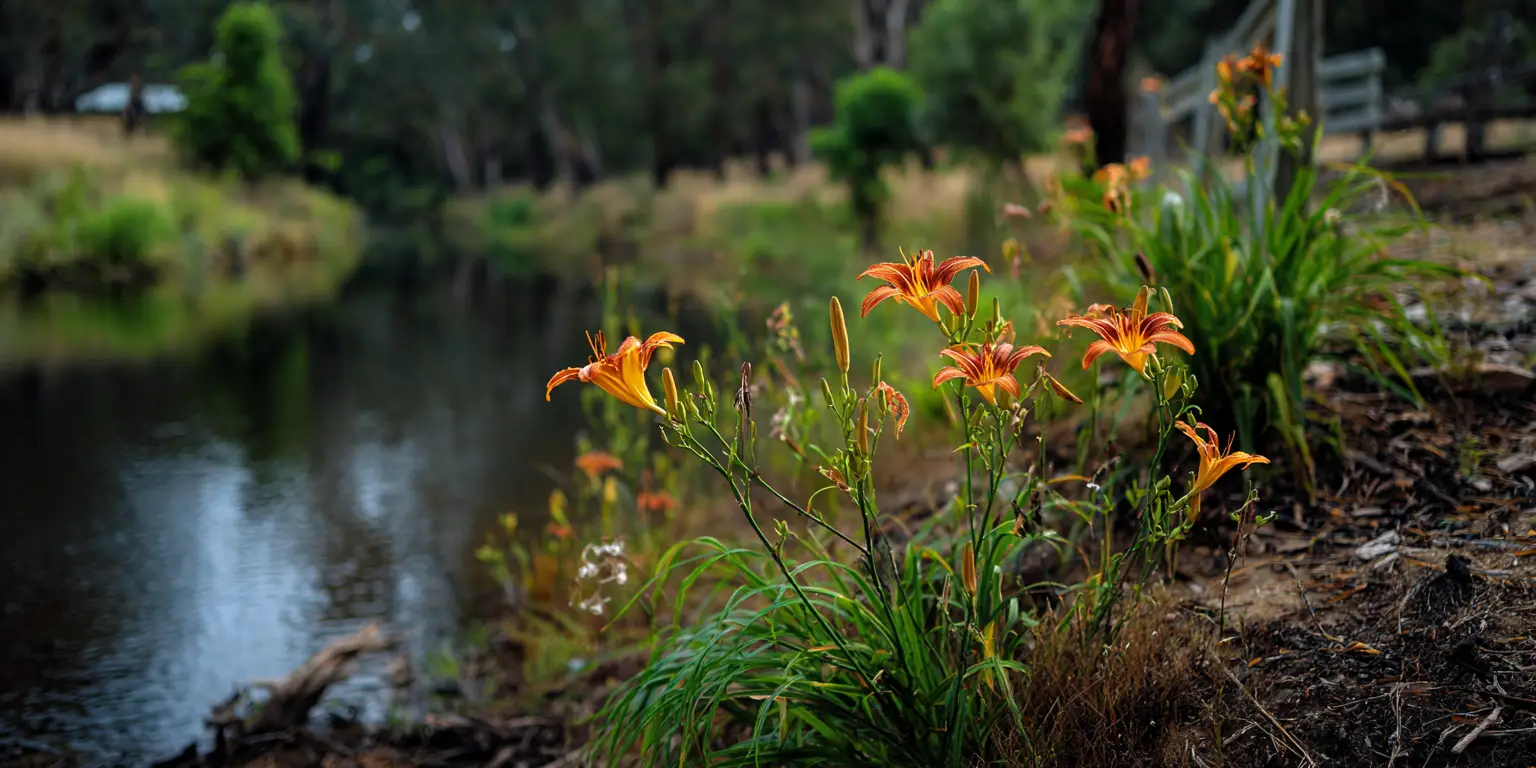
This is a common point of confusion. Tiger lilies (Lilium lancifolium) are true lilies – they grow from a bulb, have a single tall stem with leaves along it, and multiple blooms at the stem top. Their flowers are usually orange with black spots and have petals that curl back. Daylilies (genus Hemerocallis), on the other hand, are not true lilies. Daylilies grow from fleshy roots (not true bulbs) and form a clump of long, grass-like leaves at the base. Their flowering stems (scapes) rise from that clump and have several blooms, but each daylily flower lasts only one day (hence “day-lily”). The common orange daylily (Hemerocallis fulva) often seen in ditches is sometimes nicknamed “tiger daylily” for its orange color, which adds to the confusion. Key differences: Tiger lily has spotted petals and usually nodding (downward-facing) blooms; daylily blooms face outward or upward and are not spotted. Tiger lily’s leaves grow all along the stem; daylily leaves are only at the base. Tiger lilies produce bulbils on their stems; daylilies do not. Both are hardy and orange, but they are different plants from different families. In summary, Tiger lily is a bulb and a true lily, while a daylily is a day-blooming perennial often found in mass along roadsides.
Are Tiger lilies poisonous to cats and other pets?
Yes – Tiger lilies are extremely poisonous to cats. Ingesting even a small amount of Tiger lily (or licking pollen) can cause acute kidney failure in cats, which can be fatal. This is one of the most critical things to know if you have cats; it’s best to avoid having Tiger lilies or any lilies around them. For dogs, Tiger lilies are not as deadly, but can still cause stomach upset if eaten. It’s wise to keep all pets from chewing on lilies. If a pet ever consumes part of a lily plant, contact a veterinarian immediately. (And if you’re curious about humans: humans are not gravely poisoned by Tiger lilies in the way cats are – some parts are even edible to us – but consuming any ornamental plant without knowledge isn’t recommended.)
Why didn’t my Tiger lilies bloom this year?
If your Tiger lily plants came up but failed to bloom, a few factors could be at play. First, consider sunlight – a Tiger lily in too much shade might grow foliage but not have enough energy to produce flowers. Ensure they get at least around 6 hours of sun. Second, overcrowding could be an issue; if bulbs have multiplied heavily in the same spot, they might be competing for nutrients. In that case, dig and divide the bulbs after the foliage dies back, then replant with more space. Third, if the plant is newly grown from a bulbil or a small division, it may simply be immature – Tiger lilies grown from young bulbils usually take 2 years to flower. Additionally, excessive fertilizer high in nitrogen can sometimes encourage lots of leaves and no flowers. And finally, check for any signs of pests or disease that might have weakened the plant (like lily beetle damage earlier in the season can reduce blooming). Addressing these
Interesting tips
- Easy Naturalizing: Tiger lilies are great for naturalizing in a garden. If you have a wild or cottage garden area, plant a few bulbs and let them go – in a few years, you may have a whole colony thanks to those self-propagating bulbils. They’re an easy way to fill space with minimal effort, as long as you don’t mind them spreading. If you ever find you have “too many,” they are easy to dig up and relocate or share.
- Unique Propagation Trait: The little black bulbils that form along the Tiger lily’s stem are a unique feature not seen in most other lilies. This makes Tiger lily a fun plant for gardening with kids or teaching about plant life cycles – you can show how a plant creates its own “seeds” (really mini-bulbs) and grows new plants from them. It’s almost like the plant is cloning itself along its stem! Collecting and planting these can be very rewarding.
- Garden Design Use: The bold orange of Tiger lilies can be used as a striking accent among other plants. They pair well with purple or blue flowers (for example, try them near salvia or Russian sage for a complementary color scheme). They also look dramatic with dark foliage plants behind them. Despite their flashy look, Tiger lilies can also blend with traditional flowers – for instance, orange Tiger lilies popping up among roses in shades of red or pink can create a lush, layered summer display. Don’t hesitate to mix them with annuals and perennials; they play nice with most neighbors as long as their basic sun and soil needs are met.
- Symbolism and Meaning: In floriography (the language of flowers), Tiger lilies have held meanings of wealth, prosperity, and pride. In some cultures, especially in Asia, they are thought to bring good luck and are associated with confidence and courage. They are not part of the classic birth flower by month list (for example, Lily of the Valley is the birth flower of May, but Tiger lily isn’t a designated birth flower for a specific month), yet they carry their own lore. Some say that gifting a Tiger lily means “I dare you to love me” due to their bold appearance. These symbolic meanings add an extra layer of appreciation for those who enjoy the cultural aspect of gardening.
- Handling and Stain Tips: When working around Tiger lilies, it’s best to wear old clothes or an apron – the pollen from the flowers is a bright orange that can stain fabric (and skin). If you get pollen on clothing, use tape to lift it off rather than rubbing. Also, as a proactive step, you can gently remove the pollen anthers from newly opened blooms in the garden if the lilies are along a walkway where people might brush against them. This not only prevents stains but also can be helpful if someone in your home has pollen allergies (although Tiger lily pollen isn’t typically airborne allergen like grass or ragweed, contact can cause issues for sensitive individuals). Always wash hands after handling lily pollen.
- Not All “Lilies” are Lilies: As touched on earlier, remember that many plants have “lily” in their name but are unrelated. Calla lily, water lily, daylily, peace lily, etc., all differ. Tiger lily is a true lily (genus Lilium). Why is this a useful tip? Because true lilies have specific care and toxicity profiles. For instance, if you consult a care guide or a wedding flowers guide for lilies, make sure it’s referring to the type you have. True lilies like Tiger lily will have different needs than, say, calla lilies (which grow from rhizomes and prefer marshy soil) or water lilies (aquatic plants). Knowing the difference can help you avoid confusion in your gardening research.