April birth flowers by day: the Korean 365-day tradition
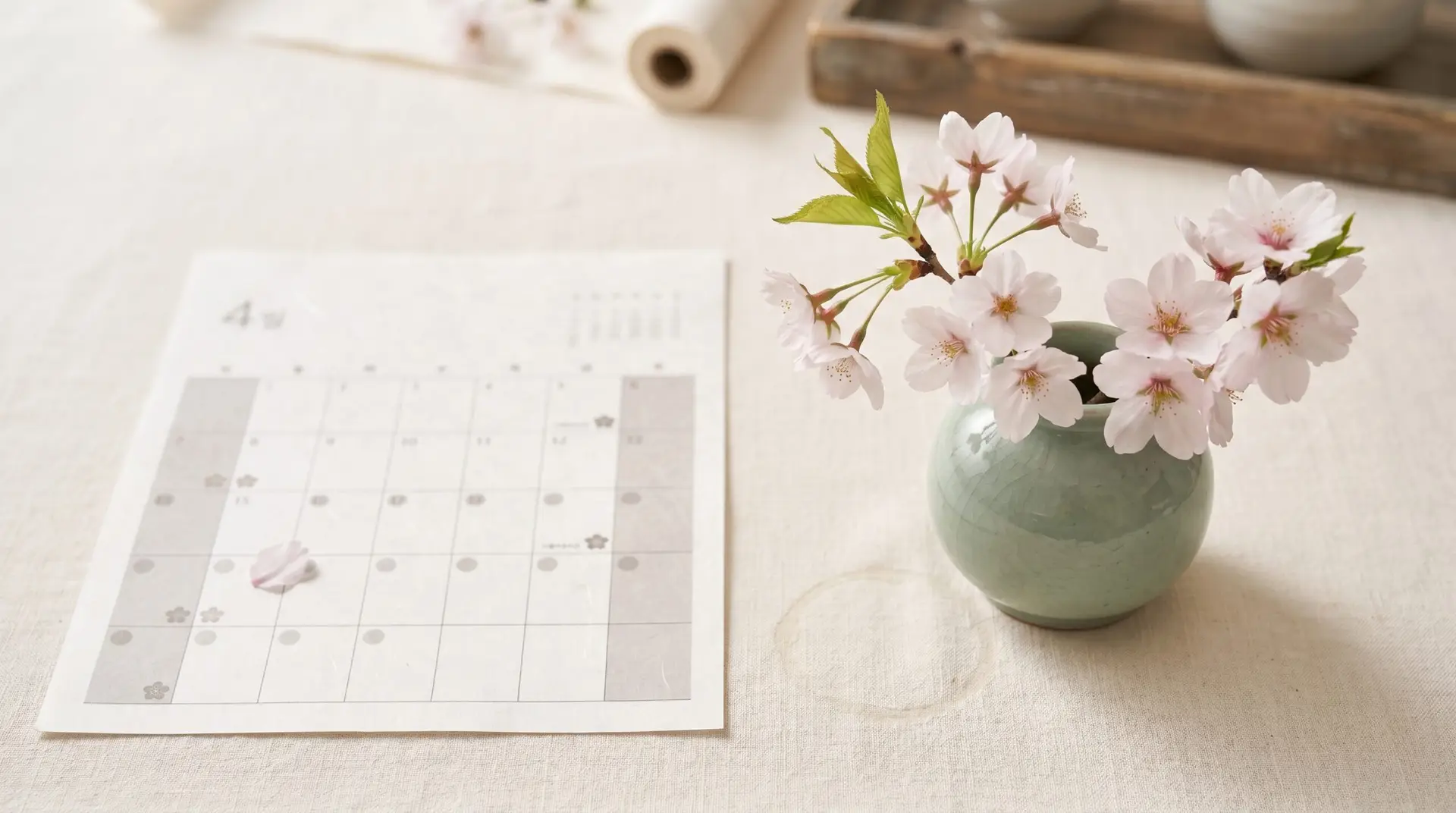
Korean tradition assigns a unique flower to each of April’s 30 days. The system runs parallel to the Western birth flower tradition (which gives all of April to daisy and sweet pea) and offers a more granular reading that ties specific birthdays to specific blooms.
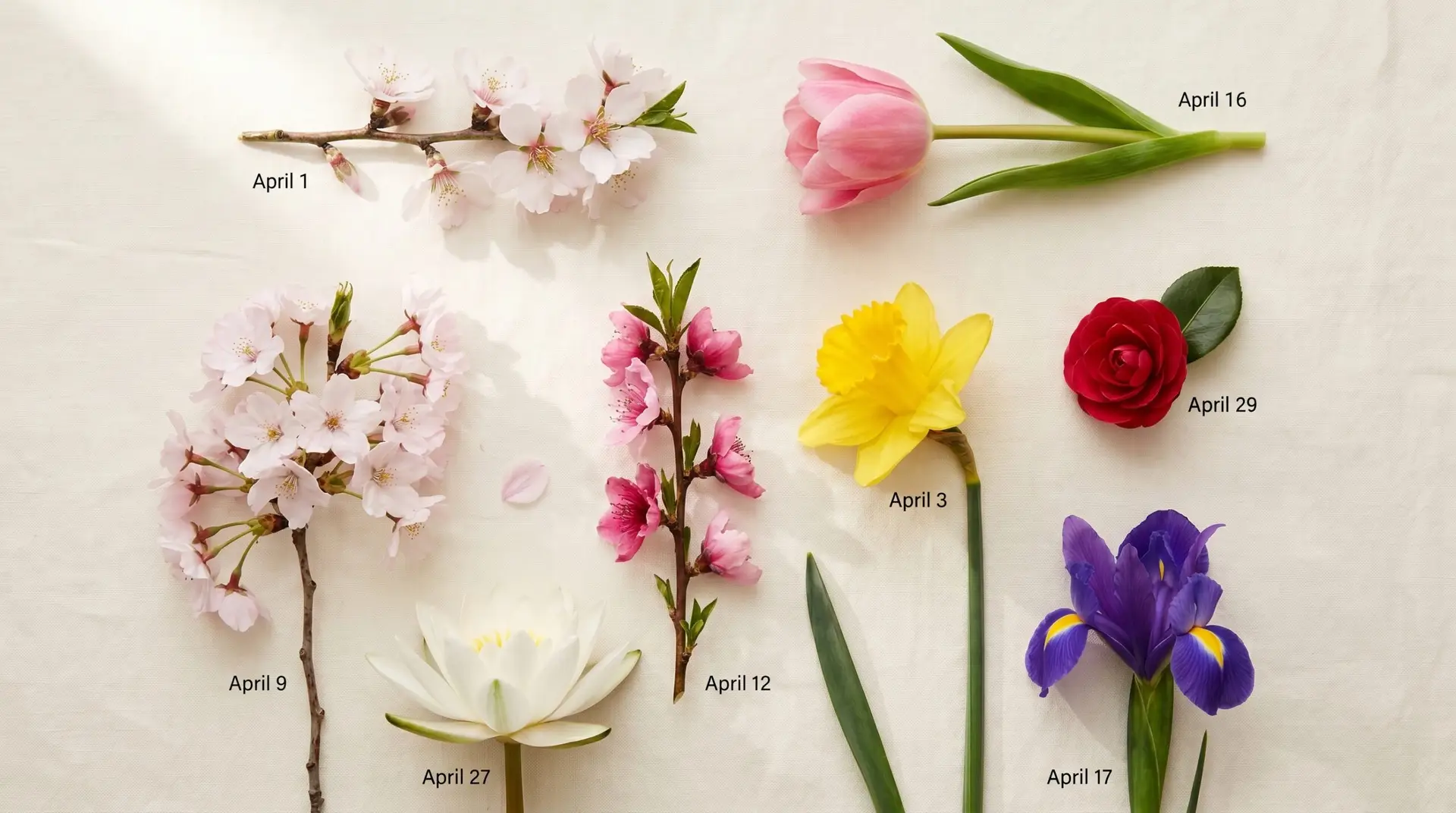
April in the Korean list opens with almond blossom on day 1 with the meaning “faithful love,” continues through themes of expectation, respect, and emerging spring through the first ten days, shifts to royal joy and abundance through the middle stretch, and closes with themes of trust, charm, and quiet beauty in the final ten days. Several culturally significant entries appear: daffodil on April 3 (matching the broader Narcissus genus celebrated in Western March tradition), water lily on April 27 (cross-cultural alignment with the Western July primary), and the closing golden chain on April 30 with the bittersweet meaning “sad beauty.”
Early April (Apr 1-10): faithful love themes
The first ten days of April in the Korean tradition center on faithful love, expectation, and emerging spring abundance.
| Day | Flower | Korean (한국어) | Meaning |
|---|---|---|---|
| Apr 1 | Almond | 아몬드 | Faithful love |
| Apr 2 | Anemone | 아네모네 | Expectations |
| Apr 3 | Daffodil | 수선화 | Respect and pride |
| Apr 4 | Red anemone | 빨간아네모네 | To love you |
| Apr 5 | Fig tree | 무화과나무 | Wealth and abundance |
| Apr 6 | Adonis | 아도니스 | Eternal bliss |
| Apr 7 | Adiantum (maidenhair fern) | 봉작고사리 | Interesting |
| Apr 8 | Broom (Scotch broom) | 양골담초 | Philanthropy |
| Apr 9 | Cherry blossom | 벚꽃 | Purity, beautiful soul |
| Apr 10 | Periwinkle | 빙카 | Happy memories |
The early April cluster moves through emotional warmth themes. Almond blossom on April 1 (also assigned to March 14 in some Korean tradition variants as the White Day flower with “hopes and desires” meaning) gives April a doubled almond presence. The “faithful love” reading on April 1 brings the optimistic spring-renewal symbolism into a relational register.
Daffodil on April 3 with the meaning “respect and pride” connects to the broader Narcissus genus that anchors Western March tradition. The cross-month presence (Korean March 1 narcissus, Korean April 3 daffodil) reflects the long bloom window of the Narcissus genus across early-to-mid spring in East Asian climates.
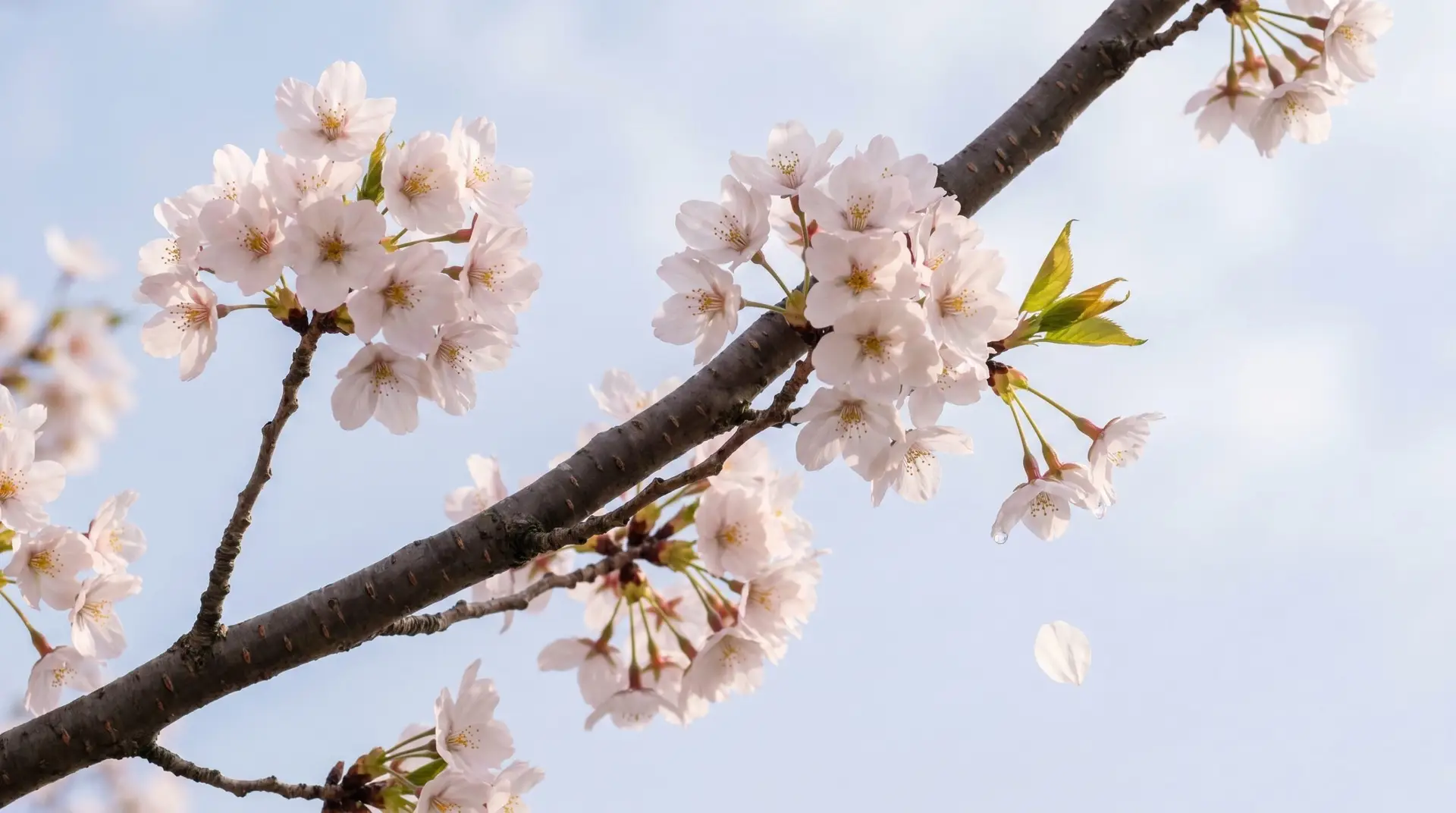
Cherry blossom (벚꽃) on April 9 with “purity, beautiful soul” connects April directly to Korean and Japanese cherry blossom culture. Cherry blossom season in Korea typically peaks in early-to-mid April depending on the year, making the April 9 assignment seasonally accurate. The flower has enormous cultural weight in Korean and Japanese tradition beyond its birth-flower assignment, with cherry blossom festivals, hanami viewing parties, and extensive poetic and visual art traditions celebrating the brief bloom.
Mid April (Apr 11-20): royal joy themes
The middle ten days of April shift to themes of royal joy, abundance, and beauty.
| Day | Flower | Korean (한국어) | Meaning |
|---|---|---|---|
| Apr 11 | Jacob’s ladder | 폴레모니움 | Come with me |
| Apr 12 | Peach blossom | 복숭아꽃 | In the power of love |
| Apr 13 | Golden wave (Coreopsis) | 금계국 | Competitive |
| Apr 14 | Morning glory | 나팔꽃 | Overwhelming joy |
| Apr 15 | Fen orchid | 펜 오키드 | Excellence |
| Apr 16 | Tulip | 튤립 | Beautiful eyes |
| Apr 17 | German iris | 독일아이리스 | Great marriage |
| Apr 18 | Astragalus sinicus | 자운영 | Immense love |
| Apr 19 | Larkspur | 참제비고깔 | Clear, fair |
| Apr 20 | Pear blossom | 배꽃 | Gentle love |
The mid-April stretch reads as a series of abundance and beauty entries. Peach blossom (복숭아꽃) on April 12 with “in the power of love” connects to the broader East Asian tradition of peach blossom as a symbol of youthful beauty and romantic love; peach blossom appears in Chinese, Korean, and Japanese classical poetry across two thousand years of literary tradition.
Tulip on April 16 with “beautiful eyes” gives a culturally interesting reading. The Western tradition associates tulip primarily with the seventeenth-century Dutch “tulip mania” speculative bubble (1634-1637), but the Korean reading emphasizes the flower’s aesthetic appreciation rather than its economic history. Tulips bloom widely in Korean parks and gardens in mid-April, which makes the seasonal assignment accurate.
The German iris on April 17 with “great marriage” connects iris symbolism to wedding traditions. Iris has been used in European wedding bouquets since the Renaissance, and the Korean assignment of iris to a wedding-related reading aligns with this cross-cultural floral convention.
Late April (Apr 21-30): trust and charm themes
The final ten days of April move toward themes of trust, charm, and the quieter beauty of late spring transition into early summer.
| Day | Flower | Korean (한국어) | Meaning |
|---|---|---|---|
| Apr 21 | Weeping willow | 수양버들 | Sadness of love |
| Apr 22 | China aster | 과꽃 | Trustworthy love |
| Apr 23 | Balloon flower | 도라지 | Gentle and warm-hearted |
| Apr 24 | Geranium | 제라늄 | Fruition |
| Apr 25 | Fritillaria thunbergii | 패모 | Majestic |
| Apr 26 | Japanese cress | 일본냉이 | Burning love |
| Apr 27 | Water lily | 수련 | Innocent heart |
| Apr 28 | Red primrose | 빨간앵초 | Unparalleled beauty |
| Apr 29 | Camellia | 동백꽃 | Attractive and charming |
| Apr 30 | Golden chain | 라브르눔 | Sad beauty |
The late April cluster shifts toward quiet introspective themes. Weeping willow on April 21 with “sadness of love” creates an emotional pivot from the earlier optimistic faithful-love readings. Balloon flower (도라지) on April 23 with “gentle and warm-hearted” connects to Korean traditional folk song heritage; “도라지 타령” (Doraji Taryeong, the Balloon Flower Song) is a famous Korean folk song that has been recorded by hundreds of artists across the twentieth and twenty-first centuries.
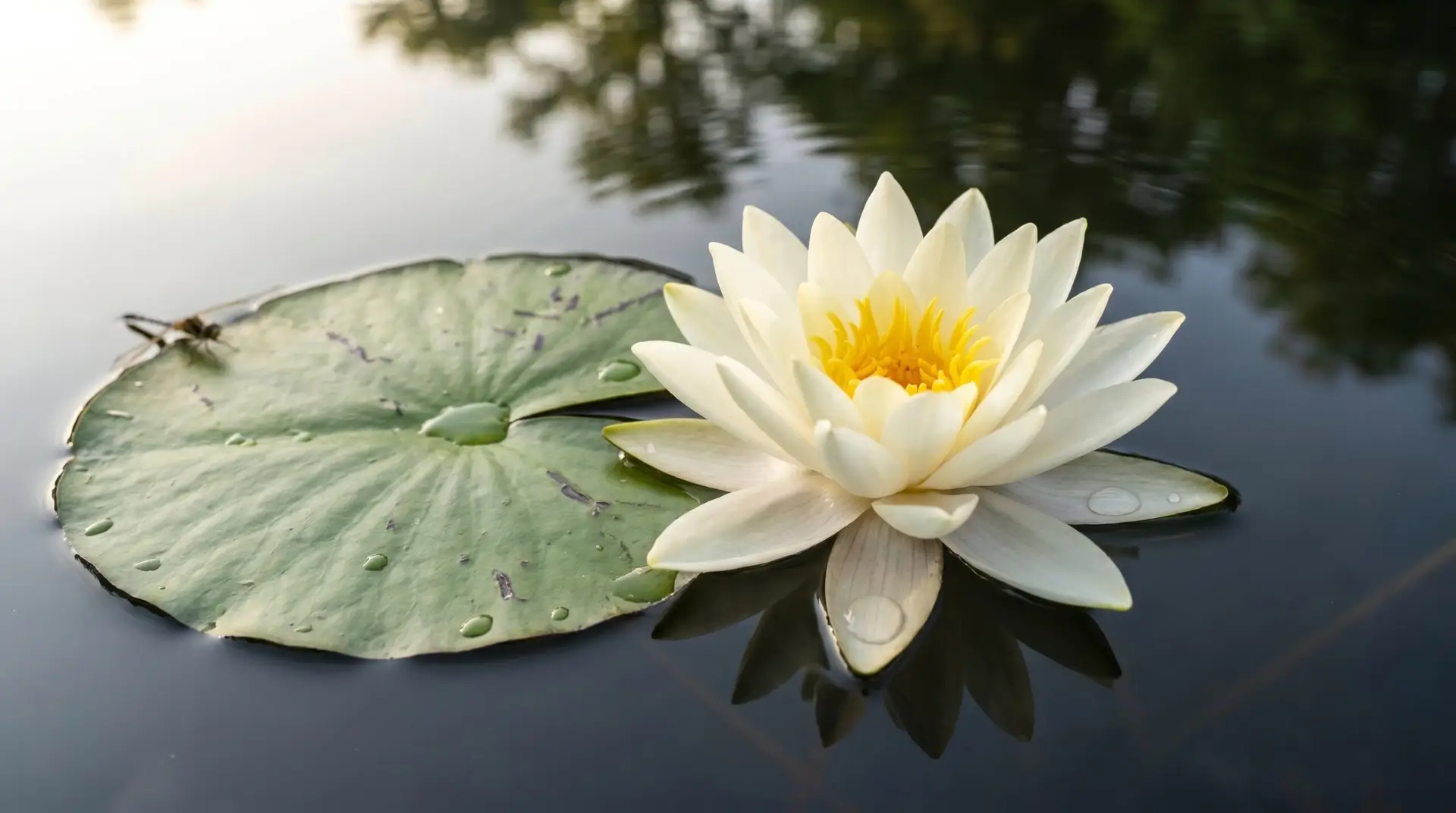
Water lily (수련) on April 27 with “innocent heart” deserves particular attention. The flower is the Western July primary birth flower with related “purity” symbolism. The cross-cultural alignment on water lily symbolism (both Korean and Western traditions emphasize purity and innocence) shows that some flowers have similar symbolic readings across very different cultural traditions.
Camellia (동백꽃) on April 29 with “attractive and charming” connects to one of the most culturally significant flowers in East Asian tradition. Camellia japonica blooms in Korea and Japan from late winter through early spring, with peak bloom typically in February-April depending on region. The flower has its own extensive symbolic tradition in Korean and Japanese culture, with classical poetry, ceremonial uses, and continuing modern garden popularity.
The month closes with golden chain (라브르눔, Laburnum) on April 30 with the bittersweet meaning “sad beauty.” Golden chain is a small ornamental tree with cascading yellow flowers in late April through May. Its toxicity (all parts of the plant contain cytisine, a poisonous alkaloid) gives the “sad beauty” reading a botanical foundation: beautiful to look at, dangerous to consume.
How Korea’s April compares to Western daisy tradition
The two traditions differ significantly for April. Western tradition assigns daisy and sweet pea to the entire month. Korean tradition does not include daisy as a primary flower on any April day, instead featuring almond, cherry blossom, peach blossom, tulip, and other species that align with East Asian spring bloom timing.
The closest Korean parallel to Western April daisy is the broader category of small white-petal spring flowers across the month: cherry blossom (April 9), pear blossom (April 20), red primrose (April 28). None of these directly matches daisy, but all share the early-spring abundant-bloom symbolic register that gives daisy its Western April assignment.
Cross-cultural alignment appears most strongly on water lily (April 27 in Korean tradition with “innocent heart” reading; Western July primary with “purity” reading) and the broader Narcissus genus (April 3 daffodil in Korean tradition; Western March primary as daffodil/narcissus).
The April 22 China aster with “trustworthy love” gives an interesting Korean equivalent to Western daisy’s “loyal love” reading. Aster is itself the Western September primary birth flower (with “hope and faith” symbolism), so the Korean April 22 assignment cross-references the broader aster symbolic family rather than the specific Western September assignment.
Frequently asked
What is the Korean birth flower for April 1?
Almond (아몬드), with the meaning “faithful love.” Almond also appears on March 14 (the Korean White Day) in some tradition variants with “hopes and desires” meaning. The April 1 assignment emphasizes the relational dimension of the flower’s symbolism.
What is the Korean birth flower for April 9?
Cherry blossom (벚꽃), with the meaning “purity, beautiful soul.” The date typically aligns with peak cherry blossom season in central Korea, making the assignment seasonally accurate. Cherry blossom has enormous cultural weight in Korean and Japanese tradition beyond its birth flower role.
What is the Korean birth flower for April 27?
Water lily (수련), with the meaning “innocent heart.” This date shows cross-cultural alignment with Western tradition, where water lily is the July primary birth flower with related “purity” symbolism. Both traditions emphasize the innocent-heart reading.
Why is golden chain the April 30 flower?
Golden chain (Laburnum) blooms in late April through May with cascading yellow flowers. The Korean “sad beauty” reading reflects the plant’s distinctive characteristic: visually stunning when in bloom, but all parts contain cytisine, a toxic alkaloid. The combination of beauty and danger gives the bittersweet symbolic reading.
Why does Korean April not include daisy?
The Korean 365-day tradition developed independently from Western Victorian floriography. Daisy does appear in the Korean tradition on other dates (March 6 with “playfulness” reading) but not in April. The Korean April list features cherry blossom, peach blossom, almond, and other species that align with East Asian spring bloom timing and cultural significance.
What does balloon flower symbolize in Korean tradition?
Gentle and warm-hearted (April 23 assignment). Balloon flower (도라지) is also celebrated in the Korean traditional folk song “도라지 타령” (Doraji Taryeong, the Balloon Flower Song), which has been recorded by hundreds of artists. The symbolic warmth aligns with the song’s gentle pastoral tradition.
Which Korean April birth flower is for my birthday?
Find your date in the tables above. The Korean tradition assigns one specific flower to each day from April 1 (almond) through April 30 (golden chain). Each daily flower has its own symbolic reading drawn from Korean folk tradition and East Asian floral culture.
Sources
- Korean birth flower 365-day tradition guide · Creatrip Korean culture portal
About this article. > Written and reviewed by the Your Flowers Guide editorial team. Korean 365-day tradition data from Creatrip and Korean Wikipedia (“탄생화” entries). Botanical reference for named species cross-verified with Royal Horticultural Society and Britannica.