August birth flower: gladiolus, poppy, and what they mean
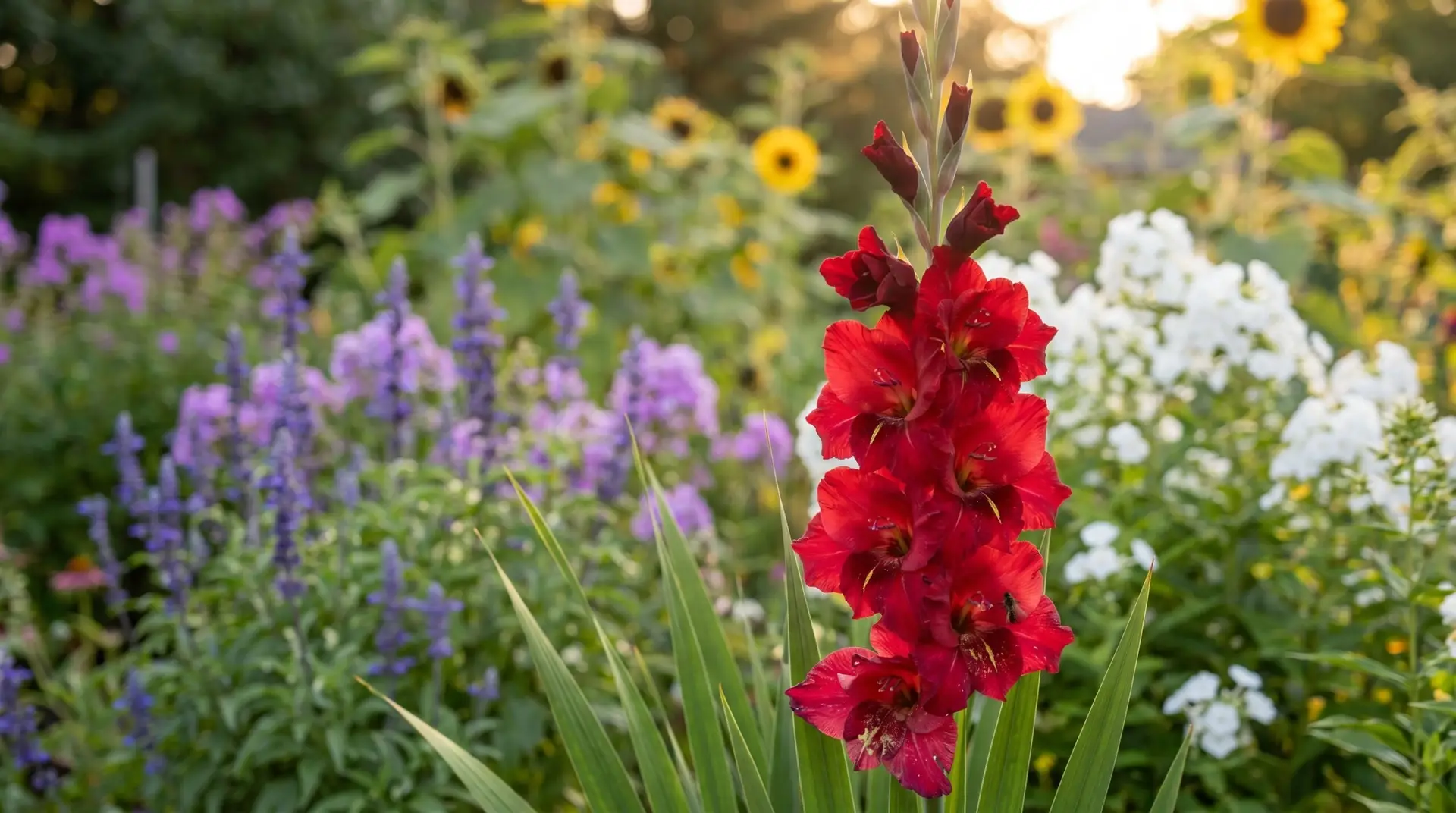
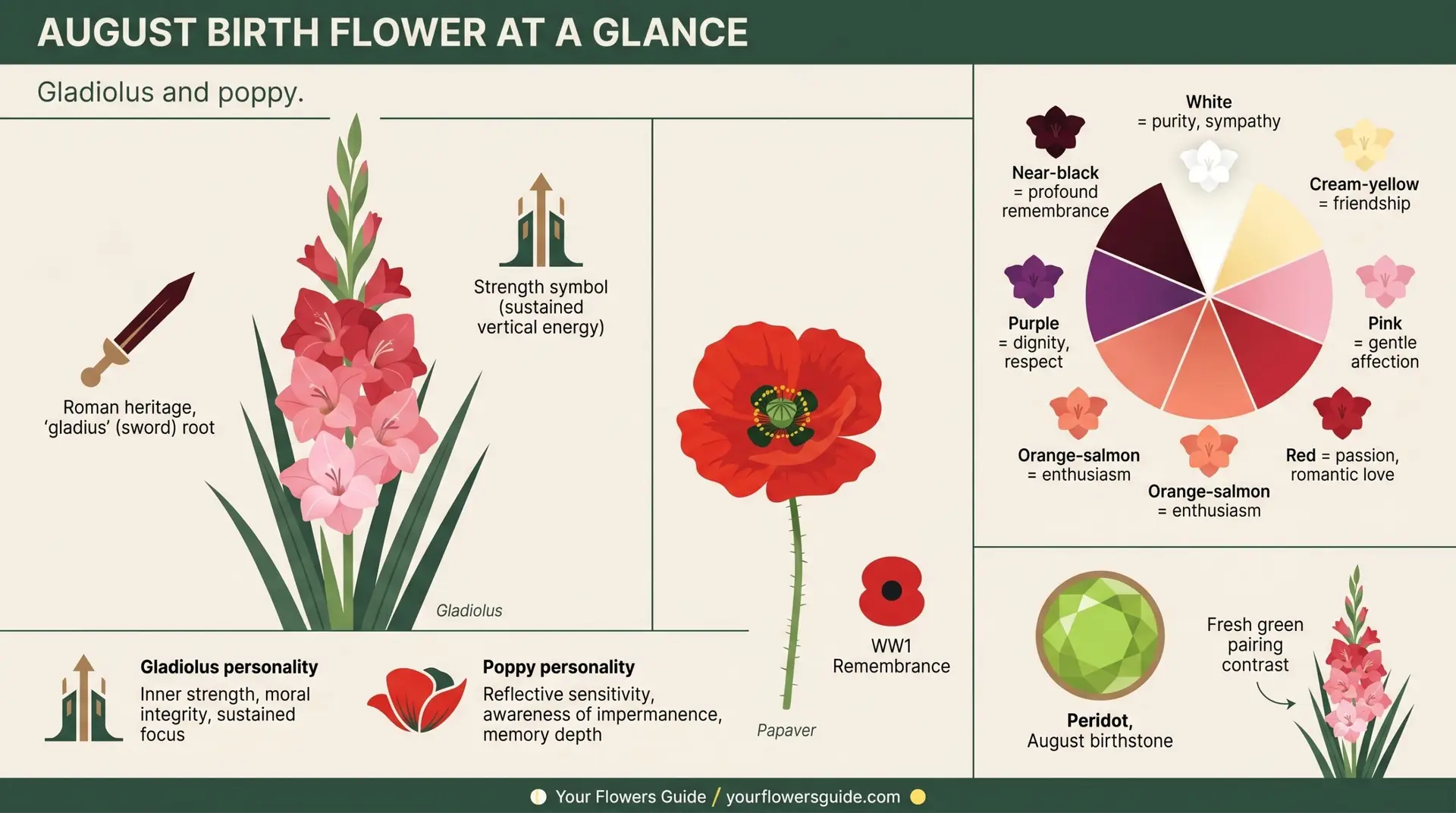
August has two birth flowers in Western tradition: gladiolus (Gladiolus genus) as the primary, and poppy (Papaver) as the secondary. Gladiolus means strength of character, moral integrity, and remembrance through the sword imagery in its Latin name. Poppy signals consolation, peaceful sleep, and active remembrance through its modern military memorial associations.
The two flowers create a striking thematic pairing focused on strength and remembrance. Gladiolus grows on tall flowering spires (3 to 5 feet) topped with large funnel-shaped blooms that ascend the stem in dramatic sequence. The Latin name comes from “gladius” (small sword), the same root that named the gladiator and that gave the flower its association with combat heroism. Poppy grows on slender stems with delicate four-petal flowers that range from the bright red of common Papaver rhoeas to the violet of Papaver somniferum (the opium poppy) and the orange of California poppy (Eschscholzia californica). The deeper cultural weight of the August pair comes from a shared remembrance theme: gladiolus through the strength and courage carried in its sword name, and poppy through twentieth-century war memorial.
Gladiolus, the main August birth flower
Gladiolus belongs to the genus Gladiolus in the family Iridaceae. The genus contains approximately 300 species native to Mediterranean Europe, Asia Minor, the Middle East, and especially southern Africa, where the highest species concentration grows wild in the Cape Floristic Region. The species most associated with the modern garden birth flower tradition is Gladiolus dalenii and its many hybrids developed through nineteenth and twentieth century European and American breeding programs.
The plant grows from corms, the bulb-like underground storage organs that distinguish gladiolus from true bulbs. Each corm produces a single tall flowering spike during the growing season, with the spike reaching 3 to 5 feet at full height for garden hybrid varieties. The leaves are sword-shaped (the Latin name “gladius” refers to both the sword shape of the leaves and to the gladiator’s small sword), growing upright from the corm in a fan arrangement around the central flowering stem. Each flowering spike contains 10 to 20 large funnel-shaped flowers arranged in a vertical sequence, with the lower flowers opening first and progression upward over a period of one to two weeks.
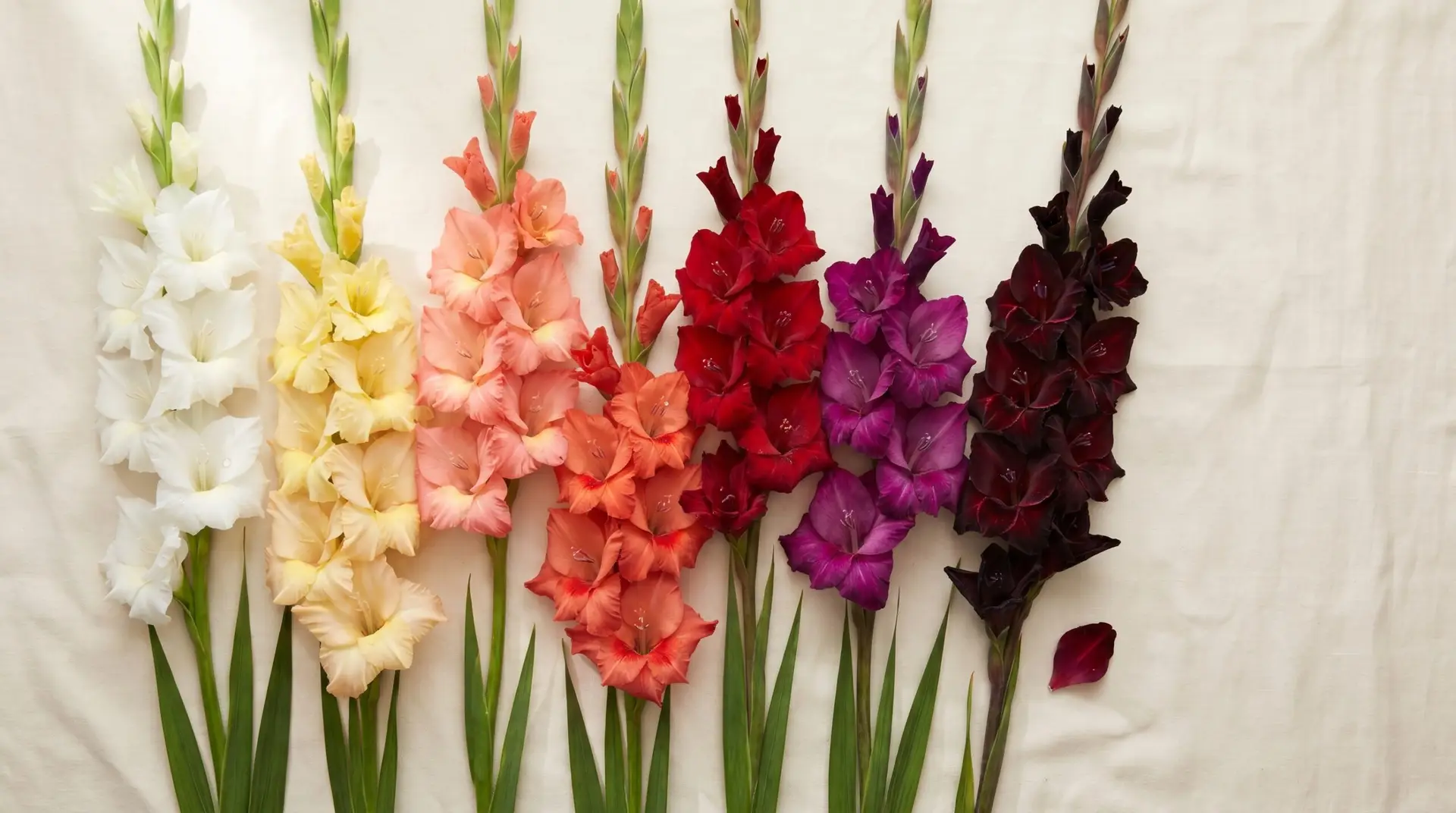
Modern gladiolus cultivation includes an extraordinary range of color and form. Color choices include white, cream, yellow, salmon, pink, red, magenta, purple, near-black (deep maroon-purple), and bicolor combinations. Flower forms range from large heavily ruffled garden varieties to smaller delicate primrose-form hybrids and miniature gladiolus suitable for cutting gardens. The North American Gladiolus Council maintains a classification system based on flower size and color that organizes the thousands of registered cultivars.
Bloom timing runs from midsummer through early autumn in temperate climates, with peak abundance in late July, August, and early September. The August position in the Western birth flower tradition reflects this peak summer bloom timing combined with the flower’s classical Roman cultural anchor. Victorian flower writers chose gladiolus for August because it was both the most visually dramatic summer spire flower and the species with the strongest classical historical symbolism through its Roman gladiator etymology.
Modern garden gladiolus is winter-tender in most temperate climates. The corms must be lifted in autumn after the first frost, dried, and stored indoors over winter, then replanted in spring after the last frost. This annual lifting cycle is the most demanding aspect of growing gladiolus and explains why the plant is sometimes treated as an annual rather than as a perennial in colder climates. Mediterranean climates (USDA zone 8 and warmer) allow gladiolus corms to overwinter in the ground without lifting.
Poppy, the secondary August birth flower
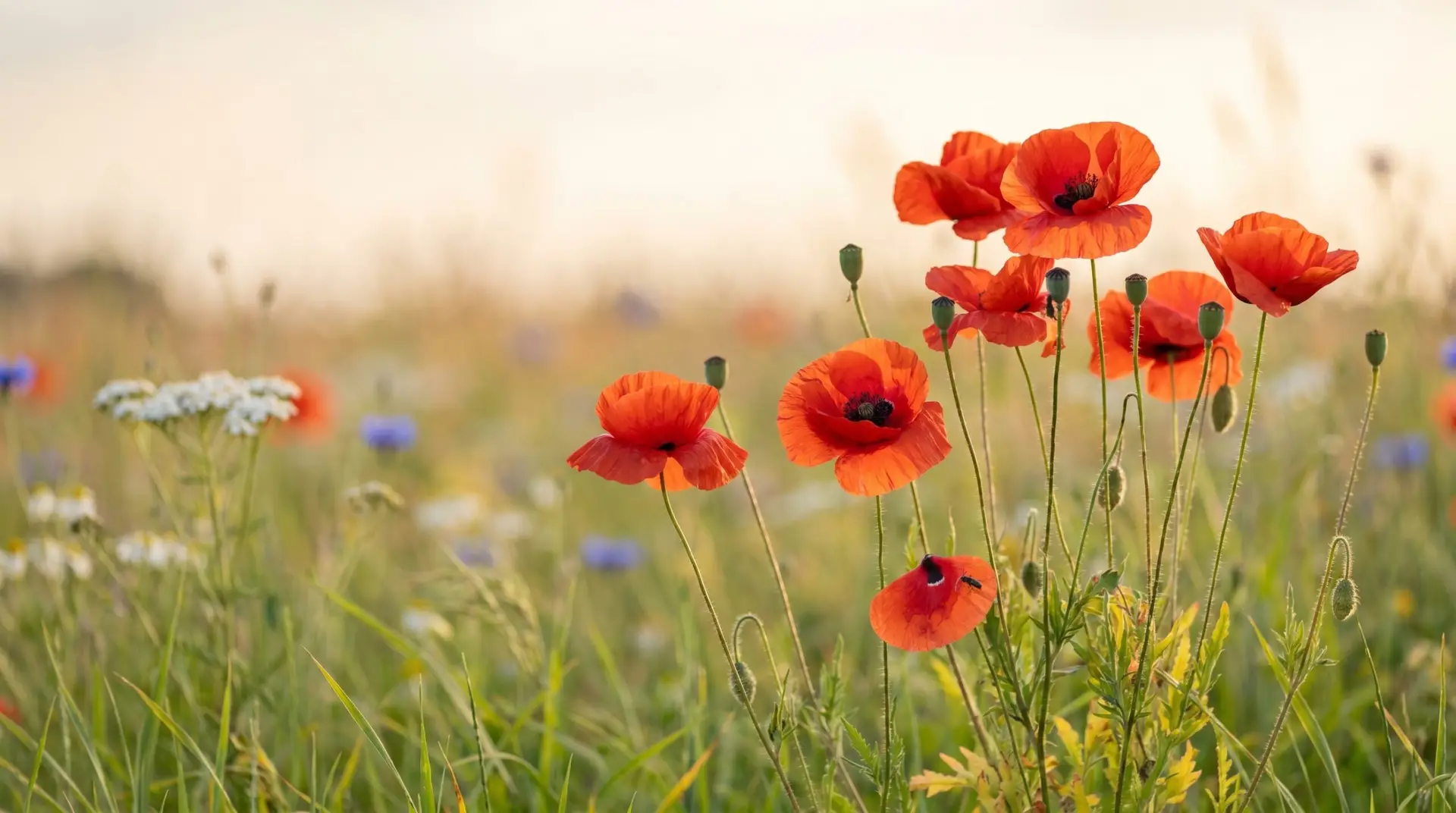
Poppy refers primarily to the genus Papaver in the family Papaveraceae, with several other related genera (Eschscholzia, Meconopsis, Romneya) sometimes included under the broader “poppy” common name. The genus Papaver contains approximately 70 species native to temperate Europe, Asia, and North Africa. The species most associated with the Western birth flower tradition are Papaver rhoeas (the common field poppy or Flanders poppy, with bright red flowers), Papaver somniferum (the opium poppy, with violet or white flowers), and Papaver orientale (the oriental poppy, with large salmon or red flowers).
The plant grows on slender wiry stems reaching 12 to 36 inches depending on species. The flowers are delicate four-petal forms (occasionally five or six in some species and hybrids) with a characteristic crumpled paper-like petal texture that distinguishes poppy visually from other summer flowers. The central seed capsule develops after flowering into a distinctive cup-shaped or round form that persists as a dried decorative element long after the petals have fallen. Each individual poppy flower lasts only one or two days, but a healthy plant produces sequential blooms throughout the summer flowering period.
Bloom timing varies by species. Field poppy (Papaver rhoeas) blooms in early to mid-summer in temperate climates. Oriental poppy (Papaver orientale) blooms in late spring to early summer. California poppy (Eschscholzia californica) blooms throughout summer in suitable climates. The August birth flower position reflects the broader summer poppy season rather than a single peak month.
Poppy symbolism in Victorian floriography includes “consolation,” “peaceful sleep,” and “imagination” (the latter from the opium poppy’s pharmacological associations). The modern remembrance reading, dominant since the twentieth century, comes from the red field poppies that grew over the disturbed earth of Flanders battlefields after World War One and the John McCrae poem “In Flanders Fields” (1915) that fixed the poppy as the universal symbol of military commemoration in English-speaking traditions.
Toxicity varies by species. The opium poppy (Papaver somniferum) is the source of opium and the derived alkaloids morphine, codeine, and other medicinal and recreational drugs; cultivation is regulated in many jurisdictions. Most other Papaver species are not significantly toxic but should not be eaten without expert botanical knowledge.
For deeper coverage of poppy color symbolism, the WW1 remembrance tradition, opium poppy history, and growing notes, see the poppy deep dive article.
The Roman gladiator connection
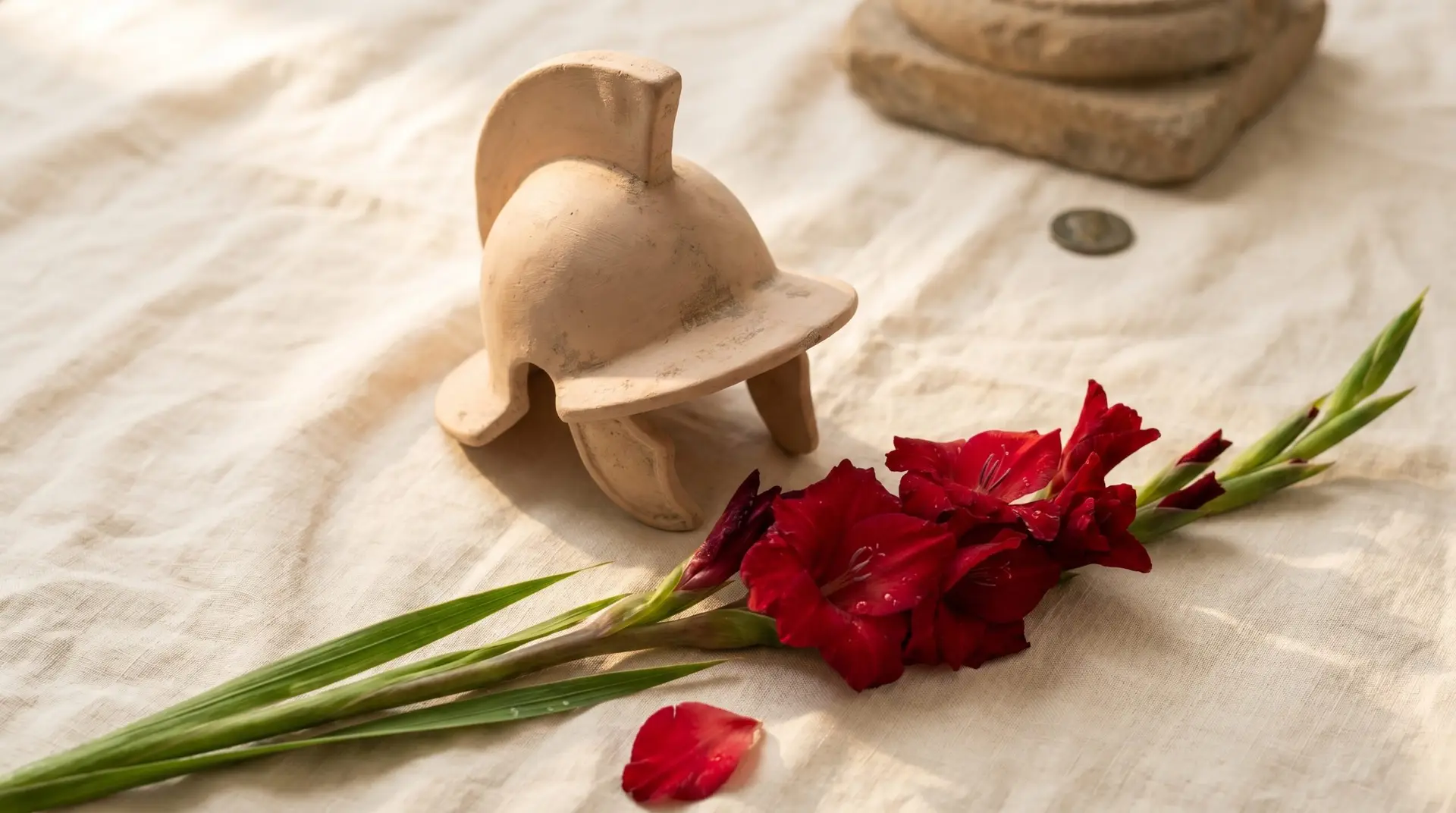
The Latin name Gladiolus comes from “gladius” meaning small sword, the weapon carried by Roman gladiators in arena combat. The shared name gave the flower its strongest classical symbolic anchor and shaped its later association with strength of character, moral integrity, and remembrance.
Roman gladiators were professional combatants who fought in public arena spectacles across the Roman Empire from approximately the third century BC through the early Christian period. Most gladiators were enslaved persons or condemned criminals trained at specialized schools, though some were free volunteers who chose the profession for fame or financial reward. The combat was often deadly but not always so; many fights ended in surrender rather than death, and successful gladiators could earn freedom, wealth, and celebrity status through repeated arena victories.
A popular modern story holds that Romans strewed gladiolus flowers into the arena to honor gladiators, but this arena custom is not documented in surviving Roman sources and is best treated as later legend rather than historical fact. What is solid is the shared name: both the flower and the gladiator take their name from “gladius,” the small Roman sword, and the flower’s sword-shaped leaves reinforce the link. The flower’s tall spire form and dramatic blooming pattern (ascending sequentially up the spike like the sequential combats of a multi-fight arena program) make a natural visual metaphor for endurance and achievement.
The shared sword imagery, rather than any recorded arena ritual, is what gives gladiolus its association with strength under pressure. That sense of resilience in the face of difficulty is what carried into later Western symbolic use.
Modern symbolic reading of gladiolus draws on this Roman heritage. The flower means strength of character (the inner moral and emotional resilience that allows a person to face difficulty with dignity), moral integrity (the consistent commitment to ethical principles even under pressure), and remembrance (the active honoring of those who have demonstrated such qualities, particularly in dangerous or extreme contexts). The connection makes gladiolus appropriate for occasions that recognize achievement under difficulty, courage in adversity, and memorial honoring of those who have died after demonstrating notable qualities.
Modern military and first-responder commemoration sometimes uses gladiolus for these reasons, though red poppy has become the more dominant military memorial flower in twentieth-century English-speaking tradition. The dual August birth flower combination (gladiolus and poppy) thus gives August birthdays the strongest dual remembrance symbolism of any month in the Western tradition.
What gladiolus colors mean
Gladiolus color shifts the symbolic reading within the broader theme of strength and remembrance:
Red gladiolus: passion, deep love, romantic devotion. The most traditional Victorian color reading for gladiolus and the dominant color for romantic gift bouquets.
Pink gladiolus: gentle affection, motherly love, feminine grace. Often used for Mother’s Day arrangements and birthday bouquets honoring female recipients.
White gladiolus: purity, innocence, sympathy. Often used in wedding bouquets and funeral arrangements where the white provides the most formally appropriate color register.
Yellow gladiolus: friendship, cheerful affection, sunshine. The yellow color shifts the symbolic register toward warm friendly relationships rather than romantic or memorial contexts.
Purple gladiolus: dignity, respect, ceremonial honor. The purple color suits formal recognition occasions and dignified honoring of accomplishments or memorial contexts.
Orange and salmon gladiolus: enthusiasm, creative energy, summer abundance. The warm colors suit cheerful gift contexts and bold floral statements in mid-summer bouquets.
Black-red (near-black, deep maroon) gladiolus: strong remembrance, gothic elegance, profound emotional weight. The dark color suits memorial bouquets and dramatic floral statements where the symbolic depth justifies the unconventional color choice.
Florist usage treats gladiolus as the formal-occasion summer flower across English-speaking traditions. Tall gladiolus spires work well for weddings (dramatic vertical statement), funerals (dignified remembrance), graduation ceremonies (achievement under effort), and significant birthday celebrations where the recipient values the symbolic weight of the gladiator heritage.
August personalities by flower symbolism
Reading personality from a birth flower is closer to a horoscope than to psychology. Take it as a useful lens, not as evidence. The two August flowers offer complementary readings that combine into a distinctive personality profile.
The gladiolus side of August reads as inner strength and quiet determination. People in the gladiolus profile have the moral and emotional resilience to face difficulty with dignity, the consistent commitment to ethical principles that does not bend under pressure, and the steady focus on long-term goals that allows them to push through obstacles. The sequential blooming pattern of the flower (lower flowers opening first, then progression upward over many days) suggests sustained effort across time: gladiolus-profile people often pursue ambitions that require long commitment rather than quick wins. The Roman gladiator heritage adds a register of courage in difficulty: people in the gladiolus profile show their best qualities when challenges arise rather than when conditions are easy.
The poppy side reads as sensitivity and reflective memory. People in the poppy profile have heightened awareness of beauty in transient moments (the one-day life of the individual poppy flower providing the natural metaphor), strong connection to memory and historical depth (the poppy’s remembrance symbolism extending into personal awareness of past), and reflective inner life that processes experience deeply rather than quickly. The combination of bright color and short individual flower life gives poppy-profile people a particular relationship with beauty and impermanence.
The combination describes an August personality that pairs determined inner strength (gladiolus) with reflective sensitivity (poppy). August-born readers who describe themselves as both quietly resilient and deeply aware of beauty and memory will recognize the fit.
Gift ideas for August birthdays
August birthdays fall in peak summer bloom across most of the northern hemisphere, which makes both birth flowers seasonally available. Gift logic varies by recipient preference and occasion register.
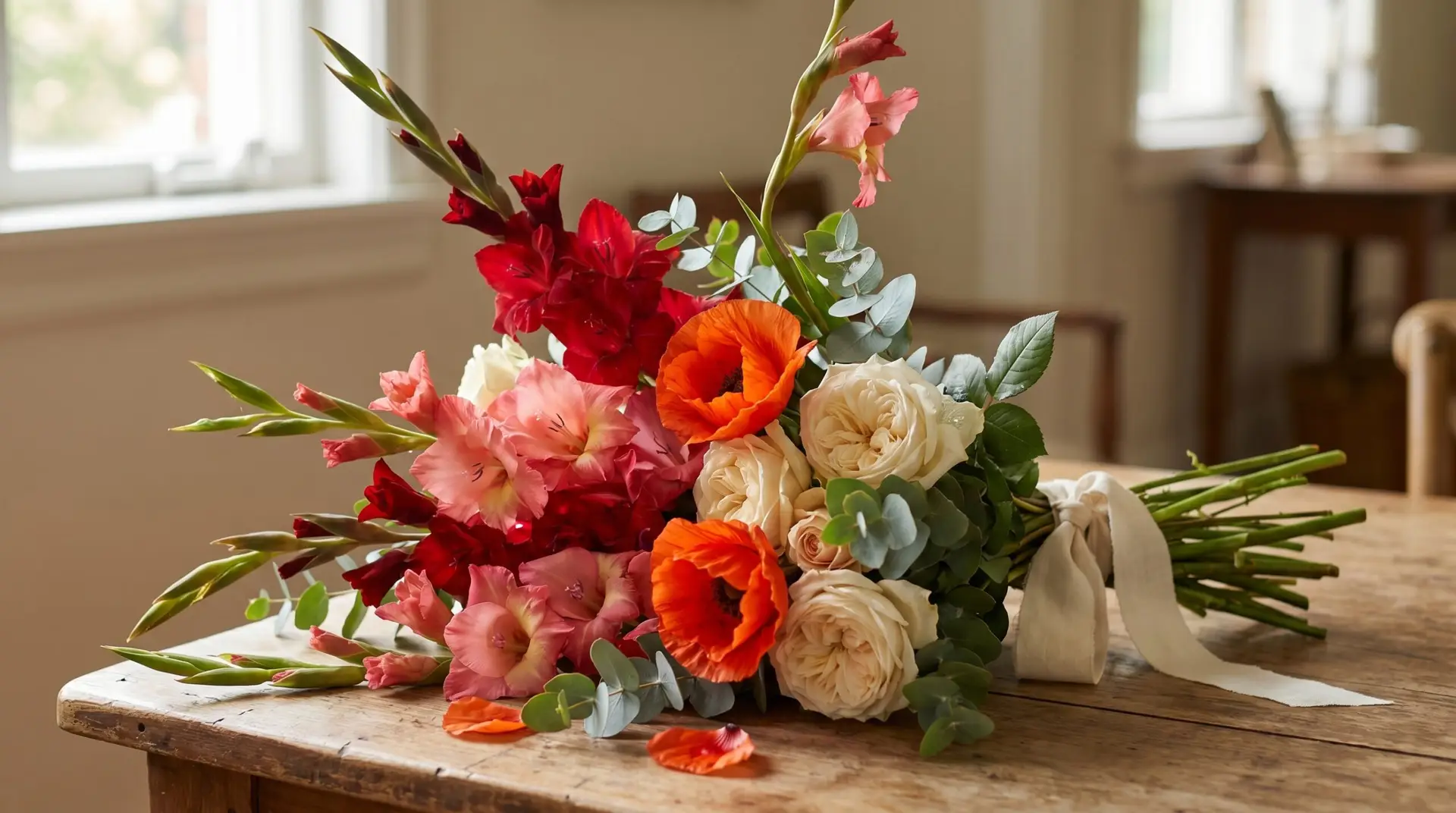
Gladiolus as a cut flower is widely available in summer florist trade. A bouquet of mixed-color gladiolus spires (red, pink, white, purple, orange) makes a striking vertical-element gift bouquet. Single-color gladiolus arrangements work well for formal occasions where the color symbolism matters: red for romantic gifts, white for memorial or wedding contexts, yellow for friendship, purple for dignified recognition. Florist prices typically run from fifty to one hundred fifty dollars for a substantial gladiolus arrangement.
Gladiolus corms for spring planting give a long-term gift that returns each summer. Specialty bulb suppliers offer named gladiolus varieties at prices typically running from ten to forty dollars per package of 10 to 20 corms. The recipient plants the corms in spring (after the last frost) for late summer bloom. The gift suits gardener recipients who appreciate the long-term cultivation rhythm.
Poppy as a cut flower is less commonly available than gladiolus because the delicate petals do not hold well after cutting and the individual flower life is only one or two days. Specialty florists may stock oriental poppy (Papaver orientale) in early summer; California poppy is rarely available as cut flower. The more accessible poppy gift category is seeds for the recipient’s own garden. A packet of mixed Papaver seeds for autumn or early spring sowing costs from five to fifteen dollars and provides summer poppy blooms.
A bouquet combining gladiolus spires as vertical statement with summer roses, lilies, or large dahlias for rounded contrast creates a meaningful August birthday gift. The combination is visually striking and provides multiple symbolic layers (gladiolus for strength, complementary flowers for romantic or celebratory notes).
For recipients with interest in Roman classical culture or military history, a gladiolus bouquet paired with a small book on Roman gladiator history or on World War One commemorative tradition makes a culturally layered gift. The combination uses the flowers as the primary gift element and the book as the educational supplement that explains the symbolic depth.
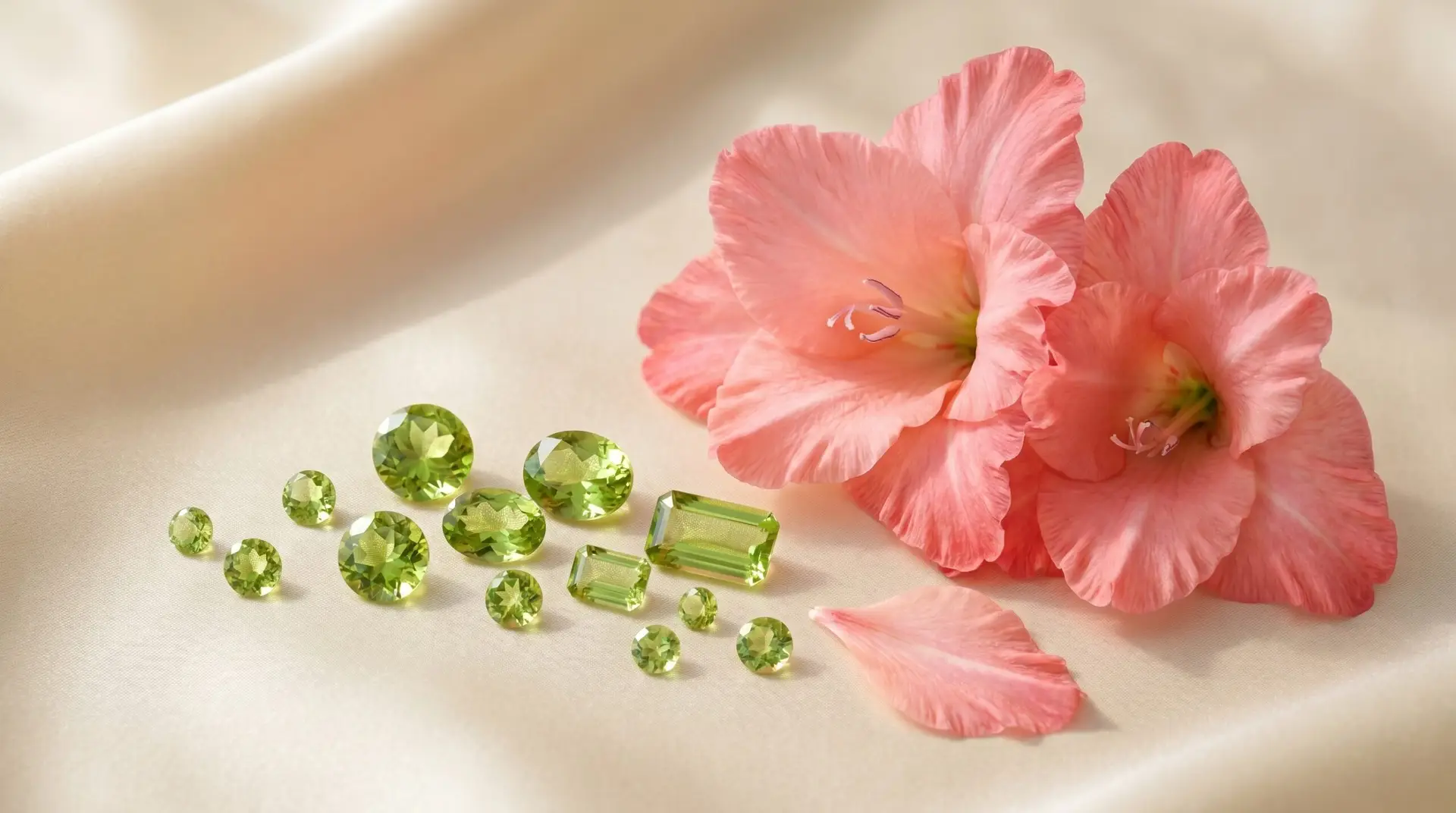
A jewelry piece combining gladiolus or poppy motif work with peridot (the August birthstone) creates a coherent color and cultural pairing. Peridot’s bright fresh green provides natural contrast with most gladiolus colors (red, pink, purple, white) and works well with poppy red. Price tiers range from about forty dollars for simple peridot studs to several thousand dollars for fine pieces with floral motif work.
Frequently asked
What is August’s birth flower?
Gladiolus as the primary and poppy as the secondary. Gladiolus is the genus Gladiolus with approximately 300 species. Poppy refers primarily to the genus Papaver with approximately 70 species, including the common field poppy (Papaver rhoeas) and the oriental poppy (Papaver orientale).
Why is gladiolus August’s birth flower?
Gladiolus has peak bloom in late July through August across temperate climates. The flower also has a strong classical anchor through its etymology (Latin “gladius” meaning small sword, the weapon that also named the Roman gladiator). Victorian flower writers chose gladiolus for August because of both seasonal availability and this sword-name heritage.
What does gladiolus mean?
Strength of character, moral integrity, and remembrance. The symbolism comes from the sword imagery embedded in the Latin name, which shares its root (“gladius,” the small Roman sword) with the word gladiator. A popular story that Romans threw gladiolus into the arena to honor gladiators is not documented in surviving Roman sources and is best treated as later legend. The flower entered Western symbolic vocabulary as an emblem of courage under pressure and dignified remembrance.
What does poppy mean?
Consolation, peaceful sleep, and active remembrance. The Victorian readings included consolation and peaceful sleep (the latter from the opium poppy’s pharmacological associations). The dominant modern reading is military remembrance, fixed by the red field poppies that grew over Flanders battlefields after World War One and by the John McCrae poem “In Flanders Fields” (1915).
Is gladiolus the same as gladiola?
Yes. “Gladiola” is a common informal variant of the proper Latin name “gladiolus.” Both forms refer to the same plant. The proper Latin singular is “gladiolus” and plural is “gladioli,” though “gladiolas” is widely used in informal English.
Why are red poppies symbols of military remembrance?
Red field poppies (Papaver rhoeas) grew naturally in the disturbed earth of Flanders battlefields after World War One battles, providing the visual association between bright red flowers and recent war dead. The John McCrae poem “In Flanders Fields” (1915) fixed this association in English-speaking remembrance tradition. The poppy is now worn on Remembrance Day (Commonwealth countries) and Memorial Day (United States) as the universal symbol of military commemoration.
Are poppies legal to grow in my garden?
Most Papaver species are legal to grow ornamentally in most jurisdictions. The opium poppy (Papaver somniferum) has legal restrictions in some jurisdictions because it produces opium and the derived alkaloids morphine and codeine. Cultivation for ornamental purposes is typically permitted in most US states and UK, but harvest of opium or processing of poppy sap is regulated. Check local regulations before planting Papaver somniferum.
What birthstone goes with August’s birth flower?
Peridot. The bright fresh green of peridot creates natural visual contrast with most gladiolus colors (red, pink, purple, white) and works well with the bright red of common field poppy. Peridot was traditionally associated with August through both modern Western birthstone tradition (formalized 1912) and older Egyptian folk associations (the gem was mined on the Egyptian Red Sea island of Zabargad from at least 1500 BC).
Can you eat gladiolus?
Most parts of gladiolus are not eaten and some have mild toxicity. The corms contain compounds that can cause stomach upset if eaten. Some traditional cultures used gladiolus medicinally but the plant is not commonly recognized as edible. Do not eat gladiolus from garden or florist sources without expert botanical knowledge.
Can I grow gladiolus from seed?
Yes, but the process is slow. Gladiolus seeds can be sown indoors in late winter for transplanting in spring, but the resulting plants typically do not flower in their first year (the corm must develop for one to three growing seasons before producing flowering-size growth). Most gardeners buy gladiolus corms (the bulb-like underground structures) rather than seeds, which provides flowering plants in the first growing season.
Sources
- Gladiolus (Gladiolus) · Encyclopedia Britannica
- Gladiolus growing guide · Royal Horticultural Society
- Poppy (Papaver) · Encyclopedia Britannica
About this article. > Written and reviewed by the Your Flowers Guide editorial team. Botanical content from Britannica and the Royal Horticultural Society. Roman botanical and naming references via Pliny the Elder’s Natural History (about 77 AD). World War One poppy commemoration references via John McCrae’s “In Flanders Fields” (1915) and standard military history sources.