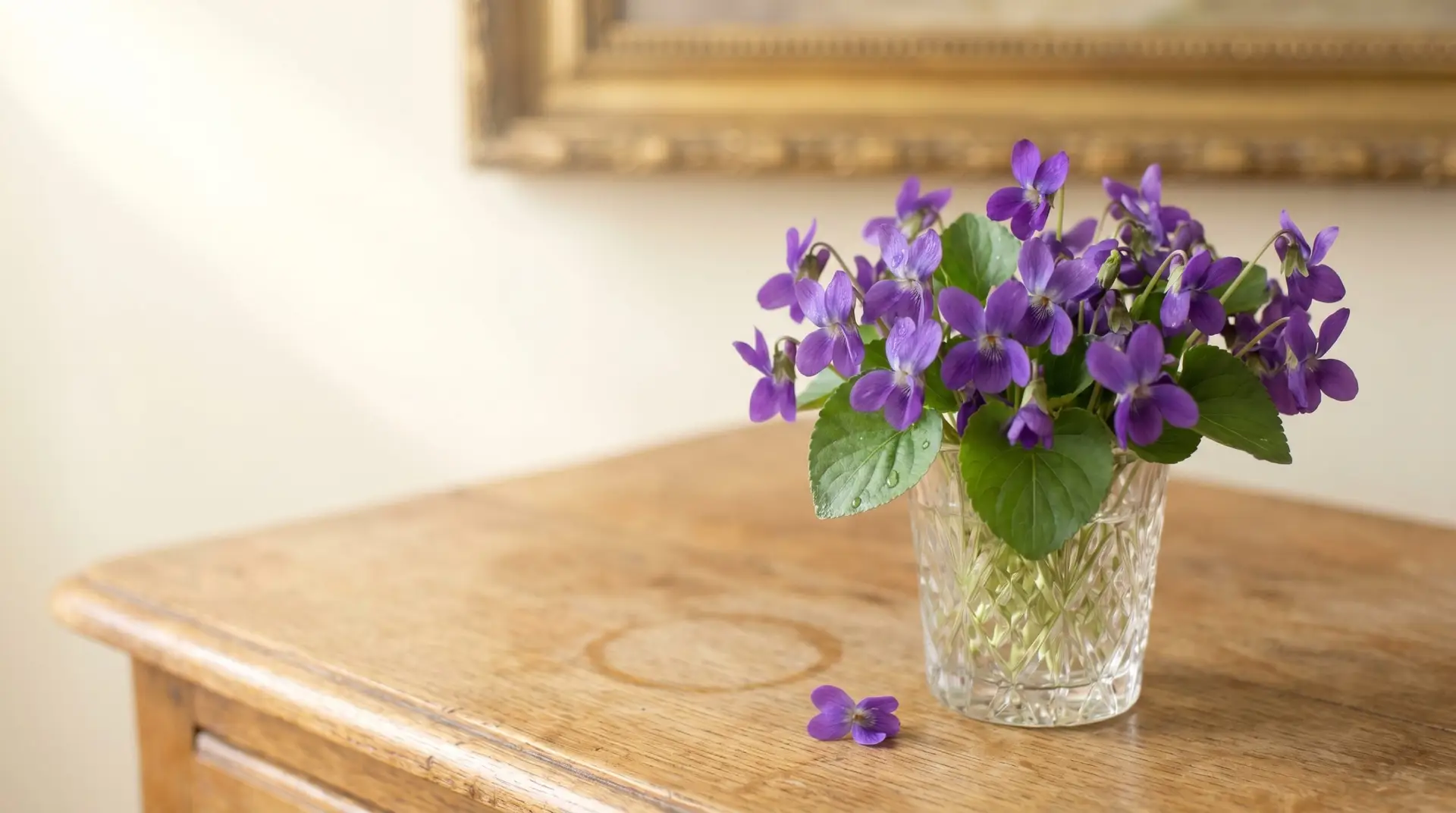
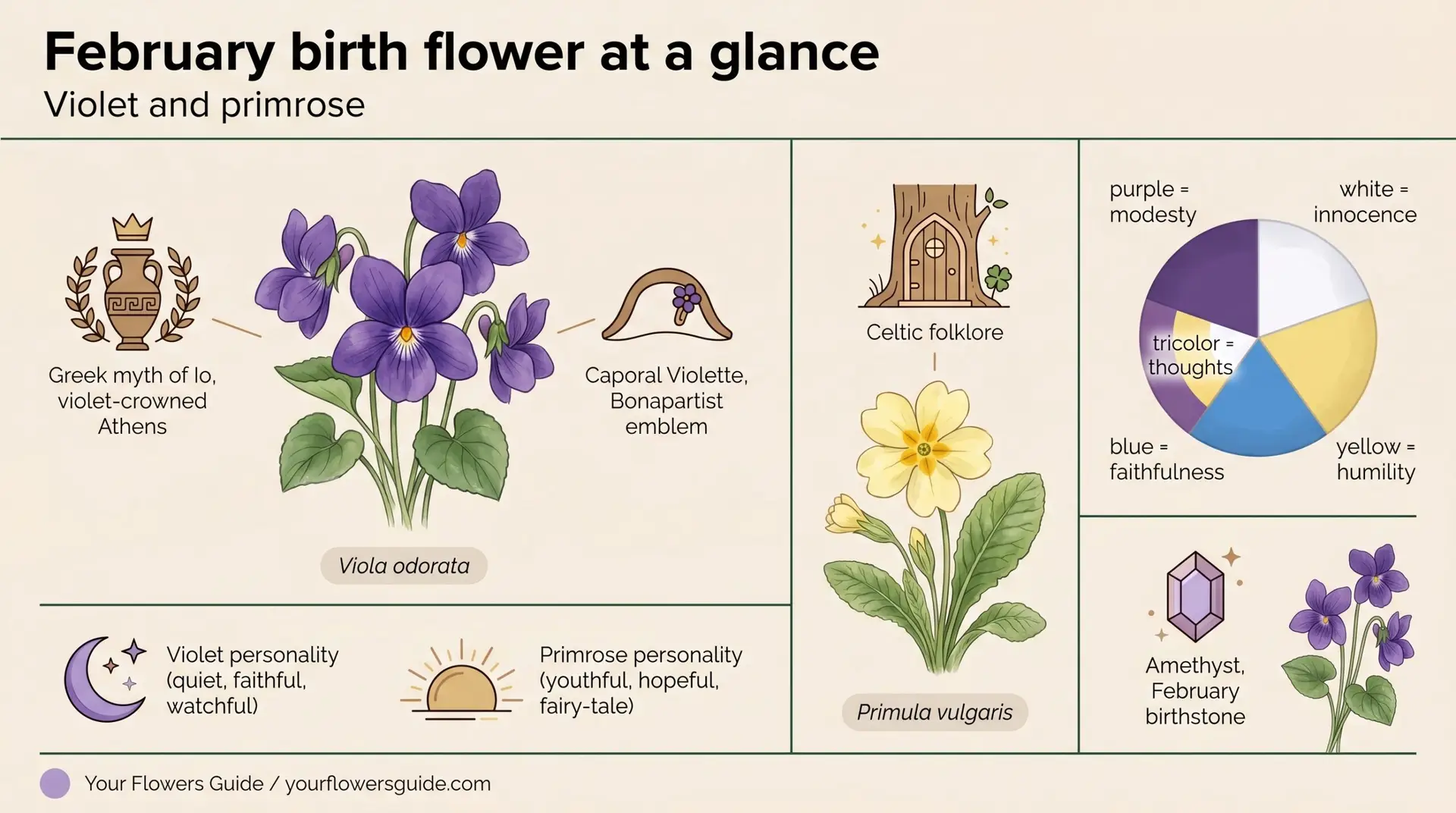
February has two birth flowers in Western tradition: violet (Viola, primarily V. odorata) as the primary, and primrose (Primula vulgaris) as the secondary. Violet means modesty, faithfulness, and watchful love. Primrose means young love and first beginnings.
Both flowers fit February’s seasonal character. Violet blooms in mild-climate gardens (the Mediterranean coast, southern England, the American South) from late winter onward, while primrose emerges as one of the earliest spring flowers in deciduous woodlands. Violet has the deeper documented cultural history of the two: classical Greek myth tied to the goddess Io, Athenian civic identity (“the violet-crowned city” in Pindar’s poetry), and the most distinctive modern association of any common flower with a single historical figure (Napoleon Bonaparte). Primrose has Celtic fairy folklore, Christian Marian associations, and the linguistic claim of being the “first rose” of spring through its Latin etymology (primus, meaning first).
In this guide 8 sections
Violet, the main February birth flower
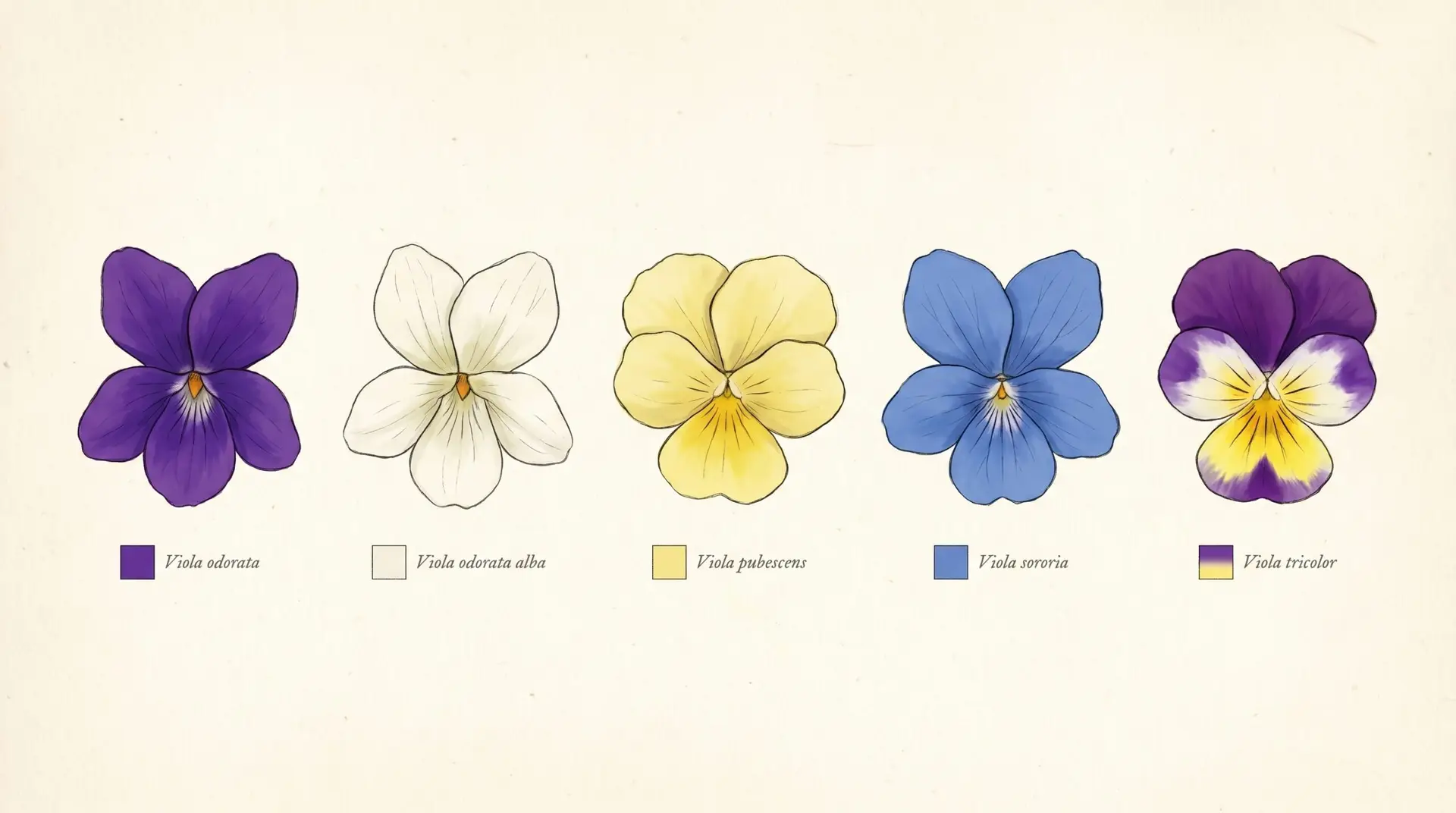
Violet belongs to the genus Viola in the family Violaceae, which contains over 500 species worldwide. The species most associated with the February birth flower tradition is Viola odorata, the sweet violet, native to Europe and western Asia and cultivated for fragrance and ornamental use since classical antiquity. Other commonly grown species include Viola tricolor (johnny-jump-up or heartsease), Viola sororia (common blue violet, the state flower of four US states), and Viola × wittrockiana (the modern garden pansy, a hybrid derivative).
The violet flower has a distinctive five-petal structure: two upper petals, two lateral petals, and one lower spurred petal that often serves as a landing platform for pollinators. The lower petal carries the flower’s fragrance glands in scented species, which is why sweet violet smells strongly while pansies (also Viola) have only mild fragrance. Color ranges from deep purple (the most iconic) through white, yellow, blue, and various bicolor patterns including the tricolor heartsease that gives Viola tricolor its name.
Most violet species are perennial low-growing herbs, typically 4 to 8 inches tall, forming spreading clumps through both seed and rhizome. The plant blooms in late winter through spring in mild climates, with peak February bloom in southern England, southern France, the Mediterranean coast, and the American South. In colder climates, violet bloom moves to March or April. The flowers carry their fragrance most intensely in cool morning hours; warmer afternoon temperatures often suppress the scent through a chemical mechanism called scent fatigue.
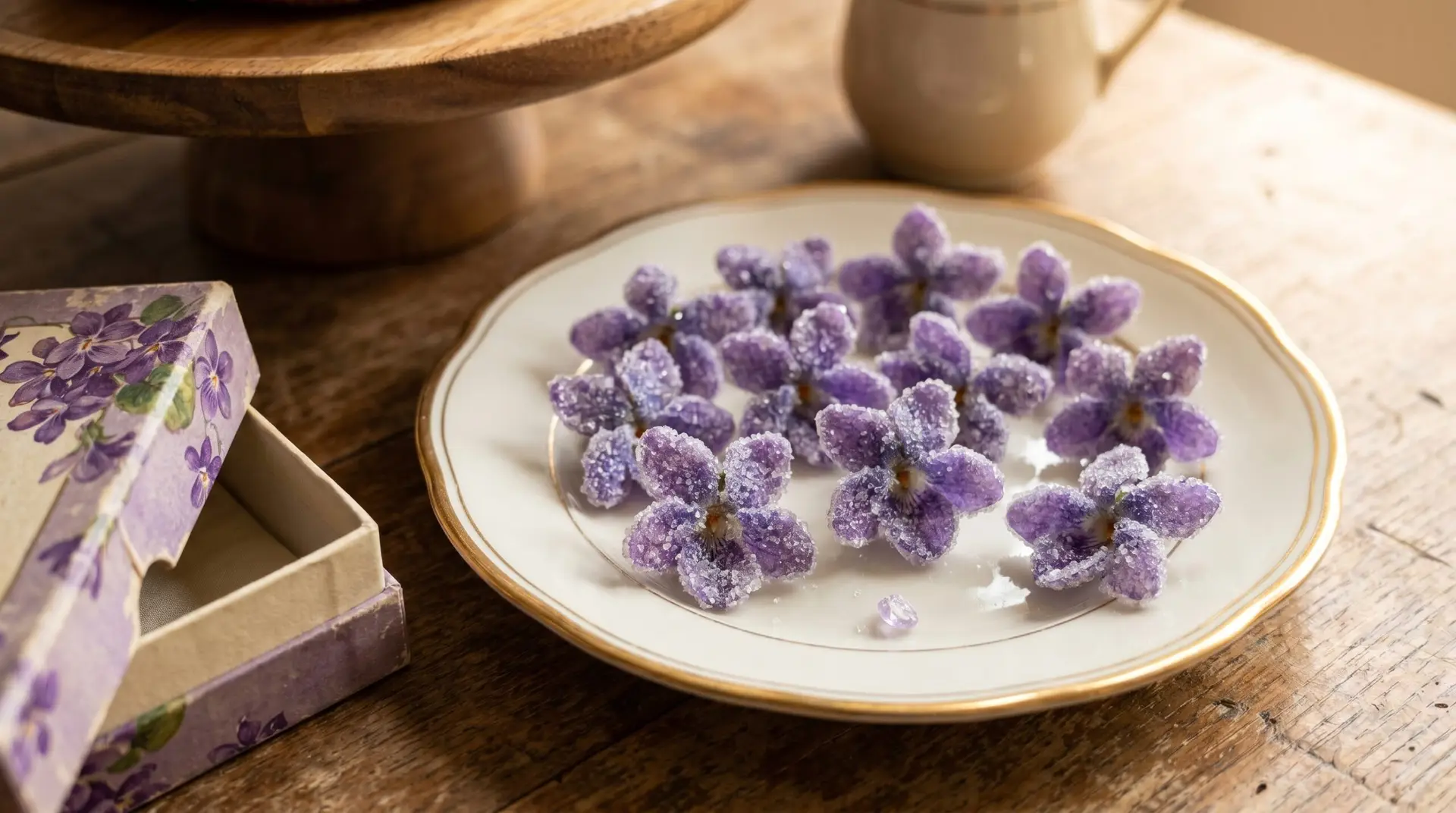
Sweet violet has been cultivated commercially for fragrance since at least the eighteenth century, with the French town of Toulouse becoming the world center of violet cultivation in the nineteenth century. “Violette de Toulouse” remains a protected cultivar name with continuing commercial production. The crystallized violet petals served as confections in French and Italian patisserie (“violettes cristallisées”) draw on the same Toulouse tradition.
Primrose, the secondary February birth flower
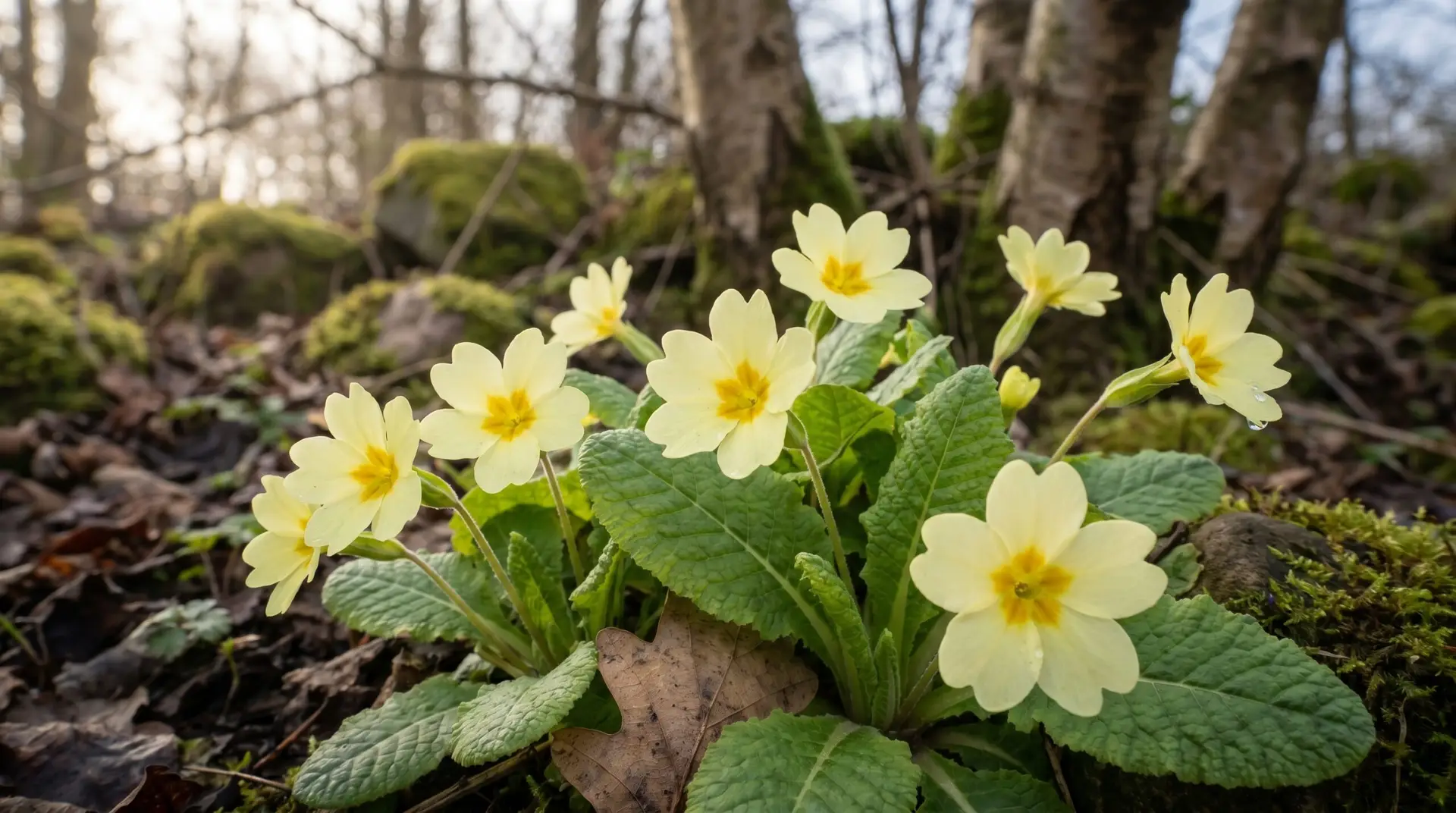
Primrose belongs to the genus Primula in the family Primulaceae, which contains about 500 species native primarily to Europe, Asia, and North America. The species most associated with the February birth flower tradition is Primula vulgaris, the common primrose, a yellow-flowered native of British and continental European woodlands.
The botanical name itself states the symbolic claim. Primula derives from the Latin primus (first), and the English common name “primrose” extends this naming as “first rose” (the flower is not botanically a rose; the naming is symbolic rather than taxonomic). Both names reflect the plant’s position as one of the earliest spring flowers in temperate European woodlands, often appearing in February in mild climates and into April further north.
Primula vulgaris forms a rosette of crinkled green leaves close to the ground, with pale yellow five-petal flowers emerging on short individual stems just above the leaves. Modern cultivars expand the color range to pink, red, purple, white, and bicolor patterns. The plant blooms most reliably in cool partial shade with rich moist soil, which is why naturalized primrose colonies appear most often at the edges of deciduous woodlands and on damp grassy banks.
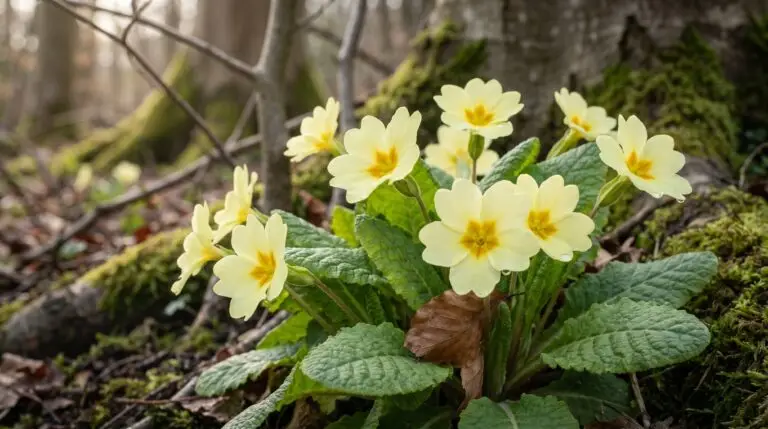
Primrose has strong fairy folklore associations in Celtic tradition, with the flower historically read as a doorway to the fairy world. The full Primula botany, the Celtic fairy tradition, the medieval cuisine uses, and the important disambiguation between true primrose (Primula) and evening primrose (Oenothera, a completely different family) appear in the primrose flower meaning article.
Napoleon Bonaparte and the violet
Few flowers carry as specific a historical association as violet does with Napoleon Bonaparte (1769-1821). The connection is well-documented in French political history and gave violet its strongest non-religious cultural anchor.
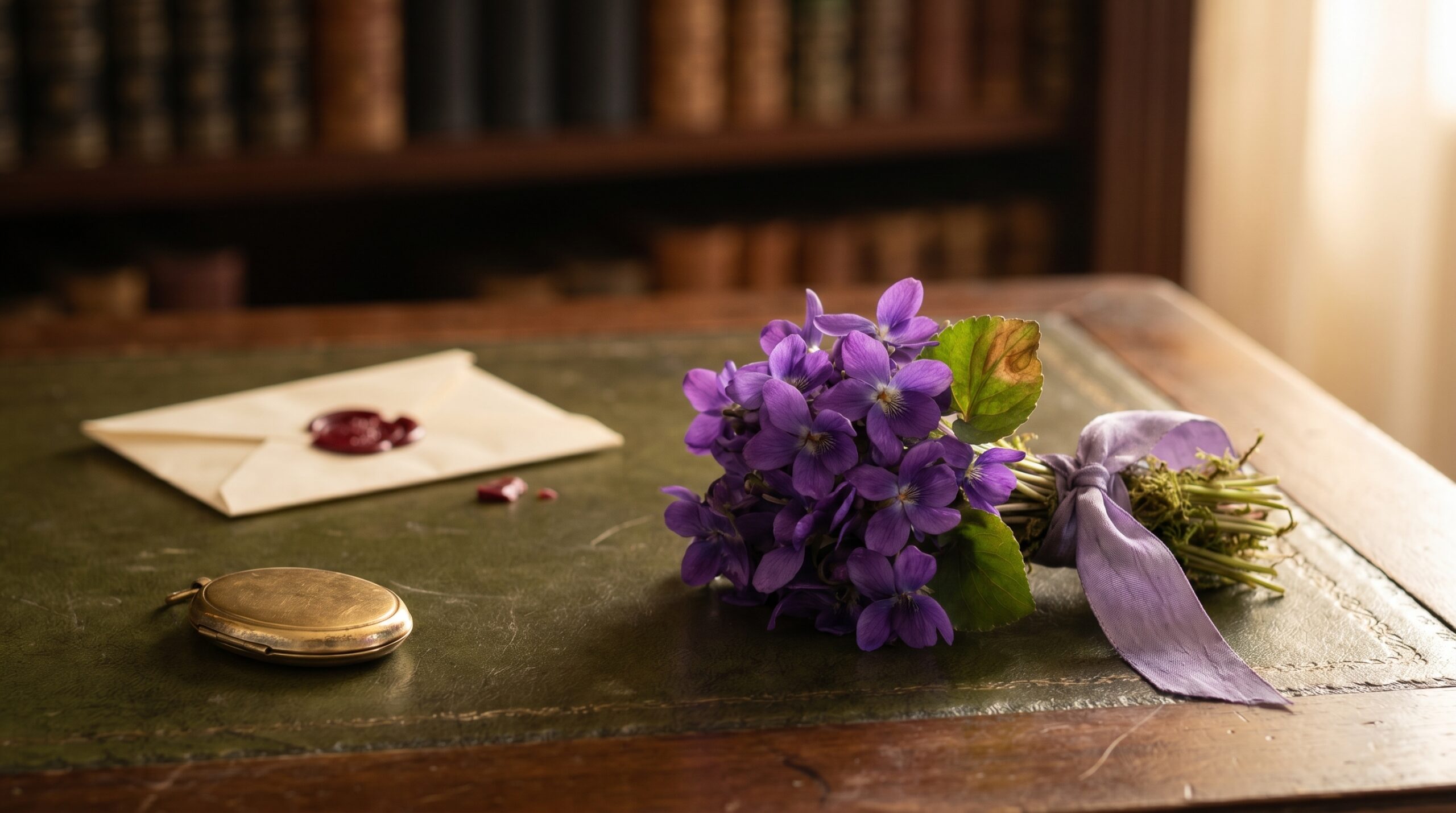
The origin lies in Napoleon’s marriage to Joséphine de Beauharnais. Joséphine loved violets, and Napoleon associated the flower with her throughout their marriage and after her death in May 1814. The flower became Napoleon’s private personal emblem, used in personal correspondence and intimate gifts rather than in state imagery.
The political dimension developed during Napoleon’s first exile to the island of Elba in April 1814. His supporters in France adopted violet as a secret recognition symbol for Bonapartist sympathy under the restored Bourbon monarchy. A common code phrase circulated among supporters: “Aimez-vous la violette?” (“Do you love the violet?”). The expected reply varied by tradition, but a positive response signaled Bonapartist loyalty. Napoleon himself became known by the nickname “Caporal Violette” (Corporal Violet) in supporter circles during this period.
A widely-circulated prediction during the exile held that Napoleon would “return in the spring with the violets.” He escaped from Elba and returned to Paris on March 20, 1815, beginning the period known as the Hundred Days. The timing coincided with the actual violet bloom in much of France, which reinforced the symbolic prediction in retrospect and cemented violet’s place in Bonapartist iconography.
After Waterloo in June 1815 and Napoleon’s second exile to the remote South Atlantic island of Saint Helena, violet became permanently associated with Bonapartist nostalgia. Throughout the nineteenth century, French Bonapartists wore violet jewelry, gave violet bouquets at memorial gatherings, and used violet-colored fabric and ornament as quiet political statements during periods when overt Bonapartist activity was discouraged or illegal. The “violette de Toulouse” cultivar, developed in the same period, gained additional cultural weight through this Bonapartist association.
This depth of political-personal-romantic floral symbolism is unique to violet in European tradition. No other flower has an equivalent association with a single historical figure across two centuries of continuing cultural reference. The connection still appears in modern French culture: Napoleon-themed gift shops sell violet items, and academic studies of Napoleonic iconography routinely treat violet as a primary visual marker.
The Greek myth of Io
The Greek mythological tradition gives violet a second cultural anchor, older than the Napoleonic association and more diffuse in its modern presence.
In the myth, Zeus fell in love with Io, a young priestess of Hera. To protect Io from Hera’s jealousy, Zeus transformed her into a white heifer. The earth produced sweet violets specifically for Io to graze on while in her transformed state. The Greek name for violet, “ion” (ἴον), is etymologically connected to Io’s name and preserves the myth in the flower’s standard botanical reference.
The myth gave violet the symbolic readings of modesty (Io was hidden, protected) and watchful love (Zeus’s continuing care for her despite her transformation). Ancient Greek wedding crowns often included violets as a symbolic invocation of the Io tale, reading the flower as a sign of protective devotion in marriage.
Athens used violet as a civic symbol. The phrase “Athens, the violet-crowned city” appears in Pindar’s poetry and recurs in classical Greek references to the city. Wild violets bloomed extensively on the hills around classical Athens in spring, and the visual landscape contributed to the symbolic naming as much as any specific civic decree.
The Io myth and the Napoleonic association share a common register despite their two-thousand-year separation: violet as the flower of hidden devotion, protected love, and quiet loyalty across difficult circumstances. The two anchors reinforce rather than contradict each other in modern violet symbolism.
What violet colors mean
Violet color shifts the meaning within the broader theme of modesty and faithful love. Standard Western readings include:
- Purple violet: the most iconic color. Modesty, watchful love, and faithfulness. Bonapartist political loyalty in nineteenth-century France. The traditional “say it without saying it” flower for understated affection.
- White violet: innocence, modesty in the strictest reading, and “let’s take a chance on happiness” (Victorian florist convention). Often used in wedding bouquets where modesty and innocence are the desired symbolic register.
- Yellow violet: rural humility and modest happiness. The Korean tradition reads yellow violet as shy love (the Jan 9 entry in the Korean 365-day system).
- Blue violet: faithfulness and devotion. The dominant reading of the North American native species Viola sororia.
- Heartsease (Viola tricolor): “you occupy my thoughts.” The tricolor flower appears in Shakespeare’s A Midsummer Night’s Dream as the source of Oberon’s love potion. The Shakespearean reference is a common gift-card line on heartsease bouquets in modern English-speaking countries.
Florist usage treats violet as the understated affection flower rather than the grand-declaration flower. Violet bouquets work well for thank-you gestures, sympathy gifts, and quiet birthday acknowledgments where modesty is part of the message. They are less common as romantic-anniversary or Valentine’s Day choices because the violet symbolic register reads as reserved rather than passionate.
February personalities by flower symbolism
Reading personality from a birth flower is closer to a horoscope than to psychology. Take it as a useful lens, not as evidence. The two February flowers offer a contrast that many readers find meaningful.
The violet side of February reads as quiet strength: modesty without weakness, faithfulness through long absences (the Napoleon-Joséphine archetype), and watchful protective love. People in the violet profile are the partners who maintain steady devotion through difficult periods, the friends who keep secrets reliably, and the family members who carry weight without making it visible. The violet register is reserved rather than demonstrative.
The primrose side reads as youthful openness: first-love optimism, fairy-tale wonder maintained into adulthood, and the willingness to begin again. People in the primrose profile are the ones who keep enthusiasm alive across years, who treat every new project with the energy of a first try, and who maintain childlike curiosity past the point where most adults set it aside.
The combination describes a February personality that pairs gentle determination with sustained idealism. February-born readers who describe themselves as both quietly faithful and persistently hopeful will recognize the fit.
Gift ideas for February birthdays
February birthdays often fall close to Valentine’s Day, which creates either a coordination opportunity or a coordination problem depending on the relationship. The two birth flowers offer alternatives to the standard Valentine’s red rose for the specifically February-born recipient.
A small violet bouquet works well when violet stems are in season (late winter and early spring). Commercial florist supply of fresh violet has declined over the past century, but specialty florists and farmers’ markets in mild climates often carry violet bunches in February. Pairing violet with sweet pea or freesia extends the bouquet without overwhelming the violet’s modest scale.
Crystallized violet confections (“violettes cristallisées de Toulouse”) are a real and continuing French tradition. The candied flowers come in small boxes from specialty patisseries and chocolatiers, and they make a distinctive gift that draws on the actual violet cultivation tradition of southern France. Online suppliers ship internationally for under thirty dollars per box.
Violet-themed perfumes are another option. The Caron house has produced violet-centered fragrances since the early twentieth century, and modern perfumers (Penhaligon’s, Guerlain, Tom Ford) all offer violet-prominent compositions. Pairing a perfume with a small fresh bouquet doubles the violet message.
Primrose plants in small pots are a different category of gift. The flowering pot lasts weeks indoors and can be planted outdoors in spring to naturalize in a shady garden corner. Price runs from about ten dollars for a single pot to thirty dollars for a multi-color collection.
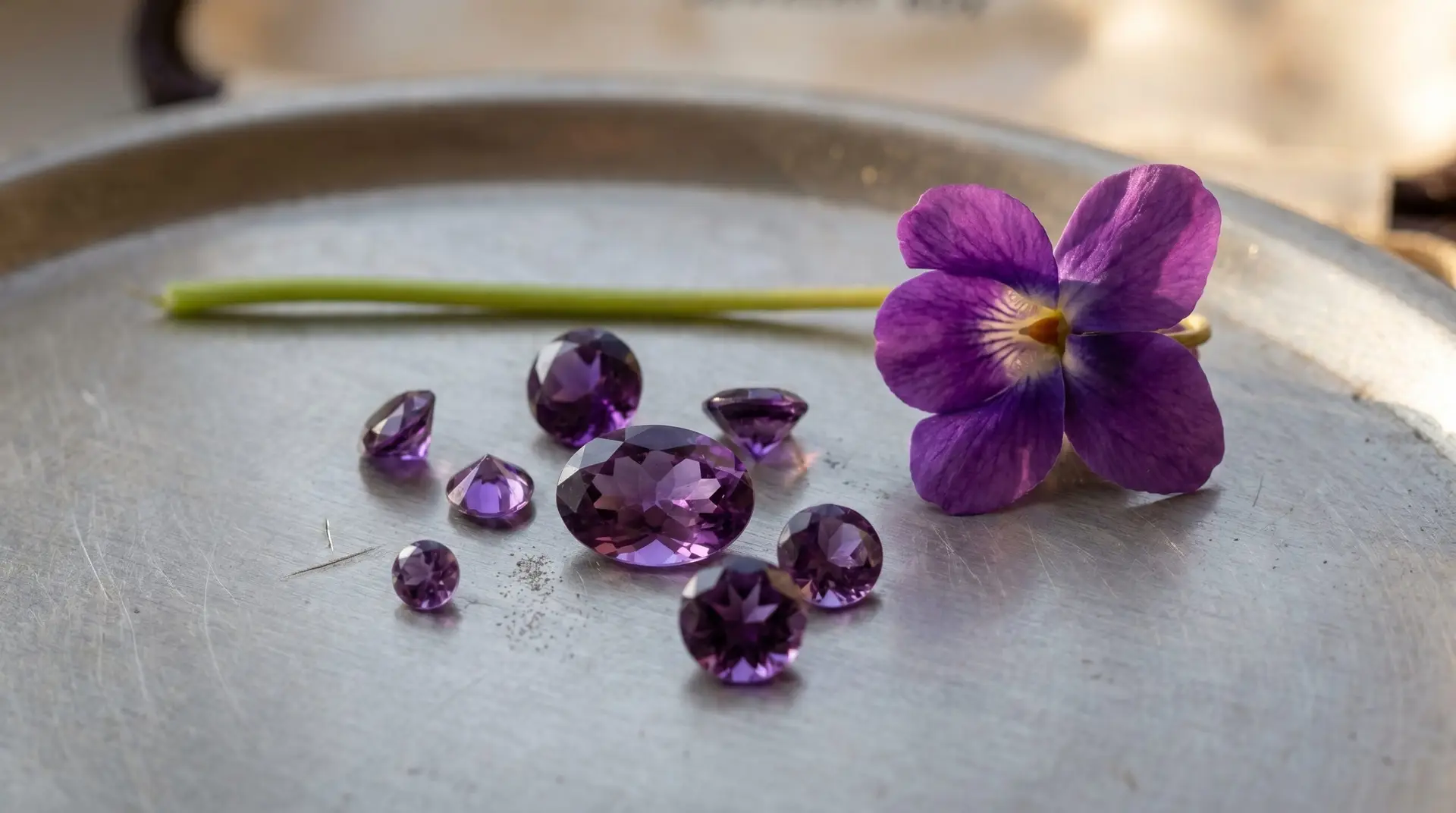
For Napoleonic history enthusiasts, a small violet-themed jewelry piece (violet enamel on amethyst, the February birthstone) draws on both the violet symbolism and the color-harmony of February’s birthstone. Price tiers run from about twenty dollars for simple amethyst studs to over two hundred dollars for fine jewelry pieces with violet motif work.
At a glance
Questions
Frequently asked
What is February’s birth flower?
Violet as the primary and primrose as the secondary. Violet is Viola odorata (sweet violet) or related Viola species, a small fragrant perennial native to Europe and western Asia. Primrose is Primula vulgaris, a yellow-flowered woodland native of the British Isles and continental Europe.
Why is violet February’s birth flower?
Violet blooms in late winter in mild climates (the Mediterranean coast, southern England, the American South), making it one of the few flowers available outdoors in February. The flower also has one of the deepest documented cultural histories in Western tradition: Greek mythology, Athenian civic identity, and the Napoleonic association combine to give violet a heavier symbolic weight than any other late-winter flower.
What did Napoleon’s violet mean?
Violet was Napoleon Bonaparte’s personal emblem, originating in his marriage to Joséphine de Beauharnais. After Joséphine’s death in 1814 and Napoleon’s exile to Elba, his supporters adopted violet as a secret recognition symbol for Bonapartist sympathy. Napoleon himself became known as “Caporal Violette” (Corporal Violet) in supporter circles. The association persisted throughout the nineteenth century and continues to appear in modern French cultural references.
Why was Napoleon called “Caporal Violette”?
The nickname came from his supporters during his first exile to Elba in 1814-1815. Violet was the secret recognition symbol for Bonapartist sympathizers, and “Corporal Violet” became Napoleon’s affectionate code name within this network. The widely-circulated prediction that he would “return in the spring with the violets” gave the nickname additional weight when he did in fact return to Paris in March 1815.
Are violets and pansies the same flower?
Closely related but botanically distinct. Both are in the genus Viola, but “violet” typically refers to wild species (V. odorata, V. sororia, V. tricolor) while “pansy” refers to the cultivated hybrid Viola × wittrockiana developed from wild parents in the nineteenth century. Pansies are larger, often more dramatically patterned, and generally have weaker fragrance than sweet violet.
What does the Greek myth say about violets?
Zeus transformed his lover Io into a white heifer to protect her from his wife Hera’s jealousy. The earth produced sweet violets for Io to graze on while in her transformed state. The Greek name for violet (“ion”) preserves the connection to Io, and the myth gave the flower its symbolic readings of modesty (Io was hidden) and watchful love (Zeus’s continuing care).
Can you eat violet flowers?
Yes, sweet violet (V. odorata) flowers are edible and have been used in European confections for centuries. Crystallized violets (“violettes cristallisées”) are a real French confection still produced commercially in Toulouse. Fresh violet petals also work in salads, syrups, and as cake decoration. Use only violets you have grown yourself or have identified with certainty, and avoid violets from roadsides or treated lawns due to pesticide concerns.
What does primrose mean?
Young love, first beginnings, and fairy-tale wonder. The name comes from the Latin primus (first), reflecting primrose’s position as one of the earliest spring flowers in temperate European woodlands. Celtic folklore reads primrose as a doorway to the fairy world, and the flower has strong Christian Marian associations through its early spring bloom timing.
What birthstone goes with February’s birth flower?
Amethyst. The purple of amethyst harmonizes directly with the purple of violet, making jewelry that combines amethyst stones with violet motif work a coherent February birthday gift. Some modern birthstone lists also include jasper as an alternative February stone.
Why is the primrose called primrose?
The English name comes from the Latin primus (first), reflecting the plant’s position as one of the earliest spring flowers in temperate European woodlands. The naming as “first rose” is symbolic rather than botanical; primrose is not in the rose family. The Middle English form “primerole” influenced the modern English word.
Sources
- Violet (Viola) · Encyclopedia Britannica
- Viola growing guide · Royal Horticultural Society
- Primula vulgaris (common primrose) · Encyclopedia Britannica
- Napoleon and the violet, French historical archives · Fondation Napoléon
Keep reading
February birth flowers by day: the Korean 365-day tradition
Primrose flower meaning: Celtic fairy folklore, botany, and growing
Violet tattoo: fine-line designs, historical meaning, and placement
Birth flower by month: all 12 monthly flowers
Enjoying our flower guides? Add YourFlowersGuide as a preferred source on Google. It helps more readers find us.
Add to Preferred Sources