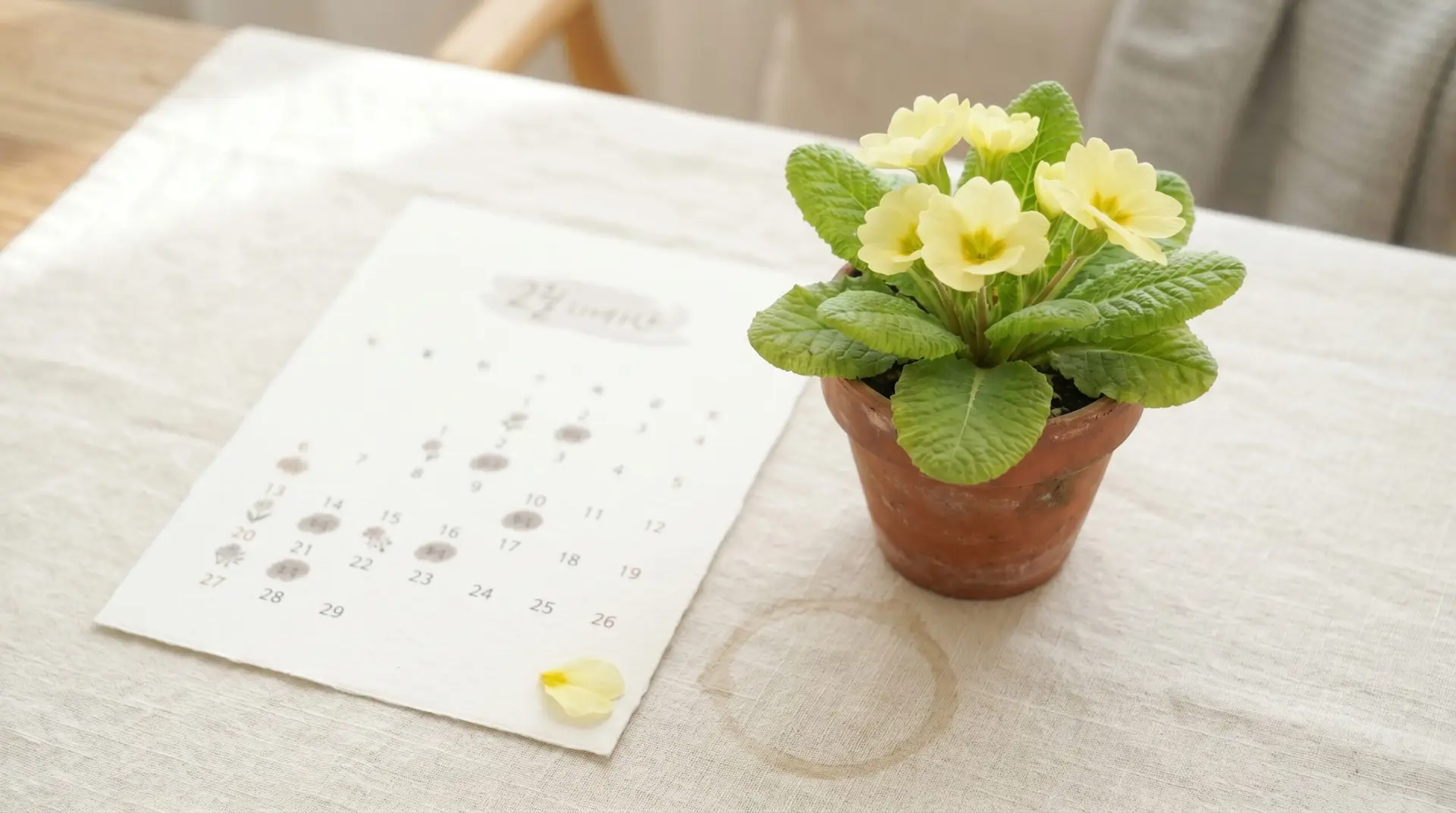
Korean tradition assigns a unique flower to each of February’s 28 or 29 days. The system runs parallel to the Western birth flower tradition (which gives all of February to violet and primrose) and offers a more granular reading that ties specific birthdays to specific blooms. This approach has roots in older East Asian floral calendars and has gained mainstream visibility in modern Korea through entertainment sources, gift culture, and matchmaking traditions.
February in the Korean list opens with primrose on day 1, which is the only direct overlap with Western secondary tradition for the month. The list moves through themes of pure love and devotion in the first ten days, overcoming adversity in the middle ten days, and memory and purity in the final stretch. The list includes several culturally significant entries: Korea’s national flower rose of Sharon (mugunghwa) on day 22, the Valentine’s Day chamomile reading on day 14 with its “overcoming adversity” symbolism, and the leap-year-only armeria on day 29. The full Korean 365-day system covers all calendar days and offers a distinctive East Asian approach to flower symbolism. The complete tradition appears in the Korean 365-day birth flower portal.
In this guide 6 sections
Early February (Feb 1-10): pure love and devotion themes
The first ten days of February in the Korean tradition center on pure love and devotion themes. February 1 opens with primrose, the same flower the Western tradition recognizes as the secondary February birth flower; this is a rare direct cross-cultural alignment that gives the date doubled symbolic weight. February 7 brings forget-me-not, a flower with strong Valentine’s-adjacent symbolism in many cultures that pairs naturally with the Korean reading of “don’t forget me.”
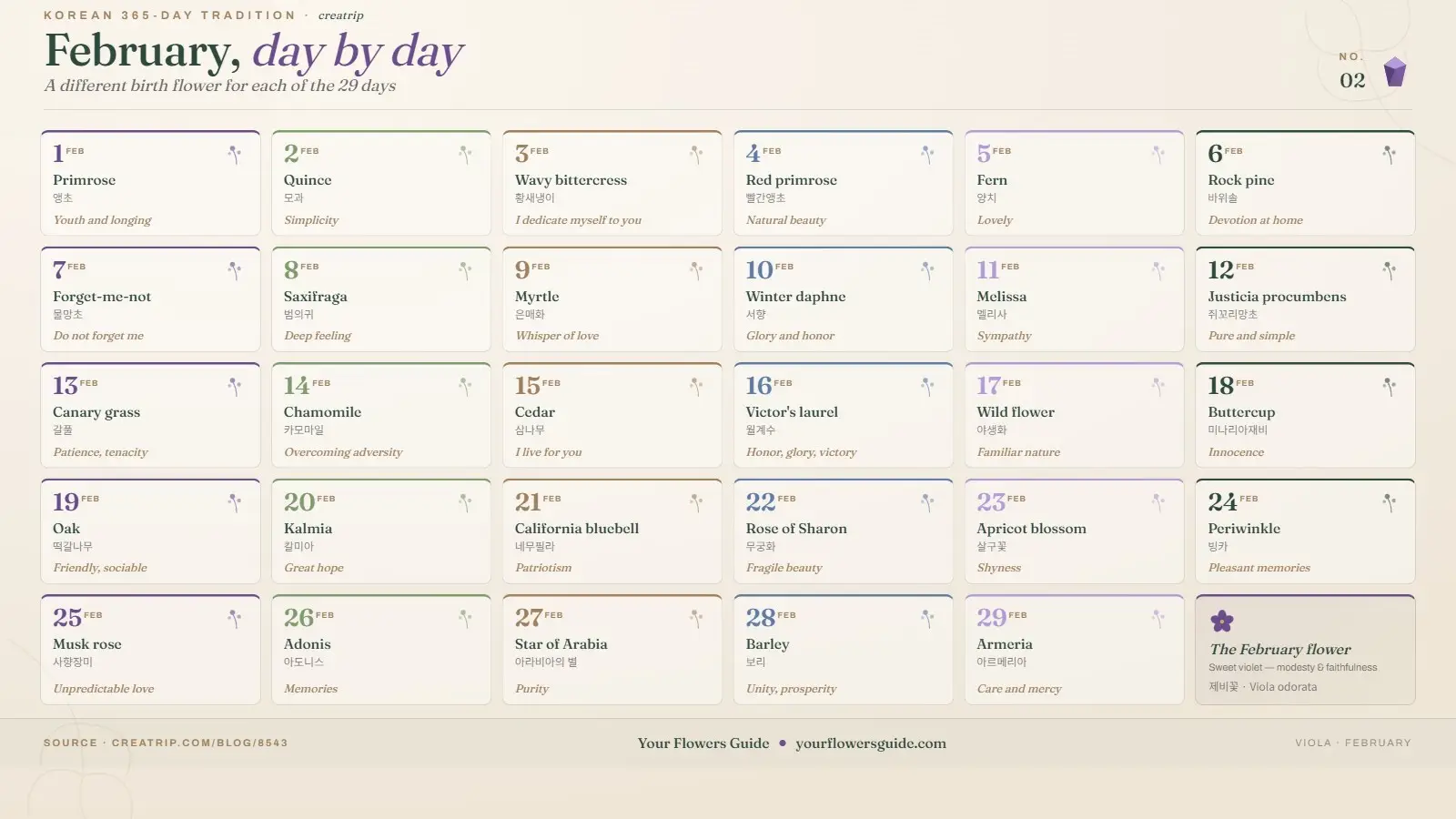
| Day | Flower | Korean (한국어) | Meaning |
|---|---|---|---|
| Feb 1 | Primrose | 앵초 | Youth and longing |
| Feb 2 | Quince | 모과 | Simple |
| Feb 3 | Wavy bittercress | 황새냉이 | I dedicate myself to you |
| Feb 4 | Red primrose | 빨간앵초 | Natural beauty |
| Feb 5 | Fern | 양치 | Lovely |
| Feb 6 | Rock pine | 바위솔 | Working hard in the home |
| Feb 7 | Forget-me-not | 물망초 | Don’t forget me |
| Feb 8 | Saxifraga | 범의귀 | Deep feelings |
| Feb 9 | Myrtle | 은매화 | Whisper of love |
| Feb 10 | Winter daphne | 서향 | Glory, honor |
The early February cluster reads as a series of quiet affectionate gestures: dedication (Feb 3), natural appreciation (Feb 4 and Feb 5), quiet domestic effort (Feb 6), and “don’t forget me” devotion (Feb 7). The flowers are mostly small understated plants that bloom in late winter or live as quiet evergreen presences (rock pine, winter daphne) rather than dramatic showy bloomers. The pattern matches the Western reading of February as a month of quiet faithful love rather than passionate declaration.
The primrose entry on February 1 deserves particular attention. The Western tradition lists primrose as February’s secondary birth flower, with the Latin etymology of Primula (from primus, meaning first) reflecting the plant’s status as one of the earliest spring flowers. Korean tradition independently selected primrose for the first day of February. The convergence is striking: two unrelated traditions assigned the same flower to the same calendar position based on the same observable seasonal characteristic.
Mid February (Feb 11-20): adversity overcome
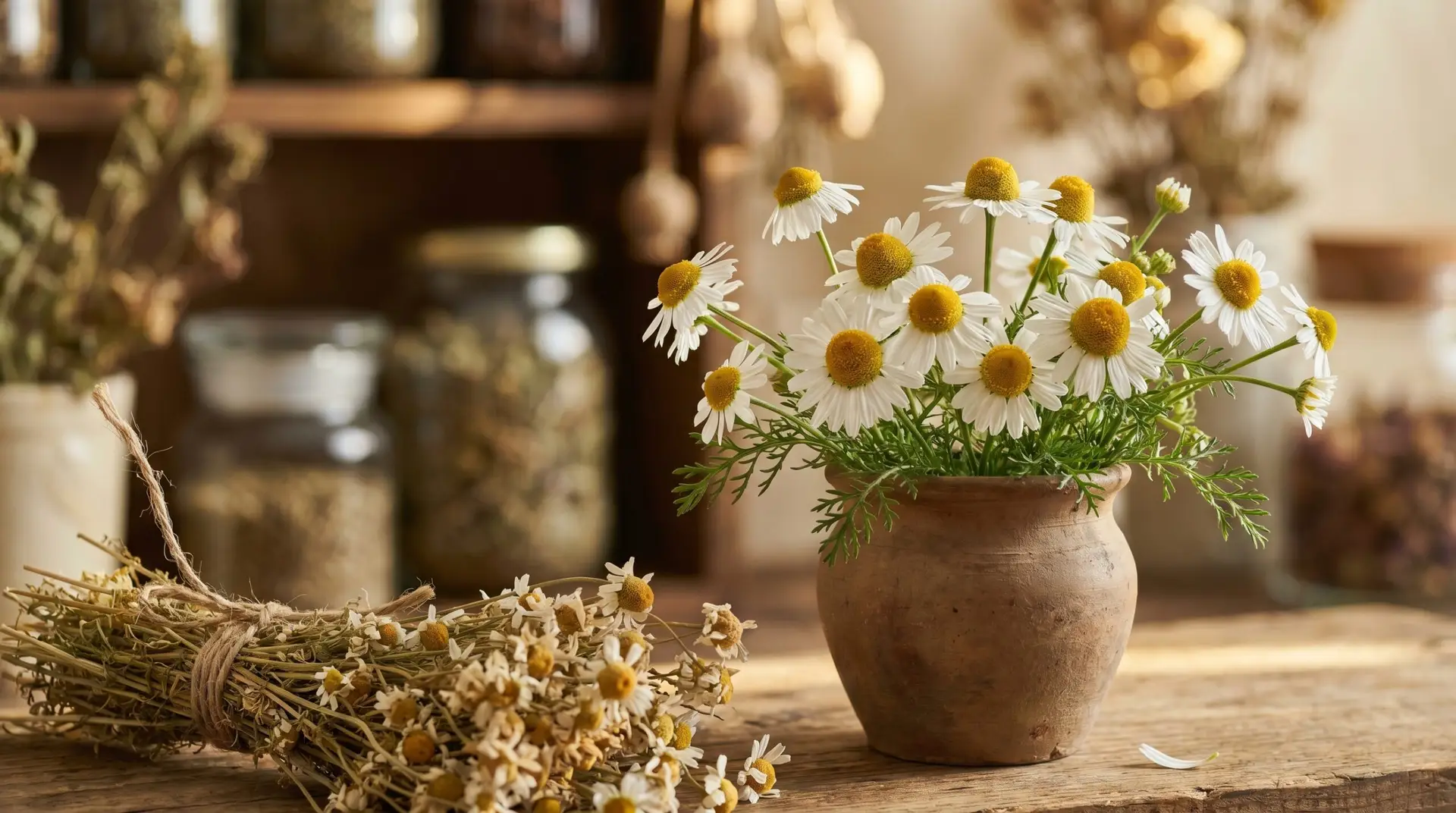
The middle ten days of February shift to emotional themes of overcoming difficulty, sympathy, and pure simplicity. February 14, Valentine’s Day in Western tradition, has chamomile in the Korean reading with the meaning “overcoming adversity.” The pairing is culturally interesting: where Western Valentine’s Day emphasizes romantic love, Korean tradition reads February 14 as a date for sympathy and persistence through difficulty.
| Day | Flower | Korean (한국어) | Meaning |
|---|---|---|---|
| Feb 11 | Melissa | 멜리사 | Sympathy |
| Feb 12 | Justicia procumbens | 쥐꼬리망초 | Pure, simple |
| Feb 13 | Canary grass | 갈풀 | Patience, tenacity |
| Feb 14 | Chamomile | 카모마일 | Overcoming adversity |
| Feb 15 | Cedar | 삼나무 | I live for you |
| Feb 16 | Victor’s laurel | 월계수 | Honor, glory, victory |
| Feb 17 | Wild flower | 야생화 | Familiar nature |
| Feb 18 | Buttercup | 미나리아재비 | Innocent |
| Feb 19 | Oak | 떡갈나무 | Friendly, sociable |
| Feb 20 | Kalmia | 칼미아 | Great hope |
The mid-February stretch covers the emotional weight of late winter directly. The flowers and plants assigned to these days lean toward perennial woody plants (cedar, oak, victor’s laurel) and resilient meadow flora (canary grass, buttercup, wild flower) rather than showy garden blooms. The reading emphasizes endurance: patience and tenacity on day 13, overcoming adversity on day 14, “I live for you” devotion on day 15, and great hope on day 20.
February 14 in the Korean reading offers a thoughtful counterpoint to Western Valentine’s Day commercial culture. The chamomile assignment with its “overcoming adversity” meaning shifts the day from romantic declaration to sympathetic persistence. Modern Korean gift culture does observe Valentine’s Day with chocolates and romantic gestures (women give chocolates to men on February 14, with the reciprocal White Day on March 14), but the traditional flower assignment keeps the older symbolic reading. A February 14 birthday in the Korean reading sits at the intersection of romantic culture and stoic endurance.
The buttercup on February 18 has the same “innocent” meaning that the Korean tradition assigns to buttercup on January 20, which is a rare same-flower-same-meaning repetition in the Korean calendar. The repetition may reflect older sources that listed buttercup at multiple positions; modern Korean sources typically present the list as-is without resolving the duplication.
Late February (Feb 21-29): memory and purity
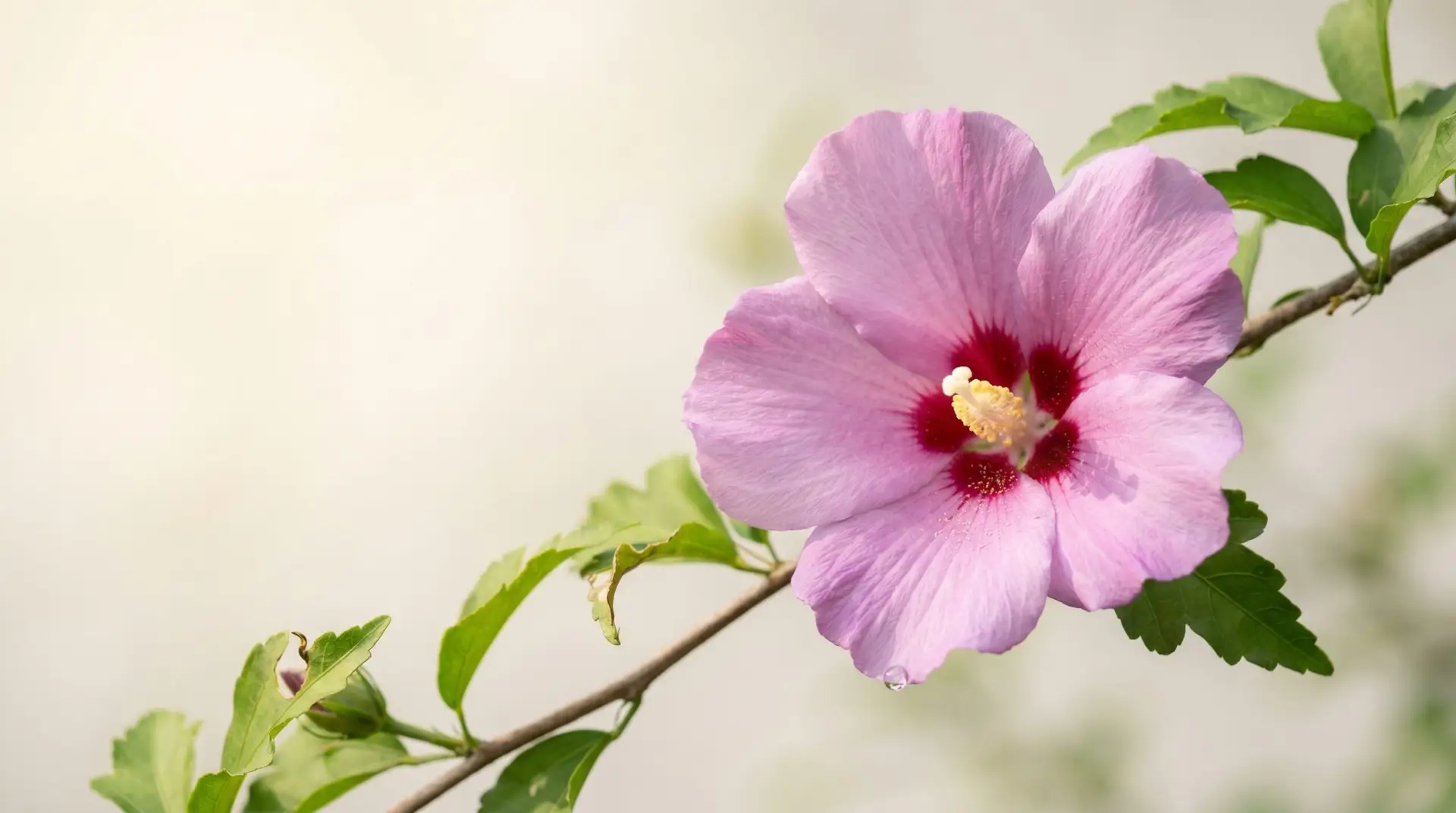
The final stretch of February runs late winter into early spring. The themes shift toward memory, unity, and purity. February 22 brings rose of Sharon (Hibiscus syriacus), Korea’s national flower, with the symbolic reading “fragile beauty.” The placement of mugunghwa at this date connects the day directly to Korean national identity and gives February 22 birthdays a particular cultural anchor.
| Day | Flower | Korean (한국어) | Meaning |
|---|---|---|---|
| Feb 21 | California bluebell | 네무필라 | Patriotic |
| Feb 22 | Rose of Sharon | 무궁화 | Fragile beauty |
| Feb 23 | Prunus (apricot blossom) | 살구꽃 | Shy |
| Feb 24 | Periwinkle | 빙카 | Pleasant memories |
| Feb 25 | Musk rose | 사향장미 | Unpredictable love |
| Feb 26 | Adonis | 아도니스 | Memories |
| Feb 27 | Star of Arabia | 아라비아의 별 | Purity |
| Feb 28 | Barley | 보리 | Unity, prosperity |
| Feb 29 | Armeria | 아르메리아 | Care and mercy (leap year only) |
The late February cluster moves visibly toward spring. Prunus (apricot blossom) on day 23 marks the first stone-fruit bloom of the season in temperate East Asia. Periwinkle (day 24), musk rose (day 25), and the Mediterranean Adonis (day 26) all represent emerging spring growth. The cluster closes with grain symbolism on day 28 (barley, unity and prosperity) and the leap-year-only armeria on day 29, which means “care and mercy” in the Korean reading.
The rose of Sharon (mugunghwa) on February 22 is the most culturally significant entry in the entire month. Hibiscus syriacus is the national flower of South Korea, embedded in the national anthem (“mugunghwa samchŏlli” – rose of Sharon over three thousand li) and used as a national symbol on currency, government seals, and civic decoration. A February 22 birthday in Korean reading takes on the symbolic weight of the national flower assignment, which is a stronger civic-symbolic anchor than any other date in the month.
The leap-year armeria on February 29 is worth noting separately. Armeria maritima (sea thrift) is a small coastal flower with pink globe-shaped clusters, often used in rock gardens. The flower’s appearance only on the leap-year February 29 means a leap-day birthday in the Korean reading has a unique once-every-four-years floral assignment.
How Korea’s February compares to the Western tradition
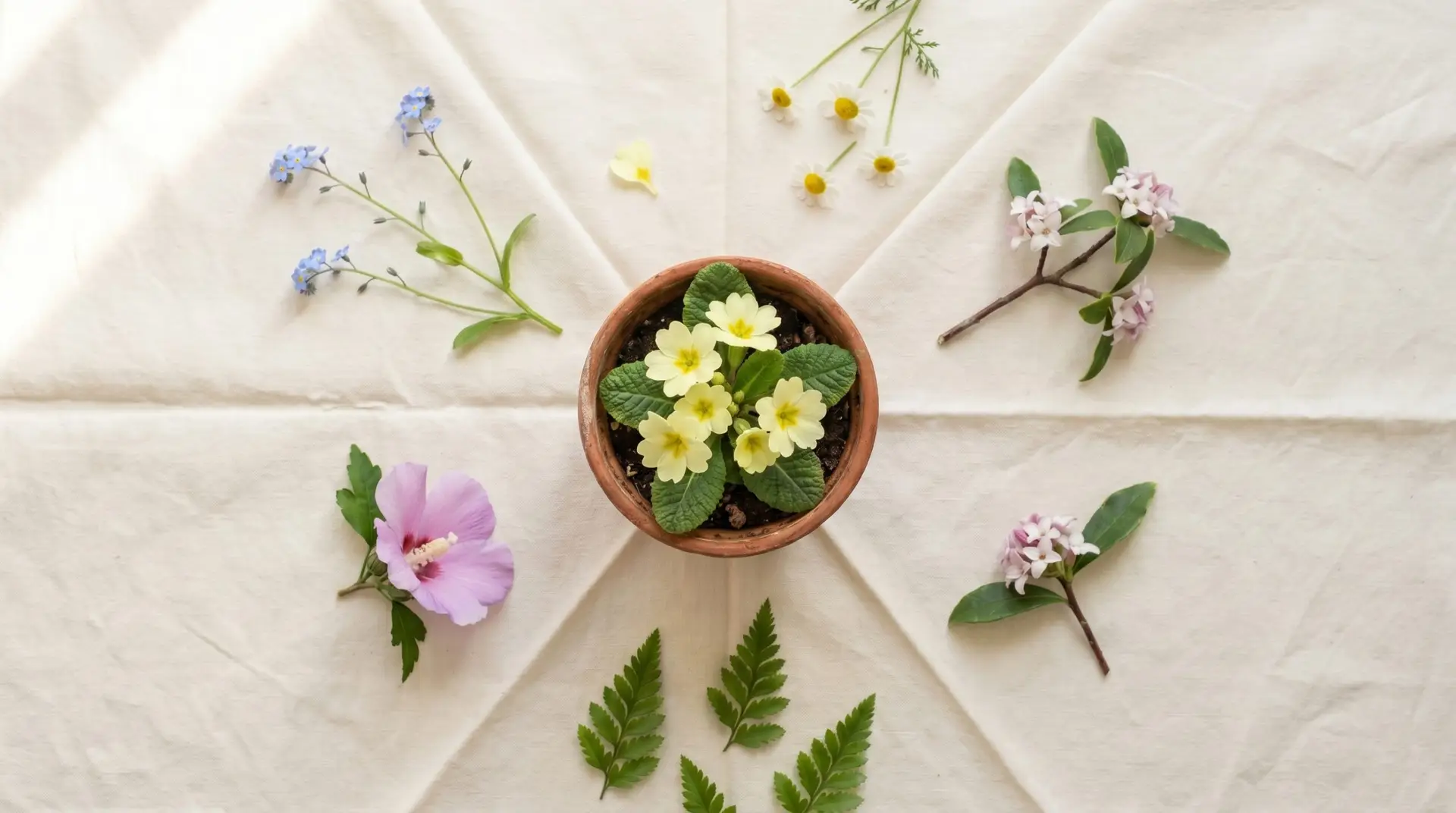
The two traditions read February differently. Western tradition assigns the entire month to violet (primary) and primrose (secondary), creating a single shared symbolic reading for every February-born person. Korean tradition assigns 29 distinct daily flowers, giving every February birthday a unique floral identity.
The direct overlap is primrose on February 1. Both traditions independently selected primrose for this date based on the flower’s late-winter or early-spring bloom and its symbolic association with first beginnings. A February 1 birthday has the strongest combined symbolic weight in the entire month: the Korean “youth and longing” reading and the Western “first beginnings” reading reinforce each other.
Violet, the Western primary, does not appear in the Korean February list. The Korean tradition uses violet for other calendar positions (notably January 9, where yellow violet means “shy love”). The two traditions independently developed their flower-to-month associations and arrived at non-overlapping primary choices.
The Valentine’s Day intersection (February 14) shows the difference in cultural register clearly. Western tradition treats February 14 as the central romantic day of the year. Korean tradition assigns chamomile with the meaning “overcoming adversity,” which reads as a more grounded sympathy-and-persistence symbolism. Modern Korean commercial culture has adopted Western Valentine’s Day conventions for chocolate-giving, but the traditional flower assignment retains the older symbolic reading.
The Korean national flower placement on February 22 (rose of Sharon) gives the date a civic-cultural anchor that has no Western equivalent. Mugunghwa appears in the South Korean national anthem and on government symbols, which makes the February 22 birthday assignment a meaningful identity marker for Korean readers.
At a glance
Questions
Frequently asked
What is the Korean birth flower for February 14?
Chamomile, with the meaning “overcoming adversity.” The Korean tradition reads Valentine’s Day as a date of sympathetic persistence rather than romantic declaration, which contrasts with modern Western Valentine’s Day culture.
What is the Korean birth flower for February 22?
Rose of Sharon (Hibiscus syriacus), Korea’s national flower, with the meaning “fragile beauty.” The flower appears in the South Korean national anthem and on government symbols, which makes February 22 a culturally significant date in Korean tradition.
Why is primrose on Feb 1 in both Korean and Western traditions?
Primrose blooms in late winter and early spring in temperate climates, making it one of the first flowers available outdoors. The Latin name Primula (from primus, meaning first) reflects this seasonal position. Two unrelated traditions independently selected the same flower for the same calendar position based on the same observable seasonal characteristic.
Why doesn’t violet appear in the Korean February list?
Korean tradition assigns violet to other calendar positions, including January 9 (yellow violet, “shy love”). The Korean and Western flower-to-date systems developed independently and selected different primary flowers for each month.
What is the leap-year-only February 29 birth flower?
Armeria (sea thrift, Armeria maritima) with the meaning “care and mercy.” The flower appears only in the leap-year version of the Korean list. A February 29 birthday in Korean tradition has a once-every-four-years floral identity.
Are Korean birth flowers official or just popular tradition?
They are popular cultural tradition rather than official government designation. The system has been published in Korean popular sources for decades and is widely recognized in modern Korean culture, but it does not hold official state designation in the way that the rose of Sharon holds official national flower status.
Which Korean February birth flower is for my birthday?
Find your date in the tables above. The Korean tradition assigns one specific flower to each day from February 1 (primrose) through February 28 or 29 (barley or armeria). Each daily flower has its own symbolic reading.
Sources
- Korean birth flower 365-day tradition guide · Creatrip Korean culture portal
Keep reading
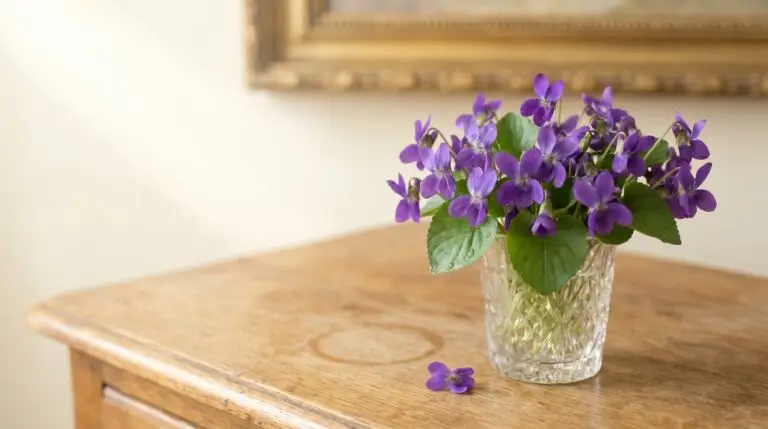
February birth flower: violet, primrose and what they mean
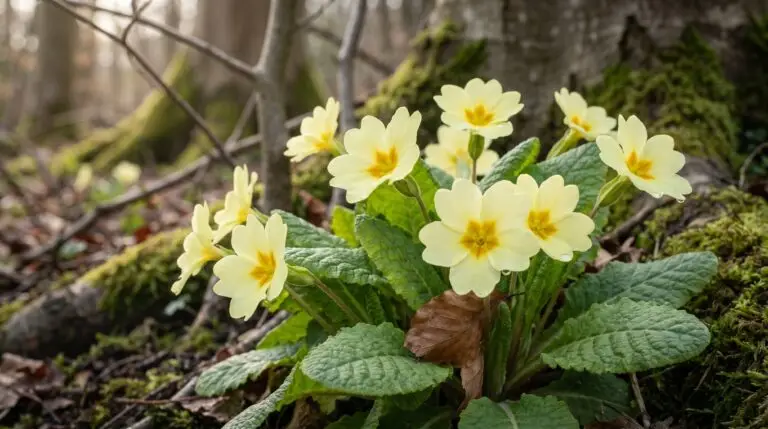
Primrose flower meaning: Celtic fairy folklore, botany, and growing
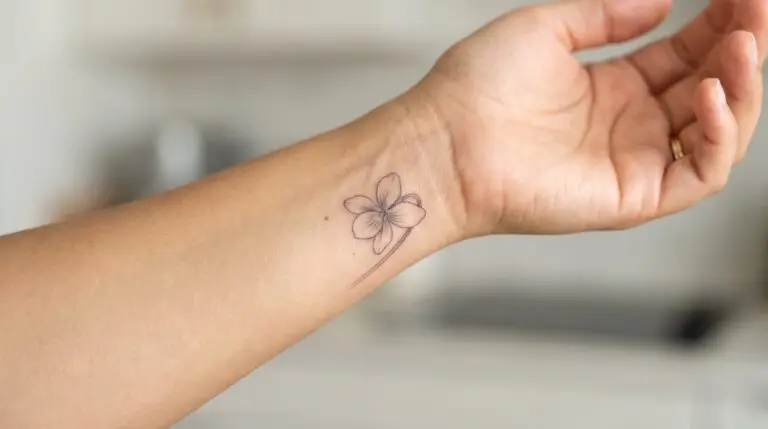
Violet tattoo: fine-line designs, historical meaning, and placement
Birth flower by month: all 12 monthly flowers
Enjoying our flower guides? Add YourFlowersGuide as a preferred source on Google. It helps more readers find us.
Add to Preferred Sources