Water lily is July’s primary birth flower, and its many-petaled radial form makes it among the most popular spiritual-symbolic tattoo subjects in modern Western tattoo culture. The flower symbolizes purity, enlightenment, and rebirth in basic Western reading, with additional layers from ancient Egyptian sacred tradition (Nymphaea caerulea, the blue water lily, associated with ancient Egyptian sun symbolism) and Buddhist enlightenment iconography (though Buddhist tradition traditionally uses true lotus rather than water lily). The combination gives water lily tattoos one of the deepest religious-symbolic anchorings in the entire Western birth flower tattoo vocabulary.
The water lily tattoo is often called “lotus tattoo” in casual usage, reflecting the popular Western conflation of Nymphaea (water lily) and Nelumbo (true lotus). Most “lotus tattoo” images and Pinterest searches actually depict water lily form rather than true lotus form. For July birth flower commemorative tattoos, water lily is the technically correct identification, though most readers will be familiar with the design as “lotus tattoo” in common usage.
In this guide
Why water lily works as a tattoo subject
Water lily holds several design advantages that explain its position as one of the most popular spiritual-symbolic flower tattoos. The many-petaled radial structure (typically 15 to 25 petals arranged around a central yellow stamen cluster) creates a visually distinctive flower silhouette that reads correctly at almost any scale. The flower’s symmetry suits mandala-style and geometric tattoo work particularly well. The cultural depth (ancient Egyptian, Buddhist, and broader spiritual associations) gives readers a meaningful symbolic register beyond simple decorative flower work.
The flat horizontal orientation of water lily (the flower floats on water) makes the tattoo work naturally on body placements with horizontal emphasis: the inner forearm, the upper chest, the back, and the outer thigh. The radial symmetry also makes the flower visually balanced from any viewing angle, suiting placements that the wearer wants visible from multiple directions.
The flower’s spiritual associations make water lily tattoos particularly popular for milestone life events: significant birthdays (marking spiritual growth), recovery from difficult periods (the rebirth symbolism), meditation practice commitments (the Buddhist enlightenment register), and memorial tattoos honoring spiritual mentors or family members with spiritual significance.
Style options for water lily tattoos
Style choice shapes longevity, placement, and visual register:
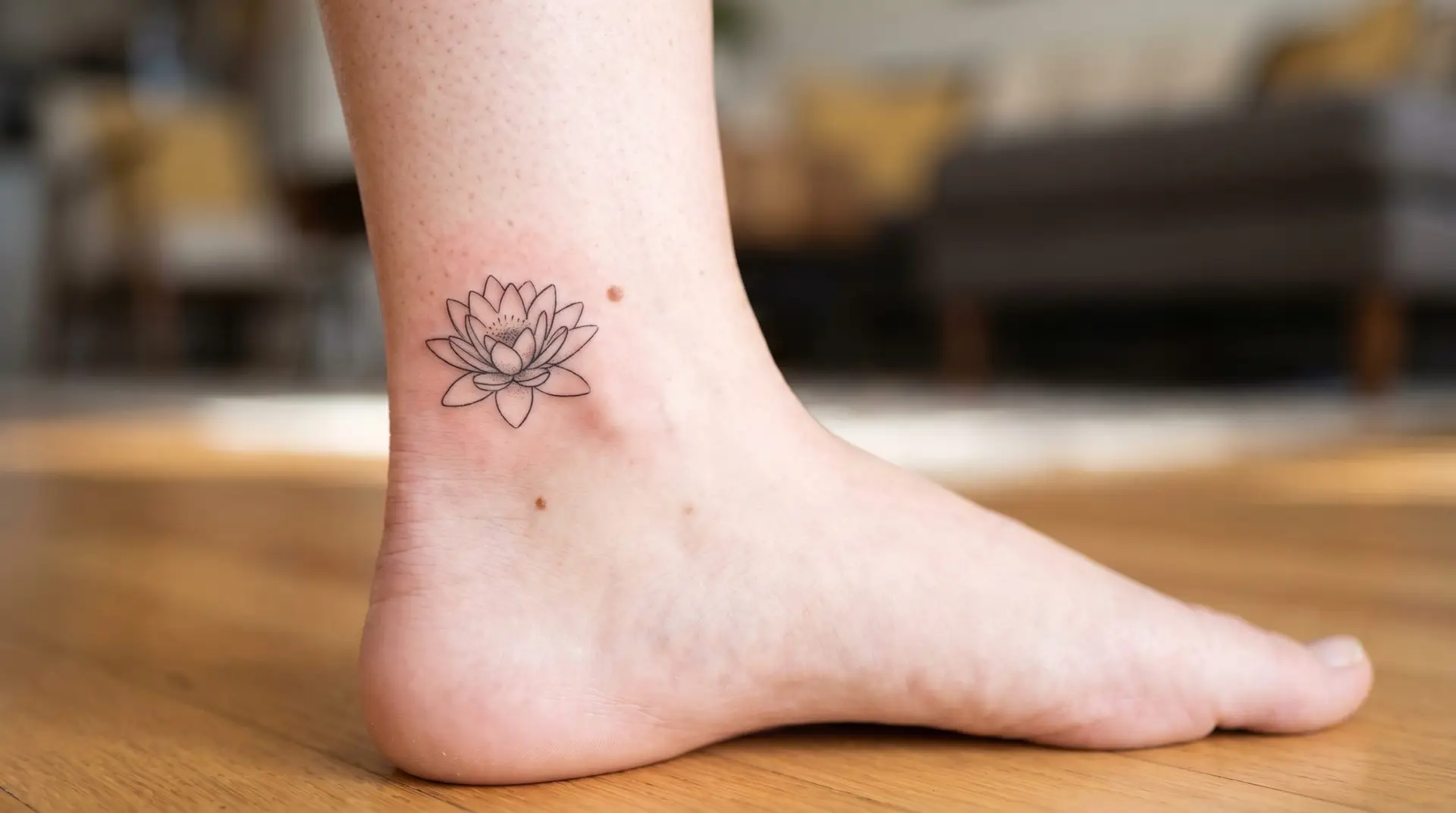
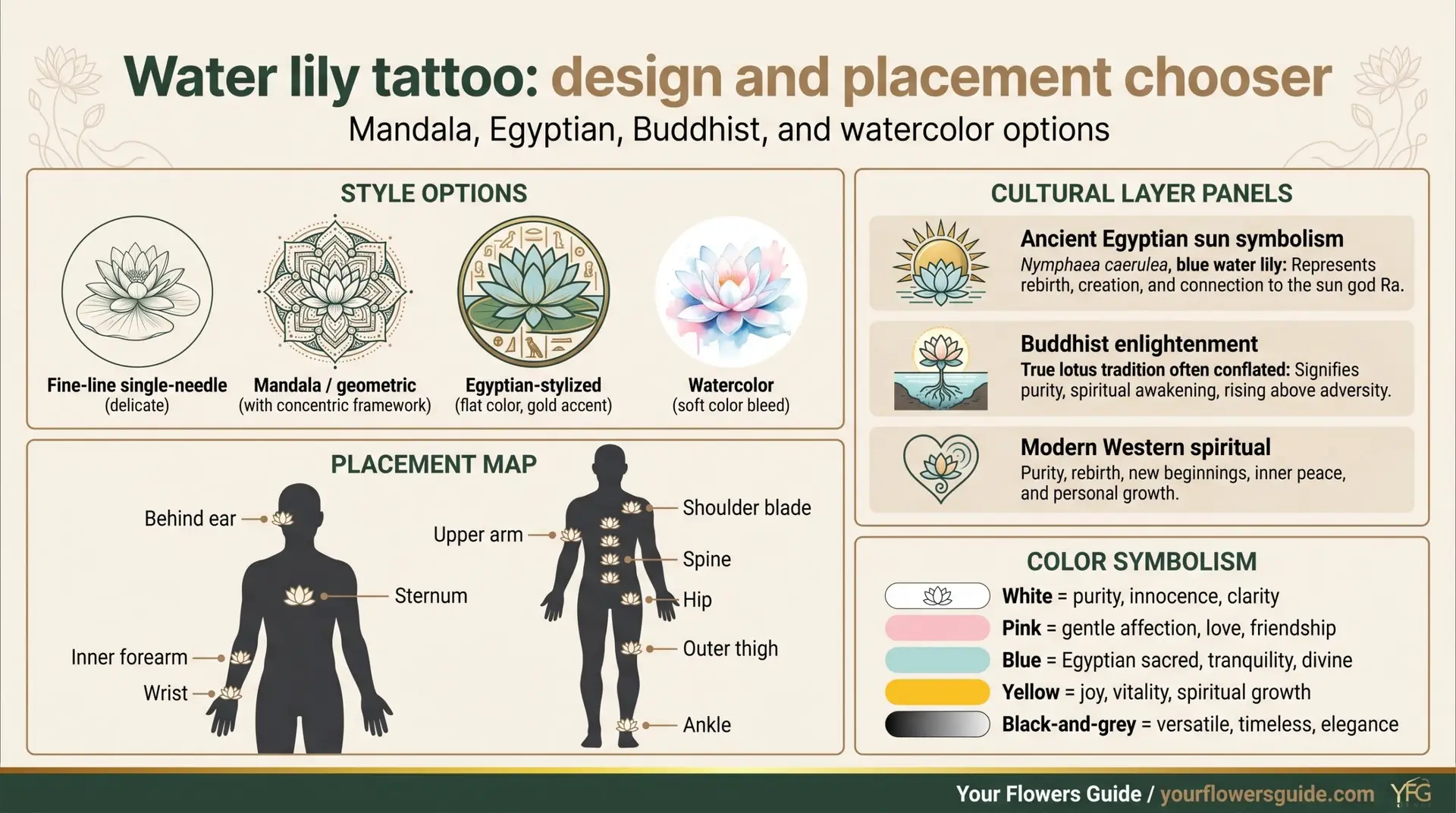
Fine-line single-needle. Delicate petal-by-petal rendering with thin clean lines. Works at small to medium scale (1.5 to 4 inches). Touch-ups every 5 to 10 years.
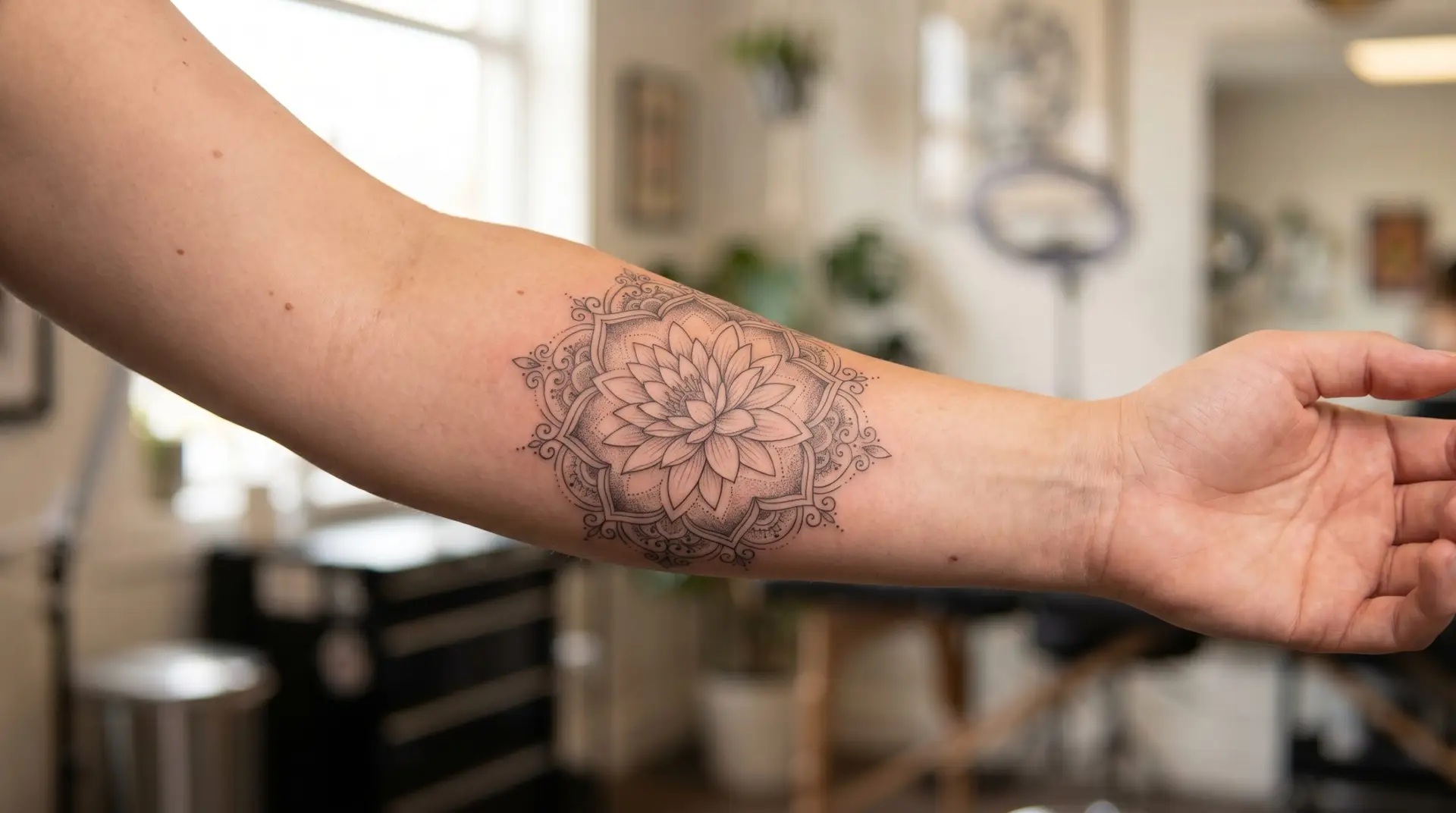
Mandala / geometric. Water lily stylized into mandala framework with concentric circles, sacred geometry elements, or geometric pattern fills. Modern popular style especially for spiritual-symbolic tattoos. Works at medium to large scale.
Traditional American. Bold black outline with saturated color fill. Less common for water lily than for rose but valid stylistic option. Works at medium scale.
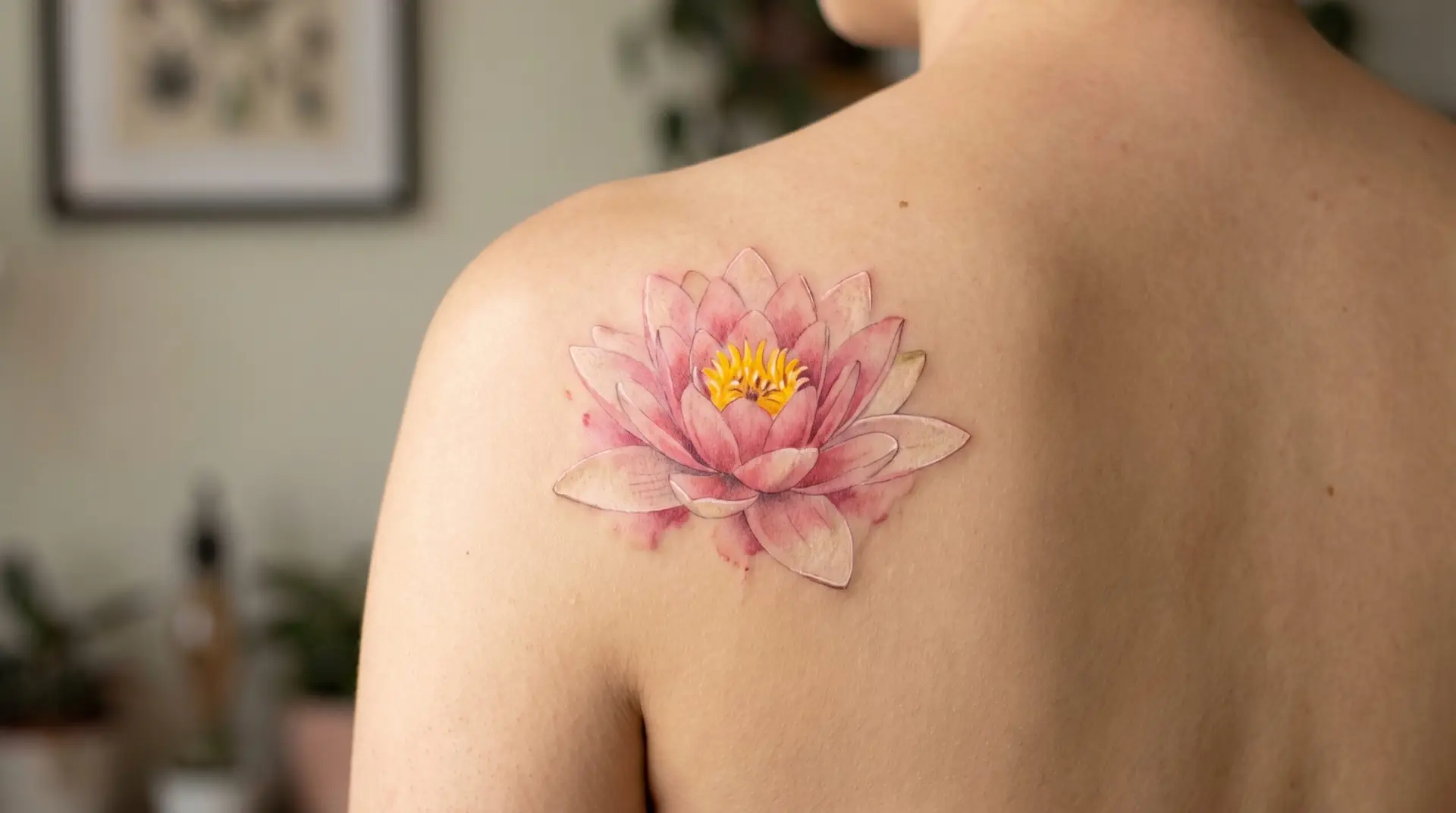
Watercolor. Soft color bleeding outward from central water lily outline. Suits the floating-on-water visual character. Requires touch-up every 3 to 5 years.
Photorealism. Photo-realistic water lily with detailed petal texture, water reflection effects, and dimensional shading. Requires large canvas (5 to 8 inches) and master-level artist.
Dotwork (pointillism). Texture from small dots creates soft fuzzy character suiting water lily petal softness. Medium scale (3 to 4 inches).
Japanese (irezumi-influenced). Water lily integrated with Japanese-style elements (water, waves, koi). Large scale, requires Japanese-style specialist.
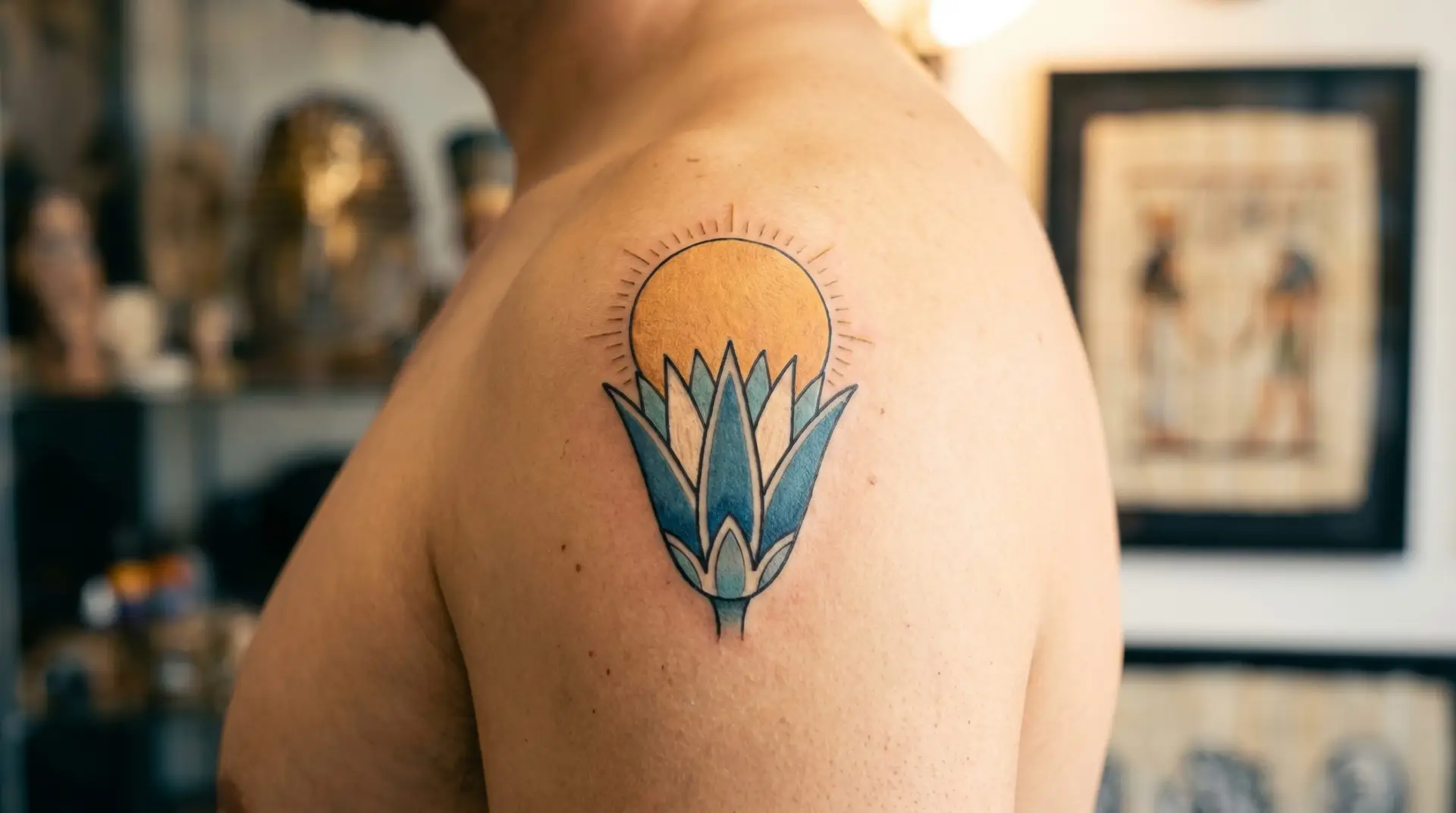
Egyptian-stylized. Stylized into ancient Egyptian artistic conventions (papyrus-style flat color, stylized petals). Suits readers drawn to the Egyptian sacred tradition layer specifically.
Egyptian and Buddhist cultural layers
Water lily tattoos can draw on two documented major cultural traditions for additional symbolic depth.
Ancient Egyptian sacred tradition. The blue water lily (Nymphaea caerulea) was associated with sun and creation symbolism in ancient Egyptian culture. The flower’s daily cycle of opening at dawn and closing at dusk was linked to the daily renewal of the sun. For tattoo integration, common designs include water lily with Egyptian-style sun disk above it (representing Ra), water lily with stylized Eye of Horus protective symbol, water lily with papyrus-style stylization (flat color, simplified petals, gold accent), or water lily integrated with hieroglyphic-style border elements.
The Egyptian layer suits readers with Egyptian family heritage, students of Egyptian history or religion, readers who connect to the sun-renewal symbolic register, or those drawn to the visual aesthetic of ancient Egyptian art.
Buddhist enlightenment tradition. Buddhist iconography traditionally uses true lotus (Nelumbo nucifera) rather than water lily, but the two flowers are frequently conflated in modern Western tattoo culture. For tattoo integration drawing on Buddhist symbolism, common designs include water lily/lotus in mandala-style framework, water lily with Buddha image or silhouette, water lily with om symbol or other dharma references, or water lily with Buddhist quote or mantra in script.
The Buddhist layer suits readers who practice Buddhist meditation, students of Buddhist philosophy or religion, readers drawn to mindfulness or contemplative spirituality, or those who use the lotus position in yoga practice.
A note on cultural sensitivity: religious-symbolic tattoos work best when personally meaningful rather than as costume. The Egyptian or Buddhist layers add depth to a water lily tattoo when the wearer has genuine connection to or appreciation for the source traditions; designs that simply borrow exotic religious imagery without understanding can feel hollow to both the wearer and to others familiar with the source traditions.
Color choices and symbolism
Water lily color shifts the symbolic reading within the broader spiritual register:
White water lily tattoo: the most traditional. Pure purity, innocence, spiritual awakening. The default reading and the dominant memorial choice.
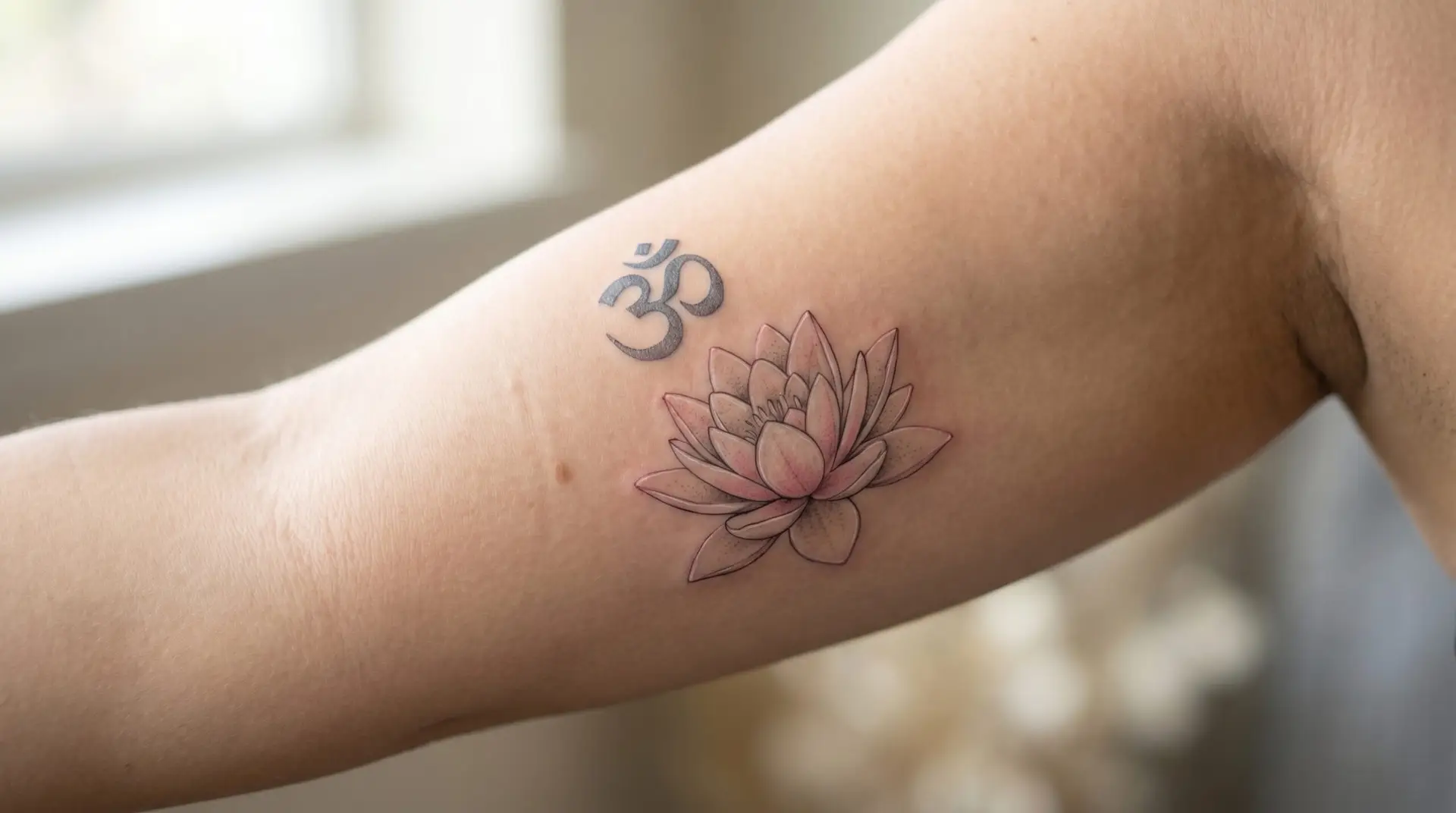
Pink water lily tattoo: gentle affection, romantic devotion, the warmer spiritual reading. Suits readers wanting the spiritual register with relational warmth.
Blue water lily tattoo: ancient Egyptian sacred symbolism, enlightenment, divine consciousness. The most culturally weighted color through the direct Egyptian religious connection.
Yellow water lily tattoo: joy, sunshine, vitality. Less spiritually weighted than the religious colors but visually striking.
Multi-color or rainbow water lily tattoo: modern aesthetic combining multiple petals in different colors. Suits readers wanting vibrant artistic expression alongside the symbolic meaning.
Black-and-grey water lily tattoo: versatile, ages well, suits readers preferring monochromatic aesthetic. The greyscale work renders form without color-fade concerns.
Placement options
Common water lily tattoo placements:
Inner forearm: medium scale (2 to 4 inches), low pain, easy to show or cover. Most popular for medium-scale water lily designs.
Upper back / shoulder blade: large scale (4 to 6 inches), low pain, low daily visibility. Suits elaborate mandala-style or Egyptian-stylized work.
Sternum (between breasts): small to medium scale (2 to 4 inches), high pain due to thin skin over bone, intimate placement. Works particularly well for radial flower symmetry.
Inner wrist: small (1 to 2 inches), low to moderate pain.
Behind ear: very small (0.5 to 1 inch), moderate pain, discreet.
Ankle (outer): small to medium (1.5 to 3 inches), low to moderate pain.
Outer thigh: large scale (4 to 8 inches), low to moderate pain, hideable under clothing.
Spine line: vertical orientation works well for water lily mandala extending along spine curve. Moderate to high pain.
Hip: discreet placement, low pain, suits private spiritual significance.
Chest (over heart): small to medium (2 to 4 inches), moderate pain.
Design pairings
Common water lily tattoo pairings:
Water lily plus name: script name flowing alongside the bloom. Suits memorial and family tattoos.
Water lily plus date: birth, anniversary, or memorial date in Roman numerals.
Water lily plus Egyptian sun disk: the Ra symbolic reference.
Water lily plus Eye of Horus: Egyptian protective symbolism.
Water lily plus om symbol: Buddhist or Hindu spiritual reference.
Water lily plus Buddha silhouette: Buddhist enlightenment reference.
Water lily plus mantra script: Buddhist or Sanskrit mantra in calligraphic script.
Water lily plus zodiac: Cancer (June 21 to July 22) or Leo (July 23 to August 22).
Water lily plus ruby: the July birthstone in dramatic color contrast.
Multi-water-lily composition: several water lilies representing family members or spiritual milestones.
Water lily plus water ripples: dynamic composition showing the flower in natural pond setting.
Water lily plus koi or fish: Japanese-style ecosystem composition.
Aftercare for water lily tattoos
Standard tattoo aftercare applies (see the American Academy of Dermatology aftercare guide linked in Sources). Water lily-specific considerations:
White ink can develop yellowish tint after 5 to 10 years on UV-exposed placements. Many artists use off-white or pale grey rather than pure white for water lily tattoos.
Color saturation in pink, blue, or yellow water lily tattoos fades faster than black-and-grey work. UV protection (daily mineral sunscreen) matters more for color water lily tattoos than monochromatic versions.
Fine-line water lily designs need touch-ups every 5 to 10 years due to the small petal detail definition loss. Bold mandala-style or traditional water lily tattoos hold definition for 15 to 20 years.
The intricate petal structure benefits from careful artist selection. Choose an artist with documented experience in floral mandala work, fine-line botanical work, or Egyptian-stylized tattoo specifically depending on which water lily aesthetic you want.
At a glance
Questions
Questions
Frequently asked
What does a water lily tattoo mean?
Purity, enlightenment, and rebirth in basic Western reading. Additional layers include ancient Egyptian sun symbolism (Nymphaea caerulea, the blue water lily) and Buddhist enlightenment associations. The flower is July’s primary birth flower in standard Western birth flower lists.
Is water lily tattoo the same as lotus tattoo?
They are commonly conflated but botanically different. Water lily (Nymphaea) has leaves floating on water; true lotus (Nelumbo) has leaves rising above water on stems. Most “lotus tattoo” images and Pinterest searches actually depict water lily form. Both flowers share similar spiritual symbolism, and the casual usage of “lotus tattoo” to mean either is widespread.
What is the Egyptian water lily tattoo meaning?
The Egyptian layer draws on Nymphaea caerulea and its association with ancient Egyptian sun and creation symbolism. The flower’s daily cycle of opening at dawn and closing at dusk was linked to the daily renewal of the sun. For tattoo integration, designs combining water lily with Egyptian sun disk, Eye of Horus, or papyrus-style stylization invoke this ancient religious tradition.
Where should I place a water lily tattoo?
Inner forearm and sternum are particularly popular due to the flower’s flat radial form. Upper back/shoulder blade suits larger mandala designs. Spine line works for vertical mandala extensions. Smaller designs work on wrist, behind ear, and ankle.
Are water lily tattoos good for memorial tattoos?
Yes. The purity and rebirth symbolism suits memorial intentions particularly well. White water lily is the traditional memorial color choice. Multi-water-lily compositions can honor multiple family members in a single design.
What’s the difference between water lily and Buddhist lotus tattoo?
The visual designs are often interchangeable in modern tattoo culture, but the source traditions are different. Buddhist lotus iconography uses true lotus (Nelumbo nucifera) and connects to Buddhist enlightenment teaching, lotus throne symbolism, and Buddhist devotional practice. Water lily uses Nymphaea and connects to Egyptian sun-renewal symbolism and broader Western spiritual readings. For commitment-tattoo purposes, the symbolic intent matters more than the botanical precision.
How long does a water lily tattoo last?
Fine-line work holds detail for 5 to 10 years. Mandala-style and traditional bold-line work holds for 15 to 20 years. Black-and-grey work holds detail longest of any style. White-ink elements need particular attention to UV protection.
Can I get a water lily tattoo for my July birthday?
Yes, water lily is the standard July primary birth flower. For July-birthday commemorative tattoos, the design can combine water lily with July date in Roman numerals, with Cancer or Leo zodiac symbol, or with ruby (the July birthstone) for additional cultural-symbolic coherence.
Sources
Keep reading
July birth flower: water lily, larkspur, and what they mean

July birth flowers by day: the Korean 365-day tradition
Larkspur flower meaning: Greek mythology, growing, and toxicity
Birth flower by month: all 12 monthly flowers
Enjoying our flower guides? Add YourFlowersGuide as a preferred source on Google. It helps more readers find us.
Add to Preferred Sources