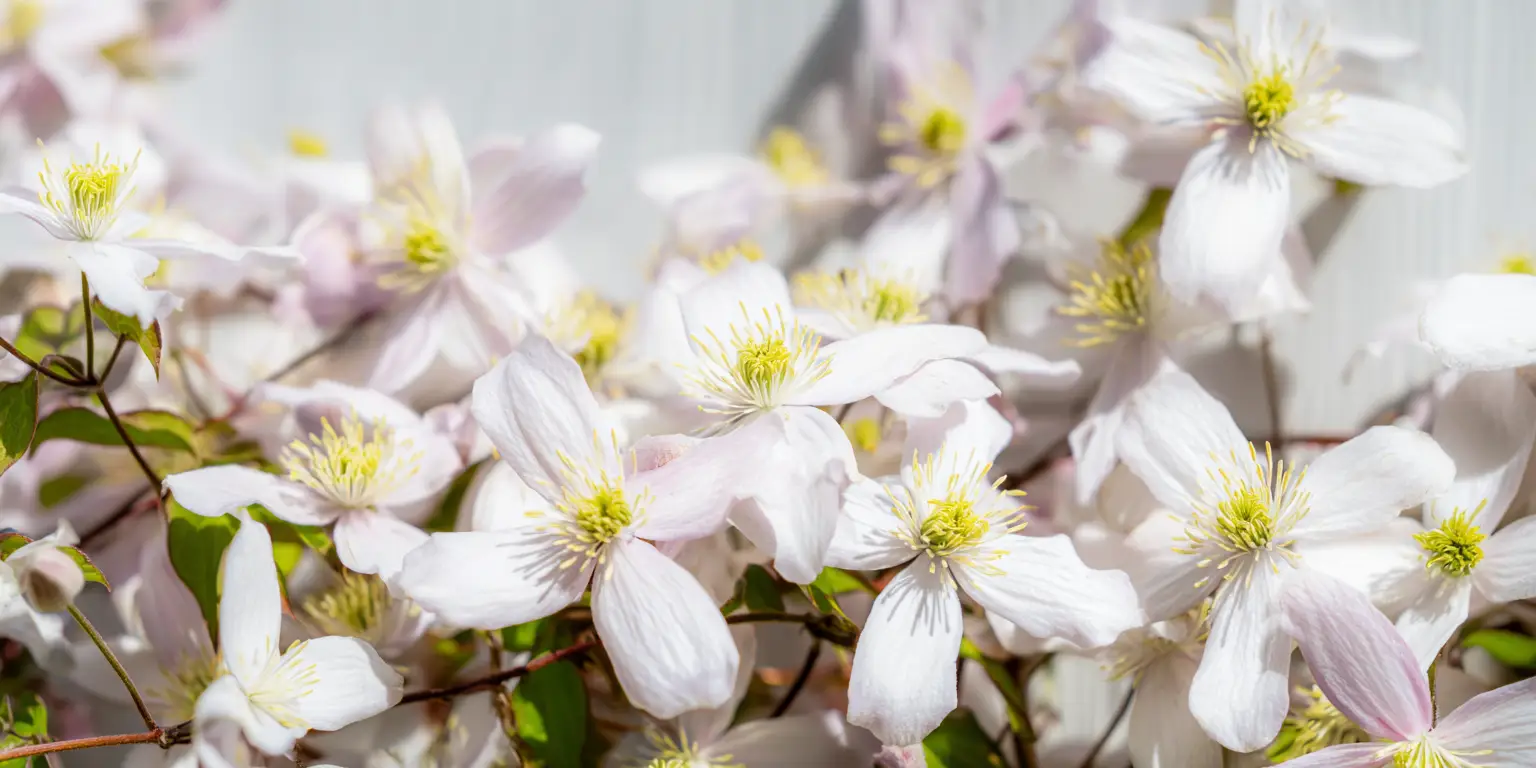
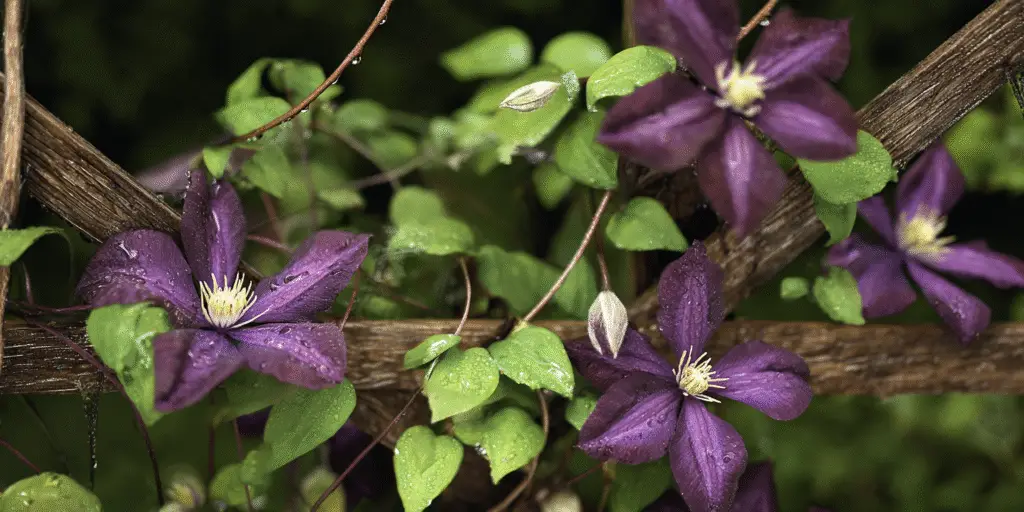
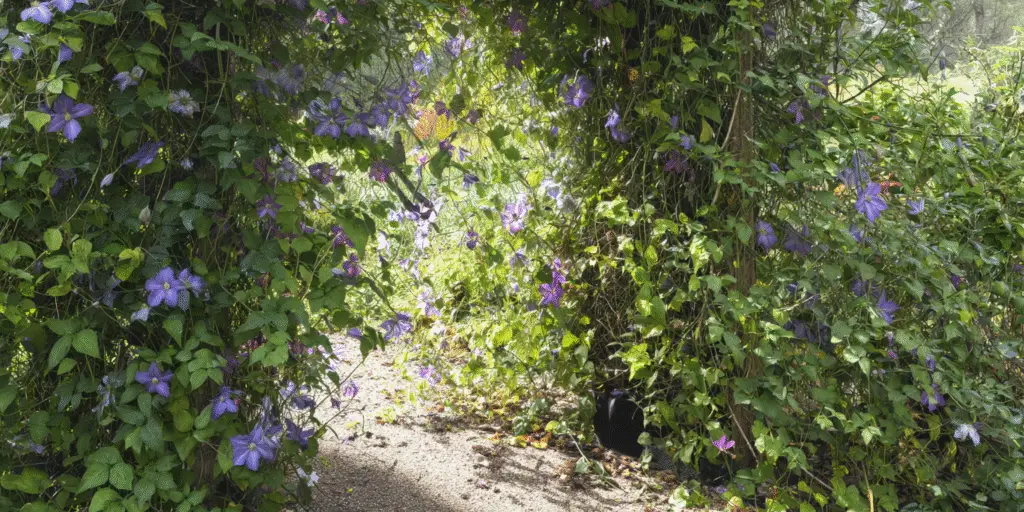
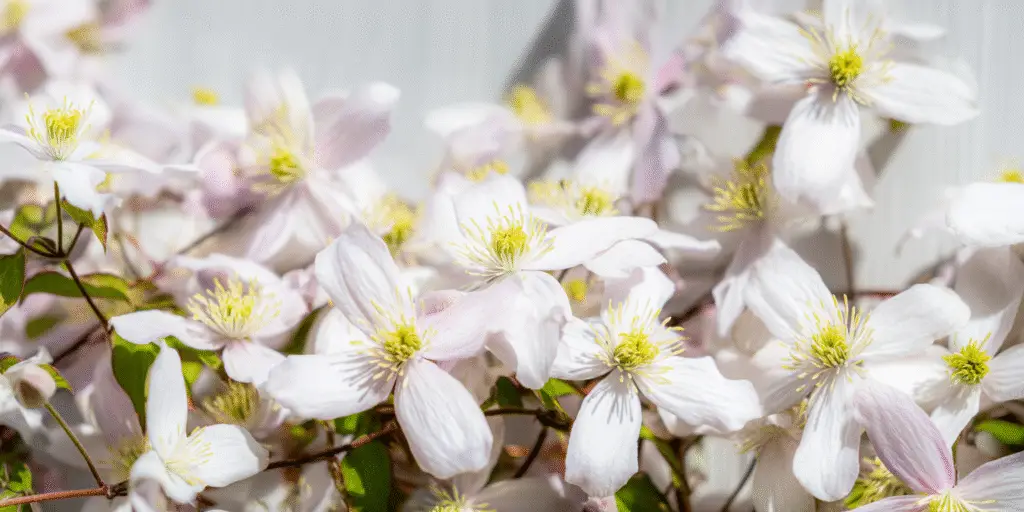
This species is a fast, spring‑flowering climber often called Himalayan clematis. It covers strong supports with starry white to pink flowers in late spring. A light vanilla scent is noticeable in bloom in many forms. It suits cooler or moderate summer regions of North America. Give it room to run and a sturdy structure to climb. Prune soon after flowering because it blooms on last year’s wood.
At‑a‑glance
Group/Class: Montana Group; Pruning Group 1
Height × spread: 16–40 ft × 8–15 ft (4.9–12.2 m × 2.4–4.6 m)
Bloom window: May to June
Color & flower form: White to pink star‑shaped flowers, 3–6 in (7.5–15 cm)
Fragrance: 2 noticeable
USDA hardiness: zones 6 to 9
Breeder / Year / Origin: unknown, Himalayas to China and Taiwan
Pet safety: avoid
How it differs
Much more vigorous than typical large‑flowered clematis
Flowers on old wood rather than new wood
Noted vanilla fragrance compared with many unscented types
Best where summers are not very hot
Strengths
Covers pergolas and trees quickly
Heavy late spring display
Low maintenance once established
Care in one minute
Site: sun to part shade; cooler root zone helps performance.
Soil: moist, well‑drained; neutral to alkaline pH.
Water: regular moisture, especially in dry springs.
Feeding: light spring feed; avoid heavy nitrogen.
Pruning: Group 1; prune and train right after flowering only.
Overwintering: mulch crown in colder sites; avoid fall pruning that removes flower buds.
Watch‑outs
Can overwhelm nearby shrubs without training
Not reliably hardy in the coldest northern areas; sources differ on Zone 5 tolerance
Buds may be damaged by late frosts
Best uses (tags)
arbors, walls, large structures, pollinators, cottage gardens
Provenance note
Native to the Himalayas and adjacent parts of Asia; widely grown forms are grouped as Montana Group clematis.
Written by: Your Flowers Guide editorial team We are a small independent group of flower lovers who research and review each guide using trusted horticultural and educational sources. Learn more about us