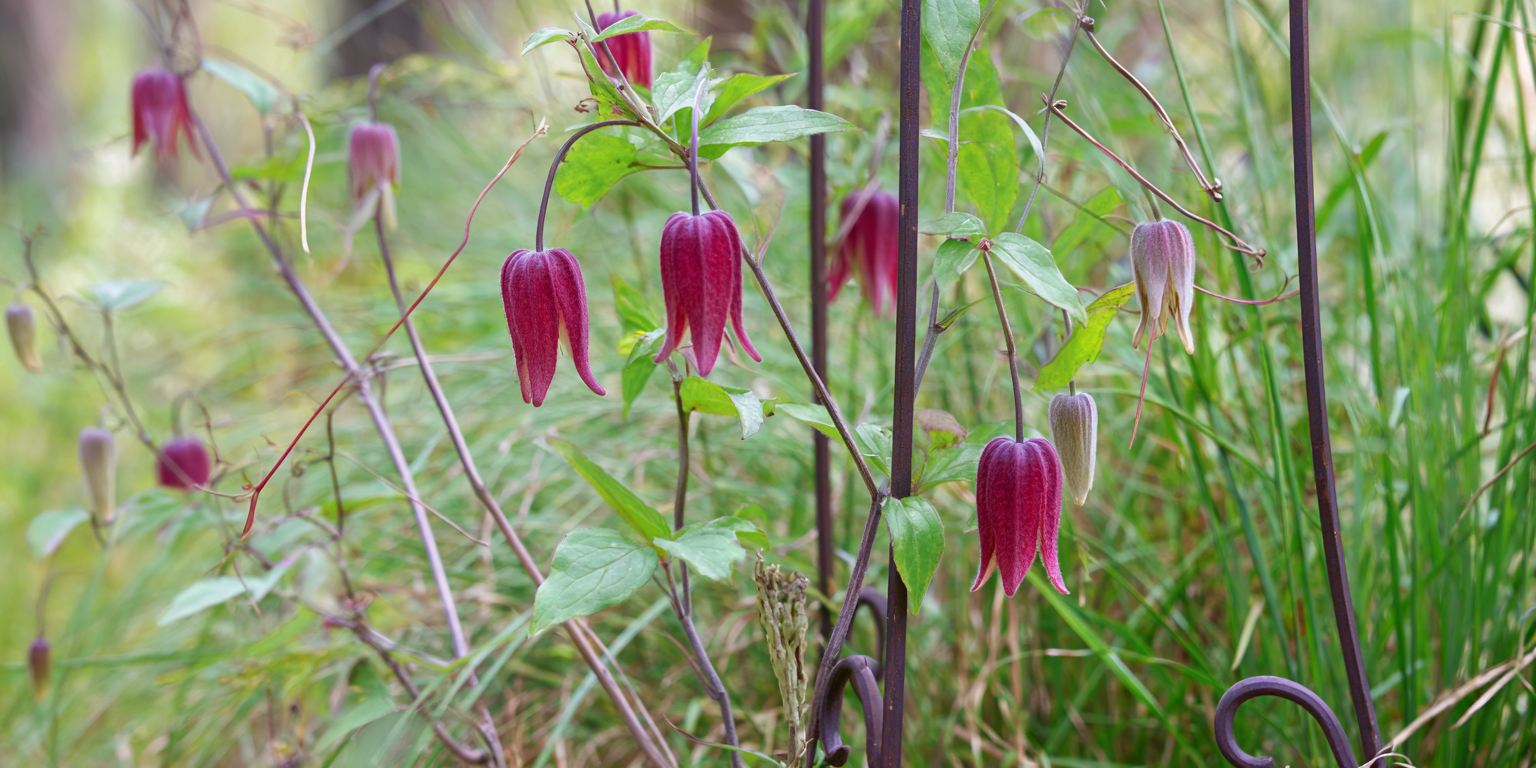
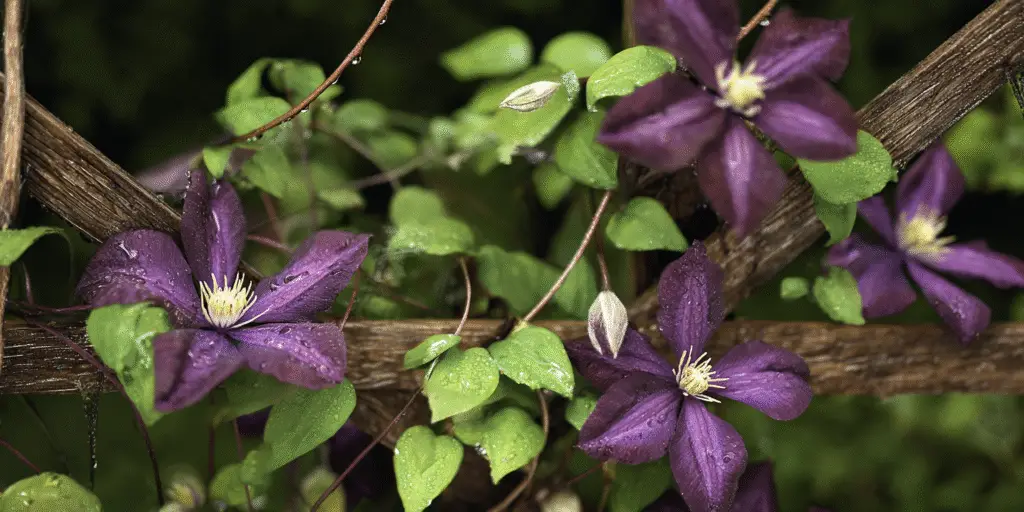
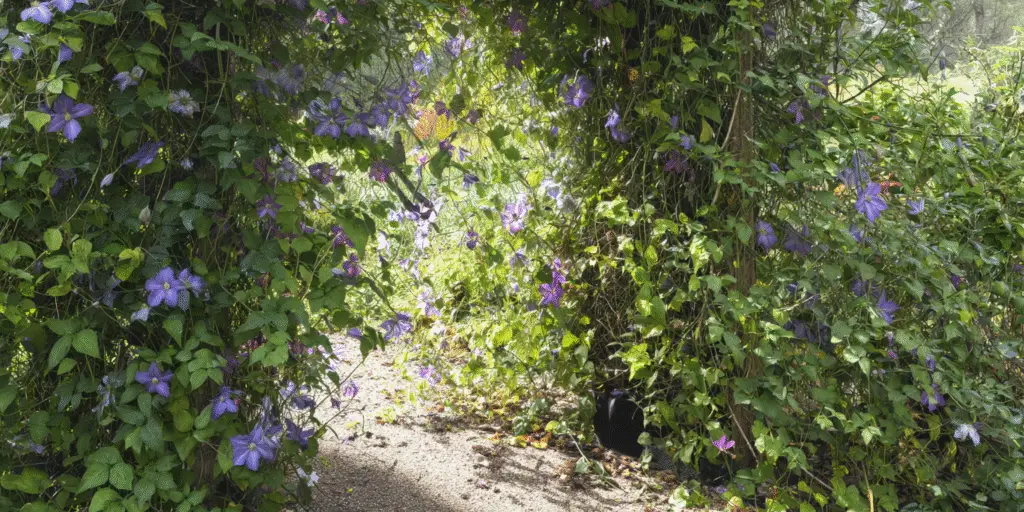
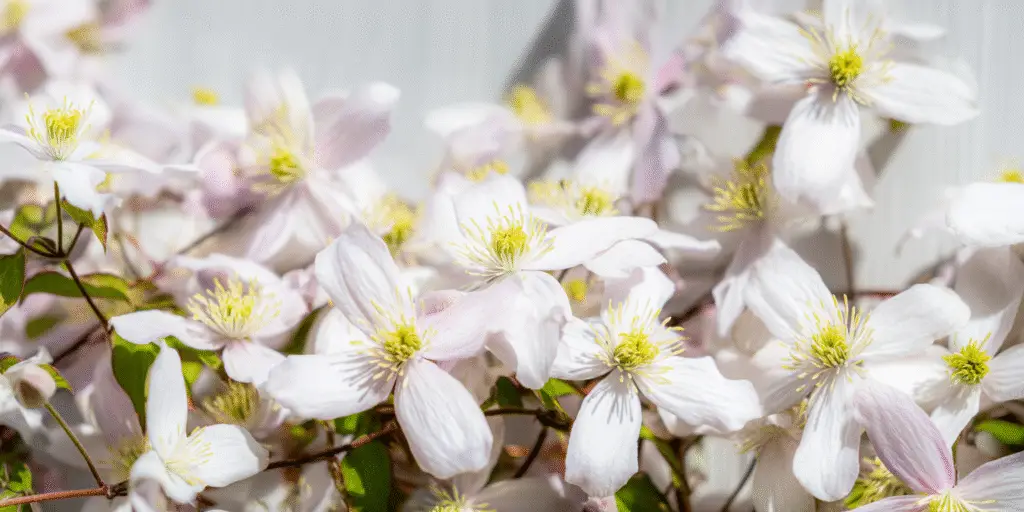
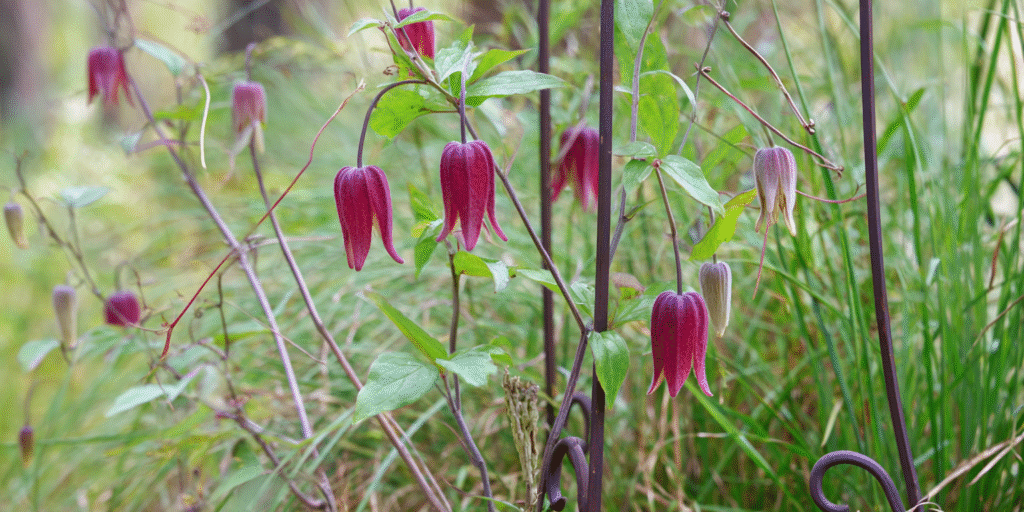
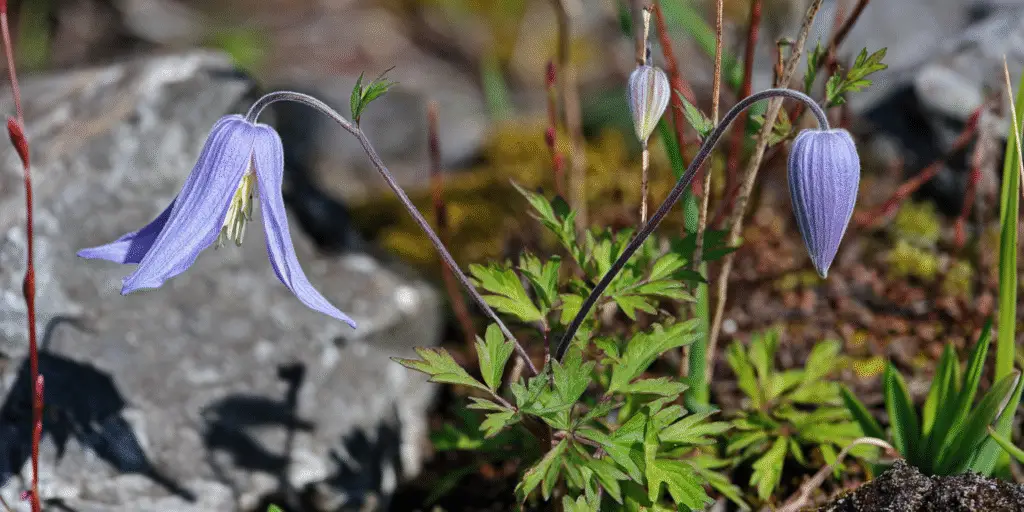
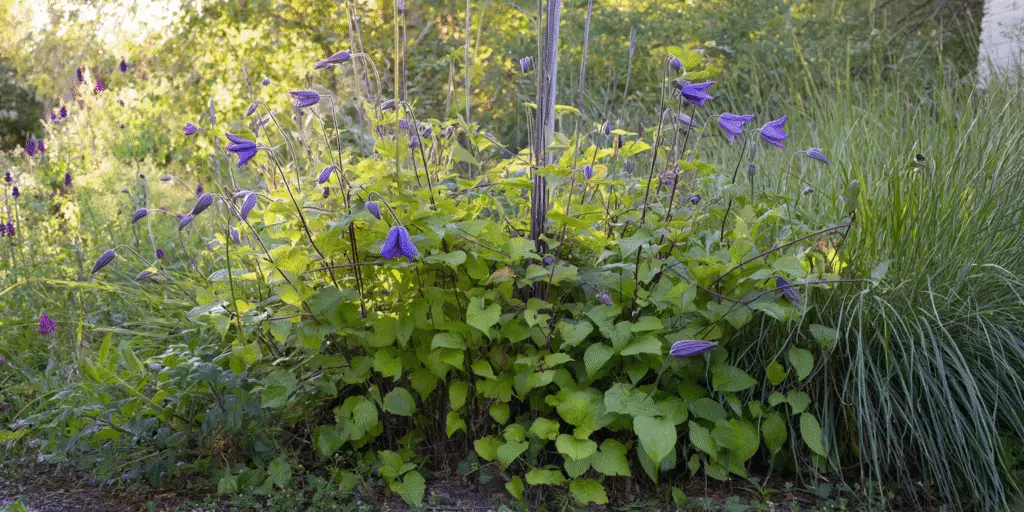
This species is a small‑flowered climber native to Texas. It bears tulip to bell‑shaped red to scarlet flowers on new growth. It excels in sunny, warm sites with the root zone shaded and moist. It suits many North American gardens where winters are not extreme. Give it a trellis or shrub to scramble through for best effect. Pruning is simple because it flowers on current season shoots.
At‑a‑glance
Group/Class: Texensis Group; Pruning Group 3
Height × spread: 10–15 ft × 2–3 ft (3.0–4.6 m × 0.6–0.9 m)
Bloom window: July to September
Color & flower form: Tulip to bell‑shaped flowers, reddish orange to scarlet, about 1 in (2.5 cm)
Fragrance: 0 none
USDA hardiness: zones 4 to 8
Breeder / Year / Origin: unknown, Texas USA
Pet safety: avoid
How it differs
Tulip‑shaped flowers unlike broad star forms of many garden hybrids
Blooms reliably on new wood
Moderate vine length compared with ramblers
Native North American species used in many hybrids
Strengths
Summer flowers hold color in heat
Responds well to hard annual pruning
Good for smaller vertical spaces
Care in one minute
Site: full sun to part shade; shade the crown with mulch or low plants.
Soil: fertile, well‑drained, moisture‑retentive; neutral to slightly alkaline pH.
Water: regular during establishment; avoid waterlogging.
Feeding: spring slow‑release fertilizer; light top‑ups in midsummer if growth is light.
Pruning: Group 3; cut to strong buds 8–12 in above ground in late winter.
Overwintering: mulch in colder zones; avoid late‑season pruning that removes new buds.
Watch‑outs
Needs consistent moisture at the roots to establish
May require tying in to supports
Standard clematis pests and diseases still possible
Best uses (tags)
arbors, fences, wildlife‑friendly, small spaces, heat‑tolerant
Provenance note
Species native to Texas; parent of many Texensis Group hybrids cultivated since the late 19th century.
Written by: Your Flowers Guide editorial team We are a small independent group of flower lovers who research and review each guide using trusted horticultural and educational sources. Learn more about us