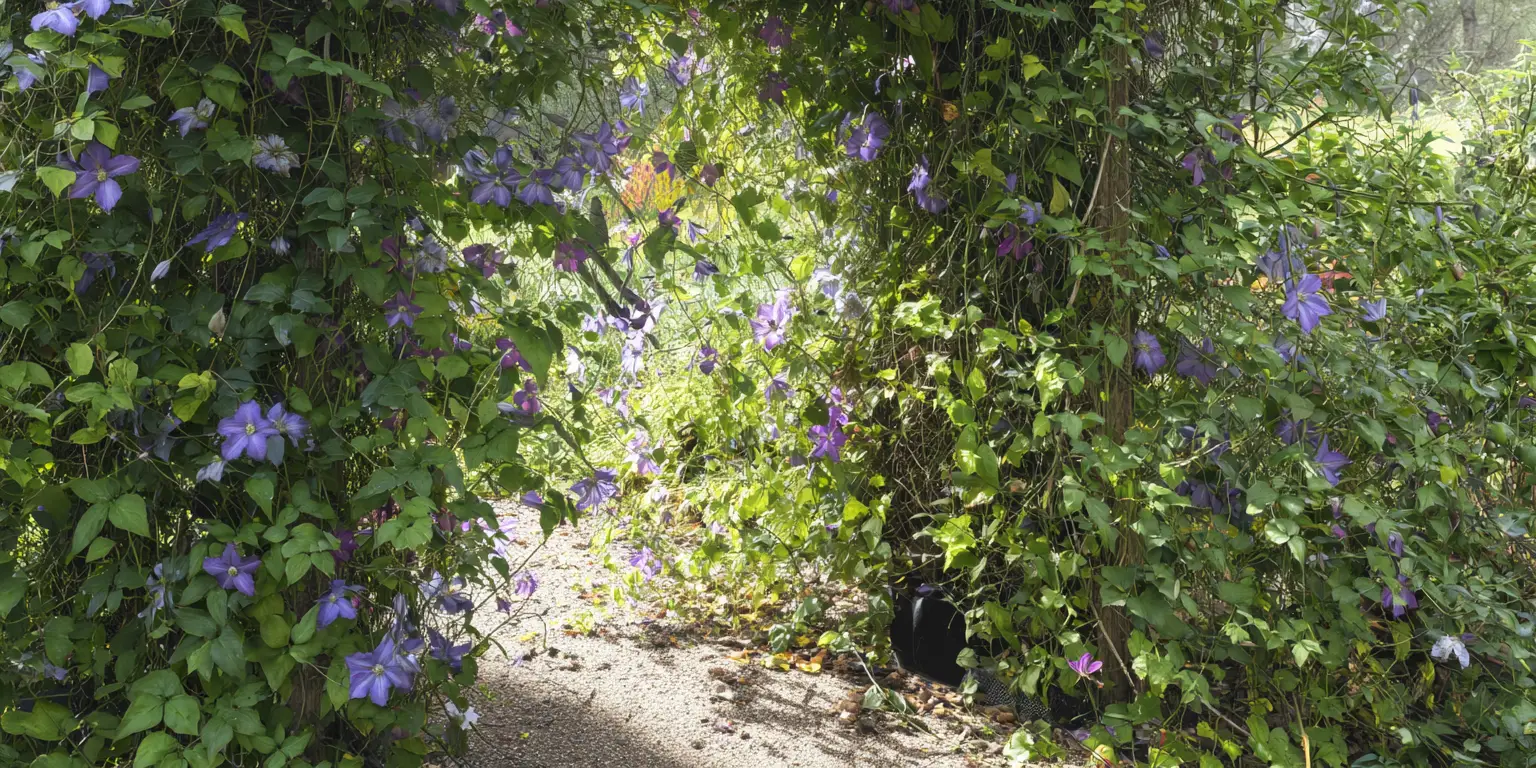
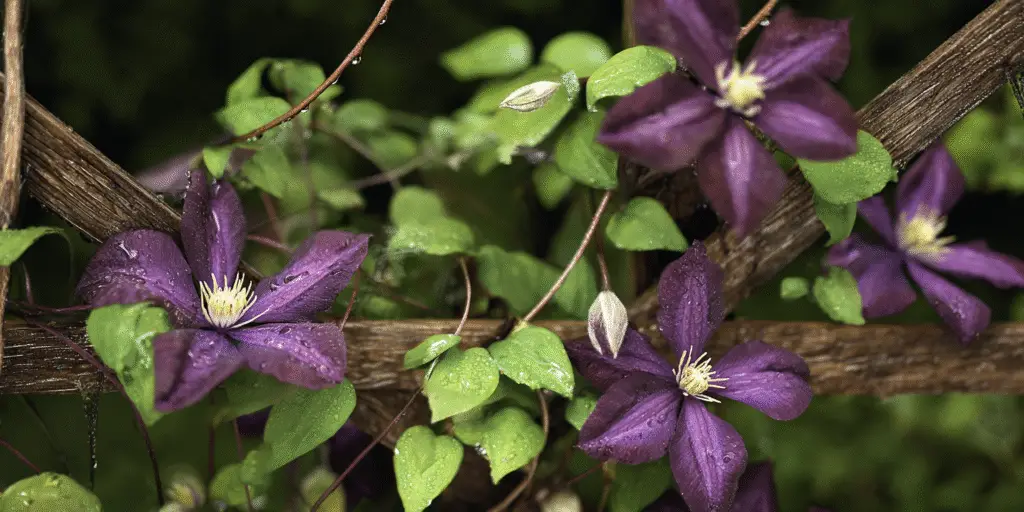
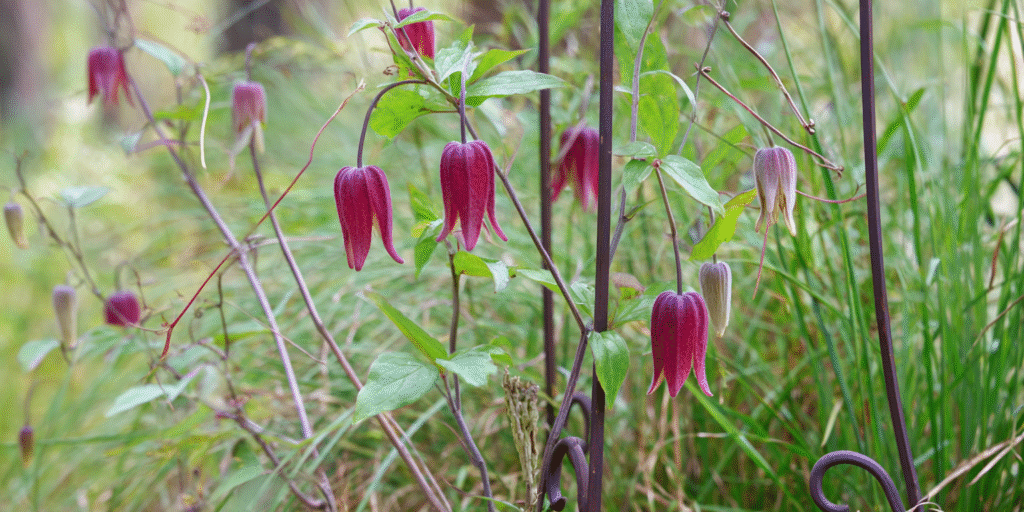
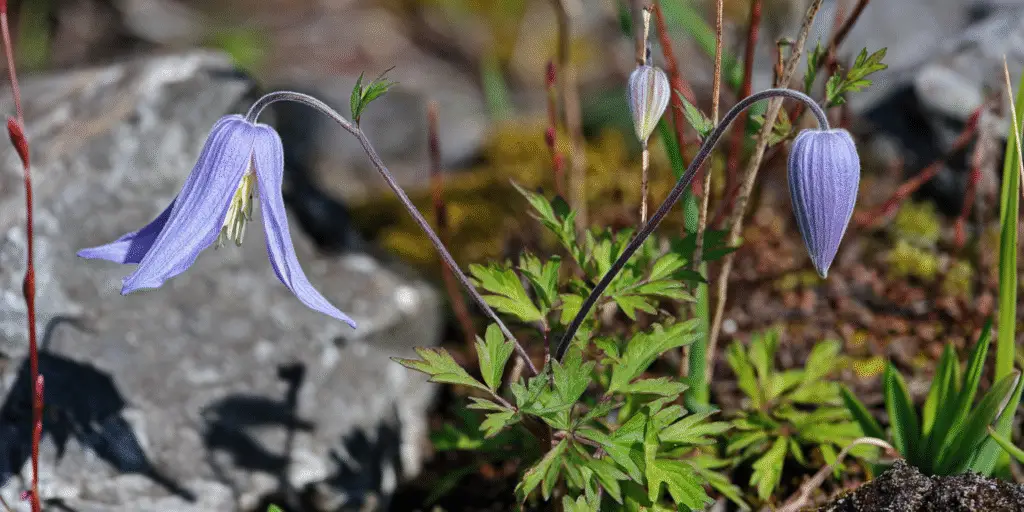
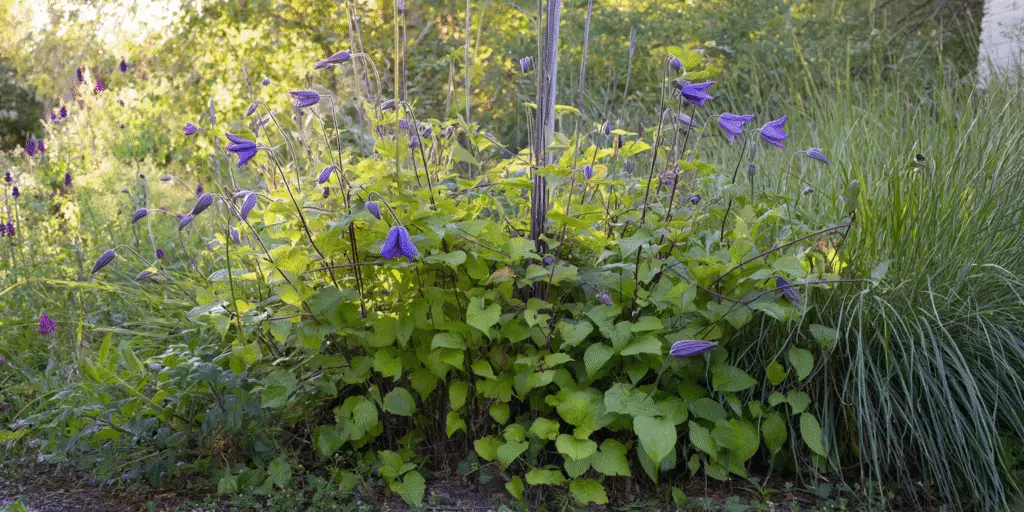
This species clematis is a vigorous, dependable summer bloomer. It is noted for open, nodding bells in purple to violet tones. It performs best in sun with cool, shaded roots and steady moisture. It is widely adapted across much of North America. Pruning is straightforward because it flowers on new growth. It is often less prone to wilt than many large‑flowered hybrids.
At‑a‑glance
Group/Class: Viticella Group; Pruning Group 3
Height × spread: 10–15 ft × 3–5 ft (3.0–4.6 m × 0.9–1.5 m)
Bloom window: summer to fall
Color & flower form: Purple to violet, open bell‑shaped flowers, 1–3 in (2.5–7.5 cm)
Fragrance: 0 none
USDA hardiness: zones 4 to 8
Breeder / Year / Origin: unknown, Southern Europe to Asia
Pet safety: avoid
How it differs
Flowers later than many spring clematis
Smaller, bell‑shaped flowers rather than broad star forms
Generally better wilt tolerance than large‑flowered hybrids
Strong regrowth after hard spring pruning
Strengths
Long bloom season in warm weather
Handles pruning and renovation well
Good vigor with modest footprint
Care in one minute
Site: full sun to part shade; keep the root zone shaded and cool.
Soil: moist but well‑drained; neutral to alkaline pH.
Water: provide steady moisture during active growth.
Feeding: light, balanced feeding in spring; avoid excess nitrogen.
Pruning: Group 3; cut back hard in late winter to encourage new flowering shoots.
Overwintering: mulch crown in colder sites; otherwise typical protection is sufficient.
Watch‑outs
Can develop powdery mildew in crowded, dry sites
Requires regular moisture at the root zone
Needs support for twining leaf stalks
Best uses (tags)
arbors, fences, pollinators, cottage gardens
Provenance note
Species native to southern Europe and into western Asia; widely used in breeding of modern clematis.
Written by: Your Flowers Guide editorial team We are a small independent group of flower lovers who research and review each guide using trusted horticultural and educational sources. Learn more about us