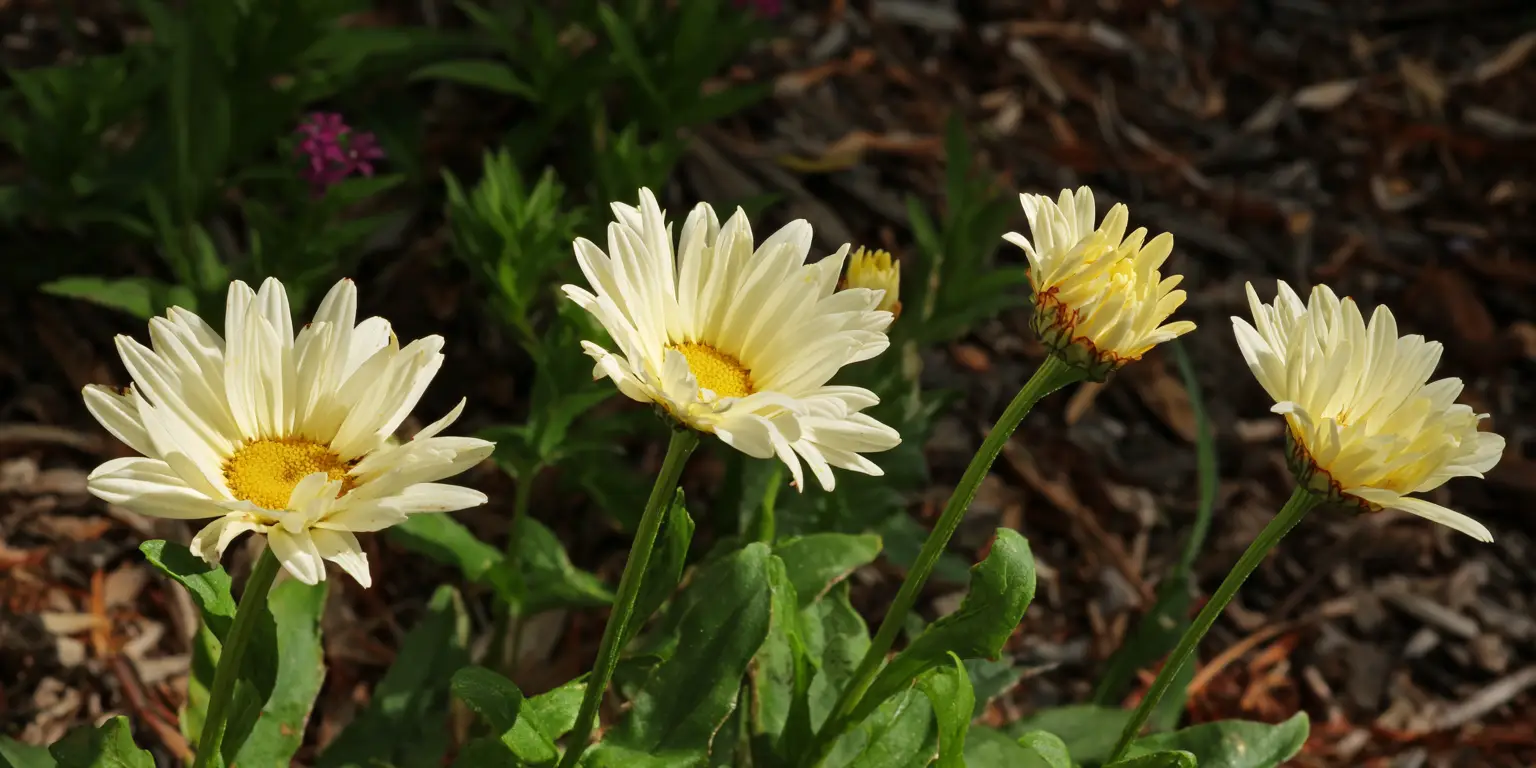
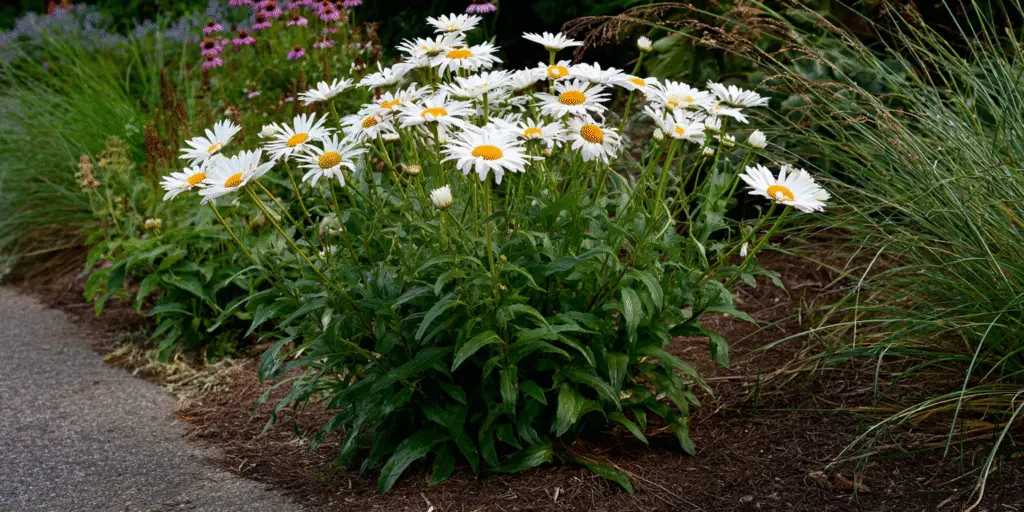
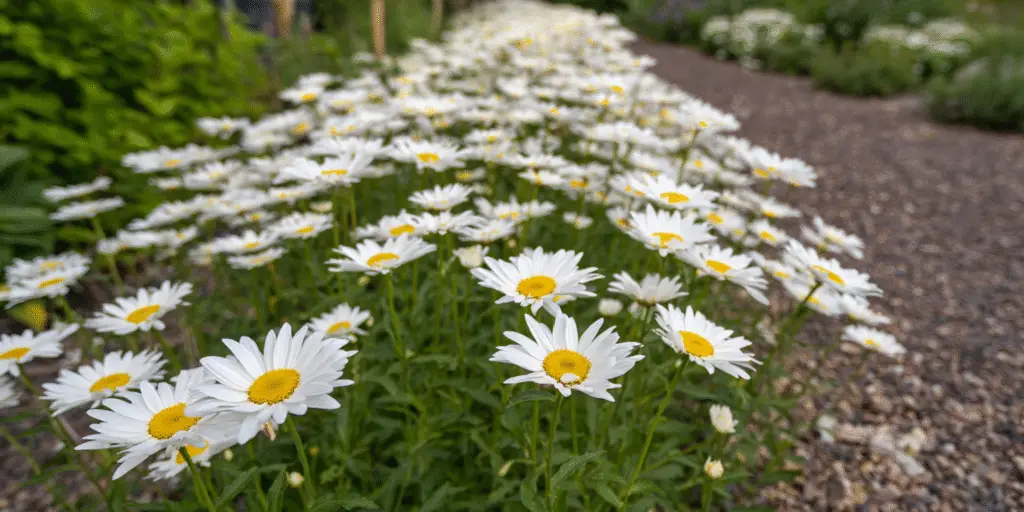
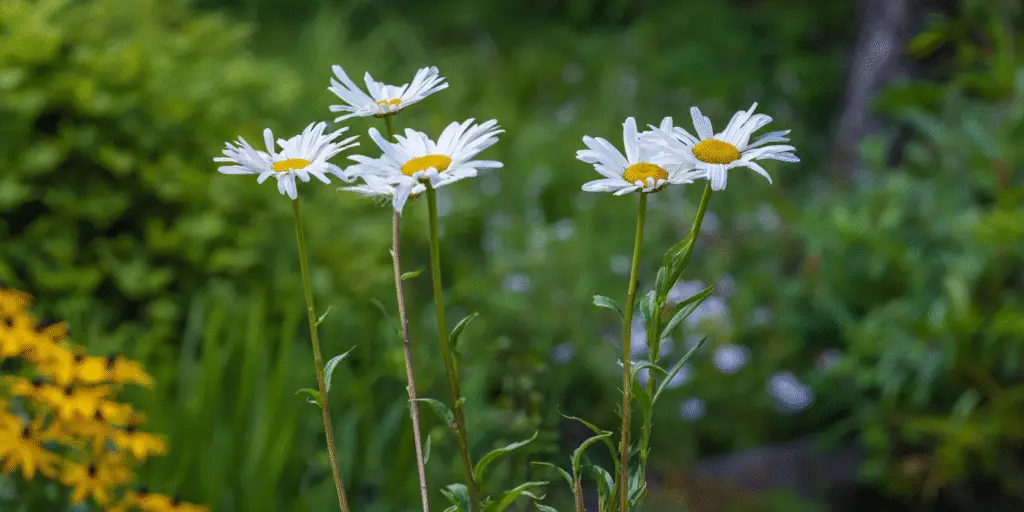
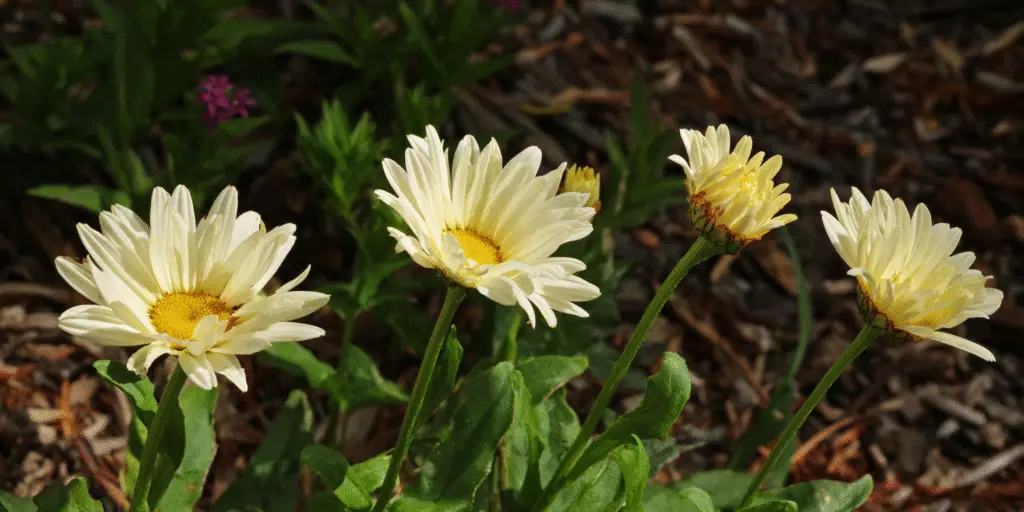
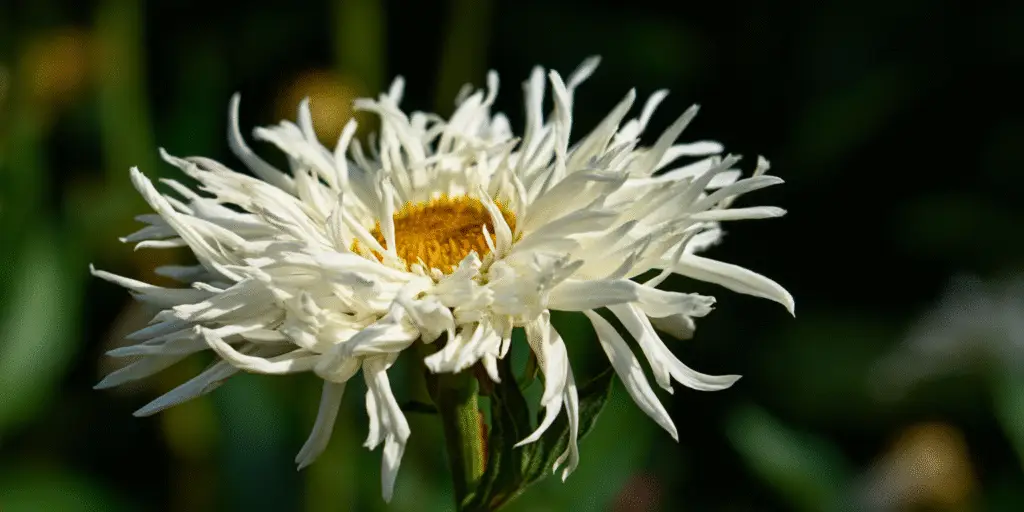
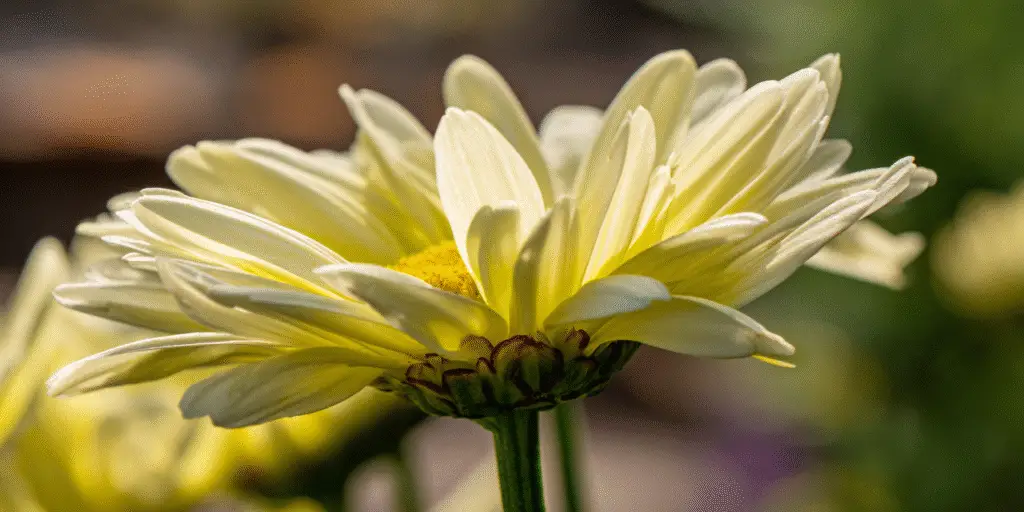
A yellow Shasta daisy whose flowers open lemon yellow and age to soft cream. Plants are low to medium height with many buds and a long summer display. It thrives in full sun and well drained soils and is broadly hardy in North America. This cultivar is often noted for good color retention and strong branching.
At‑a‑glance
Group/Class: Shasta daisy Height × spread: 12 to 18 in (30 to 45 cm) × 18 to 24 in (45 to 60 cm) Bloom window: June to August Color & flower form: lemon yellow aging to cream; semi double to full single; about 4 to 5 in heads Fragrance: 1 trace USDA hardiness: zones 5 to 9 Breeder / Year / Origin: Kevin A. Hurd, 2012, USA Awards/registration: U.S. Plant Patent PP23181 Cut‑flower notes: upright stems; blooms hold color as they age Pet safety: unknown
How it differs
distinct lemon to cream color progression
lower, broader habit than many traditional white selections
numerous axillary buds for extended bloom
Strengths
long flowering window in summer
compact habit for edges and containers
butter to cream color works in warm palettes
Care in one minute
Full sun with well drained soil; average fertility is adequate.
Irrigate during dry periods to support bud development.
Deadhead to maintain bloom; shear lightly after the main flush if needed.
Divide every 2 to 3 years when clumps thin in the center.
Watch‑outs
color ages toward cream; rate varies with heat and sun
avoid waterlogged soils to prevent crown rot
Best uses (tags)
borders, containers, cutting, pollinators
Provenance note
Selected by Kevin A. Hurd at Zeeland, Michigan; U.S. Plant Patent PP23181 granted in 2012. Described by RHS as producing large lemon yellow flowers that mature to cream.
Written by: Your Flowers Guide editorial team We are a small independent group of flower lovers who research and review each guide using trusted horticultural and educational sources. Learn more about us