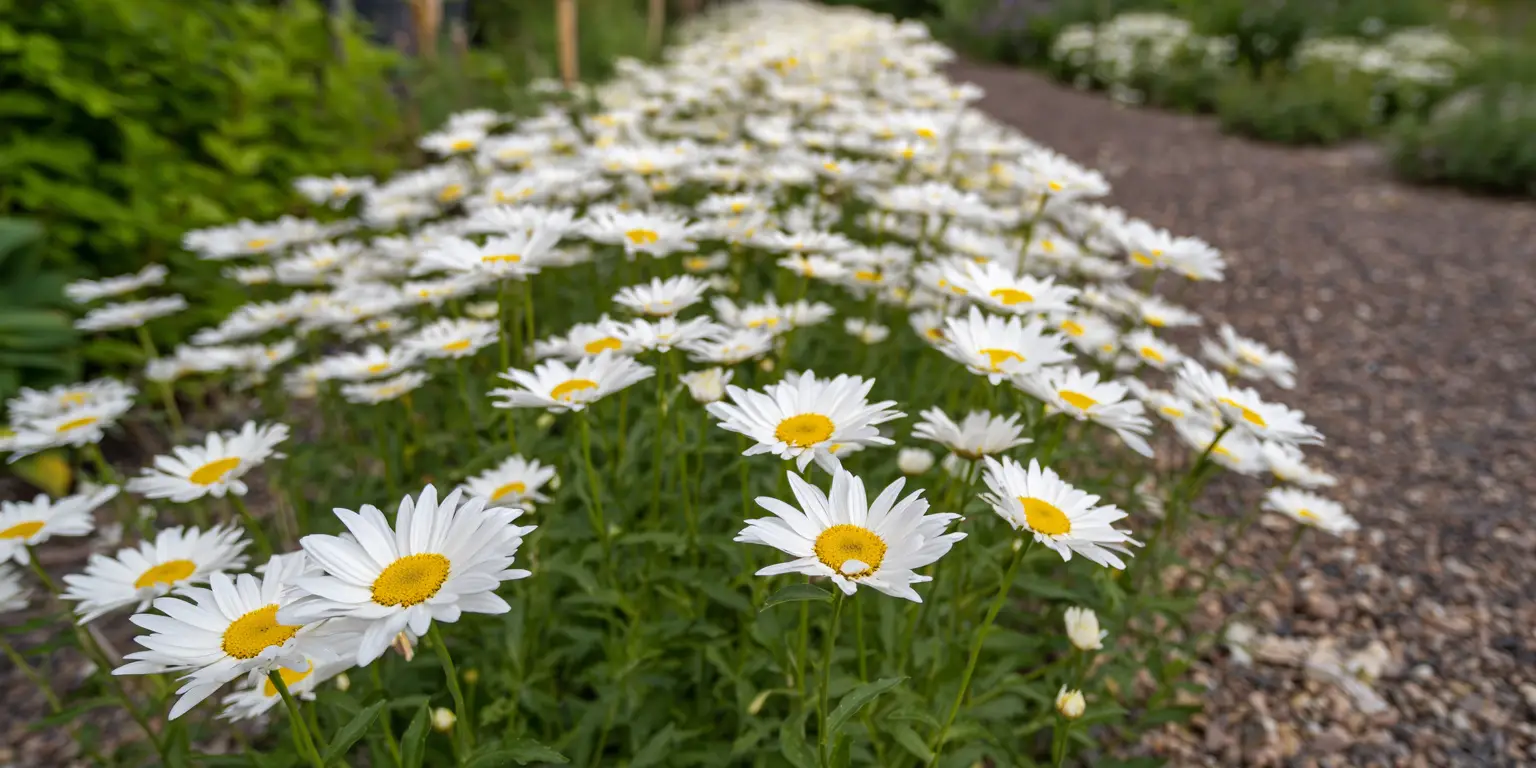
in bloom
now
through Sep
Bloom calendar
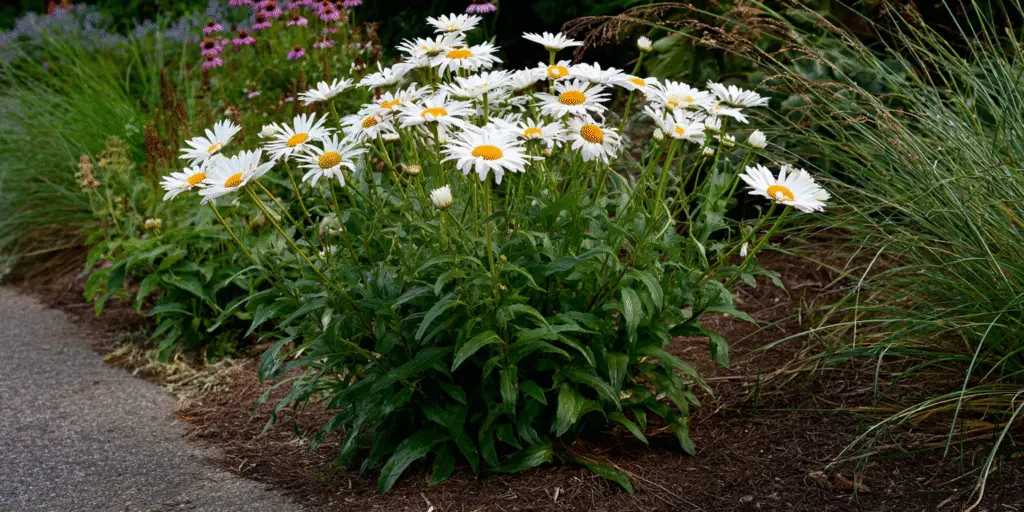
Snowcap
Shasta daisy
At‑a‑glance
- Group/Class: Shasta daisy
- Height × spread: 12 to 18 in (30 to 45 cm) × 9 to 12 in (23 to 30 cm)
- Bloom window: July to September
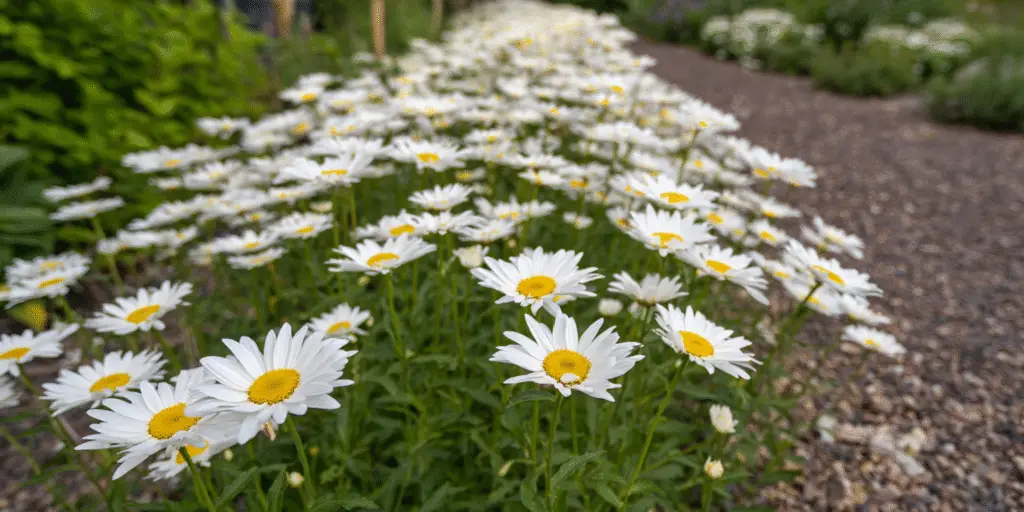
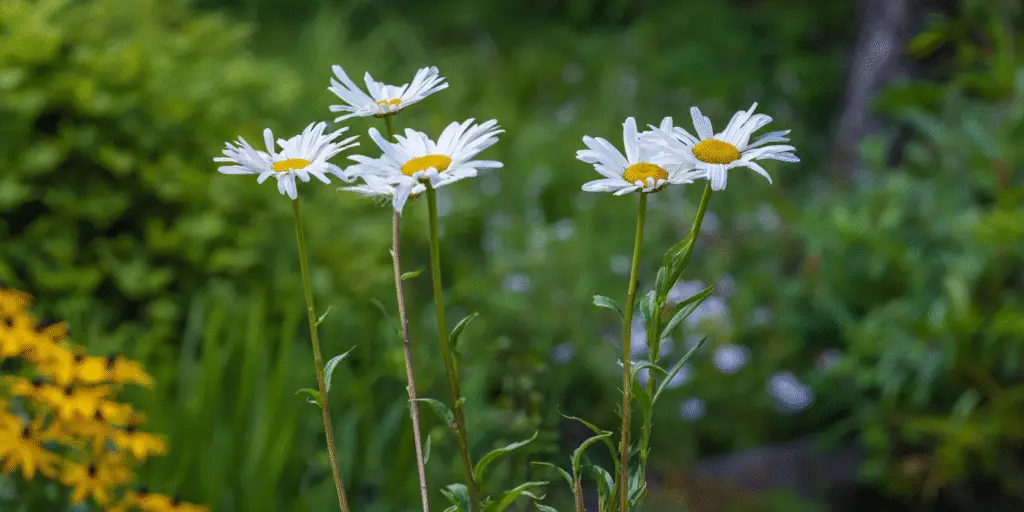
- Color & flower form: white rays with yellow disk; single; heads to about 4 in (10 cm)
- Fragrance: 1 trace
- USDA hardiness: zones 5 to 9
- Breeder / Year / Origin: Alan Bloom, unknown, UK
- Cut‑flower notes: shorter stems than tall cultivars; holds up well in weather
- Pet safety: unknown
How it differs
- more compact habit than a typical Shasta daisy
- better weather resistance due to shorter stems
- dense bud set with steady bloom in summer
Strengths
- neat habit for small spaces
- flowers abundantly in mid to late summer
- handles wind and rain comparatively well
Care in one minute
Plant in full sun with good air circulation.
Provide moderately fertile, well drained soil; avoid waterlogged sites.
Water to keep soil evenly moist the first season; reduce as plants establish.
Deadhead to maintain bloom and cut stems to the base when flowering finishes.
Divide clumps in early spring or early fall to renew vigor.
Watch‑outs
- like other Shastas, dislikes winter wet soils
- clumps benefit from division every 2 to 3 years
Best uses (tags)
Provenance note
Introduced by Alan Bloom of Blooms of Bressingham in the 1980s. Often listed as a compact selection suited to windy sites.
References
- Missouri Botanical Garden Plant Finder – Leucanthemum × superbum ‘Snowcap’
- Royal Horticultural Society – Leucanthemum × superbum ‘Snowcap’
Similar Flowers
Enjoying our flower guides? Add YourFlowersGuide as a preferred source on Google. It helps more readers find us.
Add to Preferred Sources