Daisy bloom time across the US
Interactive map
 See the interactive map
Drag the date and the bloom moves north across the country. Every point has its own window, and the map says where it has no records rather than guessing. Free, with nothing to sign up for. Open the daisy map.
City by city
Typical window, earliest first. Cultivars of the same flower can open days or weeks apart.
In the language of flowers
What daisy symbolizes
Innocence and purity above all, plus a loyal, faithful kind of true love and the idea of new beginnings, which grows out of the flower opening with the morning light. Gentle and positive throughout, with no dark reading, which makes it safe to give almost anyone.
The Victorian reading. In the Victorian language of flowers the daisy stood for innocence and loyal love, and carried a quiet promise to keep a secret, "I will never tell."
What to write on the cardFor a new baby, "A fresh, bright start"; for a friend, "Keep that sunny heart."
Taxonomy and origin
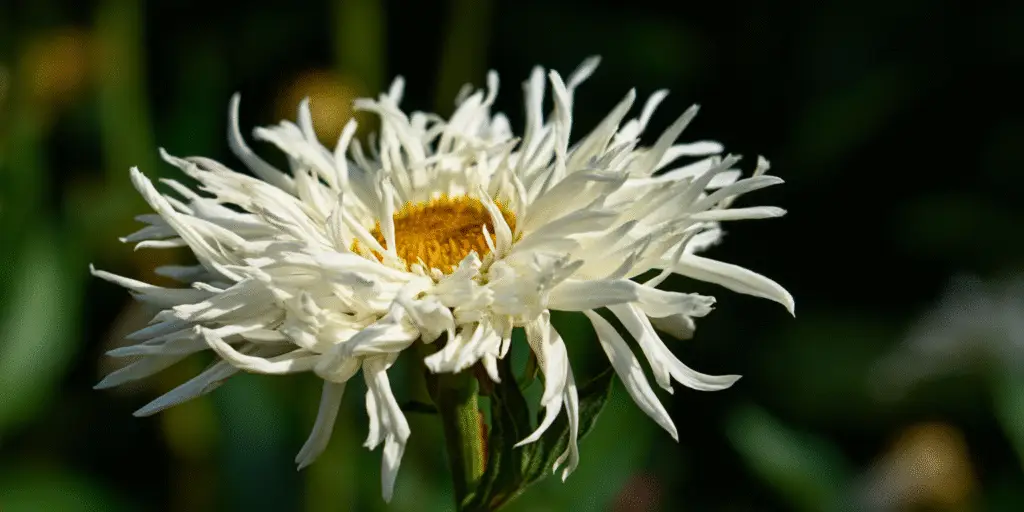
The daisy family, Asteraceae (older books call it Compositae), holds more than 32,000 species in some 1,900 genera, rivaled in size only by the orchids. What looks like a single daisy flower is a crowd of them on one flattened receptacle, a head botanists call a capitulum: each white strap is a flower in its own right, and the yellow eye is a mosaic of tiny tubular disc florets. Deadheading therefore takes off a whole head of developing seed at a stroke, and a double daisy is a head whose disc florets have taken the strap shape of the rays, which is why the shaggy doubles offer bees so much less.
The name is Old English daeges eage, day's eye, after the lawn daisy's habit of shutting at dusk and reopening with the light. That plant is Bellis perennis; the garden daisy is Leucanthemum, Greek for white flower. The Shasta daisy is no wild species but deliberate breeding. Working in northern California in the 1890s, Luther Burbank crossed the European oxeye daisy (Leucanthemum vulgare) with the Pyrenees daisy (L. maximum), then brought in the Portuguese field daisy (L. lacustre) and the Japanese field daisy (Nipponanthemum nipponicum), and named the result for Mount Shasta. The hybrid, Leucanthemum × superbum, took larger flowers and stiffer stems, and, less visibly, a fibrous, clump-forming root system in place of the creeping rhizomes of its oxeye parent. That difference is why one of them is a border plant and the other a management problem.
Which daisy is which
Daisy confusion comes down to five white-flowered plants that look alike in a photograph and behave nothing alike in the ground. The tells sit in the leaves, the height and the roots.
| Plant | Height | What gives it away | How it behaves |
|---|---|---|---|
| English daisy (Bellis perennis) | 3 to 6 in | Flat rosette pressed to the ground, one small head per leafless stalk, rays often tipped pink | Cool-season and short-lived, seeds and creeps; a cottage edging in some regions and a turf weed in others |
| Oxeye daisy (Leucanthemum vulgare) | 1 to 2 ft | Basal leaves deeply lobed and spoon-shaped, heads usually under 2 in, roots creeping | Spreads by rhizome and heavy seed; listed noxious in several western states |
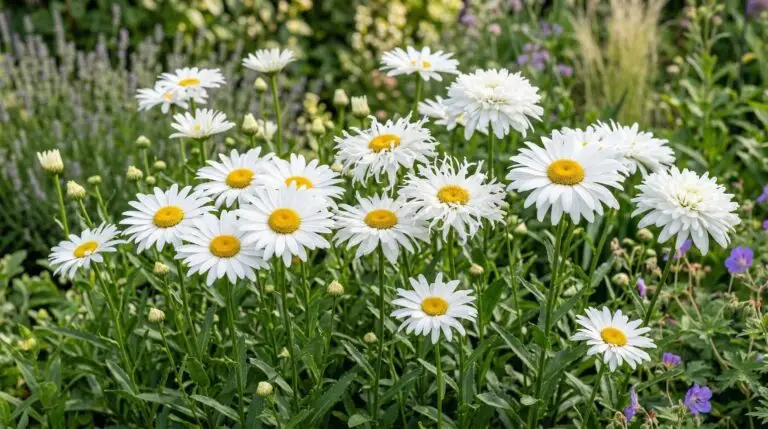
| Shasta daisy (Leucanthemum × superbum) | 2 to 3 ft | Basal leaves merely toothed, never lobed, heads over 2 in, tight fibrous clump | Garden perennial, stays where planted, short-lived without division |
| Montauk daisy (Nipponanthemum nipponicum) | 1.5 to 3 ft | Thick, fleshy, glossy dark leaves and bare lower stems, flowers arrive in autumn | Late-season perennial, salt tolerant, wants shearing in spring to stay compact |
| Feverfew (Tanacetum parthenium) | 1 to 3 ft | Many small heads in loose sprays, short rays around a fat yellow button, ferny foliage sharp with camphor when crushed | Short-lived, seeds itself hard, usually arrives uninvited |
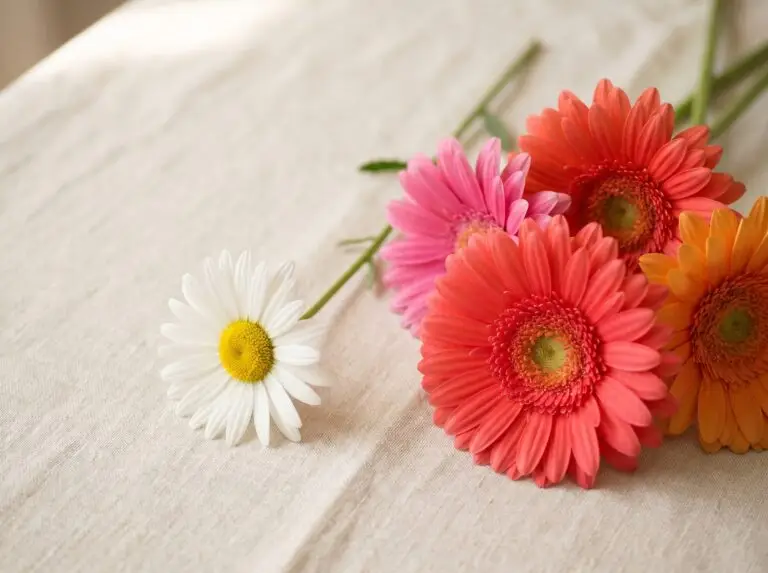
The rest are not really confusable, just co-named. The gerbera daisy, sold as the Transvaal or Barberton daisy, gives itself away by its thick, leafless, faintly furry stalk and saturated coral, orange and magenta color; it is tender and usually lives as a pot plant. African daisy is Osteospermum, which shuts its flowers at night and on gray days; gloriosa daisy is Rudbeckia hirta; Michaelmas daisies are asters; painted and pyrethrum daisies are Tanacetum species. Chrysanthemums, coneflowers, zinnias and sunflowers wear the same head and simply escaped the nickname.
Two of the five need a warning more than a description. Oxeye daisy is a listed noxious weed in Montana, Colorado, Wyoming, Idaho and Washington, and Montana State University Extension puts the reason in numbers: a modest plant sheds 1,300 to 1,400 seeds and a large one up to 26,000, and a seed longevity study found 82 percent of buried seed still viable after six years and 1 percent still viable after 39. It still shows up in wildflower seed mixes, so read the species list before scattering one in the mountain West and plant Shasta instead. The English daisy that charms a cottage path in New England runs the other direction, a serious turf weed in the maritime Northwest, where turf programs at Oregon State and Washington State have spent real effort on it because it roots at the nodes of short rhizomes, seeds heavily, and shrugs off many common broadleaf herbicides.
Nine plants sold or found under the name daisy
This grid exists because the name does not narrow anything down. Each card carries what its own authority says, with zones from NC State Extension's plant toolbox, Clemson, Chicago Botanic Garden and the state noxious weed boards, so the differences that decide whether a plant returns, spreads, or belongs in a vegetable bed sit side by side.
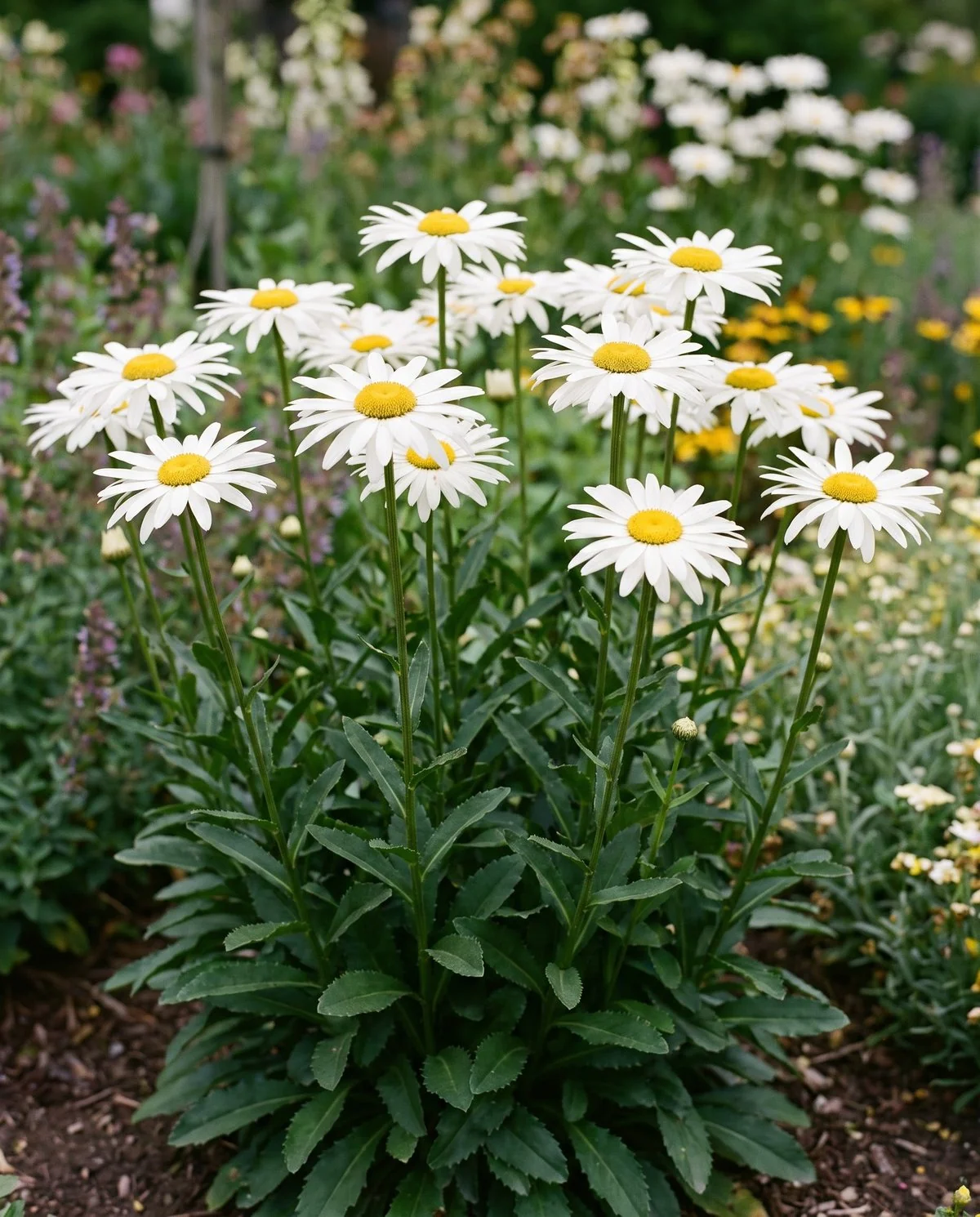
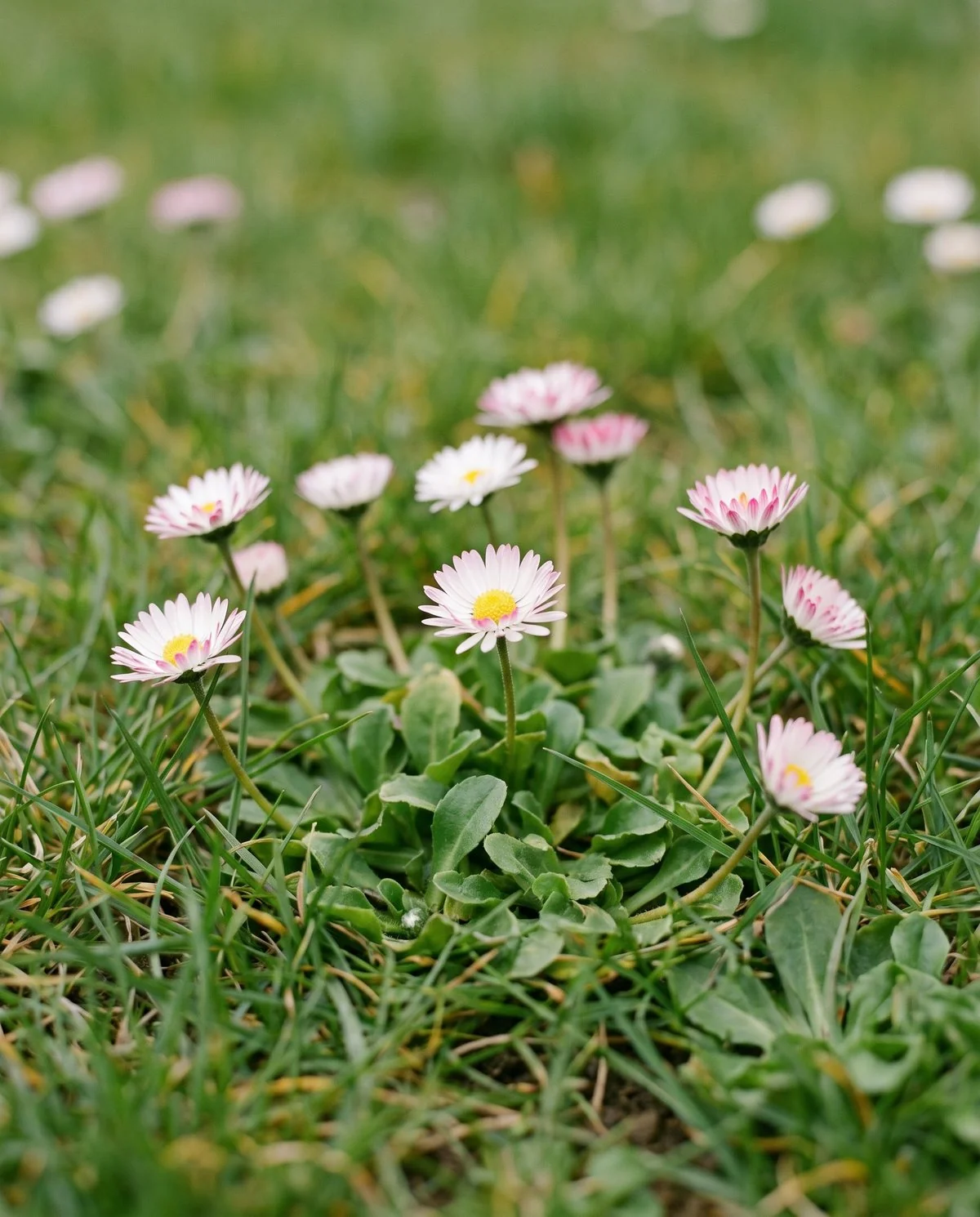
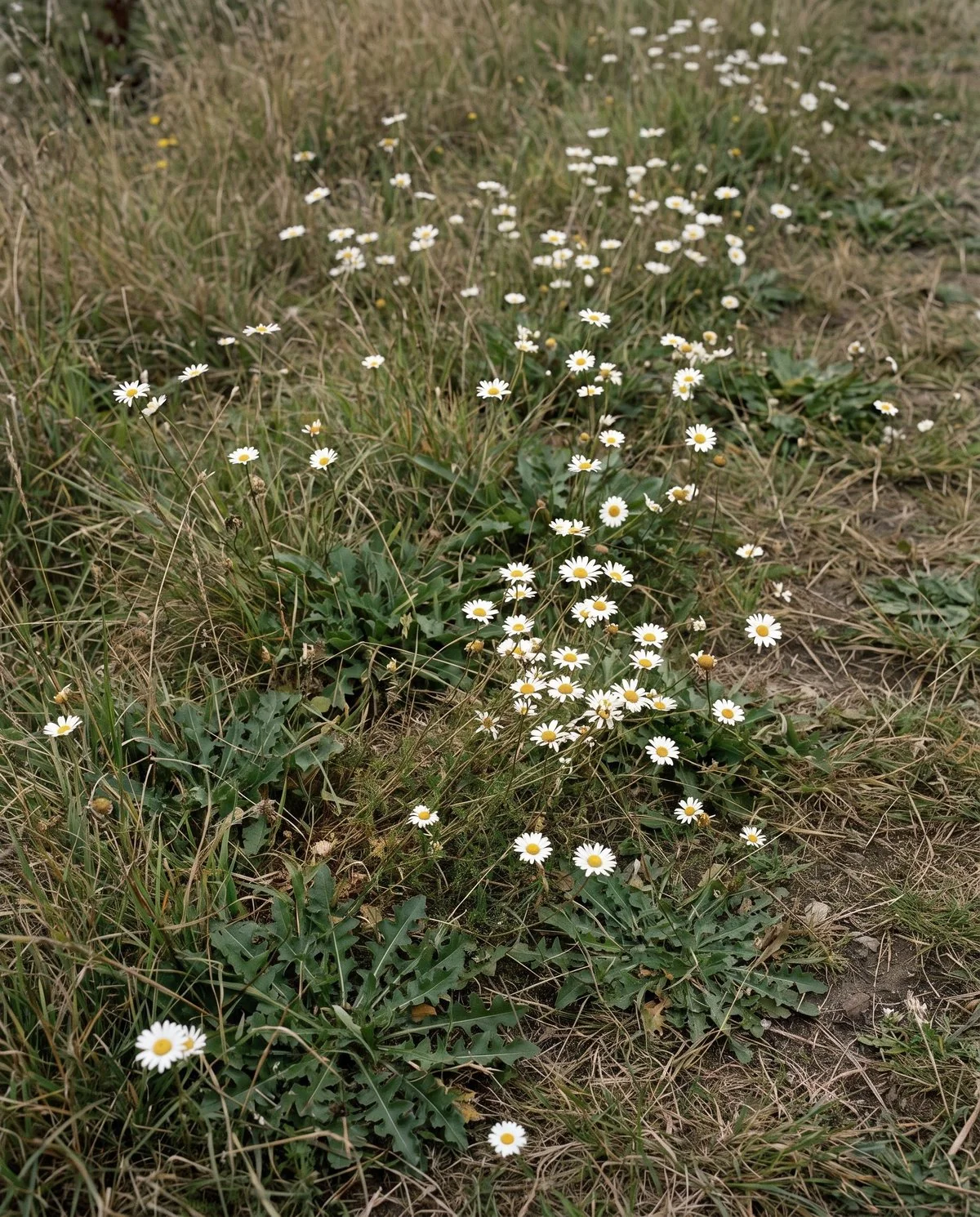
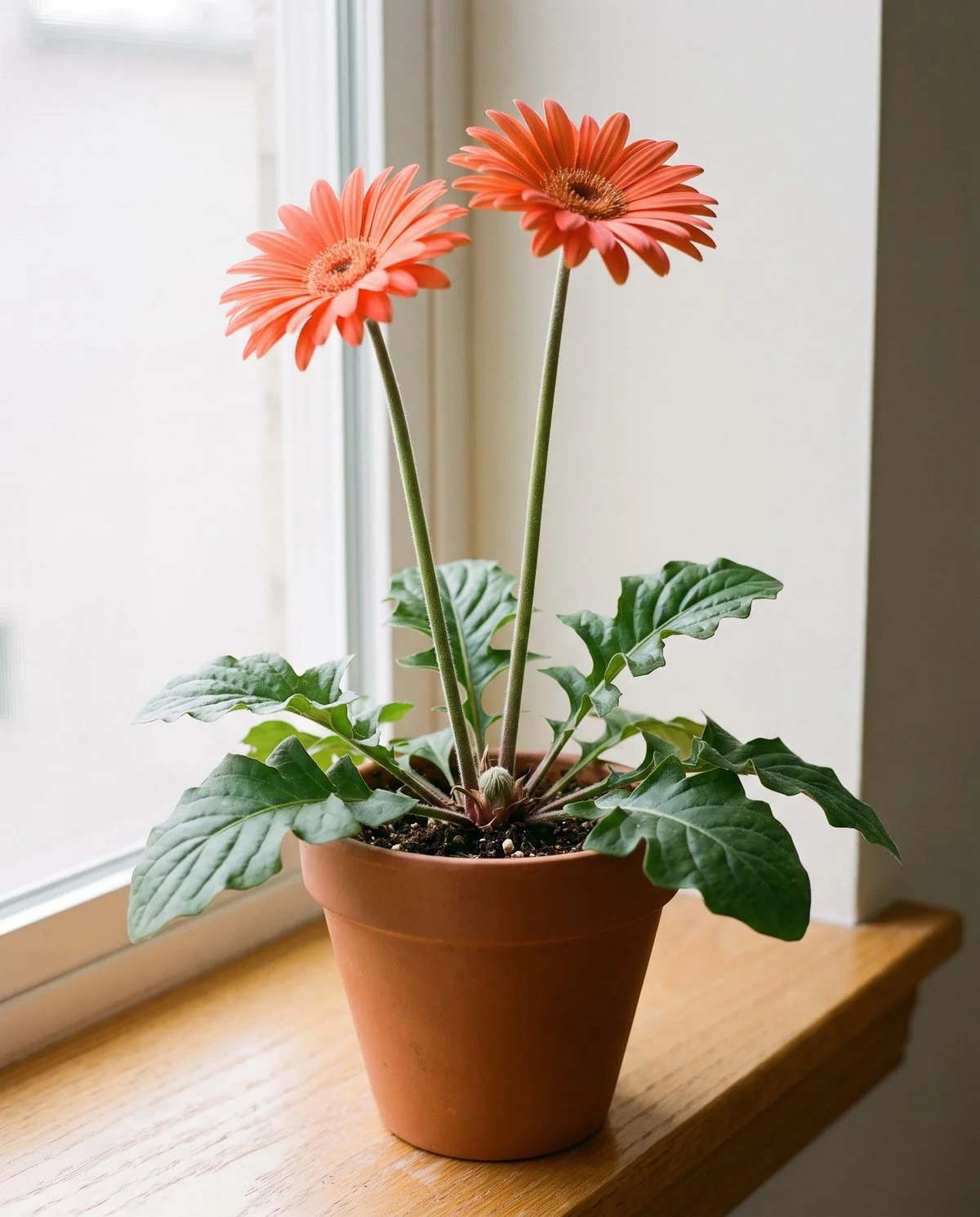
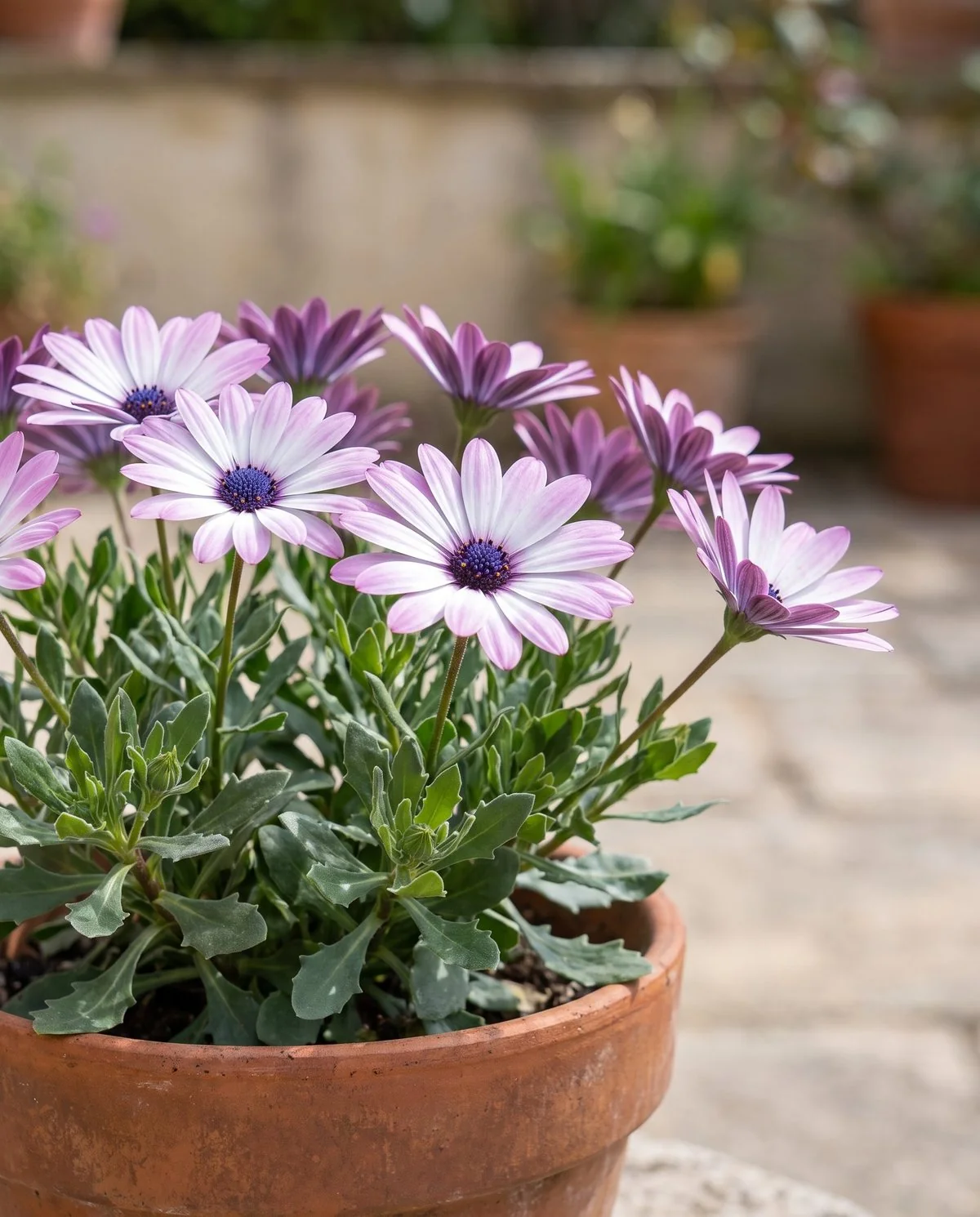
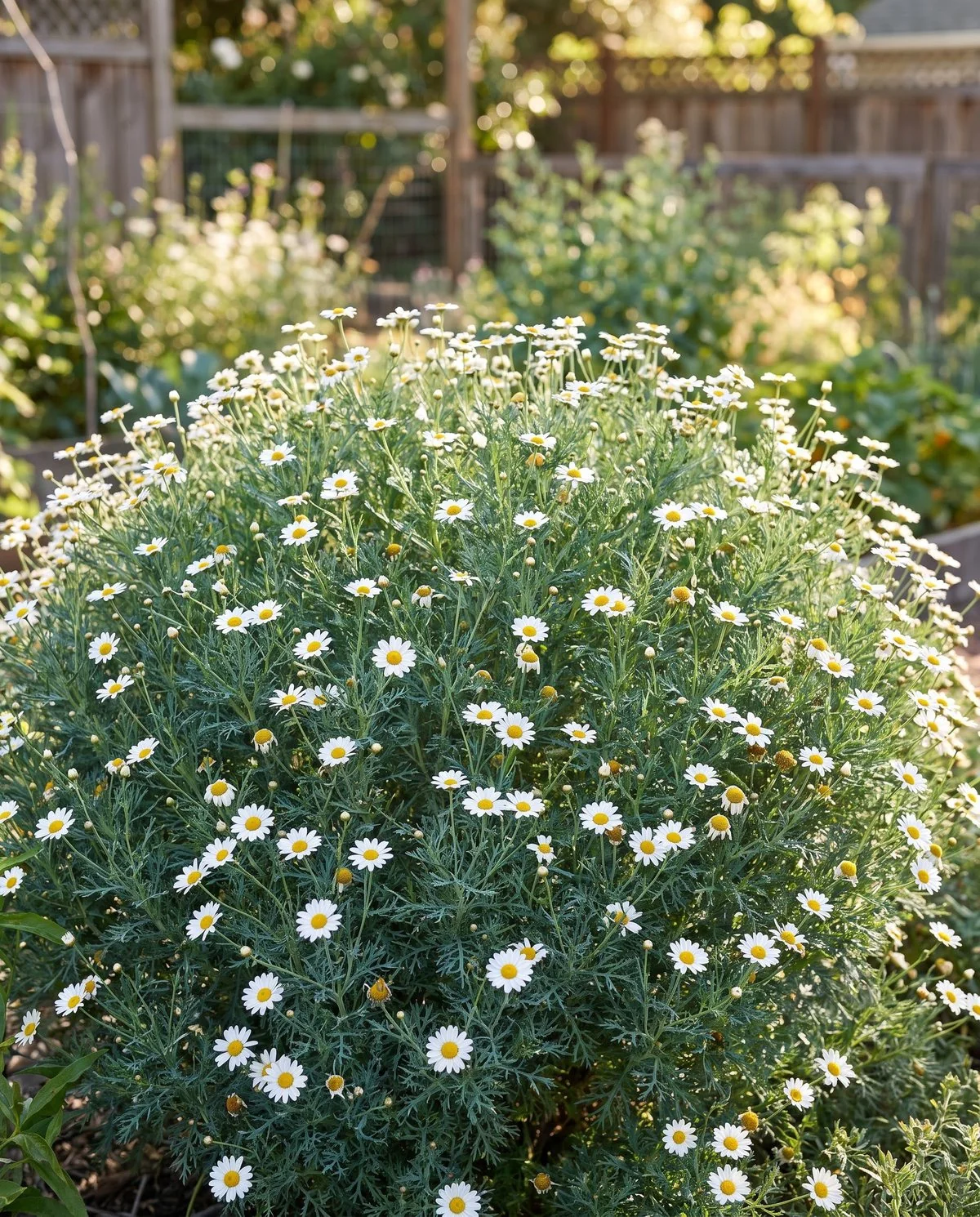
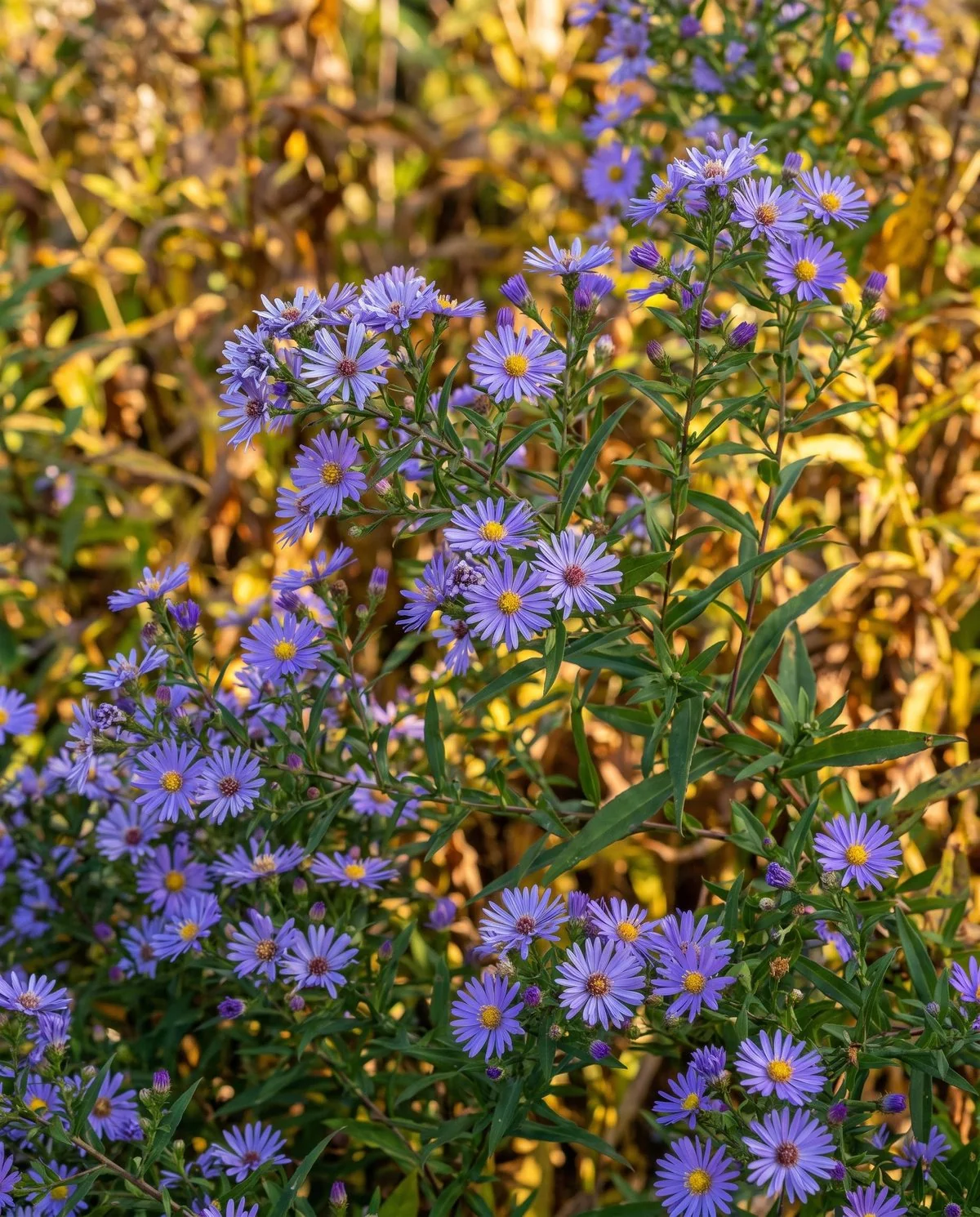
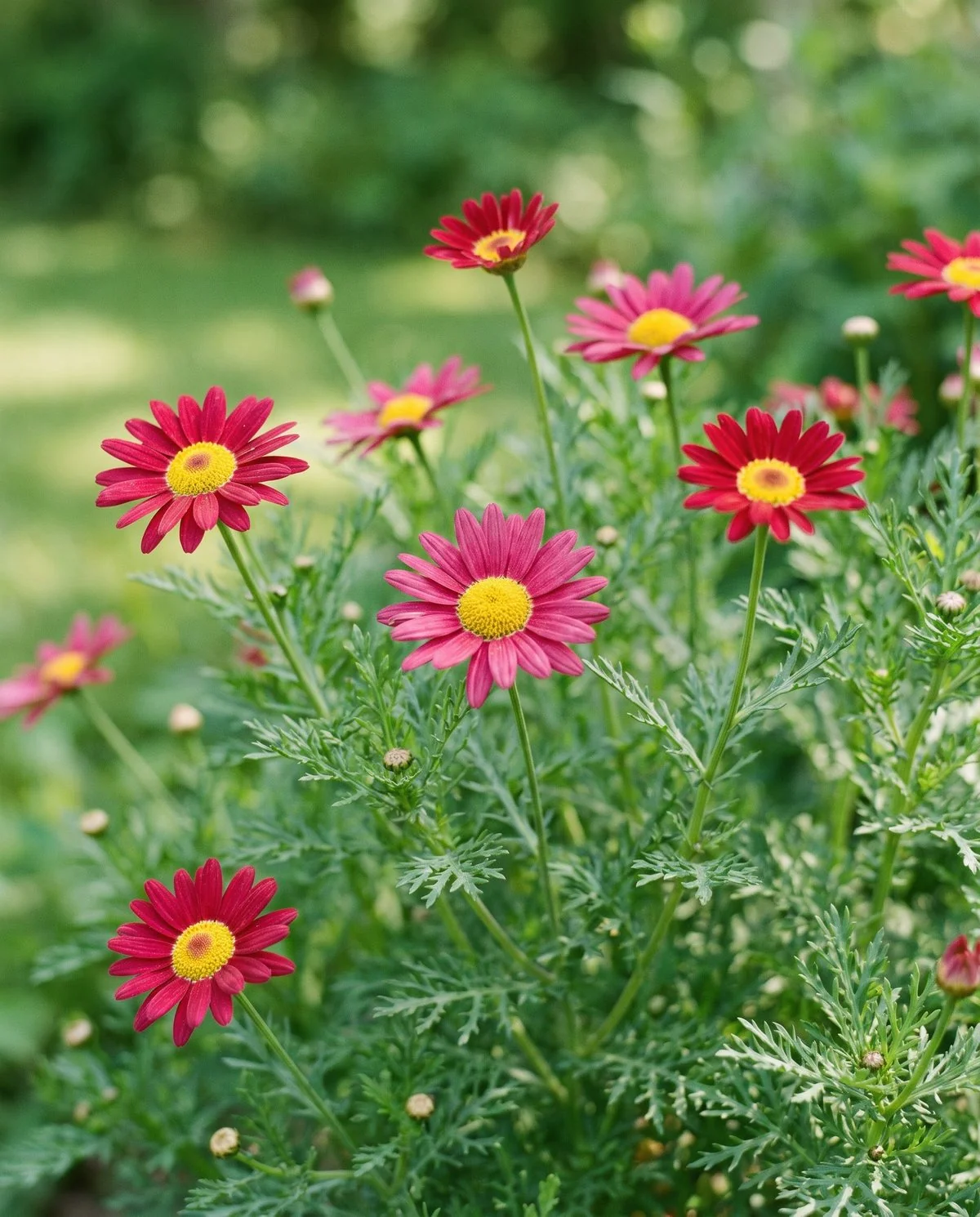
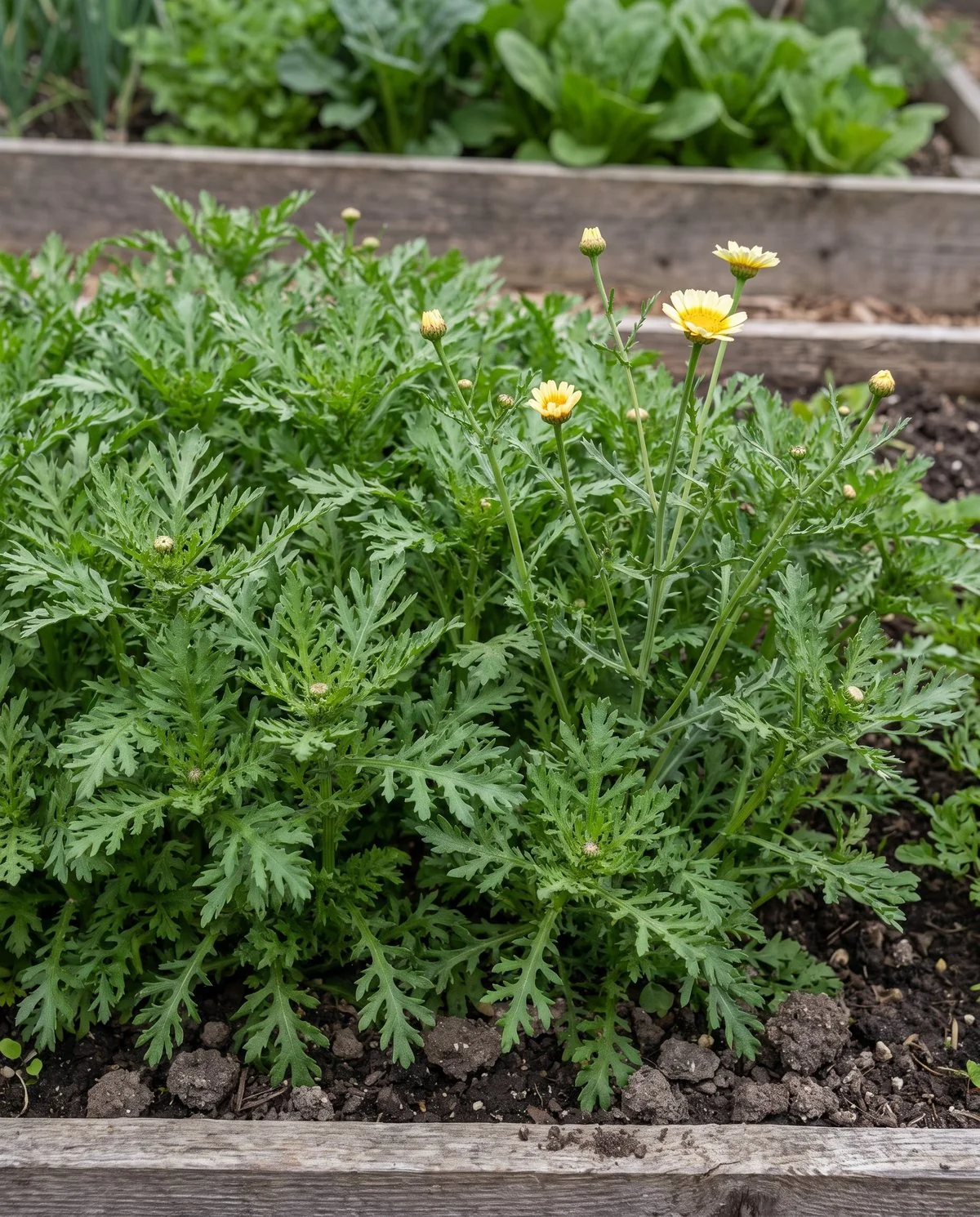
The name spans genera, families and uses: a border perennial, a lawn weed, a quarantined noxious weed, a florist's pot plant, an insecticide crop and a salad green all answer to it. That is why every practical question about a daisy has to start with which one, and why the field checks in the section below matter more here than on any other flower on this site.
Bloom time
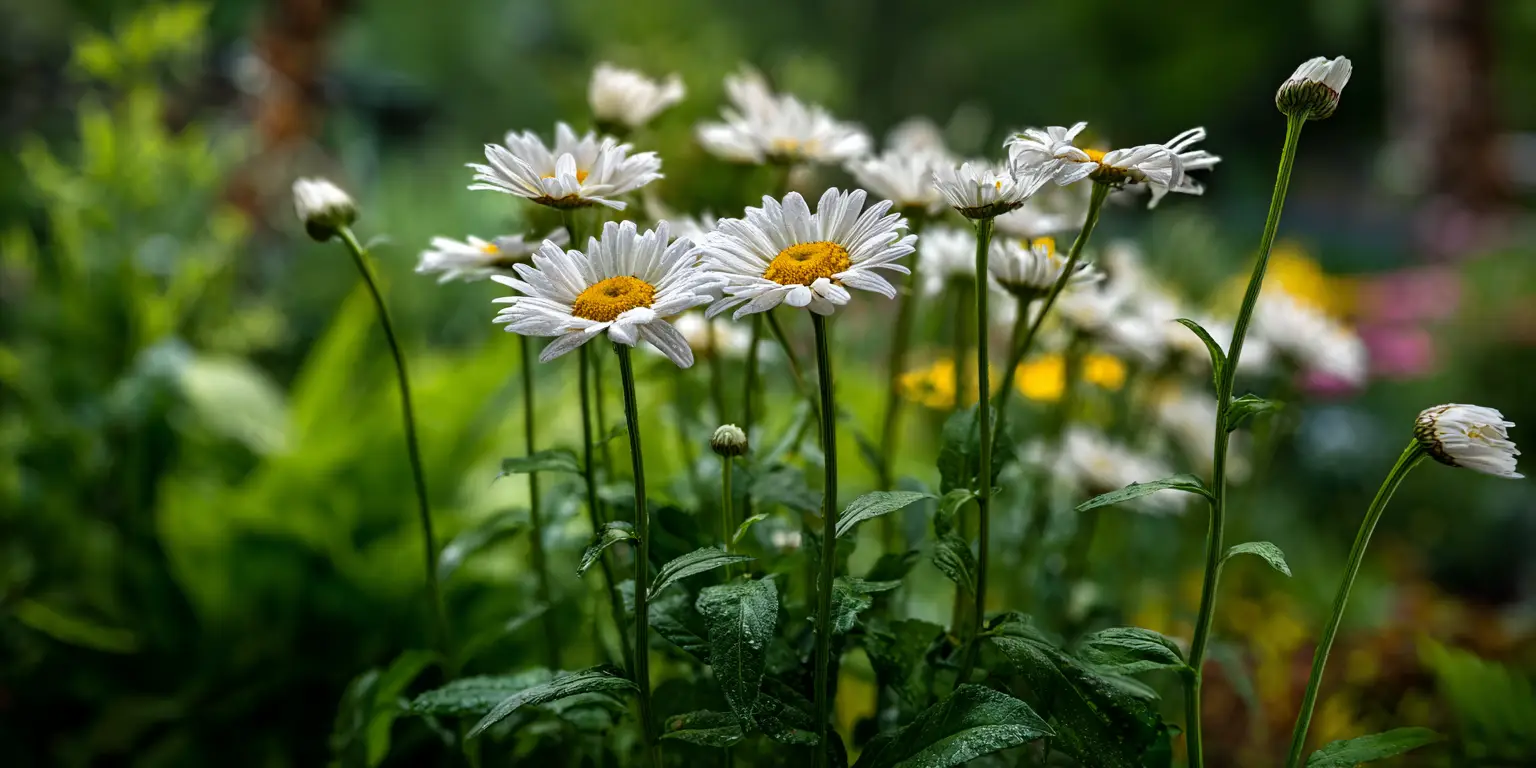
Shasta daisies flower in summer, though the quoted window shifts with the source: Missouri Botanical Garden lists July through September, most garden tags June through August. The start moves with the cultivar and the climate, and a compact early type in the mid-Atlantic can open in the first week of June while a tall late one in the upper Midwest waits until mid-July. Reckon on six to eight weeks of display, each head holding its shape for a week or more. A daisy allowed to set seed treats the job as finished and slows down; a daisy cut back to a leaf or a side bud as each head browns keeps sending up buds, and the reward is a second and sometimes third flush instead of a single show. Shearing the clump by a third once the main flush passes works nearly as well and is far faster. The others keep their own calendars: English daisy flowers in cool spring and quits when heat arrives, African daisy runs from spring to frost in a cool summer, and Montauk daisy holds off until early fall.
What the first three years honestly look like
Year one is not a formality here, and the evidence for that is a trial rather than an anecdote: the Chicago Botanic Garden's 1999 to 2006 evaluation of 36 Leucanthemum taxa lost eight named cultivars, among them 'Alaska', 'Barbara Bush', 'Cobham Gold', 'Crazy Daisy', 'Dwarf Snow Lady', 'Esther Read', 'Polaris' and 'Snow Lady', to root rot in the first year alone, before any winter was involved, with drainage rather than gardener error as the cause in most cases. Seed-raised plants add their own disappointment, since strains advertised to flower in their first summer routinely deliver small plants with a few flowers instead. Years two and three follow the ordinary perennial pattern of roots first, size second and full display third, an adage rather than a sourced figure, and consistent with the gardener in the sample who concluded that three years seems to be the magic number for plants to explode. After that, maintenance decides longevity rather than the plant's own lifespan: Chicago Botanic Garden asks for division every two to three years, and a planting left undivided in wet soil genuinely can decline to nothing. Two types run to different clocks entirely. Oxeye daisy does not decline at all if left alone, self-sowing aggressively and, in the trial's own comparative observation, proving particularly fruitful at it beside the Shasta daisies. Gerbera daisy has the shortest honest timeline of the group outside zones 8 to 10, where Clemson frames it as a tender perennial grown as an annual, or carried through winter indoors at 45 to 50 F, so there is no established year three to wait for without that indoor step.
Height and spread
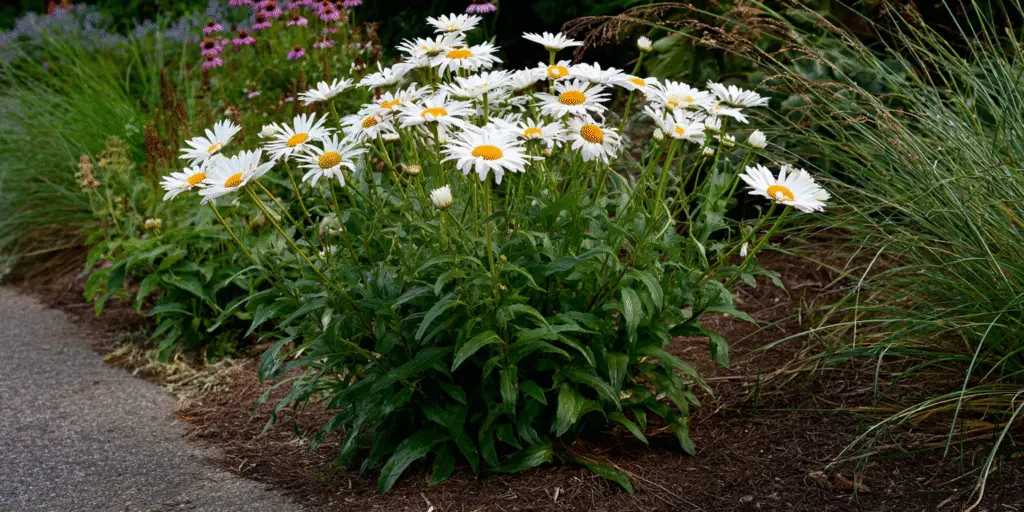
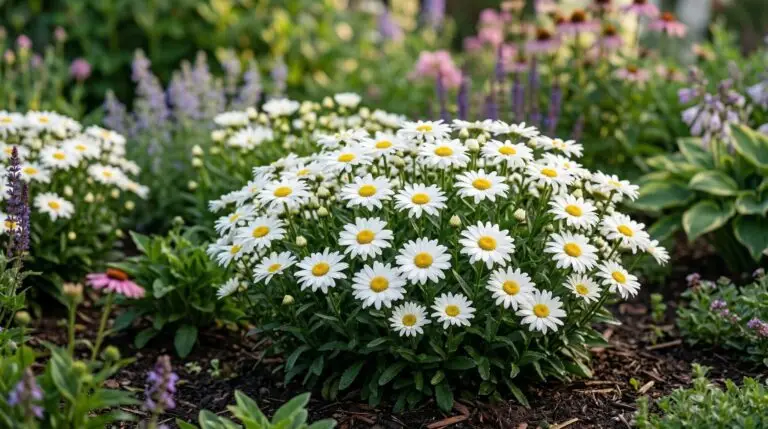
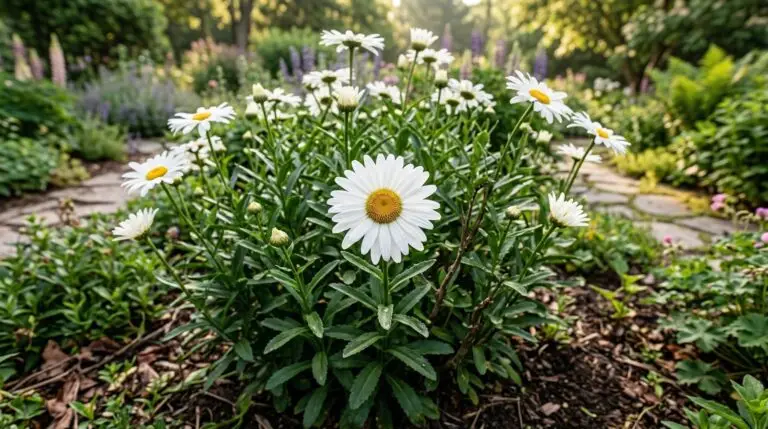
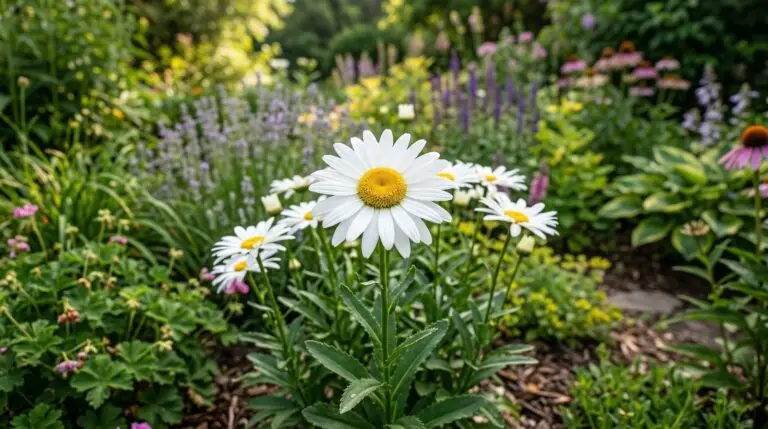
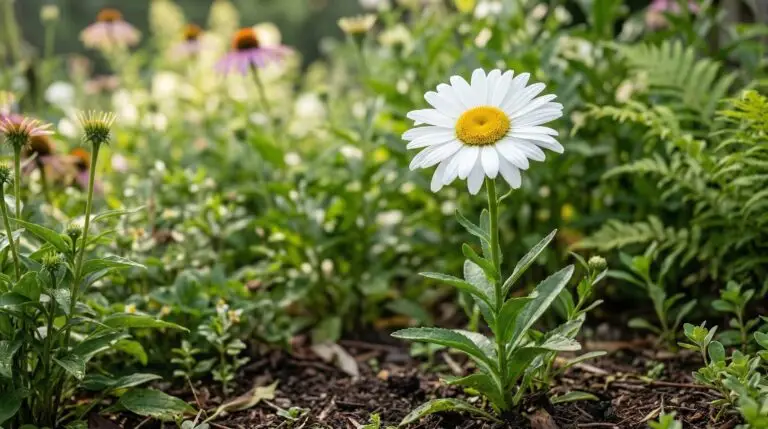
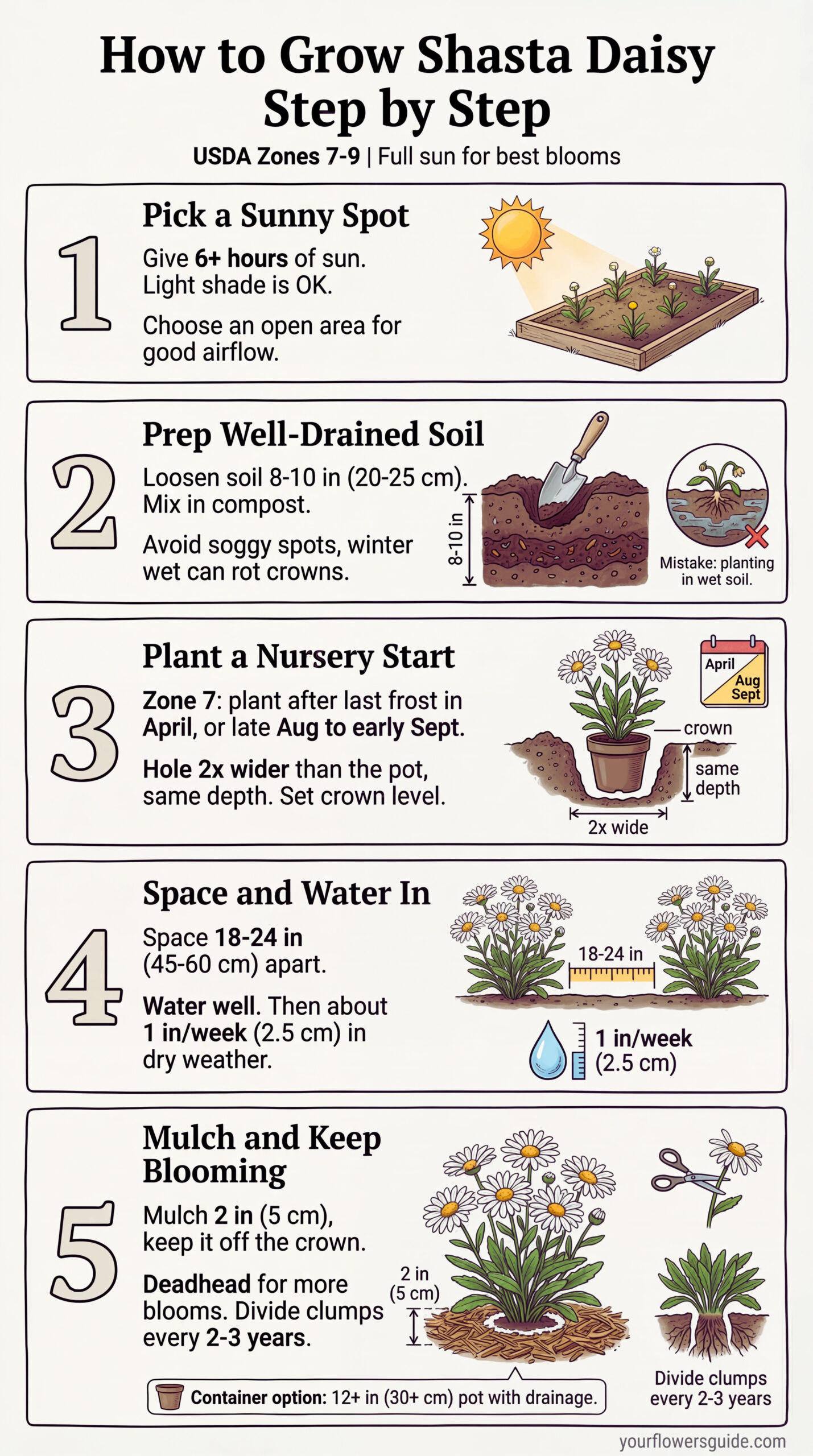
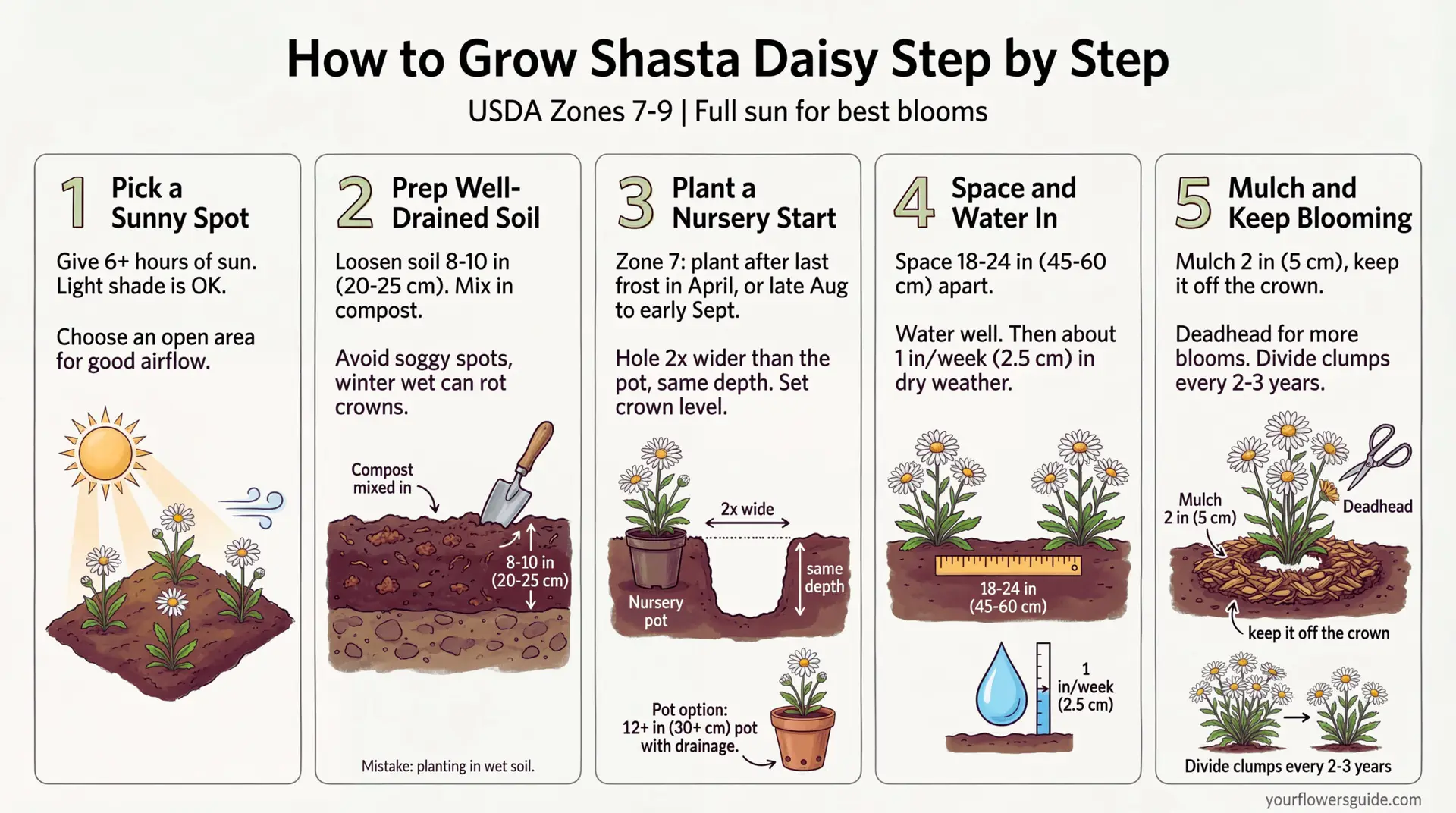
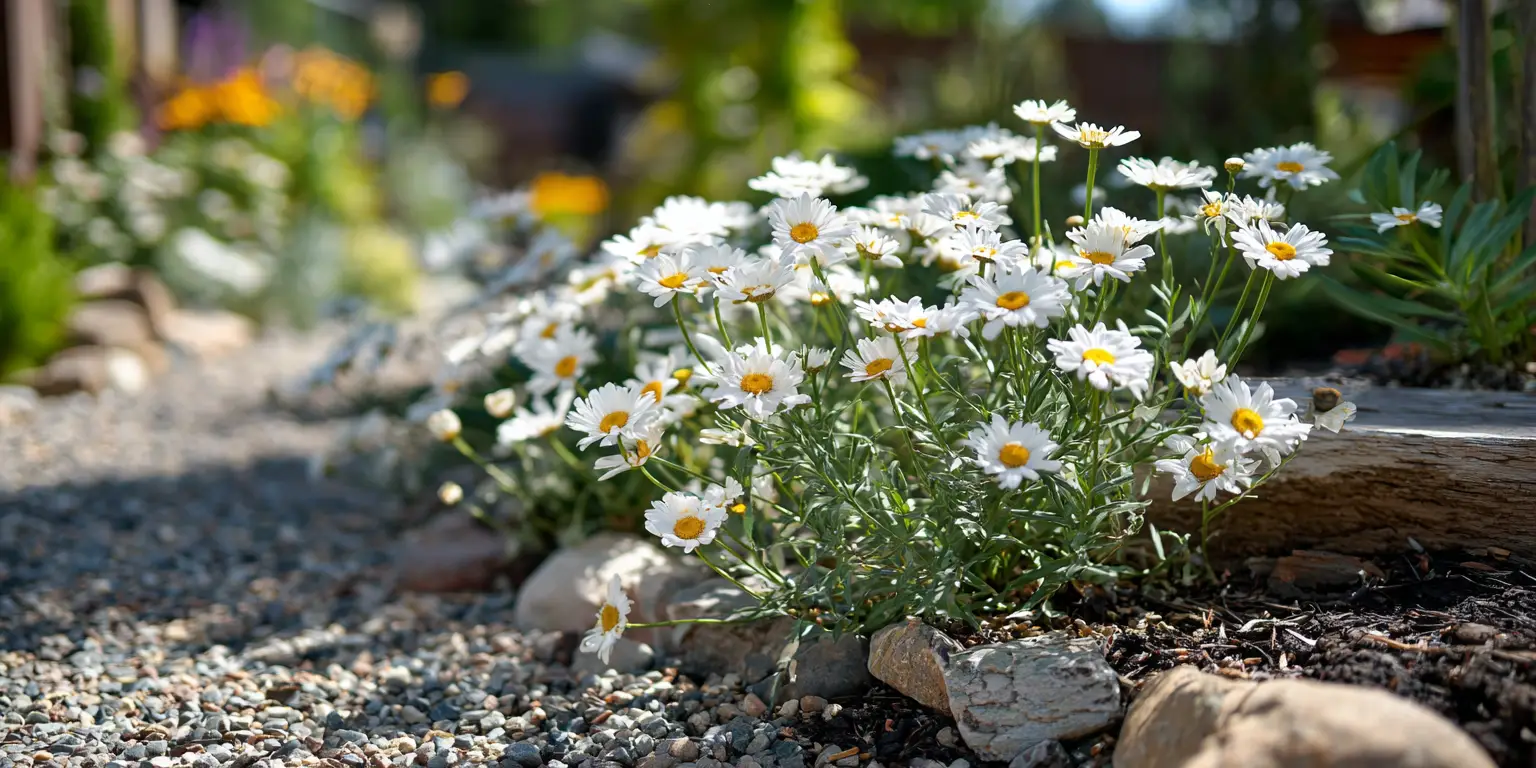
A standard Shasta daisy makes a clump 2 to 3 feet tall and 18 to 24 inches across, a basal rosette of dark, toothed leaves with the flower stems rising clear above it. Space plants 18 to 24 inches apart, since crowded crowns hold the damp air that starts leaf spot. The clump widens outward from new shoots at the perimeter and runs nowhere.
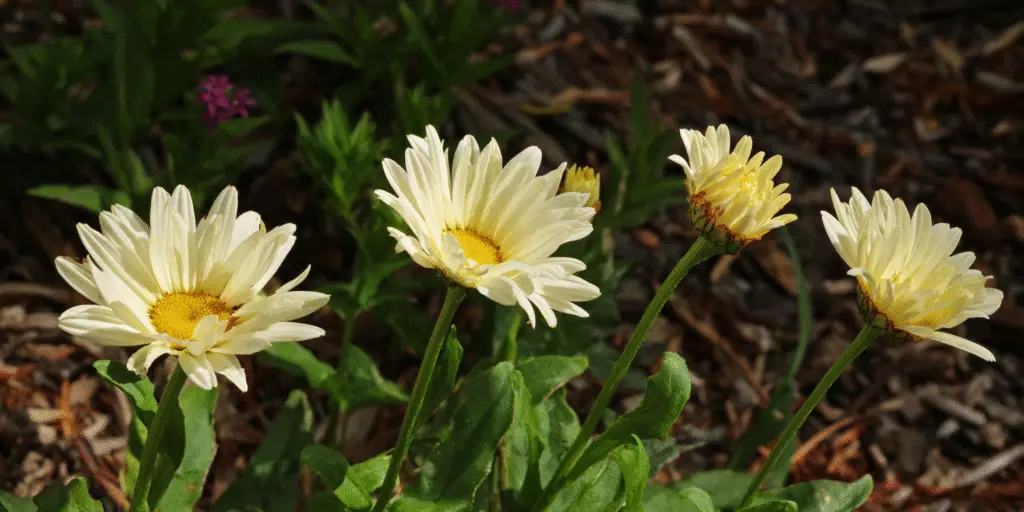
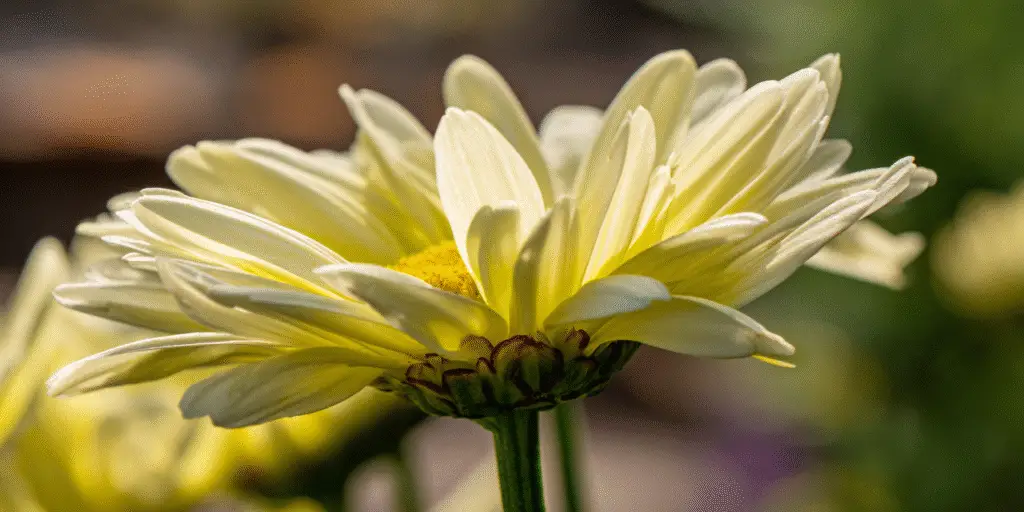
Height separates the named forms and is the thing to choose on. 'Becky' is the tall standard at 3 to 4 feet, holding large single flowers on stems stiff enough to skip staking, and its tolerance of southern heat and humidity is why it became the most widely grown Shasta daisy in the trade and was named Perennial Plant of the Year by the Perennial Plant Association. 'Alaska' is the older tall single, less refined and tougher in cold gardens. Nearer the front sit 'Snowcap' at 12 to 15 inches, 'Snow Lady' smaller again and flowering from seed in its first summer, and 'Banana Cream' at 15 to 18 inches, lemon yellow fading to cream. 'Crazy Daisy' and the other shaggy doubles hold frilled heads around 2 to 2.5 feet, and 'Goldfinch' keeps a soft yellow tone. A packed double head holds rain, so those stems bow after a storm in a way the singles do not.
Light
Full sun, six or more hours of direct light, is what a Shasta daisy is built for. In strong light the stems come up short-jointed and rigid, and in the hottest parts of the South and Southwest shade through the mid afternoon keeps the white rays from scorching brown at the tips. Under about five hours the plant changes shape before it changes its flower count: stems stretch, the clump leans outward from the middle, and the flowers are smaller and fewer. Staking treats the symptom. When a clump that used to stand starts flopping, look at what has grown up around it, because a maturing shrub or a spreading limb is the usual culprit, and moving the clump in early spring solves in one season what a decade of staking will not.
Water
Shasta daisies want about an inch of water a week while they establish, as one deep soak rather than several light sprinklings. After the first season they are genuinely drought tolerant, and Missouri Botanical Garden describes their preference as average, dry to medium, well-drained soil, a more honest reading than the constant moisture some care sheets recommend. The danger runs the other way, and it runs seasonally. Summer dryness makes a daisy look tired; winter wet kills it outright, and Missouri Botanical Garden puts it flatly: wet soils in winter can be fatal. The Chicago Botanic Garden saw the same thing in its multi-year trial of Leucanthemum, recording crown damage and outright plant losses from excessive soil moisture and poor drainage over the winter months. A crown sitting in cold, saturated ground through the dormant months softens and rots. Water at the base, and pull mulch back two or three inches from the crown, because mulch banked against the stems traps the same dampness.
Five things the name gets wrong
The myth: Marguerite is a particular daisy.
The reality: It is a shared common name for at least three unrelated plants in this grid alone: oxeye daisy, English daisy and the Canary Island marguerite, Argyranthemum foeniculaceum. NC State Extension's own database entry for Leucanthemum vulgare states that it is often confused with Argyranthemum foeniculaceum and Bellis perennis, while listing marguerite as a common name on all three species pages separately.
The myth: Oxeye daisy is a North American wildflower.
The reality: It is native to temperate Eurasia and naturalized here. Washington State's Noxious Weed Control Board classes it a Class C noxious weed on the state quarantine list, illegal to buy, sell or distribute; Montana rates it a Priority 2B noxious weed; and Colorado State University Extension's own county guidance requires containment. Extension sources specifically warn that it turns up uncredited in wildflower seed mixes.
The myth: A struggling gerbera daisy needs more water.
The reality: Usually the reverse. Clemson HGIC's central care instruction for the plant is to allow the crown to dry out between waterings to reduce the risk of crown and root rots, and the forum evidence is full of people increasing water in response to a wilting gerbera, which is the documented cause of the decline rather than its cure.
The myth: Crown daisy is just another name for a garden daisy.
The reality: It is a leaf vegetable, Glebionis coronaria, grown and eaten across East Asia for centuries and prominent in Korean cooking as tong ho. A gardener given crown daisy seed expecting a flower bed is actually growing a salad green, which is exactly what happened to one poster in the sample who could not work out what their plant was doing.
The myth: Pyrethrin insecticide is a modern synthetic chemical.
The reality: It is a plant extract that predates synthetic pesticides by about a century. The dried flowers of Tanacetum coccineum and the related T. cinerariifolium were commercially cultivated in Armenia from 1828 and sold through the 19th and early 20th centuries as Persian insect powder, or Pulvis insectis, used against lice long before any synthetic pesticide existed. This one rests on a consistent historical record cross-checked against NC State's own toolbox entry naming the plant pyrethrum, rather than on a single university citation.
Soil and pH
Drainage outranks fertility here by a wide margin. A loamy or sandy bed of average richness, lightened with compost at planting, gives a Shasta daisy everything it needs. Heavy clay is the problem soil, and the fix is coarse grit and organic matter worked deeply through the bed, or more reliably a planting area raised a few inches. Judge a spot during the wettest week of late winter rather than in summer: ground that holds a puddle or stays spongy underfoot then will rot a crown, whatever it looks like in July. Feeding needs restraint. Too much nitrogen produces a large, soft, leafy plant with few flowers and stems that cannot hold their own heads up, as any daisy bed at the edge of a fed lawn shows every year. One spring application of a balanced granular feed, or nothing at all in decent soil, suits them better. On pH they are happiest between 6.0 and 7.0 and tolerant of mildly alkaline ground.
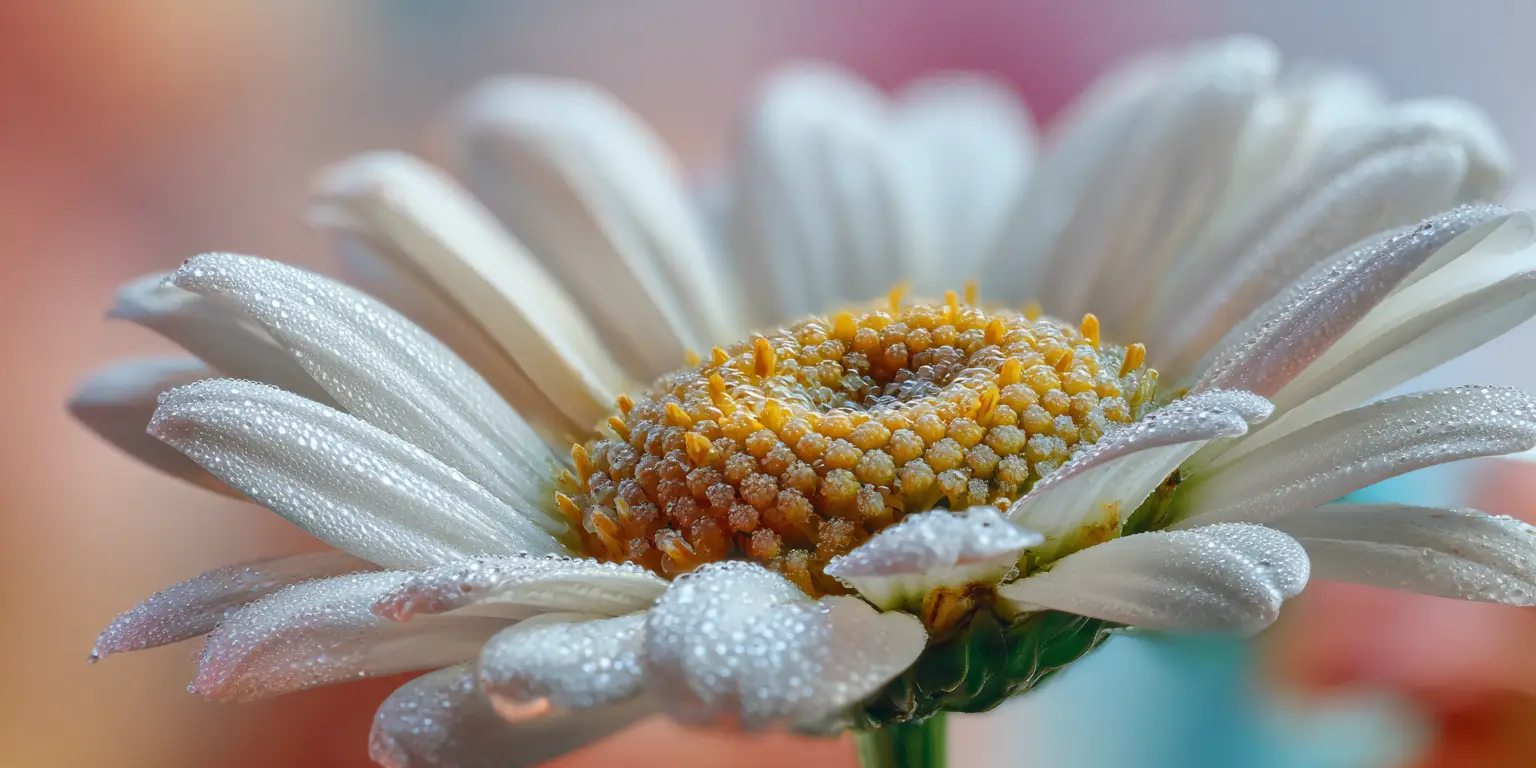
USDA hardiness
Missouri Botanical Garden lists Leucanthemum × superbum as hardy in zones 5 to 9, while most nursery tags and many extension sheets say 4 to 9. Both figures are defensible, because the plant is a complex hybrid and its cold tolerance is cultivar dependent: the older, plainer, tougher selections such as 'Alaska' hold up in cold gardens that will kill a refined modern double in its second winter. Treat zone 5 as the safe assumption, zone 4 as achievable with the right cultivar, and read the tag before the species range.
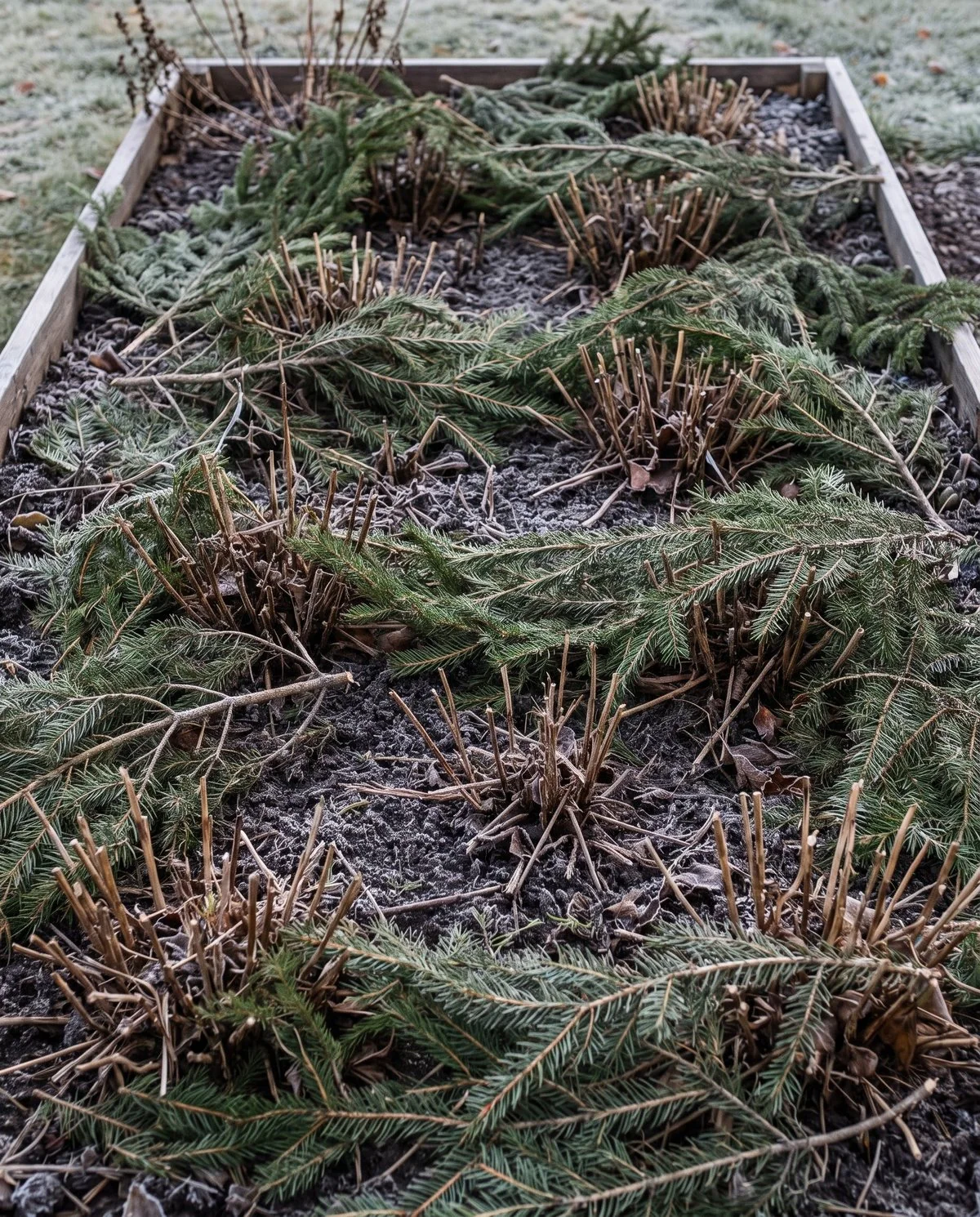
Cold is rarely what kills a Shasta daisy anyway. The dangerous winter is the one that alternates thaw and freeze over ground that cannot drain, common in zone 6 and 7 gardens that assume they have nothing to worry about. Plant in spring in the coldest zones so roots anchor before the first freeze-thaw cycle can heave a young crown out, and lay winter mulch only after the soil has frozen, since the point is to keep the ground frozen steadily rather than warm. At the warm end, heat and humidity in zones 8 and 9 shorten the plant's life, so heat-tolerant selections and generous spacing matter more than any cold precaution.
By type, because one zone grid cannot hold this name
A single planting calendar works for a flower that is one species. These are unrelated plants with different life cycles, from a herbaceous perennial to a tender annual to a cool-season leaf crop, so the calendar is organized by type instead, each row carrying its own source.
Propagation and longevity
Division is less routine maintenance than the mechanism by which the plant survives. A clump expands outward from its middle, and the oldest tissue at the center goes woody, stops flowering and dies, leaving a living ring around a hollow that keeps thinning until the plant is gone. That is the reputation for being short lived, and splitting every two to three years resets it. Dig the clump in early spring as growth resumes, cut it into sections that each carry several shoots and a fist of roots, throw the dead middle away, and replant the outer pieces at the depth they were growing. Those divisions flower the following summer, and a clump kept on that rhythm can be carried on indefinitely from what is genetically the same plant.
Seed carries one instruction people get wrong: Shasta daisy seed needs light to germinate, so it is pressed onto the surface of moist mix and left uncovered, never buried. At around 70 degrees Fahrenheit it sprouts in two to three weeks, and many strains started indoors six to eight weeks before the last frost flower in their first summer. Named cultivars are hybrids and do not come true, so seed off a 'Becky' gives daisies that are recognizably not the parent. To clone a cultivar, take basal cuttings of young shoots in spring.
When daisies stop blooming or disappear
Almost every complaint about Shasta daisies reduces to one of five causes, in this order of likelihood. Age comes first: a clump that flowered for three summers and has gone thin in the middle is not sick, it is overdue for division. Second is winter drainage, since a plant that never appeared at all in spring, leaving no crown to find, almost always rotted, and replanting the same spot without opening the soil repeats the outcome. Third is light, which shows as a clump that stretches, leans and carries small, sparse flowers. Fourth is nitrogen, the opposite picture, a huge dark leafy plant with almost no flowers. Fifth is a plant not old enough, since a spring-sown seedling of a strain that does not flower in year one will make foliage and wait. Two smaller patterns account for the rest: a clump that flowers hard in early summer and then stops entirely has been left to set seed, and a division that sulks the summer after it was moved is rebuilding roots rather than failing.
Fragrance
Daisies are grown for the flower rather than the scent. Leucanthemum flowers are neither sweet nor neutral: they carry a sharp, faintly rank note that becomes obvious with a full vase in a closed room, and gardeners describe it in unflattering terms often enough to take seriously. Cultivars differ in how strongly they express it and some are close to odorless, but nobody plants a Shasta daisy for perfume. The foliage smells bitter and herbal in the way the whole chrysanthemum tribe does. If fragrance matters, plant lavender, phlox or garden pinks beside them.
Toxicity and pet safety
There is no single answer for daisies, because the name covers plants with different chemistry. The ASPCA lists Daisy, under the botanical name Chrysanthemum species, as toxic to dogs and to cats, naming sesquiterpene lactones, pyrethrins and other irritants as the active principles, with vomiting, diarrhea, hypersalivation, incoordination and dermatitis as the signs. Shasta daisy sits inside that chemistry and is best treated as mildly toxic to pets. A dog or cat chewing a few leaves usually gets an unhappy stomach and drooling rather than an emergency.
Not every daisy carries that chemistry. The ASPCA lists gerbera daisy, Gerbera jamesonii, as non-toxic to dogs, cats and horses, which makes it the daisy of choice where a cat grazes the vase; broader guidance on blooms that are safe around animals is in the guide to flowers that are safe for cats and dogs. For people, the same compounds cause contact dermatitis in anyone sensitive to the family, so gloves make sense when cutting back a large planting.
Garden tags commonly label Shasta daisies deer resistant and rabbit resistant. Rutgers, whose ratings come from decades of observation in a heavily browsed state, places Shasta daisy in the band it calls occasionally severely damaged, a middle rating and not a pass. Bitter foliage discourages browsing when better food is available; it does not stop a hungry deer taking the buds off a clump overnight. Plant them freely where deer pressure is light, and fence or repel where it is heavy.
Vase life
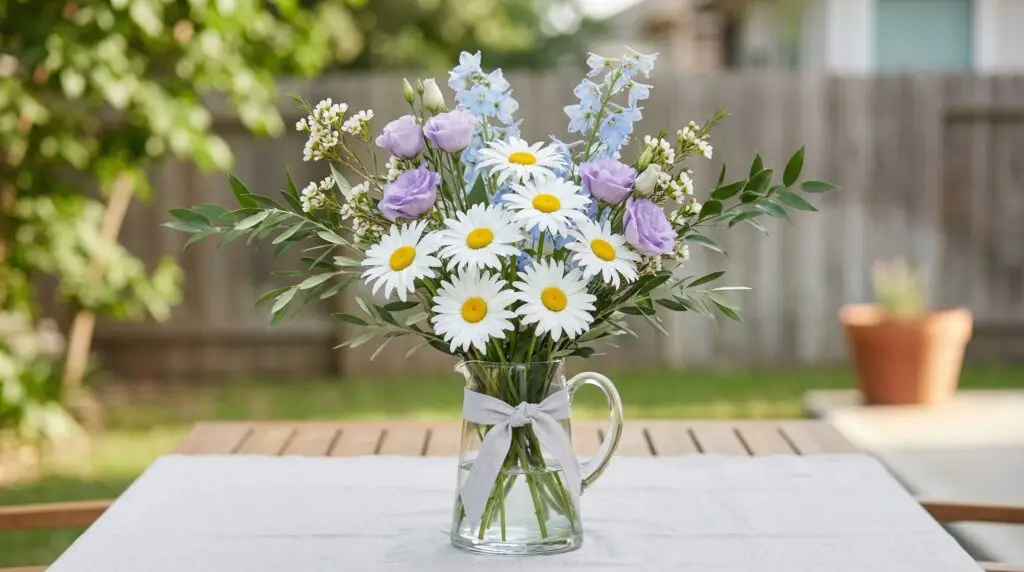
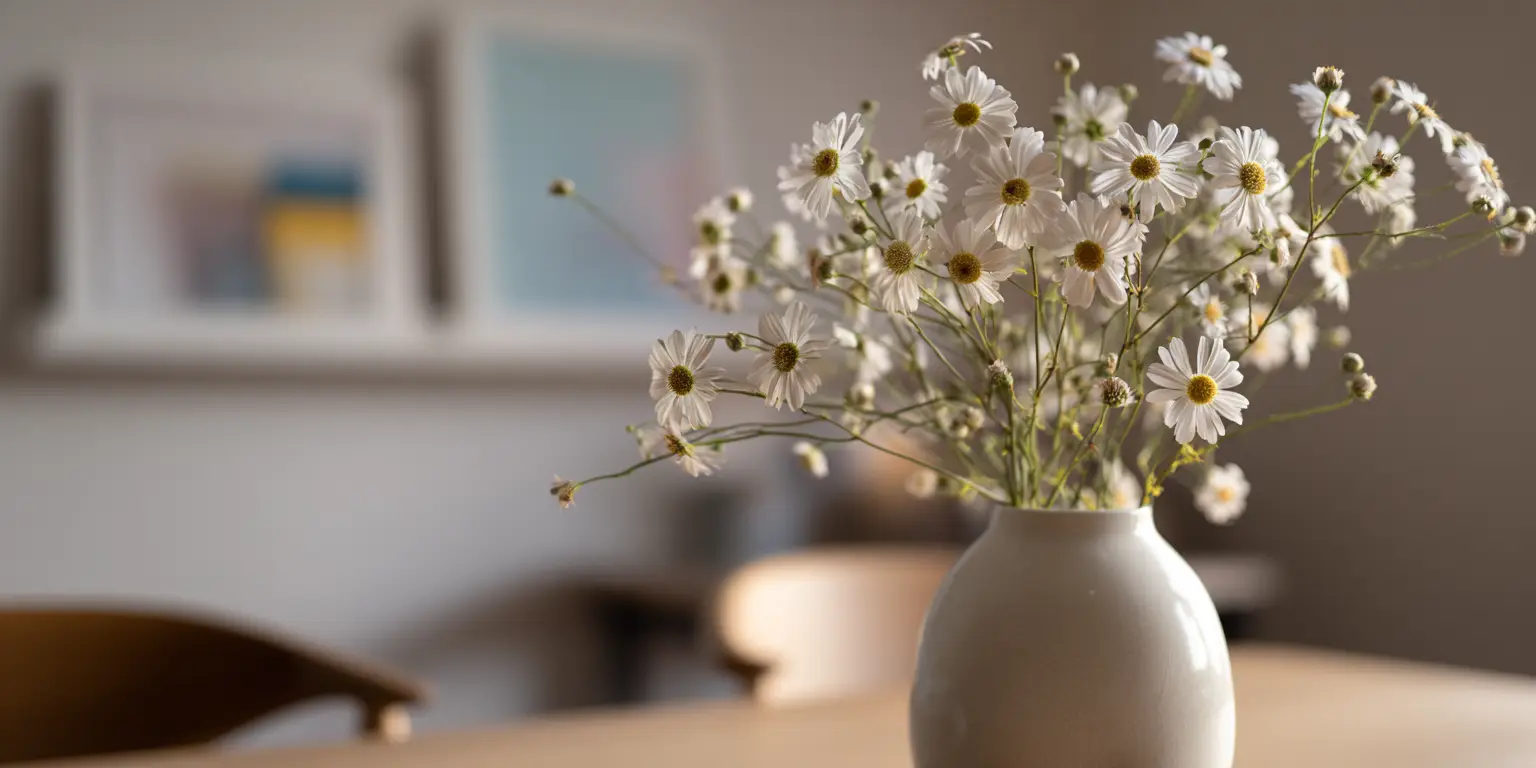
Cut Shasta daisies hold 7 to 10 days in a vase, long for a garden flower. Harvest stage matters most: take the stems in the cool of the morning when the white rays have just finished flattening out of the bud and the yellow disc has not begun shedding pollen from its outer ring. A head cut then opens fully in water; one cut later is already past its best. Strip every leaf that would sit below the waterline and recut on a slant. The flower food packet is worth using here, since postharvest trials run by North Carolina State University with the Association of Specialty Cut Flower Growers found Shasta daisy among the cut flower cultivars whose vase life was measurably extended by a commercial holding preservative. Change the water every couple of days, and keep the vase out of sun and away from ripening fruit. Daisies read best against depth of color instead of more white, which is why black-eyed Susan and coneflower make such durable summer partners.
The gerbera's own failure mode, and indoor handling
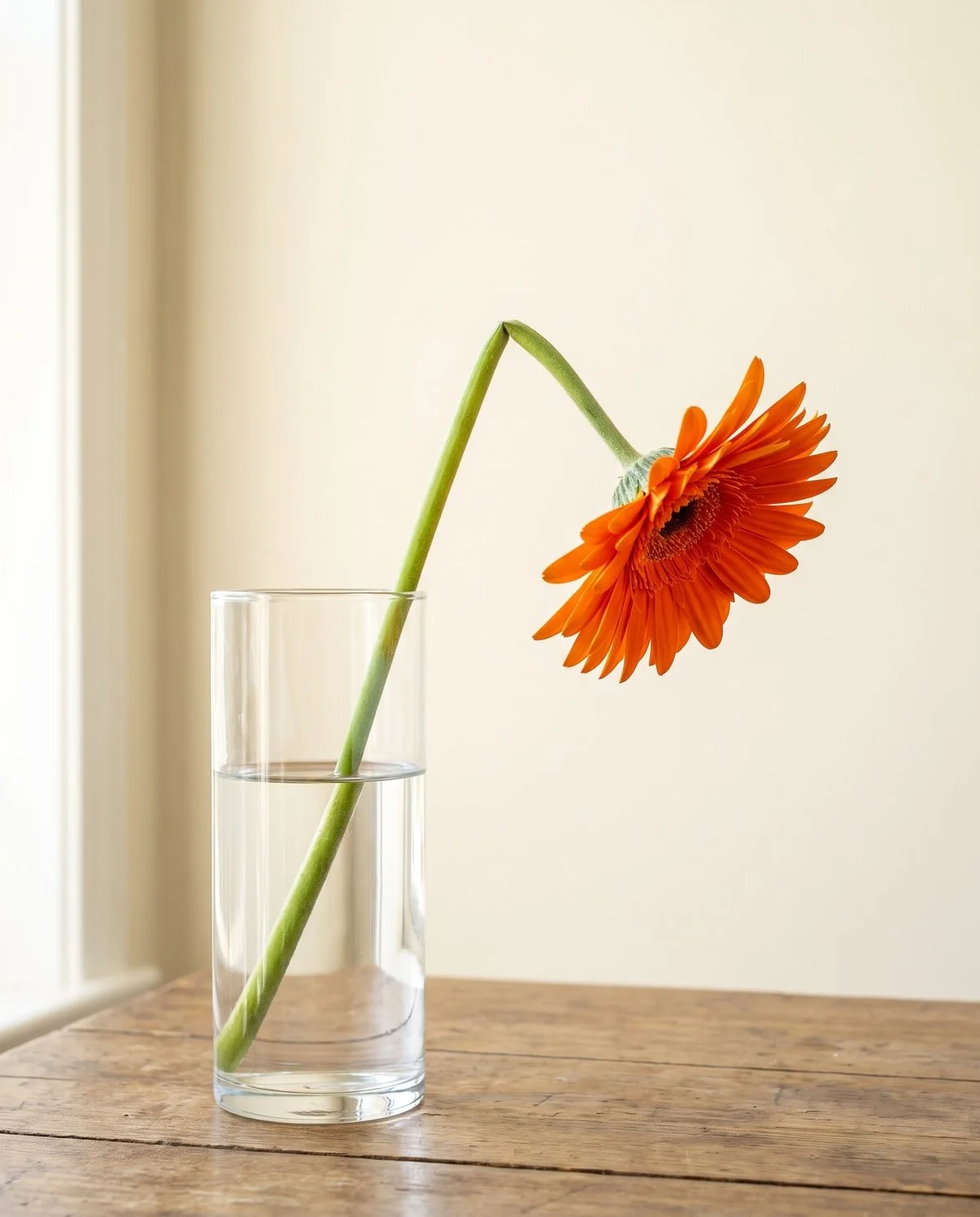
The interesting postharvest research here is not about how many days a daisy lasts. It is about why a gerbera's head flops over while the flower itself is still perfectly good, which turns out to be a measurable, separate mechanism from wilting.
A gerbera whose head has flopped over needs more water in the vase.
Topping up the vase does not answer it. The bend is a rigidity failure from blocked uptake, per the ABA research above, so the response is a fresh cut and clean water rather than more of the water the stem cannot draw.
A thick winter mulch is extra insurance for a container or garden clump.
Chicago Botanic Garden's own trial found heavy winter mulch itself a cause of crown rot, and asks for a loose covering of conifer boughs, pine needles or whole leaves instead. More is worse here.
Pests and diseases
Insects are a nuisance more than a threat. Aphids gather on buds and soft new stems in late spring and wash off with a jet of water or a soap spray. Slugs and earwigs chew ragged notches in damp, mulched, shaded plantings, where clearing debris from the crowns does more good than baiting. Leaf miner damage is cosmetic, and picking off the mined leaves is the whole treatment.
The diseases matter more. Leaf spot, caused by Septoria and Alternaria fungi, shows as brown or black spots that run together until the lower leaves yellow and die. Powdery mildew coats leaves with a gray-white bloom in humid, still air. Both answer to the same measures: full spacing, water at the base, and affected foliage in the trash rather than the compost. Crown and stem rot follows saturated soil and is untreatable once established, so correct the drainage and start again elsewhere. Missouri Botanical Garden also lists verticillium wilt, the one to think of when a single plant wilts from the bottom upward while its neighbors are untouched; the fungus persists in soil, so lift the plant with its root ball and give the spot to something unrelated, and never to another member of the family.
What people actually post about daisies
From 47 unique posts across r/gardening and r/plantclinic. This sample is smaller and was gathered by a weaker method than the other flowers in this series: the archive API rate-limited repeatedly and the posts were collected and deduplicated by hand rather than counted by script, so read the order as a real pattern and the percentages as approximate. Themes overlap and do not sum to 100.
Which daisy it is. This category is the largest partly because posters frequently do not know which plant they have, and several threads open with an identification question before reaching the symptom.
Whether the crown is staying wet. The most consistent single theme in the corpus: cheap potted gift plants bought by beginners with no idea they are tender perennials that want a dry crown.
Drainage first, then the clump's age. Disease and pest identification, no bloom in year two, unwanted spreading and floppy stems, several of which the Chicago Botanic Garden trial independently documents as real outcomes.
The undersides of the leaves and the buds. Aphids and unidentified chewing insects recur steadily, at a lower share than the animal damage seen on bulb flowers.
Age of the plant and the seed strain's own claims. Almost certainly under-counted, because a plant that never flowers is undramatic and hard to photograph.
Flower size, the crush-and-smell test, and rhizome against clump. Counted conservatively here using only posts where the identification was the primary ask, and higher if the ones embedded in other questions were included.
Whether the season is over or mid-flush. One post by count, but the single highest-engagement post in the whole corpus at 71 upvotes and 19 comments, which is a demand signal worth more than its share.
Two ordered paths
The two failures behind most of the forum sample. Both are answered in the wrong order by instinct, and in both the first check costs nothing.
Seven pairs, and the detail that separates each
Five of these seven cards show one side only. The missing photograph is always the same class of thing: a specific fungal texture, a rotted crown or an internal vascular disease, none of which should be illustrated with anything other than a real reference photo.
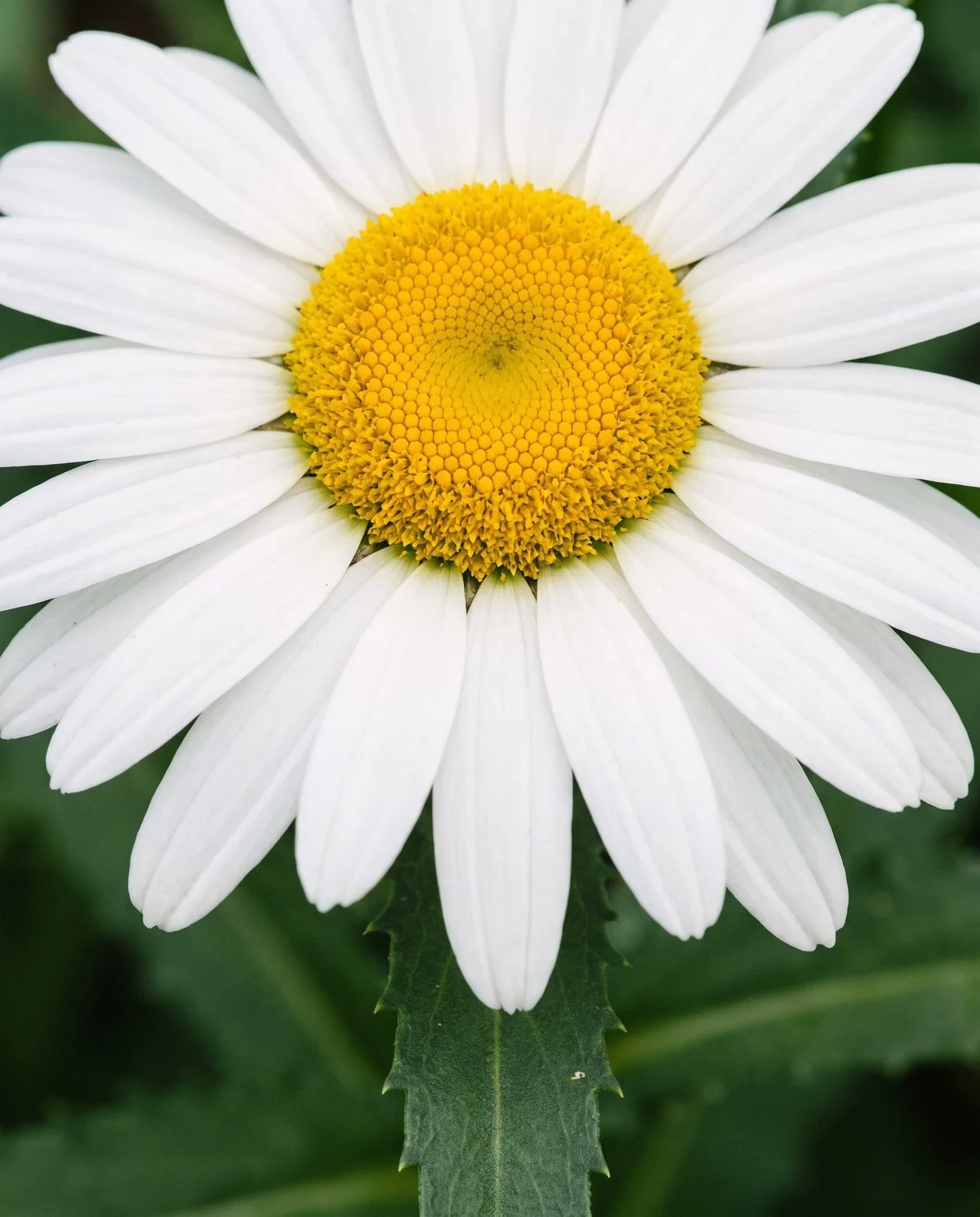
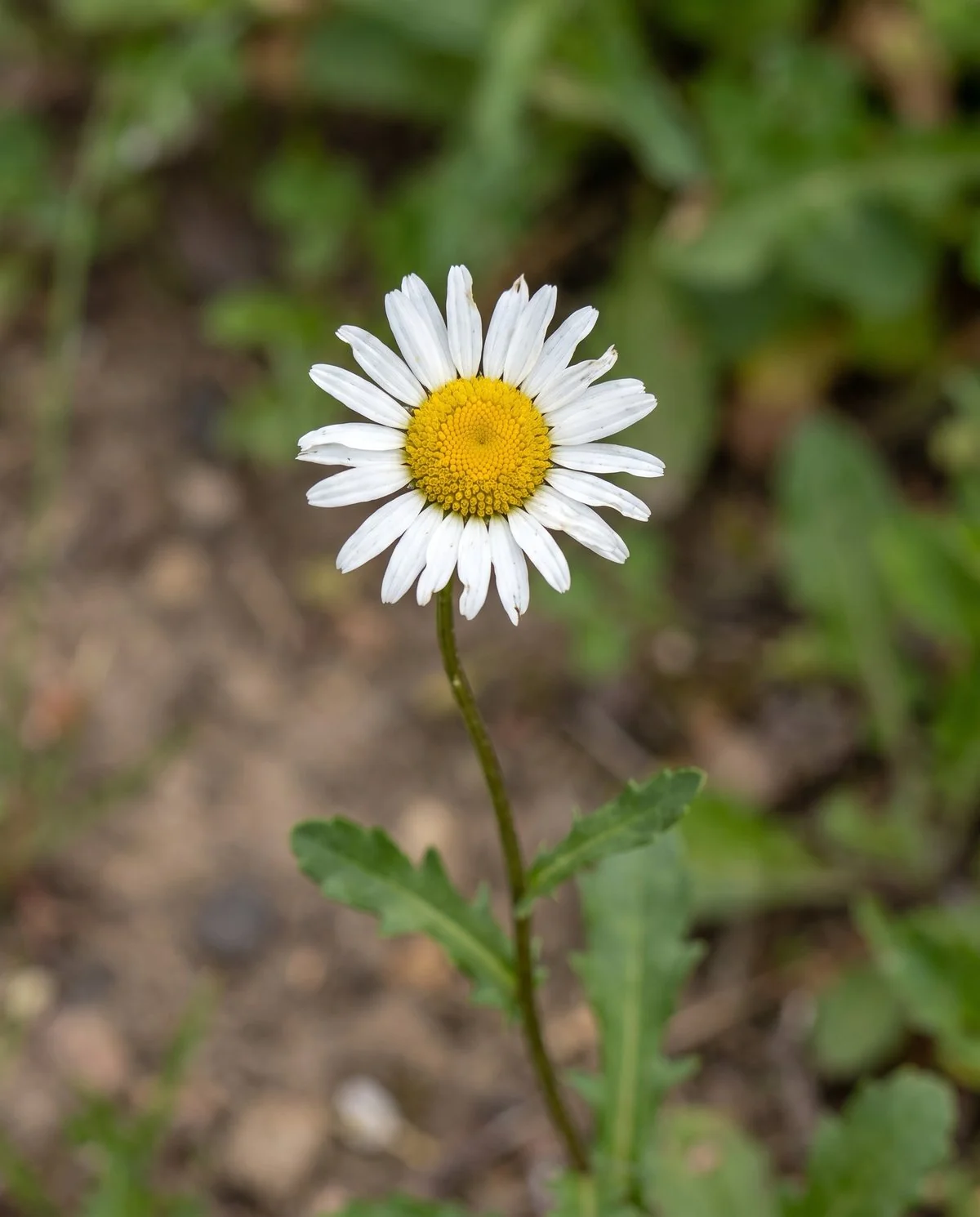
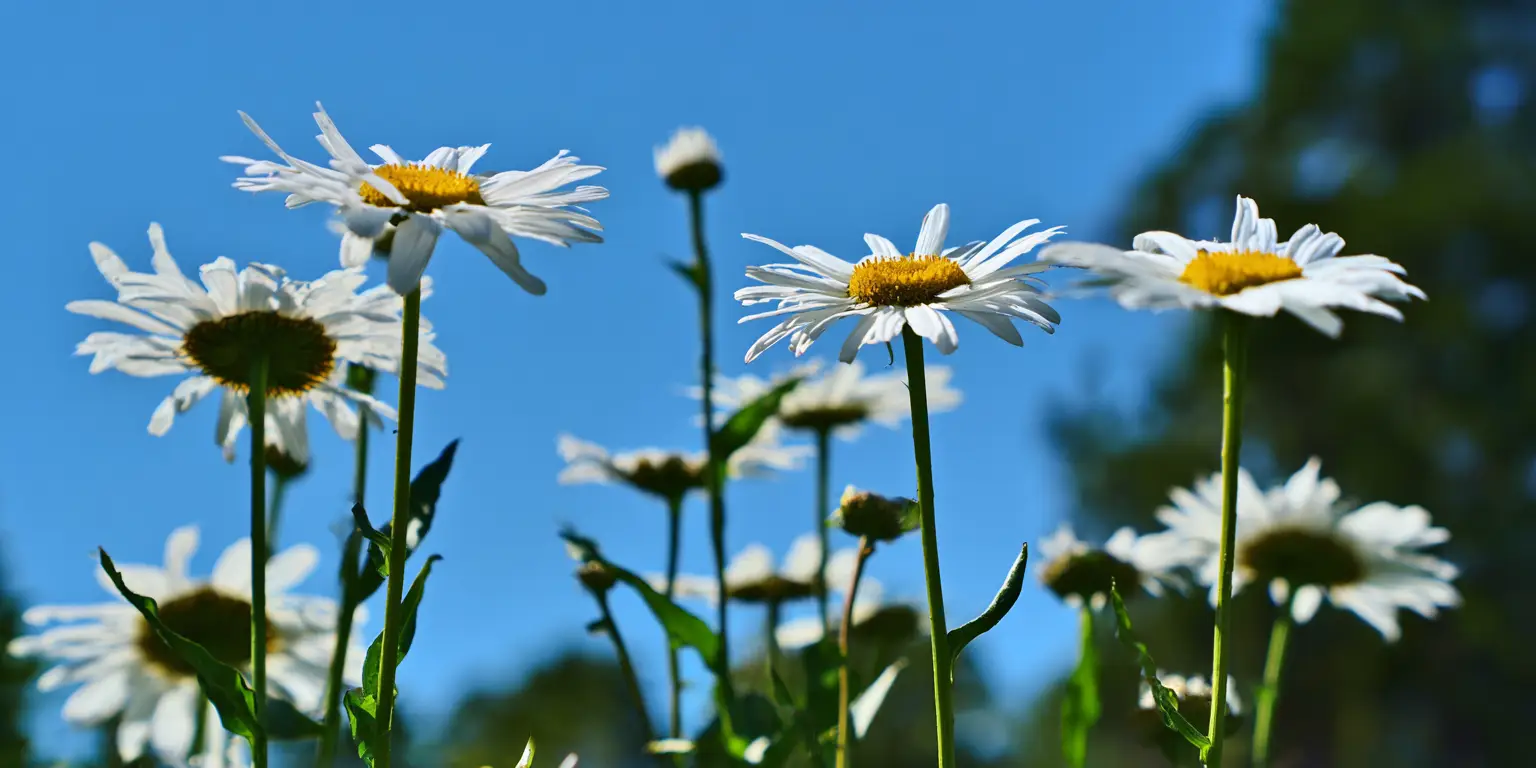
Three checks, any of which settles it. Flower size: the Chicago Botanic Garden trial measured Shasta daisy at 2 to 5 in across against oxeye at 1 to 3.5 in. Habit: Shasta forms a clump that stays put, oxeye spreads by rhizome. And the field test nobody expects, from Washington State's Noxious Weed Control Board: the entire oxeye plant has a disagreeable odor when crushed, which Shasta daisy does not share. Oxeye also opens up to four weeks earlier.
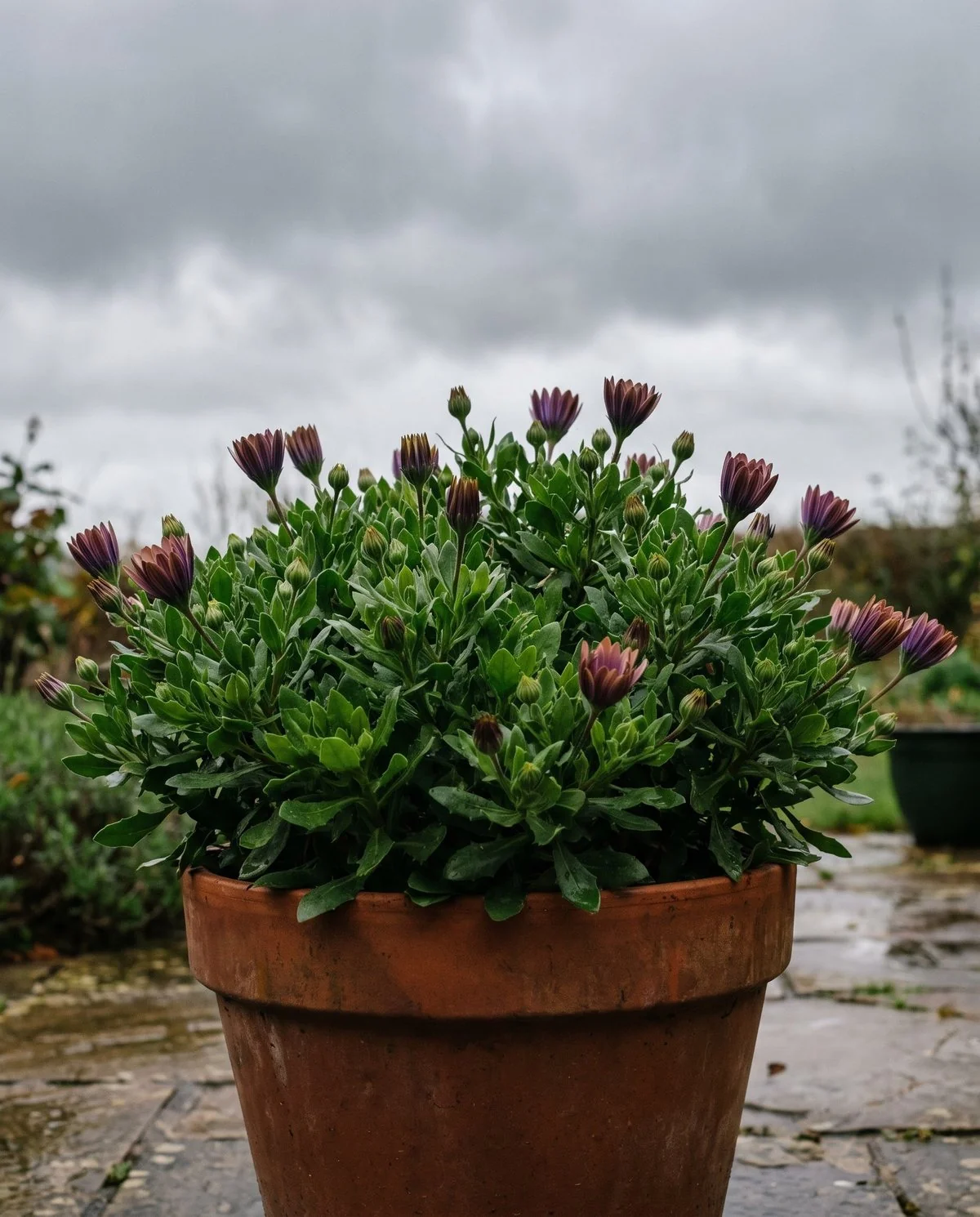
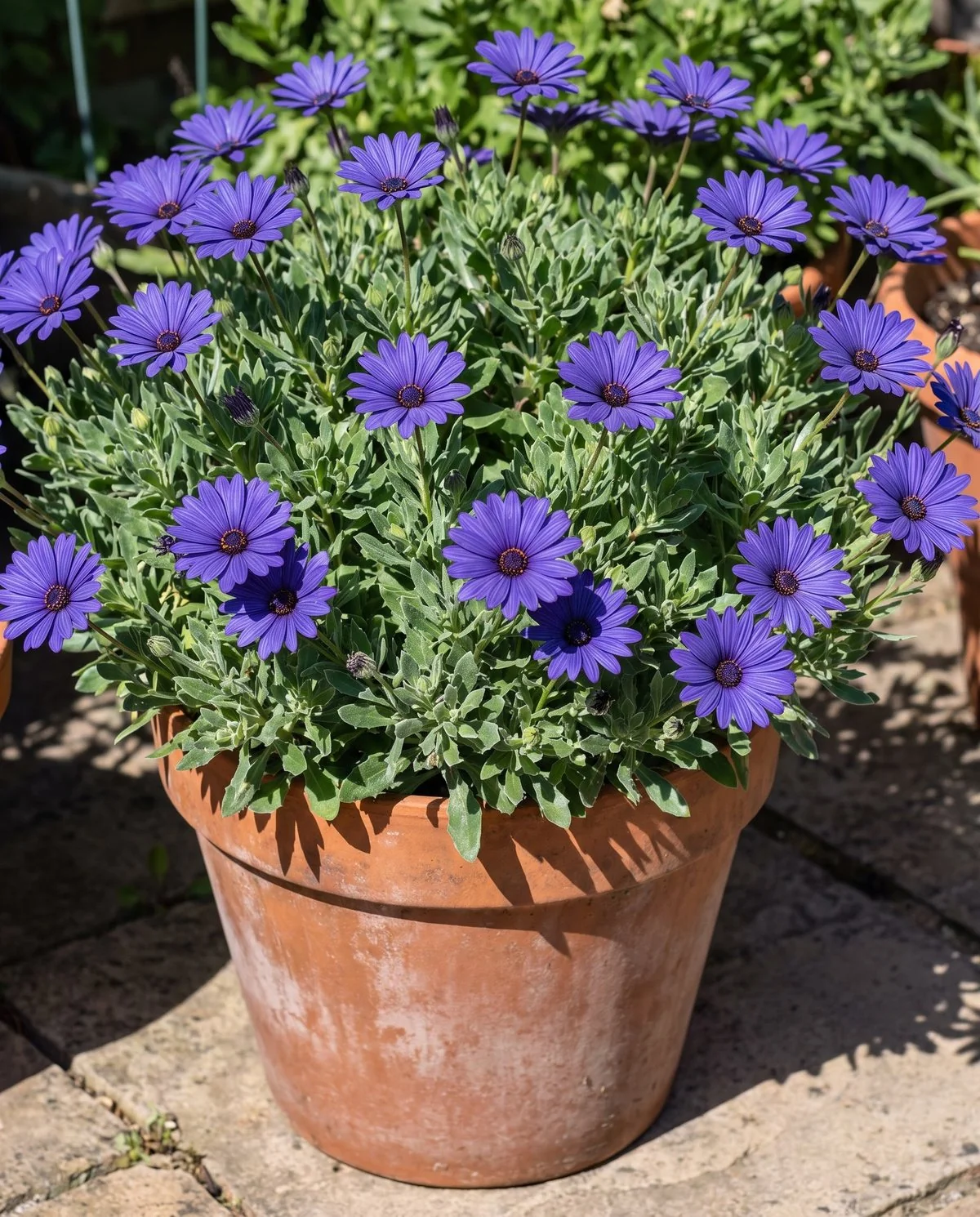
Osteospermum closes its flowers at night and on heavily overcast days, reopening as soon as the sun returns, and on a partly cloudy day may open only halfway. That is routine, tied to light levels, and not a sign of a sick plant. Decline looks different: petals that wilt and fail to reopen in full sun across successive days, usually with soil that is either bone dry or waterlogged. No .edu page was found stating the closing behavior outright, though it is consistently documented across horticultural sources as a genus trait.
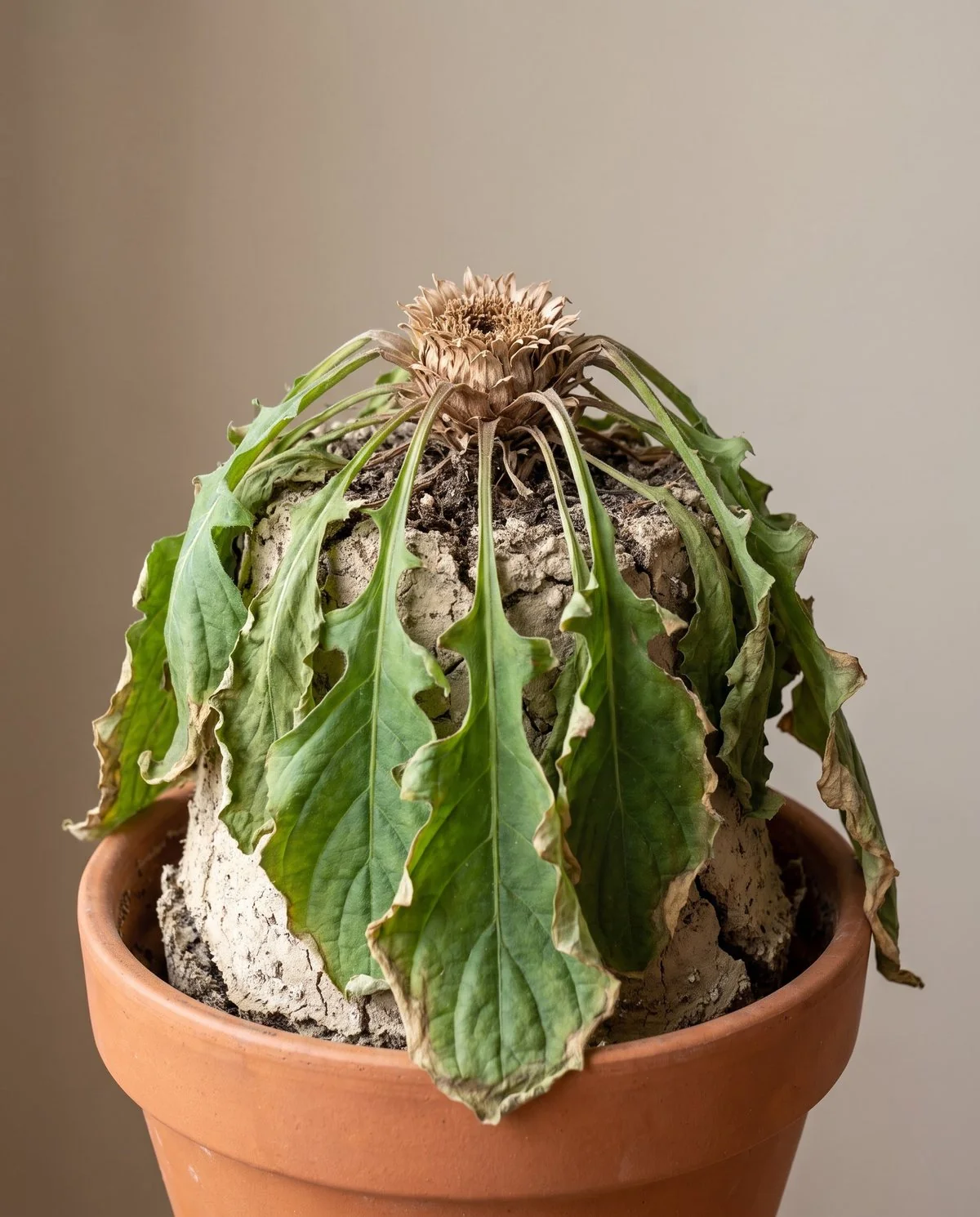
Underwatering is the benign, and commoner, first answer: uniformly dry crisp leaf margins, soil visibly pulled away from the sides of the pot, and, critically, a plant that perks back up within hours of a thorough watering. Crown rot never recovers from water. It starts with yellowing low down, wilting that does not respond, and eventually soft dark tissue at the crown where the leaves meet the roots. Clemson HGIC and UF/IFAS both name overwatering and standing moisture at the crown as the primary cause, which is why the reflex to water a drooping gerbera is so often the thing that finishes it.
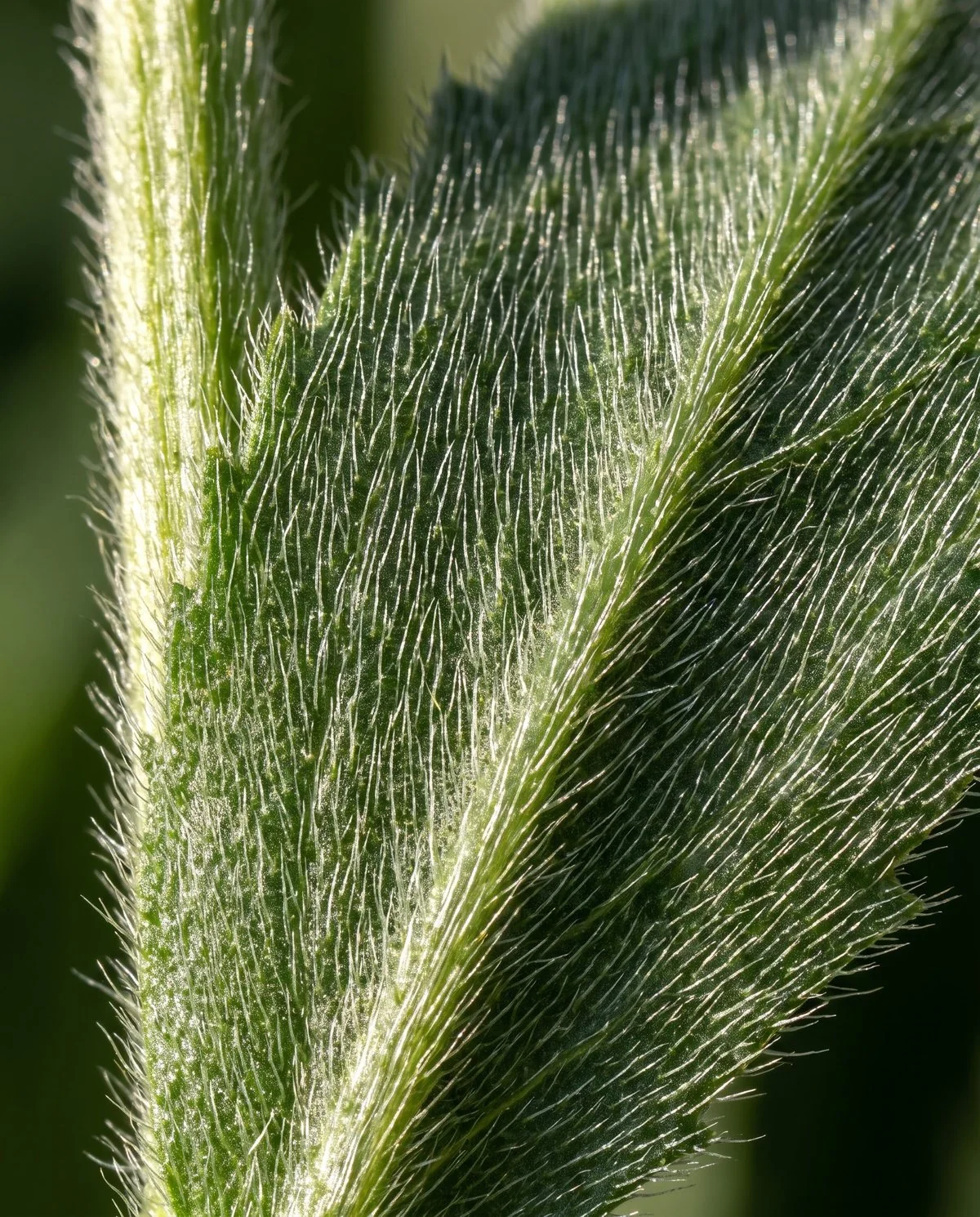
Mildew is a white to gray talc-like fungal coating that sits on top of the leaf surface, can be rubbed off, appears in patches, and worsens over days in humid still air. Natural pubescence is a structural feature: fine silvery-white hairs, uniform across the plant rather than patchy, present from the moment the leaf grew rather than arriving suddenly. The verbatim question from the forum sample is exactly this: is this powdery mildew or thick hairs on this Shasta daisy. Rub a leaf gently and watch whether anything comes away.
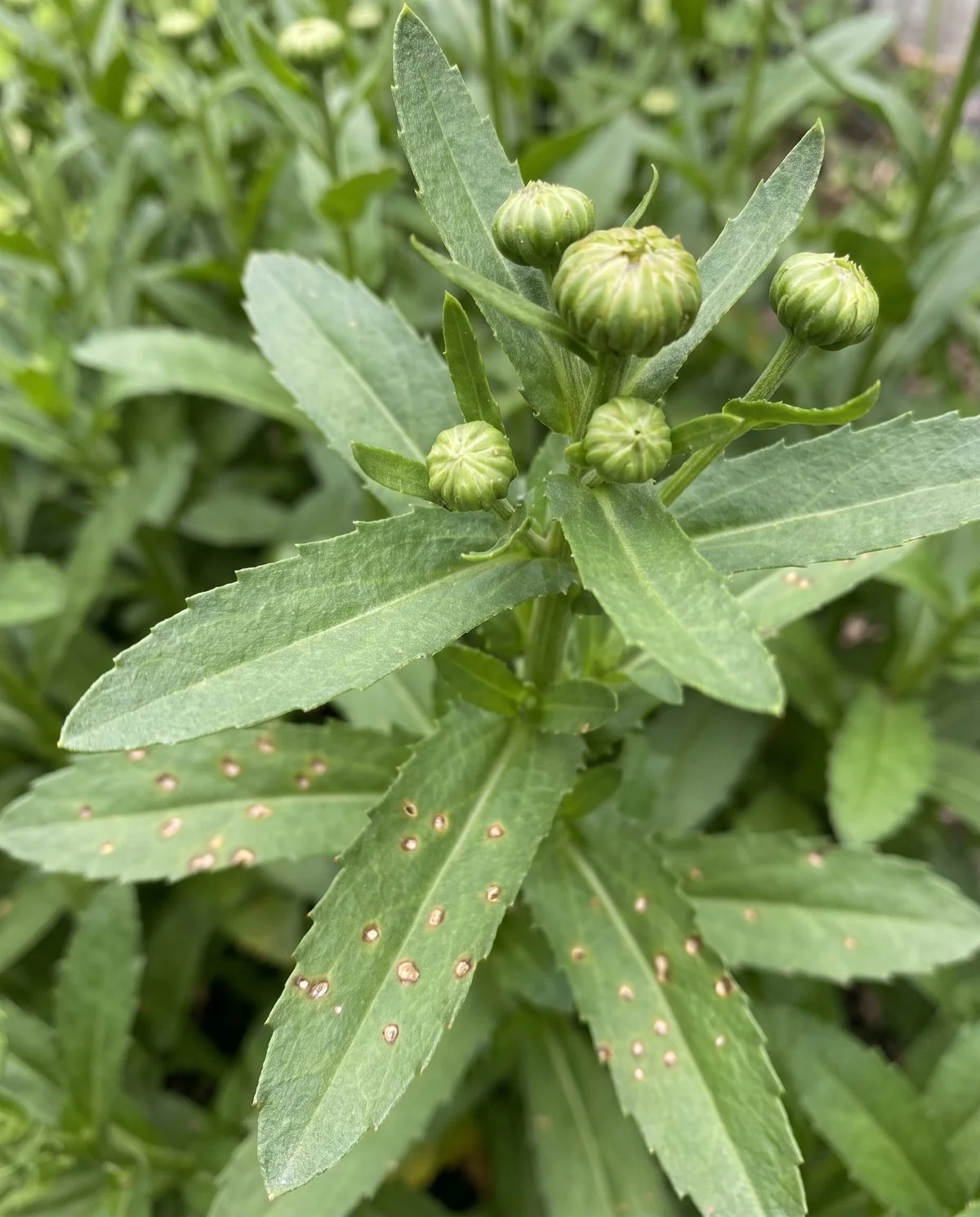
The University of Minnesota Extension records the fourlined plant bug from May to early July, with red nymphs and adults that are greenish yellow with four black stripes, a quarter to a third of an inch long, and feeding that leaves a brownish or sunken spot on the leaves while the buds carry on normally. Botrytis is the opposite distribution: an Ask Extension answer puts it plainly, that Botrytis blight prevents the blooms from opening, and buds turn brown and decay, thriving in rainy seasons where old blooms have not been removed. Buds browning and blackening before they open, with clean foliage, is the Botrytis pattern.
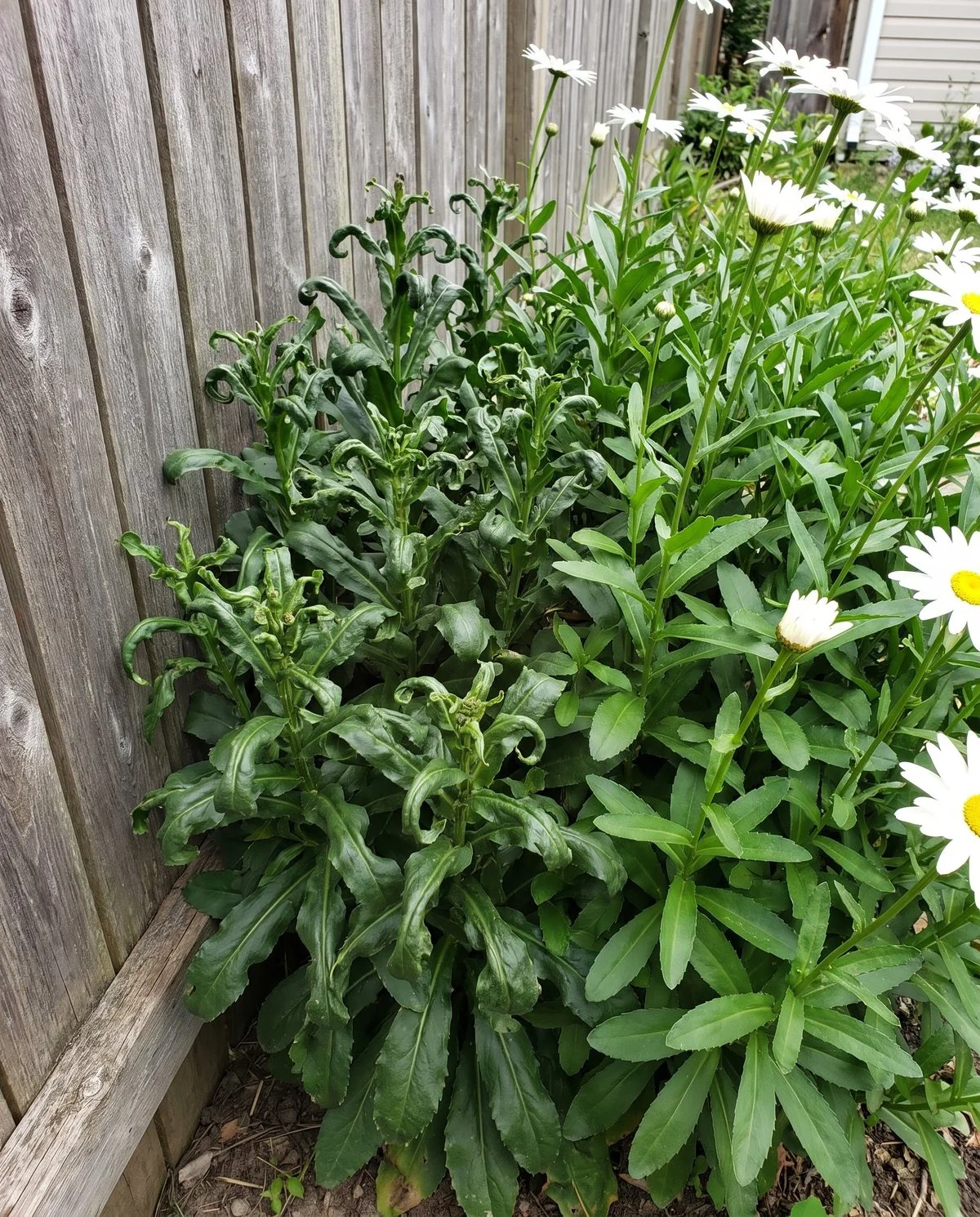
The University of Minnesota Extension's tell for phenoxy-type herbicide drift such as 2,4-D is geometric: foliage twisted, cupped or distorted, leaves that may look thick and leathery, and the side of the plant closest to the application most severely affected, so the damage is one-sided. Verticillium wilt is a soil-borne fungus with no such asymmetry, and University of Illinois Extension notes its symptoms often do not develop until the plant is flowering or after stressful hot dry weather. If one flank is hit and the other is clean, look over the fence before digging anything up.
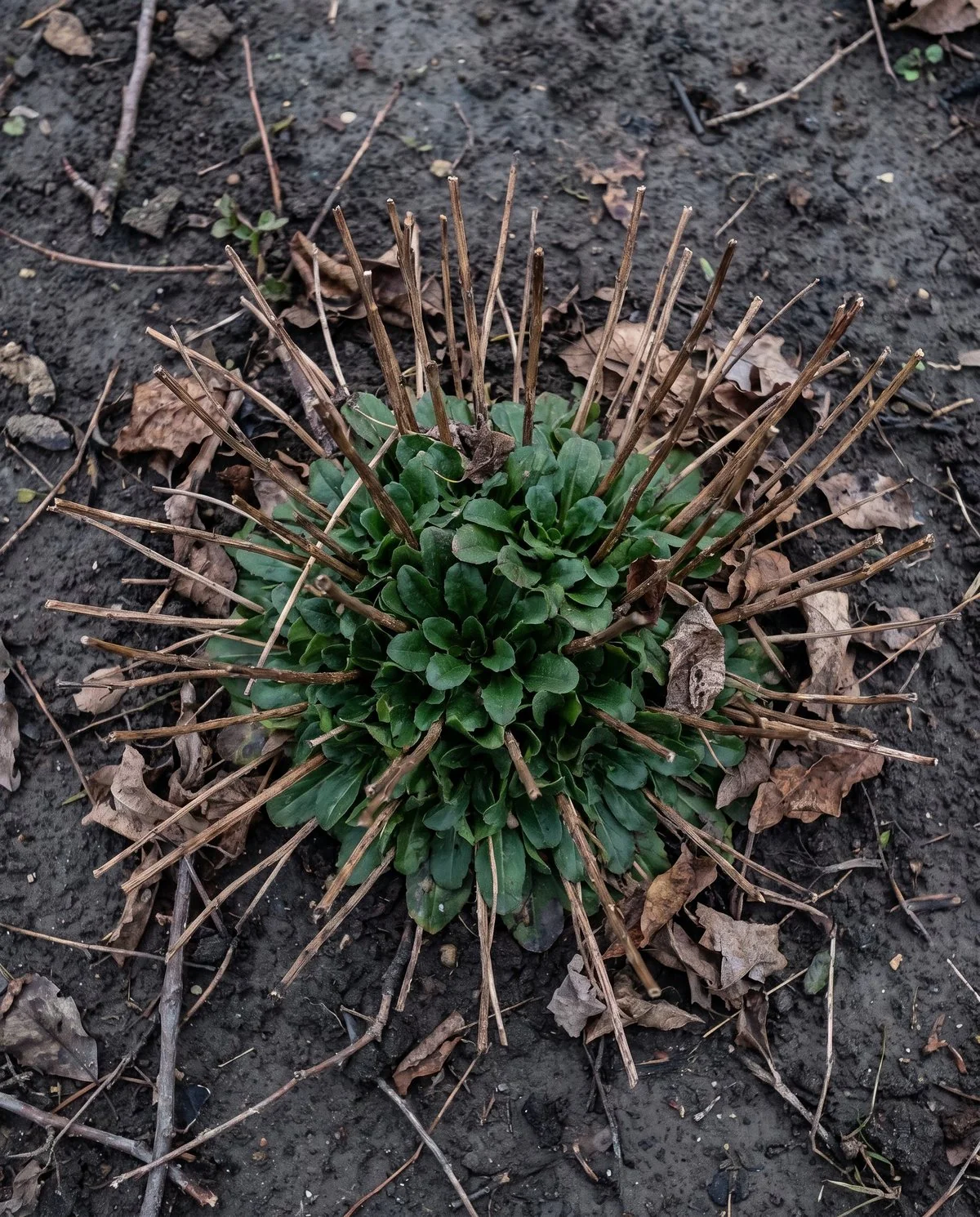
Ordinary dieback browns the top growth while the basal foliage at the crown, semi-evergreen to evergreen depending on the winter per NC State, stays green and firm, and new growth resumes from there in spring. Winter crown rot is the failure the Chicago Botanic Garden trial recorded directly, from excessive soil moisture and poor drainage during winter months, producing minor to moderate crown loss and several taxa lost outright: the crown itself goes soft and dark. Check the base, not the stems, and check it before assuming cold was the cause.
Flower photos
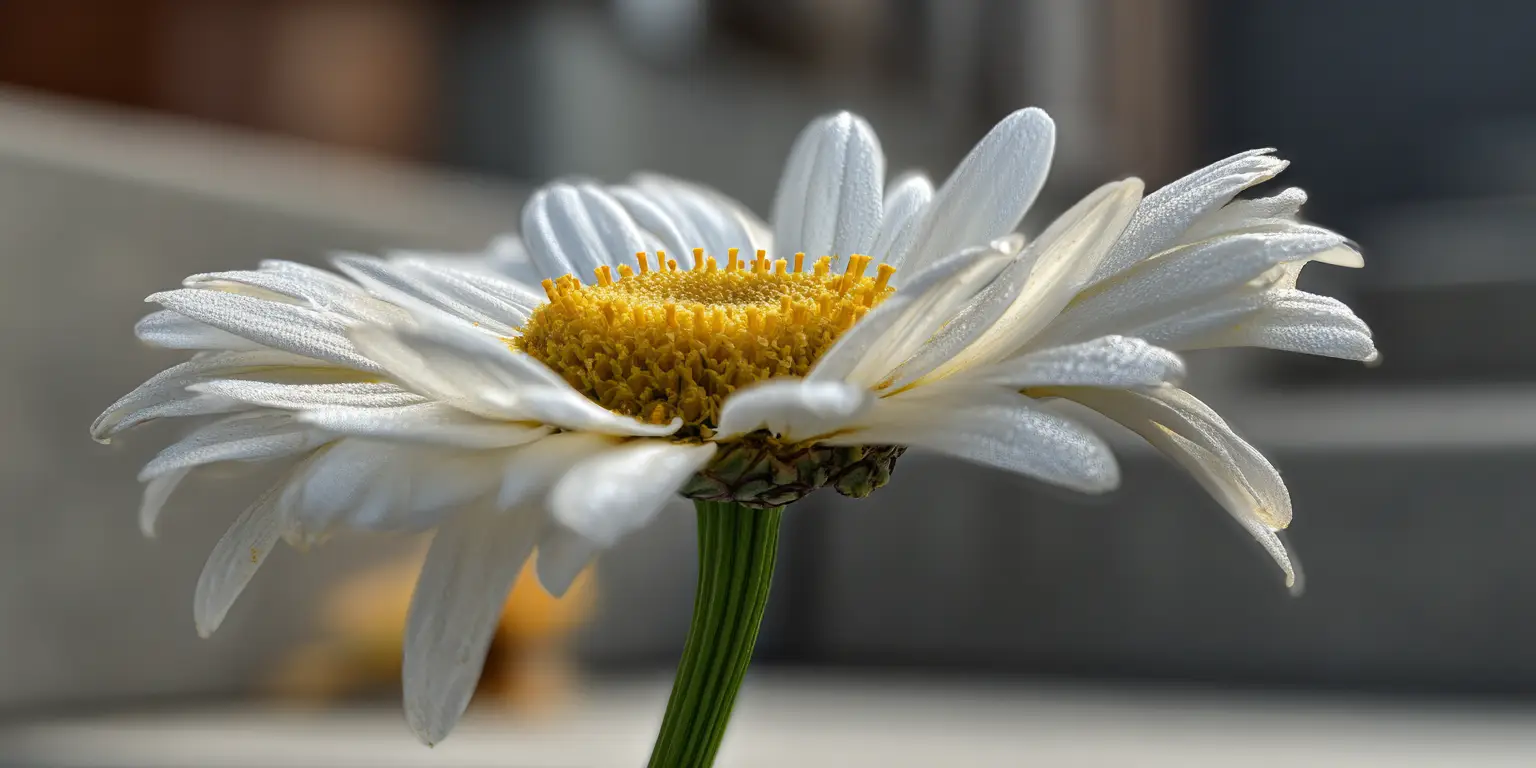
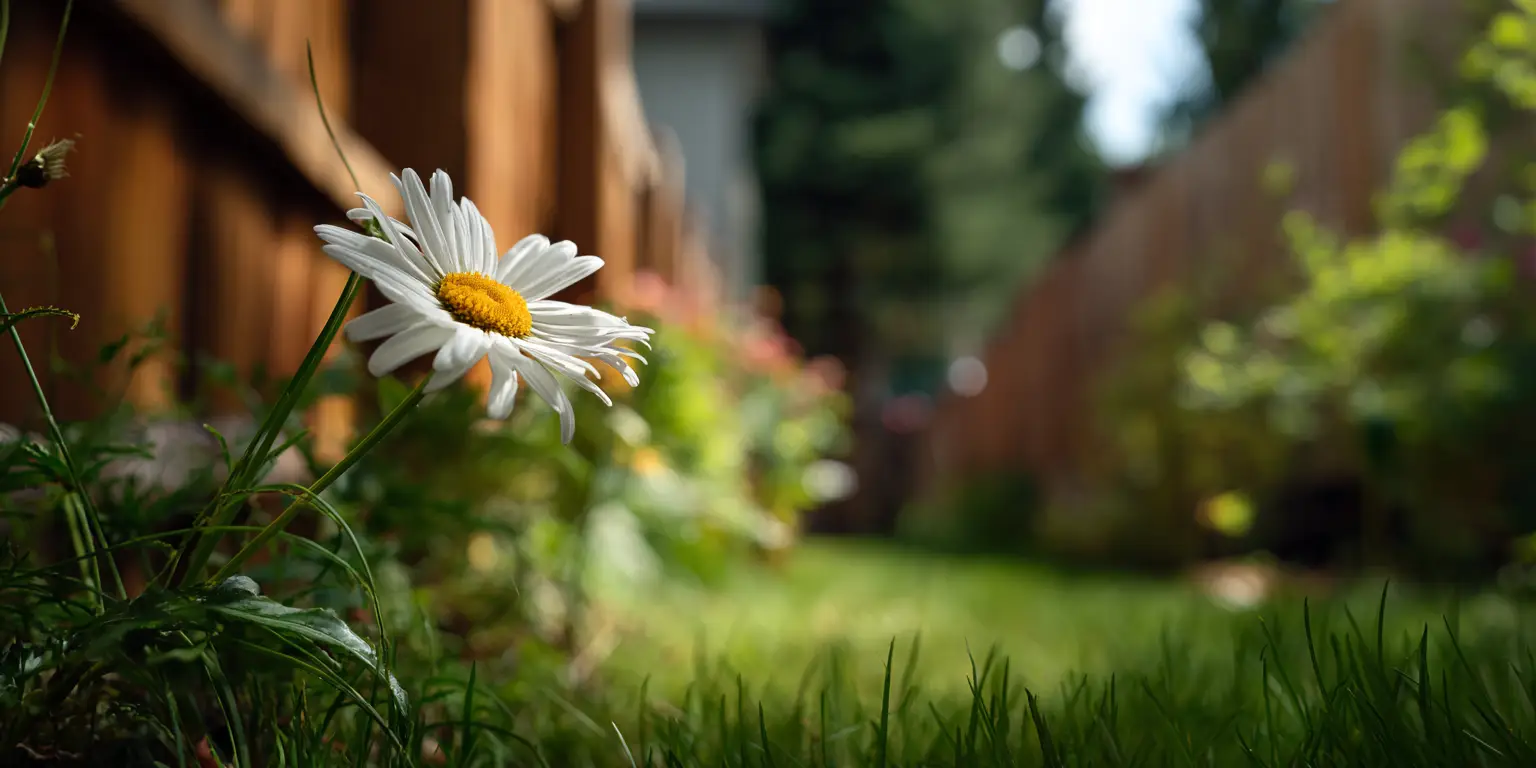
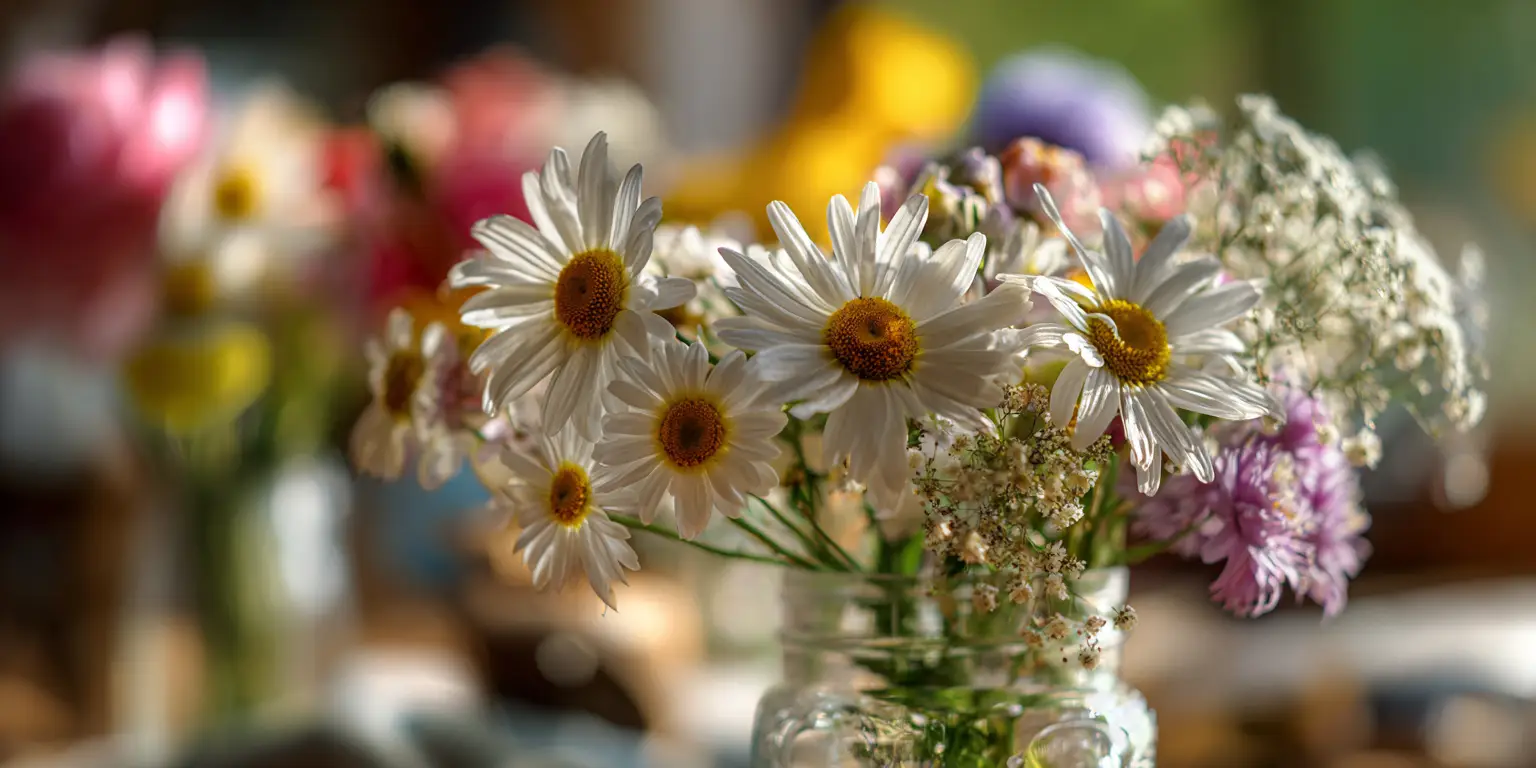
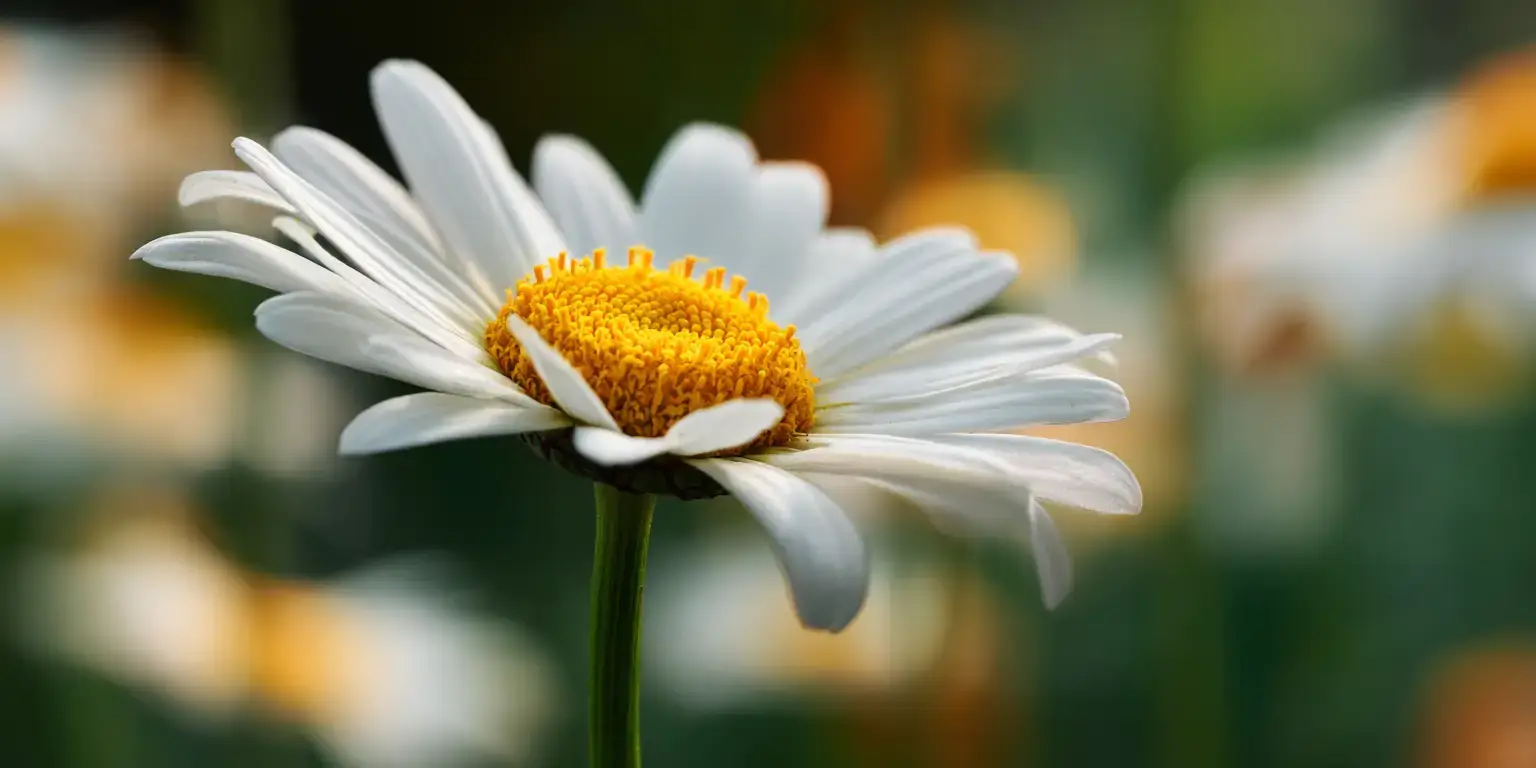
FAQ
How do I tell a Shasta daisy from an oxeye daisy?
Look at the basal leaves and the roots. Oxeye has deeply lobed, spoon-shaped basal leaves, heads under 2 inches across, and creeping rhizomes; Shasta has merely toothed leaves, heads over 2 inches, and a tight fibrous clump that stays put.
Are daisies perennials, and will they come back every year?
Shasta daisies are perennials, but short-lived ones: expect three to five good years, and divide every two to three years to keep the planting going indefinitely. English daisy often behaves as a biennial, and African and gerbera daisies are tender, grown as annuals or pot plants.
Why did my daisies die after three years?
Most likely the clump aged out, since a Shasta daisy grows outward while its oldest central tissue dies. The other likely cause is winter wet, where a crown in cold, saturated ground rots over the dormant months. Division fixes the first, raised or opened soil the second.
Are daisies poisonous to cats and dogs?
The ASPCA lists Daisy, as Chrysanthemum species, as toxic to dogs and cats, with vomiting, diarrhea, drooling, incoordination and skin irritation as the signs, and Shasta daisy belongs to that chemistry. A nibble usually means an upset stomach, but a pet that has eaten a quantity is worth a call to the veterinarian. Gerbera daisy is the exception: the ASPCA lists it as non-toxic to dogs, cats and horses.
Should I deadhead daisies, and how?
Yes, and it is the highest-return job on the plant. Cut each spent head back to a leaf or a visible side bud, and once the main flush passes shear the whole clump by about a third, which usually triggers a second round of flowering.
Can I dig up the daisies growing along the road and plant them?
Usually a bad idea. Roadside white daisies in North America are almost always oxeye daisy, a listed noxious weed in Montana, Colorado, Wyoming, Idaho and Washington that spreads by rhizome and by thousands of seeds per plant. Plant a Shasta instead.
How do I get rid of daisies in my lawn?
The lawn daisy is Bellis perennis, and it thrives in turf that is cut short, compacted, acidic and thin. Raising the mowing height, relieving compaction and feeding the grass until it closes over bare ground works better than repeated spraying, which the plant shrugs off.
How long do cut daisies last?
Seven to ten days, if they are cut in the early morning before the center starts shedding pollen, stripped of their lower leaves, recut on a slant, and given the flower food packet that postharvest trials show extends vase life for this flower.
Do Shasta daisies spread, and when should I divide them?
Shasta daisies grow in clumps that slowly spread wider each year, but they do not invade aggressively beyond where they are planted. Over time a clump can become overcrowded, which is a good opportunity to divide it. It’s recommended to divide Shasta daisies every 2 to 3 years. The best time to divide is early spring (as new growth begins) or early fall. Dig up the clump, split it into sections, and replant the sections to give them more space. This will reinvigorate the plant and help it continue blooming strongly. Dividing also effectively controls how much area the plant covers, keeping your daisies in bounds.
How do I care for Shasta daisies in winter?
Shasta daisies are quite hardy and don’t require much special care in winter in most climates. After the plant has finished blooming and once frost hits in autumn, you can cut the stems back to just a few inches above the ground. This cleanup pruning helps prevent pests or diseases from overwintering in the dead foliage and makes room for fresh growth in spring. In regions with cold winters (zone 5 and colder), it’s helpful to apply a layer of mulch over the root area after cutting back. Use straw, pine needles, shredded leaves, or similar material about 2-3 inches deep. This will insulate the crown and roots from extreme cold and from the freeze-thaw cycles. In spring, pull the mulch back once the worst freezes are over, to allow new shoots to emerge easily. In very mild winter areas, you might not need to cut back much, just remove any ragged or dead growth and let the plant be semi-evergreen. Either way, Shasta daisies are low-maintenance in winter and will rebound when the growing season returns.
Will deer or rabbits eat Shasta daisies?
Generally, Shasta daisies are deer-resistant and rabbit-resistant. Most deer and rabbits find the leaves and stems unappealing due to their coarse texture and bitter compounds. This means in gardens with frequent deer or rabbit visitors, Shasta daisies often remain untouched even when other flowers get nibbled. However, no plant is completely deer-proof. A very hungry deer might sample almost anything if food is scarce enough. Young tender shoots might occasionally get nibbled in early spring, but overall Shasta daisies are a safe choice if you’re looking for plants that these critters usually avoid. Many gardeners specifically include Shasta daisies and other daisy-family plants to add beauty to the landscape without attracting herbivores.
Why are my Shasta daisies not blooming?
If your Shasta daisies have healthy green growth but few or no blooms, a few factors could be at play. The most common issue is insufficient sunlight. Daisies need plenty of sun (around 6+ hours a day) to bloom well. If they’re in too much shade, flowering will be sparse. Over-fertilization can also cause lots of leafy growth and few flowers, these plants don’t need heavy feeding. Use a balanced, slow-release fertilizer sparingly, or simply enrich the soil with compost once a year. Another factor could be overcrowding or aging clumps. If the plants haven’t been divided in several years, the congested roots and shoots may reduce flowering. Dividing the clump can renew its vigor. Additionally, stress conditions like drought or extreme heat can temporarily halt blooming, ensure the plants are getting adequate water (but not sitting in soggy soil). Lastly, check for any signs of pests or disease, an infestation or root problem can weaken the plant and impact its ability to flower. By addressing these issues, sunlight, soil nutrition, plant spacing, and general care, you can usually get your Shasta daisies blooming happily again.
Can Shasta daisies grow in containers?
Yes, Shasta daisies can be grown successfully in containers, provided the pot is large enough and has good drainage. Dwarf varieties of Shasta daisy (which stay under about 1-2 feet tall) are better suited for container gardening than the tallest types. Choose a pot that is at least 12 inches in diameter and depth (larger if you plan to keep the plant for multiple years). Use a quality potting mix that drains well. You might mix in some perlite or coarse sand to ensure good drainage, as Shasta daisies won’t tolerate waterlogged soil. Place the container in full sun for best results. Container-grown daisies will dry out faster than those in the ground, so monitor soil moisture and water when the top inch of soil is dry. They may need watering several times a week in hot weather. Also, since nutrients leach out of potting soil with regular watering, feed your potted Shasta daisies occasionally (for example, apply a slow-release fertilizer in spring, or a diluted liquid fertilizer every few weeks during the growing season). With attentive care, Shasta daisies can thrive and bloom in pots, brightening up patios and balconies just as well as they do garden beds.
Why is my gerbera daisy wilting even though I water it?
Because the watering is very likely the problem. Check whether the crown, where the leaves meet the roots, is staying wet: Clemson HGIC's central instruction is to let the crown dry out between waterings specifically to prevent the crown and root rot that is the commonest cause of gerbera decline. Water at soil level rather than overhead, and let the plant dry between drinks.
Is that white coating mildew or just leaf hairs?
Rub it gently. Powdery mildew sits on top of the leaf as a talc-like film, comes away when rubbed, appears in patches and worsens over days in humid still air. Natural pubescence is fine silvery hair, uniform across the plant, and has been there since the leaf grew. This exact question appears verbatim in the forum sample.
Is it normal for my African daisy to close up during the day?
Yes. Osteospermum flowers close at night and on heavily overcast days as ordinary behavior tied to light levels, reopening when the sun returns, and on a partly cloudy day they may open only partway. Newer cultivars have been bred to stay open regardless of weather, a claim from consumer sources rather than a university one.
Why did my Shasta daisies not bloom in year two?
Two documented causes, and either can apply. Root rot from poorly drained soil is a real first-year risk rather than a late-life problem: the Chicago Botanic Garden trial lost eight named cultivars to it in year one. The other is an overcrowded, undivided clump losing vigor, which dividing answers rather than more feeding or water.
When should a daisy be cut back?
Cutting back hard once a plant is genuinely finished for the season is fine for most perennial daisies, but severity and timing vary by species, and Shasta daisy specifically is cut back to its basal growth late in the season rather than mid-bloom. This was the highest-engagement question in the whole forum sample, from somebody whose plant had been heavily pruned because it looked done.
Is crown daisy the same as a regular garden daisy?
No. Glebionis coronaria is a leaf vegetable grown and eaten across East Asia for centuries, not an ornamental, and it shares nothing with the border daisies except a flower shape and a name. Somebody who bought or was given crown daisy seed expecting a flower bed is growing a salad green.
Interesting tips
Buy Shasta daisies by height rather than by picture, because the difference between a 12-inch edging plant and a 4-foot cutting-garden plant decides whether the purchase works. When a nursery pot already has a woody, congested middle, split it at planting instead of waiting two years, since the clock on the center dying started before you bought it. Set white daisies where they will be seen in the evening, since white is the last color the eye holds at dusk.
The daisy is April's birth flower, and the full April guide covers its symbolism in more depth. The "he loves me, he loves me not" game landed on the daisy for a mechanical reason as much as a romantic one: ray counts vary from head to head, so the answer really is unknown when the plucking starts. The pyrethrin in a shelf full of natural insect sprays is pressed from the flower heads of a daisy, Tanacetum cinerariifolium, so the tribe that supplies the most innocent-looking flower in the border also supplies one of the oldest insecticides in the shed.
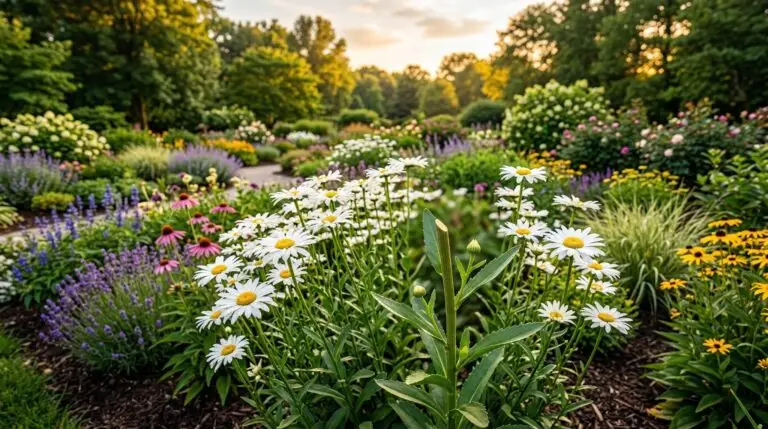
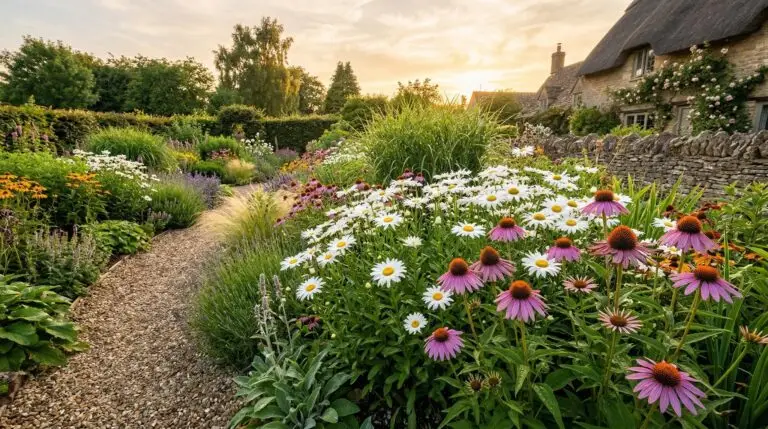
- The Shasta daisy was named after Mount Shasta in California because its bright white petals were said to resemble the mountain’s snow. This origin gives the flower a charming backstory linking it to a picturesque natural landmark. Deadheading is the key to extended bloom. If you remove spent Shasta daisy flowers regularly, the plants will reward you with continuous blooms and might even flower again later in the season. Shasta daisies are excellent companions in the garden. They mix well with other perennial flowers like coneflowers, salvia, and yarrow, and with yellow flowers such as black-eyed Susans. These combinations create a classic cottage garden look and provide a long season of color. Try planting Shasta daisies in groups of three or five for a bold display. Mass plantings of daisies have a striking effect and are more visible from a distance than a solitary plant. These cottage garden favorites are also pollinator magnets. The open-centered daisies provide an easy landing pad for butterflies and bees, making them a great choice for pollinator-friendly landscapes. Remember to divide your clumps every few years. Not only does this prevent overcrowding, but it also gives you new starter plants to expand your garden or share with friends, essentially free plants from your original garden daisies! When cutting Shasta daisies for bouquets, choose stems with flowers that are just fully opened. With proper conditioning (clean water, trimmed stems), these daisies will last over a week in arrangements, adding a happy, rustic touch to your indoor decor.
Related Guides & Flowers
- Gerbera Daisy (Gerbera jamesonii) – Big, modern "daisy" heads for beds and bouquets, long bloom in warm weather.
- Black-eyed Susan (Rudbeckia) – Sunny yellow rays with a dark cone, tough, pollinator-friendly, late-summer color.
- Coreopsis (Tickseed) – Airy, long-blooming daisylike disks in yellow and bicolors; excellent for dry, sunny borders.
- Calendula (Pot Marigold) – Cool-season daisylike flowers in gold to apricot; great for edging and cutting.
- Zinnias (Zinnia) – Bold, daisylike heads in every color; fast annuals for cutting gardens and summer massing.
- Coneflower (Echinacea) – Sturdy prairie perennial with a prominent cone, loved by bees and finches.
- Yarrow (Achillea) – Flat-topped daisylike clusters, drought-tolerant, feathery foliage, long bloom.
References
- NC State Extension: Shasta Daisy (Leucanthemum × superbum) – Plant ProfileCulture, bloom window, uses, and cultivar notes for the classic garden "daisy."
- University of Minnesota Extension: Oxeye Daisy (Leucanthemum vulgare)Clear ID traits and management; often treated as invasive outside cultivation.
- ASPCA: Gerbera Daisy – Toxicity to PetsConfirms Gerbera daisy is non-toxic to dogs and cats; helpful for bouquets and pet-safe lists.
- University of Maine Cooperative Extension: Oxeye Daisy – Weed Images & NotesConcise photo ID with bloom timing and habitat; useful for distinguishing wild oxeye from garden Shasta.
Enjoying our flower guides? Add YourFlowersGuide as a preferred source on Google. It helps more readers find us.
Add to Preferred Sources