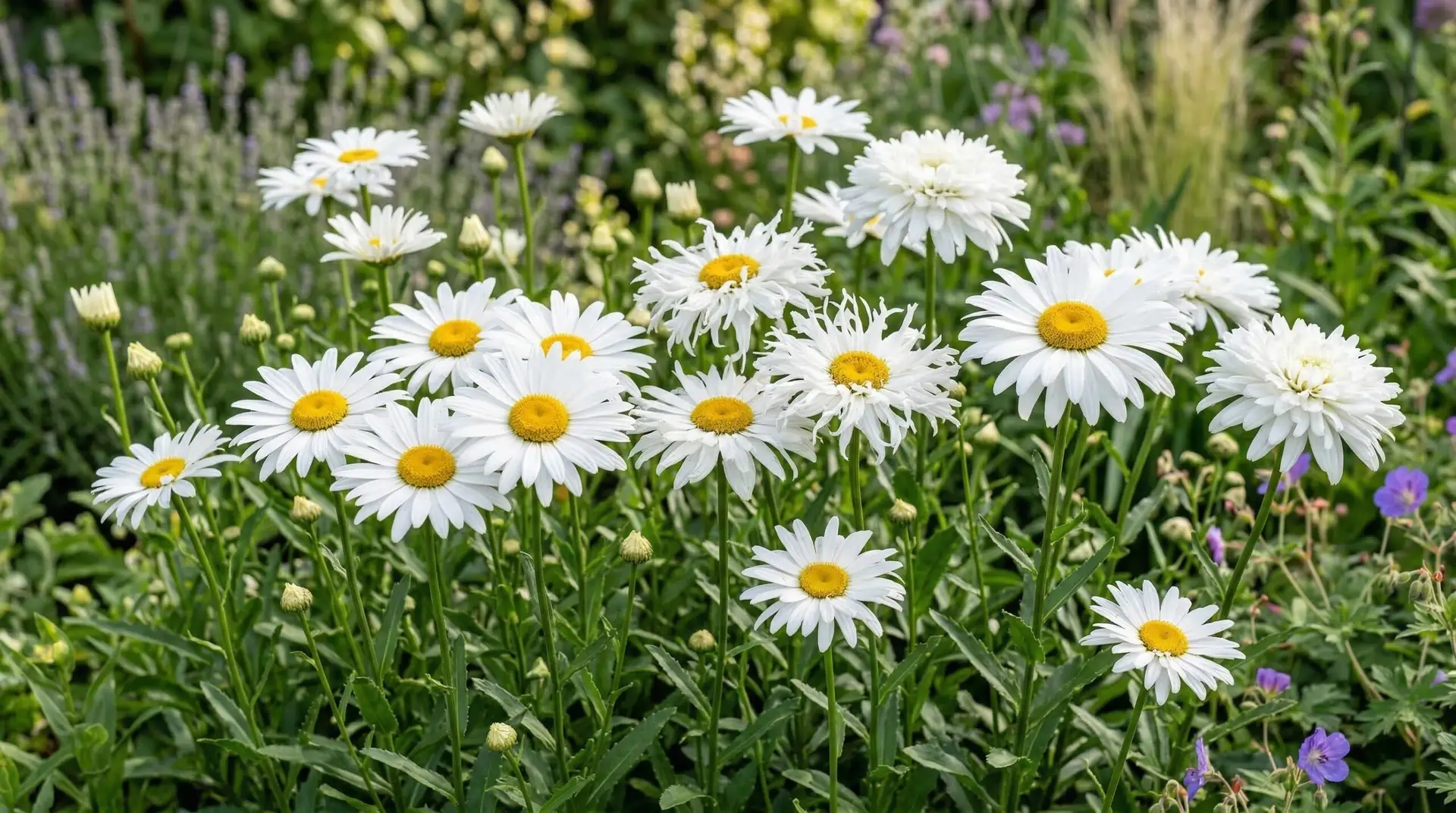
The Shasta daisy is a manufactured plant, bred over a century ago by Luther Burbank to be the ideal garden perennial. Many catalogs present dozens of variations of this white and yellow flower, making it difficult to know which ones actually perform well in a perennial border. Rather than attempting to catalog every hybrid on the market, I have selected a few distinct varieties that represent the best of their respective forms. The criteria for these selections rely heavily on stem strength, longevity of bloom, and the specific visual texture they bring to a planting scheme. By focusing on these traits, we can bypass the numerous mediocre cultivars that tend to flop over after a heavy rain or fade quickly in midsummer heat.
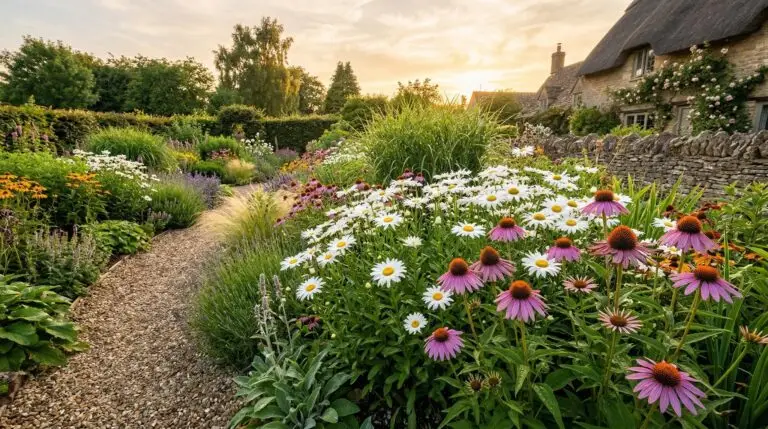
Gardeners often assume a daisy is just a daisy, but the structural differences between a classic single flower and a heavily fringed double completely change how the plant reads in a landscape. You might pair a simple white Shasta with a coneflower to create a sturdy, drought-tolerant prairie aesthetic. Conversely, a fluffy double variety leans more toward a cottage garden style, requiring different companions and slightly more attention to deadheading. My selections here cover the classic single, the reliable dwarf, the textured double, and the newer yellow introductions. Each has a specific role to play, provided you choose the right plant for the right space.
Contents 4 sections
The reliable single classics
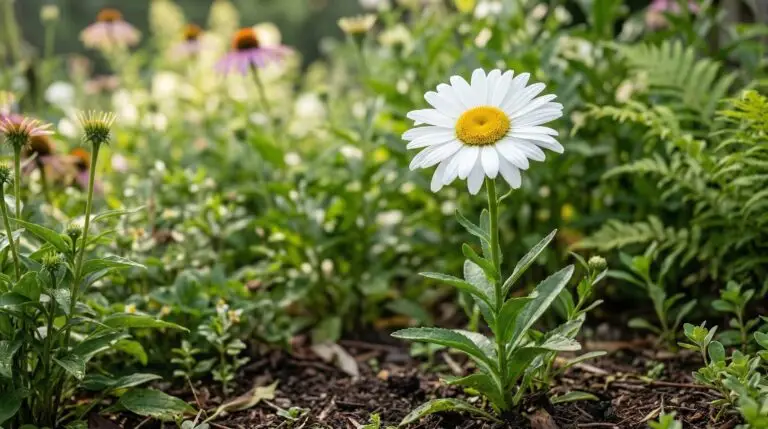
When most people picture a Shasta daisy, they are visualizing a tall plant with stark white petals surrounding a golden yellow center. The variety ‘Alaska’ has been the standard bearer for this classic look for decades, offering large blooms on stems that can reach three feet tall. While ‘Alaska’ is historically significant and widely available, it has a frustrating tendency to lodge, or fall over, when exposed to heavy wind or rain. For this reason, I usually steer gardeners away from ‘Alaska’ and instead recommend ‘Becky’ for the classic tall single daisy role. ‘Becky’ offers the exact same pristine white and yellow aesthetic but grows on remarkably rigid, sturdy stems that rarely require staking. This structural integrity earned ‘Becky’ the Perennial Plant of the Year award two decades ago, and it remains the benchmark against which all other tall single daisies are judged.
Beyond its structural advantages, ‘Becky’ excels in its bloom duration and overall vigor in the garden. It handles heat and humidity far better than many older cultivars, continuing to produce side shoots if the spent central flowers are removed promptly. The foliage is thick, dark green, and relatively resistant to the leaf spots that can plague lesser varieties during wet summers. Because the blooms are held high above the leaves, they act as beacons in an evening garden and attract a steady stream of pollinators throughout July and August. If you have the space for a plant that grows three feet tall and spreads equally wide over a few years, ‘Becky’ is the most dependable choice for a traditional daisy form.
Compact selections for the front border
Tall daisies are excellent for the middle or back of a perennial border, but they look awkward when placed too close to the edge of a path. Breeders have spent considerable effort developing dwarf Shasta daisies to fill this front-row gap, with varying degrees of success. Many dwarf varieties look stunted, producing flowers that are disproportionately large for their short stems. ‘Snow Lady’ avoids this awkward proportion, offering a balanced, compact plant that tops out at roughly twelve inches high. The flowers are slightly smaller than those of the tall varieties, which keeps the overall plant looking natural rather than artificially compressed.
Because ‘Snow Lady’ blooms heavily and stays low to the ground, it works exceptionally well as an edging plant or cultivated in a container. It blooms earlier in the season than the taller varieties, often pushing its first flush of white flowers in late spring rather than waiting for midsummer. The trade-off for this early, intense bloom is that the plant can sometimes exhaust itself, acting more like a short-lived perennial or biennial in regions with harsh winters. To counteract this, it is wise to divide ‘Snow Lady’ every two years to rejuvenate the crown and maintain its vigor. Even with this extra maintenance requirement, it remains the most refined and visually pleasing of the dwarf Shasta varieties.
Exploring texture with double and fringed forms
Moving away from the classic flat single bloom, the Shasta daisy also exists in highly textured double and fringed forms that look entirely different from their wild ancestors. ‘Crazy Daisy’ is the most famous of these textured varieties, producing flowers with multiple rows of thin, twisted, and quilled petals. The appearance is chaotic and fluffy, resembling a white Gerbera daisy more than a traditional Shasta. Seed-grown ‘Crazy Daisy’ plants are highly variable, meaning a single packet of seeds will yield some plants with fully double pompom flowers and others with merely a few extra rows of petals. This unpredictability is part of its charm in an informal cottage garden, but it can be frustrating if you are trying to design a highly uniform planting scheme.
For gardeners who want the texture of a double flower but demand strict uniformity, ‘Real Charmer’ is a far superior alternative to ‘Crazy Daisy’. This variety is propagated by cuttings rather than seed, ensuring that every plant produces the exact same heavily fringed, anemone-style blooms. The flowers of ‘Real Charmer’ feature a prominent golden center surrounded by densely packed, creamy lemon-yellow inner petals and pure white outer petals. The stems are strong and reach about two feet tall, making it a perfect mid-border plant that holds its heavy, double blossoms upright without assistance. The intricate detail of these flowers invites close inspection, making ‘Real Charmer’ an excellent candidate for cutting gardens or areas near patios where the complex petal structure can be appreciated.
The shift toward yellow petals
Historically, the definition of a Shasta daisy dictated pure white petals surrounding a yellow disc. Recent breeding programs have successfully pulled the yellow coloration out into the petals themselves, creating an entirely new category of pastel daisies. ‘Banana Cream’ is the most successful and reliable of these yellow introductions, opening with pale lemon-yellow petals that gradually transition to butter-cream and eventually to ivory as the flower matures. Because the plant produces lateral buds that open sequentially, a single plant will display three different shades of yellow and white simultaneously. This gives the plant a dynamic, multi-tonal appearance that pairs beautifully with blue and purple companion plants, or alongside a contrasting pink coneflower in a mixed border.
While the novelty of yellow petals and fringed doubles adds welcome variety to the garden palette, a curator must ultimately decide which plant offers the most enduring value. If I were forced to plant only one Shasta daisy, I would bypass the novelties and return to the structural perfection of ‘Becky’. The primary job of a daisy in a perennial border is to provide a clean, bright, and reliable resting place for the eye amid more complex flower shapes. ‘Becky’ performs this fundamental task flawlessly, offering the classic white and gold contrast on stems that refuse to collapse under the weight of summer storms. It asks for very little maintenance, lives for many years, and delivers exactly what a Shasta daisy is supposed to deliver with absolute consistency.
More About Daisy
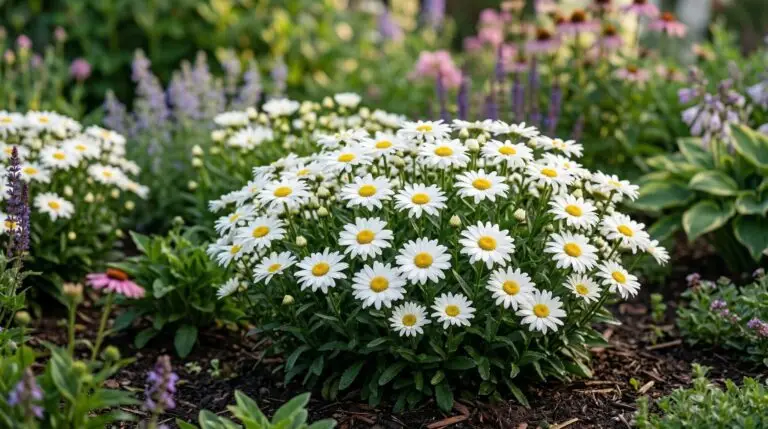
Shasta daisies in containers for bright summer displays on patios and porches
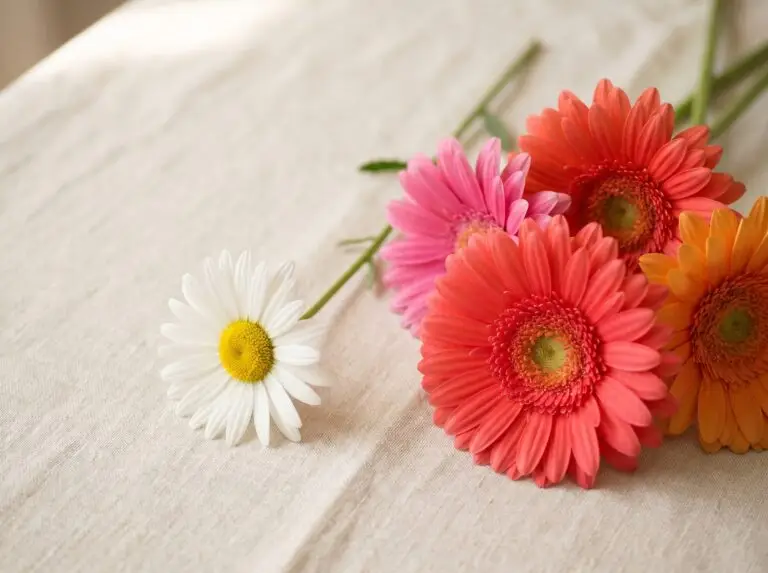
Daisy meaning, from innocence and new beginnings to he loves me, he loves me not
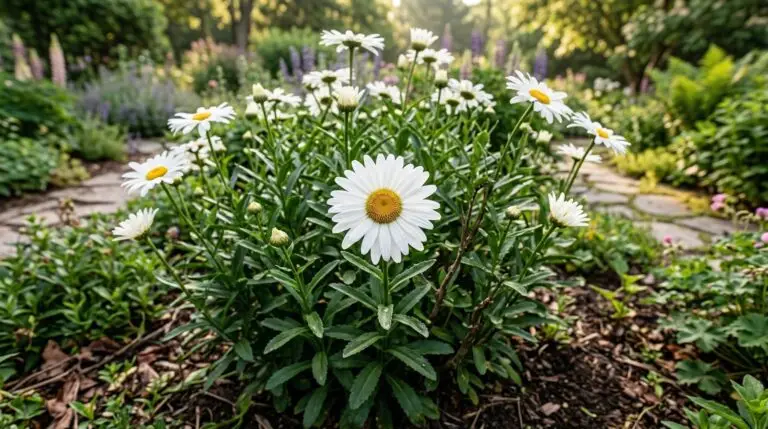
Why Shasta daisies die after a few years and how to keep them going through division
The Luther Burbank story and how he created the Shasta daisy from four wild species
Deadheading Shasta daisies for months of continuous blooming instead of a one-time show
Growing Shasta daisies from seed for the most affordable perennial border
How to grow Shasta daisies for cheerful white and gold flowers all summer long
Shasta daisies as long-lasting cut flowers for simple elegant summer bouquets
Companion plants for Shasta daisies: what to grow and avoid
Enjoying our flower guides? Add YourFlowersGuide as a preferred source on Google. It helps more readers find us.
Add to Preferred Sources