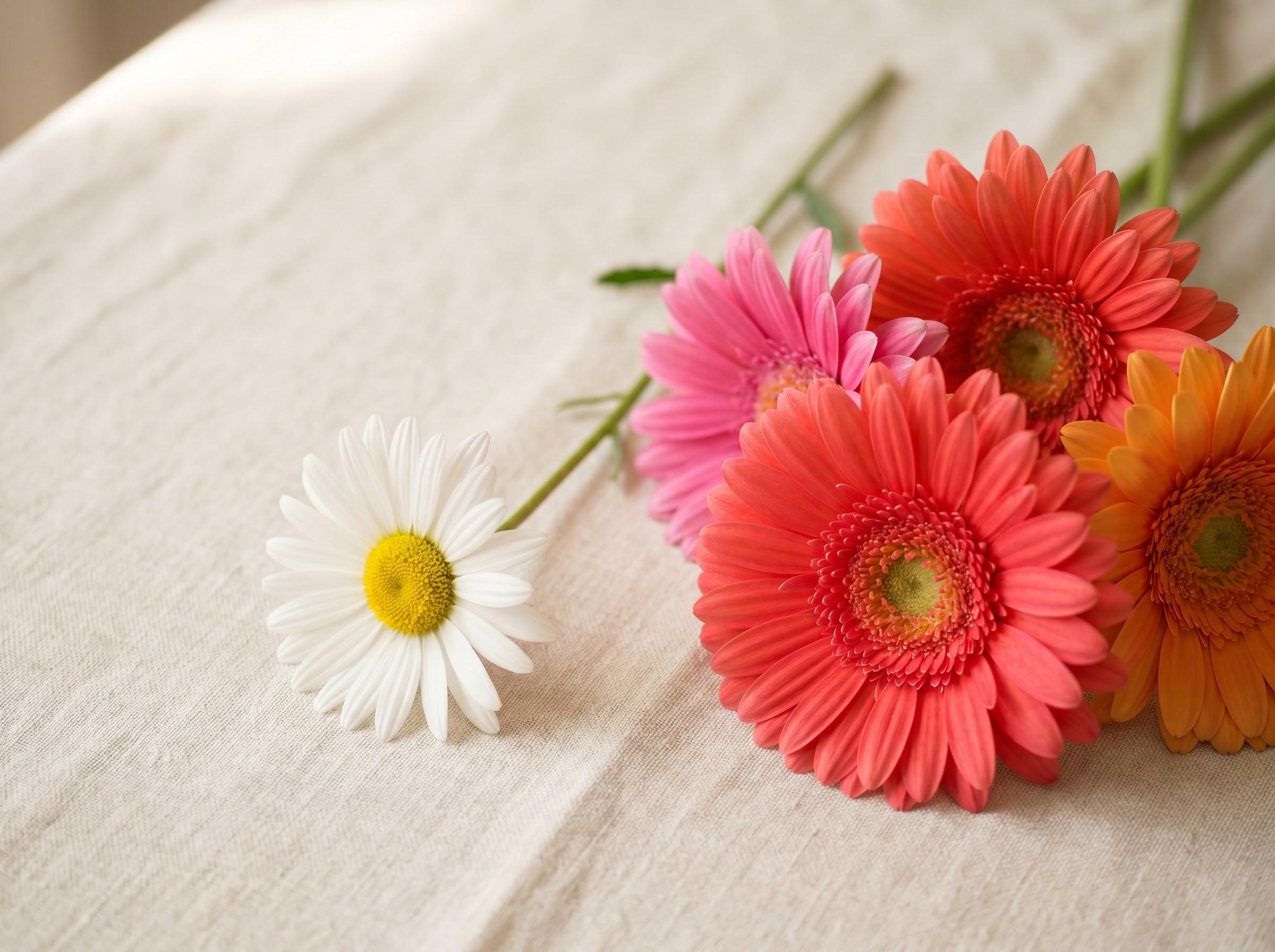
Most common today
Innocence and purity above all, plus a loyal, faithful kind of true love and the idea of new beginnings, which grows out of the flower opening with the morning light. Gentle and positive throughout, with no dark reading, which makes it safe to give almost anyone.
The Victorian reading
In the Victorian language of flowers the daisy stood for innocence and loyal love, and carried a quiet promise to keep a secret, “I will never tell.”
The colour spectrum, at a glance
What to write on the card
For a new baby, “A fresh, bright start”; for a friend, “Keep that sunny heart.”
Ask what a daisy means and the answer barely wavers from one source to the next: innocence, and it has read that way for centuries. Around that simple center sit a few close cousins of meaning, purity, true love, and new beginnings, all of them gentle, none of them dark. If you have ever pulled petals off one chanting he loves me, he loves me not, you already know the daisy as a small oracle of the heart, and that game is no accident; it grew straight out of what the flower has always stood for. Below you will find the full honest reading, what the daisy means by colour, what it says in love and friendship, where the meaning came from, how the Victorians read it, and what to write on the card when you give one.
What makes the daisy worth a whole page is how little argument surrounds it. Plenty of flowers pull double duty, read as joy in one country and grief in another, or quietly flipped their meaning somewhere in the last hundred years. The daisy did none of that. It points at the same handful of bright, soft ideas almost everywhere you look, which is why you can hand one to a new baby, a recovering friend, or a fresh start without first checking whose tradition you are working in.
What a daisy means
Innocence is the heart of it. A daisy reads as innocence and purity, the clean, unguarded quality of something young and honest, which is why it suits a child, a fresh start, or a feeling you want to keep simple and true. Close behind sits true love, but a particular kind: not the burning romance of a red rose, more a loyal, faithful, uncomplicated love that does not need to prove itself. The Victorians captured that double note exactly, listing the daisy for innocence and loyal love, and adding a quieter promise that has stuck to it ever since, “I will never tell.” In their flower language the daisy kept a secret. Give one, and you were saying your confidence was safe.
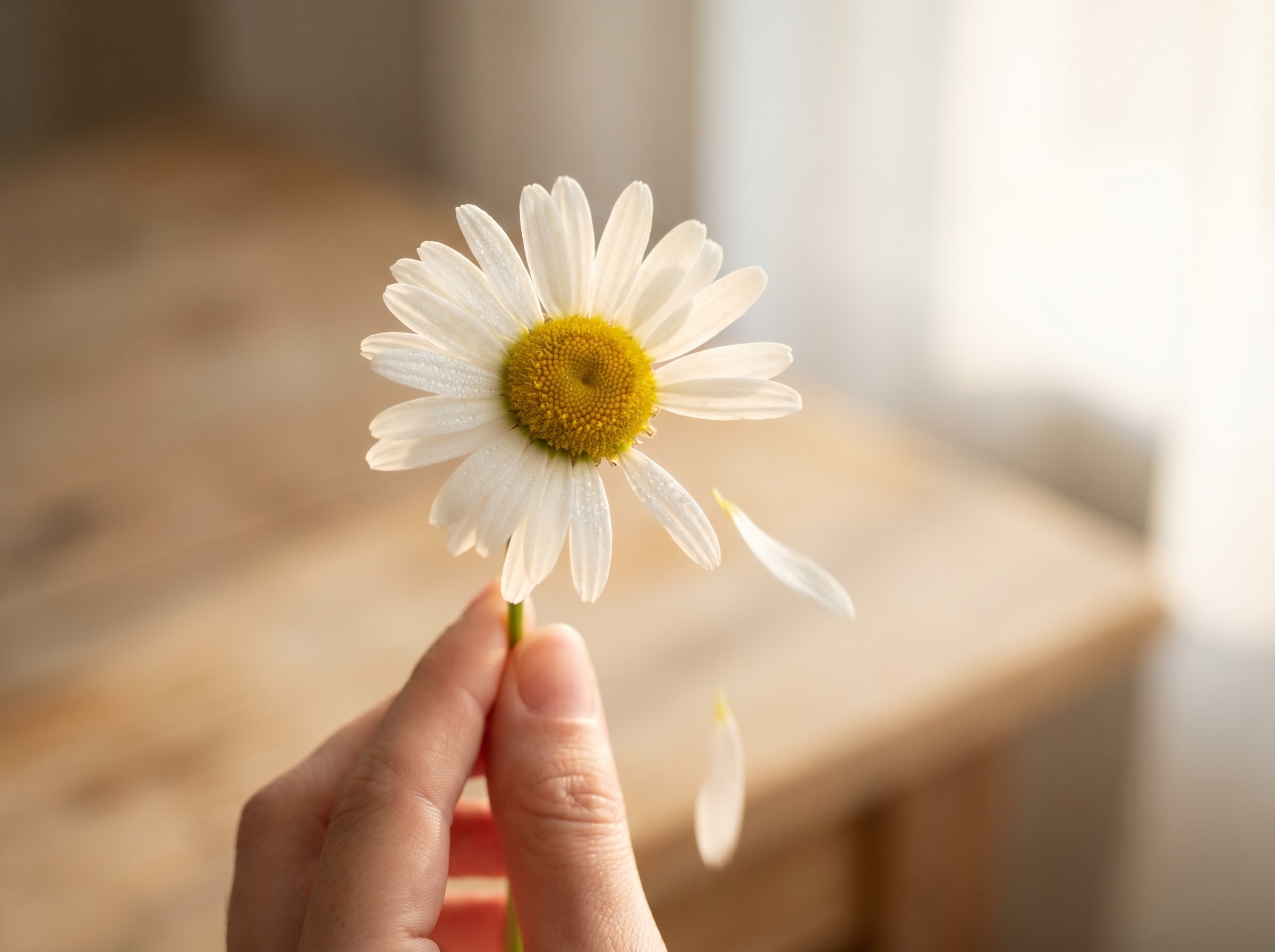
The other meaning people reach for is new beginnings, and that one comes from the flower’s own habit. A daisy opens its petals with the morning light and closes them again at dusk, so it greets each new day fresh, and the symbolism of starting over grew naturally out of that. The name itself is traditionally said to come from the Old English for “day’s eye,” the eye that opens with the day, which is a tidy bit of folklore even if you treat the exact word-origin as a charming claim rather than a settled fact. Either way, the link between the daisy and a bright new start is old and consistent, which is why it lands so well for a birth, a recovery, or any clean slate.
Daisy colour meanings
The classic daisy is white, and white is where its meaning lives most plainly: innocence and purity, the same ideas the flower carries overall, just stated in the most direct colour it comes in. A white daisy is the safe and lovely default, and it is the one the centuries of symbolism were really written about. The cheerful Shasta daisy that fills summer gardens reads the same way, since it is essentially the big white daisy most people picture.
The gerbera daisy is the one real exception worth naming, and it earns a meaning of its own through sheer personality. With its wide face and its bold reds, pinks, oranges, and yellows, the gerbera reads as cheerfulness and pure joy, a happier and more outgoing cousin of the demure white daisy. That is why a bunch of bright gerberas is such a reliable get-well or just-because gift; the colour itself is doing the cheering. Beyond white and the gerbera, the daisy does not carry a deep, well-documented set of colour codes the way a rose or a tulip does. A pink or yellow daisy mostly borrows the general meaning of that colour, soft affection for pink, friendly sunshine for yellow, rather than a fixed daisy-specific reading, and it is more honest to say so than to invent a chart. Our wider guide to flower colour meanings covers what each colour says in general, which is the better place to look for a coloured daisy.
| Daisy type or colour | Common meaning today | Note |
|---|---|---|
| White daisy | Innocence and purity | The classic. This is the daisy the old symbolism was written about. Send it blind. |
| Shasta daisy | Innocence, purity, and cheer | The big white garden daisy. Reads the same as the classic white. |
| Gerbera daisy | Cheerfulness and pure joy | The bright, bold-coloured one. Built on bright personality rather than deep tradition. A great get-well gift. |
| Pink daisy | Gentle affection | Borrows the general meaning of pink. No fixed daisy-specific tradition. |
| Yellow daisy | Friendship and cheer | Borrows the general meaning of yellow. Soft, sunny, no special baggage. |
A daisy in love, and the loves-me game
In love, the daisy strikes a sweet and faithful note rather than a passionate one. It says loyal, true, uncomplicated love, the kind you would give to a long, steady relationship or a new and gentle one, rather than a grand romantic declaration. Pair it with that secret-keeping Victorian promise, “I will never tell,” and it becomes a flower of trust as much as affection, well suited to someone you confide in. It is also one of the great friendship flowers, since its cheer and its innocence carry warmth with no romantic pressure at all, which is exactly what you want for a friend you are not trying to court.
Then there is the loves-me game, which is the first thing most people associate with a daisy and the reason so many search for its meaning. Plucking petals one by one, he loves me, he loves me not, turns the flower into a small folk oracle of love, a way of asking the universe a question you are too shy to ask the person. It is play more than prophecy, but it is genuinely old, and it has fixed the daisy in the popular mind as the flower you consult about a crush. That folk-game association only deepens the daisy’s link to young, hopeful, slightly nervous love. For the full range of which flowers carry which emotions, from this kind of tender hope to grief and gratitude, our guide to what flowers mean by feeling maps it out.
One honest aside, since people search for it: daisy is also a girl’s name, a vintage favorite that carries exactly the flower’s own associations of innocence and freshness. If you are here about the name rather than the bloom, that is the meaning it lends, and the rest of this page is about the flower.
How the daisy earned its meaning
The daisy’s symbolism is less about grand mythology and more about plain observation, which fits its modest character. Its core meanings, innocence, purity, and the fresh start of a new day, come from the flower’s own simplicity and its habit of opening with the morning. There is far less ancient legend attached to the daisy than to a rose or a lotus, and that is part of its charm; it has always read as the unpretentious, everyday flower, the one growing in the lawn rather than the temple.
The reading we use today was set down most firmly in the Victorian language of flowers, the elaborate floriography craze of the nineteenth century in which every bloom carried a coded message. None of that was a fresh Victorian invention, though. Cornell University traces the art of sending messages with flowers all the way back to China, Egypt, and Assyria, and notes that the version England eventually adopted had taken shape in France first, before it crossed the Channel and became a polite drawing-room pastime. The daisy entered those lists as a flower of innocence and loyal love, and because nothing controversial ever attached to it, its meaning passed down almost unchanged. It is worth a small note that the dainty white flower the European tradition called the true daisy, the lawn daisy, is a smaller plant than the showy Shasta and gerbera most people buy today, but they share the family and the symbolism, so the meaning carries cleanly across all of them.
Why the daisy never changed sides
Here the daisy is almost boringly well-behaved, and that is genuinely useful to know. Many flowers shifted hard between the Victorian era and now, and many more read one way in one country and the opposite in another. The daisy did neither. What the Victorians meant by it, innocence, loyal love, and the kept secret of “I will never tell,” is essentially what it means today, just stated in warmer modern words. The “new beginnings” reading has grown a little more prominent in our time, helped along by the flower’s day-opening habit and its popularity for births and fresh starts, but nothing was reversed or contradicted along the way.
That steadiness is the daisy’s quiet advantage. A bloom that means celebration to one guest and a funeral to another forces you to know the room before you hand it over; the daisy spares you that calculation entirely. You can give it almost anywhere, to almost anyone, and trust it to read as something gentle and good. If you want to see how differently other flowers fared across the centuries and across cultures, our meaning of flowers hub follows the blooms that changed their minds, while the daisy simply held still.
Giving a daisy, and what to write on the card
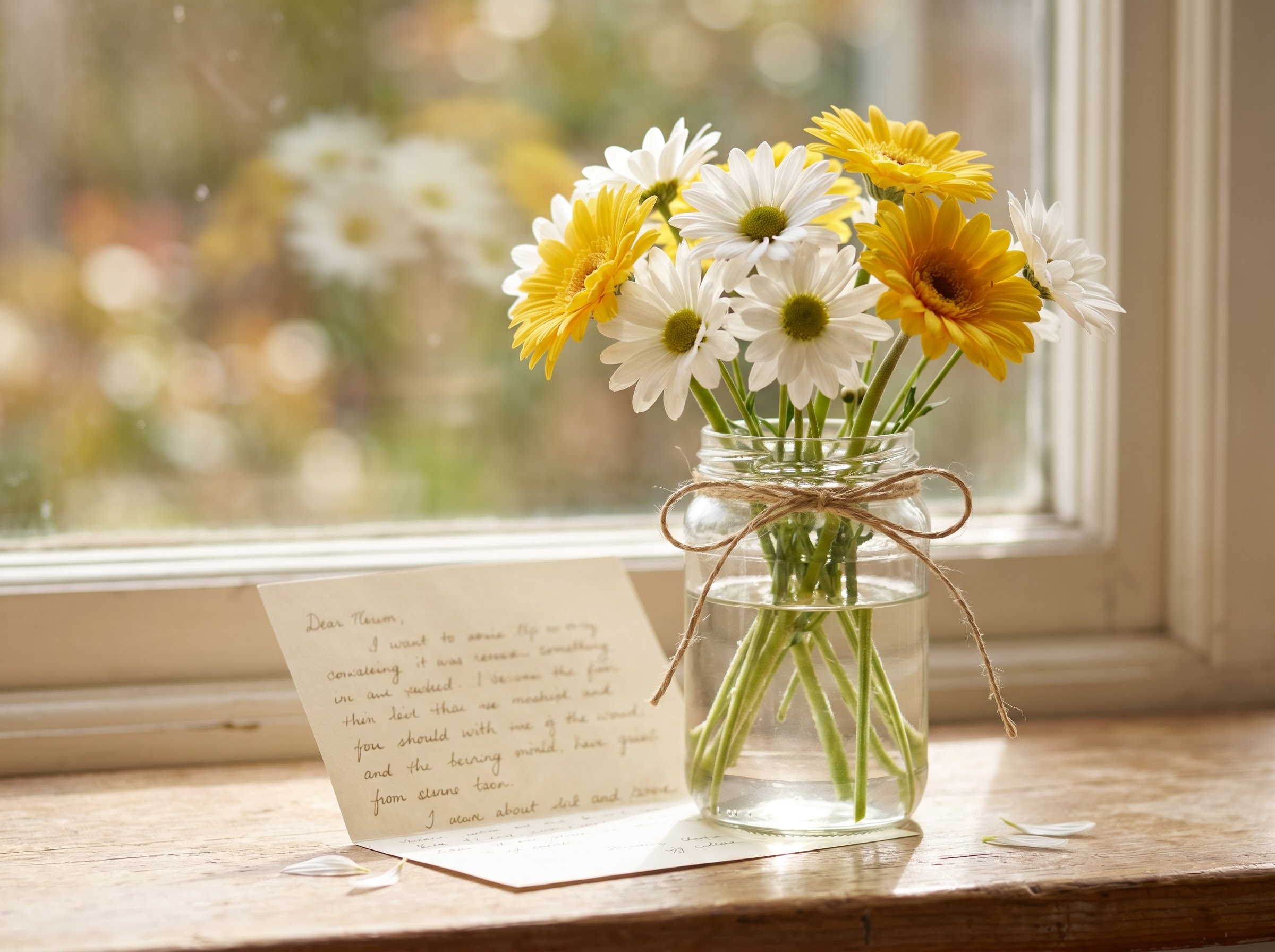
Reach for daisies when the moment is bright and the feeling is warm rather than weighty. They are made for a new baby, a get-well, a friend’s good news, a birthday, or a fresh start of any kind, and they bloom through late spring and summer, so they are easy and cheerful to find in season. For a new baby, a card can lean straight on the flower’s meaning: “A fresh, bright start.” For a friend, “Keep that sunny heart” matches the gerbera’s pure-joy energy. If you are giving them in love, let the daisy’s faithful note carry it, something like “Simply, truly yours,” which suits the loyal, unshowy affection the flower stands for far better than anything grand.
One caveat applies here as it does to any flower, even an easy one like this. As Iowa State University Extension reminds readers, the same bloom can carry several meanings at once and be read different ways depending on which source you trust, because no official dictionary has ever made any of it binding. The daisy is simply lucky in that its sources agree more than most, so you can lean on innocence, purity, loyal love, and new beginnings with real confidence, and treat the finer colour notes as gentle guidance rather than rules. Nobody sat down and ruled that the daisy stands for innocence; the meaning settled in slowly, the way a word does, because so many people gave it for exactly that and were understood. If you would also like to grow your own, our guide to the Shasta daisy covers the easy sun perennials behind all this symbolism.
Sources
- Cornell University, Written in Petals: The Language of Flowers, on the history of floriography.
- Iowa State University Extension, Flowers and Their Meanings, on why sources disagree.
More flower meanings
 ChrysanthemumAt its core the chrysanthemum means long life, friendship, joy, and loyalty, but the reading…
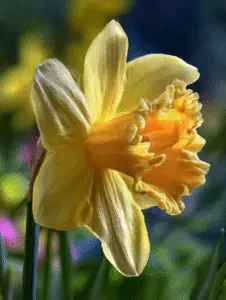 DaffodilNew beginnings, rebirth, and hope. As one of the first flowers to push up after winter, the…
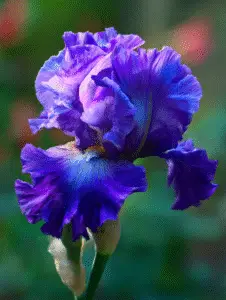 IrisFaith, hope, wisdom, and courage, with the older idea of a message running underneath, which is…
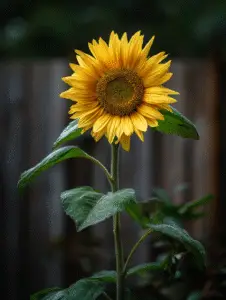 SunflowerAdoration, loyalty, and warmth, with a strong thread of happiness and positivity. Because the…
More meaning guides
More About Daisy
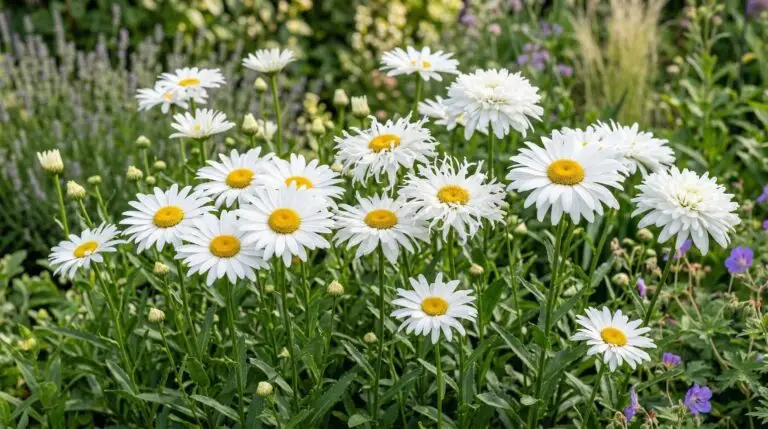 Best Shasta daisy varieties from classic Alaska to fluffy double Crazy Daisy
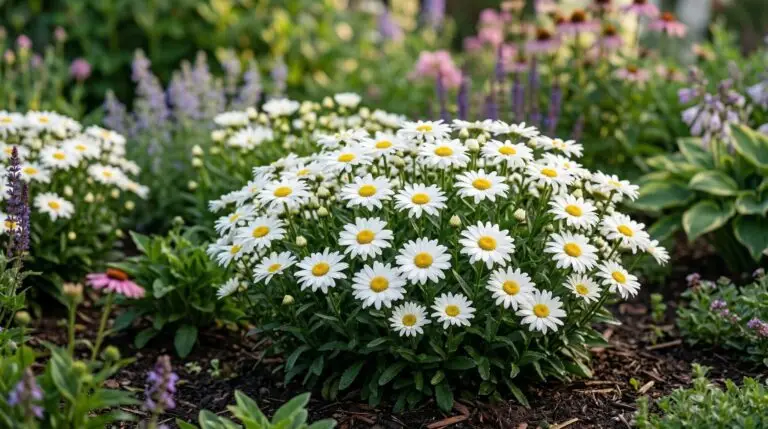 Shasta daisies in containers for bright summer displays on patios and porches
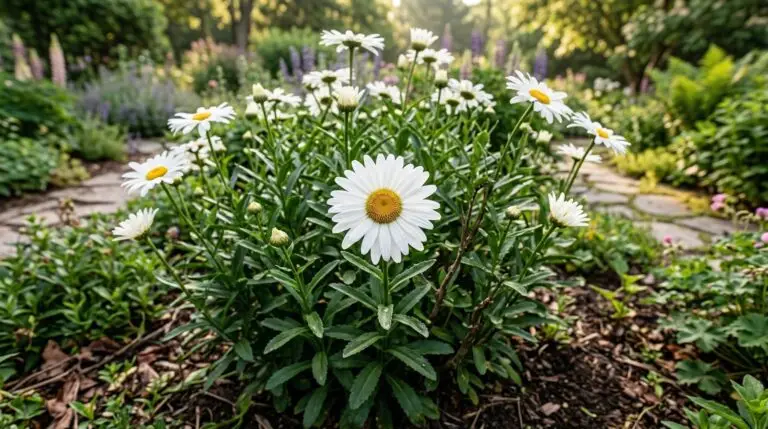 Why Shasta daisies die after a few years and how to keep them going through division
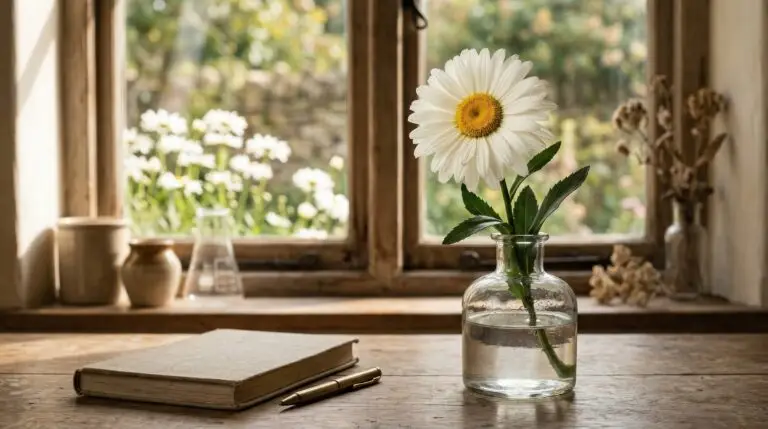 The Luther Burbank story and how he created the Shasta daisy from four wild species
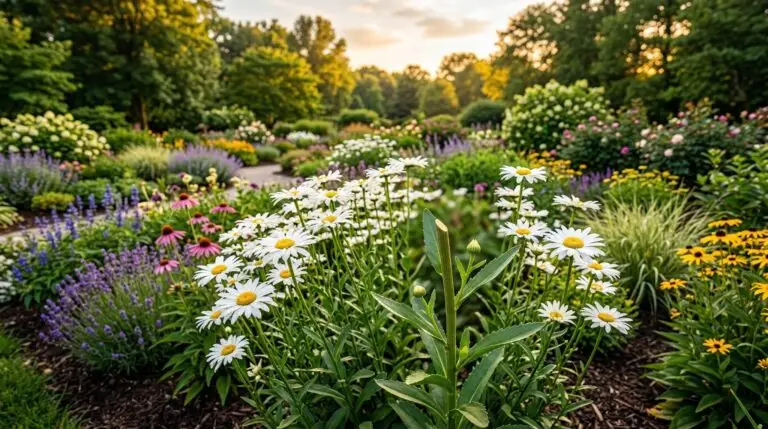 Deadheading Shasta daisies for months of continuous blooming instead of a one-time show
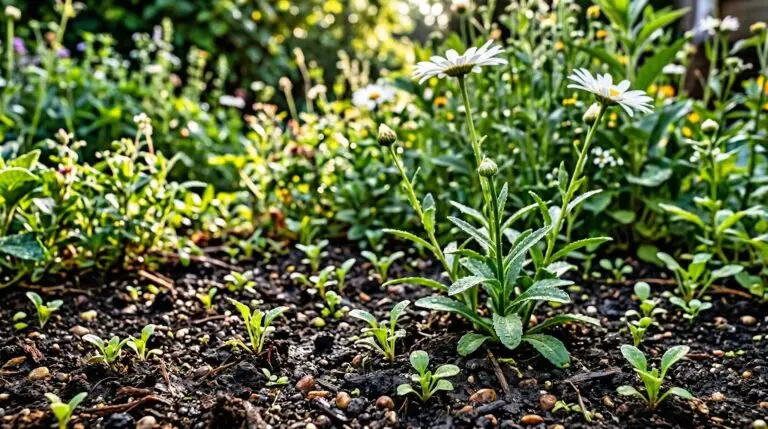 Growing Shasta daisies from seed for the most affordable perennial border
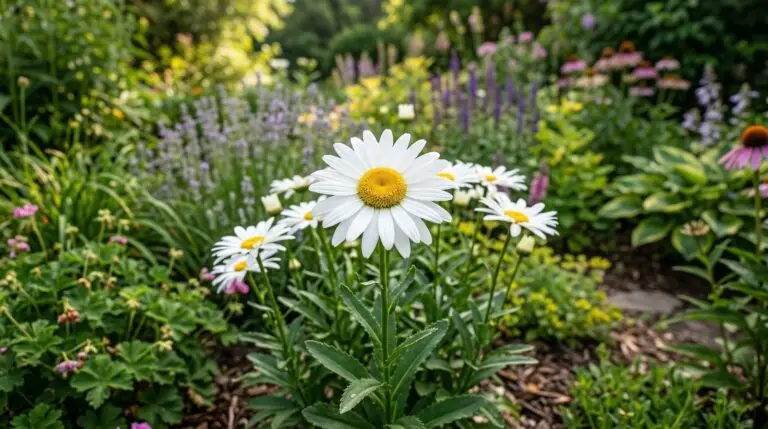 How to grow Shasta daisies for cheerful white and gold flowers all summer long
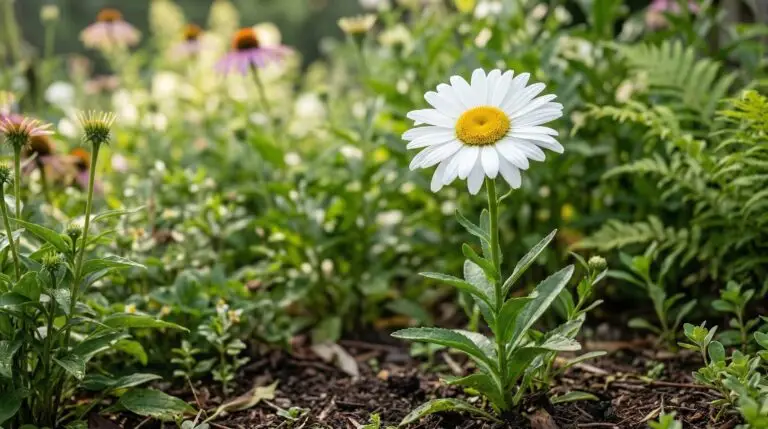 Shasta daisies as long-lasting cut flowers for simple elegant summer bouquets
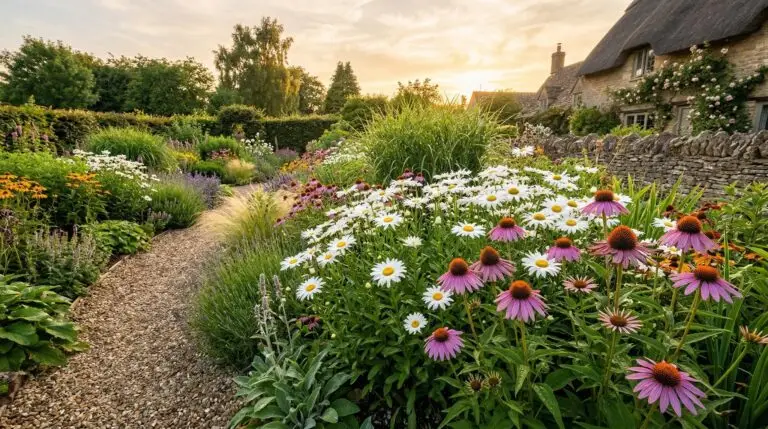 Companion plants for Shasta daisies: what to grow and avoid
Enjoying our flower guides? Add YourFlowersGuide as a preferred source on Google. It helps more readers find us.
Add to Preferred Sources